

안녕하세요! 매일한글 에디터입니다.
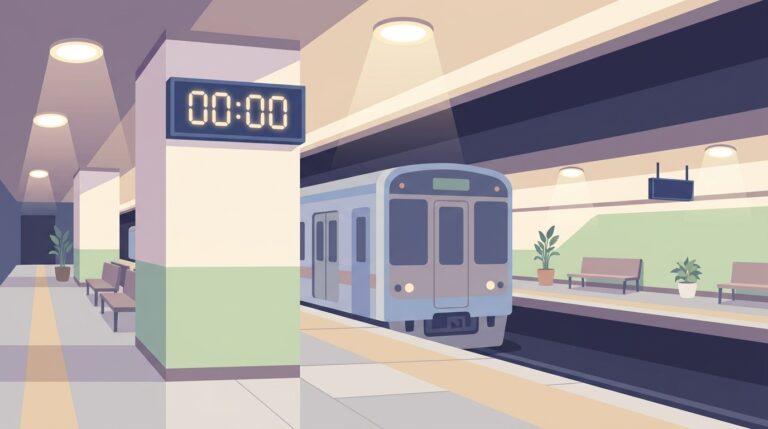
Picture this: It’s 11:45 PM in Hongdae. You just finished an incredible round of Korean barbecue with friends, followed by singing your heart out at a noraebang. Suddenly, someone glances at their phone and gasps: “Wait, when does the last train leave?!” You rush down the subway stairs, heart pounding, only to be greeted by flashing signs and a maze of transfer lines. You desperately need to ask a station worker or a passerby if you can still get home to Gangnam or Myeongdong, but your mind goes blank.
Don’t panic! Missing the midnight transit cutoff is a classic rite of passage in Seoul, but with just a few golden beginner words, you can navigate the station like a seasoned local. Today, I’ve distilled practical student feedback into this beginner-friendly survival blueprint. Let’s make sure you never get stranded again!
Phase 2: 핵심 표현 3선 심층 분석 (Key Expressions in Depth)
1. 막차 몇 시에 있어요? (Makcha myeot sie isseoyo?)
- Pronunciation: [Mak-cha myeot shi-eh eess-eo-yo?] (Think of mak like ‘muck’ and cha like chai tea: “Muck-chai”)
- Meaning: Literal: “What time is the last train?” / Actual Nuance: “Could you tell me what time the last subway leaves?”
- K-Culture Moment: In almost every K-drama romance, this line triggers the pivotal “run through the turnstile together” scene.
- Editor’s Insight: 막차 (Makcha) combines 막 (last/final) and 차 (vehicle/train). Add 몇 시에 있어요? (What time is it at?) to create an instant polite inquiry.
- Situation Spectrum: Casual: ⚠️ (Use ‘있어?’ with peers) | Semi-formal: ✅ | Formal: ✅
- 🤔 Think About It: In English, we specify ‘train’ or ‘bus’. Korean bundles both into 차 (car/vehicle). How does grouping transport words reflect everyday efficiency?
2. 지하철 끊겼어요? (Jihacheol kkeunkyeosseoyo?)
- Pronunciation: [Jee-ha-cheol kkeun-kyeoss-eo-yo?] (The double kk sounds like a sharp, snappy ‘k’ click!)
- Meaning: Literal: “Is the subway cut off?” / Actual Nuance: “Did the subway service stop running for the night?”
- K-Culture Moment: Used by coworkers checking their wristwatches right as a lively hoesik (team dinner) reaches midnight.
- Editor’s Insight: The verb 끊기다 literally means “to be severed or disconnected.” Koreans visualize the transit network like a living thread that gets cut at night.
- Situation Spectrum: Casual: ⚠️ | Semi-formal: ✅ | Formal: ✅
- 🤔 Think About It: Why do you think Korean uses “cut off” instead of “stopped running”? What imagery does that evoke in your native language?
3. 아직 탈 수 있어요? (Ajik tal su isseoyo?)
- Pronunciation: [Ah-jik tal soo eess-eo-yo?] (Ajik sounds like “ah-jeek”)
- Meaning: Literal: “Can I still ride?” / Actual Nuance: “Can I still make it onto the train?”
- K-Culture Moment: The breathless sentence blurted out to station staff while tapping a T-money card against the barrier gate.
- Editor’s Insight: 아직 (still/yet) paired with ~ㄹ 수 있어요? (can do) is the ultimate lifesaver pattern when every second counts.
- Situation Spectrum: Casual: ⚠️ | Semi-formal: ✅ | Formal: ✅
- 🤔 Think About It: Notice how simple subject dropping is in Korean—you don’t even need to say “I” or “the train”!
Phase 3: 교과서 한국어 vs 진짜 한국어 (Textbook vs. Real-life)
Situation 1: Asking if the final train has departed
* 📖 교과서 한국어: 마지막 열차가 이미 출발했습니까? (Majimak yeolchaga imi chulbalhaesseumnikka?) – Has the last passenger train already departed?
* 🗣️ 진짜 한국어: 혹시 막차 끊겼어요? (Hoksi makcha kkeunkyeosseoyo?) – By any chance, is the last train already cut off?
* 💡 왜 다를까? Textbook phrases sound like robotic automated station announcements. In real life, adding 혹시 (by any chance) softens the urgency and sounds natural to any Seoulite.
Situation 2: Asking if you can still enter the platform
* 📖 교과서 한국어: 지금 탑승하는 것이 가능합니까? (Jigeum tapseunghaneun geosi ganeunghamnikka?) – Is boarding feasible right now?
* 🗣️ 진짜 한국어: 지금 탈 수 있어요? (Jigeum tal su isseoyo?) – Can I still get on now?
* 💡 왜 다를까? Complex nominal phrases (탑승하는 것) waste precious seconds. Real spoken Korean defaults to punchy root verbs like 타다 (to ride).
Phase 4: K-Culture 딥다이브 & 비언어적 매너 (Deep Dive & Manners)
4-1. 눈치 (Nunchi) & Essential Gestures
When dashing into a Korean subway station past midnight, workers and commuters are tired. If you need to stop an attendant or fellow passenger, do not tap their shoulder abruptly. Instead, make quick eye contact, bow your head slightly at a 15-degree angle, and say: 저기요, 죄송한데요… (Jeogiyo, joesonghandeyo… / “Excuse me, I’m sorry to bother you…”). Hold your smartphone screen showing your destination line or station name with both hands if you are asking for directions. Two hands show instant respect and urgency without coming across as entitled.
4-2. The ‘Makcha Sprint’ (막차 러시)
In Seoul, between 11:45 PM and 12:30 AM, you will witness the legendary Makcha Dash. Business people in suits, university students, and tourists suddenly begin sprinting in unison down the platform corridors. Missing the last train means competing for rare late-night taxis or waiting until 5:30 AM for the 첫차 (cheotcha – first train). Knowing this term gives you instant cultural membership: you aren’t just an outsider; you understand the city’s pulse.
Phase 5: 실전 롤플레이 시나리오 (Real-world Roleplay Scenario)
Setting: Gangnam Station Line 2 turnstiles, 11:58 PM. Neon station signs flicker as Minho, a helpful station agent in a navy uniform, stands near the help booth.
- You: 🎭 (Approaching with a slight head tilt, looking anxious)
저기요, 홍대 가는 막차 몇 시에 있어요?
(Jeogiyo, Hongdae ganeun makcha myeot sie isseoyo?)
“Excuse me, what time is the last train to Hongdae?” -
Station Staff (Minho): 🎭 (Glances at the master screen above the gate)
홍대입구역이요? 12시 10분에 있어요.
(Hongdae-ipgu-yeogiyo? Yeol-du-si sip-bune isseoyo.)
“Hongik University Station? It’s at 12:10 AM.” -
You: 🎭 (Checking watch in relief, then looking at the wide turnstiles)
아, 10분이요? 아직 탈 수 있어요?
(A, sip-bun-iyo? Ajik tal su isseoyo?)
“Ah, 10 minutes? Can I still catch it?” -
Station Staff (Minho): 🎭 (Pointing down toward Platform 2 with an open palm)
네, 2번 승강장으로 지금 빨리 뛰어가세요!
(Ne, i-beon seunggangjangeuro jigeum ppalli ttwieogaseyo!)
“Yes, run quickly right now down to Platform 2!” -
You: 🎭 (Tapping T-money card in a rush)
감사합니다! 혹시 환승도 돼요?
(Gamsahamnida! Hoksi hwanseungdo dwaeyo?)
“Thank you! By any chance, can I still transfer later?” -
Station Staff (Minho): 🎭 (Shaking head with an empathetic grimace)
환승은 끊겼을 수도 있어요. 직행으로 가세요.
(Hwanseungeun kkeunkyeosseul sudo isseoyo. Jikhaengeuro gaseyo.)
“Transfers might already be cut off. Stay on the direct line.” -
You: 🎭 (Giving a quick grateful bow)
네, 알겠습니다! 좋은 밤 되세요!
(Ne, algetseumnida! Joeun bam doeseyo!)
“Understood! Have a good night!” -
Station Staff (Minho): 🎭 (Smiling warmly and waving on)
네, 조심히 가세요!
(Ne, josimhi gaseyo!)
“Yes, get home safely!”
🔀 Interactive Choice Point
You reach the platform at 12:09 AM. The warning chimes ring, and the doors are about to close. What do you do?
* Choice A: Yell “Wait!” and thrust your hand between the closing subway doors.
* Feedback (Bad / Dangerous): 🚫 Never block Seoul subway doors! The sensors are heavy-duty and this can cause severe injury or emergency stops.
* Choice B: Bow politely, stand behind the yellow line, and take out your phone to check Kakao T for a late-night taxi.
* Feedback (Risk / Safe alternative): ⚠️ Safe, but late-night taxis during weekend peaks can be hard to flag down or come with late-night surcharges.
* Choice C: Look for the late-night ‘Owl Bus’ (올빼미 버스) stop right outside the exit.
* Feedback (Best!): ✅ Seoul operates dedicated night buses (N-Buses) that mirror primary subway paths until dawn for regular transit fare!
Phase 6: 10초 감정 섀도잉 드릴 (Shadowing Drill)
Practice breathing life into your Korean with these rhythm stops (/):
[🏃 급하고 다급하게 - Hurried & Breathless]
저기요! / 막차 / 아직 탈 수 있어요?
(Jeogiyo! / Makcha / ajik tal su isseoyo?)-
[🥺 아쉽고 걱정스럽게 - Worried & Hesitant]
혹시… / 지하철 / 벌써 끊겼어요?
(Hoksi… / jihacheol / beolsseo kkeunkyeosseoyo?) -
[😊 안도하며 정중하게 - Relieved & Polite]
정말 감사합니다! / 바로 갈게요!
(Jeongmal gamsahamnida! / Baro galgeyo!)
Phase 7: K-Culture 미니 사전 (Mini Dictionary)
- 막차 (Makcha) | The Last Train / Bus | The ultimate buzzword of Seoul nightlife. Missing it changes your entire night’s budget!
- 첫차 (Cheotcha) | The First Train | The savior train that begins operating around 5:20-5:40 AM every morning.
- 환승 (Hwanseung) | Transit Transfer | Switching subway lines or moving to a bus. Keep in mind: transfer gates often close earlier than end-of-line terminals.
- 출구 (Chulgu) | Station Exit | Seoul subway stations are massive subterranean cities with up to 14 exits. Always confirm your Chulgu number before leaving the gates!
Phase 8: 여행자를 위한 생존 키트 (Traveler Survival Kit)
Top 3 Urgent Transit Phrases
- 이거 어디로 가요? (Igeo eodiro gayo?) – Pro Tip: Point at your platform track when you aren’t sure if the train goes in the right circular direction.
- 카드 잔액이 부족해요. (Kadeu janaegi bujokhaeyo.) – Pro Tip: Say this if the turnstile buzzes red with error sound 삐빅!.
- 출구가 어디예요? (Chulguga eodiyeyo?) – Pro Tip: If you lose the exit signs, ask any pedestrian heading upstairs.
Editor’s Travel Note
- Google Maps does not provide real-time platform transit schedules accurately in South Korea due to national map data regulations. Before landing at Incheon Airport, ensure you download the official KakaoMap navigation app for real-time subway arrivals or Naver Map subway tracker. Both offer real-time timetables highlighting exact countdowns for the last train.
Phase 9: 한 발 더 깊이 (Cultural Reflection)
In many Western metropolises, missing a scheduled train simply means catching an Uber or walking home. But in Korea’s collectivist urban fabric, the makcha serves as a shared social boundary. It is socially accepted as the universal, graceful excuse to leave an overly demanding company dinner without causing offense: “I must leave now before the makcha is gone!” In this way, public transport schedules subtly protect personal boundaries within a demanding working culture.
💬 Your Turn: Have you ever raced against the clock for the last train in your hometown or while traveling? What excuse do you use when you want to leave a party early? Share your story in the comments below!
Phase 10: FAQ & 흔한 실수 (FAQ & Common Mistakes)
Q: What time does the subway usually close in Seoul?
A: Most Seoul subway lines stop running between 12:00 midnight and 1:00 AM on weekdays, and slightly earlier on weekends and public holidays. However, the last train for your specific destination station might leave as early as 11:30 PM depending on where it terminates!
Q: Does my transfer discount apply if I catch the last train and switch to an Owl Bus?
A: Yes! As long as you tag out of the subway turnstile and tag into the night bus within 30 minutes, Korea’s unified transit transfer discount system remains active.
Q: Can I sleep overnight inside the subway station if I miss the last train?
A: No. Seoul Metro shutters and locks station gates completely approximately 20 to 30 minutes after the final train passes through. You must exit to street level, where you can easily find a 24-hour convenience store, cafe, or Jjimjilbang (Korean spa).
🚨 Common Mistakes Alert!
- Mistake: Assuming the last train goes all the way to the end of the line.
- Correct Action: Check the terminating station! Many last trains terminate midway (e.g., at Seoul National University Station rather than Sadang).
- Mistake: Using casual Korean with staff: “막차 언제야?”
- Correct Action: Always retain polite endings (~요) when talking to staff: say “막차 언제예요?”
- Mistake: Forgetting to tap your card out during a rushed exit.
- Correct Action: Always ensure your card beeps upon leaving, otherwise your card will charge a maximum fare penalty on your next trip.
Phase 11: 액션 미션 (Action Missions)
- 🥉 Bronze Mission (Solo Practice): Stand in front of your mirror, set a 10-second timer, and say: “저기요, 막차 끊겼어요?” three times smoothly without looking at the text.
- 🥈 Silver Mission (Social Connection): Screenshot a Seoul subway map, circle your dream stay neighborhood, and post it to your Instagram stories with the caption: “막차 몇 시에 있어요? Learning Korean with Daily Hangul!”
- 🥇 Gold Mission (Real-world Challenge): On your next trip to Korea (or using a subway app simulation), ask the station attendant or kiosk helper: “아직 탈 수 있어요?”
- 🎮 K-Culture Bonus Mission: In your next K-drama episode, listen carefully during evening drinking scenes for the word 막차 (Makcha)!
Phase 12: 인터랙티브 퀴즈 챌린지 (Interactive Quiz Challenge)
1. Situation Check: You just walked into Itaewon Station at 12:15 AM. You want to ask the ticket gate officer if the train service is finished. Which phrase is best?
* A) 지하철 탑승 원해요. (Jihacheol tapseung wonhaeyo.)
* B) 막차 끊겼어요? (Makcha kkeunkyeosseoyo?)
* C) 첫차 주세요. (Cheotcha juseyo.)
2. Fill-in-the-Blank: Complete the question meaning “Can I still ride?”:
아직 ___ 수 있어요? (Ajik ___ su isseoyo?)
3. True or False: In Korea, “막차” (Makcha) can refer to both the last subway train and the last city bus of the evening.
👉 Click here to reveal the Answers & Explanations!
- Answer: B (막차 끊겼어요?)
- Explanation: This is the most natural, polite way to ask if service has concluded. Option A sounds unnatural, and Option C asks for the morning first train!
- Answer: 탈 (Tal)
- Explanation: The root verb is 타다 (to ride/board). When combined with the grammar pattern ~ㄹ 수 있다 (ability), it becomes 탈 수 있어요.
- Answer: True!
- Explanation: The word 차 (Cha) covers all transit vehicles, so 막차 applies to buses, trains, and subways alike.
- Explanation: The word 차 (Cha) covers all transit vehicles, so 막차 applies to buses, trains, and subways alike.







