

Phase 1: Empathy (Story-Immersive Opening)
안녕하세요! 매일한글 에디터입니다.
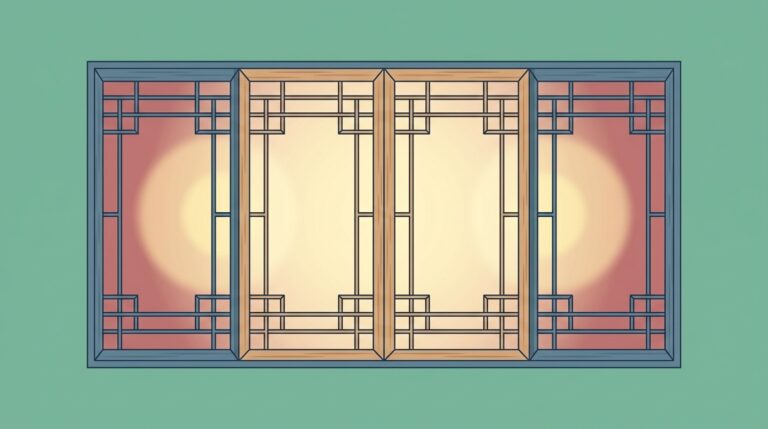
Imagine stepping into a centuries-old Hanok nestled in Bukchon on a crisp autumn afternoon. You slide off your shoes, sit cross-legged on the polished wooden floor (maru), and gaze at the sliding door before you. The afternoon sun doesn’t pierce through like it does through modern glass; instead, it enters gently, filtered through translucent mulberry paper—changhoji (창호지)—framed by an intricate geometric lattice called munsal (문살). You feel an overwhelming sense of calm, an almost poetic reverence. You want to describe this exact sensation to your Korean host or companion, but your mind draws a blank. You know words like yeppuda (pretty) or bich (light), yet saying “이 창문 예뻐요” feels painfully reductive. It captures neither the architectural mastery nor the philosophical depth of Korean traditional living.
Over the past ten years of coaching advanced Korean learners, I have watched countless C1-level students hit this exact wall. You have conquered standard grammar and business honorifics, but when faced with Korea’s profound aesthetic vocabulary—the delicate dance between natural light, traditional materials, and historical architectural sensibilities—textbooks suddenly abandon you. Mastering how to discuss changhoji and munsal does more than enrich your travel anecdotes: it unlocks the door to literary Korean, historical drama dialogue, and the nuanced cultural worldview known as cha-gyeong (borrowing nature). Let’s bridge that gap together today.
Phase 2: Core Expressions Deep Dive
1. 은은하게 스며들다 (Euneunhage seomyeodeulda)
- Pronunciation: [Eu-neun-ha-ge seo-myeo-deul-da] (Think of the soft, humming “eu” sound in “good”, flowing seamlessly like warm tea seeping into a dry cotton cloth).
- Meaning: Literal: “To permeate or seep in softly.” / Nuanced: Used to describe subtle, diffused light, delicate fragrances, or mellow emotions that gently spread without overwhelming the senses.
- K-Culture Moment: In historical dramas like The Red Sleeve (옷소매 붉은 끝동), when dawn sunlight filters through the paper lattice of the King’s library, directors deliberately frame this glow to evoke emotional intimacy.
- Editor’s Insight: Glass reflects or directly transmits light, but changhoji breathes. Koreans use 은은하다 specifically when something is neither blaring nor invisible, but comfortably ambient. Combining it with 스며들다 turns light into a tactile, liquid-like element.
- Situation Spectrum: Casual: ✅ | Semi-formal: ✅ | Formal: ✅
- 🤔 Think About It: In Western architecture, natural light is often maximized with floor-to-ceiling glass. Why do you think Korean traditional design chose to soften and temper sunlight through organic paper fibers instead?
2. 문살의 격자무늬가 정갈하다 (Munsal-ui gyeokjamunui-ga jeonggalhada)
- Pronunciation: [Mun-sal-ui gyeok-ja-mu-nui-ga jeong-gal-ha-da] (Crisp ‘k’ and rolling ‘l’ sounds, evocative of precise wooden joints clicking neatly into place).
- Meaning: Literal: “The geometric lattice pattern of the door frame is neat and pure.” / Nuanced: Expresses a deeply refined, clutter-free elegance where mathematical symmetry inspires peaceful mindfulness.
- K-Culture Moment: Seen in architectural documentaries on Arirang TV or travel vlogs exploring Andong Hahoe Village, where master artisans (somokjang) assemble intricate wood joinery without a single metal nail.
- Editor’s Insight: 정갈하다 (jeonggalhada) is far more sophisticated than 깨끗하다 (clean). It implies a spiritual, moral, and aesthetic purity—often applied to pristine temple cuisine or minimalist traditional carpentry.
- Situation Spectrum: Casual: ⚠️ (sounds slightly bookish) | Semi-formal: ✅ | Formal: ✅
- 🤔 Think About It: Does your native language have a specific adjective that describes cleanliness not just as the absence of dirt, but as an expression of spiritual order?
3. 여백의 미를 살리다 (Yeobaek-ui mireul sallida)
- Pronunciation: [Yeo-baek-ui mi-reul sal-li-da] (The rhythmic cadence sounds almost like a meditative breath: yeo-baek… mi-reul… sal-li-da).
- Meaning: Literal: “To bring alive the beauty of empty white space.” / Nuanced: Celebrating intentional restraint—allowing unadorned surfaces to amplify the significance of what is present.
- K-Culture Moment: Minimalist interior design segments on lifestyle YouTube channels or K-art curations explaining why Joseon white porcelain (baekja) and plain hanok walls leave vast negative space.
- Editor’s Insight: In changhoji windows, the empty paper squares are not “empty holes waiting to be decorated”; they are vital spaces allowing the shadows of bamboo trees outside to become living artwork.
- Situation Spectrum: Casual: ✅ | Semi-formal: ✅ | Formal: ✅
- 🤔 Think About It: Modern society often views blank space as wasted potential. How does the Hanok philosophy of 여백 (negative space) challenge this productivity-driven mindset?
Phase 3: Textbook Korean vs. Real Korean
Situation 1: Describing the morning light filtering into a Hanok room
- 📖 교과서 한국어: 햇빛이 종이 창문을 통해 방 안으로 들어옵니다.
(Haetbichi jong-i changmuneul tonghae bang aneuro deureo-omnida. / Sunlight enters the room through the paper window.) - 🗣️ 진짜 한국어: 아침 햇살이 창호지 문살 사이로 참 은은하게 스며드네요.
(Achim haetsari changhoji munsal sairo cham euneunhage seomyeodeuneyo. / The morning sunlight filters through the paper lattice so delicately.) - 💡 왜 다를까? Textbook Korean treats light as an inanimate optical object and paper as generic material. Native speakers personify the atmosphere using poetic verbs (스며들다) and specific terminology (창호지, 문살), transforming simple description into sensory appreciation.
Situation 2: Complimenting the craftsmanship of a Hanok sliding screen
- 📖 교과서 한국어: 이 문의 나무 디자인이 아주 멋있고 예쁩니다.
(I munui namu dijaini aju meositgo yeoppeumnida. / This door’s wood design is very cool and pretty.) - 🗣️ 진짜 한국어: 문살의 짜임새가 군더더기 없이 아주 정갈하고 기품이 넘쳐요.
(Munsal-ui jja-imsaega gundeodeogi eopsi aju jeonggalhago gipumi neomchyeoyo. / The joinery of the lattice has zero clutter; it is remarkably refined and dignified.) - 💡 왜 다를까? At a C1 level, vague loanwords like 디자인 (design) fail to capture traditional craftsmanship. Using 짜임새 (structure/joinery), 군더더기 없이 (without unnecessary excess), and 기품 (grace/dignity) shows genuine cultural literacy.
Phase 4: K-Culture Deep Dive & Non-Verbal Manners
4-1. 눈치 (Nunchi) & Tactile Etiquette in a Hanok
When visiting a preserved Hanok or staying overnight in an upscale traditional boutique pension, your physical interactions with changhoji speak volumes before you utter a single word:
* The Frame-Only Rule: Never push on the paper pane (changhoji) when sliding doors open or closed. Always place your fingertips on the recessed wooden grip (mungori or the solid wooden stile mun-teul). Poking or leaning against changhoji is a severe faux pas—while durable, Korean mulberry paper (hanji) is breathable and can puncture under blunt pressure.
* The Two-Handed Glide: Hanok sliding doors glide along floor tracks without modern ball bearings. Open and close them smoothly using both hands if the door is large, ensuring the movement is quiet and deliberate. Slamming a wooden sliding door shatters the peaceful ambiance of the entire courtyard.
4-2. Cultural Code Analysis: The Philosophy of Cha-Gyeong (차경, 借景)
In Korean traditional architecture, windows and lattice doors are rarely meant to isolate the resident from the world outside. Instead, they serve as living picture frames. This concept is called 차경 (borrowed landscape)—you do not own nature; you simply “borrow” its view through the frame of your munsal.
When a breeze blows, the shadows of pine branches flutter against the semi-opaque changhoji, creating an animated ink-and-wash painting (sumukhwa) directly on your bedroom wall. This explains why K-dramas use Hanok doorways for quiet contemplation: the lattice frame represents a harmonious threshold between interior human thought and exterior cosmic nature.
Phase 5: Real-World Roleplay Scenario
Setting: You are visiting the studio gallery of Master Park (박 장인), a National Intangible Cultural Heritage carpenter (somokjang), nestled inside a quiet mountain retreat in Gangneung.
Characters:
* Master Park: A contemplative, silver-haired craftsman who has dedicated 50 years to wood joinery.
* You: A passionate cultural connoisseur eager to explore the subtleties of traditional lattice design.
Dialogue:
1. You: 장인님, 공방 전체에 풍기는 은은한 소나무 향이 참 마음을 차분하게 만드네요.
(Jang-innim, gongbang jeonchee punggineun euneunhan sonamu hyangi cham maeumeul chabunhage mandeuneyo.)
“Master, the subtle pine fragrance pervading your entire workshop truly calms the mind.”
🎭 Gaze gently around the workshop with hands clasped in front.
- Master Park: 허허, 나무를 다듬다 보면 마음의 찌꺼기도 함께 깎여 나가지요. 어디 이 문짝을 한번 보시겠소?
(Heoheo, namureul dadeumda bomyeon maeumui jjiggeogido hamkke kkakyeo nagajiyo. Eodi i munjjageul hanbeon bosigesso?)
“Haha, when one carves wood, the impurities of the mind get shaved away too. How about taking a look at this door panel?”
🎭 Sweeps sawdust off a finely planed cedar lattice screen. -
You: 와… 살 하나하나의 결이 살아있네요. 문살의 짜임새가 군더더기 없이 정갈합니다.
(Wa… sal hanahana-ui gyeori sara-itneyo. Munsal-ui jja-imsaega gundeodeogi eopsi jeonggalhamnida.)
“Wow… the grain of every single slat is alive. The lattice joinery is so neat and completely free of excess.”
🎭 Leans closer to inspect the seamless wooden joints without touching the paper. -
Master Park: 눈썰미가 대단하시네. 못을 쓰지 않고 오직 결구법으로만 맞춘 완자살(卍字)이오.
(Nun-sseol-miga daedanhasine. Moseul sseuji anko ojik gyeolgubeobeoroman matchun wanjasario.)
“You have a keen eye. This is a wanjasal pattern fitted purely through interlocking mortise and tenon joinery, without a single metal nail.”
🎭 Taps the solid wooden frame with quiet pride. -
You: 닥나무로 만든 창호지도 남달라 보입니다. 바깥 빛을 받아들이는 느낌이 유리창과는 확연히 다르네요.
(Dangnamuro mandeun changhojido namdalla boimnida. Bakkat bicheul badadeurineun neukkimi yurichang-gwaneun hwag-yeonhi dareuneyo.)
“The mulberry changhoji paper also looks exceptional. The way it absorbs and welcomes outside light is distinctly different from modern glass.”
🎭 Tilts head slightly to observe the diffused light illuminating the paper surface. -
Master Park: 그렇지요. 창호지는 햇볕을 한 번 걸러서 방 안을 부드럽게 감싸 안아주거든.
(Geureochiyo. Changhojineun haetbyeoteul han beon geolleoseo bang aneul budeureopge gamssa an-ajugeodeun.)
“Indeed. Changhoji filters the harsh sunlight once, wrapping the entire room in a soft, embracing glow.”
🎭 Steps back to let the natural daylight illuminate the screen. -
You: 빛을 차단하는 게 아니라 여백의 미를 살리며 자연을 안으로 끌어들이는 지혜군요.
(Bicheul chadanhaneun ge anira yeobaek-ui mireul sallimyeo jayeoneul aneuro kkeureodeurineun jihyegunyo.)
“It doesn’t block the light, but rather brings alive the beauty of empty space, drawing nature right inside—what profound wisdom.”
🎭 Nods slowly with sincere admiration. -
Master Park: 우리 한옥의 숨결을 이토록 깊이 이해해 주니 내 평생의 노고가 보람차구려.
(Uri hanogui sumgyeoreul itorok gipi ihaehae juni nae pyeongsaeng-ui nogoga boramchaguryeo.)
“To have someone comprehend the living breath of our Hanok so deeply makes my lifelong toil feel truly rewarding.”
🎭 Offers a warm, crinkly-eyed smile of professional respect.
🔀 Interactive Branching Moment
Master Park now asks you: “그렇다면 자네가 보기에, 이 방에 어떤 형태의 문살을 달면 사계절의 풍경을 가장 잘 담아낼 것 같소?” (In your eyes, what kind of lattice pattern would best capture the four seasons in this room?)
- Choice A: “계절의 변화가 그대로 비치도록 군더더기 없는 세살문(직선 격자)을 달아 차경의 미학을 완성하면 좋겠습니다.”
Feedback (Best): 🌟 Flawless! C1 cultural fluency at its peak. You referenced sesalmun (clean vertical/horizontal slats) and interconnected it with cha-gyeong (borrowed landscape). Master Park will treat you like an esteemed scholar. - Choice B: “요즘 유행하는 현대식 통유리창을 달면 밖이 훨씬 선명하게 보일 것 같아요.”
Feedback (Bad): ❌ Ouch! Suggesting modern plate glass to a traditional wooden lattice artisan negates the entire philosophy of diffused light and breathable materials. Master Park’s smile will instantly freeze. - Choice C: “화려한 꽃살문(꽃 모양 문살)을 넣으면 사진 찍어서 인스타에 올리기 딱 좋을 것 같습니다.”
Feedback (Risk): ⚠️ While kkotsalmun is a stunning Buddhist temple craft, framing it merely as an “Instagram photo spot” reduces solemn craftsmanship to transient social media clout. Use with caution.
Phase 6: 10-Second Emotion Shadowing Drill
Train your intonation and breath control to match the tranquil gravitas of native architectural commentary.
[😌 고즈넉하고 감탄하듯이 - Serene and marveling]
창호지 문살 사이로 / 아침 햇살이 / 참 은은하게 스며드네요.
(Changhoji munsal sairo / achim haetsari / cham euneunhage seomyeodeuneyo.)-
[🧐 통찰력 있고 진지하게 - Insightful and appreciative]
단순히 빛을 막는 게 아니라 / 여백의 미를 살리면서 / 자연을 품어내는 지혜 같아요.
(Dansunhi bicheul makneun ge anira / yeobaek-ui mireul sallimyeonseo / jayeoneul pumeonaeneun jihye gat-ayo.) -
[✨ 정중하고 깊은 울림으로 - Respectful and heartfelt]
못을 전혀 쓰지 않았는데도 / 문살의 짜임새가 / 어쩜 이렇게 빈틈없이 정갈할까요?
(Moseul jeonhyeo sseuji anatneundedo / munsal-ui jja-imsaega / eojjeom ireoke binteum-eopsi jeonggalhalkkayo?)
Phase 7: K-Culture Mini Dictionary
-
차경 (Cha-gyeong)
Translation: “Borrowed Scenery.”
Usage: The traditional architectural philosophy where window and door frames are strategically designed not as boundaries, but as organic picture frames that incorporate distant mountains, bamboo groves, or the moon into the living space. -
살대 (Sal-dae)
Translation: Lattice thin-timber slats.
Usage: The individually carved, slender wooden strips that intersect to form geometric patterns in Hanok doors. Master carpenters cut these with microscopic precision so they snap together seamlessly. -
창호지 (Changhoji)
Translation: Traditional mulberry paper for sliding screens.
Usage: Made from the fibrous inner bark of the paper mulberry tree (daknamu). Unlike wood-pulp paper, it regulates indoor humidity, insulates against winter winds, and diffuses direct glare into soft ambient illumination. -
고즈넉하다 (Go-jeu-neok-ha-da)
Translation: Quiet, serene, and steeped in peaceful antiquity.
Usage: A high-frequency aesthetic adjective used exclusively for tranquil, nostalgic atmospheres—such as sitting inside a Hanok courtyard at dusk while listening to the wind chime (punggyeong).
Phase 8: Survival Kit for Travelers
Top 3 Hanok Appreciation Expressions
-
“문살 격자무늬가 정말 정교하네요.”
(Munsal gyeokjamunuiga jeongmal jeonggyohaneyo. / The lattice pattern of the door frame is remarkably exquisite.)
Pro Tip: Use this when checking into an authentic Hanok stay in Jeonju or Bukchon; it instantly sets you apart as a guest who respects cultural detail. -
“창호지를 통과한 햇살 덕분에 방 분위기가 포근해요.”
(Changhojireul tonggwahan haetsal deokbune bang bunwigiga pogeunhaeyo. / Thanks to the sunlight passing through the paper screen, the room feels so cozy and warm.)
Pro Tip: Say this to your Hanok guesthouse host in the morning to compliment the interior ambiance. -
“한옥 문은 나무틀을 잡고 조심스럽게 열어야 하죠?”
(Hanok muneun namuteureul japgo josimseureopge yeoreoya hajyo? / Hanok sliding doors should be opened carefully by holding the wooden frame, right?)
Pro Tip: Demonstrates exemplary awareness of Hanok etiquette, earning instant trust from historic site caretakers.
Editor’s Travel Note: Experiencing Living Lattice Architecture
- Where to Go: Visit the Korea Furniture Museum (한국가구박물관) in Seongbuk-dong, Seoul (reservation required months in advance) for the world’s most breathtaking display of Hanok doors and natural light play. Alternatively, stroll through Gangneung Seongyojang House (강릉 선교장) to witness 300-year-old preserved window frames.
- Essential Tool: Download the Naver Map app for navigating Hanok heritage alleys to uncover quiet traditional tea houses (jeontong chatjip) tucked away from tourist crowds.
Phase 9: “One Step Deeper” (Reflective Cultural Essay)
In Western architectural tradition, a window is fundamentally an aperture through solid stone or brick—a transparent barrier designed to keep the hostile outside elements at bay while granting visual control over the exterior world. The Hanok door, however, subverts this divide. By wrapping the wooden skeleton in changhoji, the ancestors created a permeable membrane. You cannot clearly see who is approaching your courtyard, but you can perceive their silhouette; you cannot hear a crisp voice, but you hear the gentle murmur of wind and falling rain.
This reflects the foundational Korean philosophy of Sangsaeng (상생, mutual coexistence). A door is not a fortress gate meant to shut nature out, but an invitation for nature to settle comfortably upon the paper screen. In an era where modern life is mediated through cold, scratch-resistant smartphone glass, sitting quietly behind a paper-and-wood sliding door reminds us that beauty often thrives within filtration, softness, and intentional imperfection.
💬 Your Turn: When you look at modern architecture in your home country, how is natural light treated compared to the Hanok’s ‘diffused filtration’ philosophy? Share your observations in the comments below! (댓글로 여러분의 생각을 들려주세요!)
Phase 10: FAQ & Misconceptions
Q: Can Hanok paper windows (창호지) actually keep out winter cold in Korea’s freezing weather?
A: Surprisingly, yes! Genuine changhoji made from mulberry fibers has microscopic air pockets that create a thermal barrier. In traditional homes, windows often feature double or triple sliding panels (ikchang or yeolkae-chang), providing layered insulation while allowing the room to breathe without condensation.
Q: What is the difference between 창문 (Changmun) and 문살 (Munsal)?
A: 창문 (changmun) is the broad general word for any window (including modern aluminum and glass windows). 문살 (munsal) specifically refers to the structural wooden lattice ribs and geometric woodwork inside the frame of a traditional sliding door or window.
Q: Why do some Hanok doors feature leaves or flower petals pressed directly into the paper?
A: This traditional craft technique is called kkot-changhoji (꽃창호지). During the paper-making process, autumn maple leaves, chrysanthemum petals, or dried pine needles are laid between two ultra-thin layers of mulberry pulp. When sunlight hits the screen, the natural botanicals glow from within, creating seasonal indoor silhouette art.
🚨 Common Mistakes Alert (외국인 학습자의 흔한 실수 TOP 3)
- Mistake: Calling the paper “한옥 종이” (Hanok jong-i).
Correct Action: Use the precise term 창호지 (Changhoji) for window screen paper, or 한지 (Hanji) for traditional mulberry paper in general. - Mistake: Pushing sliding doors open by placing fingers on the paper squares.
Correct Action: Always touch the solid wooden frame (mun-teul) or the metal/wooden latch pull (mungori). - Mistake: Complimenting a Hanok’s atmosphere using only “깨끗해요” (It is clean).
Correct Action: Elevate to C1 adjectives such as 고즈넉하다 (gojeuneokhada – serenely peaceful) or 정갈하다 (jeonggalhada – purely uncluttered and refined).
Phase 11: Action Mission & K-Culture Hunt
- 🥉 Bronze Level Mission (Solo Practice): Read the Phase 6 Shadowing Drill out loud three times. Record your voice on your phone and check whether your pronunciation of 은은하게 carries a soft, ambient cadence rather than a clipped modern tone.
- 🥈 Silver Level Mission (Social Expression): Take a photo of filtered light or natural woodwork around your home or neighborhood. Post it on Instagram or your study blog with the caption: “창호지처럼 빛이 은은하게 스며드는 시간.”
- 🥇 Gold Level Mission (Real-World Test): Next time you visit a Hanok stay, traditional tea house, or cultural center, say this directly to the staff or curator: “문살의 격자무늬가 참 정갈하고 아름답네요.” Watch their eyes widen at your architectural vocabulary!
- 🎮 K-Culture Mission: Watch an episode of a period K-drama (such as Mr. Sunshine or Under the Queen’s Umbrella). Pause the screen whenever a conversation happens inside a traditional room and analyze the shadow patterns projected on the changhoji.
Phase 12: Interactive Quiz Challenge
Question 1: Situational Judgment
You are sitting in a quiet Hanok tea house in Insadong. Soft afternoon sunlight is creating beautiful geometric shadows across your table through the sliding doors. Which sentence best expresses this scene at an advanced (C1) level?
* A) 유리가 맑아서 밖이 시원하게 다 보여요.
* B) 창호지 문살 사이로 햇살이 은은하게 스며들어 분위기가 참 고즈넉해요.
* C) 문살의 페인트 색깔이 알록달록해서 사진 찍기 좋네요.
Question 2: Fill-in-the-Blank
한옥의 창문은 단순히 안과 밖을 가르는 벽이 아니라, 자연의 풍경을 방 안으로 빌려오는 ( _________ )의 철학을 담고 있다.
(The windows of a Hanok are not merely walls dividing inside and out, but embody the philosophy of [ _________ ], borrowing natural scenery into the room.)
Question 3: True or False Cultural Quiz
True or False: Hanok sliding doors constructed with traditional munsal and changhoji require steel nails to maintain structural tension across the seasons. (T/F)
👉 Click here to reveal the Answer Key & Explanations
-
Answer: B
Explanation: Option B integrates key C1 vocabulary (창호지, 문살, 은은하게 스며들다, 고즈넉하다) to perfectly capture the atmosphere. Option A describes plain transparent glass, while Option C inappropriately mentions “colorful paint” on unpainted natural wood joinery. -
Answer: 차경 (Cha-gyeong / Borrowed Scenery)
Explanation: Cha-gyeong (借景) is the definitive Korean architectural concept of framing nature through window latticework without physically altering it. -
Answer: False
Explanation: Authentic master carpenters assemble munsal using interlocking joinery (gyeol-gu-beop, 결구법) where wooden grooves slide into each other with microscopic tolerance, requiring zero metal nails.







