

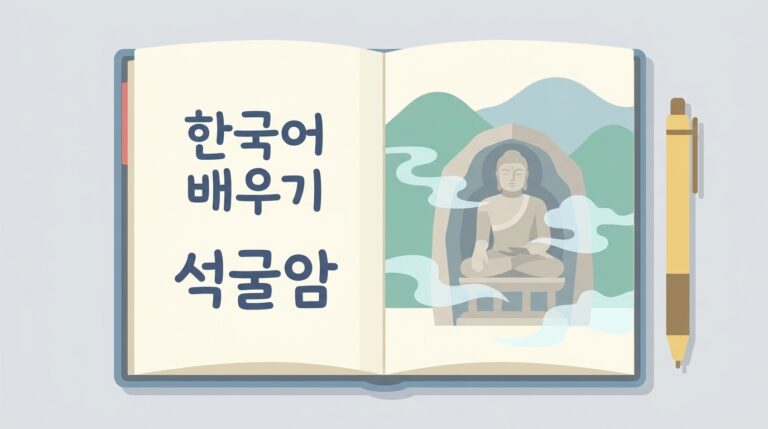
Visiting Seokguram Grotto: Speak Like a Local at Korea’s Ancient Wonder
Phase 1: Empathy & Story Opening
안녕하세요! 매일한글 에디터입니다.
Imagine taking the early morning shuttle bus winding up Mount Toham in Gyeongju. The mountain air is crisp, pine needles crunch softly beneath your sneakers, and you finally reach the entrance of Seokguram Grotto (석굴암), a UNESCO World Heritage gem sculpted during the ancient Silla dynasty over 1,200 years ago.
As you step toward the serene rotunda where the majestic stone Buddha sits in tranquil meditation, you notice an unmistakable hush fall over the crowd. Signs gently ask for silence. You want to ask the temple guide if flash photography is forbidden, or perhaps whisper to your travel buddy how breathtaking the carved stone walls look, but your mind goes completely blank. You freeze, worried you might break a temple rule or sound clumsy.
Don’t worry! You are not alone. Many of our beginner students tell us that historical temples feel intimidating because of formal etiquette and archaic terms. But with just a handful of simple A2-level Korean expressions, you can navigate historical sanctuaries politely, appreciate sacred art, and connect meaningfully with local temple guides.
Phase 2: Core Expressions Deep Dive
1. 사진 찍어도 돼요? (Sajin jjigeodo dwaeyo?)
- Pronunciation: [Sah-jin jee-gaw-doh dway-yo?] (Think of ‘sajin’ like ‘sergeant’ without the ‘t’, and ‘dwaeyo’ rhymes with ‘play-o’)
- Meaning: Literal: “Is taking a picture okay?” / Real Nuance: “May I take photos here?”
- K-Culture Moment: You often hear this polite inquiry in travel variety programs like 2 Days & 1 Night (1박 2일) whenever the cast enters a protected heritage site or a traditional craftsman’s workshop.
- Editor’s Insight: The pattern
-아/어도 돼요?is the gold standard for asking permission at level A2. At Seokguram, interior photography is strictly prohibited to protect the ancient granite carvings, so asking this shows deep cultural mindfulness. - Situation Spectrum: Casual: ⚠️ (Only with close friends: 사진 찍어도 돼?) | Semi-formal: ✅ (사진 찍어도 돼요?) | Formal: ✅ (사진 촬영이 가능한가요?)
- 🤔 Think About It: In English, we often ask “Can I take a photo?” directly. Korean centers on whether the action itself is permissible and harmonious (
-도 돼요). How does this shift focus from the speaker to shared etiquette?
2. 조용히 해 주세요. (Joyonghi hae juseyo.)
- Pronunciation: [Joh-yong-hee hae joo-seh-yo.] (Pronounce ‘joyong’ like ‘Joe-young’, and ‘juseyo’ like ‘zoo-say-yo’)
- Meaning: Literal: “Please do quietly.” / Real Nuance: “Please speak softly / Please keep it down.”
- K-Culture Moment: Seen frequently in historical K-Dramas like The King’s Affection or temple stay vlogs when guests enter sacred prayer halls.
- Editor’s Insight: Notice that it uses
-해 주세요(please do for me/us). It is far softer than saying “Don’t speak” (말하지 마세요). It invites mutual cooperation in maintaining a peaceful atmosphere. - Situation Spectrum: Casual: ⚠️ (조용히 해) | Semi-formal: ✅ (조용히 해 주세요) | Formal: ✅ (정숙해 주시기 바랍니다)
- 🤔 Think About It: Why do historical and spiritual places in Korea emphasize collective harmony over individual expression?
3. 정말 신비로워요! (Jeongmal sinbirowoyo!)
- Pronunciation: [Jeong-mahl sheen-bee-roh-woh-yo!]
- Meaning: Literal: “Truly mystical!” / Real Nuance: “This is so wondrous and awe-inspiring!”
- K-Culture Moment: The iconic reaction when K-Travel YouTubers gaze upon ancient artifacts lit under the soft golden museum lamps.
- Editor’s Insight: While
멋있어요(meosisseoyo – cool) works for K-pop stars,신비로워요captures the spiritual aura, ancient history, and enigmatic smile of the Seokguram Buddha statue. - Situation Spectrum: Casual: ⚠️ (정말 신비로워) | Semi-formal: ✅ (정말 신비로워요) | Formal: ✅ (대단히 신비롭습니다)
- 🤔 Think About It: What English words do you use when looking at ancient monuments? Does “mystical” carry the same emotional weight as “신비롭다”?
Phase 3: Textbook Korean vs. Real Korean
Situation 1: Asking if taking photos inside the grotto is forbidden
* 📖 교과서 한국어 (Textbook): 여기서 사진 촬영이 금지되어 있습니까? (Yeogiseo sajin chwaryeongi geumjidoeeo itseumnikka? – Is photography prohibited here?)
* 🗣️ 진짜 한국어 (Real-life): 안에서는 사진 못 찍죠? (Aneseoneun sajin mot jjikjyo? – We can’t take photos inside, right?)
* 💡 Why is it different? While the textbook uses heavy administrative vocabulary (사진 촬영, 금지), native speakers use the friendly confirmation ending -죠? along with 못 찍다 (cannot take) to confirm what they intuitively suspect.
Situation 2: Admiring the ancient stone craftsmanship
* 📖 교과서 한국어 (Textbook): 이 불상은 매우 정교하게 조각되었습니다. (I bulsangeun maeu jeonggyohage jogakdoeeotseumnida. – This Buddha statue was carved very delicately.)
* 🗣️ 진짜 한국어 (Real-life): 와, 옛날에 이걸 어떻게 만들었을까요? (Wa, yennare igeol eotteoke mandeureosseulkkayo? – Wow, how did they make this in the old days?)
* 💡 Why is it different? Conversational Korean leans into expressive emotional exclamations (와!) and rhetorical wonder (-을까요?) rather than passive academic statements.
Phase 4: K-Culture Deep Dive & Non-Verbal Manners
4-1. Nunchi (눈치) & Temple Body Language
When standing inside the glass-enclosed viewing pavilion of Seokguram, practice 차수 (Chasu): gently clasp your left hand over your right hand resting just below your navel. This traditional posture demonstrates humility and self-restraint. Keep your footsteps light, mute your smartphone shutter sound, and never lean on or tap against the protective glass. If an elder monk or local worshipper passes by, offer a polite 15-degree head bow rather than a loud verbal greeting.
4-2. The Silla Golden Age & K-Heritage
Seokguram is the crown jewel of the Silla Kingdom (57 BC – 935 AD), often romanticized in K-Dramas such as Hwarang (화랑). Built under the direction of Prime Minister Kim Dae-seong in 751 AD, Seokguram was constructed using advanced mathematical proportions and granite domes so precise that moisture would naturally ventilate without damaging the rock. Recognizing this brilliant engineering helps you see that historical Korean sites are living sanctuaries of science, art, and devotion.
Phase 5: Real-Life Roleplay Scenario
Setting: Outside the entrance of Seokguram’s glass pavilion. Morning sunlight filters through the mist.
Characters: Alex (Curious traveler, A2 learner) & Monk Ji-an (지안 스님, Temple Guardian).
- Alex: 실례합니다. 여기가 석굴암 입구 맞아요? (Sillyehamnida. Yeogiga Seokguram ipgu majayo?)
- “Excuse me. Is this the entrance to Seokguram?”
- 🎭 Politely stops a few steps away and bows head slightly.
- Monk Ji-an: 네, 맞습니다. 안으로 들어가시면 됩니다. (Ne, matseumnida. Aneuro deureogasimyeon doemnida.)
- “Yes, that is correct. You may step inside.”
- 🎭 Smiles gently and points toward the walkway with two open hands.
- Alex: 혹시 안에서 사진 찍어도 돼요? (Hoksi aneseo sajin jjigeodo dwaeyo?)
- “By any chance, may I take photos inside?”
- 🎭 Holds camera with both hands, tilting head with an inquisitive look.
- Monk Ji-an: 죄송하지만, 유물 보호를 위해 사진은 찍으시면 안 돼요. (Joesonghajiman, yumul bohobeul wihae sajineun jjigeusimyeon an dwaeyo.)
- “I am sorry, but to protect the relic, you cannot take pictures.”
- 🎭 Places hands together in a warm, polite refusal gesture.
- Alex: 아, 그렇군요! 눈으로만 볼게요. (A, geureokgunyo! Nuneoroman bolgeyo.)
- “Ah, I see! I will only look with my eyes.”
- 🎭 Nods immediately in understanding and lowers the camera bag.
- Monk Ji-an: 고맙습니다. 내부에서는 조용히 관람해 주세요. (Gomapseumnida. Naebueseoneun joyonghi gwallamhae juseyo.)
- “Thank you. Please view quietly while inside.”
- 🎭 Gives an appreciative bow.
- Alex: 네, 조용히 관람할게요. 정말 신비로워요! (Ne, joyonghi gwallamhalgeyo. Jeongmal sinbirowoyo!)
- “Yes, I will view quietly. It is truly mystical!”
- 🎭 Whispers gently while clasping hands respectfully.
- Monk Ji-an: 좋은 시간 되세요. 성불하세요. (Joeun sigan doeseyo. Seongbulhaseyo.)
- “Have a wonderful time. May you attain peace.”
- 🎭 Offers a warm Buddhist blessing.
🔀 Interactive Decision Point
Suppose you accidentally drop your metal water bottle inside the grotto pavilion with a loud CLANG, and everyone turns around. What do you do?
- Option A: Laugh nervously, wave your hand, and say “괜찮아요!” (Gwaenchanayo! – It’s okay!).
- Option B: Quickly pick it up, bow your head slightly to those nearby, and whisper “죄송합니다…” (Joesonghamnida – I am sorry).
- Option C: Ignore the gazes, put it in your bag, and walk quickly to the exit.
Feedback:
* Option A [Bad]: Saying 괜찮아요 means “I’m fine / don’t worry about it”—saying this after causing a disturbance sounds like you are excusing yourself!
* Option B [Best]: Perfect! A quiet bow and a whispered 죄송합니다 shows instant nunchi and cultural awareness.
* Option C [Risk]: Leaving abruptly may seem dismissive or awkward. A quick polite acknowledgment is always better.
Phase 6: 10-Second Emotion Shadowing Drill
Practice reading these out loud! Follow the pause markers (/) and channel the designated emotion:
[🤫 Polite & Hesitant]
저기요, / 혹시 / 사진 찍어도 돼요? (Jeogiyo, / hoksi / sajin jjigeodo dwaeyo?)-
[🙏 Understanding & Respectful]
아, / 알겠습니다. / 눈으로만 / 볼게요! (A, / algetseumnida. / Nuneoroman / bolgeyo!) -
[✨ Soft Awe & Wonder]
우와… / 불상이 / 정말 / 신비로워요. (Uwa… / bulsangi / jeongmal / sinbirowoyo.)
Phase 7: K-Culture Mini Dictionary
- 석굴암 (Seokguram): Seokguram Grotto. An artificial stone cave temple carved from white granite, built alongside Bulguksa Temple.
- 국보 (Gukbo): National Treasure. You will often spot signs saying 대한민국 국보 (National Treasure of South Korea) at significant historic landmarks.
- 불상 (Bulsang): Buddha Statue. Specifically refers to sculptural representations of Buddha. Notice the peaceful downcast gaze designed to meet the eyes of pilgrims standing below.
- 합장 (Hapjang): Clasping palms together in prayer/greeting. The universal non-verbal gesture of respect when greeting Buddhist monks or entering temple halls.
Phase 8: Traveler’s Survival Kit
Top 3 Survival Phrases
- 여기서 사진 찍을 수 있나요? (Yeogiseo sajin jjigeul su innayo?)
- Can I take photos here?
- 💡 Pro Tip: Look for the photo crossed-out icon. If in doubt, ask before taking your phone out.
- 입장료가 얼마예요? (Ipjangnyoga eolmayeyo?)
- How much is the admission fee?
- 💡 Pro Tip: As of May 2023, entry to Bulguksa and Seokguram is free (무료), but keeping this phrase handy helps at other nearby historical monuments.
- 불국사 가는 버스 어디서 타요? (Bulguksa ganeun beoseu eodiseo tayo?)
- Where do I catch the bus going to Bulguksa?
- 💡 Pro Tip: Bus No. 12 runs between Bulguksa and Seokguram once every hour. Catching it saves a 50-minute steep mountain hike!
Editor’s Travel Note
- Navigation Guide: Google Maps often lags with Korean transit times. Instead, make sure to Download Naver Map App for Gyeongju Bus 11 and 12 routes to track real-time bus arrivals up Tohamsan.
- Transit & Footwear: The walk from the ticket gate to Seokguram is a 15-minute shaded gravel path. Wear comfortable walking shoes. High heels will hurt!
- Temple Courtyard Souvenir: Near the ticket booth, you can purchase a Giwa (roof tile – 기와) for 10,000 KRW and write your family blessings in paint marker—a great souvenir of your visit.
Phase 9: One Step Deeper (Reflection Question)
In modern travel, we often rush to snap selfies to prove we were there. However, at Seokguram, the strict rule against photography invites visitors to slow down and practice yeobaek (여백)—appreciating empty space, quiet contemplation, and being truly present. Instead of seeing the Buddha through a camera lens, visitors are compelled to stand quietly and hold the memory in their hearts.
💬 Your Turn: Have you ever visited a sacred site where taking pictures was restricted? How did putting your phone away change your experience? Drop your thoughts in the comments below!
Phase 10: FAQ & Avoiding Misunderstandings
Q: Can I take pictures from outside through the open glass door of Seokguram?
A: No. Photography of the central Buddha chamber is completely forbidden, even without flash and from outside the glass partition. Security guards monitor the area, so keep your camera down to avoid being asked to delete your photos.
Q: Do I need to remove my shoes when viewing Seokguram?
A: No! Visitors stay inside the viewing corridor with their shoes on. Only monks and authorized practitioners entering the inner sanctum during special services remove their footwear.
Q: Can I bring coffee or snacks inside the grotto area?
A: Food and beverages (except bottled water) are strictly prohibited past the main gate. Enjoy your snacks and drinks at the souvenir cafes near the parking lot before walking up.
🚨 Common Mistakes Alert (TOP 3)
- Mistake: Calling out loudly to travel companions inside the pavilion.
- Correct Action: Whisper softly and use hand gestures to guide your friends.
- Mistake: Using casual Korean
고마워(gomawo) with the Buddhist monk or security staff.- Correct Action: Always use polite honorifics:
감사합니다(gamsahamnida) or고맙습니다(gomapseumnida).
- Correct Action: Always use polite honorifics:
- Mistake: Touching the glass or ancient stone lanterns outside.
- Correct Action: Keep a respectful arm’s length distance to preserve historic artifacts for future generations.
Phase 11: Action Mission & Engagement
- 🥉 Bronze Mission (Solo): Look into your mirror and practice saying:
"사진 찍어도 돼요?"(Sajin jjigeodo dwaeyo?) 5 times with a gentle, polite head tilt. - 🥈 Silver Mission (Community): Share this guide on Instagram or X (Twitter) with the hashtag #DailyHangulGyeongju and tag a friend you’d love to visit Gyeongju with!
- 🥇 Gold Mission (Real-world): Next time you visit a Korean museum, gallery, or Buddhist temple, greet the docent with palms together (
합장) and ask your permission question entirely in Korean!
🎮 K-Culture Mission: Watch an episode of any travel show set in Gyeongju (such as 2 Days 1 Night or Battle Trip). Listen carefully for how locals say 조용히 (quietly) and 신비롭다 (mystical)!
Phase 12: Interactive Quiz Challenge
Q1. Situational Judgment:
You want to take a snapshot in front of the stone bell tower outside Seokguram. What is the most polite question to ask a nearby tourist?
* (A) 사진 찍어! (Sajin jjigeo!)
* (B) 사진 좀 찍어 주실 수 있으세요? (Sajin jom jjigeo jusil su isseuseyo?)
* (C) 사진 찍지 마세요. (Sajin jjikji maseyo.)
Q2. Fill in the Blank:
When stepping inside a quiet temple hall, you whisper to your friend: “여기서는 ________ 해 주세요.” (Please be quiet here.)
* (A) 시끄럽게 (sikkeureopge)
* (B) 조용히 (joyonghi)
* (C) 빠르게 (ppareuge)
Q3. True or False:
Taking photos inside Seokguram’s glass rotunda is allowed as long as your camera flash is turned off. (True / False)
👉 Click to reveal answers & explanations!
- Q1 Answer: (B) – 사진 좀 찍어 주실 수 있으세요? is a wonderfully polite, natural way to ask someone to take your picture. (A) is too blunt/informal, and (C) means “Don’t take pictures!”
- Q2 Answer: (B) 조용히 (joyonghi) – 조용히 해 주세요 means “Please be quiet.” 시끄럽게 means noisily, and 빠르게 means quickly.
- Q3 Answer: False – Photography is strictly forbidden inside the Seokguram rotunda regardless of whether flash is on or off.






