

Phase 1: Empathy (Immersive Story Opening)
안녕하세요! 매일한글 에디터입니다. (Annyeonghaseyo! Maeil Hangeul editeonim-ida. / Hello! This is your Daily Hangul editor.)
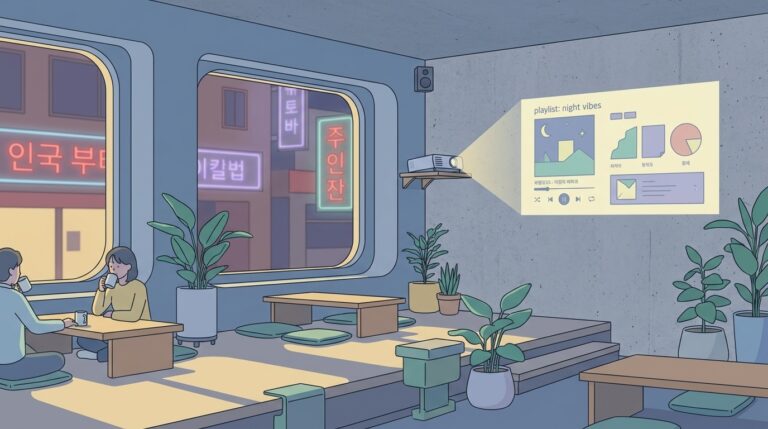
Picture this: It is 11:45 PM on a rainy Tuesday in Seoul. You are sitting at a low wooden table in a dimly lit Mangwon-dong cafe, surrounded by students, freelancers, and night owls. Nobody is talking, yet nobody feels lonely. On a wall projector, a vintage photograph floats alongside an evocative sentence in Korean: “When you want to run along the Han River at 2 AM thinking about the one who got away.” The background music shifts—a melancholic Korean indie track seamlessly transitions into an understated R&B groove. You glance at the comments section on your phone, and thousands of strangers have poured their souls into poetic paragraphs, validating each other’s quiet heartaches.
Welcome to the universe of Korean YouTube playlist channels—colloquially known as “플리” (Plli). In Korea, playlists curated by indie creators like essential;, Take a Look (때껄룩), and Leeplay are far more than background noise; they are cultural sanctuaries, lifestyle signifiers, and communal emotional therapy sessions. If you have ever felt disconnected when your Korean friends passionately debate their favorite playlist channels or drop hyper-nuanced slang in playlist comment sections, you are not alone. As a C2 learner, you already grasp complex grammatical structures, but decoding the aesthetic, affective vernacular of digital music curation requires a whole new cultural key. Based on our clinical fieldwork with advanced Korean learners and cultural insiders, this master guide will elevate your fluency from functionally fluent to native-level poetic nuance.
Phase 2: Core Expressions Deep Dive
1. 감성에 젖다 (Gamseonge jeotda) / 감성 터지다 (Gamseong teojida)
- Pronunciation: [Gam-seong-e jeot-da] / [Gam-seong teo-ji-da] (Think of ‘gam-seong’ as aesthetic sentimentality, ‘jeotda’ sounding like ‘jut-dah’, rhyming with a soaked sponge)
- Meaning: Literal: To be soaked in sentiment / To burst with emotion. Nuance: To be utterly swept away by an evocative, cinematic mood or nostalgia induced by music or atmosphere.
- K-Culture Moment: You are listening to a rainy-day acoustic playlist on YouTube, looking out at the foggy Han River bridge, and your Korean colleague remarks on how the moody chord progressions make everyone vulnerable.
- Editor’s Insight: While textbook Korean treats 감성 (gamseong) as merely “sensitivity” or “emotion,” modern digital vernacular uses it almost like the English “vibe” or “aesthetic,” but with a uniquely introspective, melancholic weight. When you say 감성에 젖다, you are portraying your consciousness as porous, absorbing the ambient melancholia of the soundscape.
- Situation Spectrum: Casual ✅ | Semi-formal ✅ | Formal ⚠️
- 🤔 Think About It: In English, we say “getting in one’s feelings,” which often carries a slightly irrational or self-indulgent undertone. Why does Korean culture revere 감성 as a celebrated aesthetic virtue rather than an embarrassing lapse in stoicism?
2. 벅차오르다 (Beokchaoreuda)
- Pronunciation: [Beok-cha-o-reu-da] (Pronounce ‘beok’ like ‘buck’, ‘cha’ crisp like ‘chai’ without the ‘i’, and ‘o-reu-da’ rolling smoothly like an ascending scale)
- Meaning: Literal: To surge or brim over. Nuance: A feeling of overwhelming, cinematic, heart-swelling inspiration or catharsis, heavily used for anthemic J-rock, K-band, or nostalgic anime-style tracks.
- K-Culture Moment: Used relentlessly under playlist titles such as: “Youth band songs that make your heart swell when running toward the horizon.”
- Editor’s Insight: 벅차오르다 is the definitive keyword of Korean playlist culture. It describes that precise physiological sensation when a swelling synthesizer or distorted guitar solo triggers goosebumps, evoking nostalgic memories of youth you might not have even experienced yourself. It is emotional maximalism in a single verb.
- Situation Spectrum: Casual ✅ | Semi-formal ✅ | Formal ✅
- 🤔 Think About It: How does your native language express music-induced physical goosebumps? Notice how Korean connects physical breath and thoracic expansion (벅차다) directly to existential grandeur.
3. 귀호강하다 (Gwi-hoganghada)
- Pronunciation: [Gwi-ho-gang-ha-da] (Blend ‘gwi’ [ear] with ‘ho-gang’, which mirrors the historical pleasure of royal pampering)
- Meaning: Literal: For one’s ears to indulge in luxurious comfort. Nuance: Experiencing an absolute sonic feast; auditory bliss provided by exceptional vocals, immaculate mixing, or superior sound curation.
- K-Culture Moment: Top comment under a playlist featuring underrated R&B singers with breathy vocal textures: “오늘 귀호강 제대로 하고 갑니다” (My ears were thoroughly pampered today).
- Editor’s Insight: 호강 (Hogang) historically meant living in imperial or aristocratic luxury. By attaching it to the body part 귀 (ear), Koreans create a playful yet deeply respectful compliment for musicians and playlist curators alike. It transcends “good music” and declares the listening experience an acoustic spa treatment.
- Situation Spectrum: Casual ✅ | Semi-formal ✅ | Formal 🚫
- 🤔 Think About It: In digital consumer culture, sensory organs are often metaphorically rewarded. What does treating your ears like royalty say about the value Koreans place on curation as high-end leisure?
Phase 3: Textbook Korean vs. Real Korean
Scenario 1: Recommending an expertly curated indie playlist
- 📖 교과서 한국어 (Textbook):
이 음악 재생 목록의 수록곡들은 대단히 조화롭고 듣기 좋습니다.
(I eumak jaesaeng mongnogeui surokgokdeureun daedanhi johwaropgo deutgi joseumnida. / The songs included in this music playlist are extremely harmonious and pleasant to listen to.) - 🗣️ 진짜 한국어 (Real-life C2 Native):
이 플리 트랙 배치가 진짜 유기적이라, 셔플 말고 무조건 정주행하셔야 돼요.
(I peulli teuraek baechiga jinjja yugijeogira, syeopeul malgo mujogeon jeongjuhaenghasyeoya dwaeyo. / The track sequencing on this playlist is so organic; you absolutely must listen straight through without shuffling.) - 💡 왜 다를까? (Why the divergence?):
Textbook Korean relies on dry, analytical adjectives (조화롭다). Real-world music discourse borrowed cinematic terminology (유기적 – organic/interconnected) and binge-watching jargon (정주행 – consuming from start to finish) to highlight how sequence curation creates an unbroken atmospheric narrative.
Scenario 2: Expressing emotional catharsis over a comment section story
- 📖 교과서 한국어 (Textbook):
댓글에 적힌 당신의 사연을 읽고 깊은 감동과 슬픔을 느꼈습니다.
(Daetgeure jeokhin dangsineui sayeoneul ilkgo gipeun gamdonggwa seulpeumeul neukkyeotseumnida. / Reading your story written in the comments gave me deep emotion and sorrow.) - 🗣️ 진짜 한국어 (Real-life C2 Native):
새벽에 댓글 읽다가 주책맞게 감정 이입돼서 과몰입 오열할 뻔했네요.
(Saebyeoge daetgeul ikdaga juchaengmatge gamjeong i-ipdwaeseo gwamorip oyeolhal ppeonhaennyeyo. / Reading comments at dawn, I got so embarrassingly swept up in emotional empathy that I almost ugly-cried from hyper-immersion.) - 💡 왜 다를까? (Why the divergence?):
Advanced Korean communication balances emotional authenticity with self-deprecating wit (주책맞게 – indiscreetly/foolishly; 과몰입 – hyper-immersion). C2 naturalness comes from moderating heavy sentimental vulnerability with playful linguistic self-awareness.
Phase 4: K-Culture Deep Dive & Non-Verbal Manners
4-1. 눈치 (Nunchi) & Digital Netiquette in Playlist Spaces
In Korean playlist ecosystems, there is an unwritten code of emotional preservation. Comment sections function as an anonymous diary—a digital Daenamusup (Bamboo Grove) where strangers confess burnout, lost romances, and artistic crises.
* The Spatial Nunchi (분위기 파악): Dropping aggressive internet sarcasm, overt self-promotion, or jarring humor in a late-night melancholic playlist comment section is considered a profound lack of 눈치 (Nunchi).
* Respecting the “Vibe Integrity” (감성 파괴 금지): When sharing playlists in person—such as at a friend’s workspace or during a shared road trip—observe whether someone is using headphones for 노동요 (work labor playlists) before initiating conversation. Breaking their sonic immersion abruptly is perceived as a disruption of psychological flow.
4-2. The Cultural Code: Why “플리 (Plli)” Replaced Traditional Radio
Why did YouTube playlist channels become a multi-million-view phenomenon in South Korea?
* The Rise of Ambient Aesthetics: Traditional Korean radio relied on celebrity DJs and commercial interruptions. Modern urban youth, exhausted by hyper-competitive schedules and social pressures, crave curate-and-forget sonic immersion. Aesthetic branding like essential; (curated by Bugs Music) transformed algorithmic listening into an interior design accessory; trendy cafes in Seongsu-dong project playlist visuals onto raw concrete walls simply to curate their establishment’s identity.
* The Subversive Narrative Title: Playlist titles in Korea are distinct micro-novels. Rather than genre labels like “Lo-Fi Hip Hop 2024,” titles adopt narrative scenarios: “Playing this when you need to submit your resignation letter with calm defiance.” This exemplifies how Korean language fuses storytelling, mood projection, and hyper-specific relational situations into everyday artistic consumption.
Phase 5: Real-Life Roleplay Scenario
Setting: 11:30 PM. An open-plan design studio in Yeonnam-dong. You are finishing a creative proposal alongside Min-seo, a senior graphic designer who always has pristine taste in underground Korean music.
Characters:
* You (Advanced Professional Learner): Passionate about contemporary soundscapes, seeking to discuss musical curation naturally.
* Min-seo (Creative Director): Stylish, understated, typing rhythmically while ambient music echoes from the studio speakers.
민서 (Min-seo):
오늘 야근 진짜 길어지네요. 저 방금 스피커에 새 플리 걸어뒀는데, 음악 볼륨 괜찮아요?
(Oneul yageun jinjja gireojineyo. Jeo banggeum seupikeoe sae peulli georeodweonneunde, eumak bollyum gwaenchannayo?)
(🎭 Glances up from her dual monitors, pushing back her glasses and nodding toward the studio speaker.)
“Tonight’s overtime is really dragging on. I just hooked up a new playlist to the speakers—how’s the volume?”
You:
볼륨 딱 좋아요! 안 그래도 아까부터 트랙 넘어갈 때마다 집중이 확 되더라고요. 혹시 채널 이름이 뭐예요?
(Bollyum ttak joayo! An geuraedo kkabuteo teuraek neomeogal ttaemada jipjungi hwak dweodeoragoyo. Hoksi chaeneol ireumi mwoyeyo?)
(🎭 Smiling appreciatively, pausing typing to listen to the transition.)
“The volume is spot-on! Actually, every time a track transitioned, my focus dialed in. By any chance, what’s the channel name?”
민서 (Min-seo):
‘때껄룩’ 채널 건데요. 이번 플레이리스트는 진짜 알고리즘이 점지해 준 인생 플리예요.
(‘Ttae-kkeol-luk’ chaeneol geondeyo. Ibeon peulleiriseuteuneun jinjja algorijeumi jeomjihae jun insaeng peulliyeyo.)
(🎭 Tapping her finger lightly against her mug, eyes brightening with pride.)
“It’s from the channel ‘Take a Look’. This particular playlist was practically ordained by the algorithm—a true once-in-a-lifetime curation.”
You:
아, 저도 알아요! 썸네일이랑 타이틀 맛집으로 유명하잖아요. 이번엔 제목이 뭐였길래 이렇게 꽂히셨어요?
(A, jeodo arayo! Sseomneilirang taiteul matjibeuro yumyeonghajanayo. Ibeonen jemogi mwoyeotgillae ireoke kkot-hisyeosseoyo?)
(🎭 Chuckling softly, acknowledging the channel’s legendary curation reputation.)
“Ah, I know them! They’re renowned for their top-tier thumbnails and titles. What was the title this time that hooked you so thoroughly?”
민서 (Min-seo):
‘새벽 3시, 마감에 쫓기다 문득 도시의 불빛을 내려다볼 때.’ 완전 지금 우리 상황 저격 아니에요?
(‘Saebyeok sesi, magame jjotgida mundeuk dosieui bulbicheul naeryeodabol ttae.’ Wanjeon jigeum uri sanghwang jeogyeok anieyo?)
(🎭 Laughing quietly, gesturing toward the floor-to-ceiling windows overlooking Mapo-gu.)
“‘3:00 AM, Chased by Deadlines, Suddenly Gazing Down at City Lights.’ Doesn’t that target our exact reality right now?”
You:
완전 소름 돋네요. 트랙 리스트 보니까 보컬들 음색이 다 독보적이라 귀호강 제대로 하고 있어요.
(Wanjeon soreum dotneyo. Teuraek riseuteu bonikka bokeoldeul eumsaegi da dokbojeogira gwi-hogang jedaero hago isseoyo.)
(🎭 Leaning back slightly, taking a deep breath of satisfaction.)
“Literal goosebumps. Looking at the tracklist, the vocal timbres are all peerless; my ears are getting pure luxury treatment.”
민서 (Min-seo):
맞아요. 이런 밴드 사운드 후반부로 갈수록 벅차오르는 구성이라 졸릴 틈이 없죠.
(Majayo. Ireon baendeu saundeu hubanburo galsurok beokchaoreuneun guseong-ira jollil teumi eopjyo.)
(🎭 Bobbing her head in sync with the rising drum tempo.)
“Exactly. Band sounds structured to build this swelling intensity towards the climax don’t leave any room for drowsiness.”
You:
동의해요. 우리 오늘 작업 이거 다 끝나기 전까지 무조건 무한 반복 재생입니다!
(Dong-uihaeyo. Uri oneul jageop igeo da kkeutnagi jeonkkaji mujogeon muhan banbok jaesaeng-imnida!)
(🎭 Giving a decisive thumbs-up before turning back to your draft with renewed energy.)
“Agreed. Until our project wraps tonight, this playlist stays on infinite repeat!”
🔀 Interactive Decision Point
Min-seo looks at the comments section on the screen and notices a stranger wrote: “I failed my bar exam today, but this music tells me I still deserve to live.” How do you respond to maintain the respectful emotional depth of the room?
- Option A: “댓글이 너무 우울하네요. 분위기 처지니까 신나는 케이팝 댄스곡으로 바꿀까요?”
- Option B: “플리 댓글창은 진짜 랜선 위로 공간 같아요. 음악 하나로 다들 서로의 상처를 보듬는 게 뭉클하네요.”
- Option C: “저런 사연은 유튜브 알고리즘 좋아요 받으려고 지어낸 과장 아닐까요?”
Detailed Feedback:
* Option A (Risk): Mood breaker! Abruptly calling a vulnerable comment “depressing” and suggesting upbeat dance pop completely shatters the ambient collective sentiment (감성) you both just bonded over.
* Option B (BEST): Flawless C2 Cultural Pragmatics! You acknowledge the social function of Korean playlist comment sections (랜선 위로 – online solace) and validate the communal empathy (뭉클하다 – touching/heartwarming).
* Option C (BAD): Cynicism overload. Dismissing someone’s heartache as engagement bait in front of an emotionally attuned Korean colleague will make you seem insensitive and socially tone-deaf.
Phase 6: 10-Second Emotion Shadowing Drill
Train your musical intonation and emotional delivery using these rhythmic, pausing-guided drills. Practice pausing at each slash (/).
- [😌 Deeply moved, reflective calm]
잔잔한 인디 플리 틀어놓고 / 창밖 보고 있으니까 / 묘하게 감성에 젖어드네요.
(Janjanhan indi peulli teureonoko / changbak bogo isseunikka / myohage gamseonge jeojeodeuneyo.)
“Leaving this serene indie playlist on / while gazing out the window / leaves me strangely immersed in sentiment.” -
[🔥 Thrilled, cinematic swelling with excitement]
후렴구에서 일렉기타 터질 때 / 심장이 벅차오르는 기분 / 뭔지 아시죠?
(Huryeomgueseo illek-gita teojil ttae / simjang-i beokchaoreuneun gibun / mwonji asijyo?)
“When the electric guitar drops in the chorus / that sensation of your heart swelling up / you know what I mean, right?” -
[😍 Pure sensory bliss, grateful praise]
보컬 음색이 너무 독보적이라 / 듣는 내내 / 귀호강 제대로 했어요.
(Bokeol eumsaegi neomu dokbojeogira / deunneun naenae / gwi-hogang jedaero haesseoyo.)
“The vocal timbre is so genuinely unparalleled / that the whole time listening / my ears were treated like royalty.”
Phase 7: K-Culture Mini Dictionary
-
플리 (Plli / [Peul-li]):
Translation: Playlist.
Everyday Usage: The universal Korean portmanteau for playlist. Used constantly in colloquial sentences like “인생 플리 찾음” (Found my life-defining playlist) or “카페 사장님 플리 센스 미쳤다” (The cafe owner’s playlist curation taste is insane). -
노동요 (Nodong-yo / [No-dong-yo]):
Translation: Labor song / High-productivity focus playlist.
Everyday Usage: Historically, traditional field-working chants. In contemporary digital life, it denotes high-BPM, lyric-free, or hyper-addictive music sets played by office workers, designers, and students cramming before tight deadlines. -
과몰입 (Gwamorip / [Gwa-mo-rip]):
Translation: Hyper-immersion / Over-identification.
Everyday Usage: Becoming so emotionally invested in a fictional scenario, song narrative, or playlist aesthetic that it dictates your real-world mood. You will often see Koreans comment: “이 플리 듣고 전 연인 없는데 이별 후유증 앓는 중 (과몰입)” (Listening to this playlist, I’m suffering heartbreak withdrawal even though I have no ex-partner. #HyperImmersion). -
음색 깡패 (Eumsaek kkangpae / [Eum-saek kkang-pae]):
Translation: Vocal timbre gangster / Unrivaled vocal color.
Everyday Usage: A singer whose sheer tonal uniqueness and textured voice dominate any track, making vocal technique almost secondary (e.g., Zion.T, Heize, Baek Yerin, Colde).
Phase 8: Traveler’s Survival Kit for Music Lovers
Top 3 Survival Expressions for Trendy Spaces:
- “지금 나오는 노래 제목 좀 알 수 있을까요?”
(Jigeum naoneun norae jemok jom al su isseulkkayo?)
Pro Tip: Use this in independent record bars in Euljiro or hip cafes in Hannam-dong. Staff will be flattered rather than annoyed. - “혹시 이 매장 플레이리스트 유튜브나 스포티파이에 공개되어 있나요?”
(Hoksi i maejang peulleiriseuteu yutyubeuna seupotipai-e gonggaedweo innayo?)
Pro Tip: High-end concept stores in Dosan Park and Seongsu frequently have public QR codes linking directly to their curation channels. - “분위기 전환할 때 듣기 좋은 플리 하나만 추천해 주세요.”
(Bunwigi jeonhwanhal ttae deutgi joeun peulli hanaman chucheonhae juseyo.)
Pro Tip: Perfect conversational icebreaker with trendy Korean acquaintances when hanging out at the Han River or traveling in a rental car.
Editor’s Travel Note: The Aesthetic Listening Map
- The Cafe Projector Phenomenon: When traveling in Seoul, do not miss indie vinyl bars in Mullae-dong or listening lounges in Itaewon. Many do not hand you a physical menu first; they let the sonic environment speak.
- Essential Audio Recognition: While Shazam works well, downloading the Naver App Music Search Guide on your mobile device provides 10x faster accuracy for identifying indie Korean tracks playing in underground establishments.
- Domestic Streaming vs. YouTube: While Spotify and Apple Music are common, Koreans still dominate YouTube Music due to unrestricted access to unofficial YouTube playlist uploads with custom remixes and indie cover tracks.
Phase 9: A Step Deeper (Humanities Thought Essay)
In a hyper-dense, fast-paced society characterized by fierce competition and emotional restraint (Chemyon or saving face), Korean youth rarely have permission to display unfiltered fragility during working daylight hours. The anonymous comment section under an ambient YouTube playlist transforms into a sanctuary of collective vulnerability—a modern digital reimagining of Korea’s traditional communal catharsis (Han transmuted into shared comfort). When thousands of anonymous users gather under an evocative track at 3 AM to write their unsent letters, they are engaging in a silent, mutual ritual: validating that solitude, when shared collectively across the fiber-optic network, is no longer loneliness.
💬 Your Turn: Have you ever experienced an algorithmically recommended playlist that seemed to know your inner emotional state better than your closest friends? What was the track that triggered that feeling? Drop your reflections in Korean below!
Phase 10: FAQ & Misconceptions
Q: Can I use the word “플리 (Plli)” in professional creative meetings?
A: Absolutely! In advertising, video production, graphic design, and content marketing, 플리 is widely accepted industry shorthand. For example: “이번 브랜드 팝업스토어는 20대 감성에 맞춘 힙한 플리로 BGM 세팅하겠습니다.” However, in traditional corporate boardrooms or legal settings, stick to the formal 음악 재생 목록 (music playback list).
Q: What is the difference between “노동요” and regular study playlists?
A: A 노동요 (Labor song) playlist is intentionally designed to stave off mental fatigue and sleepiness through rhythmic velocity—frequently featuring addictive K-pop hooks, anime anthems, or 130+ BPM electronic beats. Conversely, a general study playlist (카공 플리) leans toward ambient lofi, neo-classical piano, or French jazz with zero vocals.
Q: Are playlist titles always that long and poetic?
A: In modern Korean YouTube culture, yes! Single-word titles like “Chill Beats” are considered obsolete. Highly ranked curators use situational storytelling (“When you need to act calm while crying in a taxi after a breakup”). Learning to construct these situational phrases will radically boost your command of Korean narrative grammar.
🚨 Common Mistakes (경고판)
- Mistake: Saying “이 노래 들으니 센티멘탈해요” (Sounds awkward and unnatural).
- Correct Action: Use native expressive depth: “이 노래 들으니까 묘하게 감성에 젖네요.”
- Mistake: Confusing 벅차다 as only negative stress.
- Correct Action: Remember that 벅차다 on its own can mean “beyond one’s capability / exhausting,” but 벅차오르다 overwhelmingly implies triumphant, heart-swelling emotional ecstasy.
- Mistake: Writing critique on personal playlist comments.
- Correct Action: Digital playlist culture is an emotional safe haven. Critiquing someone’s musical taste or grammar in a sentimental comment section violates unwritten netiquette (눈치 챙겨야 함).
Phase 11: Action Mission & Engagement
- 🥉 Bronze Mission (Self-Practice): Open YouTube, search for “벅차오르는 밴드 플리” (Swelling band playlist), listen to the top recommended track, and write one sentence describing your emotional state using 감성에 젖다 or 벅차오르다.
- 🥈 Silver Mission (Social Media): Post a screenshot of your current favorite Korean indie song on your Instagram story with the caption: “오늘의 노동요 무한 반복 중. 보컬 음색 진짜 사기다…” and observe your Korean friends’ reactions.
- 🥇 Gold Mission (Real-life Practice): Next time you visit a cafe or chat with a Korean friend, ask: “요즘 자주 듣는 플리 채널 있어요?” Use “트랙 배치가 유기적이다” or “귀호강했다” during your dialogue.
- 🎮 K-Culture Mission: Search for the legendary curation channel essential; on YouTube. Find a video whose title includes “드라이브” (Drive) or “비 오는 날” (Rainy Day), scroll through the comments, and identify at least two examples of 과몰입 (hyper-immersion) writing!
Phase 12: Interactive Quiz Challenge
Test your C2 sociolinguistic intuition below. Tap each section to check your answer and advanced explanation.
1. Situation Judgment
You are visiting a sophisticated wine bar in Hannam-dong with your Korean creative agency team. An exquisite city-pop tune begins to play. Which reaction showcases natural C2 conversational mastery without sounding overly academic or childish?
(A) 이 재생 목록은 음향학적으로 대단히 우수한 성능을 보유하고 있군요.
(B) 와, 여기 사장님 선곡 센스 장난 아니네요. 보컬 음색 깡패라 귀호강 제대로 하네요.
(C) 노래가 너무 벅차올라서 더 이상 대화할 수 없으니 조용히 해 주세요.
Click to reveal Answer & Analysis
- Correct Answer: (B)
- Explanation: (B) naturally integrates industry-insider colloquialisms (선곡 센스 – song selection taste; 음색 깡패 – exceptional vocal timbre; 귀호강 – auditory treat) in a way that compliments the venue effortlessly. (A) sounds like an AI translating an acoustics manual, while (C) is wildly antisocial and misunderstands how 벅차오르다 should be shared socially.
2. Fill-in-the-Blank
Complete the sentence with the appropriate aesthetic verb reflecting an anthemic, goosebump-inducing music climax:
“영화 엔딩 크레딧 올라갈 때 이 노래가 웅장하게 터져 나오는데, 가슴이 온통 ( ) 눈물이 날 뻔했어요.”
Click to reveal Answer & Analysis
- Correct Answer: 벅차올라서 (or 벅차올라)
- Explanation: The context clues (엔딩 크레딧 – ending credits, 웅장하게 터져 나오다 – grandly bursting forth, 가슴이 온통 – chest completely…) indicate an expansive surge of profound catharsis. Hence, 벅차오르다 conjugated into 벅차올라서 is the definitive native pairing.
3. True / False Cultural Insight
Statement: In Korean YouTube playlist culture, it is considered polite and standard etiquette to debate and correct users who post emotionally vulnerable personal stories in the comment section.
Click to reveal Answer & Analysis
- Correct Answer: FALSE
- Explanation: Korean playlist channels serve as a digital sanctuary (랜선 쉼터). Disrupting someone’s poignant vulnerability with fact-checking, unsolicited advice, or intellectual critique is considered a grave breach of digital Nunchi (눈치 없는 행동). Support, silence, or empathetic replies (따뜻한 위로) are the universal standard.






