

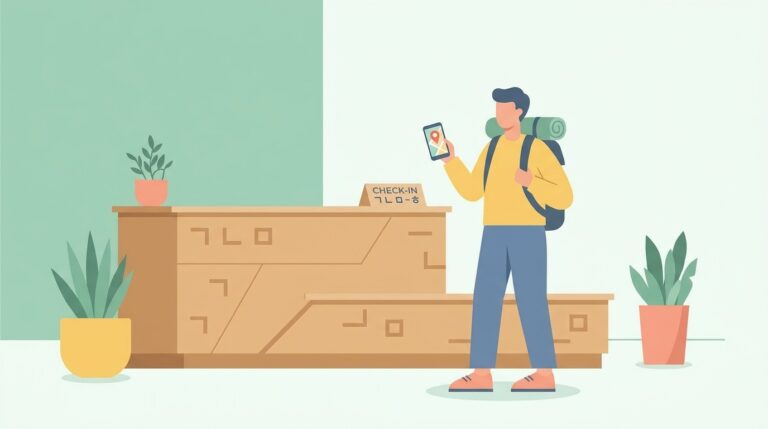
Master Hotel Korean: How to Ask for the Wi-Fi Password Smoothly
Phase 1: 공감 (Empathy & Connection)
안녕하세요! 매일한글 에디터입니다. (Hello! It’s your Daily Hangul editor.)
Picture this: You have just landed in Incheon after a grueling 14-hour flight. You survived the airport railroad, navigated the lively hills of Seoul with your heavy suitcases, and finally checked into your chic boutique hotel in Hongdae. Exhausted, you sink into the crisp white hotel bed, eager to text your family, upload that celebratory arrival story on Instagram, or wind down with an episode of your favorite K-Drama. But when you look down at your screen, you see that dreaded exclamation mark over the Wi-Fi icon: No Internet Connection.
You head down to the front desk, but suddenly your mind goes blank. How do I ask for the password without sounding like an aggressive drill sergeant or a stilted textbook robot? Over the past decade, dozens of intermediate learners have told me that asking for simple digital necessities often triggers the worst performance anxiety. Today, we are putting an end to that hotel desk sweat. By the end of this guide, you will request the Wi-Fi, troubleshoot bad signals, and chat with hotel staff with the natural charm of a Seoul insider!
Phase 2: 핵심 표현 3선 심층 분석 (3 Key Expressions)
1. 혹시 와이파이 비밀번호가 어떻게 돼요? (Hoksi waipai bimilbeonhoga eotteoke dwaeyo?)
- Pronunciation: [Hok-shi wa-i-pa-i bi-mil-beon-ho-ga eo-tteo-ke dwae-yo?] (Like saying: “Hoke-she” + “Wi-Fi” + “Bee-meal-burn-hoe-ga” + “Uh-tuh-kay dway-yo”)
- Meaning: Literal: “By any chance, how does the Wi-Fi password become?” vs. Actual Nuance: “Could you tell me what the Wi-Fi password is, by any chance?”
- K-Culture Moment: Just like when the lead character in a romance drama walks into a cozy Jeju pension and smoothly asks the host for connection details.
- Editor’s Insight: Using 어떻게 돼요? (how does it become?) instead of 뭐예요? (what is it?) instantly shifts your speech from rookie elementary to polite, polished intermediate.
- Situation Spectrum: Casual ⚠️ | Semi-formal ✅ | Formal ✅
- 🤔 Think About It: Why do Koreans prefer asking “how does it become?” rather than a blunt “what is it?” when asking for credentials or numbers?
2. 객실에서 와이파이가 잘 안 잡혀요. (Gaeksil-eseo waipaiga jal an japhyeoyo.)
- Pronunciation: [Gaek-shi-re-seo wa-i-pa-i-ga jal an ja-pyeo-yo] (Think: “Gek-she-reh-saw why-pie-gah jahl ahn jah-pyuh-yo”)
- Meaning: Literal: “In the guest room, Wi-Fi isn’t caught well.” vs. Actual Nuance: “The Wi-Fi signal is spotty / weak in my room.”
- K-Culture Moment: In modern slice-of-life dramas when a freelancer is trying to do a midnight remote presentation from a Hanok stay and the internet cuts out.
- Editor’s Insight: In Korean, internet and radio signals are “caught” (잡히다, japhida). Saying 잘 안 잡혀요 accurately places the blame on the invisible radio waves rather than accusing the hotel staff!
- Situation Spectrum: Casual ⚠️ | Semi-formal ✅ | Formal ✅
- 🤔 Think About It: How does phrasing technical issues with passive verbs like “not being caught” preserve relational harmony in East Asian service encounters?
3. 비밀번호 좀 종이에 적어 주실 수 있나요? (Bimilbeonho jom jong-ie jeogeo jusil su innayo?)
- Pronunciation: [Bi-mil-beon-ho jom jong-i-e jeo-geo ju-sil su in-na-yo?] (Sounds like: “Bee-meal-burn-hoe jom jong-ee-eh juh-guh joo-sheel soo een-nah-yo?”)
- Meaning: Literal: “Could you write the password on paper a little for me?” vs. Actual Nuance: “Could you please write down the password on a piece of paper?”
- K-Culture Moment: When you receive a long, chaotic alphanumeric password with underscores and symbols, and both you and the staff want to avoid a frustrating spelling guessing game.
- Editor’s Insight: The tiny word 좀 (jom – a little) is your emotional superpower. It softens any imperative request into a modest, humble favor.
- Situation Spectrum: Casual 🚫 | Semi-formal ✅ | Formal ✅
- 🤔 Think About It: Why does adding a microscopic buffer word like “좀” change the perceived warmth and consideration of the speaker?
Phase 3: 교과서 한국어 vs 진짜 한국어 (Textbook vs. Real-World)
Situation 1: Inquiring about the password at the front desk
- 📖 교과서 한국어: 와이파이 비밀번호는 무엇입니까? (Waipai bimilbeonhoneun mueosimnikka? – What is the Wi-Fi password?)
- 🗣️ 진짜 한국어: 혹시 와이파이 비번 알려주실 수 있으세요? (Hoksi waipai bibeon allyeojusil su isseuseyo? – Could you let me know the Wi-Fi password by any chance?)
- 💡 왜 다를까?: “무엇입니까” sounds stiff, like a written exam question. Real Koreans shorten 비밀번호 to 비번 (bibeon) and soften requests with 알려주실 수 있으세요?.
Situation 2: Asking where the login info is located
- 📖 교과서 한국어: 비밀번호가 어디에 쓰여 있습니까? (Bimilbeonhoga eodie sseuyeo itseumnikka? – Where is the password written?)
- 🗣️ 진짜 한국어: 비번 공유기 밑에 적혀 있나요? (Bibeon gong-yugi mite jeokhyeo innayo? – Is the password written under the router?)
- 💡 왜 다를까?: Native speakers name the exact hardware (공유기, gong-yugi / router) and use conversational set phrases like 적혀 있다 (written down) rather than archaic passive constructions.
Phase 4: K-Culture 딥다이브 & 비언어적 매너 (Deep Dive & Body Language)
4-1. 눈치(Nunchi) & Front Desk Etiquette
- The Two-Handed Handover: When handing over your key card jacket or phone to show the connection screen, always support your right forearm or wrist with your left hand, or hold the item with both hands. Handing something with a single limp hand can feel nonchalant or dismissive.
- The 15-Degree Polite Nod: As you step toward the reception counter, catch the staff’s eye, tilt your upper torso by about 15 degrees, and initiate with a friendly “저기요, 실례합니다” (Excuse me).
- Eye-level Screen Tilting: If the network fails, hold your phone at chest height angled toward the clerk, rather than shoving the screen close to their face.
4-2. Culture Code: The “Palli-Palli” Internet Standard
South Korea is globally renowned for hyper-fast gigabit internet. Expecting lightning speeds is ingrained into everyday lifestyle. In Korean hotels, functional high-speed Wi-Fi is considered a baseline human courtesy rather than a premium amenity. If your connection is faltering, staff will not find it petty if you speak up—they genuinely take pride in fast resolution!
Phase 5: 실전 롤플레이 시나리오 (Interactive Role-play)
- Setting: The sleek wooden reception desk of Boutique Hotel Sol in central Seoul.
- Characters:
- Alex (You): An intermediate traveler staying on the 7th floor.
- Minho: The sharp, courteous front desk manager wearing a tailored navy blazer.
- Alex: 저기요, 실례지만 체크인할 때 안내를 못 받아서요. (Jeogiyo, sillyejiman chekeuinhal ttae annaereul mot badaseoyo. – Excuse me, I didn’t get the information during check-in.) 🎭 [Tilts head gently, clasping both hands politely in front]
- Minho: 네, 고객님! 무엇을 도와드릴까요? (Ne, gogaeknim! Mueoseul dowadeurilkkayo? – Yes, valued guest! How can I assist you?) 🎭 [Smiles attentively, placing hands neatly on the desk]
- Alex: 혹시 객실 와이파이 비밀번호가 어떻게 돼요? (Hoksi gaeksil waipai bimilbeonhoga eotteoke dwaeyo? – Could you tell me what the room’s Wi-Fi password is, by any chance?) 🎭 [Shows smartphone with the disconnected network screen]
- Minho: 아, 방 카드 키 커버 안쪽에 적혀 있는데요, 혹시 확인해 보셨을까요? (A, bang kadeu ki keobeo anjjoge jeokhyeo inneundeyo, hoksi hwaginhae bosyeosseulkkayo? – Ah, it is written inside your room key card cover; have you had a chance to check there?) 🎭 [Points gently to a sample key card folder]
- Alex: 아, 거긴 미처 못 봤네요! 그런데 신호가 잘 안 잡혀서요. (A, geogin micheo mot bwanneyo! Geureonde sinhoga jal an japhyeoseoyo. – Ah, I didn’t see that! But the signal is not catching well in my room.) 🎭 [Chuckles sheepishly, tapping the Wi-Fi icon]
- Minho: 7층 복도 공유기를 방금 리셋했으니, 5G 신호로 다시 연결해 보시겠어요? (Chil-cheung bokdo gong-yugireul banggeum risethaesseuni, 5G sinhoro dasi yeongyeolhae bosigesseoyo? – We just reset the 7th-floor router; could you try reconnecting to the 5G signal?) 🎭 [Checks system status quickly on his monitor]
- Alex: 네, 지금 바로 해볼게요. 친절하게 알려주셔서 감사합니다! (Ne, jigeum baro haebolgeyo. Chinjeolhage allyeojusyeoseo gamsahamnida! – Yes, I will try it right now. Thank you for your kind help!) 🎭 [Nods appreciatively with a warm, relieved smile]
- Minho: 천만에요. 이용 중 불편한 점 있으시면 언제든 0번으로 전화 주세요! (Cheonman-eyo. Iyong jung bulpyeonhan jeom isseusimyeon eonjedeun yeong-beoneuro jeonhwa juseyo! – You are very welcome. If anything else is uncomfortable, dial 0 anytime!) 🎭 [Offers a polite 30-degree bow]
🔀 인터랙티브 분기점 (Branching Point)
Imagine Minho rattles off a complex 12-character alphanumeric code verbally at lightning speed. How do you respond?
- Option A: “죄송하지만 종이에 좀 적어 주실 수 있나요?” (Joesonghajiman jong-ie jom jeogeo jusil su innayo?)
- Feedback: [Best Choice! 🎉] Flawless polite B1 phrasing! It respects your own listening limits while staying courteous.
- Option B: “뭐라고요? 크게 다시 말해요.” (Mworagoyo? Keuge dasi malhaeyo.)
- Feedback: [Bad Choice! ❌] Dropping honorifics sounds aggressive and demanding. Staff will feel shocked.
- Option C: “제가 직접 카운터 컴퓨터 볼게요.” (Jega jikjeop kaunteo keompyuteo bolgeyo.)
- Feedback: [Risk Choice! ⚠️] Leaning over a service counter breaches security boundaries and creates awkward tension.
Phase 6: 10초 감정 섀도잉 드릴 (Shadowing Drill)
Read these aloud, pausing at the slashes (/) and matching the designated emotional delivery:
[😊 상냥하고 조심스럽게 / Sweetly & cautiously]
“저기요, / 혹시 와이파이 비번 / 어떻게 돼요?”
(Jeogiyo, / hoksi waipai bibeon / eotteoke dwaeyo?)-
[🥺 살짝 난감하고 곤란한 어조로 / Slightly troubled & helpless]
“방에서 / 신호가 / 계속 끊겨요.”
(Bang-eseo / sinhoga / gyesok kkeunkyeoyo. – The signal keeps dropping in my room.) -
[✨ 밝고 후련한 목소리로 / Bright & relieved]
“알려주신 대로 하니까 / 바로 연결됐어요!”
(Allyeojusin daero hanikka / baro yeongyeoldwaesseoyo! – Once I did as you said, it connected right away!)
Phase 7: K-Culture 미니 사전 (4 Essential Keywords)
- 비번 (Bibeon) | Short for 비밀번호 (Password) | The undisputed king of everyday Korean abbreviations. Used by university students, office workers, and shop owners alike.
- 공유기 (Gong-yugi) | Wi-Fi Router / Access Point | Essential when staying at Hanok guesthouses, Airbnbs, or pensions where you might need to locate the hardware box.
- 끊기다 (Kkeunkida) | To cut off / disconnect | Used when video streams stutter, phone calls fail, or internet drops unexpectedly (인터넷이 자꾸 끊겨요).
- 안 터지다 (An teojida) | Signal not reaching / no data throughput | Slang-tinted idiomatic expression meaning the internet or cellular service is completely unresponsive (여기 와이파이 안 터져요).
Phase 8: 여행자를 위한 생존 키트 (Traveler Survival Kit)
Top 3 Survival Phrases
- 와이파이 이름이 뭐예요? (Waipai ireumi mwoyeyo?) – What is the network name (SSID)?
- Pro Tip: Useful when 20 different hotel networks populate your list.
- 비밀번호 없는 와이파이인가요? (Bimilbeonho eomneun waipai-ingayo?) – Is this an open Wi-Fi without a password?
- Pro Tip: Helpful in hotel lobbies or dining lounges.
- 인터넷 연결이 안 돼요. (Inteonet yeong-gyeori an dwaeyo.) – The internet won’t connect.
- Pro Tip: The most direct distress signal when error screens appear.
Editor’s Travel Note
- Relying on foreign search engines can cause navigation headaches in Korea. Make sure to download the 네이버 지도 앱 다운로드 (Naver Map app) for accurate walking navigation, real-time subway arrivals, and hotel pinpointing.
- Keep a portable battery pack charged—searching for spotty hotel Wi-Fi networks will drain your phone battery faster than usual.
Phase 9: “한 발 더 깊이” (Cultural Reflection)
In Korean linguistic culture, direct questions can easily feel like a challenge. When you walk up to a desk clerk and demand “와이파이 비밀번호 뭐예요?”, the grammatical lack of softening creates emotional friction. By cushioning your speech with words like 혹시 (by any chance) and opting for the indirect verb 어떻게 돼요? (how does it become?), you honor the other person’s peace. Politeness in Korea is not about overly complicated grammar; it is about leaving comfortable breathing room between speaker and listener.
💬 Your Turn: How do you naturally ask for Wi-Fi in your mother tongue? Do you ask straight out, or do you use softening phrases like Koreans do? Share your language’s quirks in the comments below!
Phase 10: FAQ & 흔한 실수 (FAQ Schema)
Q: Can I just speak English to ask for the Wi-Fi at Korean hotels?
A: Large luxury hotels in Myeongdong, Gangnam, and Haeundae have multilingual concierges. However, in boutique pensions, Hanok stays, or budget business hotels outside major tourist strips, speaking polite B1 Korean will earn you much faster, warmer service!
Q: Is it rude to say ‘비번’ (bibeon) instead of ‘비밀번호’ (bimilbeonho)?
A: Not at all! ‘비번’ is widely accepted in conversational Korean. However, pairing it with polite endings like “알려주실 수 있으세요?” ensures you stay completely respectful.
Q: Where do Korean hotels usually hide the Wi-Fi information?
A: Always check three places before heading to the lobby: the inner flap of your paper key card jacket, a small acrylic desk stand near the kettle, or a sticker directly stuck to the Wi-Fi router under the television.
🚨 흔한 실수 (Common Mistakes) 경고판
- Mistake 1: Asking “와이파이 뭐예요?” (Waipai mwoyeyo?). This literally means “What is Wi-Fi?” like a philosophical question.
- Correct Action: Specify “와이파이 비밀번호가 어떻게 돼요?”.
- Mistake 2: Dropping into casual talk: “비번 알려줘” (Bibeon allyeojwo).
- Correct Action: Always preserve polite endings with “~주세요” or “~주실 수 있나요?”.
- Mistake 3: Waving your phone frantically at the staff from across the room.
- Correct Action: Step up to the counter, give a slight bow, and show the device with both hands.
Phase 11: 액션 미션 & 참여 유도 (Action Mission)
- 🥉 Bronze Mission: Stand in front of your mirror and practice saying “혹시 와이파이 비밀번호가 어떻게 돼요?” three times with a gentle smile.
- 🥈 Silver Mission: Leave a comment below introducing yourself and asking for our imaginary café’s Wi-Fi using the keyword 비번!
- 🥇 Gold Mission: Next time you visit a Korean restaurant, hotel, or K-town coffee shop, ask the staff for the password completely in Korean without switching to English!
- 🎮 K-Culture Mission: Watch an episode of a modern travel reality show like Earth Arcade or Single’s Inferno, and spot when participants ask for directions or passwords.
Phase 12: 인터랙티브 퀴즈 챌린지 (Interactive Quiz)
1. [Situation Check] You are in your hotel room and the connection keeps cutting in and out during a video call. What is the most natural sentence to report this to the front desk?
* A) 와이파이가 죽었어요. (Waipaiga jugeosseoyo.)
* B) 방에서 와이파이가 계속 끊겨요. (Bang-eseo waipaiga gyesok kkeunkyeoyo.)
* C) 와이파이를 빨리 만드세요. (Waipaireul ppalli mandeuseyo.)
2. [Fill in the Blank] “실례지만 종이에 비밀번호 좀 ______ 주실 수 있나요?”
* A) 먹어 (meogeo)
* B) 적어 (jeogeo)
* C) 벗어 (beoseo)
3. [True or False] In Korean, asking “와이파이 비밀번호가 어떻게 돼요?” is considered softer and more natural than asking “와이파이 비밀번호는 무엇입니까?”.
* (True / False)
👉 Click to reveal answers & detailed explanations!
- Answer: B | Explaining that the signal keeps disconnecting (계속 끊겨요) is the standard, natural Korean expression. Saying it “died” (죽었어요) or commanding them to “make it fast” (빨리 만드세요) is awkward or rude.
- Answer: B (적어) | 적다 (jeokda) means to write down or note down. 적어 주실 수 있나요? means “Could you please write it down for me?”.
- Answer: True | 어떻게 돼요? is the quintessential polite intermediate conversational bridge used across Korea every single day!







