

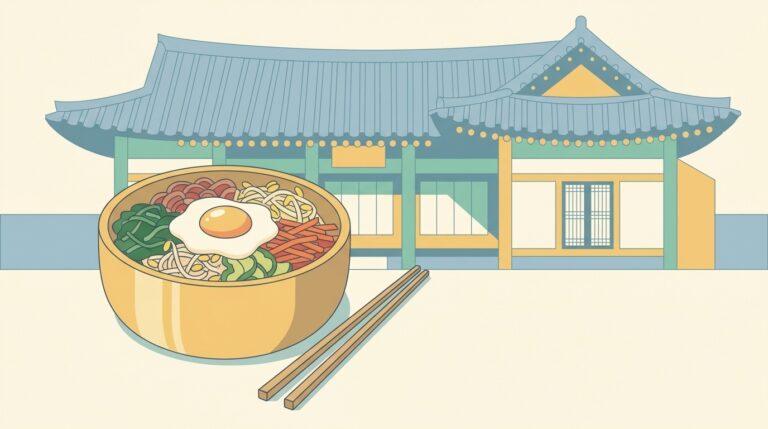
Conquering Korea’s Regional Food Scene: From Jeonju Bibimbap to Coastal Delicacies
Phase 1: Empathy & Storytelling Opening
안녕하세요! 매일한글 에디터입니다. (Hello! This is your Daily Hangul editor.) Have you ever found yourself sitting in a cozy, wooden-beamed restaurant in Jeonju Hanok Village, surrounded by twenty little side dishes, completely overwhelmed by the menu? In popular K-dramas, the lead characters stroll into a hometown diner, exchange knowing glances with the owner, and effortlessly receive a steaming brass bowl of authentic bibimbap mixed to perfection. But in reality, when the owner asks you rapid-fire questions about your toppings or how spicy you want it, your textbook phrases vanish into thin air. Many intermediate learners tell us: “I know how to order food in Seoul, but the moment I visit regional hotspots, the local vibe and specific food vocabulary make me freeze up.” This guide is crafted directly from field notes and learner feedback to help you navigate local eateries with natural confidence, savoring not just the food, but the warm cultural dialogue behind it.
Phase 2: Core Expressions Deep Dive
1. 여기는 뭐가 제일 잘 나가요? (Yeogineun mwoga jeil jal nagayo?)
- Pronunciation: Yeo-gi-neun mwo-ga je-il jal na-ga-yo? (Think of “jal” sounding like jolly without the ‘-ly’, and “nagayo” rolling smoothly like na-gah-yo).
- Meaning: Literal: “What goes out the best here?” | Actual Nuance: “What is your top-selling / most popular specialty here?”
- K-Culture Moment: Seen in food vlogs and variety shows like Baek Jong-won’s Alley Restaurant, where host Baek asks local eatery owners what keeps the lights on.
- Editor’s Insight: Asking for a “recommendation” (추천, chucheon) can sound formal. Asking what “goes out well” (잘 나가요, jal nagayo) speaks the business-savvy, casual language of everyday restaurant patrons.
- Situation Spectrum: Casual: ✅ | Semi-formal: ✅ | Formal: ⚠️
- 🤔 Think About It: Why does Korean focus on the movement of food “leaving the counter” (잘 나가다) rather than asking what the chef “personally loves”? What does this say about crowd consensus in Korean dining?
2. 비빔밥은 젓가락으로 비벼야 밥알이 안 으깨져요 (Bibimbabeun jeotgarageuro bibyeoya babari an eukkaejyeoyo)
- Pronunciation: Bi-bim-ba-beun jeot-ga-ra-geu-ro bi-byeo-ya ba-ba-ri an eu-kkae-jyeo-yo. (Pronounce “eukkae” with an energetic, doubled ‘k’ sound like uh-KAY).
- Meaning: Literal: “You must mix bibimbap with chopsticks so the rice grains don’t get crushed.” | Actual Nuance: The ultimate insider tip for enjoying authentic texture.
- K-Culture Moment: A veteran food master in a Jeonju culinary documentary gently scolding a city guest for using a spoon like a cement mixer.
- Editor’s Insight: Using
-(으)fiber/야 제맛이다or-야 밥알이 안 으깨져요reveals your intermediate understanding of culinary texture (sikgam, 식감).- Situation Spectrum: Casual: ✅ | Semi-formal: ✅ | Formal: ⚠️
- 🤔 Think About It: In many Western cuisines, spoons or forks mash ingredients willingly. Why are intact rice grains considered an art form in Korean gastronomy?
3. 이 반찬 리필 좀 더 부탁드려도 될까요? (I banchan ripil jom deo butakdeuryeodo doelkkayo?)
- Pronunciation: I ban-chan ri-pil jom deo bu-tak-deu-ryeo-do doel-kka-yo? (“Doel” sounds like dwell without the ‘w’).
- Meaning: Literal: “May I ask for a refill of this side dish a bit more?” | Actual Nuance: A very polite, natural way to request seconds on exceptional regional side dishes.
- K-Culture Moment: Travelers visiting South Jeolla province marveling at 15 distinct herbal banchan and timidly asking the auntie (Imo) for more marinated wild greens.
- Editor’s Insight: Combining the loanword ripil (refill) with humble phrasing (
부탁드려도 될까요) prevents you from sounding entitled while celebrating the generosity of Korean free side dish refills.- Situation Spectrum: Casual: ⚠️ | Semi-formal: ✅ | Formal: ✅
- 🤔 Think About It: How does the expectation of unlimited free side dishes shape customer-host relationships differently compared to tipping cultures?
Phase 3: Textbook Korean vs. Real Korean
Situation 1: Inquiring About the Signature Regional Dish
- 📖 Textbook Korean: “이 식당의 대표 메뉴를 추천해 주시겠습니까?” (I sikdang-ui daepyo menyureul chucheonhae jusigesseumnikka?)
- 🗣️ Real Korean: “사장님, 여기서 보통 뭐 많이 드세요?” (Sajangnim, yeogiseo botong mwo mani deuseyo? – “Boss, what do people usually get here?”)
- 💡 Why the difference? The textbook phrase sounds like an official inspection interview. Asking what “people usually eat” connects with the communal social proof Koreans rely on.
Situation 2: Asking to Tone Down the Heat for Local Specialties
- 📖 Textbook Korean: “이 음식은 덜 맵게 조리하는 것이 가능합니까?” (I eumsigeun deol maepge jorihaneun geosi ganeunghamnikka?)
- 🗣️ Real Korean: “이거 신라면보다 매워요? 조금만 덜 맵게 해주실 수 있어요?” (Igeo Sinramyeonboda maewoyo? Jogeumman deol maepge haejusil su isseoyo? – “Is this spicier than Shin Ramyun? Could you make it a bit less spicy?”)
- 💡 Why the difference? Koreans use “Shin Ramyun” as the national universal standard metric for spiciness! It gives an exact culinary benchmark that cooks understand immediately.
Phase 4: K-Culture Deep Dive & Non-Verbal Manners
4-1. Nunchi (눈치) & Table Gestures
When dining at traditional restaurants (matjip), watch the rhythm of the hall. Notice the call bell (ding-dong) mounted on the edge of the wooden table. If there isn’t one, make polite eye contact and raise your hand gently at chest level, calling out “사장님~” (Sajangnim~) with a melodic rising intonation. When the banchan arrives, holding the rim of the dish with both hands as it touches the table shows genuine gratitude toward the elder servers.
4-2. Cultural Code: The Art of Son-mat (손맛) & Regional Pride
Regional Korean cuisine is deeply tied to Hyangto Eumsik (향토 음식 – native regional food). Jeonju, designated a UNESCO City of Gastronomy, prides itself on son-mat—the instinctive “taste of the cook’s hand.” Unlike standardized franchise recipes, regional dishes depend on aged fermented pastes (jang, 장) and local water quality. Complimenting the broth depth with “국물이 깊어요” (Gungmuri gipeoyo – “The broth is deep”) honors generations of regional fermentation traditions.
Phase 5: Interactive Role-Play Scenario
Setting: A busy, 50-year-old traditional dining house in Jeonju filled with the aroma of sesame oil and sizzling stone pots. You are seated at a low wooden table facing the friendly proprietress, Imo (이모).
- Imo: 어서 와요! 몇 분이세요? 저기 안쪽에 편한 데 앉아요. (Eoseo wayo! Myeot bun-iseyo? Jeogi anjjoge pyeonhan de anjayo.)
🎭 Gestures toward a warm corner table with a wide smile.
“Welcome! How many are you? Have a seat over there where it’s cozy.” - You: 감사합니다, 사장님! 두 명이에요. (Gamsahamnida, sajangnim! Du myeong-ieyo.)
🎭 Folding your coat neatly and sliding into the booth.
“Thank you! Table for two.” - Imo: 그래요, 날 추운데 따뜻한 보리차 먼저 마셔요. 뭐로 줄까? (Geuraeyo, nal chuunde ttatteuthan boricha meonje masyeoyo. Mwo-ro julkka?)
🎭 Setting down a steaming kettle of barley tea.
“Sure thing. It’s chilly out, drink warm barley tea first. What can I get for you?” - You: 사장님, 여기는 뭐가 제일 잘 나가요? (Sajangnim, yeogineun mwoga jeil jal nagayo?)
🎭 Glancing over the wooden wall plaque menu.
“Boss, what is your most popular dish here?” - Imo: 아이구, 우리 집은 육회비빔밥이 제일 알아주지! 돌솥도 있어. (Aigu, uri jibeun yukhoe-bibimbabi jeil arajuji! Dolsotdo isseo.)
🎭 Pointing proudly to the seasoned raw beef bibimbap.
“Oh, our beef tartare bibimbap is the house legend! We have hot stone pots too.” - You: 그럼 육회비빔밥 하나랑 돌솥비빔밥 하나 주세요! (Geureom yukhoe-bibimbap hanarang dolsot-bibimbap hana juseyo!)
🎭 Nodding enthusiastically.
“Then one beef tartare bibimbap and one hot stone bibimbap, please!” - Imo: (음식을 내려놓으며) 젓가락으로 살살 비벼 먹어야 맛나요! (Eumsigeul naeryeonoeumyeo: Jeotgarageuro salsal bibyeo meogeoya mannayo!)
🎭 Placing colorful brass bowls surrounded by twelve banchan.
“(Setting dishes down) Mix gently with chopsticks to make it delicious!” - You: 네! 밥알 안 으깨지게 젓가락으로 비벼볼게요. 잘 먹겠습니다! (Ne! Babal an eukjaejige jeotgarageuro bibyeobolgeyo. Jal meokgetseumnida!)
🎭 Picking up chopsticks with both hands in anticipation.
“Yes! I’ll mix with chopsticks so the grains don’t mash. Thank you for the meal!”
🔀 Decision Point: The Kimchi Plate is Completely Empty!
- Option A: Silently walk up to the kitchen counter holding the empty dish and hand it directly to the cook.
- Option B: Make gentle eye contact, raise your hand, and say: “이모님, 이 묵은지 너무 맛있는데 조금만 더 주실 수 있어요?” (Imonim, i mugeunji neomu masinneunde jogeumman deo jusil su isseoyo?)
- Option C: Shout loudly from your seat: “저기요! 김치 빨리 리필해 주세요!” (Jeogiyo! Kimchi ppalli ripil-hae juseyo!)
Feedback:
* Option A (Risk): While not offensive, walking into tight kitchen spaces can be dangerous with hot soups carrying past. Always ask from your seat unless there is a clearly marked “셀프 코너” (Self-service corner).
* Option B (Best!): Perfect! Calling her Imonim, complimenting the aged kimchi (mugeunji), and politely asking for a little more will likely get you a double portion and a beaming smile.
* Option C (Bad): Using ppalli (hurry) sounds demanding and disrespectful, breaking the friendly dining harmony.
Phase 6: 10-Second Emotion Shadowing Drill
[😊 Delighted and curious]
여기는 / 뭐가 제일 / 잘 나가요?
(Yeogineun / mwoga jeil / jal nagayo?)-
[🤓 Confident foodie insider]
비빔밥은 / 숟가락 말고 / 젓가락으로 비벼야 / 제맛이에요!
(Bibimbabeun / sutgarak malgo / jeotgarageuro bibyeoya / jemasieyo!) -
[🥺 Warm and politely requesting]
사장님, / 이 나물 반찬이 / 너무 맛있어서 그런데 / 조금만 더 / 부탁드려도 될까요?
(Sajangnim, / i namul banchani / neomu masisseoseo geureonde / jogeumman deo / butakdeuryeodo doelkkayo?)
Phase 7: K-Culture Mini Dictionary
- 향토 음식 (Hyangto Eumsik) | Traditional regional specialty.
Context: Used in travel blogs and cultural guides to describe foods unique to geographical terroirs, like Chuncheon Dakgalbi or Jeonju Bibimbap. - 손맛 (Son-mat) | Cook’s culinary touch / instinctive seasoning prowess.
Context: A high compliment reserved for seasoned home-style cooks and traditional restaurant matrons. - 제맛 (Je-mat) | The true, authentic, quintessential flavor.
Context: Often paired with-야(only when…): e.g., “뚝배기에 끓여야 제맛이지” (It has the true flavor only when boiled in an earthenware pot). - 셀프 바 (Sel-peu Ba) / 셀프 코너 (Sel-peu Ko-neo) | Self-service side dish station.
Context: Signboards reading “추가 반찬은 셀프입니다” indicate you should take your own bowl to refill sides.
Phase 8: Traveler’s Survival Kit
Top 3 Survival Expressions
- 1. 혹시 땅콩/해산물 들어가나요? (Hoksi ttangkong/haesanmul deureoganayo?)
Pro Tip: Critical for allergy safety. Means: “Does this perchance contain peanuts / seafood?” - 2. 1인분도 주문 돼요? (Irinbundo jumun dwaeyo?)
Pro Tip: Many provincial specialties (stews, braised meats) require minimum 2 orders. This checks if solo dining is allowed. - 3. 앞치마 하나만 주실 수 있나요? (Apchima hanaman jusil su innayo?)
Pro Tip: Essential when eating red-sauced bibimbap or sizzling hot stone bowls.
Editor’s Travel Note
- When hunting for uncommercialized regional gems outside Seoul, check the Naver Map Local Bookmark Lists instead of Western search engines. Look for high ratings with Korean reviews mentioning “현지인 맛집” (local resident favorite). Most intercity express buses arrive at regional terminals with dedicated taxi lines; simply show your driver the destination in Korean characters on your phone.
Phase 9: One Step Deeper (Reflection)
In Korean culinary philosophy, a dining table is never just a transaction of calories; it is an arena of communal Jeong (정, emotional affection). When a regional restaurant owner loads your table with generous banchan and tells you how to hold your chopsticks, they are not policing your manners—they are extending hospitality as if welcoming family into their ancestral home. Notice how Koreans refer to the owner as Imo (maternal aunt) or Samchon (uncle). Dining in provincial Korea invites you to step out of the sterile customer-service bubble and into a living web of shared warmth.
💬 Your Turn: What regional food from your home country has strict “rules” on how to eat it properly? Share your story in the comments below!
Phase 10: FAQ & Avoiding Misunderstandings
Q: Can I ask for more beef or seafood toppings in my bibimbap for free like side dishes?
A: No. The unspoken rule is that vegetables and banchan are refillable, but primary proteins (raw beef yukhoe, ribs, grilled fish) require ordering an extra portion (gogi chuga, 고기 추가).
Q: Is it rude if I mix my bibimbap with a spoon anyway?
A: Not rude at all! Nobody will stop you. However, mixing with chopsticks prevents the warm rice from turning into a sticky paste, keeping the sesame oil-glazed vegetables distinct and crisp.
Q: What should I do if a restaurant says “2인분 이상” (2 orders minimum)?
A: If dining alone, you can offer to pay for two portions (“혼자인데 2인분 시켜도 될까요?”), which many busy regional BBQ or stew restaurants happily accommodate.
🚨 Common Mistakes Alert!
- Mistake: Shouting “저기요!” (Jeogiyo!) at top volume in small, quaint regional eateries.
Correct Action: Make soft eye contact first, or use a gentle “사장님~” with a respectful tone. - Mistake: Leaving metal chopsticks stuck vertically into the rice bowl.
Correct Action: Rest chopsticks on the paper wrapper or table holder; vertical sticks resemble ancestral memorial rites (Jesa). - Mistake: Assuming banchan is automatically self-service everywhere.
Correct Action: Look for a “추가 반찬 셀프” sign. If none exists, ask the staff politely.
Phase 11: Action Missions
- 🥉 Bronze Level: Practice saying “여기는 뭐가 제일 잘 나가요?” three times out loud, matching the rising intonation pattern.
- 🥈 Silver Level: Next time you eat bibimbap at home or at a Korean restaurant, use chopsticks exclusively to blend the ingredients, and post a photo tagging your mastery of intact rice grains!
- 🥇 Gold Level: Visit an authentic Korean restaurant, ask the server for their top recommendation in Korean, and order it without switching to English!
- 🎮 K-Culture Mission: Watch an episode of a Korean food variety show (such as Delicious Guys or Street Food Fighter) and count how many times the hosts describe the dish using the word 제맛 (jemat) or 손맛 (son-mat)!
Phase 12: Interactive Quiz Challenge
Q1. Situational Judgment: You enter a historic restaurant in Jeonju and want to know which dish made the restaurant famous. Which sentence sounds most natural?
* A) 사장님, 메뉴판에 있는 거 다 설명해 주세요.
* B) 사장님, 여기는 뭐가 제일 잘 나가요?
* C) 사장님, 제일 비싼 음식이 뭐예요?
Q2. Fill in the Blank: “비빔밥은 숟가락보다 젓가락으로 비벼야 밥알이 안 _________.” (Hint: not get crushed)
Q3. Cultural True/False: In Korean traditional restaurants, main meat toppings like yukhoe (beef tartare) can be refilled for free just like standard vegetable side dishes.
👉 Click to reveal answers & explanations!
- A1: B) 사장님, 여기는 뭐가 제일 잘 나가요? (Asking what sells best captures natural dining etiquette without sounding pushy).
- A2: 으깨져요 (eukkaejyeoyo) (으깨지다 means to be mashed or crushed).
- A3: False. Standard vegetable and kimchi banchan are free to refill, but premium proteins (raw beef, grilled fish, bulgogi) require paid additions (chuga).







