

Phase 1: 공감 (Story-Driven Opening)
안녕하세요! I’m your Daily Hangul editor and cultural navigator.
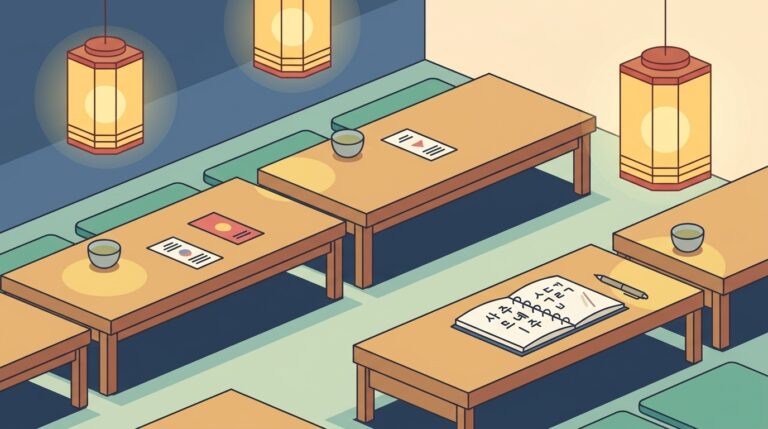
Picture this: It’s a brisk January evening in Seoul. Crisp winter air bites your cheeks as neon signs flicker across the lively streets of Hongdae. You see a cozy tent or a warm rooftop cafe glowing with a sign reading 사주·타로 (Saju & Tarot). Inside, people are chatting intently over steaming cups of yuzu tea while an elder fortune master leafs through ancient-looking charts. Your Korean friends nudge you: “Hey, it’s New Year! Let’s check our Tojeongbigyeol (토정비결)!”
Suddenly, your heart starts pounding. You know the textbook word for fortune—운세 (unse)—but when the fortune teller asks for your exact birth hour and starts reeling off complex terms about elemental clash and luck cycles, you freeze. You nod awkwardly, wondering: Did he say I’m going to make a fortune, or that I need to avoid traveling this summer?
Don’t worry—you’re definitely not alone. Every January, thousands of intermediate Korean learners hit this exact wall. Korean fortune telling isn’t about blind occultism; it is a warm social tradition, a blend of seasonal introspection and emotional counseling. In this masterclass guide, built on direct classroom feedback from over a decade of tutoring intermediate learners, you’ll unlock the authentic, natural expressions required to navigate a Korean New Year fortune session with flair and absolute confidence.
Phase 2: 핵심 표현 3선 심층 분석 (Top 3 Core Expressions)
Here are the three most natural, practical expressions you will hear and use when discussing New Year fortunes at a B2 level.
1. 올해 대박 날 운이래요 (Olhae daebak nal un-i-rae-yo)
- Pronunciation: Ol-hae dae-bak nal oon-ee-rae-yo (Think of dae-bak rhyming with a short “pack”, and un sounding like “oon” in “moon”).
- Meaning: Literal: “They say it is fortune that will strike big hit this year.” / Natural: “They said I’m set to hit the jackpot this year!”
- K-Culture Moment: You’ll hear this in slice-of-life K-dramas (like Reply 1988 or Work Later, Drink Now) right after a character bursts out of a tent, waving their fortune sheet triumphantly to friends over pork belly and soju.
- Editor’s Insight: The ending -대요 (-dae-yo) is an indirect quotation marker (short for -다고 해요). When reporting what a fortune teller, doctor, or third party said, using -대요 shows that you’re not arrogantly bragging about your own greatness—you’re simply passing along the master’s evaluation. It keeps the tone playful and humble.
- Situation Spectrum:
- Casual: ✅ (올해 대박 날 운이래!)
- Semi-formal: ✅ (올해 대박 날 운이래요.)
- Formal: ⚠️ (Used more in casual/friendly corporate breakroom chatter than boardroom presentations).
- 🤔 Think About It: In Western horoscopes, people often say “Jupiter is in my sign.” How does the Korean tendency to use indirect quotation (-대요) reflect conversational modesty?
2. 삼재(三災)를 조심해야 한대요 (Samjaereul josimhaeya handaeyo)
- Pronunciation: Sam-jae-reul jo-shim-hae-ya han-dae-yo (Pronounce Sam like “sum” in math, and jae like “J” in English).
- Meaning: Literal: “They say I must be careful of the Three Disasters.” / Natural: “They told me to watch out because I’m in my three-year bad luck cycle.”
- K-Culture Moment: A colleague forgets their umbrella, drops their coffee, and sighs: “아, 나 올해 삼재인가?” (Ah, am I in my Samjae this year?).
- Editor’s Insight: Samjae refers to a traditional 9-year cycle where 3 consecutive years are believed to bring minor hiccups or hurdles. Koreans don’t panic over this; instead, it acts as a cultural reminder to stay grounded, drive carefully, and avoid reckless investments. Mentioning this expression instantly proves you understand Korean cultural context!
- Situation Spectrum:
- Casual: ✅
- Semi-formal: ✅
- Formal: ⚠️ (Acceptable when sharing lighthearted personal updates with colleagues).
- 🤔 Think About It: Does your native culture have an equivalent multi-year cycle of caution, or do you view luck on a day-to-day basis?
3. 액땜했다고 생각해요 (Aekttaemhaetdago saenggakhaeyo)
- Pronunciation: Aek-taem-haet-da-go saeng-gak-hae-yo (Notice the tensed sound in 액땜 [aek-ttaem], like “act-dam”).
- Meaning: Literal: “I think of it as having blocked off evil spirits/misfortune.” / Natural: “Look at it as dodging a bigger bullet!”
- K-Culture Moment: When a character in a drama cracks their smartphone screen on New Year’s Day, their best friend gently comforts them: “더 큰일 날 거 액땜한 거야!” (You just warded off something worse!).
- Editor’s Insight: Aek (액) means misfortune, and ttaem (땜) comes from ttauda (to patch or solder). The cultural psychology here is deeply comforting: if something annoying happens to you early in the year, you believe you have “paid the toll” of misfortune upfront, leaving only good fortune for the rest of the year.
- Situation Spectrum:
- Casual: ✅
- Semi-formal: ✅
- Formal: 🚫 (Keep for personal relationships and empathetic support).
- 🤔 Think About It: How does reframing bad events into an emotional “buffer payment” help maintain mental resilience?
Phase 3: 교과서 한국어 vs 진짜 한국어 (Textbook vs. Real Korean)
Situation 1: Suggesting a fortune check with friends in January
- 📖 교과서 한국어: 신년 운세를 확인하러 사주 카페에 방문합시다. (Sinnyeon unse-reul hwaginhareo saju kape-e bangmunhapsida. – “Let us visit a Saju cafe to verify our New Year fortune.”)
- 🗣️ 진짜 한국어: 새해도 됐는데 재미로 신년 운세나 토정비결 보러 갈래? (Saehae-do dwaenneunde jaemiro sinnyeon unsena tojeongbigyeol boreo gallae? – “Now that it’s the New Year, wanna go check our fortune or Tojeongbigyeol just for fun?”)
- 💡 왜 다를까?: Native speakers rarely use formal verbs like 방문하다 (to visit) or 확인하다 (to verify) in leisure contexts. Adding 재미로 (just for fun) softens the invitation, showing you don’t take it too superstitiously.
Situation 2: When the fortune teller gives a slightly disappointing forecast
- 📖 교과서 한국어: 나쁜 운명이 나타나서 실망스럽습니다. (Nappeun unmyeong-i natanaseo silmangseureopseumnida. – “I am disappointed that a bad fate has appeared.”)
- 🗣️ 진짜 한국어: 올해는 무리하지 말고 조심조심 넘어가라는 뜻인가 봐요. (Olhaeneun murihaji malgo josimjosim neomeogaraneun tteus-inga bwayo. – “I guess it just means I should play it safe and take it easy this year.”)
- 💡 왜 다를까?: B2 speakers demonstrate nuance by reinterpreting negative fortune as cautionary advice using patterns like **-라는 뜻인가 봐요 (I suppose it means…)* rather than speaking in stark, dramatic terms.
Phase 4: K-Culture 딥다이브 & 비언어적 매너 (Deep Dive & Manners)
4-1. 눈치 (Nunchi) & Non-Verbal Manners in Fortune Cafes
- Pre-record your birth data: Prepare your birth year, month, day, and exact time (si / 시) beforehand on your smartphone notepad. If you know whether you were born under the solar calendar (양력, yangnyeok) or lunar calendar (음력, eumnyeok), tell them immediately. Fortune masters appreciate this courtesy!
- Handing over your details: When writing down your name or handing your phone over, use two hands (두 손) as a sign of mutual respect.
- Listen with thoughtful nodding: When the master explains your five elements (오행 – Wood, Fire, Earth, Metal, Water), nod slowly and say “아, 그렇군요” (Ah, I see). Avoid interrupting abruptly or debating their calculations—treat it as an interpretive storytelling session.
4-2. Cultural Code: Why Saju is Modern Therapy in Korea
In contemporary Korea, especially among Gen Z and millennials in neighborhoods like Hongdae, Seongsu, and Gangnam, consulting Tojeongbigyeol (토정비결) or Saju (사주) is rarely about blind religious faith. Instead, it functions as accessible, low-pressure counseling. In a competitive society, taking an hour to sit down with someone who analyzes your innate strengths, validates your past struggles, and reminds you to rest when times are tough serves as profound emotional relief.
Phase 5: 실전 롤플레이 시나리오 (Real-Life Roleplay Scenario)
Setting: A warm, traditional-modern Saju tea house in Insadong. Incense is faintly burning; soft gayageum music plays in the background.
Characters:
* 도사님 (Fortune Master Dosa-nim): Sharp-eyed, gentle, experienced interpreter.
* 민우 (Minwoo): B2-level international resident curious about his upcoming year.
도사님: 어서 오세요. 생년월일이랑 태어난 시간을 양력으로 알려주세요.
(Eoseo oseyo. Saengnyeonworirirang tae-eonan siganeul yangnyeogeuro allyeojuseyo.)
“Welcome. Please give me your date of birth and birth time according to the solar calendar.”
🎭 Looks over his glasses while preparing the brush and chart.
민우: 네, 1996년 5월 14일 오전 8시 30분이에요. 양력이고요.
(Ne, cheongu-baek-gusip-yungnyeon o-wol sipsa-il ojeon yeodeol-si samsip-bun-ieyo. Yangnyeog-igoyo.)
“Yes, it’s May 14, 1996 at 8:30 AM. Solar calendar.”
🎭 Hands over his phone screen politely with both hands.
도사님: 음… 사주에 불(火) 기운이 많고 쇠(金)가 조금 부족하네.
(Eum… sajue bul giuni manko soega jogeum bujokane.)
“Hmm… you have a lot of Fire energy in your chart, but you’re a bit lacking in Metal.”
🎭 Calculates strokes swiftly on traditional paper.
민우: 아, 그래요? 불이 많으면 성격이 급한 편인가요?
(A, geuraeyo? Buri maneumyeon seonggyeogi geupan pyeon-ingayo?)
“Oh, really? If I have a lot of Fire, does that mean I tend to be impatient?”
🎭 Leans forward with genuine curiosity.
도사님: 맞아요. 열정은 넘치는데 쉽게 지칠 수 있어. 그래도 올해 토정비결을 보면 가을부터 재물운이 활짝 열려요!
(Majayo. Yeoljeongeun neomchineunde swipge jichil su isseo. Geuraedo olhae tojeongbigyeoreul bomyeon gaeulbuteo jaemul-uni hwaljjak yeollyeoyo!)
“Spot on. You overflow with passion, but you can burn out easily. Still, looking at your Tojeongbigyeol this year, your financial luck opens wide starting this autumn!”
🎭 Smiles reassuringly and taps the table.
민우: 정말요? 하반기에는 이직이나 투자운도 괜찮을까요?
(Jeongmalyo? Habanggieneun ijigina tuja-undo gwaenchaneulkkayo?)
“Really? Would career change or investment luck also look favorable in the second half?”
🎭 Eyes widen with pleasant surprise.
도사님: 욕심만 안 부리면 대박 날 운이야. 다만 상반기에는 건강에 유의하고 무리한 확장은 피해요.
(Yoksimman an burimyeon daebak nal un-iya. Daman sangbanggieneun geon-gange yuihago murihan hwakjangeun pihaeyo.)
“As long as you aren’t greedy, you’re set to hit a jackpot. However, in the first half, mind your health and avoid excessive expansions.”
🎭 Nods deliberately with sage advice.
민우: 네, 명심하겠습니다! 상반기엔 조심하면서 실력을 쌓아야겠네요.
(Ne, myeongsimgeseumnida! Sangbanggi-en josimhamyeonseo sillyeogeul ssayagennéyo.)
“Understood, I’ll take that to heart! I should be cautious and build my skills during the first half.”
🔀 Interactive Branching Decision
The fortune teller warns: “상반기에는 구설수(guseolsu – gossip/rumors)가 있으니 입조심을 좀 해야겠어.” How will you respond?
- Choice A: “저 원래 말 별로 안 하는데요? 잘못 보신 거 아니에요?” (Jeo wonlae mal byeollo an haneundeyo? Jalmot bosin geo anieyo? – “I don’t usually talk much anyway? Did you read it wrong?”)
- Feedback [Bad]: Challenging the reader aggressively ruins the interactive atmosphere and misses the cultural spirit of the reading.
- Choice B: “아, 직장에서 말실수 안 하도록 각별히 신경 써야겠네요. 좋은 말씀 감사합니다.” (A, jikjangeseo malsilsu an hadorok gakbyeolhi singyeong sseoyagennéyo. Joeun malsseum gamsahamnida. – “Ah, I must pay extra attention not to make slip-ups at work. Thank you for the wise words.”)
- Feedback [Best]: Demonstrates mature, high-level Korean etiquette. You acknowledge the advice graciously while applying it productively to everyday life.
- Choice C: “어떡해요! 그럼 올해 완전히 망한 건가요?” (Eotteokaeyo! Geureom olhae wanjeonhi manghan geongayo? – “What do I do! Does that mean I’m totally doomed this year?”)
- Feedback [Risk]: Overly fatalistic! Saju is merely guidance; overreacting makes you appear excessively anxious.
Phase 6: 10초 감정 섀도잉 드릴 (10-Second Emotional Shadowing Drill)
Practice reading these with authentic native inflection and pacing marks (/ indicates a short breath pause):
[😊 신나고 벅찬 뉘앙스 / Excited & Hopeful]
올해 하반기부터는 / 재물운이 확 트인대요!
(Olhae habanggibuteoneun / jaemul-uni hwak teuin-daeyo!)
“They say starting the second half of the year, / my wealth luck will open right up!”-
[🤔 담담하고 긍정적인 수용 / Calm Acceptance]
상반기에 고생한 건 / 다 하반기를 위한 액땜이었죠, 뭐.
(Sangbanggi-e gosaenghan geon / da habanggi-reul wihan aekttaem-ieotjyo, mwo.)
“Whatever rough patch I had in the first half / was just paying the toll for a great second half.” -
[🥺 조심스럽고 공손한 확인 / Respectful Inquiry]
혹시 올해 건강운이나 / 삼재 관련해서 / 주의할 점이 있을까요?
(Hoksi olhae geon-gang-unina / samjae gwanryeonhaeseo / ju-uihal jeomi isseulkkayo?)
“By any chance, regarding my health or Samjae this year, / is there anything I should be mindful of?”
Phase 7: K-Culture 미니 사전 (Mini Dictionary)
-
토정비결 (Tojeongbigyeol)
Literal: The Secret Manuscript of Master Tojeong.
Context: A 16th-century book written by scholar Yi Ji-ham. Unlike comprehensive lifetime Saju, Tojeongbigyeol is looked at strictly once a year during the New Year period to preview the upcoming 12 months. -
사주팔자 (Saju-palja)
Literal: Four Pillars and Eight Characters.
Context: The Year, Month, Day, and Hour of birth yielding eight elemental characters. Koreans often say “내 팔자야!” (“Oh, my destiny!”) jokingly when facing minor hardships. -
궁합 (Gunghap)
Literal: Marital or chemistry compatibility.
Context: Originally checked between prospective brides and grooms. Nowadays used loosely for business partners, co-workers, and friends (e.g., “우리 팀장님이랑 나랑 은근히 궁합이 잘 맞아!”). -
액땜 (Aek-ttaem)
Literal: Patching up misfortune.
Context: The psychological reframing tool used when a small mishap prevents a greater disaster from occurring.
Phase 8: 여행자를 위한 생존 키트 (Traveler’s Survival Kit)
TOP 3 Survival Phrases for Fortune Cafes
- 태어난 시간 몰라도 볼 수 있나요?
(Tae-eonan sigan mollado bol su innayo?)
Pro Tip: If you don’t know the exact minute you were born, masters can still read your general annual fortune using just the date. - 연애운이랑 취업운 위주로 보고 싶어요.
(Yeonae-un-irang chwieop-un wijuro bogo sipeoyo.)
Pro Tip: Always clarify your main area of interest (Love, Employment, Wealth, Health) so the master focuses on what matters to you. - 적어 주신 종이 가져가도 되나요?
(Jeogeo jusin jong-i gajyeogado dwenayo?)
Pro Tip: Masters summarize your reading on an A4 sheet. You can take this home as a unique cultural souvenir!
Editor’s Travel Note
- Where to Go: Visit the fortune-telling alleys of Hongdae (Exit 9) or traditional spots near Insadong Ssamziegil. Many places feature signs saying “English Available” or allow smartphone translation apps.
- Digital Map Tip: Search for terms like
사주카페on the Naver Map app for Saju Cafes to read authentic local reviews and check transparent pricing (typically 20,000 to 50,000 KRW for a comprehensive session). - Payment: While most accept cards, having cash or bank transfer ready is preferred in traditional street tents (pojangmacha style).
Phase 9: “한 발 더 깊이” (Food for Thought)
When Westerners look at horoscopes, the takeaway is often individualistic: “This is my personality, take it or leave it.” In Korea, Saju and Tojeongbigyeol represent harmony within the collective universe. If your chart lacks “Water,” a master will advise you to wear black, drink more tea, or build partnerships with people who have watery charts. It is not fatalistic surrender; it is about balance, mutual complement, and self-restraint.
It prompts a profound philosophical inquiry: Is destiny something carved in stone, or is it a weather forecast telling you when to bring an umbrella?
💬 Your Turn: What is your culture’s approach to dealing with negative predictions? Do you brush them off, or use them as a mindful warning? Share your thoughts below!
Phase 10: FAQ & 오해 방지 (FAQ & Common Mistakes)
Q: Can foreigners get an accurate Saju reading without an Asian birth time?
A: Yes! Experienced Korean fortune masters adjust for international time zones and daylight savings time. Simply provide the country, city, and local time of your birth.
Q: What is the main difference between Saju (사주) and Tojeongbigyeol (토정비결)?
A: Saju is a lifelong blueprint based on Eastern cosmology, while Tojeongbigyeol is specifically a 1-year seasonal roadmap for the immediate New Year.
Q: Do young Koreans actually believe these readings?
A: Most view it as an entertaining social activity and emotional checkpoint—akin to Myers-Briggs (MBTI) or wellness counseling, rather than dogmatic belief.
🚨 흔한 실수 (Common Mistakes) 경고판
- Confusing Lunar and Solar dates:
Mistake: Saying your birthday without specifying calendar type.
Correct Action: Say “양력이에요” (It’s solar) immediately. - Taking bad fortune as an absolute curse:
Mistake: Panicking or arguing with the reader.
Correct Action: Laugh it off and say “액땜하면 되죠!” (I’ll just ward off the bad luck!). - Using overly stiff textbook speech:
Mistake: Saying “제 운명을 점쳐 주십시오.” (Please divine my destiny).
Correct Action: Keep it natural: “올해 신년 운세 좀 보러 왔어요.” (I came to check my New Year fortune).
Phase 11: 액션 미션 & 참여 유도 (Action Missions)
- 🥉 Bronze Mission (Solo): Write down your birth year, month, date, and hour in Korean numerals using solar calendar labels (양력).
- 🥈 Silver Mission (SNS & Speaking): Record a voice note shadowing the phrase: “올해 대박 날 운이래요!” and post it on your Instagram Story tagging
#DailyHangul. - 🥇 Gold Mission (Real-world Challenge): Visit a Saju cafe in Korea (or an online Korean fortune service) and ask at least two targeted questions about your work (취업운) or romance (연애운).
- 🎮 K-Culture Mission: Watch an episode of a Korean variety show (like Running Man or Hangout with Yoo) during their January New Year specials and spot when the members joke about 삼재 (Samjae) or 액땜 (Aek-ttaem)!
Phase 12: 인터랙티브 퀴즈 챌린지 (Interactive Quiz Challenge)
Test your mastery of Korean New Year fortune expressions:
1. 상황 판단 (Situational Judgment)
Your Korean friend accidentally spills coffee on their brand-new coat in early January and looks visibly upset. What is the most culturally empathetic, intermediate-level expression to comfort them?
(A) 불운을 피할 수 없습니다.
(B) 올해 큰일 안 생기려고 액땜한 셈 쳐!
(C) 당신의 운세가 매우 안 좋네요.
2. 빈칸 채우기 (Fill-in-the-Blank)
철수: “신년 운세 봤어? 뭐래?”
영희: “선생님이 나 올해 가을부터 완전히 ( ) 운이래!”
Hint: An expression meaning to hit the jackpot or strike it big.
3. True or False 문화 퀴즈
Tojeongbigyeol (토정비결) analyzes a person’s entire lifetime from birth until old age. (T / F)
👉 Click here to check the Answers & Explanations!
-
Answer: (B)
Explanation: Suggesting that minor misfortune is an 액땜 (aek-ttaem) that dodged a bigger catastrophe is the definitive Korean way to comfort someone facing bad luck. -
Answer: 대박 날 (daebak nal)
Explanation: The complete phrase is 대박 날 운이래! (“They say I’m destined to hit the jackpot!”). -
Answer: False (F)
Explanation: Saju covers a lifetime, but Tojeongbigyeol is uniquely designed to read fortune over a single, 12-month annual period!







