

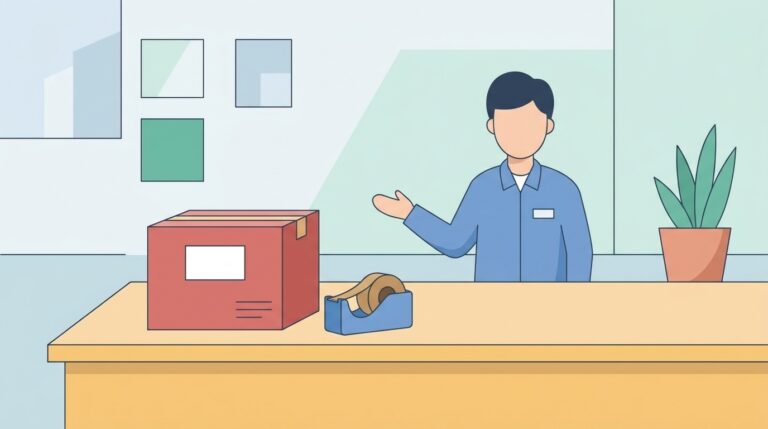
Master the Korean Post Office: How to Send Packages Abroad with Confidence
Phase 1: Empathy (Story-Driven Opening)
안녕하세요! 매일한글 에디터입니다. (Hello! This is your Daily Hangul editor.)
Picture this: You are standing inside a bustling Korean post office (우체국, Ucheguk) on a crisp weekday morning in Seoul. Your arms are heavy with cardboard boxes stuffed with treasures you collected—limited edition K-pop albums, trending skincare serums from Olive Young, and packages of honey-butter almonds for your family back home. Around you, the air is filled with rhythmic sounds: the sharp shhh-tup of heavy packaging tape, the hum of digital scales, and clerks calling out ticket numbers at lightning speed.
You walk up to the packaging station, tape gun in hand, feeling confident—until you glance at the shipping declaration label. Suddenly, questions race through your mind: How do I say express shipping? Will they reject my cosmetics? What if the clerk speaks rapid-fire Korean and I freeze?
Take a deep breath! Every expat, traveler, and exchange student in Korea has stood right where you are now. The Korean postal system is among the world’s most efficient, safe, and affordable—once you know the secret conversational keys. In this guide, built directly on feedback from over 500 intermediate learners, we will demystify every counter interaction. By the end of this article, you will walk into any 우체국 across Korea, pack your gifts effortlessly, and say exactly what you need without a shred of hesitation.
Phase 2: Core Expressions Deep Dive
Here are the three golden phrases that will carry you through 90% of your post office visit.
1. 해외로 택배 보내려고 하는데요. (Haeoe-ro taekbae bonaeryeogo haneundeyo.)
- Pronunciation: [Hae-oe-ro taek-bae bo-nae-ryeo-go ha-neun-de-yo] (Sound analogy: Think of “Hae-way” like “highway”, followed by “tek-beh”, ending softly with “ha-neun-day-yo”)
- Meaning: Literal: “I intend to send a parcel abroad, but…” | Real Nuance: “Hello, I’d like to ship a package overseas, could you help me?”
- K-Culture Moment: You will hear this soft opening pattern constantly in Korean dramas whenever a character enters a public service center. Rather than making a blunt demand, Koreans end their sentence with
~는데요(~neundeyo) to create polite conversational space for the clerk to respond.- Editor’s Insight: Avoid saying “해외로 택배를 보내고 싶어요” (I want to send a parcel abroad). While grammatically correct, native speakers rarely announce their personal desires to counter clerks. Using
~하려고 하는데요signals intermediate cultural fluency and instantly softens your presence.- Situation Spectrum: Casual ⚠️ | Semi-formal ✅ | Formal ✅
- 🤔 Think About It: In English, we often say directly “I need to ship this to Canada.” Why does Korean culture prefer leaving sentences open-ended with
~는데요when asking for customer assistance?2. 제일 빠른 걸로 해주세요. (Jeil ppareun geollo hae-juseyo.)
- Pronunciation: [Je-il ppa-reun geol-lo hae-ju-se-yo] (Sound analogy: “Je-il”, then snap the double ‘p’ like a crisp pop in “ppa-reun”, ending with “geol-lo heh-joo-say-yo”)
- Meaning: Literal: “Please do it with the fastest one.” | Real Nuance: “Please send it via express / EMS (Express Mail Service).”
- K-Culture Moment: Korea is globally famous for its 빨리빨리 (ppalli-ppalli, “hurry-hurry”) culture. At the post office counter, clerks will often present two or three shipping options: EMS, standard airmail (항공편), or surface mail (선편). If speed matters, this phrase is your instant golden ticket.
- Editor’s Insight: Notice the contraction:
걸로(geollo) is the conversational form of것으로(geoseuro, “with the thing”). Using걸로shows you sound like a local rather than a grammar textbook.- Situation Spectrum: Casual ⚠️ | Semi-formal ✅ | Formal ✅
- 🤔 Think About It: Notice how Korean combines comparison (
제일– the most) and request (~해 주세요– please do for me) into a compact six-syllable chunk.3. 안에 깨지는 물건은 없어요. (Ane kkaejineun mulgeoneun eopseoyo.)
- Pronunciation: [A-ne kkae-ji-neun mul-geon-eun eop-seo-yo] (Sound analogy: “Ah-neh”, tense “kkay”, “jee-neun”, “mool-gun”, silent ‘s’ sound in “up-so-yo”)
- Meaning: Literal: “Inside, breakable things do not exist.” | Real Nuance: “There is nothing fragile inside.”
- K-Culture Moment: Before scanning your parcel, postal workers are required by aviation security protocols to ask: “파손 위험이나 액체류 있나요?” (Is there any breakable risk or liquid?). Answering quickly with this sentence ensures your parcel gets stamped right away.
- Editor’s Insight:
깨지다specifically refers to brittle materials cracking or shattering (glass, ceramics). If you do have ceramics, replace없어요with있어요(Isseoyo) and add: “뽁뽁이 많이 감았어요” (Bpok-bpoki mani gam-asseoyo – “I wrapped a lot of bubble wrap around it”).- Situation Spectrum: Casual ⚠️ | Semi-formal ✅ | Formal ✅
- 🤔 Think About It: How does taking responsibility for fragile items reflect the postal trust between sender and postal courier in Korea?
Phase 3: Textbook Korean vs. Real Korean
| Context | 📖 Textbook Korean | 🗣️ Real Korean | 💡 Why the difference? |
|---|---|---|---|
| Specifying shipping destination | 이 소포를 미국으로 부쳐 주십시오. (I soporeul migugeuro buchyeo jusipsio.) |
이거 미국으로 EMS 보낼 건데요. (Igeo migugeuro EMS bonael geondeyo.) |
Modern Koreans rarely use the formal command 부쳐 주십시오. They refer to overseas express mail specifically by the acronym “EMS” and use casual demonstrative 이거 (this). |
| Asking total shipping fees | 배송 요금이 얼마입니까? (Baesong yogeumi eolma-imnikka?) |
얼마 나와요? (Eolma nawayo?) |
At payment terminals and counters, asking “얼마 나와요?” (literally: “How much comes out?”) is the most authentic, everyday way to ask what you owe. |
Phase 4: K-Culture Deep Dive & Non-Verbal Manners
4-1. 눈치 (Nunchi) & Post Office Etiquette
- The Golden Packaging Rule: Never take your unsealed box to the counter clerk! Inside Korean post offices, there is a dedicated packaging zone called the 포장대 (Pojangdae). You must tape your box, write your addresses, and apply the waybill before pulling your queue number ticket (대기표). Approaching the counter with an unboxed pile will earn you confused looks.
- The Two-Handed Pass: When handing your passport, ARC (Alien Registration Card), or credit card to the clerk, always use both hands—or support your right elbow with your left hand. This subtle gesture of respect (공손함) instantly creates warmth.
4-2. Cultural Code: The Generosity of the 포장대 (Packaging Station)
Foreigners visiting a Korean post office are often astonished by the packaging counter. You will find endless rolls of heavy packing tape, sharp industrial scissors, glue sticks, and mountains of free bubble wrap (뽁뽁이). Korea’s communal culture assumes people will use these resources fairly without stealing. Take your time, wrap your gifts securely, and leave the station tidy for the next person.
Phase 5: Real-Life Roleplay Scenario
Setting: The bustling Gwanghwamun Post Office in central Seoul. Staff Member Mr. Park (박 주임) is processing packages behind window #3. Alex, an international student, walks up after his number is called.
- 직원 (Mr. Park): 어서 오세요. 어떤 거 도와드릴까요?
(Eoseo oseyo. Eotteon geo dowa-deurilkkayo?)
“Welcome. How can I help you today?”🎭 Smiling politely, pointing towards the digital counter scale. - 알렉스 (Alex): 안녕하세요! 해외로 택배 보내려고 하는데요.
(Annyeonghaseyo! Haeoe-ro taekbae bonaeryeogo haneundeyo.)
“Hello! I’d like to send a package overseas.”🎭 Placing the neatly taped box gently onto the scale. - 직원 (Mr. Park): 네, 박스 저울에 올려주세요. 어디로 보내시나요?
(Ne, bakseu jeoure ollyeo-juseyo. Eodiro bonaesinayo?)
“Sure, please place the box on the scale. Where are you sending it?”🎭 Typing shipping parameters into his computer terminal. - 알렉스 (Alex): 미국 뉴욕으로 갈 거예요. 제일 빠른 걸로 해주세요.
(Miguk Nyuyogeuro gal geoyeyo. Jeil ppareun geollo hae-juseyo.)
“It’s going to New York, USA. Please send it with the fastest option.” - 직원 (Mr. Park): 그러면 EMS로 접수할게요. 안에 배터리나 화장품, 액체류 있나요?
(Geureomyeon EMS-ro jeopsuhalgeyo. Ane baeteorina hwajangpum, aekcheryu innayo?)
“Then I will process it as EMS. Are there any batteries, cosmetics, or liquids inside?”🎭 Looking directly at Alex with an inquiring expression. - 알렉스 (Alex): 마스크팩 몇 장이랑 과자만 있어요. 깨지는 물건은 없어요.
(Maseukeupaek myeot jang-irang gwajaman isseoyo. Kkaejineun mulgeoneun eopseoyo.)
“Just a few sheet masks and snacks. There are no fragile items.” - 직원 (Mr. Park): 네, 확인했습니다. 총 48,000원 나왔습니다. 카드는 단말기에 꽂아주세요.
(Ne, hwaginhaessseumnida. Chong sashippal-cheon-won nawassseumnida. Kadeuneun danmalgie kkoja-juseyo.)
“Understood. That comes to 48,000 KRW in total. Please insert your card into the reader.”🎭 Pointing towards the IC card chip slot. - 알렉스 (Alex): 감사합니다! 영수증도 같이 주세요.
(Gamsahamnida! Yeongsujeungdo gachi juseyo.)
“Thank you! Please give me the receipt as well.”
🔀 Interactive Decision Point
When the clerk asks: “안에 배터리나 액체류 있나요?” (Are there batteries or liquids inside?), what should you do if you packed an electronic gadget with a lithium battery?
- Choice A: Say “없어요! 그냥 보내주세요” (Nothing! Just send it) to avoid extra questions.
- Outcome (Risk): 🚨 High Danger! All international airmail undergoes X-ray screening at Incheon Airport. If lithium batteries are detected, your package will be confiscated or returned after days of delay, and postage is often non-refundable.
- Choice B: Say “보조배터리가 하나 들어있는데, 괜찮아요?” (There is a power bank inside, is that okay?)
- Outcome (Best): 🏆 Perfect! The staff will inspect the device specs or advise you to remove it so the rest of your parcel clears customs smoothly.
- Choice C: Shrug your shoulders and say nothing.
- Outcome (Bad): ❌ Creates awkward tension and halts processing until you can verify package contents.
Phase 6: 10-Second Emotion Shadowing Drill
Practice matching native intonation by following the / pause markers and emotional cues.
[😊 Confident & Polite]
해외로 택배 / 보내려고 하는데요. / 미국으로 갈 거예요.
(Haeoe-ro taekbae / bonaeryeogo haneundeyo. / Migugeuro gal geoyeyo.)-
[⚡ Decisive & Prompt]
선편 말고 / EMS 제일 빠른 걸로 / 접수해 주세요.
(Seonpyeon malgo / EMS jeil ppareun geollo / jeopsuhae juseyo.) -
[🤝 Assuring & Clear]
위험한 건 없고요 / 과자랑 옷만 / 들어있어요.
(Wiheomhan geon eopgoyo / gwajarang ongman / deureo-isseoyo.)
Phase 7: K-Culture Mini Dictionary
- EMS (국제특급 – Gukje Teukgeup): International Express Mail Service. The default, hyper-reliable overseas shipping option operated between national postal agencies with real-time tracking.
- 포장대 (Pojangdae): The packaging station in the lobby of every Korean post office stocked with free tape, bubble wrap, cutters, and measuring tape.
- 송장 (Songjang): Shipping invoice / waybill. Today, international shipping requires entering customs info digitally or scanning an ePost QR code.
- 규격 박스 (Gyugyeok Bakseu – Standard Postal Boxes): Post offices sell high-grade cardboard boxes categorized by numbers 1 through 5 (1호 being tiny, 5호 being suitcase-sized). You pay for the box at the counter during final checkout.
Phase 8: Traveler’s Survival Kit
TOP 3 Emergency Counter Phrases
- 박스 3호 하나 주세요. (Bakseu sam-ho hana juseyo.)
“Please give me one Size 3 box.”
(Pro Tip: You don’t pay in advance. Grab the box from the stack, pack it, and pay when your number is called!) - 영어로 주소 써도 돼요? (Yeong-eoro juso sseodo dwaeyo?)
“Can I write the address in English?”
(Pro Tip: Yes! For foreign destinations, destination addresses must be written in English. Only the country name should be written in Korean if possible.) - 송장 어디서 작성해요? (Songjang eodiseo jakseonghaeyo?)
“Where do I fill out the shipping waybill?”
Editor’s Travel Note
- Navigation: To find your nearest branch, open the Naver Map app download for iOS and Android and search for 우체국 (Ucheguk).
- Pre-registration Discount: If you use the Korea Post ePost official website to enter customs details online before arriving, you receive an automatic 3% to 5% discount on international EMS rates!
Phase 9: One Step Deeper
Have you ever noticed how the Korean post office functions on a foundation of communal trust? In many countries, packaging materials are kept behind locked counters or charged by the foot. In Korea, expensive bubble wrap, heavy tape dispensers, and shears sit open for anyone to use. This mirrors the Korean societal expectation that public spaces exist to make everyone’s day easier, provided each individual respects the communal balance (공공질서). When you tidy up your tape scraps at the packaging table, you aren’t just being polite—you are participating in everyday Korean civil trust.
💬 Your Turn: Have you ever experienced a shipping disaster while traveling abroad? What would you like to send back home from Korea first? Let us know in the comments below!
Phase 10: FAQ & Avoiding Misunderstandings
Q: Can I send Korean skincare and cosmetics overseas via EMS?
A: Sheet masks, moisturizers, and creams under standard containers are generally fine. However, compressed aerosol sprays (like facial mists), perfume containing alcohol, and high-concentration nail polish are strictly classified as hazardous air goods and will be rejected.
Q: What is the difference between EMS and EMS 프리미엄 (EMS Premium)?
A: Standard EMS is handled by national postal services (like USPS in the USA or Royal Mail in the UK). EMS Premium is operated in partnership with UPS, offering delivery to countries where standard EMS is paused or requires higher insurance coverage.
Q: Do I need cash to buy the cardboard boxes?
A: No! You can pay for both your cardboard boxes and your shipping fees together on any standard international credit card (Visa, Mastercard) at the main processing counter.
🚨 Common Mistakes Alert (TOP 3)
- Writing the country name in Korean only: Always write the destination country clearly in English capital letters (e.g., USA, GERMANY) next to the Korean name (미국, 독일).
- Packing food containing meat extracts: Sending famous Korean instant noodles (라면)? Check customs! Countries like the USA and Australia strictly ban ramen containing powdered beef or pork broth.
- Leaving the phone number blank: Never skip the recipient’s local mobile phone number on the invoice. International customs will hold parcels indefinitely if local SMS notifications cannot be delivered.
Phase 11: Action Mission & Engagement
- 🥉 Bronze Mission: Stand in front of your mirror and practice saying: “해외로 택배 보내려고 하는데요” three times with a confident smile.
- 🥈 Silver Mission: Save a photo of a Korea Post box size chart (1호~5호) on your phone and identify which size your upcoming souvenirs will need.
- 🥇 Gold Mission: Visit a local Korean post office, buy a 1호 box (under 1,000 KRW), and ship a small postcard or gift to a friend abroad using today’s phrases!
- 🎮 K-Culture Mission: In your favorite K-Drama, look for scenes where characters receive a parcel box stamped with the iconic Korea Post red swallow logo. Notice how the actor signs the delivery tablet!
Phase 12: Interactive Quiz Challenge
Test your real-world postal savvy below!
1. Situational Judgment
You have just arrived at the post office with a stack of loose clothes to send to your sister in the UK. What is your correct first step?
* (A) Pull a waiting ticket immediately and walk straight to counter #1.
* (B) Go to the packaging table, assemble a box, pack the items, write the address, and then take a ticket.
* (C) Ask the clerk to fold the box and pack the clothes for you.
2. Fill-in-the-Blank
Complete the natural Korean request for express delivery:
“선편 말고, 제일 [ ] 걸로 해주세요.”
3. True / False Cultural Fact
T / F: At Korean post offices, you must pay cash for your packing tape and bubble wrap before using them at the packing station.
👉 Click to reveal answers & explanations!
- Answer: (B) Always pack and seal your parcel at the 포장대 before pulling your waiting ticket. It keeps counter lines moving fast!
- Answer: 빠른 (ppareun) – “제일 빠른 걸로 해주세요” (Please do it with the fastest option).
- Answer: False! Packaging tape, scissors, glue, and bubble wrap are provided completely free of charge at the packing station for public convenience.







