

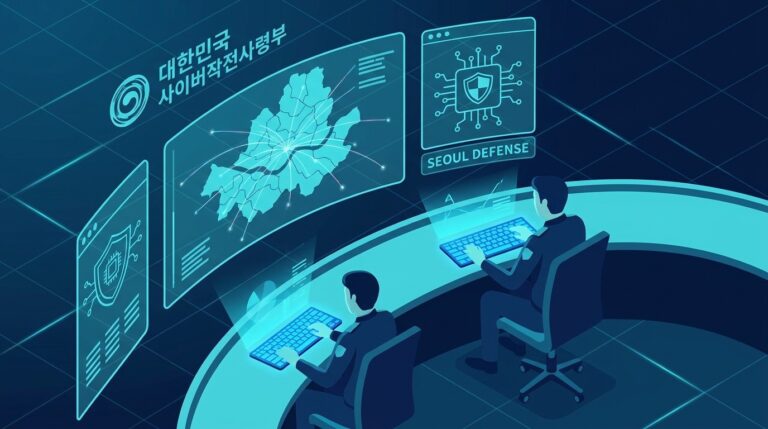
Mastering C2 Korean: Inside the Cyber Operations Command and Hacking Defense
Phase 1: Empathy (Immersive Story Opening)
안녕하세요! 매일한글 에디터입니다. (Hello! It’s your Daily Hangul editor here.)
Picture this: You are watching a high-stakes Korean thriller like Ghost (유령) or an intense military political drama. The national intelligence situation room lights glow crimson. Sirens echo. Adversarial state-sponsored actors have launched a distributed zero-day exploit targeting critical infrastructure. The Joint Chiefs of Staff turn to the Cyber Operations Command (사이버작전사령부). Suddenly, the screen bursts into rapid-fire military administrative jargon, intelligence acronyms, and heavy Sino-Korean vocabulary. You pause the stream. You know basic vocabulary like ‘컴퓨터’ (computer) or ‘해킹’ (hacking), but phrases like ‘비대칭 전력’ (asymmetric capabilities) and ‘망 분리 체계’ (network isolation systems) feel like an impenetrable fortress.
At a C2 (Mastery) proficiency level, conversational fluency is already a given. The true frontier lies in mastering domain-specific, high-register discourse—the exact language utilized by national security analysts, military policymakers, and strategic defense journalists in Seoul. When foreign defense analysts, intelligence translators, and C2 learners come to me, their primary frustration is how starkly institutional defense discourse differs from conventional corporate or academic Korean. This guide bridges that precise divide. Rooted in real-world policy briefings, military defense white papers (국방백서), and high-level defense journalism, this deep dive empowers you to decipher, discuss, and command the sophisticated linguistic architecture of South Korea’s fifth domain of warfare: military cyber defense.
Phase 2: Core Expressions Deep Dive
1. 비대칭 위협을 무력화하다 (Bi-dae-ching wi-hyeop-eul mu-ryeok-hwa-ha-da)
- Pronunciation: [비대칭 위효블 무려콰하다] (Sounds like: bee-dae-ching wee-hyo-beul moo-ryeok-hwa-ha-da)
- Meaning: Literally “to neutralize asymmetric threats.” In actual defense discourse, it denotes nullifying tactical vulnerabilities exploited by an opponent with unconventional military means, such as state-sponsored cyber warfare, malicious malware deployment, or DDOS saturation.
- K-Culture Moment: Heard during high-level defense committee hearings in National Assembly broadcasts (국회 방송) or military briefings in geopolitical action dramas when commanders assess deterrence capabilities against adversary cyber warfare units.
- Editor’s Insight: ‘비대칭’ (Asymmetric) contrasts with conventional frontline forces (대칭 전력). The verb ‘무력화하다’ (無力化하다 – to render powerless) is significantly more strategic and decisive than mere ‘막다’ (to block).
- Situation Spectrum: Casual: 🚫 | Semi-formal: ⚠️ | Formal: ✅
- 🤔 Think About It: How does your native language differentiate between defense against conventional troops versus digital sabotage? Notice how Korean employs Sino-Korean nominal compounds to convey geopolitical weight.
2. 망 분리 및 침입 차단 체계를 가동하다 (Mang bun-ri mit chim-ip cha-dan che-gye-reul ga-dong-ha-da)
- Pronunciation: [망 분리 밎 치밉 차단 체계롤 가동하다] (Sounds like: mahng boon-ree meet cheem-eep cha-dahn cheh-gyeh-reul gah-dong-ha-da)
- Meaning: Literally “to activate network isolation and intrusion prevention systems (IPS).” Practically, it conveys the decisive operational protocol of physically severing public intranets from classified military defense backbones to preempt critical data exfiltration.
- K-Culture Moment: A signature trope in modern espionage K-Dramas where a military cyber analyst slams an emergency console button to disconnect classified servers from external telecommunications.
- Editor’s Insight: ‘망 분리’ (air-gapping/network segmentation) is a cornerstone of South Korean statutory defense compliance. Pairing it with ‘가동하다’ (to mobilize/operate high-level systems) elevates your register instantly above casual IT vernacular.
- Situation Spectrum: Casual: 🚫 | Semi-formal: ⚠️ | Formal: ✅
- 🤔 Think About It: In English, we often say “unplug the network” colloquially, but official military lexicons demand institutional precision. How does ‘망 분리’ anchor authoritative command?
3. 사이버 작전 태세를 격상하다 (Sai-beo jak-jeon tae-se-reul gyeok-sang-ha-da)
- Pronunciation: [사이버 작쩐 태세를 격쌍하다] (Sounds like: sai-beo jak-jjeon tae-seh-reul gyeok-ssang-ha-da)
- Meaning: Literally “to upgrade the cyber operational posture.” Practically, it signals transitioning defense alert status (such as moving from standard watch condition to elevated Cyber Defense Readiness Conditions, CPCON).
- K-Culture Moment: The climactic scene in political thrillers where the Minister of National Defense commands all intelligence wings to operate at maximum alert against imminent digital infrastructure attacks.
- Editor’s Insight: The verb ‘격상하다’ (to upgrade/elevate rank or status) is exclusively matched with systemic postures, alerts, or protocol tiers (e.g., 위기 경보 격상, 방호 태세 격상).
- Situation Spectrum: Casual: 🚫 | Semi-formal: ⚠️ | Formal: ✅
- 🤔 Think About It: Compare ‘격상하다’ (institutional escalation) with ‘올리다’ (everyday raising). Reflect on how Korean honorifics and morphological register elevate institutional gravity.
Phase 3: Textbook Korean vs. Real Native Korean
Situation 1: Highlighting network vulnerability management
- 📖 교과서 한국어 (Textbook Korean): 시스템 보안을 철저히 점검해야 합니다. (Siseutem boaneul cheoljeohi jeomgeomhaeya hamnida. / “We must inspect system security thoroughly.”)
- 🗣️ 진짜 한국어 (Real Defense Korean): 제로 트러스트 기조에 입각해 비인가 접근 통제와 망 연계 구간의 보안 취약점을 전면 재실사해야 합니다. (Jero teureoseuteu gijoe ipgakhae bi-inga jeopgeun tongjewa mang yeon-gye guganui boan chwiyakjeomeul jeonmyeon jaesilsahaeya hamnida. / “Anchored in a zero-trust paradigm, we must execute an exhaustive audit of unauthorized access controls and inter-network gateway vulnerabilities.”)
- 💡 Why the Difference? C2-level strategic Korean substitutes generic terms (‘점검하다’) with institutional governance terms (‘재실사하다’, ‘기조에 입각하다’, ‘비인가 접근 통제’).
Situation 2: Reporting successful interception of a targeted cyber incursion
- 📖 교과서 한국어 (Textbook Korean): 적의 해킹 공격을 성공적으로 막았습니다. (Jeogui haeking gonggyeogeul seonggongjeogeuro magasseumnida. / “We successfully blocked the enemy’s hacking attack.”)
- 🗣️ 진짜 한국어 (Real Defense Korean): 지능형 지속 위협(APT) 공격 징후를 조기에 식별하여 침투 경로를 선제적으로 차단하고 잔여 위협을 소탕했습니다. (Jineunghyeong jisok wihyeop gonggyeok jinghureul jogie sikbyeolhayeo chimtu gyeongnoreul seonjejeogeuro chadanhago janyeo wihyeobeul sotanghaesseumnida. / “By identifying APT indicators in their infancy, we preemptively severed the intrusion vector and neutralized lingering residual vulnerabilities.”)
- 💡 Why the Difference? Real military reports focus on attribution, early detection (‘조기 식별’), tactical mechanics (‘침투 경로 선제 차단’), and systematic elimination (‘잔여 위협 소탕’).
Phase 4: K-Culture Deep-Dive & Non-Verbal Manners
4-1. 눈치 (Nunchi) & Protocol in Defense Command Centers
Within Korean military institutions, verbal precision is mirror-reflected in non-verbal posture:
* The ‘다나까’ (Da-Na-Kka) Paradigm: In command operational centers (상황실), standard polite endings like ‘-요’ (-yo) are completely impermissible. Every declaration concludes strictly in ‘-십시오’ (-sipsio), ‘-ㅂ니다’ (-mnida), or ‘-ㅂ니까’ (-mnikka).
* Vocal Pitch & Posture: When reporting breaches or status changes to a superior officer (e.g., 대령, 준장), your gaze must remain pinned to the tactical display or the superior officer’s uniform rank insignia (계급장), never darting aimlessly. Speak with compressed, diaphragm-grounded projection without conversational fillers like ‘어…’ (uh…) or ‘그게…’ (well…).
4-2. Cultural Code: The Fifth Domain on the Peninsula
South Korea operates in a unique geopolitical reality: it is simultaneously one of the most hyper-connected nations on earth and targets of continuous asymmetric cyber assaults. Consequently, cyber defense is not conceptualized merely as civilian IT maintenance, but as national sovereignty defense—the ‘제5의 전장’ (The 5th Domain of War: Land, Sea, Air, Space, Cyber). K-Dramas like Search or films like Steel Rain reflect this continuous technological vigilance.
Phase 5: Real-World Roleplay Scenario
Setting: Joint Defense Operations Center (합동작전상황실), Underground Bunker, Cyber Operations Command. Deep blue tactical screens illuminate the command room.
Characters:
* Brigadier General Park (박 준장): Chief of Cyber Operations, razor-sharp, zero tolerance for ambiguity.
* Senior Analyst / Captain Kim (학습자 / Learner): Head of Incident Response.
박 준장: 김 소령, 현재 국방 인트라넷 전산망에 비정상 트래픽이 폭증하고 있다는 보고를 받았다. 원점 식별은 완료되었나? (Gim soryeong, hyeonjae gukbang inteuranet jeonsanmange bijeongsang teuraepigi pokjeunghago itdaneun bogoreul badatda. Wonjeom sikbyeoreun wanryeodoeeotna?)
🎭 [Stands before the central radar console with arms crossed behind his back, voice cold and steady]
“Major Kim, I received word of an abnormal traffic surge within the defense intranet backbone. Have we localized the origin vector?”
김 소령 (You): 보고드리겠습니다! 적성국 소행으로 추정되는 분산 서비스 거부 공격 징후를 포착하여 역추적 중입니다. (Bogodeurigesseumnida! Jeokseongguk sohaengeuro chujeongdoeneun bunsan seobiseu geobu gonggyeok jinghureul pochakhayeo yeokchujeok jung-imnida.)
🎭 [Snaps to attention, eyes fixed firmly on the monitor, presenting with a crisp vocal cadence]
“Reporting, Sir! We detected indicators of a distributed denial-of-service vector suspected to originate from an adversary state, and live back-tracing is underway.”
박 준장: 내부망 침투 가능성은? 핵심 지휘통제 시스템(C4I) 데이터베이스에 위해가 가해졌는가? (Naebumang chimtu ganeungseongeun? Haeksim jihwitongje siseutem deiteobeiseue wihaega gahaejeotneunga?)
🎭 [Turns slowly toward you, his eyes narrowing sharply]
“What is the probability of intranet compromise? Has critical C4I command-and-control database integrity been breached?”
김 소령 (You): 즉각적인 물리적 망 분리 조치로 본부 메인 프레임 데이터 손실은 전무합니다. (Jeukgakjeogin mullijeok mang bunri jochiro bonbu mein peureim deiteo sonsireun jeonmuhamnida.)
🎭 [Gestures with an open palm toward the firewall status board without breaking posture]
“Due to immediate physical network isolation protocols, database compromise across headquarters mainframes is entirely zero.”
박 준장: 다행이군. 허나 2차 기만 공격의 가능성을 배제할 수 없다. 후속 조치는 무엇인가? (Dahaeng-igun. Heona icha giman gonggyeogui ganeungseongeul baejehal su eopda. Husok jochineun mueosinga?)
🎭 [Taps the glass conference desk rhythmically with a single finger]
“Fortunate. However, secondary deceptive vectors cannot be ruled out. What is your subsequent containment measure?”
김 소령 (You): 취약 포트를 즉시 셧다운하고, 암호화 패킷을 심층 분석하여 공격 시그니처를 데이터베이스에 등록하겠습니다. (Chwiyak poteureul jeuksi syeotdaunhago, amhohwa paekiseul simcheung bunseokhayeo gonggyeok sigeunicheoreul deiteobeiseue deungnokhagesseumnida.)
🎭 [Speaks with absolute certainty, handing over an encrypted flash brief tablet]
“We will immediately shut down vulnerable ports, execute deep packet inspection on encrypted payloads, and register the attack signature onto our unified database.”
박 준장: 타당하다. 사이버 방호태세를 현 시간부로 ‘진돗개’가 아닌 국방 사이버 방호태세 ‘CPCON II’로 격상 발령한다. 전 부대에 하달하도록. (Tadanghada. Saibeo banghotaesereul hyeon siganburo jindotgaega anin gukbang saibeo banghotaese ssipikon turo gyeoksang ballyeonghanda. Jeon budaee hadalhadorok.)
🎭 [Authorizes with a firm, sharp nod]
“Prudent. Effective immediately, elevate the cyber operational readiness posture to CPCON II. Disseminate down the chain of command.”
김 소령 (You): 충성! 즉시 전파하여 철통같은 방어 태세를 유지하겠습니다! (Chungseong! Jeuksi jeonpahayeo cheoltonggateun bangeo taesereul yujihagesseumnida!)
🎭 [Salutes with razor-sharp precision, turning swiftly back to the terminal]
“Loyalty! Broadcasting operational directives immediately to maintain impenetrable defense posture!”
🔀 Interactive Decision Point
How do you advise General Park regarding an unverified secondary data packet anomaly?
* Option A: “장군님, 별문제 아닌 것 같으니 잠시 모니터링만 유지하시죠.” (General, it seems minor; let’s just observe passively.)
* Option B: “사이버 작전 예규에 의거, 즉시 전산 자원을 격리하고 전수 조사를 실시해야 합니다.” (In accordance with cyber operational standing procedures, we must immediately quarantine computing nodes and execute a complete forensic audit.)
* Option C: “상관없습니다! 제가 코드를 직접 해킹해서 적 서버를 다운시키겠습니다!” (No problem! I will personally hack their code and crash the enemy server!)
Detailed Feedback:
* Option A (Bad): Disastrous. In a Korean military environment, dismissing an anomaly (‘별문제 아닌 것 같으니’) violates security vigilance and sounds dangerously casual.
* Option B (Best): Flawless C2 execution. Citing official standing operational procedures (‘사이버 작전 예규에 의거’) followed by institutional terminology (‘자원 격리’, ‘전수 조사’) establishes consummate authority.
* Option C (Risk): Reckless. Unauthorized offensive counter-strikes breach rules of engagement (교전수칙) and sound like an exaggerated action-movie parody rather than professional doctrine.
Phase 6: 10-Second Emotion Shadowing Drill
Practice reading these sentences aloud, respecting pause boundaries marked by /:
[🚨 긴박하고 단호하게 - Urgent and decisive]
“적성국의 침입 시도가 감지된 즉시 / 전산망을 차단하고 / 비상 방호 태세로 전환했습니다!”
(Jeokseonggugui chimip sidoga gamjidoen jeuksi / jeonsanmangeul chadanhago / bisang bangho taesero jeonhwanhaesseumnida!)
“The moment the hostile infiltration attempt was detected / we severed the operational network / and transitioned to an emergency defense posture!”-
[🛡️ 냉철하고 신중하게 - Calm and analytical]
“단순 디도스 공격에 현혹되지 않고 / 은닉된 지능형 지속 위협(APT) 악성코드를 / 정밀 추적 중입니다.”
(Dansun didoseu gonggyeoge hyeonhokdoeji anko / eonnikdoen jineunghyeong jisok wihyeop akseongkodeureul / jeongmil chujeok jung-imnida.)
“Without being misled by diversionary DDOS attacks / our team is conducting deep tracking / on the concealed APT malware.” -
[🎖️ 확신에 찬 군인 정신 - Confident and authoritative]
“국방사이버사령부는 / 제5의 전장에서도 / 한 치의 빈틈없는 방어 태세를 / 수호할 것입니다!”
(Gukbangsaibeosaryeongbuneun / je-o-ui jeonjangeseodo / han chiui binteumeomneun bangeo taesereul / suhohal geosimnida!)
“The Defense Cyber Command / even in this fifth domain of warfare / will preserve / an impenetrable posture of total defense!”
Phase 7: K-Culture Mini Dictionary
- 지능형 지속 위협 (Jineunghyeong Jisok Wihyeop – Advanced Persistent Threat / APT)
- Usage: Describes prolonged, stealthy cyber campaigns targeting defense networks rather than swift, conspicuous hacks.
- 작전예규 (Jakjeon-yegyu – Standing Operating Procedures / SOP)
- Usage: Standard doctrine referenced constantly when justifying tactical actions (e.g., “작전예규 제4조에 의거하여 조치했습니다”).
- 상황실 (Sanghwangsil – Situation Room / Command & Control Hub)
- Usage: The nerve center where radar feeds, cyber threat heatmaps, and intelligence streams are synthesized.
- 국방사이버방호태세 (Gukbang Saibeo Banghodaese – Cyber Defense Readiness Condition / CPCON)
- Usage: Scaled from Level V (Peacetime) to Level I (Critical emergency), analogous to military DEFCON.
Phase 8: Field Survival Kit for Strategic Observers
Top 3 High-Register Phrases:
- 인가된 단말기만 출입 가능합니다. (Ingadoen danmalgiman churip ganeunghamnida. – Only cleared, authorized terminals are permitted for access.)
- Pro Tip: ‘인가’ (Authorization/Clearance) is essential whenever dealing with secure zones in public institutions.
- 비인가 보관 매체의 반입을 일절 금합니다. (Bi-inga bogwan maecheui banibeul iljeol geumhamnida. – Bringing unauthorized storage media onto premises is strictly prohibited.)
- Pro Tip: Heard at checkpoints entering government offices, military academies, and research facilities (e.g., ADD – Agency for Defense Development).
- 보안 서약서를 작성하고 암호화 토큰을 수령하십시오. (Boan seoyakseoreul jakseonghago amhohwa tokeuneul suryeonghasipsio. – Please execute the non-disclosure agreement and collect your encryption key.)
Editor’s Field Note for Defense & Tech Observers in Korea:
If you attend high-level defense expos like ADEX (Seoul International Aerospace & Defense Exhibition) or DX Korea, bear in mind that taking photographs near telecommunication command modules or military drone telemetry stations is strictly controlled. Download the 국방안보 연구자료 열람 공식 플랫폼 to reference unclassified white papers, and never connect to open, unencrypted Wi-Fi in government clusters like Yongsan (용산) or Gwacheon (과천).
Phase 9: “One Step Deeper” (Reflective Essay)
Language mirrors national vulnerability. In English-speaking defense discourse, the vocabulary of cyber defense often stems from private software innovation—companies pioneer tools, and military institutions adapt them. In South Korea, however, cyber warfare language was forged directly under acute geopolitical friction and administrative centralized coordination. Concepts like ‘망 분리’ (air-gapping) are enshrined into mandatory civilian-military legal statutes, giving Korean defense linguistics an exceptionally structured, statutory, and decisive character. It is an idiom where state sovereignty and computational science intertwine tightly.
💬 Your Turn: In your home country, is cyber defense spoken of primarily as an extension of IT engineering, or as an indispensable branch of armed sovereignty? Let’s discuss in the comments below!
Phase 10: FAQ & Common Pitfalls
Q: What is the official current name of the military cyber defense command in South Korea?
A: Historically established as 국군사이버사령부 (Armed Forces Cyber Command), it was reorganized into the 사이버작전사령부 (Cyber Operations Command) under the direct jurisdiction of the Joint Chiefs of Staff to emphasize offensive-defensive joint operational readiness.
Q: Can I use everyday computing terms like ‘해킹하다’ or ‘컴퓨터 고장’ in these military contexts?
A: While understood, they sound noticeably unrefined. Instead of ‘해킹당하다’ (to get hacked), professionals use ‘침해 사고가 발생하다’ (a security breach occurred) or ‘악성 코드에 감염되다’ (infected by malicious code).
Q: How does CPCON differ from civilian threat advisory levels?
A: While the civilian KISA (Korea Internet & Security Agency) issues public alerts scaled by colors (Green to Red), the military operates on 국방사이버방호태세 (CPCON – Cyber Inspection Condition), tiered from Level V to Level I.
🚨 Common Mistakes Alert (외국인 학습자 흔한 실수 TOP 3)
- Using civilian conversational polite style (-요):
- ❌ Mistake: “제가 방화벽을 닫았어요.” (I closed the firewall.)
- ✅ Correct Action: “방화벽 포트를 차단 조치 완료했습니다.” (Firewall port block protocol has been executed.)
- Confusing ‘망 분리’ with general ‘인터넷 끄기’:
- ❌ Mistake: “인터넷을 껐습니다.” (I turned off the internet.)
- ✅ Correct Action: “내부 업무망과 외부 인터넷망을 완전히 물리적으로 분리했습니다.” (Internal operational networks and external commercial intranets have been physically air-gapped.)
- Overusing literal English calques:
- ❌ Mistake: “사이버 어택을 디펜스했습니다.” (Defended the cyber attack.)
- ✅ Correct Action: “적의 사이버 도발을 무력화했습니다.” (Neutralized the adversary’s cyber provocation.)
Phase 11: Action Missions
- 🥉 Bronze Mission (Self-Practice): Shadow Phase 6 aloud 3 times, paying close attention to the crisp military stop sounds (받침) in words like ‘식별’ and ‘격상’.
- 🥈 Silver Mission (Social/Study Group): Write a 3-sentence situation report in C2 Korean describing a simulated data breach and share it with your language partner using ‘-ㅂ니다’ forms.
- 🥇 Gold Mission (Real Application): Read an editorial or white paper summary from the Korean Ministry of National Defense (국방부) regarding cyber resilience, and summarize two strategic countermeasures in high-register Korean.
- 🎮 K-Culture Mission: Watch an episode of an espionage K-Drama (e.g., Vagabond or The Veil) and pinpoint three times characters reference classified servers or defense communications using Sino-Korean compounds.
Phase 12: Interactive Quiz Challenge
- Situational Judgment: If hostile actors launch an infiltration sequence against central communications, which of the following is the most doctrinal high-level action phrase?
- A) 시스템을 재부팅한다. (Reboot the system.)
- B) 망 연계 서버를 차단하고 사이버 방호태세를 격상한다. (Sever the gateway servers and elevate the cyber defense readiness posture.)
- C) 백신 프로그램을 다운로드한다. (Download an antivirus program.)
- Fill in the Blank: “국방 통신망의 안전성을 제고하기 위해 공공망과의 ( ) 조치를 단행하였다.”
- A) 로그인 (Log-in)
- B) 망 분리 (Network isolation / Air-gapping)
- C) 포맷 (Format)
- True / False Culture Quiz: In professional Korean defense briefing situations, it is acceptable to use polite informal speech (‘-해요’) as long as you bow respectfully.
- [True / False]
🔍 Click to view answers and explanations!
- Answer: B. Elevating defense postures (‘방호태세 격상’) and severing gateway links (‘망 연계 서버 차단’) represents proper strategic military protocol.
- Answer: B (망 분리). The complete sentence means: “In order to elevate the security of the defense communications network, decisive physical network isolation measures from public intranets were implemented.”
- Answer: False. In the Korean military hierarchy, the ‘다나까’ system is non-negotiable. Even with physical bowing, informal endings like ‘-해요’ are regarded as a serious breach of military protocol.







