

Phase 1: 공감 (Story-Immersive Opening)
안녕하세요! 매일한글 에디터입니다.
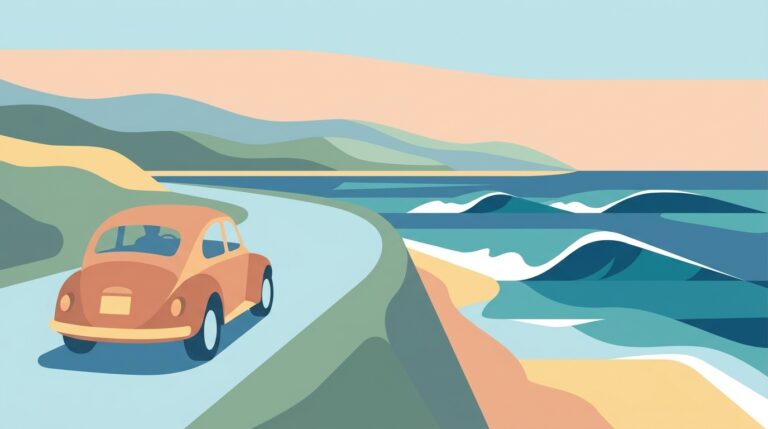
Picture this: the salty sea breeze rushes through your cracked car window as you cruise along National Route 7 (국도 7호선), with the deep, azure waters of the East Sea stretching endlessly on your right. You have spent years mastering C1-level Korean grammar—concessive clauses, subjunctive nuances, formal verb endings. Yet, as you pull into a quiet coastal town in Gangwon-do to order fresh seafood or navigate a spontaneous scenic detour with your Korean travel buddies, textbook phrases suddenly feel strangely stiff and out of touch. Saying “이곳의 경치가 매우 아름답습니다” sounds like you are reading from a 1995 government brochure rather than sharing an intimate, breezy road trip vibe.
Driving Route 7 is a cultural pilgrimage for Koreans—an escape where heartfelt contemplation meets roadside spontaneity. This guide is crafted from authentic feedback from advanced learners who wanted to transition from grammatically flawless Korean to soulful, emotionally resonant conversation. By the end of this guide, you will master the unspoken cultural codes, evocative vernacular, and navigation banter needed to cruise the Korean coast like a native insider.
Phase 2: 핵심 표현 3선 심층 분석
1. 탁 트인 바다를 보니까 가슴이 뻥 뚫리는 것 같아요. (Tak teu-in badareul bonikka gaseumi ppeong ttullineun geot gat-ayo.)
- Pronunciation: [Tak teu-in ba-da-reul bo-ni-kka ga-seu-mi ppeong ttul-li-neun geot ga-ta-yo] (Imagine the sound ppeong as the sharp pop of a champagne cork releasing high pressure!)
- Meaning: Literal: “Looking at the wide-open sea, it feels like my chest is punctured/cleared.” vs. Nuance: “Taking in this boundless ocean view sweeps away all my suffocating stress.”
- K-Culture Moment: Seen frequently in healing road-trip dramas like Our Blues or Welcome to Samdal-ri, where characters escape corporate Seoul to exhale their burnout by the coast.
- Editor’s Insight: Korean links emotional overwhelm directly to physical sensations of blockage (dapdaphada). The onomatopoeia ppeong paired with ttullida (to be unclogged) expresses instant psychological liberation.
- Situation Spectrum: Casual ✅ | Semi-formal ✅ | Formal ⚠️
- 🤔 Think About It: In your native language, do you metaphorically unclog an internal organ when you feel relaxed, or do you frame freedom around external space?
2. 해안도로 타고 쭉 올라가면서 뷰 좋은 카페에 들렀다 가요. (Hae-andoro tago jjuk ol-lagamyeonseo byu joeun kape-e deulleotda gayo.)
- Pronunciation: [Hae-an-do-ro ta-go jjuk ol-la-ga-myeon-seo byu jo-eun ka-pe-e deul-leot-da ga-yo] (Jjuk sounds like a swift, continuous swoosh without stopping.)
- Meaning: Literal: “Riding the coastal road going straight up, let’s stop by a cafe with a good view before going.” vs. Nuance: “Let’s cruise up the coastal highway and hit a scenic cafe on the way.”
- K-Culture Moment: The iconic road-trip banter heard on variety shows like 2 Days & 1 Night, where the journey itself is paced around spontaneous aesthetic cafe stops.
- Editor’s Insight: Combining serial movement verbs (tago, ollagamyeonseo, deulleotda gayo) reflects C1 spatial agility. Korean speakers rarely say “let’s drive on”; they express riding along geography (tago).
- Situation Spectrum: Casual ✅ | Semi-formal ✅ | Formal 🚫
- 🤔 Think About It: How does stacking directional verbs in your mother tongue compare to Korean’s multi-layered verb chaining?
3. 현지인들만 아는 숨은 노포 맛집으로 안내해 드릴게요. (Hyeon-jiindeulman aneun sum-eun nopo matjibeuro annaehae deurilgeyo.)
- Pronunciation: [Hyeon-ji-in-deul-man a-neun su-meun no-po mat-ji-beu-ro an-nae-hae deu-ril-ge-yo] (Nopo glides smoothly, carrying the weight of decades-old prestige.)
- Meaning: Literal: “I will guide you to a hidden veteran restaurant known only to local residents.” vs. Nuance: “Let me take you to a true hidden gem of a heritage spot that only locals know.”
- K-Culture Moment: A host on Heo Young Man’s Food Travel introducing an unassuming back-alley raw fish or sundae joint that has operated for 40 years without internet ads.
- Editor’s Insight: Nopo (노포) signifies deep respect for longevity, culinary heritage, and rustic authenticity over flashy, touristy establishments.
- Situation Spectrum: Casual ⚠️ | Semi-formal ✅ | Formal ✅
- 🤔 Think About It: What elevates a restaurant from simply ‘old’ to ‘revered’ in your culture, and does your language have a distinct word for it?
Phase 3: 교과서 한국어 vs 진짜 한국어
Situation 1: Ordering seasonal seafood at a rustic seaside fish market in Jumunjin
- 📖 교과서 한국어: 이 생선은 오늘 잡은 것입니까? 아주 신선해 보입니다. (I saengseoneun oneul jabeun geosimnikka? Aju sinseonhae boimnida. / Is this fish caught today? It looks very fresh.)
- 🗣️ 진짜 한국어: 사장님, 오늘 물 좋은 횟감 어떤 거 있어요? (Sajangnim, oneul mul joeun hoetgam eotteon geo isseoyo? / Boss, what raw fish is running top-tier fresh today?)
- 💡 왜 다를까? Mul jota (물 좋다; literally ‘the water is good’) is authentic market slang signifying peak freshness and prime quality. Using it signals that you are not an easily swayed tourist.
Situation 2: Remarking on the traffic flow along Route 7’s uninterrupted coastline
- 📖 교과서 한국어: 도로에 차량이 별로 없어서 운전하기에 매우 편리합니다. (Doroe charyang-i byeollo eopseoseo unjeonhagi-e maeu pyeonrihamnida. / Driving is very convenient because there are not many vehicles on the road.)
- 🗣️ 진짜 한국어: 차도 하나도 안 막히고 길이 시원하게 뚫렸네요! (Chado hanado an makhigo giri siwonhage ttullyeonneyo! / Zero traffic and the road is wide open like a breeze!)
- 💡 왜 다를까? Advanced native phrasing adopts sensory adjectives like siwonhada (refreshing/cool) to describe unimpeded spatial clarity rather than the sterile adjective pyeonrihada (convenient).
Phase 4: K-Culture 딥다이브 & 비언어적 매너
4-1. 눈치 (Nunchi) & Highway Etiquette
Driving Route 7 requires a unique rhythm of non-verbal road manners. When another car yields or lets you merge smoothly onto the two-lane coastal road, tap your hazard lights (비상깜빡이 / bisangkkambbagi) exactly three times. This is the universal Korean gesture for “Thank you, and I appreciate your courtesy.” Additionally, when entering small fishing villages or coastal rest stops, keep your music volume respectful. Locals in these quiet coastal zones value tranquility, and a slight bow through your windshield when making eye contact with pedestrian seniors exhibits immaculate nunchi.
4-2. Culture Code: 차박 (Chabak) & 물멍 (Mulmeong)
Route 7 is the mecca of chabak (car camping) and mulmeong (zoning out in contemplative silence while staring at the water). In high-stress Korean urban life, the East Coast represents spiritual decompression. When your Korean friends sit on the beach or tailgate in silence for twenty minutes, do not rush to fill the silence. They are savoring mulmeong—a shared meditative pause where the rhythm of waves replaces conversation.
Phase 5: 실전 롤플레이 시나리오
Background: You and your Korean travel buddy Min-ho (민호) pull over at a cliffside lookout along Route 7 near Samcheok. The mid-afternoon sun glistens across the horizon.
- 민호: 와, 드디어 7번 국도 명소에 도착했네! 바다 빛깔 예술이다, 그치? (Wa, deudieo chilbeon gukdo myeongso-e dochakhaenne! Bada bitkkal yesurida, geuchi?)
🎭 Looking out the driver window with a broad, refreshed smile.
“Wow, we finally made it to the Route 7 highlight! The ocean color is pure art, isn’t it?” -
You: 정말이네요. 탁 트인 수평선을 보니까 가슴이 뻥 뚫리는 기분이에요. (Jeongmallyeneyo. Tak teu-in supyeongseoneul bonikka gaseumi ppeong ttullineun gibunieyo.)
🎭 Stepping out of the passenger seat, stretching your arms wide toward the sea breeze.
“Truly. Looking at this boundless horizon, it feels like all my stress is completely blown away.” -
민호: 그동안 서울에서 야근하느라 답답했을 텐데, 오늘 제대로 힐링하자. (Geudong-an seoureseo yageunhaneura dapdaphaesseul tende, oneul jedeoro hillinghaja.)
🎭 Leaning against the car hood, tossing you a cold bottle of barley tea.
“You must have felt so stifled doing overtime in Seoul lately. Let’s get some proper healing today.” -
You: 고마워요. 이제 해안도로 타고 쭉 올라가면서 뷰 좋은 카페 한 군데 들를까요? (Gomawoyo. Ije hae-andoro tago jjuk ol-lagamyeonseo byu joeun kape han gunde deulleulkkayo?)
🎭 Checking the navigation map on your smartphone and gesturing north.
“Thanks! Shall we cruise straight up the coastal road now and hit a scenic cafe somewhere?” -
민호: 센스 굿! 양양 쪽에 통유리 오션뷰 카페 알아둔 데 있어. (Senseu gut! Yangyang jjoge tong-yuri osyeonbyu kape aradun de isseo.)
🎭 Nodding enthusiastically while starting the engine.
“Great instinct! I have an ocean-view cafe with floor-to-ceiling glass bookmarked in Yangyang.” -
You: 완벽해요. 그리고 저녁엔 관광객 많은 곳 말고, 현지인들만 아는 노포 맛집 가요! (Wanbyeokhaeyo. Geurigo jeonyeogen gwan-gwanggaek maneun got malgo, hyeon-jiindeulman aneun nopo matjip gayo!)
🎭 Looking into the side mirror with an adventurous smirk.
“Perfect. And for dinner, skip the tourist traps—let’s hit an authentic local heritage eatery!” -
민호: 오, 한국 사람 다 됐네! 내가 오늘 물 좋은 곰치국 집으로 모실게. (O, hanguk saram da dwaenne! Naega oneul mul joeun gomchiguk jibeuro mosilge.)
🎭 Laughing and flashing a thumbs-up as he signals the left turn onto the highway.
“Oh, you’re practically Korean now! I’ll treat you to a spot with super fresh moray soup today.” -
You: 기대할게요. 비상깜빡이 켜고 합류하는 매너도 잊지 마시고요! (Gidaehalgeyo. Bisangkkambbagi kyeogo hamnyuhaneun maeneodo itji masigoyo!)
🎭 Fastening your seatbelt with a playful chuckle.
“I’m holding you to it. And don’t forget to flash your hazards when merging!”
🔀 인터랙티브 분기점 (Interactive Choice)
Min-ho asks you where to stop next before sunset: “다음 목적지로 어디가 더 끌려?” (Where are you leaning toward next?)
- Option A: “아무 데나 너 가고 싶은 곳으로 가자.” (Let’s go anywhere you want.)
- Feedback: ⚠️ Risk (Passive). While polite, Koreans on road trips value collaborative decision-making. Leaving it entirely to the driver feels burdened.
- Option B: “해안도로 따라가다가 노을 질 때쯤 백사장에 차 세우고 물멍이나 때리자.” (Let’s follow the coastal road, pull over on the sand right around sunset, and zone out at the sea.)
- Feedback: 🏆 Best (C1 Local Insight). Uses vibrant slang (mulmeong-ina ttaerija) and perfectly reflects the relaxed, poetic culture of East Coast drives.
- Option C: “가장 유명한 관광지로 직진해서 기념품부터 사자.” (Let’s go straight to the most famous tourist attraction and buy souvenirs first.)
- Feedback: 🚫 Bad (Kills the Vibe). Sounds overly rigid and commercial, stripping away the romantic spontaneity of Route 7.
Phase 6: 10초 감정 섀도잉 드릴
- [😊 기쁘고 속 시원하게]
“와 / 탁 트인 바다를 보니까 / 가슴이 뻥 뚫리는 것 같아!”
(Wa / tak teu-in badareul bonikka / gaseumi ppeong ttullineun geot gata!) -
[🚗 경쾌하고 자연스럽게]
“해안도로 타고 쭉 올라가면서 / 뷰 좋은 카페 / 들렀다 가자.”
(Hae-andoro tago jjuk ol-lagamyeonseo / byu joeun kape / deulleotda gaja.) -
[😎 자신감 넘치고 능숙하게]
“사장님 / 오늘 물 좋은 횟감으로 / 추천 좀 해주세요!”
(Sajangnim / oneul mul joeun hoetgameuro / chucheon jom haejuseyo!)
Phase 7: K-Culture 미니 사전
- 낭만 (Nang-man) | Romance / Poetic sentiment
Context: Used far beyond love. Refers to a nostalgic, soulful appreciation of simple moments, like eating cup ramen facing a breezy sea at midnight. - 차박 (Cha-bak) | Car camping / Tailgating sleepover
Context: High-level lifestyle trend along the East Coast where travelers convert SUVs into cozy mobile bedrooms overlooking scenic horizons. - 물멍 (Mul-meong) | Spacing out while gazing at the water
Context: A beloved modern Korean wellness portmanteau (mul = water + meongttaerida = to zone out), representing mental detoxification. - 드라이브 코스 (Deu-ra-i-beu Ko-seu) | Scenic driving route
Context: Essential weekend conversation vocabulary; Route 7 is heralded as Korea’s undisputed “No. 1 드라이브 코스”.
Phase 8: 여행자를 위한 생존 키트
Survival Expressions TOP 3
- 혹시 주차는 어디에 하면 될까요? (Hoksi juchaneun eodie hamyeon doelkkayo? / Where might I park the car?)
Pro Tip: Essential for narrow seaside alleys where restaurants have dedicated rear plots. - 여기서 제일 잘나가는 시그니처 메뉴가 뭐예요? (Yeogiseo jeil jallaganeun sigeunicheo menyuga mwoyeyo? / What is the most popular signature menu item here?)
Pro Tip: Guarantees the freshest, highest-turnover specialty dish in regional coastal towns. - 비상깜빡이 세 번 켜는 거 잊지 마! (Bisangkkambbagi se beon kyeoneun geo itji ma! / Don’t forget to flash the hazard lights three times!)
Pro Tip: Use as friendly backseat guidance to your peers after a smooth lane courtesy.
Editor’s Travel Note
For seamless navigation along Route 7, avoid global maps that lack real-time regional lane guidance. Instead, ensure you proceed with the 네이버 지도 앱 다운로드 prior to your departure. Korean tollgates also operate either via manual cash/card lanes or the automated blue “Hi-Pass” lane; unless your rental car possesses a calibrated Hi-Pass terminal, always filter into the lanes marked with cash/card icons to avoid automatic toll fines!
Phase 9: “한 발 더 깊이” (Deep Thought Essay)
National Route 7 is more than asphalt; it is modern Korea’s emotional pressure valve. Stretching from the southern ports of Busan all the way to the DMZ line in Goseong, it traces the historical and physical spine of the Korean peninsula. In a society famously powered by hyper-competitive ppalli-ppalli (fast-paced) dynamics, driving this route provides a rare cultural sanctuary where people deliberately slow down, chase nangman, and rediscover the healing power of vast horizontal space.
💬 Your Turn: What highway or journey serves as the emotional escape valve in your home country? Share your scenic road stories below!
Phase 10: FAQ & 오해 방지
Q: What is the most scenic stretch of Route 7 to experience authentic ocean driving?
A: The section between Samcheok and Donghae, and further north linking Yangyang to Goseong, offers direct, uninterrupted ocean panoramas right alongside the highway guardrails.
Q: Can I use “물 좋다” in a fancy Gangnam dining establishment?
A: No. “물 좋다” is colorful, colloquial market slang best reserved for coastal seafood markets, casual fish stalls (pojangmacha), or banter among friends. Using it in high-end dining sounds jarringly informal.
Q: Is wild roadside car camping (차박) permitted everywhere along Route 7?
A: Not universally. Always look for marked public camping zones or beach lots without “차박 금지” (Car Camping Prohibited) banners to protect coastal ecosystems and respect local municipal bylaws.
🚨 흔한 실수 (Common Mistakes) 경고판
- ❌ Mistake 1: Translating “scenic drive” literally as “풍경 운전” (Pung-gyeong unjeon).
➡️ Correct Action: Use “드라이브 코스” (Deu-ra-i-beu ko-seu) or “경치 좋은 해안도로 드라이브”. - ❌ Mistake 2: Using honorifics (-si-) on inanimate objects like “바다가 시원하시네요”.
➡️ Correct Action: Keep natural landscape descriptions objective: “바다가 시원하네요”. - ❌ Mistake 3: Forgetting to tap hazards when merging onto local Gangwon expressways.
➡️ Correct Action: Tap your hazard lights 2–3 times immediately after a driver yields space to you.
Phase 11: 액션 미션 & 참여 유도
- 🥉 Bronze Mission: Practice saying “가슴이 뻥 뚫리는 것 같아요!” three times out loud, hitting the explosive ppeong with physical conviction.
- 🥈 Silver Mission: Write an imaginary Instagram caption for an ocean road trip using the words 낭만, 해안도로, and 물멍.
- 🥇 Gold Mission: On your next trip to Korea, order seafood at an authentic fish market using the phrase “오늘 물 좋은 걸로 추천해 주세요!”.
- 🎮 K-Culture Mission: Watch an episode of a Korean seaside travel show (like Three Meals a Day: Seaside) and spot how many times the hosts pause for quiet contemplation by the water.
Phase 12: 인터랙티브 퀴즈 챌린지
1. Situational Judgment:
You pull into a local roadside restaurant in Gangneung. You want to ask the elderly owner for their authentic specialty without sounding like a rigid textbook. Which phrase is best?
* A) 사장님, 메뉴판에 있는 음식을 모두 서술해 주시겠습니까?
* B) 사장님, 오늘 물 좋은 걸로 제일 잘나가는 메뉴 추천해 주세요!
* C) 점원님, 신선한 생선이 존재하는지 확인 부탁드립니다.
2. Fill-in-the-Blank:
“답답한 도시를 벗어나 바다를 보니 가슴이 ____ 뚫리는 기분이야.”
(Fill in the onomatopoeia describing an instant release of pressure.)
3. True or False:
Flashing your hazard lights three times after merging onto a coastal road in Korea indicates that your vehicle has an emergency breakdown. (T / F)
🔍 정답 및 해설 확인하기 (Click to expand answers)
- Answer: B — Asking for recommendations based on what has “good water” (mul joeun) and is popular (jeil jallaganeun) balances vibrant fluency with natural politeness.
- Answer: 뻥 (ppeong) — “가슴이 뻥 뚫리다” is the definitive Korean idiom for emotional unblocking and relief.
- Answer: False — On Korean highways, 2–3 pulses of the hazard light is the universal non-verbal code for “Thank you!”







