

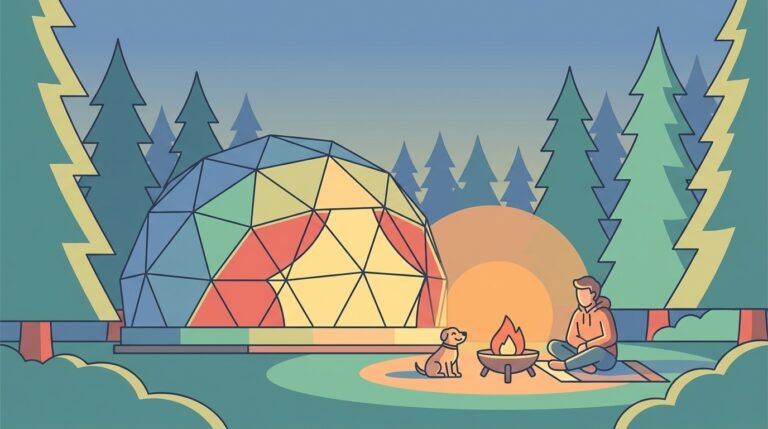
Phase 1: Empathy (Immersive Story Opening)
안녕하세요! 매일한글 에디터입니다. (Hello! This is your Daily Hangul editor.)
Picture this: You have just driven through the misty, pine-covered winding roads of Gapyeong (가평), arriving at a postcard-perfect luxury glamping resort. Your beloved furry companion is enthusiastically pressing their nose against the car window, eager to explore the expansive grassy lawn. You step out into the crisp mountain air, smelling the sweet aroma of charcoal and woodsmoke. But as you approach the front pavilion, reality sets in. Other glampers are lounging in designer outdoor chairs with their well-mannered bichons and poodles; intricate perimeter fences crisscross the campsite; and signs reading ‘반려견 매너타임 준수’ (Comply with pet quiet hours) and ‘목줄 착용 필수’ (Leash mandatory) greet you at every turn.
Suddenly, the anxiety kicks in. What if your dog barks during the quiet campfire hours? How do you ask the campsite manager whether the perimeter fence is double-latched so your pup won’t sneak out into the wild woods? In standard textbooks, you only learned clinical, rigid sentences like ‘개를 데려왔습니다’ (I brought a dog) or ‘개를 텐트에 넣어도 됩니까?’ (May I put the dog in the tent?). Say those phrases in real life, and you will instantly feel an awkward communicative barrier. At a C1 level, mastering the refined, empathetic sociolect of modern Korean dog lovers—addressing your pet as family (우리 아이) and navigating communal safety rules with subtle etiquette (눈치, Nunchi)—is the true key to a stress-free luxury pet-cation (펫캉스).
This guide is crafted directly from our advanced learners’ real travel debriefs and conversations with boutique glamping hosts across Gangwon-do. By the end of this masterclass, you will speak with the natural ease and social intelligence of a seasoned Korean camper.
Phase 2: Deep-Dive Analysis of 3 Core Expressions
1. 혹시 여기 오프리시 가능한 구역이 따로 지정되어 있나요?
- Pronunciation: [Hoksi yeogi o-peu-ri-si ganeunghan guyeog-i ttaro jijeongdoe-eo innayo?] (Sound analogy: Hoke-shee yuh-ghee oh-peu-ree-shee gah-neung-hahn goo-yuck-ee ttah-roh jee-jung-dweh-uh een-nah-yoh?)
- Meaning: Literal: By any chance, is an off-leash capable area designated separately here? | Nuance: Excuse me, do you have an enclosed zone where my dog can play off-leash without disturbing other campers?
- K-Culture Moment: You will hear this phrase frequently in lifestyle vlogs or reality programs like I Live Alone (나 혼자 산다) whenever celebrity pet parents take their rescue dogs to outdoor glamping sites in Yangpyeong.
- Editor’s Insight: Notice the use of the loanword ‘오프리시’ (off-leash) rather than ‘목줄을 풀다’ (untying the leash). While ‘목줄 해제’ sounds regulatory and bureaucratic, ‘오프리시 구역’ is the chic, community-standard jargon used in modern pet-friendly camping hubs.
- Situation Spectrum: Casual: ⚠️ | Semi-formal: ✅ | Formal: ✅
- 🤔 Think About It: In many Western countries, off-leash dog parks are public municipal staples. In Korea’s dense, high-amenity glamping culture, off-leash zones are strictly sequestered luxury amenities. How does your native language negotiate communal space vs. individual pet freedom?
2. 저희 아이가 사회성이 좀 부족해서 그런데, 펜스 이중 잠금 되어 있을까요?
- Pronunciation: [Jeohui aiga sahoeseong-i jom bujokhaeseo geureonde, penseu ijung jamgeum doe-eo isseulkkayo?] (Sound analogy: Juh-hee ah-ee-gah sah-hweh-sung-ee johm boo-johk-heh-suh guh-run-deh, pen-seu ee-joong jahm-geum dweh-uh ees-seul-kkah-yoh?)
- Meaning: Literal: Because our child lacks sociality, is the fence double-locked? | Nuance: My dog is somewhat reactive/nervous around strangers, so could you confirm if your fences have a fail-safe double gate?
- K-Culture Moment: On pet behavioral shows like Kang Hyung-wook’s Dogs Are Incredible (개는 훌륭하다), trainers always praise owners who preemptively disclose their dog’s ‘사회성 부족’ (reactive disposition) with humbleness rather than defensive pride.
- Editor’s Insight: C1 speakers never say ‘우리 개가 사나워요’ (My dog is ferocious). Instead, using ‘저희 아이’ (our child) humanizes the pet, while ‘사회성이 부족하다’ (lacks socialization) functions as a polite, non-confrontational euphemism for reactivity.
- Situation Spectrum: Casual: ⚠️ | Semi-formal: ✅ | Formal: ✅
- 🤔 Think About It: Calling pets ‘아이’ (child) or ‘막내’ (the youngest baby) has become standard in modern urban Korea. Does your native tongue afford non-human family members identical kinship terminology?
3. 불멍할 때 반려견 안전을 위해 화로대 가림막 대여가 가능할까요?
- Pronunciation: [Bulmeonghal ttae ballyeogyeon anjeon-eul wihae hwarodae garimmak daeyeoga ganeunghalkkayo?] (Sound analogy: Bool-mung-hahl tteh bahl-lyuh-gyuhn ahn-juhn-eul wee-heh hwah-roh-deh gah-reem-mahk deh-yuh-gah gah-neung-hahl-kkah-yoh?)
- Meaning: Literal: When doing campfire-zoning-out, for companion dog safety, is braziers safety-screen rental possible? | Nuance: We want to do the campfire safely with our pup; do you have a protective fire-guard screen we could borrow or rent?
- K-Culture Moment: Seen across luxury glamping reels on Instagram where cozy tents feature glowing firepits, roasted sweet potatoes, and dogs snuggled inside sleeping bags behind mesh safety barriers.
- Editor’s Insight: ‘불멍’ (Bulmeong) is an iconic Korean portmanteau (불 ‘fire’ + 멍때리다 ‘to zone out’). Pairing an informal cultural buzzword (불멍) with an ultra-polite honorific question form (대여가 가능할까요?) signals that you are culturally fluent yet deeply respectful.
- Situation Spectrum: Casual: ✅ | Semi-formal: ✅ | Formal: ✅
- 🤔 Think About It: Notice the word ‘반려견’ (companion dog) instead of ‘애완견’ (pet/toy dog). In contemporary Korea, this distinction highlights ethical stewardship over ownership.
Phase 3: Textbook Korean vs. Real Native Korean
Situation 1: Inquiring About Pet Rules Inside the Glamping Tent
- 📖 교과서 한국어:
이 글램핑 텐트 안에 개를 데리고 들어가도 됩니까?
(I geullaemping tenteu ane gae-reul derigo deureogado doepnikka?)
“Is it permissible to bring a dog inside this glamping tent?” - 🗣️ 진짜 한국어:
텐트 내부 동반 입실 가능한가요? 혹시 실내 매너벨트 착용이 필수 규정일까요?
(Tenteu naebu dongban ipsil ganeunghangayo? Hoksi silnae maeneobelteu chak-yong-i pilsu gyujeong-ilkkayo?)
“Is indoor companion entry allowed? Also, is wearing a pet belly band/manner belt a mandatory policy inside the tent?” - 💡 왜 다를까?: Using ‘개’ sounds blunt, dismissive, and detached. Advanced native speakers utilize hospitality jargon like ‘동반 입실’ (accompanied room entry) and proactively ask about ‘매너벨트’ (manner belts/hygiene diapers for pets), signaling that you respect the site’s high-end textiles and bedding.
Situation 2: Greeting Another Camper’s Dog on the Trail
- 📖 교과서 한국어:
당신의 개와 저의 개가 인사해도 좋습니까?
(Dangsin-ui gaewa jeo-ui gaega insahaedo joseumnikka?)
“Is it fine for your dog and my dog to greet each other?” - 🗣️ 진짜 한국어:
저희 애가 호기심이 많은 편인데요, 혹시 친구랑 코인사 잠깐 나눠도 괜찮을까요?
(Jeohui aega hogisimi maneun pyeon-inde-yo, hoksi chin-gurang ko-insa jamkkan nanwo-do gwaenchaneulkkayo?)
“Our pup is quite curious; would it be alright if they had a brief nose-touch greeting with their new friend?” - 💡 왜 다를까?: Second-person pronoun ‘당신’ sounds confrontational or dramatic in spoken Korean. Native dog owners anthropomorphize both dogs as ‘친구’ (friend) and describe the greeting gently as ‘코인사’ (nose greeting).
Phase 4: K-Culture Deep Dive & Non-Verbal Manners
4-1. 눈치 (Nunchi) & Gestures: The Glamping Etiquette Code
- The ‘Short-Leash Hold’ (리드줄 짧게 쥐기): When crossing shared gravel paths between glamping decks, wrap the leash around your palm until it is under 1 meter long. Raising your other hand gently toward your chest with a slight nod to oncoming campers shows proactive control without saying a word.
- The 10 PM ‘매너 타임’ (Manner Time): Korean luxury campsites strictly observe quiet hours beginning at 10 PM. If your dog tends to bark at nocturnal woodland noises, move them inside the inner tent before 9:50 PM. Leaving a dog outside during 매너 타임 can lead to immediate eviction.
- Barbecue Vigilance: During the dinner grill session, Korean etiquette mandates keeping your dog physically leashed to your chair or inside a playpen. Glamping sites use high-temperature briquettes (야자숯), and grease drips can cause severe paw burns.
4-2. Cultural Code Analysis: The ‘펫캉스’ (Pet-cance) Revolution
In South Korea, where over a quarter of households now live with pets amid declining birthrates, the pet industry has shifted from functional care to luxury pampering. Glamping resorts now compete on pet-centric amenities: heated dog pools, personalized doggy bathrobes, and allergen-free roasted beef snacks (수제 간식). Respecting this ecosystem means acknowledging that glamping sites are shared wellness sanctuaries. Glampers expect peer accountability; showing high Nunchi guarantees you the warmest Korean hospitality.
Phase 5: Real-Life Roleplay Scenario
Setting: Front Check-in Pavilion at Forest & Paws Luxury Glamping (포레스트앤포즈) in Gapyeong.
Characters:
* 매니저 박 (Manager Park): A meticulous, friendly outdoor enthusiast who loves dogs but is strict about site safety.
* 민우 (Minwoo): An experienced camper with a 2-year-old active border collie named ‘초코’.
- Turn 1 (Manager Park):
어서 오세요! 포레스트앤포즈입니다. 예약자분 성함과 반려견 견종 확인 부탁드릴게요.
(Eoseo oseyo! Poresiteu-aen-pojeu-imnida. Yeyakjapun seongham-gwa ballyeogyeon gyeonjong hwag-in butakdeurilgeyo.)
“Welcome! This is Forest & Paws. May I please verify the name on the reservation and your dog’s breed?”
🎭 Check-in clipboard in hand, smiling warmly toward the dog. -
Turn 2 (Minwoo):
네, 이민우로 예약했고요, 여기 있는 친구는 두 살 된 보더콜리 초코예요. 중성화랑 기본 접종은 다 마쳤습니다.
(Ne, Lee Minwoo-ro yeyakhaetgoyo, yeogi inneun chin-guneun du sal doen bodeokolli Choko-yeyo. Jungseonghwarang gibon jeopjong-eun da machyeosseumnida.)
“Yes, it’s reserved under Lee Minwoo, and this friend here is Choco, a two-year-old border collie. Neutering and essential vaccines are all up to date.”
🎭 Pulling out a digital vaccination record on his smartphone while keeping the leash short. -
Turn 3 (Manager Park):
초코가 털결도 곱고 아주 늠름하네요! 다만 저희 글램핑장이 잔디 공용 구역은 리드줄 착용이 필수 규정이라서요.
(Chokoga teolgyeol-do gopgo aju neumneumhaneyo! Daman jeohui geullaempingjang-i jandi gong-yong guyeog-eun rideujul chak-yong-i pilsu gyujeong-iraseoyo.)
“Choco has such a gorgeous coat and looks so handsome! However, in our shared lawn areas, leashes are strictly mandatory.”
🎭 Pointing to the marked perimeter path outside the lobby window. -
Turn 4 (Minwoo):
네, 당연히 지켜야죠. 혹시 여기 오프리시 가능한 구역이 따로 지정되어 있나요? 에너지를 좀 빼줘야 해서요.
(Ne, dang-yeonhi jikyeoyajyo. Hoksi yeogi o-peu-ri-si ganeunghan guyeog-i ttaro jijeongdoe-eo innayo? Eneojireul jom ppaejwoya haeseoyo.)
“Of course, naturally we will follow that. By any chance, is there an enclosed off-leash area designated here? I need to let him burn off some energy.”
🎭 Speaking politely while patting Choco's side reassuringly. -
Turn 5 (Manager Park):
텐트 존 D 구역 뒤편에 천연 잔디 반려견 전용 놀이터가 마련되어 있습니다. 거기는 이중 펜스라 안전하게 뛰놀 수 있어요.
(Tenteu jon D guyeok dwipyeone cheon-yeon jandi ballyeogyeon jeon-yong noriteoga maryeondoe-eo isseumnida. Geogineun ijung penseura anjeonhage ttwinol su isseoyo.)
“Behind Glamping Zone D, we have a natural grass playground exclusively for companion dogs. That area has double fences, so he can run safely.”
🎭 Marking Zone D on a resort map with an orange highlighter. -
Turn 6 (Minwoo):
다행이네요! 그리고 저녁에 불멍 세트 이용할 예정인데, 혹시 화로대 안전 가림막도 같이 대여 가능할까요?
(Dahaeng-iney-yo! Geurigo jeonyeoge bulmeong seteu iyonghal yejeong-inde, hoksi hwarodae anjeon garimmak-do gachi daeyeo ganeunghalkkayo?)
“What a relief! Also, we plan to use the campfire set tonight; would it be possible to rent a brazier safety screen alongside it?”
🎭 Inquiring with courteous vocal inflections and an attentive posture. -
Turn 7 (Manager Park):
센스 있으시네요! 호기심 많은 친구들은 불꽃에 다가가기 쉬워서 가림막은 무료로 같이 세팅해 드리겠습니다.
(Senseu isseusineyo! Hogisim maneun chin-gudeureun bulkkoce dagagagi swiwoseo garimmag-eun muryoro gachi setinghae deurigesseumnida.)
“You are so thoughtful and considerate! Curious dogs can easily get too close to the sparks, so we will set up the barrier free of charge.”
🎭 Nodding with visible appreciation at Minwoo's safety awareness. -
Turn 8 (Minwoo):
세심하게 배려해 주셔서 감사합니다. 매너 타임 전까지 쓰레기 분리수거랑 배변 정리도 확실히 해둘게요!
(Sesimhage baeryeohae jusyeoseo gamsahamnida. Maeneotaim jeon-kkaji sseuregi bunrisugeorang baebyeon jeongnido hwaksilhi haedulgeyo!)
“Thank you so much for your attentive care. I will make sure waste recycling and dog waste cleanups are thoroughly finished before quiet hours!”
🎭 Bowing respectfully at 30 degrees while collecting the room key.
🔀 Interactive Choice Point
After setting up your tent, you notice your neighbor’s small French Bulldog staring intently through the fence gap while whimpering. What do you say?
- Option A: “혹시 간식 줘도 돼요? 애가 배고파 보여서요.” (Can I give him a treat? The kid looks hungry.)
- Option B: “안녕하세요! 아이가 너무 사랑스럽네요. 혹시 알레르기 같은 거 없으시면 저희 수제 간식 소량 나눠먹여도 괜찮을까요?” (Hello! Your baby is so lovely. If they don’t have allergies, would it be alright if we shared a small homemade treat?)
- Option C: (Silently toss a piece of your grilled sausage over the fence).
Option Feedback:
* Option A (Risk): Well-intentioned, but assuming the dog is hungry (배고파 보여서) can subtly insult the owner’s caretaking, and many Korean dogs have severe grain/protein allergies.
* Option B (Best): Perfect C1 delivery! Praising the dog (아이), asking about allergies (알레르기), and requesting permission demonstrates elite canine etiquette.
* Option C (Bad): Never do this! Human grilled sausage contains high sodium, garlic, and onion powder, which can cause canine pancreatitis. It violates campsite safety rules instantly.
Phase 6: 10-Second Emotional Shadowing Drill
Speak aloud, paying strict attention to the breath pauses marked by / and the emotional markers.
[😊 친절하고 상냥하게 - Friendly and bright]
“혹시 실례가 안 된다면, / 잔디 운동장 펜스가 / 안쪽까지 완전히 닫혀 있는지 / 확인 한 번만 부탁드려도 될까요?”
(Hoksi sillyega an doendamyeon, / jandi undongjang penseuga / anjjokkkaji wanjeonhi dachyeo inneunji / hwag-in han beonman butakdeuryeodo doelkkayo?)
“If it isn’t too rude, / could I kindly ask you / to verify if the grass field fence / is latched completely shut on the inside?”-
[🥺 조심스럽고 배려 깊게 - Cautious and deferential]
“저희 아이가 / 낯선 소리에 조금 예민한 편이라, / 매너 타임 전에 미리 / 텐트 안으로 데리고 들어가겠습니다.”
(Jeohui aiga / natseon sorie jogeum yeminhan pyeon-ira, / maeneotaim jeone miri / tenteu aneuro derigo deureogagesseumnida.)
*”Since our child / is a bit sensitive to unfamiliar sounds, / I will bring them inside the tent / well before the quiet hours begin.” -
[🤝 정중하고 신뢰감 있게 - Courteous and reassuring]
“불멍 화로대 주변에 / 안전 펜스를 둘러주셔서 / 정말 안심하고 쉴 수 있겠어요. / 신경 써주셔서 감사합니다!”
(Bulmeong hwarodae jubyeone / anjeon penseureul dulleojusyeoseo / jeongmal ansimhago swil su ikkesseoyo. / Sin-gyeong sseojusyeoseo gamsahamnida!)
“Because you set up the safety fence around the campfire pit, / I feel truly at ease resting here. / Thank you for your thoughtful attention!”
Phase 7: K-Culture Mini Dictionary
-
펫캉스 (Pet-kance) [Pet-kang-seu]
- Translation: Pet Vacation (Pet + Vacance).
- Real-world Usage: Refers to high-end travel experiences where pets enjoy luxury human amenities (dog-tailored spas, glamping resorts, and pet menus). Used extensively in hospitality marketing and lifestyle discussions.
- 불멍 (Bulmeong) [Bool-mung]
- Translation: Staring into a campfire in a meditative state of calm.
- Real-world Usage: The quintessential soul of modern Korean camping. At pet sites, you often hear: “초코랑 나란히 앉아서 불멍했어요” (I zoned out by the fire sitting side-by-side with Choco).
- 매너벨트 (Manner Belt) [Mae-neo-bel-teu]
- Translation: Male pet belly band / hygiene diaper wraps.
- Real-world Usage: Mandatory gear in pet cafes and glamping dome tents to prevent marking territory on expensive carpets and wooden furniture.
- 개통령 (Dog President) [Gae-ttong-ryeong]
- Translation: Canine President (Honorific nickname for celebrity dog trainers).
- Real-world Usage: Derived from 개 (dog) + 대통령 (President). It refers to renowned trainer Kang Hyung-wook, whose philosophy transformed how modern Koreans perceive dog psychology and public manners.
Phase 8: Traveler’s Survival Kit
Top 3 Survival Phrases for Pet Camping
- 혹시 배변 봉투 여분 있으신가요?
(Hoksi baebyeon bongtu yeobun isseusingayo?)
“By any chance, do you have a spare dog waste bag?”
Pro Tip: Use this when your roll runs out on the trail; Korean dog owners are delighted to share and will praise your responsibility. - 저희 강아지가 겁이 많아서 천천히 다가와 주시면 감사하겠습니다.
(Jeohui gang-ajiga geobi manaseo cheoncheonhi dagawa jusyimyeon gamsahagesseumnida.)
“Our puppy gets easily frightened, so we would appreciate it if you could approach slowly.”
Pro Tip: Perfect polite defense mechanism if excited children run toward your dog at the glamping site. - 텐트 바닥 난방 온도 조절기 위치가 어디인가요?
(Tenteu badak nanbang ondo jojeolgi wichiga eodi-ingayo?)
“Where is the tent’s floor ondol heating controller located?”
Pro Tip: Luxury glamping tents in Korea feature ondol (heated flooring). Regulating the heat is crucial so your dog does not overheat while sleeping on the floor.
Editor’s Travel Note
- Essential Booking & Maps: In Korea, Google Maps will not give accurate walking or localized business paths. Be sure to complete your 네이버 지도 앱 다운로드 (Naver Map app download) and search for ‘애견동반 글램핑’ (pet-friendly glamping). For dedicated pet-friendly pensions and glamping listings, check the specialized 반려생활 앱 다운로드 (Ban-Life app download) to verify weight limits (소형견/중형견/대형견 restrictions).
- Pet Taxi Services: If you do not rent a car, standard taxis may refuse pets unless they are in hard crates. Pre-book an app like Kakao T Pet (카카오 T 펫) for seamless transport from Seoul to Gyeonggi-do camping grounds.
Phase 9: “A Step Deeper” (Cultural & Philosophical Reflection)
In a hyper-urbanized, apartment-centric society like South Korea, luxury glamping with dogs represents more than weekend leisure—it is a spiritual sanctuary. Within apartment complexes (아파트), dogs must remain quiet, leashed tightly, and isolated from open soil. The pet-glamping boom reflects modern Koreans’ yearning to return their beloved ‘furry children’ to nature, unburdened by urban density. However, because Korean collectivism places enormous moral weight on not causing inconvenience (민폐, Min-pye) to the group, dog owners hold themselves to exceptionally strict community standards. When you display precise etiquette and considerate language at a Korean campsite, you are not merely a tourist following rules—you are honoring an unspoken social compact of mutual respect.
💬 Your Turn: How does camping with pets differ in your home country? Are pet parents expected to maintain strict silence zones, or is the atmosphere more relaxed and rustic? Drop your thoughts in the comments below!
Phase 10: FAQ & Avoiding Misunderstandings
Q: Can I let my well-trained dog walk off-leash if there is no one else on the grass field?
A: Absolutely not. In South Korea, keeping dogs leashed in public and communal campsite areas is enforced by both legal animal welfare statutes and strict private campsite terms. Letting your dog roam without a leash outside designated ‘오프리시 펜스 구역’ (fenced off-leash zones) will trigger immediate friction with staff and fellow glampers.
Q: Why do campsite managers ask for my dog’s weight (몸무게) during check-in?
A: Most Korean pet glamping grounds divide facilities by size: Small (소형견, under 7-10kg), Medium (중형견, 10-15kg), and Large (대형견, 15kg+). Some sites prohibit large breeds altogether due to insurance rules or fence height constraints. Always know your dog’s weight in kilograms!
Q: Do I really need to put a ‘매너벨트’ (manner diaper) on my dog inside the tent?
A: Yes, if the glamping tent features carpeted flooring, fabric sofas, or hotel-grade white duvet bedding. Even the most house-trained dogs tend to mark new, unfamiliar scents left behind by previous visiting animals. Wearing a manner belt on the first night avoids costly cleaning penalty fees (특수 세탁비).
🚨 Common Mistakes (흔한 실수)
- Referring to your host’s dog as ‘그 개’ (that dog): Calling someone’s dog ‘그 개’ sounds cold and abrasive. Correct Action: Say ‘그 친구’ (that friend) or ‘아이’ (child).
- Feeding another camper’s dog treats without permission: Pet allergies are taken very seriously in Korea. Correct Action: Always ask: “간식 하나 줘도 괜찮을까요?” (Would it be okay if I gave them a small treat?).
- Leaving dog waste bags beside the barbecue pit: Glamping sites are pristine outdoor spaces. Leaving bagged waste lying around is considered severe 민폐. Correct Action: Ask where the ‘배변 쓰레기통’ (pet waste disposal bin) is located or seal it within a designated trash bag.
Phase 11: Action Missions & Engagement
- 🥉 Bronze Mission (Solo Practice): Practice the Phase 6 shadowing drill 3 times aloud in front of a mirror until you can deliver the phrase “저희 아이가 사회성이 좀 부족해서 그런데요” without stumbling.
- 🥈 Silver Mission (SNS Community): Share a photo of your pet on Instagram or Twitter with the caption written in Korean: “이번 주말에는 초코랑 가평으로 펫캉스 떠나요! 🏕️🐾 #반려견글램핑 #불멍”.
- 🥇 Gold Mission (Real-Life Mastery): The next time you visit a Korean pet cafe or talk to a Korean dog owner, refer to your dog as ‘우리 아이’ or ‘우리 집 막내’ instead of ‘내 개’, and observe how warmly their expression shifts!
- 🎮 K-Culture Mission: Watch an episode of Kang Hyung-wook’s Bodeum TV (보듬TV) or a Korean glamping YouTube vlog (search: ‘강아지 동반 감성 글램핑’). Identify at least three times the host uses the words ‘불멍’, ‘매너벨트’, or ‘코인사’.
Phase 12: Interactive Quiz Challenge
Question 1: Situational Judgement
You have arrived at your luxury glamping dome. You want to ask the host if your male dog needs to wear a belly band indoors. Which Korean sentence is the most natural, polished, and polite (C1)?
* A) 개 기저귀 차야 합니까?
* B) 텐트 실내 이용 시 매너벨트 착용이 필수 규정일까요?
* C) 강아지 바지 입혀요?
정답 및 해설 확인하기 (Click to reveal answer)
Correct Answer: B
* Explanation: Option B utilizes the polite lexical item ‘매너벨트’ along with the respectful indirect inquiry ‘필수 규정일까요?’ (is it a mandatory rule?). Option A is grammatically understandable but overly blunt. Option C uses childlike, awkward phrasing.
Question 2: Fill-in-the-Blank
Complete the sentence using the natural Korean camping buzzword meaning ‘zoning out peacefully while watching the campfire’:
“저녁 식사 끝나고 강아지랑 화로대 앞에서 ___________ 하면서 힐링했어요.”
정답 및 해설 확인하기 (Click to reveal answer)
Correct Answer: 불멍
* Full Sentence: “저녁 식사 끝나고 강아지랑 화로대 앞에서 불멍 하면서 힐링했어요.” (After dinner, I healed while zoning out by the fire with my dog in front of the brazier.)
Question 3: True / False Cultural Etiquette
In Korea, it is considered welcoming and polite to immediately let your dog approach a stranger’s tent to say hello without keeping them on a leash.
* True
* False
정답 및 해설 확인하기 (Click to reveal answer)
Correct Answer: False
* Explanation: Uninvited visits to another camper’s pitch violate personal boundaries and Nunchi. Always keep your dog leashed and check with neighbors before allowing dogs to interact.







