

Phase 1: 공감 (Story-driven Opening)
안녕하세요! 매일한글 에디터입니다.
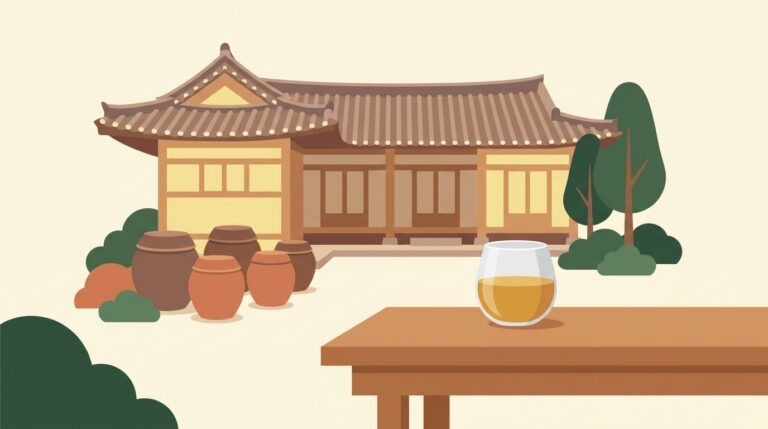
Imagine this scene: You find yourself in a centuries-old artisanal distillery tucked amidst the misty pine hills of Andong or Hadong. The courtyard is lined with breath-taking earthenware onggi vats, humming with living yeasts. The master brewer, a living cultural treasure, gracefully pours a crystal-clear, slow-distilled regional soju infused with wild local botanicals into your porcelain goblet. You take a sip. The layered notes of toasted rice, roasted sesame, and crisp green plum unfold across your palate. You yearn to convey the sheer depth of this terroir-driven masterpiece. But in that crucial, poetic moment, the only words your tongue can assemble are: “이거 진짜 맛있어요! 완전 대박이에요!” (This is really delicious! Totally awesome!).
Instantly, the sophisticated atmosphere flattens. While enthusiastic, generic praise simply fails to capture the intricate socio-cultural synergy between local farming, micro-distilleries, and gastronomic heritage. Many of our advanced learners reach C2 proficiency in academic essays, yet hit a wall when attempting high-register culinary storytelling and regional tourism discourse. Elevating traditional Korean liquor (jeontongju) into a conversation about rural economic revitalization requires subtle metaphors, cultural empathy, and culinary literacy. This masterclass is drawn directly from our work with international gastro-diplomats, travel writers, and sommeliers to give you the exact linguistic toolkit needed to discuss Korean culinary tourism with elegance and intellectual grace.
Phase 2: 핵심 표현 3선 심층 분석 (Core Expressions Deep Dive)
1. 지역색을 살린 페어링 (Jiyeoksaegeul sallin peeoring)
- Pronunciation: [Ji-yeok-sae-geul sal-lin pe-eo-ring] (Think of ‘Jee-yeok-segg-ul sal-lin pair-ing’)
- Meaning:
- Literal: A pairing that revives regional color.
- Nuanced: A terroir-driven pairing that authentically showcases the micro-climate, local produce, and native heritage of the region.
- K-Culture Moment: Commonly heard in gourmet food programs such as The Paik’s Spirit or high-end dining travel shows when top culinary curators match regional heritage brews with seasonal produce harvested within ten miles of the brewery.
- Editor’s Insight: At a C2 level, avoid using the flat noun “조합” (combination). “지역색” (regional character/terroir) paired with the causative verb “살리다” (to bring to life) illustrates your deep grasp of gastronomic philosophy.
- Situation Spectrum: Casual ⚠️ | Semi-formal ✅ | Formal ✅
- 🤔 Think About It: In English, we often borrow the French term terroir. How does the Korean concept of “지역색” (literally ‘regional color’) reflect a community-focused understanding of geography and flavor?
2. 풍미의 지평을 넓히다 (Pungmiui jipyeongeul neolpida)
- Pronunciation: [Pung-mi-ui ji-pyeong-eul neol-pi-da] (Pronounce ‘Pung-mee-wee jee-pyong-eul nul-pee-da’)
- Meaning:
- Literal: To widen the horizon of flavor/taste.
- Nuanced: To push culinary boundaries, elevating sensory experience and expanding the palate’s appreciation of traditional ingredients.
- K-Culture Moment: Used by culinary critics and judges on sophisticated food documentaries when evaluating modern reinterpretations of ancestral yakju (clarified herbal rice wine) combined with artisanal fermentations.
- Editor’s Insight: “지평을 넓히다” is a beloved metaphor in elite Korean journalism. Connecting it with “풍미” (aromatic depth and flavor) transforms a simple tasting comment into an intellectual appraisal of gastronomic artistry.
- Situation Spectrum: Casual 🚫 | Semi-formal ✅ | Formal ✅
- 🤔 Think About It: In your native tongue, do you describe taste through sensory adjectives or conceptual metaphors of space and horizons?
3. 로컬 미식 투어의 방점을 찍다 (Rokeol misik tueoui bangjeomeul jjikda)
- Pronunciation: [Ro-keol mi-sik tu-eo-ui bang-jeom-eul jjik-da] (Pronounce ‘Lo-cul mee-seek too-uh-we bahng-jum-ul jjeek-dah’)
- Meaning:
- Literal: To put an accent mark (bangjeom) on a local culinary tour.
- Nuanced: To serve as the definitive highlight or the crowning jewel of a regional gastronomic journey.
- K-Culture Moment: Encountered in prestigious travel columns and government gastro-tourism summits detailing how visiting historic regional distilleries crowns an entire provincial travel route.
- Editor’s Insight: “방점을 찍다” originally stems from the tonal dots used in medieval Korean texts (Hunminjeongeum). In modern rhetorical Korean, it means emphasizing the most pivotal, crowning achievement of an enterprise.
- Situation Spectrum: Casual ⚠️ | Semi-formal ✅ | Formal ✅
- 🤔 Think About It: Why does Korean rhetoric favor punctuation metaphors like “방점을 찍다” (placing an accent mark) over milestone metaphors when celebrating culinary climaxes?
Phase 3: 교과서 한국어 vs 진짜 한국어 (Textbook vs. Authentic Real Korean)
Situation 1: Describing a brewery’s artisanal fermentation notes
- 📖 교과서 한국어: 이 술은 전통 쌀 향미가 나고 음식과 매우 잘 어울려 맛이 좋습니다. (I sul-eun jeontong ssal hyangmiga nago eumsikgwa maeu jal eoullyeo masi joseumnida.) — “This liquor has a traditional rice aroma and goes very well with food, tasting good.”
- 🗣️ 진짜 한국어: 옹기 숙성 특유의 누룩향과 산미가 단정하게 잡혀 있어, 향토 요리와 기막힌 조화를 이루네요. (Onggi sukseong tekyuui nurukhyanggwa sanmiga danjeonghage japhyeo isseo, hyangto yoriwa gimakhin johwareul iruneyo.) — “The earthy wild-yeast aroma and acidity unique to onggi maturation are impeccably balanced, striking a phenomenal harmony with the regional cuisine.”
- 💡 왜 다를까?: Advanced speakers do not rely on generic “좋다” (good). They specify the medium of fermentation (onggi sukseong), identify nuanced yeast characteristics (nurukhyang), and praise structural balance with refined adverbs like 단정하게 (neatly/impeccably balanced).
Situation 2: Discussing rural economic revitalization via culinary tourism
- 📖 교과서 한국어: 전통주 투어를 하면 관광객이 많이 와서 지역 경제에 도움이 됩니다. (Jeontongju tueoreul hamyeon gwangwanggaegi mani waseo jiyeok gyeongje-e doumi doemnida.) — “If we do traditional liquor tours, many tourists will visit and help the local economy.”
- 🗣️ 진짜 한국어: 양조장 투어가 단순한 시음을 넘어, 지역 특산물 소비를 견인하는 고부가가치 상생 모델로 자리 잡았군요. (Yangjojang tueoga dansunhan sieumeul neomeo, jiyeok teuksanmul sobireul gyeoninhaneun gobugagachi sangsaeng moderro jari jabakgunyo.) — “Brewery tours have transcended simple tastings, establishing themselves as a high-value symbiotic model that drives local agricultural consumption.”
- 💡 왜 다를까?: C2 discourse shifts the narrative from simplistic foot traffic to structural economic synergy, employing analytical terminology such as “견인하다” (to drive/pull forward) and “상생 모델” (symbiotic, win-win model).
Phase 4: K-Culture 딥다이브 & 비언어적 매너 (Deep Dive & Non-Verbal Manners)
4-1. 눈치(Nunchi) & Sommelier Gestures in Regional Distilleries
When tasting heritage liquor before a master artisan (myeongin), speed is the ultimate sign of disrespect. Never gulp the drink like a cheap shot of commercial soju at a college bar.
* The Tilt and Gaze: Hold the small ceramic cup with both hands—cradling the base with your left hand while lightly anchoring the rim with your right fingertips. Gently swirl and raise it to chest level, pausing to appreciate the liquor’s clarity against natural light.
* The Silent Olfactory Nod: Bring the cup under your nose, inhale slowly through both mouth and nose, and offer a slow, contemplative half-second nod toward the brewer before taking your first sip. This non-verbal signal conveys that you honor the artisan’s dedication (정성) before uttering a single syllable.
4-2. Cultural Code: The Renaissance of “Chonkangse” and Craft Micro-Breweries
Korea’s younger generations (MZ) have pioneered Chonkangse (촌캉스)—a portmanteau of Chon (rural village) and Vacance (vacation). Far from viewing provincial villages as monotonous, modern Koreans seek high-end gastronomic retreats. Boutique breweries utilizing regional specialties—such as Mungyeong apples, Goheung yuzu, and Seocheon glutinous rice—have transformed into curated cultural centers. Engaging fluently in this dialogue demonstrates that you are not just studying the language from books; you understand the pulsating socio-geographic trends shaping contemporary Korean identity.
Phase 5: 실전 롤플레이 시나리오 (Interactive Role-Play Simulation)
Setting: You are visiting an artisanal boutique distillery and farm-to-table culinary salon in Mungyeong. You are conversing with Master Park (박 명인), an acclaimed master brewer who creates oak- and clay-aged spirits using regional organic apples and wild medicinal herbs.
- Master Park: 먼 길 오시느라 고생 많으셨습니다. 이번에 지역 사과 농가들과 협업하여 새로 빚어낸 40도 증류주입니다. (Meon gil osineura gosaeng maneusseumnida. Ibeone jiyeok sagwa nonggadeulgwa hyeobeophayeo saero bijeonaen sasipdo jeungnyujuimnida.)
- 🎭 행동 지문: 양손으로 목공예 트레이에 담긴 유기 잔을 건네며 그윽한 미소를 짓는다.
- (You must have had a long journey getting here. This is a 40-degree distilled spirit newly crafted in collaboration with local apple farmers.)
- You: 배려해 주셔서 감사합니다, 명인님. 잔에서 피어오르는 청량한 사과 향이 일품이네요. (Baeryeohae jusyeoseo gamsahamnida, myeonginnim. Janeseo pieooreuneun cheongnyanghan sagwa hyangi ilpumineyo.)
- 🎭 행동 지문: 잔을 두 손으로 받쳐 들고 향을 먼저 음미한 뒤 한 모금 살짝 머금는다.
- (Thank you for your warm hospitality, Master. The crisp apple aroma blossoming from the glass is truly exquisite.)
- Master Park: 허허, 단번에 알아보시는군요. 우리 지역의 큰 일교차 덕분에 당도 높은 사과가 생산되는데, 그 풍미를 증류액에 온전히 담아내기가 쉽지 않았습니다. (Heoheo, danbeone arabosineungunyo. Uri jiyeogui keun ilgyocha deokbune dangdo nopeun sagwaga saengsandoeneunde, geu pungmireul jeungnyuaege onjeonhi damanaegiga swipji anhasseumnida.)
- 🎭 행동 지문: 잔잔한 자부심 어린 표정으로 증류기를 바라본다.
- (Haha, you noticed right away. Thanks to our region’s wide diurnal temperature variation, highly sweet apples are produced, but bottling that delicate flavor into a distillate was no easy feat.)
- You: 마셔보니 첫 맛은 산뜻하면서도 뒷맛은 묵직하게 받쳐주는 균형감이 놀랍습니다. (Masyeoboni cheot maseun santseuthameonseodo dwinmaseun mukjikhage batchyeojuneun gyunhyeonggami nollapseumnida.)
- 🎭 행동 지문: 목 넘김 후 잔을 가볍게 내려놓으며 감탄 섞인 눈빛으로 응대한다.
- (Tasting it, the initial palate is refreshing while the finish carries a grounded, substantial balance that is truly striking.)
- Master Park: 그렇게 평가해 주시니 큰 보람을 느낍니다. 이 술을 중심으로 마을 청년들과 함께 로컬 다이닝 프로그램을 구상 중인데, 여행자들의 반응이 어떨지 고민스럽네요. (Geureoke pyeonggahae jusini keun borameul neukkimnida. I suleul jungsim-euro maeul cheongnyeondeulgwa hamkke rokeol daining peurogeuraemeul gusang junginde, yeohaengjadeurui baneungi eotteolji gominseureopneyo.)
- 🎭 행동 지문: 조심스럽게 조언을 구하듯 고개를 기울인다.
- (Hearing your critique brings immense fulfillment. We are currently designing a local dining program centered on this brew alongside village youth, yet I wonder how travelers will receive it.)
🔀 인터랙티브 분기점: How will you respond to Master Park?
- 선택지 A (Best): 단순한 양조장 견학에 그치지 않고 사과 과수원과 연계한 미식 페어링을 선보인다면, 지역 미식 투어의 방점을 찍는 독보적인 코스가 될 것입니다. (Dansunhan yangjojang gyeonhage geuchiji anko sagwa gasuwongwa yeon-gyehan misik peeoring-eul seonbo-indamyeon, jiyeok misik tueoui bangjeomeul jjikneun dokboyeogin koseuga doel geosimnida.)
- 선택지 B (Bad): 술맛이 좋으니까 서울 핫플레이스 식당에 납품하면 젊은 사람들이 많이 살 것 같아요. (Sulmasi joeunikka seoul hatpeulleiseu sikdange nap-pumhamyeon jeolmeun saramdeuri mani sal geot gatayo.)
- 선택지 C (Risk): 요즘 유행하는 서양 위스키 증류소들처럼 공격적인 마케팅을 하지 않으면 외지인들은 절대 찾아오지 않을 텐데요. (Yojeum yuhaenghaneun seoyang wiseuki jeungnyusodeulcheoreom gonggyeokjeogin maketing-eul haji aneumyeon oejisindeureun jeoldae chaja-oji aneul tendeyo.)
💡 분기점 피드백 (Detailed Analysis)
- Choice A (Best): Perfect! You validated his collaborative rural vision, integrated the key advanced metaphor (“미식 투어의 방점을 찍다”), and elevated the dialogue to holistic regional eco-tourism. The Master will be thoroughly impressed by your intellect.
- Choice B (Bad): This response reduces an artisan’s lifelong dedication to provincial identity into mere commercial supply-chain logistics focused on Seoul. It misses the foundational point of local revitalization.
- Choice C (Risk): Aggressive and culturally insensitive. Comparing ancestral Korean distilling traditions unfavorably to Western commercialism risks alienating the master artisan and breaking the delicate bond of mutual respect.
Phase 6: 10초 감정 섀도잉 드릴 (Emotional Shadowing Drill)
Master the subtle cadences of high-end critique. Practice with precise emotional inflection and rhythm markers (/ = brief pause, // = deliberate cadence drop).
[🍷 깊은 감탄과 학술적 진중함을 담아]
“지역의 기후와 / 누룩의 생명력이 빚어낸 산미가 / [풍미의 지평을 넓혀주네요]. //”
(Jiyeogui gihuwa / nurugui saengmyeongnyeogi bijeonaen sanmiga / pungmiui jipyeongeul neolpyeojuneyo.)-
[🌿 정중하고 확신에 찬 어조로]
“제철 식재료와 어우러진 이 페어링은 / [로컬 미식 투어의 방점을 찍기에] / 한 치의 부족함도 없습니다. //”
(Jecheol sikjaeryowa eoureojin i peeoring-eun / rokeol misik tueoui bangjeomeul jjikgie / han chiui bujokhamdo eopseumnida.) -
[🤝 따뜻하고 격려하는 파트너십의 톤으로]
“단순한 시음을 넘어 / 지역 농가와 상생하는 모델이야말로 / [음식 관광의 본질적인 미래]라고 생각합니다. //”
(Dansunhan sieumeul neomeo / jiyeok nonggawa sangsaenghaneun moderiyamallo / eumsik gwangwangi bonjiljeogin miraerago saenggakhapnida.)
Phase 7: K-Culture 미니 사전 (Core Gastro-Tourism Glossary)
- 양조장 투어 (Yangjojang tueo): Curated craft brewery/distillery exploration. In contemporary gastro-tourism, this denotes experiential cultural travel encompassing fermentation heritage, tastings, and cooking salons.
- 누룩 (Nuruk): Korea’s ancestral fermentation starter cultivated from raw whole grains (wheat, rice, or barley) colonized by wild airborne yeasts and molds. It forms the biochemical soul and aromatic signature of authentic Korean liquor.
- 제철 식재료 (Jecheol sikjaeryo): Seasonal agricultural produce harvested at the absolute apex of fresh nutritional and gustatory vitality. The philosophical bedrock of Korean food-beverage pairings.
- 촌캉스 (Chonkangseu): A celebrated trend blending rural simplicity (chon) with wellness holidaying (vacance), prioritizing hyper-local food immersion and slow living away from hyper-dense metropolises.
Phase 8: 여행자를 위한 생존 키트 (Traveler’s Survival Kit)
🧳 서바이벌 표현 TOP 3
- “이 술의 빚는 과정과 페어링 스토리를 들려주실 수 있나요?”
(I sul-ui binneun gwajeong-gwa peeoring seutorireul deullyeojusil su innayo?)- Pro Tip: Shows intellectual curiosity toward process rather than intoxicating potency.
- “지역 농산물과의 페어링 코스가 따로 마련되어 있습니까?”
(Jiyeok nongsanmulgwaui peeoring koseuga ttaro maryeondoeeo itsseumnikka?)- Pro Tip: Inquires gracefully whether the brewery offers tasting menus paired with indigenous local farm harvests.
- “택배 발송이나 정기 구독 서비스도 지원하시나요?”
(Taekbae balsong-ina jeonggi gudok seobiseudo jiwonhasinayo?)- Pro Tip: Crucial for buying regional bottles that are hard to transport on regional bus or train journeys.
🧭 Editor’s Travel Note
- Navigation: When hunting down heritage breweries in regions like Damyang, Seocheon, or Mungyeong, Western mapping services frequently falter. Always ensure you complete your 네이버 지도 앱 다운로드 to uncover precise operating hours and bus links.
- Reservations: High-end seasonal pairing salons often require prior booking through dedicated portals; consider checking the 캐치테이블 앱 다운로드 for curated farm-to-table pop-ups before embarking on your rural journey.
Phase 9: “한 발 더 깊이” (Reflective Humanities Essay)
In traditional Korean philosophy, human gastronomy is never isolated from its ecological habitat—a worldview captured by the classical principle of Sin-to-bul-i (身土不二: body and earth are non-dual). When you drink artisanal regional liquor in Korea, you are not merely ingesting ethanol; you are consuming the seasonal rainfall, the mineral topography of regional granites, and the labor of generational farming families. In an era where hyper-urbanization threatens rural demographic survival, food tourism anchored by regional distilleries operates as cultural conservation. It transforms passive tourists into respectful witnesses of living heritage. When we master the language of nuance, we do not simply demonstrate linguistic proficiency—we honor the silent toil behind every droplet.
💬 Your Turn: What traditional drink from your own culture carries deep regional identity, and how would you translate its “soul and terroir” into Korean? Leave your thoughts in the comments below!
Phase 10: FAQ & 오해 방지 (FAQ Schema)
Q: Can I use the word “마리아주” (Mariage) instead of “페어링” (Pairing) in Korean?
A: Yes, “마리아주” (from French mariage) is widely understood among sommeliers in Seoul. However, in regional artisanal breweries, “페어링” (Pairing) or native poetic terms like “어울림” (harmony) or “궁합” (alchemy/compatibility) resonate far more authentically and naturally.
Q: Is all traditional Korean clear alcohol considered “Soju”?
A: Not at all. Distilled alcohol made the authentic way is Jeungnyu-sik Soju (증류식 소주), while clear, non-distilled fermented rice wine is classified strictly as Yakju (약주) or Cheongju (청주). Conflating Yakju with Soju signals beginner-level gastro-literacy.
Q: How do I express that an alcohol has a dry profile rather than sweet?
A: Avoid saying “안 달아요” (It’s not sweet), which can sound unenthusiastic. Instead, say “단맛이 절제되어 드라이하고 깔끔합니다” (The sweetness is impeccably restrained, leaving a dry and pristine palate finish).
🚨 흔한 실수 (Common Mistakes) 경고판
- Mistake: Using “원샷!” (One shot!) with elderly masters or high-proof heritage spirits.
- Correct Action: Sip with contemplative pauses. Say: “향이 깊어 천천히 음미하게 되네요” (The bouquet is so profound it compels one to savor it slowly).
- Mistake: Calling craft makgeolli simply “cheap worker’s wine” (노동주).
- Correct Action: Acknowledge its historical agrarian roots respectfully by referring to its rich heritage: “농경 문화의 든든한 동반자였던 술” (The steadfast companion of historic agricultural culture).
- Mistake: Complimenting a brew merely on alcohol percentage (“도수가 높아서 화끈하네요”).
- Correct Action: Praise the textural integration: “도수가 높은데도 목 넘김이 매우 부드럽습니다” (Despite the high ABV, the finish down the palate is remarkably velvety).
Phase 11: 액션 미션 & 참여 유도 (Action Missions)
- 🥉 Bronze Mission (Self-Practice): Read aloud the Phase 6 Shadowing Drill three times, paying meticulous attention to breathing pauses (
/) and dignified resonance. - 🥈 Silver Mission (Social Connection): Pick your favorite regional Korean liquor (e.g., Hansan Sogokju, Andong Soju, or Makgeolli), take a photo, and post a one-sentence Korean tasting note using “지역색을 살린 페어링” on your social feed or in our comments.
- 🥇 Gold Mission (Real-World Application): On your next trip to a Korean restaurant, boutique pub (Jumak), or distillery, ask the server: “이 지역의 특산물을 활용한 추천 전통주가 있을까요?” (Is there a recommended traditional liquor featuring local specialties of this region?).
🎮 K-Culture Mission: Watch an episode of Sung Si-kyung’s Paik’s Spirit (백스피릿) or his YouTube channel food reviews. Spot whenever a culinary critic or chef uses the word “풍미” or “페어링,” and jot down the dish it was accompanied by!
Phase 12: 인터랙티브 퀴즈 챌린지 (Interactive Quiz Challenge)
Test your high-register gastronomic Korean mastery before embarking on your next rural expedition!
Quiz 1. Situational Judgment
You are sitting with a master distiller in Gangwon-do who just shared his struggles of reviving traditional sorghum-based distilled liquor. Which statement demonstrates peak C2 eloquence and empathetic understanding?
* (A) 빨리 공장 크게 지어서 해외 수출로 떼돈 버세요!
* (B) 대량 생산의 시대에 이런 토착 원료와 정통 방식을 지켜내신 점이야말로, 지역 미식 관광 활성화의 든든한 초석이 될 것입니다.
* (C) 외국 위스키보다 색깔이 덜 예쁜데 오크통에 오래 넣어두시는 건 어때요?
정답 및 해설 확인하기 (Click to reveal)
정답: (B)
- 해설: Option (B) reflects sophisticated socio-cultural acumen, praising the preservation of native ingredients (“토착 원료”) and heritage methods (“정통 방식”) as the bedrock (“초석”) of regional tourism revitalisation. Option (A) is crassly consumerist, and Option (C) displays cultural insensitivity.
Quiz 2. Fill-in-the-Blank
다음 문장의 빈칸에 들어갈 가장 격조 높은 표현을 고르시오.
“이번 남도 식도락 기행은 제철 식재료와 유서 깊은 전통주가 만나 로컬 미식 투어의 ( )을/를 찍었습니다.”
* (A) 마침표
* (B) 방점
* (C) 느낌표
정답 및 해설 확인하기 (Click to reveal)
정답: (B) 방점
- 해설: In high-register journalism and cultural critique, “방점을 찍다” is the exact idiom used to mark a defining, glorious highlight. While “마침표를 찍다” means concluding/finishing, “방점을 찍다” conveys triumphant, peak artistic emphasis.
Quiz 3. True or False Cultural Code
Traditional Korean nuruk contains a single, isolated laboratory-grown yeast strain, similar to modern industrial baking yeast. (True / False)
정답 및 해설 확인하기 (Click to reveal)
정답: False
- 해설: Traditional nuruk is an open-air, wild-fermented microbiome culture teeming with naturally occurring diverse molds, bacteria, and wild yeasts native to the specific micro-climate of that region. This bio-diversity is the very reason why traditional Korean liquor is inherently rooted in authentic local terroir!







