

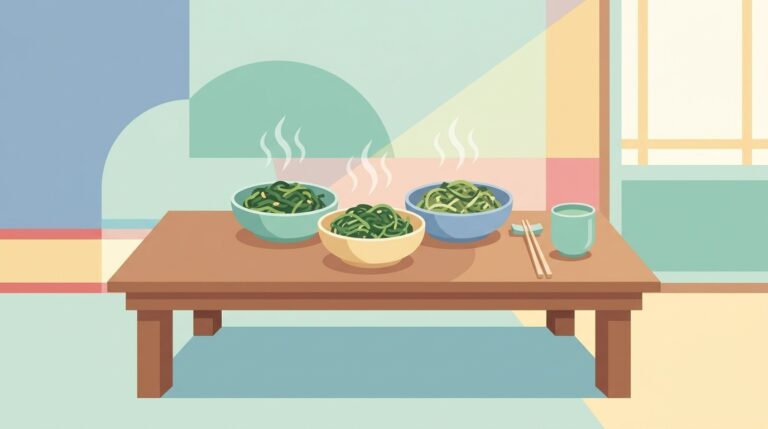
Phase 1: 공감 (Story-Driven Opening)
안녕하세요! 매일한글 에디터입니다.
Imagine this: It is a crisp April afternoon in Seoul. The cherry blossoms are fluttering down, and you stroll into a quaint, bustling neighborhood eatery with wooden tables and sizzling earthenware pots. The server smiles warmly and lays out six colorful side dishes. But wait—instead of just bright red kimchi, you are greeted by an array of leafy greens you have never seen before. Some look like leafy clover, others like baby roots tossed in fragrant sesame oil. You take a bite. It is nutty, savory, and carries a gentle, earthy bitterness that instantly clears your palate.
Suddenly, you want to ask the server what these delicious wild herbs are, or compliment the chef on how fresh and aromatic they smell—yet the only food words in your head are bibimbap and bulgogi! Don’t panic. Many of our beginner learners tell us: “I see locals raving about spring greens on food shows, but at restaurants, I just nod quietly because I don’t know how to talk about wild herbs!”
Learning how to order, taste, and compliment 봄나물 (bom-namul – spring wild greens) is your secret passport to experiencing authentic Korean food culture like a true insider. In this guide, tailored specifically for elementary A2 learners, you will master practical phrases, table etiquette, and local cultural hacks so you can savor every bite of spring with total confidence.
Phase 2: 핵심 표현 3선 심층 분석 (Core Expressions Deep Dive)
Here are the top three expressions you must know when seasonal spring greens hit the table:
1. 향이 정말 좋아요! (Hyangi jeongmal joayo!)
- Pronunciation: [Hyang-i jeong-mal jo-ah-yo] (Think: “Hyang” rhymes with “song” spoken with a breathy ‘y’, and “jo-ah-yo” sounds like “Joe-ah-yo”)
- Meaning: Literal: “The scent is really good!” / Real Nuance: “This aroma is so fresh and appetizing!”
- K-Culture Moment: On variety shows like Three Meals a Day (삼시세끼), guests lean over a boiling pot of fresh wild greens soup and murmur this exact phrase with closed eyes.
- Editor’s Insight: In Korean culinary talk, 향 (hyang) refers to botanical aromas—herbs, sesame oil, and tea. Using hyang rather than just masisseoyo (delicious) instantly makes you sound like a sophisticated diner!
- Situation Spectrum: Casual ✅ | Semi-formal ✅ | Formal ✅
- 🤔 Think About It: In English, we often say “This smells great,” but Koreans emphasize the lingering “aroma/scent” (hyang) when enjoying wild mountain herbs. What sensory words does your culture use for fresh herbal food?
2. 이거 쌉싸름한데 중독성 있어요. (Igeo ssapssareumhande jungdokseong isseoyo.)
- Pronunciation: [Ee-geo ssap-ssah-reum-han-de joong-dok-seong ee-sseo-yo] (The double ‘ss’ is crisp and sharp, like the hiss of steam: “ssap-ssah”)
- Meaning: Literal: “This is lightly bitter, but has addictiveness.” / Real Nuance: “It has a pleasant bite of bitterness, and I can’t stop eating it!”
- K-Culture Moment: A classic line uttered by K-pop idols during countryside food challenges when discovering that herbal bitterness actually awakens your appetite!
- Editor’s Insight: Korean has two words for bitter: sseuda (medicinal, harsh bitter) and 쌉싸름하다 (ssapssareumhada) (pleasant, herbal, appetizing bitterness). Koreans cherish this flavor profile in spring because it symbolizes vitality and waking up from winter slumber.
- Situation Spectrum: Casual ✅ | Semi-formal ✅ | Formal ⚠️
- 🤔 Think About It: In many Western food cultures, bitterness is something to avoid or mask with sugar. Why do you think Korean food culture celebrates herbal bitterness as a prized seasonal delicacy?
3. 봄 제철 나물 좀 더 주실 수 있나요? (Bom jecheol namul jom deo jusil su innayo?)
- Pronunciation: [Bom je-cheol na-mool jom deo joo-shil soo een-na-yo?]
- Meaning: Literal: “Could you please give a bit more spring in-season greens?” / Real Nuance: “May we please get a refill on these seasonal spring greens?”
- K-Culture Moment: A polite dining scene in a K-drama where a thoughtful character asks the restaurant auntie (Imo-nim) for extra seasonal side dishes to share with a colleague.
- Editor’s Insight: 제철 (jecheol) means “in-season”. Pair it with 좀 더 (jom deo – a little more) to make your request sound polite, humble, and completely natural.
- Situation Spectrum: Casual ⚠️ | Semi-formal ✅ | Formal ✅
- 🤔 Think About It: Korean restaurants offer free side dish refills (banchan refill). Asking specifically for “in-season” greens shows profound respect for the kitchen’s seasonal curation!
Phase 3: 교과서 한국어 vs 진짜 한국어 (Textbook vs. Real Korean)
Situation 1: Asking the server what kind of herb dish is on the table
- 📖 교과서 한국어 (Textbook): 이 채소의 이름은 무엇입니까? (I chaesoui ireumeun mueosimnikka? – What is the name of this vegetable?)
- 🗣️ 진짜 한국어 (Real-life): 이거 무슨 나물이에요? (Igeo museun namurieyo? – What kind of namul is this?)
- 💡 왜 다를까? (Why the difference?): Koreans rarely use the formal textbook word chaeso (vegetable) when dining. Instead, wild, blanched, and seasoned leafy dishes are affectionately called 나물 (namul). Using polite everyday speech (-ieyo) sounds friendly and approachable.
Situation 2: Expressing that a dish reminds you of springtime
- 📖 교과서 한국어 (Textbook): 이 음식에서 봄의 맛이 납니다. (I eumsigeseo bomui masi namnida. – The taste of spring comes out from this food.)
- 🗣️ 진짜 한국어 (Real-life): 완전 봄 맛이에요! (Wanjeon bom masieyo! – It totally tastes like spring!)
- 💡 왜 다를까? (Why the difference?): Younger locals and trendy food vloggers use the adverb 완전 (wanjeon – totally/completely) paired directly with nouns like 봄 맛 (spring flavor) to express fresh excitement with zero stiffness.
Phase 4: K-Culture 딥다이브 & 비언어적 매너 (Culture Deep Dive & Non-Verbal Manners)
4-1. 눈치 (Nunchi) & Table Etiquette
- Don’t separate the greens: When eating namul, avoid picking individual leaves out like a fussy child. Koreans use their chopsticks to grab a generous pinch of greens alongside a spoonful of warm rice.
- The Chopstick Clatter: When reaching for the shared plate of spring greens, wait for the oldest person at the table to take the first bite.
- Expressing Delight Physically: Nod gently with your eyes widening after taking your first bite, and say “Hyangi cham joayo!” This gesture shows immediate gratitude to the host or chef without needing complicated grammar.
4-2. Cultural Code: The Magic of Dallae & Naengi
In Korea, spring greens are considered 약선 (yagseon – food as restorative medicine). After enduring cold, dry winter months with stored root crops and fermented kimchi, the emergence of 달래 (dallae – wild chives) and 냉이 (naengi – shepherd’s purse) signals rejuvenation. Popularized by shows like tvN’s Three Meals a Day (삼시세끼), digging for naengi in thawing soil and boiling it in rich fermented soybean stew (doenjang-jjigae) is the ultimate Korean comfort ritual.
Phase 5: 실전 롤플레이 시나리오 (Real-World Roleplay)
- Setting: A traditional wooden hanok restaurant in Insadong, Seoul. The air smells of roasted sesame oil and savory doenjang broth.
- NPC Character: Suni Imo-nim (순이 이모님), a warm, energetic restaurant owner wearing a floral apron.
- 이모님 (Imo-nim): 어서 오세요! 오늘 아침에 캔 싱싱한 봄나물 나왔어요.
(Eoseo oseyo! Oneul achime kaen singsinghan bomnamul nawasseoyo.)
“Welcome! We have fresh spring wild greens harvested just this morning.”
🎭 Hands you two warm stone bowls with a beaming smile -
나 (Me): 와, 향이 정말 좋아요! 이거 무슨 나물이에요?
(Wa, hyangi jeongmal joayo! Igeo museun namurieyo?)
“Wow, the aroma is truly wonderful! What kind of greens are these?”
🎭 Leaning forward slightly to inhale the herbal fragrance -
이모님 (Imo-nim): 그건 달래랑 냉이 무침이에요. 입맛 돋우는 데 최고예요!
(Geugeon dallaerang naengi muchimieyo. Immang doduneun de choegoyeyo!)
“That’s seasoned wild chive and shepherd’s purse. It’s the best for waking up your appetite!” -
나 (Me): 음! 조금 쌉싸름한데 중독성 있어요.
(Eum! Jogeum ssapssareumhande jungdokseong isseoyo.)
“Mmm! It’s slightly bitter, but so addictive.”
🎭 Chewing happily and nodding in approval -
이모님 (Imo-nim): 아이고, 한국 사람 다 됐네! 입에 잘 맞아서 다행이에요.
(Aigo, hanguk saram da dwaenne! Ibe jal majaseo dahaengieyo.)
“Oh my goodness, you’ve become completely Korean! I’m so glad it suits your palate.”
🎭 Patting your shoulder playfully -
나 (Me): 이모님, 봄 제철 나물 좀 더 주실 수 있나요?
(Imo-nim, bom jecheol namul jom deo jusil su innayo?)
“Auntie, could we get a little more of these spring seasonal greens?”
🎭 Politely lifting the small ceramic bowl with both hands -
이모님 (Imo-nim): 그럼요! 많이 먹고 봄기운 듬뿍 받아가요!
(Geureomyo! Mani meokgo bomgiun deumppuk badagayo!)
“Of course! Eat plenty and soak up lots of spring energy!”
🎭 Bringing back a heaped fresh dish with extra sesame seeds -
나 (Me): 감사합니다! 완전 봄 맛이에요.
(Gamsahamnida! Wanjeon bom masieyo.)
“Thank you! It totally tastes like spring.”
🎭 Giving a friendly two-hand bow
🔀 인터랙티브 분기점 (Interactive Choice)
When Imo-nim asks if the bitter dallae fits your taste, how do you respond?
- Option A: “조금 쌉싸름한데 진짜 시원하고 맛있어요!” (Jogeum ssapssareumhande jinjja siwonhago masisseoyo!)
Feedback: BEST! You acknowledged the pleasant bitterness and used siwonhada (refreshing). Imo-nim will probably bring you extra side dishes for free! - Option B: “너무 써서 못 먹겠어요. 다른 반찬 주세요.” (Neomu sseoseo mot meokgesseoyo. Dareun banchan juseyo.)
Feedback: BAD. Rejecting a traditional seasonal dish bluntly sounds harsh and dismissive of the chef’s seasonal effort. - Option C: “그냥 풀 맛이에요.” (Geunyang pul masieyo.)
Feedback: RISK. Saying “It just tastes like grass” might make the restaurant host feel self-conscious, even if you meant it jokingly.
Phase 6: 10초 감정 섀도잉 드릴 (Shadowing Drill)
Practice matching native rhythm, pauses (/), and emotional intention:
[🌿 봄의 싱그러움에 감탄하듯이]
와, / 향이 / 정말 좋아요!
(Wa, / hyang-i / jeong-mal jo-ah-yo!)
Intonation: Pitch rises on hyang-i, settles warmly on jo-ah-yo!-
[😋 쌉싸름한 맛의 매력에 푹 빠져서]
조금 / 쌉싸름한데 / 중독성 있어요.
(Jo-geum / ssap-ssah-reum-han-de / joong-dok-seong ee-sseo-yo.)
Intonation: Soft pause after ssapssareumhande, followed by an upbeat, playful tone on jungdokseong isseoyo! -
[🙏 공손하고 다정하게 부탁할 때]
이모님, / 봄 제철 나물 / 좀 더 주실 수 있나요?
(I-mo-nim, / bom je-cheol na-mool / jom deo joo-shil soo een-na-yo?)
Intonation: Gentle high tone on Imo-nim, pausing courteously before making the polite request.
Phase 7: K-Culture 미니 사전 (Mini Dictionary)
-
제철 음식 (Jecheol eumsik)
Translation: Seasonal food / In-season produce.
Usage: Koreans take great pride in eating foods during their natural harvest window. Asking “요즘 제철 음식이 뭐예요?” (What’s in season these days?) works in any traditional restaurant. -
달래 & 냉이 (Dallae & Naengi)
Translation: Wild chive & Shepherd’s purse.
Usage: The dynamic duo of Korean spring. Dallae has a sharp, garlicky kick, while naengi has deep earthy roots and fragrant leaves. -
쌉싸름하다 (Ssapssareumhada)
Translation: Pleasantly and mildly bitter.
Usage: The holy-grail adjective used by food critics and grandmothers alike when describing high-grade tea, spring mountain herbs, and ginseng. -
반찬 리필 (Banchan ripil)
Translation: Side dish refill.
Usage: Standard practice in Korean casual dining. Simply hold your empty side dish gently and ask the staff politely for more.
Phase 8: 여행자를 위한 생존 키트 (Traveler’s Survival Kit)
Survival Expressions TOP 3
- “이거 안 매워요?” (Igeo an maewoyo?) — “Is this not spicy?”
Pro Tip: Most wild greens are seasoned with sesame oil and soy sauce, but some are tossed with chili paste (gochujang). Ask this if you have zero chili tolerance! - “나물 리필 좀 부탁드려요.” (Namul ripil jom butakdeuryeoyo.) — “May I please request a refill of the greens?”
Pro Tip: A super easy phrase if the full grammatical sentence feels too long. - “봄 한정 메뉴예요?” (Bom hanjeong menyuyeyo?) — “Is this a spring limited-edition menu?”
Pro Tip: Great for trendy cafes, kimbap spots, and seasonal stew houses.
Editor’s Travel Note
- When hunting for seasonal dishes, type 봄나물 비빔밥 (Spring herb bibimbap) directly into your Naver Map app search bar. Look for spots rated above 4.4 with local reviews mentioning “반찬이 깔끔해요” (The side dishes are clean and fresh).
- Don’t hesitate to ask for refills, but make sure to finish what you receive! Leaving full bowls of refilled greens is considered impolite (nunchi failure).
Phase 9: “한 발 더 깊이” (Cultural Insights)
In contemporary fast-paced Seoul, eating spring greens is an act of reconnection. Korean culinary wisdom is deeply rooted in the philosophy of Sintoburi (신토불이), meaning “the human body and the native soil are one.” By consuming wild plants that braved freezing frost to sprout through thawed soil, Koreans believe they ingest the vitality of spring itself. Sharing these seasonal bowls binds diners to the rhythm of the peninsula’s changing seasons.
💬 Your Turn: Does your home culture have a special vegetable or dish eaten specifically to welcome spring? Share it in the comments below!
Phase 10: FAQ & 흔한 실수 (FAQ & Common Mistakes)
Q: Is namul considered a vegetarian or vegan food in Korea?
A: Usually, yes! Most spring greens are seasoned with toasted sesame oil (chamgireum), salt, garlic, and perilla oil. However, some traditional kitchens use fish sauce (aekjeot) for savory depth. If you are strictly vegan, ask: “액젓 들어갔어요?” (Aekjeot deureogasseoyo? – Does this contain fish sauce?).
Q: Can I take leftover spring side dishes home in a doggy bag?
A: In general Korean restaurants, free side dishes (banchan) are meant strictly for dine-in consumption and are not packed into take-out containers unless you are purchasing a complete to-go lunchbox (dosirak).
Q: Why do wild herbs feel slightly chewy or gritty sometimes?
A: Genuine wild greens (san-namul) grow in rich mountain soil and contain hearty dietary fibers. The roots of naengi are especially valued for their concentrated earthy aroma, so don’t be alarmed if the texture is firmer than common spinach!
🚨 흔한 실수 (Common Mistakes) 경고판
- Mistake 1: Calling all green side dishes “샐러드 (Salad)”
Why it’s wrong: Koreans view salad as raw greens with sweet or tangy western dressing. Calling blanched seasoned herbs “salad” confuses restaurant staff.
Correct Action: Use the proper word 나물 (Namul). - Mistake 2: Leaving side dishes completely untouched because they look unfamiliar
Why it’s wrong: Chefs take pride in prepping labor-intensive spring greens. Leaving them ignored can signal dissatisfaction.
Correct Action: Taste at least one bite! If you like it, compliment the fragrance (Hyangi joayo!). - Mistake 3: Saying “맛이 써요” (Masi sseoyo) when you actually enjoy the herbal bitterness
Why it’s wrong: Sseoyo often sounds like you are complaining about medicine or spoiled food.
Correct Action: Say “쌉싸름해서 맛있어요!” (Ssapssareumhaeseo masisseoyo!).
Phase 11: 액션 미션 & 참여 유도 (Action Missions)
- 🥉 Bronze Mission: Stand in front of your mirror and practice the phrase: “향이 정말 좋아요!” three times with a satisfied facial expression.
- 🥈 Silver Mission: Snap a photo of any herbal or green dish you eat this week, post it to your Instagram story, and caption it: “완전 봄 맛이에요! #DailyHangul”.
- 🥇 Gold Mission: Visit a local Korean supermarket or restaurant, order a seasonal green dish or bibimbap, and ask the staff: “이거 무슨 나물이에요?” in Korean!
🎮 K-Culture Mission: Watch an episode of a Korean food variety show (such as Jinny’s Kitchen, Three Meals a Day, or Street Food Fighter). Pause when they eat fresh vegetables and listen for the sound of the word “향 (Hyang)” or “봄나물 (Bom-namul)”!
Phase 12: 인터랙티브 퀴즈 챌린지 (Interactive Quiz)
Test your new skills before heading out to the restaurant table!
Q1. Situational Judgment:
You taste a spoonful of wild chive soybean paste stew (dallae doenjang-jjigae). It has a wonderful rustic, aromatic herbal taste. What is the most natural compliment for an A2 learner?
* A) 향이 정말 좋아요!
* B) 채소의 냄새가 발생합니다.
* C) 풀 맛이 납니다.
👉 Click here to check the answer!
Correct Answer: A) 향이 정말 좋아요! (Hyangi jeongmal joayo!)
Explanation: Hyang specifically refers to pleasant aromas of herbs and tea. Options B and C are unnatural, literal translations that sound robotic or rude.
Q2. Fill in the Blank:
“이거 조금 ___________ 중독성 있어요!” (This is slightly bitter, but so addictive!)
* A) 달콤한데 (dalkomhande)
* B) 쌉싸름한데 (ssapssareumhande)
* C) 시큼한데 (sikeumhande)
👉 Click here to check the answer!
Correct Answer: B) 쌉싸름한데 (ssapssareumhande)
Explanation: Ssapssareumhada describes the appetizing, gentle bitterness of wild herbs. Dalkomhande means sweet, and sikeumhande means sour.
Q3. Cultural True or False:
In Korean restaurants, asking for a refill of seasonal spring side dishes (banchan) is considered an offensive insult to the kitchen staff.
* A) True
* B) False
👉 Click here to check the answer!
Correct Answer: B) False
Explanation: Banchan refills are a staple of Korean dining hospitality! Politely requesting extra bom-namul (“봄 제철 나물 좀 더 주실 수 있나요?”) is viewed as a high compliment to the chef.







