

Phase 1: 공감 (Story Immersion Opening)
안녕하세요! 매일한글 에디터입니다. (Hello! This is your Daily Hangul editor.)
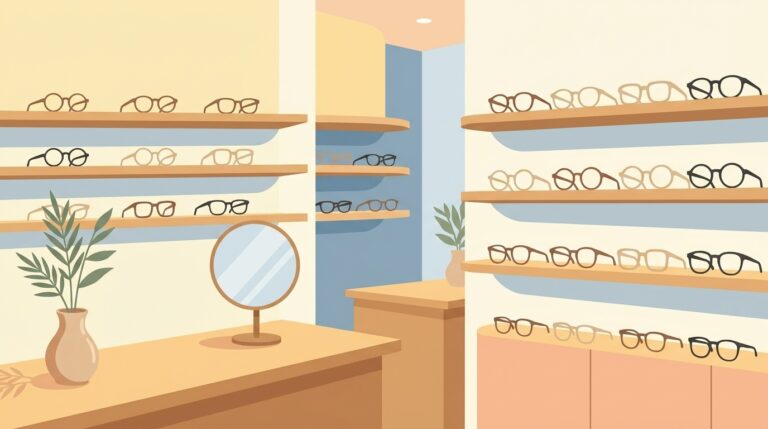
Picture this: You are walking down the vibrant, neon-lit fashion alleys of Hongdae in Seoul. You spot an ultra-sleek, minimalist optical shop that looks straight out of a trendy K-Drama where the leads share a romantic makeover moment. The shelves are lined with stunning wire rims, vintage acetate frames, and chic oversized glasses favored by your favorite K-pop idols. You step inside, excited to upgrade your look. But the moment the friendly optician approaches with a polite bow and asks how they can help, your mind blanks out.
You pick up a pair of frames with trembling fingers. Can you just put them on your face? How do you ask if they look good, or if they have something lighter that won’t pinch your nose during long study sessions?
Shopping for glasses in South Korea is legendary—fast, affordable, and incredibly fashionable—yet trying to browse glasses frames (안경테) as an absolute beginner can feel intimidating. Don’t worry! Based on years of guiding beginner learners through real-life shopping adventures in Seoul, this guide breaks down the easiest A1-level Korean phrases so you can confidently try on, compare, and pick the perfect frames without a drop of sweat. Let’s dive in!
Phase 2: 핵심 표현 3선 심층 분석 (Deep-Dive Core Expressions)
1. 이거 써 봐도 돼요? (Igeo sseo bwado dwaeyo?)
- Pronunciation: ee-guh ssuh bwah-doh dweh-yo? (Sounds like saying “E-gear sir, bar-door way-yo?”)
- Meaning: Literal: “Even if I wear this, is it okay?” | Real Nuance: “May I try this pair on?”
- K-Culture Moment: In dating reality shows like Heart Signal, contestants gently pick up stylish sunglasses or spectacles at a boutique and ask this phrase before trying them on each other.
- Editor’s Insight: In Korean, the verb for wearing glasses or hats is 쓰다 (sseuda), completely different from wearing clothes (입다) or shoes (신다). Adding -아/어 봐도 돼요? softens your question into an ultra-polite request.
- Situation Spectrum: Casual ⚠️ | Semi-formal (Polite) ✅ | Formal ✅
- 🤔 Think About It: Why do you think Korean uses specific verbs for items placed on the head (쓰다) versus clothes (입다)? What does this show about how actions are categorized in Korean culture?
2. 어떤 게 더 잘 어울려요? (Eotteon ge deo jal eoullyeoyo?)
- Pronunciation: uh-tteon geh duh jal uh-wool-lyuh-yo? (Rhymes gently with “uh-ton gay the jal uh-wool-leo-yo?”)
- Meaning: Literal: “Which thing matches better?” | Real Nuance: “Which one looks better on me?”
- K-Culture Moment: The quintessential K-drama scene where the main character holds up two distinct pairs of glasses—one cute round frame and one sleek square frame—asking their companion for an honest opinion.
- Editor’s Insight: 어울리다 (eoullida) means to match, harmonize, or suit someone. It’s not just about whether the item is pretty; it’s about whether it blends harmoniously with your personal facial aura.
- Situation Spectrum: Casual ⚠️ | Semi-formal ✅ | Formal ⚠️
- 🤔 Think About It: In English, we often say “Do I look good in this?” placing “I” at the center. Why does Korean highlight harmony (어울리다) between the person and the object instead?
3. 가벼운 테 있어요? (Gabyeoun te isseoyo?)
- Pronunciation: gah-byuh-oon teh eess-uh-yo? (Think “gah-by-un tech is-saw-yo?”)
- Meaning: Literal: “Light frame exists?” | Real Nuance: “Do you have lightweight frames?”
- K-Culture Moment: Busy Korean college students and office workers entering opticians in Gangnam, searching for ultralight titanium frames to survive 12-hour screen days without headache pressure.
- Editor’s Insight: 테 (te) is short for 안경테 (glasses frame). In daily conversation, native speakers almost always shorten it to just 테. Pair it with 가벼운 (light), and every optician will instantly guide you to the comfiest section.
- Situation Spectrum: Casual ⚠️ | Semi-formal ✅ | Formal ✅
- 🤔 Think About It: Shortening words is a staple of dynamic Korean urban life. How does shortening 안경테 to 테 reflect the convenience-driven speed of Korean retail?
Phase 3: 교과서 한국어 vs 진짜 한국어 (Textbook vs. Real Korean)
Situation 1: Asking to try on the glasses
- 📖 교과서 한국어: 안경을 착용해 보아도 됩니까? (An-gyeong-eul chag-yong-hae bo-a-do doep-ni-kka?)
- 🗣️ 진짜 한국어: 이거 써 봐도 돼요? (Igeo sseo bwado dwaeyo?)
- 💡 왜 다를까?: The textbook version sounds like a military manual or a legal disclaimer. Everyday Koreans use the natural verb 쓰다 with the polite conversational ending -아/어도 돼요?.
Situation 2: Asking if it looks flattering
- 📖 교과서 한국어: 이것이 저에게 적합합니까? (I-geos-i jeo-e-ge jeok-hap-ham-ni-kka?)
- 🗣️ 진짜 한국어: 저한테 잘 어울려요? (Jeohante jal eoullyeoyo?)
- 💡 왜 다를까?: 적합하다 means “legally/functionally suitable” (like matching building codes). To ask if fashion suits your face, always use 잘 어울리다!
Phase 4: K-Culture 딥다이브 & 비언어적 매너 (Culture & Mannerisms)
4-1. 눈치 (Nunchi) & Gestures
- Two-Handed Care (양손 매너): When handling display glasses, pick them up using both hands by the temples (the side arms). This shows respect for the merchandise and signals to the optician that you respect their curated collection.
- The Mirror Nod (거울 확인): After trying on a pair, turn toward the desk mirror, tilt your head left and right, and offer a soft nod. If an employee is watching, making gentle eye contact through the mirror with a polite smile signals you are comfortable browsing independently.
4-2. 문화 코드 분석 (The Korean Glasses Aesthetic)
In Korea, glasses are rarely viewed as merely medical devices; they are high-impact styling accessories known as 패션 아이템 (fashion items). Koreans love matching their glasses to their face shape (얼굴형). For instance, round metal frames (동글이 안경) became a national craze because they soften angular jawlines and create a youthful, approachable look. You will see everyone from K-Pop idols at airport departures to cozy cafe baristas wearing clear acetate frames (투명 뿔테) to add character without obscuring their features.
Phase 5: 실전 롤플레이 시나리오 (Real Roleplay Scenario)
Setting: Lumin Eye Studio, a trendy boutique optical shop near Sangsu Station in Seoul. Soft indie music plays while clean wooden shelves hold gleaming rows of eyewear.
NPC: Optician Min-ho (민호), a warm, attentive stylist wearing stylish horn-rimmed glasses and a crisp linen apron.
- 민호: 어서 오세요! 편하게 써 보세요.
(Eoseo oseyo! Pyeonhage sseo boseyo.)
“Welcome! Please feel free to try them on.”
🎭 Hands you a handheld mirror with a friendly bow. - Alex: 감사합니다. 저… 가벼운 테 있어요?
(Gamsahamnida. Jeo… gabyeoun te isseoyo?)
“Thank you. Um… do you have lightweight frames?”
🎭 Points gently toward the display counter. - 민호: 네, 이쪽 티타늄 테가 아주 가벼워요.
(Ne, ijjok titanyum tega aju gabyeowoyo.)
“Yes, these titanium frames on this side are very light.”
🎭 Takes out two sleek frames and lays them on a velvet tray. - Alex: 와, 진짜 가볍네요! 이거 써 봐도 돼요?
(Wa, jinjja gabyeomneyo! Igeo sseo bwado dwaeyo?)
“Wow, they are really light! May I try this one on?”
🎭 Points to a matte black frame. - 민호: 그럼요, 편하게 써 보세요.
(Geureomyo, pyeonhage sseo boseyo.)
“Of course, please feel free to try it on.”
🎭 Steps back to give Alex space to look into the mirror. - Alex: 어때요? 저한테 잘 어울려요?
(Eottaeyo? Jeohante jal eoullyeoyo?)
“How is it? Does it suit me well?”
🎭 Smiles and tilts head slightly toward Min-ho. - 민호: 네! 고객님 얼굴형에 둥근 테가 진짜 잘 어울려요.
(Ne! Gogaeknim eolgulhyeonge dunggeun tega jinjja jal eoullyeoyo.)
“Yes! Round frames really suit your face shape well.” - Alex: 좋아요. 이걸로 할게요!
(Jowayo. Igeollo halkeyo!)
“Great. I will take this one!”
🎭 Smiles with satisfaction and hands the frame over carefully.
🔀 인터랙티브 분기점 (Interactive Choice)
Now imagine you are Alex, but you want to check the price first before deciding. What do you say?
- Option A: “이거 얼마예요?” (Igeo eolmayeyo?)
- Feedback [Best]: Natural, polite, and universally understood. Min-ho will gladly point out the price tag or explain lens bundle discounts.
- Option B: “너무 비싸요, 깎아주세요!” (Neomu bissayo, kkakka-juseyo!)
- Feedback [Risk]: In modern Korean optical chains with fixed pricing systems (정찰제), asking for a discount right away can feel awkward or rude unless you’re buying multiple pairs in a traditional market.
- Option C: “돈 없어요.” (Don eopseoyo.)
- Feedback [Bad]: Saying “I have no money” is overly blunt and creates an uncomfortable pause. Simply saying “조금 더 둘러볼게요” (I’ll look around a bit more) is much smoother.
Phase 6: 10초 감정 섀도잉 드릴 (Emotion Shadowing Drill)
Read these out loud, pausing at the slashes (/) and channeling the exact mood emotion tag!
[😊 Politeness & Curiosity]
저기요, / 이거 / 써 봐도 돼요?
(Jeogiyo, / igeo / sseo bwado dwaeyo?)
“Excuse me, / may I / try this pair on?”-
[🤔 Seeking Advice & Hopeful]
어떤 게 / 저한테 / 더 잘 어울려요?
(Eotteon ge / jeohante / deo jal eoullyeoyo?)
“Which one / on me / looks better?” -
[✨ Excited & Decisive]
와, / 정말 가벼워요! / 이걸로 할게요!
(Wa, / jeongmal gabyeowoyo! / Igeollo halkeyo!)
“Wow, / it’s really light! / I’ll take this one!”
Phase 7: K-Culture 미니 사전 (Mini Eyewear Dictionary)
- 안경테 (An-gyeong-te) | Glasses frames | The fundamental term for eyewear frames, commonly abbreviated to just 테 in conversation.
- 뿔테 (Ppul-te) | Acetate / Plastic frames | Originally referring to horn-rimmed glasses, this now describes all thick plastic or acetate frames popular in street fashion.
- 동글이 안경 (Dong-geul-i an-gyeong) | Round wire-rim glasses | The iconic circular metal frames worn by K-pop vocalists and students across Korea.
- 얼굴형 (Eol-gul-hyeong) | Face shape | Essential beauty terminology used when discussing whether oval, square, or round frames flatter your jawline.
Phase 8: 여행자를 위한 생존 키트 (Traveler’s Survival Kit)
Top 3 Survival Phrases
- 추천해 주세요. (Chucheon-hae juseyo.)
Pro Tip: Unsure what matches your face? Say this while gesturing to your face. Staff love curating bestsellers for visitors! - 얼마예요? (Eolmayeyo?)
Pro Tip: Many frames display prices clearly on the temple arm or on the tray, but asking this confirms if standard lenses are included. - 블루라이트 차단 돼요? (Beullu-ra-i-teu cha-dan dwaeyo?)
Pro Tip: Ask this if you want blue-light blocking lenses, a standard, budget-friendly add-on in Korea.
Editor’s Travel Note
- Speed is King: Did you know that in Korea, most opticians can cut lenses to your prescription within 15 to 30 minutes? You can pick your frames, take a quick coffee break, and return to find your finished pair ready.
- Navigation Tip: Find top-rated independent opticians near Hongdae or Insadong by checking user reviews on the Naver Map app download. Search for
안경점(Optician). - Tax Refunds: Major chains like Davich or Gentle Monster offer immediate or airport tax refunds. Keep your passport handy!
Phase 9: “한 발 더 깊이” (Cultural Reflection)
In many Western cultures, glasses are seen as an unavoidable vision-correction tool that people sometimes try to hide with contacts. In Korea, however, eyewear is celebrated as a transformative style statement that defines your image (이미지 변신). Because Korean social culture places high value on neat presentation and harmonious aesthetics, choosing the right frame shape for your face is viewed as self-care and personal charm.
💬 Your Turn: Do you view glasses as a functional tool or as a fashion accessory? Which Korean style would you rock: classic black 뿔테 (acetate) or minimal 동글이 (round wire)? Tell us in the comments below!
Phase 10: FAQ & 흔한 실수 (FAQ & Common Mistakes)
Q: Do I need to book an eye exam in advance at a Korean optician?
A: No! Walk-ins are standard. Most Korean optical shops have state-of-the-art vision test rooms right inside and provide free, comprehensive eye exams on the spot when you buy frames.
Q: Can I bring my own frames from abroad and just get lenses replaced in Korea?
A: Yes! Simply hand them your glasses and say, “알만 바꿀 수 있어요?” (Al-man bakkul su isseoyo? – Can I just replace the lenses?).
Q: What if I don’t know my eye prescription numbers?
A: No problem at all. They will either scan your current glasses with a lensometer in 10 seconds or perform a quick, accurate computerized eye test.
🚨 흔한 실수 (Common Mistakes Top 3)
- Mistake: Using “입어 봐도 돼요?” (May I wear this?) for glasses.
- Correct Action: Clothes use 입다, but glasses use 쓰다. Always say “써 봐도 돼요?”
- Mistake: Assuming the price on the frame includes all custom high-index lenses.
- Correct Action: The sticker price usually covers the frame and basic lenses. Thinner or tinted options may cost an extra 10,000 to 30,000 KRW.
- Mistake: Forcibly bending the frame arms yourself to test flexibility.
- Correct Action: Ask the staff to adjust the fit by saying “피팅 좀 해 주세요” (Fitting jom hae juseyo); they use specialized warm-air heaters to reshape them safely.
Phase 11: 액션 미션 & 참여 유도 (Action Missions)
- 🥉 Bronze Mission: Stand in front of your home mirror, pick up your favorite pair of glasses, and practice saying “이거 써 봐도 돼요?” smoothly 5 times.
- 🥈 Silver Mission: Snap a selfie wearing your favorite glasses and post it on your Instagram Story with the caption: “저한테 잘 어울려요? (Does this suit me?)”.
- 🥇 Gold Mission: Visit a local Korean-run optical shop or a retail store in Korea, try on a pair, and ask the optician: “어떤 게 더 잘 어울려요?”.
- 🎮 K-Culture Mission: Watch any episode of a recent K-drama and spot a scene where a character changes into glasses for work. Notice what frame style they picked!
Phase 12: 인터랙티브 퀴즈 챌린지 (Interactive Quiz)
Test what you’ve learned today! Click each question to reveal the answers.
1. Situational Judgment:
You are looking at a stylish round metal frame on a display shelf. What should you say to ask permission to put them on?
* A) 이거 입어 봐도 돼요?
* B) 이거 써 봐도 돼요?
* C) 이거 신어 봐도 돼요?
Click to view Answer & Explanation
Correct Answer: B
Explanation: Glasses are placed on your head/face, so Korean requires the verb 쓰다 (to wear on the head/face) -> 써 봐도 돼요?. (Option A is for clothing, Option C is for shoes!)
2. Fill-in-the-Blank:
Complete the phrase to ask if a frame looks good on you:
“저한테 잘 _________?” (Does it suit me well?)
Click to view Answer & Explanation
Correct Answer: 어울려요 (eoullyeoyo)
Explanation: The verb 어울리다 means to match or harmonize with someone. Conjugated politely in present tense, it becomes 어울려요.
3. True or False Cultural Quiz:
True or False: In Korea, buying prescription glasses usually takes 2 to 3 weeks of waiting time.
Click to view Answer & Explanation
Correct Answer: False!
Explanation: South Korea has one of the fastest optical service networks in the world. Most everyday prescription glasses are measured, cut, and fitted in just 15 to 30 minutes!







