

안녕하세요! 매일한글 에디터입니다.
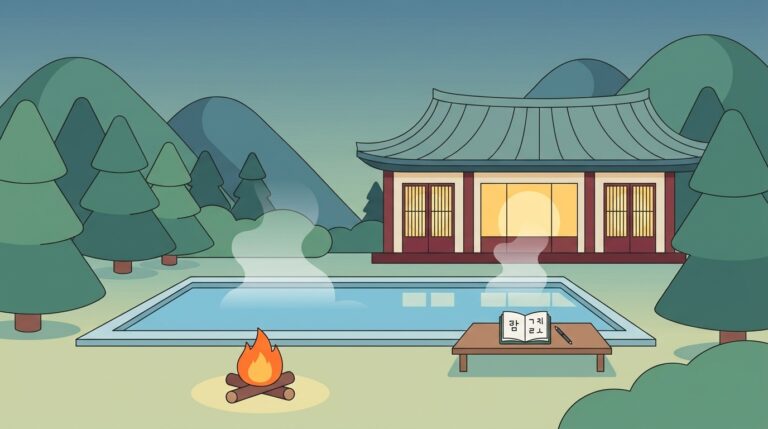
Have you ever scrolled through Instagram and stumbled upon an ethereal, mist-shrouded private pool villa tucked into the lush hills of Gapyeong, or a sleek, hyper-minimalist glamping pod overlooking the cliffs of Jeju? The floor-to-ceiling glass reveals heated emerald water, an outdoor fire pit crackling in the evening dusk, and a private stone terrace customized for an upscale barbecue feast. You pull up Naver or a local booking portal, determined to make that dream retreat a reality—only to be blindsided by a maze of nuanced Korean accommodation notices. Terms like kijun inwon (기준 인원), mionsu chugabi (미온수 추가비), and sutbul seteu (숯불 세트) suddenly loom over your vacation plans.
Booking luxury accommodations in Korea isn’t just about clicking ‘Reserve.’ Because Korean private villas and high-end glamping sites prioritize personalized guest experiences, nearly every premium amenity—from maintaining 32°C pool water overnight to using custom barbecue grills during sudden rainstorms—involves nuanced, direct communication with the host (pension sajim-nim). Over the years, many of my advanced C1 learners have expressed the same frustration: ‘My textbook Korean sounds either too stiffly mechanical or inappropriately blunt when texting a villa host.’ Today, we are bridging that gap. This guide provides battle-tested, culturally sophisticated Korean reservation strategies designed to ensure you get VIP treatment without awkward misunderstandings.
Phase 2: Core C1 Expressions Breakdown
1. 혹시 미온수 추가 비용과 이용 가능한 온도가 어떻게 되나요?
- Pronunciation: [Hoksi mionsu chuga biyong-gwa iyong ganeung-han ondoga eotteoke doenayo?] (Pronounce hok-shi with a soft breathy onset, gliding into mi-on-soo like ‘me-on-sue’.)
- Meaning: Literal: “By any chance, what are the additional fee for lukewarm water and the available temperature?” | Real Nuance: “Could you clarify the surcharge for heating the pool and what water temperature is maintained throughout our stay?”
- K-Culture Moment: Seen frequently in travel vlogs and variety shows where cast members arrive at a luxury stay (pulbilla) only to find the unheated pool freezing cold because they failed to order the heated option in advance.
- Editor’s Insight: In Korea, private pools rarely heat the water automatically due to intense utility costs. Mionsu (미온수) typically refers to 30–33°C water. Initiating the query with Hoksi (혹시 – by chance) softens your request, setting an elegant, non-demanding tone.
- Situation Spectrum: Casual ⚠️ | Semi-formal ✅ | Formal ✅
- 🤔 Think About It: In many Western resorts, heated amenities are bundled invisibly into the room rate. How does the Korean unbundled ‘pay-for-what-you-use’ fee structure reflect local operational transparency and efficiency?
2. 기준 인원 외에 1인 추가 시 침구류와 어메니티가 제공되는지 확인 부탁드립니다.
- Pronunciation: [Gijun inwon oe-e il-in chuga si chimguryuwa eomenitiga jegongdoeneunji hwagin butakdeurimnida.] (Flow smoothly over gijun inwon; treat hwagin butakdeurimnida with a crisp, polite cadence.)
- Meaning: Literal: “Please check if bedding and amenities are provided when adding one person beyond the baseline headcount.” | Real Nuance: “Could you kindly confirm whether the extra person surcharge covers an additional bedding set and toiletries?”
- K-Culture Moment: Protagonists in K-dramas sneaking extra friends into an exclusive weekend hideaway, only to have the sharp-eyed manager count heads at the front gate.
- Editor’s Insight: Korean villas strictly differentiate between gijun inwon (standard capacity) and choedae inwon (maximum capacity). Paying an extra person fee (inwon chugabi) doesn’t always guarantee a floor mattress (yo) or blanket set unless confirmed in advance.
- Situation Spectrum: Casual 🚫 | Semi-formal ✅ | Formal ✅
- 🤔 Think About It: Notice the polite indirect ending hwagin butakdeurimnida (확인 부탁드립니다). Why does high-level Korean privilege indirect requests over direct imperatives in service interactions?
3. 당일 우천 시에도 개별 바비큐 시설 이용에 지장이 없을까요?
- Pronunciation: [Dang-il ucheon si-edo gaebyeol babikyu siseol iyong-e jijang-i eopseulkkayo?] (Think of u-cheon like ‘ooh-chun’; articulate jijang-i eopseulkkayo with gentle, upward inflection.)
- Meaning: Literal: “Even in the event of rain on that day, will there be no obstacle to using the private barbecue facilities?” | Real Nuance: “In case of inclement weather, will we still be able to enjoy the private outdoor barbecue safely under cover?”
- K-Culture Moment: The quintessential rainy-day romantic glamping scene where the canopy protects the sizzling samgyeopsal while raindrops patter overhead.
- Editor’s Insight: Glamping and pool villas often boast open-air decks. Using jijang-i eopseulkkayo (지장이 없을까요 – will there be an impediment?) is the golden standard of elevated, considerate phrasing that marks true C1 fluency.
- Situation Spectrum: Casual 🚫 | Semi-formal ✅ | Formal ✅
- 🤔 Think About It: Contrast the phrase Can we barbecue if it rains? with Will there be an obstacle to use? How does framing an inquiry around potential operational obstacles display empathy toward the host?
Phase 3: Textbook Korean vs. Real Korean
Situation 1: Inquiring about Pool Heating Deadlines
- 📖 교과서 한국어: 수영장 물을 따뜻하게 해주세요. 언제까지 말해야 합니까? (Suyeongjang muleul ttatteuthage haejuseyo. Eonjekkaji malhaeya hamnikka? / Please make the pool water warm. By when must I tell you?)
- 🗣️ 진짜 한국어: 미온수 신청은 입실 며칠 전까지 확정해야 원활하게 준비될까요? (Mionsu sincheong-eun ipsil myeochil jeonkkaji hwakjeonghaeya wonhwalhage junbidoelkkayo? / By how many days prior to check-in should we confirm the heated water request for optimal preparation?)
- 💡 왜 다를까?: Pool heating takes 4 to 8 hours of massive boiler power. Native speakers frame the deadline around the host’s smooth preparation (wonhwalhage junbi), turning a transactional demand into a cooperative conversation.
Situation 2: Requesting Late Check-Out
- 📖 교과서 한국어: 내일 늦게 퇴실하고 싶습니다. 돈을 더 내면 됩니까? (Naeil neutge toesilhago sipsumnida. Doneul deo naemyeon doemnikka? / I want to check out late tomorrow. Can I pay more money?)
- 🗣️ 진짜 한국어: 혹시 다음 날 예약 상황에 따라 레이트 체크아웃이 가능한지, 시간당 추가 요금과 함께 여쭤보고 싶습니다. (Hoksi daeum nal yeyak sanghwang-e ttara reiteu chekeu-ausi ganeunghanji, sigandang chuga yogeumgwa hamkke yeojjwobogo sipsumnida. / Depending on tomorrow’s reservation schedule, could I inquire if a late check-out is feasible, along with the hourly surcharge?)
- 💡 왜 다를까?: C1 Korean recognizes that boutique villas maintain rigorous cleaning intervals. Acknowledging their booking schedule (daeum nal yeyak sanghwang-e ttara) displays stellar manners (nunchi).
Phase 4: K-Culture Deep Dive & Non-Verbal Manners
4-1. Nunchi & Digital Communication Etiquette
When booking luxury stays in Korea, 90% of host communications occur through digital messaging platforms such as Naver TalkTalk (네이버 톡톡) or KakaoTalk. Here, textual nunchi reigns supreme:
* Punctuation Warmth: Avoid curt single-sentence texts ending in flat periods. Use polite tildes (~), softening question endings (-실까요?), and appreciative closers like 감사합니다! 편하실 때 답변 부탁드립니다 (Thank you! Please reply at your convenience).
* Respecting Sunset Hours: Pension hosts often handle property maintenance themselves. Texting between 09:00 and 19:00 is standard etiquette unless checking in late.
* Self-Service Cleanliness (Bunri-sugeo): Luxury or not, Korean pension culture demands basic waste sorting (bunri-sugeo) and dish rinsing before check-out. Showing advance awareness of this instantly endears you to hosts.
4-2. The Culture Code: ‘Gamseong’ (감성) & ‘Bulmeong’ (불멍)
The Korean luxury glamping and pool villa scene is propelled by Gamseong (sensibility, aesthetics). Guests seek peaceful emotional immersion. The premier ritual of this lifestyle is Bulmeong (불멍)—zoning out while gazing into an open campfire, accompanied by roasted marshmallows and acoustic playlists. Inquire respectfully about the bulmeong seteu (fire pit kit) and firewood allowances (jangjak chuga).
Phase 5: Real-Life Roleplay Scenario
Setting: Alex is messaging Mr. Park, the owner of a secluded riverside pool villa in Gapyeong, via 1:1 chat prior to finalizing the payment.
Characters:
– 알렉스 (Alex): A discerning traveler seeking an unforgettable weekend retreat.
– 박 사장님 (Mr. Park): The meticulous yet warmly hospitable villa host.
Turn 1
* 알렉스: 사장님, 안녕하세요! 10월 14일 독채 풀빌라 예약 관련해서 몇 가지 여쭙고자 연락드렸습니다.
(Sajangnim, annyeonghaseyo! Siwol sipsail dokchae pulbilla yeyak gwanlyeonhaeseo myeot gaji yeojjupgoja yeollakdeuryeossumnida.)
“Hello, manager! I am contacting you to inquire about a few details regarding the private pool villa booking for October 14th.”
🎭 Checking the villa gallery with keen interest
Turn 2
* 박 사장님: 네, 고객님 반갑습니다! 가평 리버빌라입니다. 어떤 점이 궁금하실까요?
(Ne, gogaeknim bangapsumnida! Gapyeong ribeobillaimnida. Eotteon jeomi gunggeumhasilkkayo?)
“Yes, welcome! This is Gapyeong River Villa. How may I assist you today?”
🎭 Responding promptly with a warm smile
Turn 3
* 알렉스: 날씨가 쌀쌀해져서 그런데, 온수 풀은 당일 현장 신청도 가능한가요, 아니면 사전 예약 필수인가요?
(Nalssiga ssalssalhaejyeoseo geureonde, onsu puleun dang-il hyeonjang sincheongdo ganeunghangayo, animyeon sajeon yeyak pilsuingayo?)
“As the weather is getting chilly, is the heated pool option available for on-site request on the day, or is advance booking mandatory?”
🎭 Inquiring thoughtfully about temperature management
Turn 4
* 박 사장님: 온수를 올리는 데 시간이 걸려서 입실 최소 하루 전에는 말씀해 주셔야 32도로 맞춰드릴 수 있습니다. 추가 비용은 5만 원 발생합니다.
(Onsuleul ollineun de sigani geollyeoseo ipsil choeso haru jeoneneun malsseumhae jusyeoya samsib-idoro matchwodeuril su issumnida. Chuga biyong-eun oman won balsaenghamnida.)
“Because heating takes considerable time, you must let us know at least one day before arrival so we can warm it to 32°C. An extra fee of 50,000 KRW applies.”
🎭 Explaining boiler preparation logistics
Turn 5
* 알렉스: 상세한 안내 감사드립니다. 혹시 바비큐 숯불 세트는 몇 시까지 준비해 주실 수 있나요?
(Sangsehan annae gamsadeurimnida. Hoksi babikyu sutbul seteuneun myeot sikkaji junbihae jusil su 있nayo?)
“Thank you for the detailed information. By what time can the barbecue charcoal set be prepared for us?”
🎭 Planning the evening dinner timeline
Turn 6
* 박 사장님: 보통 저녁 6시에서 8시 사이에 원하시는 시간을 말씀해 주시면, 객실 테라스 그릴에 숯불을 피워드립니다!
(Botong jeonyeok yeosot-si-eseo yeodeol-si sa-ie wonhasineun siganeul malsseumhae jusyimyeon, gaeksil teraseu geurire sutbuleul piwodeurimnida!)
“Normally, if you give us your preferred time between 6 PM and 8 PM, we light the charcoal grill right on your room’s private terrace!”
🎭 Nodding with welcoming reassurance
Turn 7
* 알렉스: 좋습니다! 그럼 미온수와 숯불 포함해서 예약 진행하겠습니다. 입실 당일 조심히 찾아뵙겠습니다.
(Joeussumnida! Geureom mionsuwa sutbul pohamhaeseo yeyak jinhaenghagessumnida. Ipsil dang-il josimhi chajaboepgessumnida.)
“Wonderful! Then I will proceed with the reservation including heated water and barbecue. We will travel safely and see you on check-in day.”
🎭 Confirming with refined politeness
Turn 8
* 박 사장님: 믿고 예약해 주셔서 감사합니다. 깨끗하고 따뜻하게 준비해 두겠습니다. 조심히 오세요!
(Mitgo yeyakhaejusyeoseo gamsadeurimnida. Kkaekkeuthago ttatteuthage junbihae dugessumnida. Josimhi oseyo!)
“Thank you for placing your trust in us. We will prepare everything spotless and warm. Safe travels!”
🎭 Sending a friendly bowing emoji
🔀 Interactive Scenario Branching Point
At Turn 7, imagine Alex wants to bring two unexpected friends who might not sleep over but will stay until late night for dinner. How should Alex phrase this inquiry?
- Option A: 친구 두 명이 저녁만 먹고 갈 건데, 잠깐 오는 거니까 추가 요금은 안 내도 되죠? (Chingu du myeongi jeonyeongman meokgo gal geonde, jamkkan oneun geonikka chuga yogeumeun an naedo doejo?)
Feedback: Bad. Presuming that non-staying dinner guests are free breaches the strict visitor policies of Korean pool villas, which base occupancy limits on total facility usage and fire codes. - Option B: 혹시 숙박은 하지 않고 저녁 식사만 함께할 방문 인원이 2명 있는데, 이 경우에도 추가 인원 규정이 적용되는지 미리 확인하고 싶습니다. (Hoksi sukbageun haji anko jeonyeok siksaman hamkkehal bangmun inwoni dumyeong inneunde, i gyeong-uedo chuga inwon gyujeongi jeokyongdoeneunji miri hwaginhago sipsumnida.)
Feedback: Best! Demonstrates transparency, crystal-clear situational description, and total respect for facility regulations. - Option C: 친구들이 밤늦게 나갈 거라 사장님 몰래 놀다 가도 괜찮을 것 같아요. (Chingudeuri bamneutge nagal geora sajangnim mollae nolda gado gwaenchaneul geot gatayo.)
Feedback: High Risk! Unregistered guests discovered via exterior CCTV can lead to immediate contract termination and forfeiture of deposits without refund.
Phase 6: 10-Second Emotion Shadowing Drill
Practice these high-frequency sentences out loud, mimicking native pauses (/) and capturing emotional nuances:
- [😊 공손하면서도 똑 부러지게 / Courteous yet crystal clear]
혹시 미온수 추가 시 / 온도가 몇 도 정도로 유지되는지 / 여쭤봐도 될까요?
(Hoksi mionsu chuga si / ondoga myeot do jeongdoro yujidoeneunji / yeojjwobwado doelkkayo?) -
[🤔 신중하고 배려 깊게 / Thoughtful and considerate]
갑작스러운 비 예보가 있어서 그러는데, / 개별 바비큐장에 / 가림막 시설이 되어 있나요?
(Gapjakseureoun bi yeboga isseoseo geureoneunde, / gaebyeol babikyujang-e / garimmak siseori doeeo innayo?) -
[✨ 밝고 기분 좋은 확답 / Bright and cheerful affirmation]
안내해 주신 사항 잘 숙지했고요, / 안내된 계좌로 / 추가금 바로 입금해 드리겠습니다!
(Annaehae jusin sahang jal sukjihaetgoyo, / annaedoen gyejwaro / chugageum baro ipgeumhae deurigessumnida!)
Phase 7: K-Culture Mini Dictionary
-
독채 (Dokchae)
Translation: Standalone/Detached Villa.
Context: Refers to a property where the entire building and grounds are rented exclusively to one party. Essential when seeking total privacy away from other glamping guests. -
미온수 (Mionsu)
Translation: Lukewarm/Heated pool water (usually 30–33°C).
Context: In luxury accommodations, cold groundwater is standard unless you opt for mionsu, which demands an extra fee (ranging from 30,000 to 100,000 KRW). -
불멍 (Bulmeong)
Translation: Fire-hypnosis / Fire-gazing meditation.
Context: A beloved lifestyle trend combining bul (fire) and meongttaerida (spacing out). High-end glamping sites supply specialized fire bowls, firestarter cubes, and seasoned oak logs (chamsut). -
촌캉스 (Chonkangseu)
Translation: Countryside staycation (Chon + Vacance).
Context: A booming trend where urbanites rent renovated vintage rural cottages or rural glamping pads to wear flowery ilbaji (work pants), cook over cauldrons (sotttukkeong), and slow down.
Phase 8: Survival Kit for Travelers
Top 3 Survival Phrases
- 바비큐 숯불 피워주시는 시간 변경 가능한가요?
(Babikyu sutbul piwojusineun sigan byeongyeong ganeunghangayo?)
Pro Tip: Call the host at least one hour before the original schedule if traffic delays your evening. - 분리수거장은 펜션 어디 쪽에 마련되어 있나요?
(Bunrisugeojang-eun pensyeon eodi jjoge maryeondoeeo innayo?)
Pro Tip: Asking where the recycling dump is located immediately identifies you as a thoughtful, respectful guest. - 주변에 걸어서 갈 만한 편의점이나 마트가 있나요?
(Jubyeone georeoseo gal manhan pyeon-uijeomina mateuga innayo?)
Pro Tip: Glamping locations are often deep in nature; hosts will advise whether you need to drive out before dusk.
Editor’s Travel Note
- App Navigation: Install the Naver Map application download to pinpoint remote villa access roads, as Google Maps often lacks precise rural navigation in South Korea.
- Domestic Booking Portals: Accommodations listed on platforms like Yanolja or Yeogi-eottae frequently require a Korean phone number. If booking directly via Naver Pay or host bank transfers (tongjang ipgeum), keep payment screenshots ready.
- Grocery Hacks: Do not purchase charcoal or logs independently unless cleared by the host, as many sites prohibit outside fuels to prevent deck fires.
Phase 9: “One Step Deeper” (Reflective Essay)
Korean hospitality in the luxury leisure sector presents a fascinating paradox: the intersection of ancient communal warmth (Jeong, 정) and hyper-regulated modern consumer spaces. When you step foot onto a glamping terrace, the owner may personally carry your heavy cooler, hand you home-grown sweet potatoes to roast in the fire, and inquire about your drive with heartfelt warmth. Yet, laminated on the dining table, you will find meticulously numbered house rules (iyong suchik) specifying checkout penalties down to the minute. This is not cold legalism; rather, it reflects a culture of reciprocal consideration (baeryeo, 배려). The host curates a pristine, aesthetic sanctuary for you, and in return, expects you to honor the collective upkeep of that space.
💬 Your Turn: How does your home country’s luxury accommodation etiquette compare to Korea’s balance of personal warmth and strict house rules? Share your thoughts below!
Phase 10: FAQ & Common Mistakes
Q: Can I pay the heated water or barbecue fees by credit card on arrival?
A: Many suburban glamping grounds and family-run pool villas prefer instant bank transfers (gyeojwa ipgeum) or cash on-site because their card terminals are located in remote management offices. Always message the host beforehand to check if on-site credit card processing is supported.
Q: What happens if the weather forecast suddenly shows rain or heavy wind for my glamping night?
A: In Korea, luxury glamping pods are built for all-weather durability. Rain alone rarely qualifies for a penalty-free refund unless the Korea Meteorological Administration issues an official severe weather disaster warning (hobuju-uibo or taepung teukbo). Check the contract’s Hwanbul gyujeong (환불 규정).
Q: Is it customary to leave a cash tip for the pension owner who cleans the pool and lights the grill?
A: No. Tipping is not part of Korean culture and may cause confusion. Instead, express gratitude vocally (“정말 편하게 쉬다 갑니다!”), leave the room tidy, and post a glowing Naver review with photos.
🚨 Common Mistakes Warning Board
- Assuming all pool villas offer heated water year-round for free:
Wrong: Arriving in November expecting hot water without prior booking.
Correct Action: Reserve mionsu at least 24–48 hours in advance via message. - Ignoring maximum occupancy rules (choedae inwon):
Wrong: Booking a 2-person room and bringing a third person without reporting.
Correct Action: Inquire in advance: 혹시 1인 추가 결제 후 입실 가능할까요? - Leaving unwashed pots and mingled trash inside the room:
Wrong: Treating the villa like a full-service five-star hotel with maids.
Correct Action: Separate recyclables (cans, plastics, paper) into designated bins outside before checkout.
Phase 11: Action Missions
- 🥉 Bronze Level: Practice speaking the 3 core phrases from Phase 2 out loud while recording your voice. Focus on smooth intonation for ~여쭤보고 싶습니다.
- 🥈 Silver Level: Open your favorite Korean stay curation page on Instagram (e.g., search tags like
#감성숙소or#가평풀빌라), pick one property, and compose a mock Naver TalkTalk reservation inquiry using at least two advanced expressions from this lesson. - 🥇 Gold Level: Next time you travel in Korea, message an accommodation host directly in Korean to customize your amenities (mionsu, barbecue, or late check-in) without switching to English!
🎮 K-Culture Mission: Watch an episode of a Korean travel/healing reality show (such as House on Wheels or I Live Alone camping specials). Listen closely for how guests address campsite owners and note down whenever you hear the terms sutbul, bulmeong, or dokchae!
Phase 12: Interactive Quiz Challenge
Question 1: Situational Judgment
You want to make sure the private pool is warm when you arrive at 3 PM on a brisk autumn afternoon. Which message is the most culturally adept and linguistically precise?
* A) 수영장 물 지금 데워주세요. (Suyeongjang mul jigeum dewojuseyo.)
* B) 미온수 옵션을 추가하고 싶은데, 입실 시간에 맞춰 이용하려면 언제까지 입금하면 될까요? (Mionsu opsyeoneul chugahago sipeunde, ipsil sigane matchwo iyongharyeomyeon eonjekkaji ipgeumhamyeon doelkkayo?)
* C) 물 온도가 차가우면 환불해 주시나요? (Mul ondoga chaga-umyeon hwanbulhae jusinayo?)
Question 2: Fill-in-the-Blank
Fill in the blank with the appropriate C1 polite connective phrase:
“혹시 당일 비가 올 경우, 바비큐 시설 이용에 ______________ 확인 부탁드립니다.”
(Hoksi dang-il biga ol gyeong-u, babikyu siseol iyong-e ______________ hwagin butakdeurimnida.)
Question 3: True or False (Culture Knowledge)
At Korean luxury pool villas, guests are exempt from recycling and dish-cleaning duties because high-end cleaning services are automatically included in the base rate. (True / False)
👉 Click to reveal answers & explanations!
- Answer 1: B
Explanation: Option B clearly states your intent to add the option, asks for the payment deadline to sync with check-in, and uses polished honorific grammar. - Answer 2: 지장이 없는지 (jijang-i eomneunji)
Explanation: The full sentence reads: 혹시 당일 비가 올 경우, 바비큐 시설 이용에 지장이 없는지 확인 부탁드립니다 (“Please check whether there will be any impediment to using the barbecue facilities in case of rain”). - Answer 3: False
Explanation: Even in premium pool villas costing upwards of $500/night, Korean accommodation norms require guests to do basic dish cleaning and waste separation (bunri-sugeo) before departing.







