

Phase 1: Empathy & Immersion
안녕하세요! 매일한글 에디터입니다.
Imagine this scene: You are sharing an evening of chilled makgeolli with Korean theatre actors and intellectuals in a dimly lit insadong hanok alley. A respected senior critic leans forward, raises his cup, and remarks with a theatrical twinkle in his eye: “오늘 아주 훌륭한 양반놀음을 보여주셨습니다!” (Oneul aju hullyunghan yangbannoreumeul boyeojusyeotseumnida! / “You put on quite an exquisite aristocratic charade today!”). Everyone bursts into knowing, explosive laughter. The younger director blushes, scratches his neck, and drinks up in defeat.
Did the elder praise him, or did he just deliver an intellectually surgical roast? You freeze, mentally flipping through your textbook grammar. The literal words say “excellent noble play,” yet the atmosphere drips with affectionate subversion.
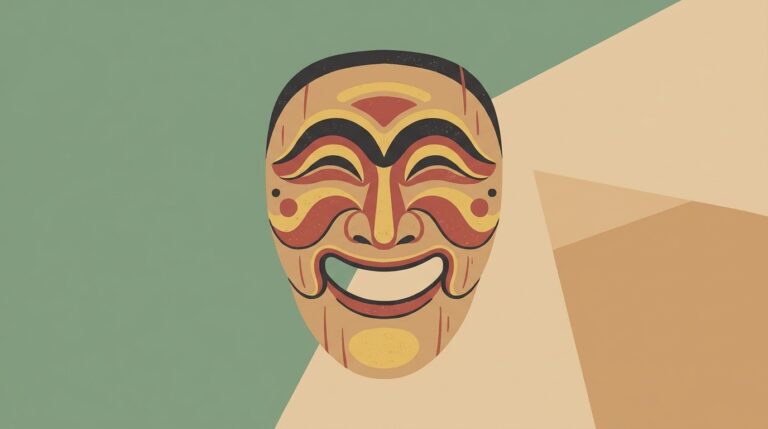
For advanced Korean learners, this is the ultimate frontier: decoding 풍자 (pungja – satire) and 해학 (haehak – humor/wit). In South Korea, high-level communicative mastery (C2) is not just about passing TOPIK VI or reciting formal honorifics; it is about reading between the rigid lines of societal hierarchy. For centuries, ordinary Koreans were barred from openly criticizing the ruling elite. Their survival mechanism? 탈춤 (Talchum – Korean Mask Dance Drama). Under the disguise of painted wooden masks, commoners skewered corrupt aristocrats and hypocritical monks with linguistic acrobatics, biting irony, and disarming laughter. Today, that exact cultural DNA permeates Korean political banter, award-winning cinema (like Bong Joon-ho’s Parasite), and boardroom banter.
This guide was forged from our master-class workshops with advanced scholars, diplomats, and dramatists who hit the “cultural glass ceiling.” If you want to articulate critiques with elegance, recognize high-register sarcasm, and wield Korean wit like an indigenous orator, you are in the right room.
Phase 2: Core Expressions Deep Dive
1. 뼈 있는 농담 (Ppyeo inneun nongdam)
- Pronunciation: [Ppyeo in-neun nong-dam] (Pronounce ‘ppyeo’ like the hard pop of ‘p’ followed by ‘yeo’, and ‘nongdam’ like ‘nohng-dahm’)
- Meaning: Literally “a joke with bones inside.” It refers to a barbed quip, pointed satire, or a trenchant criticism thinly cloaked as innocent humor.
- K-Culture Moment: In historical dramas (sageuk) or satirical variety programs, when a subordinate praises a corrupt official’s “relentless dedication to accumulating private land for the kingdom’s scenic beauty,” the narrator often whispers: “뼈 있는 농담이네요” (Ppyeo inneun nongdam-ineyob).
- Editor’s Insight: In Korean society, direct confrontation (jung-dol) ruptures gibeun (inner emotional balance) and is deemed uncouth. A joke without bones is mere clowning (농담); a joke with bones is high-level rhetoric. The “bone” is the unyielding moral critique inside the soft “meat” of humor.
- Situation Spectrum: Casual: ✅ | Semi-formal: ✅ | Formal/Public Debate: ⚠️ (Acceptable only if delivered with disarming charm)
- 🤔 Think About It: In Western rhetoric, satire often uses blunt hyperbole. Why do you think Korean rhetoric developed such a tactile metaphor as “having bones” beneath playful words?
2. 양반놀음 (Yangbannoreum)
- Pronunciation: [Yang-ban-no-reum] (Flow smoothly: the ‘n’ in ‘ban’ assimilates softly into ‘no’)
- Meaning: Literally “playing the Yangban (Joseon nobleman).” Idiomatically, it mocks people who affect unearned superiority, indulge in idle pretensions, or remain completely detached from grassroots reality.
- K-Culture Moment: Derived directly from the Yangban-chum act in Bongsan Talchum, where the servant Malttugi publicly ridicules the noble brothers. You will hear this in contemporary news editorials or office settings when executives brainstorm utopian plans without knowing how field staff operate: “현장도 모르면서 책상머리에서 양반놀음만 하고 있군요” (Hyeonjangdo moreumyeonseo chaeksangmeorieseo yangbannoreumman hago itgunyo).
- Editor’s Insight: Use this idiom judiciously. Calling someone’s actions yangbannoreum is an intellectual takedown. It implies: You are performing a role of superiority that you have not earned and cannot sustain.
- Situation Spectrum: Casual (among close peers): ✅ | Semi-formal: ⚠️ | Formal/Direct to Superiors: 🚫
- 🤔 Think About It: Does your native culture possess an idiom that compares modern elitism to a defunct feudal class?
3. 눙치고 넘어가다 (Nungchigo neomeogada)
- Pronunciation: [Nung-chi-go neo-meo-ga-da] (Think of ‘noong-chee-go nuh-muh-gah-dah’)
- Meaning: Literally “to soften/muffle and step over.” Figuratively, to defuse a tense confrontation, slip out of accountability, or smooth over an embarrassing truth through sly humor, bluster, or quick-witted banter.
- K-Culture Moment: Seen frequently in traditional folk theatre when a character caught stealing food spins an elaborate, poetic philosophical rhyme about universal sharing, charming the accuser into dropping the charges. In modern dramas, an astute diplomat or charismatic politician smiles, tells a folksy anecdote, and completely sidesteps a hostile question.
- Editor’s Insight: Unlike eomuljjeok neomeogada (which implies clumsy, dishonest evasion), nungchida carries the flavor of psychological finesse and aesthetic charm. It is the hallmark of haehak (benevolent humor).
- Situation Spectrum: Casual: ✅ | Semi-formal: ✅ | Formal Written: ⚠️ (Colloquial idiom)
- 🤔 Think About It: Is defusing conflict with humor viewed as moral cowardice or supreme social intelligence in your culture? How does this redefine your understanding of Korean nunchi?
Phase 3: Textbook Korean vs. Real Korean
Situation 1: Exposing a Superior’s Unrealistic, Hypocritical Directive
- 📖 교과서 한국어 (Textbook):
“부장님의 이번 지시는 현실성이 결여되어 있으며 모순적입니다.”
(Bujangnim-ui ibeon jisineun hyeonsilseongi gyeol-yeodoeeo isseumyeo mosunjeogimnida.)
— “Director, your current directive lacks feasibility and is contradictory.” - 🗣️ 진짜 한국어 (Real C2 Native Satire):
“말씀만 들으면 당장 태평성대라도 올 것 같습니다만, 저희 발밑엔 아직 풀 한 포기 안 자라고 있네요.”
(Malsseumman deureumyeon dangjang taepyeongseongdaerado ol geot gateumnidaman, jeohui balmmit-en ajik pul han pogi an jarago itneyo.)
— “From the sound of your words, an era of legendary peace and prosperity has already arrived; yet down here at our feet, not a single blade of grass has sprouted.” - 💡 왜 다를까? (Why the difference?):
Direct contradiction invites defensive hostility in hierarchical Korean environments. C2-level satire uses hyperbolic poetic deference (taepyeongseongdae) contrasted against grounded reality (pul han pogi), exposing folly through classical theatrical irony.
Situation 2: Commenting on a Tragicomic Social Dilemma
- 📖 교과서 한국어 (Textbook):
“상황이 매우 슬프지만 한편으로는 우스꽝스럽습니다.”
(Sanghwangi maeu seulpeujiman hanpyeon-euroneun useukkwangseureopseumnida.)
— “The situation is very sad, but on the other hand, it is comical.” - 🗣️ 진짜 한국어 (Real C2 Native Satire):
“참 기가 막혀서 웃음이 절로 나는, 전형적인 탈춤판 형국이네요.”
(Cham giga makhyeoseo useumi jeollo naneun, jeonhyeongjeogin talchumpan hyeonggug-ineyob.)
— “It takes one’s breath away so utterly that laughter just spills out—a classic mask-dance spectacle if there ever was one.” - 💡 왜 다를까? (Why the difference?):
Textbooks isolate emotions into binary opposites (sad vs. funny). Native speakers deploy the idiomatic concept of the talchumpan (mask-dance arena) where pain (han) is transformed into cathartic carnival laughter (heung).
Phase 4: K-Culture Deep Dive & Non-Verbal Manners
4-1. Nunchi & Mask Gestures (탈짓의 미학)
In traditional Talchum, an actor’s face cannot move. Every ounce of satire must be conveyed via bodily tilts and linguistic pacing:
* The Sarcastic Bow (과도한 굴신): Deeply bowing while tilting your chin slightly upward to maintain deliberate, ironic eye contact. In modern business or social critique, over-exaggerated politeness (gwadohan ye-ui) signals to everyone in the room that an order is absurd.
* The Bitter Chuckle (허허 웃음 / 너털웃음): When confronted with blatant systemic absurdity, do not frown or complain loudly. A deep, resonant “허허… (Heoheo…)” accompanied by a slow head shake communicates: I see right through your facade, and your vanity is pathetic, yet I shall not lower myself to anger.
4-2. Cultural Code: The Spirit of Malttugi
In Bongsan Talchum, the hero is not a prince, but 말뚝이 (Malttugi), a horse-grooming servant. When his masters, the three Yangban brothers, order him to find them lodging, he describes a dilapidated pigpen filled with dung, pretending it is a grand pavilion. When the aristocrats yell in fury, Malttugi bows low and says, “아, 나리들! 귀가 어두우셔서 잘못 들으셨군요!” (“Oh, masters! Your honorable ears must be failing you; you misheard me!”), redirecting his words into flowery praise. The nobles are placated, and the peasant audience roars with laughter.
This exact dynamic appears in Bong Joon-ho’s movie Parasite. When Song Kang-ho’s character acts obsequious to the wealthy CEO while quietly commenting on his scent, he is performing the 21st-century modern Malttugi. Recognizing this motif allows you to decode subtext in modern Korean cinema, webtoons, and social movements.
Phase 5: Real-World Roleplay Scenario
Setting: A backstage dressing room at the Seoul National Gugak Center. Director Kang (an avant-garde Madanggeuk director) and Julian (a visiting cultural researcher and C2 Korean speaker) are reviewing a satirical script criticizing corporate monopolies.
Dialogue (8 Turns)
- 강 연출 (Director Kang):
줄리안 씨, 이번 대본의 풍자가 너무 밋밋하지 않습니까? 양반을 욕할 거면 뼈를 제대로 때려야지요.
(Julian-ssi, ibeon daebon-ui pungjaga neomu mimmit-haji anseumnikka? Yangbaneul yokhal geomyeon ppyeoreul jedaero ttaeryeoyajiyo.)
“Julian, isn’t the satire in this script far too bland? If we are going to roast the aristocrats, we must hit them right in the bones!”
🎭 [눈살을 찌푸리며 대본을 탁자에 툭 던진다 / Frowning, tossing the script onto the low table] -
줄리안 (Julian):
지나치게 직설적인 비판은 풍자가 아니라 단순한 비난으로 전락할까 염려했습니다.
(Jinachige jikseoljeogin bipaneun pungjaga anira dansunhan binaneuro jeollakhalgga yeomryeohaetseumnida.)
“I was concerned that an overly direct critique would degrade from satire into mere petty slander.”
🎭 [차분하게 찻잔을 내려놓으며 / Calmly placing down his teacup] -
강 연출 (Director Kang):
하긴, 조선 시대 광대들도 대놓고 욕하진 않았지. 양반들 스스로가 제 발 저리게 만드는 묘미가 있어야 하는데…
(Hagin, Joseon sidae gwangdaedeuldo daenoko yokhajin anatji. Yangbandeul seuseuroga je bal jeorige mandeuneun myomiga isseoya haneunde…)
“True enough. Even Joseon-era jesters never cursed openly. There must be that exquisite artistry that makes the nobles’ own guilty consciences prick them…”
🎭 [수염을 쓰다듬으며 깊은 생각에 잠긴다 / Stroking his beard, lost in contemplation] -
줄리안 (Julian):
그렇다면 말뚝이 식의 어법을 차용해, 겉으로는 황송할 정도로 치켜세우면서 허점을 드러내는 건 어떨까요?
(Geureotdamyeon Malttugi-sig-ui eobeobeul chayon-ghae, geoteuroneun hwangsonghal jeongdoro chikyeose-umyeonseo heojeomeul deureonaeneun geon eotteolkkayo?)
“In that case, what if we borrow Malttugi’s phrasing—praising them to the skies with exaggerated reverence while quietly exposing their fatal flaws?”
🎭 [눈을 반짝이며 미소를 띤다 / Eyes brightening with a knowing smile] -
강 연출 (Director Kang):
오호라! 눙치고 넘어가면서도 관객의 허를 찌르는 화법이로군요. 구체적인 대사 한 줄 띄워보시겠습니까?
(Ohora! Nungchigo neomeogamyeonseodo gwangaek-ui heoreul jjireuneun hwabeob-irogunyo. Guchejeogin daesa han jul ttiwo-bosi-getseumnikka?)
“Aha! A cadence that defuses tension with wit while catching the audience completely off-guard. Care to float a concrete line of dialogue?”
🎭 [흥미진진한 표정으로 몸을 앞으로 기울인다 / Leaning forward with genuine intrigue] -
줄리안 (Julian):
“나리들의 고결한 탐욕 덕분에 백성들이 무소유의 참된 미덕을 깨쳤사옵니다!” 하는 식이지요.
(“Narideul-ui gogyeolhan tam-yok deokbune baekseongdeuri musoyu-ui chamdoen mideogeul kkaechyeotsaomnida!” haneun sig-ijiyo.)
“Something like: ‘Thanks to our masters’ noble greed, we commoners have finally awakened to the true spiritual virtue of possessing nothing!'”
🎭 [너스레를 떨며 마당극 배우 특유의 손짓을 흉내 낸다 / Chuckling wryly, imitating a folk actor's expansive hand gesture] -
강 연출 (Director Kang):
하하하! 기가 막힙니다! 뼈가 굵다 못해 부러질 지경이네요. 그래요, 바로 이 해학입니다!
(Hahaha! Giga maknimnida! Ppyeoga gukda mothae bureojil jigyeong-ineyo. Geuraeyo, baro i haehag-imnida!)
“Hahaha! Absolutely brilliant! Those bones aren’t just thick; they threaten to snap ribs! Yes, that is the essence of genuine Haehak!”
🎭 [무릎을 탁 치며 호탕하게 웃는다 / Slapping his knee and laughing heartily] -
줄리안 (Julian):
과찬이십니다. 탈을 쓰고 판을 벌릴 준비는 이제 끝난 것 같습니다.
(Gwachan-isipnida. Tareul sseugo paneul beollil junbineun ije kkeutnan geot gateumnida.)
“You flatter me, Director. It seems we are finally ready to don the masks and open the festival floor.”
🎭 [가볍게 목례하며 자신감 넘치는 어조로 / Nodding respectfully with quiet confidence]
🔀 Interactive Choice Point
At Turn 4, if you were Julian, how would you address Director Kang’s demand for “hitting bones”?
- Option A (Best): “말뚝이의 어법처럼 겉으론 칭송하되 속으로는 허를 찌르는 반어법을 쓰면 어떨까요?” (Propose structural irony and Malttugi’s persona).
- Outcome: Masterful C2 move. You show deep structural understanding of traditional Korean aesthetics without being bluntly vulgar.
- Option B (Risk): “그냥 요즘 유행하는 정치 풍자 코미디처럼 대기업 회장 이름을 직접 부르며 조롱하죠.” (Suggest direct naming and mockery like modern SNL sketches).
- Outcome: Destroys haehak. You turn a nuanced theatrical craft into crude agitprop; traditional artists will consider your cultural literacy shallow.
- Option C (Bad): “전통 예술에서 비판은 부적절하니 미풍양속을 해치지 말고 아름다운 춤사위만 남기죠.” (Suggest removing social critique entirely to preserve ‘tradition’).
- Outcome: Catastrophic misunderstanding. Talchum without social critique is an empty shell; you will sound like a detached bureaucrat.
Phase 6: 10-Second Emotional Shadowing Drill
Master the rhythmic cadences and pauses (/) that convey satirical irony without sounding bitter:
[😏 능청스럽고 여유롭게 / With sly, unbothered wit]
“나리들의 / 그 높으신 말씀대로라면 / 이미 온 나라가 / 낙원이어야 마땅하지요.”
(Narideul-ui / geu nopeusin malsseumdaeroramyeon / imi on naraga / nagwon-ieoya mattanghajiyo.)
“By your masters’ lofty pronouncements, / this entire nation / should already be / nothing short of paradise.”-
[🔥 날카롭지만 유쾌한 호탕함으로 / Piercing yet boisterously jovial]
“허허, / 참 뼈 있는 농담이 / 비수보다 날카롭게 / 폐부를 찌르는구려!”
(Heoheo, / cham ppyeo inneun nongdami / bisuboda nalkaropge / pyebureul jjireun-guryeo!)
“Haha! / Truly, a bone-filled jest / pierces deeper into the ribs / than any hidden dagger!” -
[🥺 겉으로는 비굴하나 속으로는 비웃으며 / Outwardly submissive, secretly scoffing]
“어련하시겠습니까, / 책상머리 양반놀음에 / 저희 같은 마당쇠 발바닥이 부르트는 줄 / 어찌 아시겠습니까.”
(Eoryeonhasigesseumnikka, / chaeksangmeori yangbannoreume / jeohui gateun madangsoe balbadagi bureoteuneun jul / eojji asigesseumnikka.)
“Of course, how could it be otherwise? / Engrossed in your armchair nobleman plays, / how could you ever perceive / that feet like ours are covered in bloody blisters?”
Phase 7: K-Culture Mini Dictionary
- 해학 (Haehak) | Benevolent Humor / Poetic Irony
- Unlike biting Western cynicism, haehak embraces human frailty with compassion. Even when the corrupt landlord is mocked, he is not destroyed; he is folded back into the dancing village community at the end of the play.
- 풍자 (Pungja) | Satire / Social Allegory
- The intentional subversion of authority using coded tropes, animal allegories, or mock deference. Essential in modern political columns and avant-garde arts.
- 골계미 (Golgyemi) | The Aesthetics of the Comical / Sublime Subversion
- A fundamental category in classic Korean literary aesthetics. It occurs when an established, solemn ideal (like Confucian decorum) is shattered and dismantled through bodily reality, colloquial wit, and folk humor.
- 말뚝이 (Malttugi) | The Archetypal Folk Trickster / Rebel
- Symbol of grassroots resilience. In modern Korean slang, calling an investigative journalist or a sharp-tongued whistleblower “이 시대의 말뚝이” (the Malttugi of our era) is an exceptionally high compliment.
Phase 8: Traveler’s Survival Kit
Top 3 Expressions for Traditional Performance Venues
- “이 대목에 담긴 풍자의 맥락을 좀 더 설명해 주실 수 있나요?”
(I daemoge damgin pungja-ui maengnageul jom deo seolmyeonghae jusil su 있nayo?)
Pro Tip: Use this at Gugak talk-concerts to prompt actors or docents into deep cultural explanations. - “얼씨구! 지화자 좋다!”
(Eolssigu! Jihwaja jota!)
Pro Tip: The classic chu-imsae (exclamatory interjection) shouted during Talchum when a jester lands a brilliant punchline. - “웃음 뒤에 서린 한(恨)이 가슴을 울리네요.”
(Useum dwie seorin han-i gaseumeul ullineyo.)
Pro Tip: A sophisticated aesthetic compliment to offer a master performer backstage.
Editor’s Travel Note
- Where to Experience It: Visit the annual 안동국제탈춤페스티벌 (Andong Maskdance Festival) every autumn in Hahoe Village, or catch weekend open-air matinees at the 국립국악원 (National Gugak Center) in Seocho-gu, Seoul.
- Booking & Navigating: Don’t queue at tourist counters. Use the 네이버 지도 앱 다운로드 to locate historic open-air amphitheatres (madang), and purchase verified cultural tickets via 인터파크 티켓 예매 사이트 with foreign card support.
Phase 9: 한 발 더 깊이 (Critical Reflection)
In Western classical theatre, satire often functions as a moral scalpel designed to ostracize the corrupt fool from polite society. In Korean Talchum, however, satire operates under the philosophy of 대동(大同, Daedong – Great Harmony). The mask performance invariably ends with the 뒤풀이 (Dwi-puri): the actors remove their grotesque masks, invite the mocked aristocrats and the cheering peasants into the center of the ring, and dance collectively under the moonlit bonfire.
Korean dissent transforms private bitterness (한, Han) into communal, ecstatic life-force (흥, Heung). The goal is not revenge; it is collective cleansing and structural healing through laughter.
💬 Your Turn: Have you ever used self-effacing humor or playful satire to resolve a power imbalance at work or in personal relationships? How does this compare to the Korean concept of Haehak? Share your reflections in the comments below!
Phase 10: FAQ & Misconception Prevention
Q: Does using “뼈 있는 농담” sound aggressive or disrespectful in professional settings?
A: It depends on the delivery and relation. If said with a relaxed smile by an equal or superior (“김 대리, 오늘 아주 뼈 있는 농담을 던지는데?”), it acknowledges the sharpness of your observation admiringly. However, hurling it defensively at an elder can sound like an accusation of passive aggression.
Q: What is the difference between 풍자 (Pungja) and 조롱 (Jorong)?
A: Critical C2 distinction: 풍자 (Satire) always targets structural hypocrisy, institutional power, or moral failure; it possesses ethical weight. 조롱 (Mockery/Derision) targets personal traits, physical appearance, or vulnerable individuals without an ethical purpose. Traditional Talchum is Pungja, never Jorong.
Q: Can foreigners participate in shouting Chu-imsae during a traditional performance?
A: Absolutely! Traditional Korean theatre is non-proscenium. The Madang (performance yard) relies on audience participation. Shouting “얼쑤!” (Eolssu!) or “잘한다!” (Jalhanda!) at the punchlines signals cultural competence and delights the performers.
🚨 흔한 실수 (Common Mistakes) Top 3
- Mistake: Using direct insult words (e.g., 바보, 위선자) when attempting Korean satire.
- Correct Action: Use hyperbole (hwajang) and ironic honorifics to let the contradiction speak for itself.
- Mistake: Confusing 해학 (warm, forgiving folk wit) with 냉소 (cynical, cold detachment).
- Correct Action: Ensure your humor retains human warmth (jeong); Korean satire laughs with collective humanity even while ridiculing power.
- Mistake: Misinterpreting a Korean colleague’s self-deprecating joke as a lack of confidence.
- Correct Action: Acknowledge it as haehak—a masterclass in social tension relief—and reply with warm appreciation rather than unsolicited advice.
Phase 11: Action Missions
- 🥉 Bronze Mission (Solo Practice): Read the 3 shadowing sentences in Phase 6 aloud in front of a mirror. Practice maintaining an unreadable, subtle smile (neungcheongseureoun miso) throughout.
- 🥈 Silver Mission (SNS Reflection): Find a Korean news headline, editorial caricature, or K-drama scene displaying modern pungja. Write a one-sentence C2 comment using “뼈 있는 농담” or “골계미” and post it on your study blog or Instagram with #DailyHangul.
- 🥇 Gold Mission (Real-world Engagement): During your next Korean cultural discussion, theatre visit, or dinner with native speakers, detect a moment of social tension and playfully describe it as “전형적인 탈춤판” or appreciate someone’s wit with “뼈 있는 말씀이십니다.”
- 🎮 K-Culture Mission: Watch the iconic historical movie 왕의 남자 (The King and the Clown) or Bong Joon-ho’s 기생충 (Parasite). Identify 2 specific scenes where the dialogue reflects traditional Malttugi-style subversion.
Phase 12: Interactive Quiz Challenge
Quiz 1. Contextual Judgment
You are attending an academic forum. A senior professor proposes a grand, unrealistic policy for rural education that completely ignores the lack of budget and teachers. Which C2 remark expresses the sharpest yet culturally elegant satire?
- A) 교수님 말씀은 완전히 거짓말이고 예산 낭비입니다.
- B) 서류 위에 쌓아 올린 이상향이 참으로 눈부셔, 현장의 현실이 눈멀 지경입니다.
- C) 교수님은 바보입니까? 현장 조사는 해보셨습니까?
🔍 Reveal Answer & Feedback
Correct Answer: B
* Why: Option B uses high-register poetic irony (sanghyang vs. hyeonjang-ui hyeonsil) to expose systemic blindness without resorting to vulgar abuse. Options A and C constitute direct verbal assault (jorong/binan), completely violating decorum and failing the test of refined satire.
Quiz 2. Fill-in-the-Blank
조선 시대 민초들은 권력층의 위선을 직설적으로 비판하기보다, 웃음 속에 비수를 숨긴 (____) 있는 농담과 (____)을 통해 부조리한 현실을 폭로했다.
🔍 Reveal Answer & Feedback
Correct Answer: 뼈, 풍자 (또는 해학)
* Explanation: “A joke with bones” (뼈 있는 농담) and “satire/humor” (풍자/해학) are the twin pillars of traditional Korean social critique.
Quiz 3. True / False Cultural Literacy
In traditional Talchum, the play concludes with the villainous aristocrats being permanently banished from the village to ensure complete social retribution.
- (True / False)
🔍 Reveal Answer & Feedback
Correct Answer: False
* Why: Unlike Western classical tragicomedy or modern melodrama, Talchum concludes with Dwi-puri (communal reconciliation). The aristocratic masks dance alongside the commoners, restoring community wholeness through Daedong (Great Harmony). The goal is cathartic resolution, not destruction.







