

Don’t Get Stranded at Midnight: How to Ask for the Last Subway in Korea Like a Local
Phase 1: 공감 (Story-Immersive Opening)
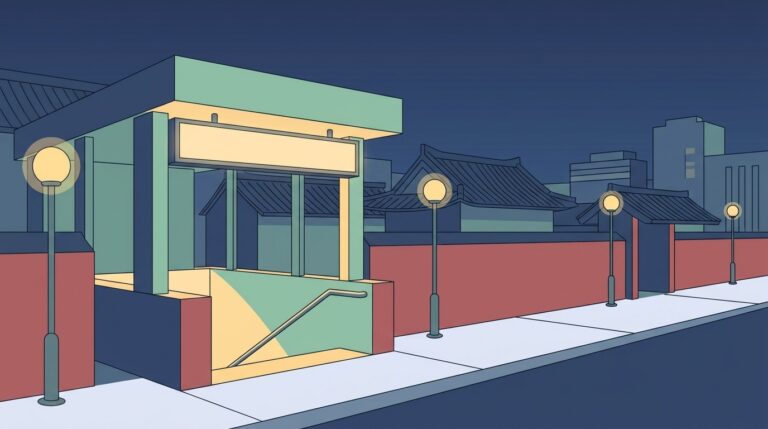
안녕하세요! 매일한글 에디터입니다. (Hello! This is your Daily Hangul editor.) Picture this: It is 11:45 PM on a chilly Friday night in Hongdae. Your belly is happily stuffed with crispy samgyeopsal (pork belly), your vocal cords are delightfully wrecked from singing BTS songs at noraebang, and your heart is full of Seoul magic. But then, as you step down the stairs toward the turnstile, you see commuters sprinting past you like Olympic athletes chasing gold medals. The digital platform display flashes red letters you cannot read yet, and sudden panic hits: Is my train still coming, or am I about to pay a 40,000 KRW midnight taxi fare?
If your heart skipped a beat just reading that, take a deep breath. Over the past decade tutoring travelers and expats in Seoul, “missing the last train” is by far the #1 urban horror story I hear. But here is the secret: Seoulites navigate this midnight adrenaline rush using just two or three ultra-short phrases. You do not need textbook paragraphs; you just need quick, polite street Korean that gets an instant answer before doors close. Today, we will master those exact life-saving words so you never get left behind on the midnight platform!
Phase 2: 핵심 표현 3선 심층 분석 (Top 3 Key Expressions)
1. 막차 시간 언제예요? (Makcha sigan eonjeyeyo?)
- Pronunciation: [Mak-cha shi-gan eon-je-ye-yo?] (Sound analogy: Imagine saying “mock-tea” quickly, then “see-gahn”, and finishing like “on-J-yay-yo”)
- Meaning: Literal: “When is the last train time?” | Real Nuance: “When does the final train leave?”
- K-Culture Moment: You hear this in every weekend K-drama when two romantic leads desperately glance at their smartwatches during a late-night street food cart (pojangmacha) date.
- Editor’s Insight: The word 막차 (makcha) combines 막 (mak – last/final) and 차 (cha – vehicle/train). It is your ultimate golden key after 11:30 PM.
- Situation Spectrum: Casual (⚠️ with close friends drop ‘-yo’ -> 막차 언제야?) / Semi-formal (✅ 막차 시간 언제예요?) / Formal (✅ 막차 시간이 언제입니까?)
- 🤔 Think About It: In many Western cities, subway lines run 24 hours or stop abruptly at arbitrary hours. Seoul’s transit operates on an ultra-predictable minute-by-minute system. Does your hometown have a special word dedicated solely to the ‘final transit vehicle’?
2. 막차 끊겼어요? (Makcha kkeunkyeosseoyo?)
- Pronunciation: [Mak-cha kkeun-kyeo-sseo-yo?] (Sound analogy: Start with “mock-cha”, then say “kun” with tension in your throat, followed by “gyuh-so-yo”)
- Meaning: Literal: “Has the last train been snapped/severed?” | Real Nuance: “Did the last train already leave? / Am I too late?”
- K-Culture Moment: In slice-of-life dramas like My Liberation Notes, tired office workers sprint down subway stairs clutching their bags, gasping this exact question to station staff.
- Editor’s Insight: Koreans use the verb 끊기다 (kkeunkida)—which means “to be cut or disconnected” like a thread—when transportation services shut down for the night. It captures that painful feeling of being severed from your ride home!
- Situation Spectrum: Casual (⚠️ 막차 끊겼어?) / Semi-formal (✅ 막차 끊겼어요?) / Formal (✅ 막차가 끊겼습니까?)
- 🤔 Think About It: Notice how Korean views transportation as an unbroken thread connecting the city throughout the day. When midnight comes, the thread is “cut.”
3. 아직 지하철 있어요? (Ajik jihacheol isseoyo?)
- Pronunciation: [Ah-jik ji-ha-cheol ee-sseo-yo?] (Sound analogy: “Ah-jeek” like a brisk tap, “jee-ha-chul” rhyming with culture, “ee-so-yo”)
- Meaning: Literal: “Is there still subway?” | Real Nuance: “Is the subway still running?”
- K-Culture Moment: Friends whispering urgently outside exit gates right as the station lights start dimming.
- Editor’s Insight: If your tongue gets twisted trying to say complex words under stress, this A1-friendly fallback is your lifesaver. 아직 (ajik) means “still/yet”, and every Korean immediately understands you are checking if service is alive.
- Situation Spectrum: Casual (⚠️ 아직 지하철 있어?) / Semi-formal (✅ 아직 지하철 있어요?) / Formal (✅ 아직 지하철이 운행합니까?)
- 🤔 Think About It: While English speakers often ask “Are trains still operating?”, Korean favors the warm, simple existence verb 있어요 (isseoyo – there is / exists).
Phase 3: 교과서 한국어 vs 진짜 한국어 (Textbook vs. Real-World Korean)
Situation 1: Asking if you missed the train
- 📖 교과서 한국어 (Textbook): 마지막 열차가 이미 출발했습니까? (Majimak yeolchaga imi chulbalhaesseumnikka? – Has the final train departed already?)
- 🗣️ 진짜 한국어 (Real-World): 막차 끊겼어요? (Makcha kkeunkyeosseoyo? – Did the last train leave?)
- 💡 왜 다를까? (Why the difference?): While “마지막 열차 (last train)” is grammatically accurate, real commuters use the compound punchy noun 막차 (makcha). Speaking like a textbook when everyone is running makes you sound like a robotic GPS!
Situation 2: Asking if a specific train at the platform can be boarded
- 📖 교과서 한국어 (Textbook): 제가 이 전철에 탑승할 수 있습니까? (Jega i jeoncheore tapsunghal su isseumnikka? – May I embark upon this electric railway carriage?)
- 🗣️ 진짜 한국어 (Real-World): 이거 타도 돼요? (Igeo tado dwaeyo? – Can I take this?)
- 💡 왜 다를까? (Why the difference?): When doors are about to close with that ringing bell chime, you have roughly 3 seconds. Pointing at the open door with “이거 타도 돼요?” conveys urgency instantly and naturally.
Phase 4: K-Culture 딥다이브 & 비언어적 매너 (Culture Deep Dive & Manners)
4-1. 눈치 (Nunchi) & Platform Gestures
Late at night, station attendants (yeokmu-won) and passengers are in a rush. When approaching someone:
* The Two-Handed Phone Tilt: Hold your phone showing your subway navigation map with both hands, tilt your head down about 15 degrees, and make gentle eye contact.
* The Quick Excuse Bow: Always prepend your question with 저기요… (Jeogiyo… / Excuse me…) accompanied by a micro-bow. Never wave your arm aggressively over someone’s shoulder—in crowded stations, that disrupts personal space.
4-2. 문화 코드 분석: The “Makcha Sprint” (막차 전쟁)
In Korea, missing the last train is not just an inconvenience; it triggers what locals jokingly call 막차 전쟁 (Makcha Jeonjaeng – The Last Train War). Between 11:30 PM and 12:30 AM, business professionals, students, and revelers pour down the staircases simultaneously. Catching the makcha means going to sleep comfortably in your own bed; missing it means either hunting for an elusive late-night taxi, paying surge pricing, or spending the night at a jimjilbang (Korean 24h sauna) or internet cafe (PC bang) until the 첫차 (cheotcha – first train) arrives at 5:30 AM!
Phase 5: 실전 롤플레이 시나리오 (Real-Life Roleplay)
Setting: Gangnam Station (Line 2) at 11:52 PM. The digital bells are chiming. You approach Min-jun, a stylish Korean commuter standing near the card barrier.
- You: 저기요, 죄송한데요… (Jeogiyo, joesonghandeyo… / Excuse me, I’m sorry to bother you…)
🎭 Hands clasped politely, looking worried - Min-jun: 네? 무슨 일이세요? (Ne? Museun iriseyo? / Yes? What’s the matter?)
🎭 Takes off one wireless earbud, looking friendly - You: 홍대입구역 막차 시간 언제예요? (Hongdae-ipgu-yeok makcha sigan eonjeyeyo? / When is the last train to Hongdae Station?)
🎭 Pointing towards the Line 2 turnstile - Min-jun: 아, 홍대요? 지금 11시 55분 차가 마지막이에요! (A, Hongdaeyo? Jigeum yeol-han-si o-sip-o-bun chaga majimak-ieyo! / Ah, Hongdae? The 11:55 PM train right now is the last one!)
🎭 Checks his watch with wide eyes - You: 아직 지하철 있어요? (Ajik jihacheol isseoyo? / Is the subway still there?)
🎭 Gasping slightly - Min-jun: 네, 플랫폼에 지금 들어오고 있어요. 빨리 내려가세요! (Ne, peullaethome jigeum deureo-ogo isseoyo. Ppal-li naeryeogaseyo! / Yes, it’s pulling into the platform right now. Run downstairs quickly!)
🎭 Points urgently toward the down escalator - You: 이거 타도 돼요? 카드 찍고 가면 돼요? (Igeo tado dwaeyo? Kadeu jjikgo gamyeon dwaeyo? / Can I take this? Just tap my card and go?)
🎭 Showing T-Money transit card - Min-jun: 네! 카드 찍고 바로 뛰세요! (Ne! Kadeu jjikgo baro ttwiseyo! / Yes! Tap your card and run right away!)
🎭 Cheering you on with a warm smile
🔀 인터랙티브 분기점 (Interactive Choice)
Now that Min-jun told you to run, what do you shout as you rush through the gate?
- Option A: 감사합니다! 뛰어갈게요! (Gamsahamnida! Ttwieogalke-yo! – Thank you! I will run!)
- Option B: 야! 같이 가자! (Ya! Gachi gaja! – Hey! Let’s go together!)
- Option C: 내일 또 봐요! (Naeil tto bwayo! – See you again tomorrow!)
[Choice Feedback]
* Choice A is the BEST! You expressed gratitude politely while acknowledging the sprint. Min-jun will give you a silent thumbs-up.
* Choice B is a RISK/BAD! “야 (Ya)” is extremely rude to strangers and could offend them immediately.
* Choice C is AWKWARD! Unless you secretly exchanged phone numbers, you will likely never see this stranger tomorrow!
Phase 6: 10초 감정 섀도잉 드릴 (Emotional Shadowing Drill)
Read these aloud matching the exact emotion and rhythm slashes (/ = pause 0.5s).
[😰 숨차고 다급하게 - Breathless & Urgent]
저기요! / 막차 끊겼어요? / 아직 있어요?
(Jeogiyo! / Makcha kkeunkyeosseoyo? / Ajik isseoyo?)-
[🙏 간절하고 조심스럽게 - Earnest & Polite]
죄송한데요, / 막차 시간 / 언제예요?
(Joesonghandeyo, / makcha sigan / eonjeyeyo?) -
[🏃 번개처럼 빠르게 - Sprinting like lightning]
이거 / 홍대 가요? / 지금 타도 돼요?
(Igeo / Hongdae gayo? / Jigeum tado dwaeyo?)
Phase 7: K-Culture 미니 사전 (Mini Dictionary)
- 막차 (Makcha): The final scheduled bus or subway train of the day. In Korea, missing this turns you into a midnight nomad!
- 첫차 (Cheotcha): The first scheduled train of the morning (usually between 5:15 AM and 5:40 AM across Seoul).
- 환승 (Hwanseung): Transit transfer. Critical tip: Transfer connections close earlier than terminal station trains, so always budget an extra 15 minutes.
- 심야버스 / 올빼미 버스 (Simyabeoseu / Owl Bus): Seoul’s late-night municipal buses (prefixed with the letter N, e.g., N13, N26) that run between midnight and 4:30 AM for travelers who missed the makcha.
Phase 8: 여행자를 위한 생존 키트 (Traveler’s Survival Kit)
Top 3 Survival Phrases
- 이거 시청 가요? (Igeo Sicheong gayo?) – Does this train go to City Hall? (Use when boarding in a rush)
- 출구 어디예요? (Chulgu eodiyeyo?) – Where is the exit? (Crucial when trapped behind locked nighttime shutters)
- 택시 정류장 어디예요? (Taeksi jeongnyujang eodiyeyo?) – Where is the taxi stand? (Your emergency Plan B)
Editor’s Travel Note
- Essential App: Download the official KakaoMap or Naver Map Transit App Guide. Unlike foreign maps that do not update Seoul transit status in real time, Korean navigation apps feature a dedicated “막차 (Last Train)” button that calculates the exact last possible minute you must walk into the station!
- T-Money Warning: Subway station cash reload machines often shut down or run out of change after 11:30 PM. Always keep at least 5,000 KRW balance on your physical card or mobile app.
Phase 9: “한 발 더 깊이” (Cultural Reflection)
In Korean society, punctuality is deeply tied to 정 (Jeong – collective warmth) and civic consideration. Seoul’s subway runs on second-by-second precision so that millions of citizens can return safely to their families after intense days of hard work. When you ask a commuter about the makcha, you step into a shared cultural bond: every Korean has, at least once, felt that frantic dash to reach home before midnight.
💬 Your Turn: Have you ever missed the last train in a foreign city? How did you survive until morning? Tell me your story in the comments below!
Phase 10: FAQ & 흔한 실수 (FAQ & Common Mistakes)
Q: What time does the Seoul subway usually stop running?
A: Most Seoul subway lines stop running between 12:00 AM (midnight) and 1:00 AM on weekdays. On weekends and public holidays, trains stop approximately one hour earlier (around midnight).
Q: If the subway says it runs until 1:00 AM, can I enter any station at 12:45 AM?
A: Not necessarily! That 1:00 AM timestamp is when the final train reaches its terminus depot. Intermediate stations may see their makcha leave as early as 11:45 PM. Always check the specific departure board for your station.
Q: What should I do if the gates are closed and I am stuck?
A: Do not panic. Look for the yellow emergency call box (비상 통화 장치) located near the gate turnstile and press the button. Station staff will remotely buzz the gate open or guide you toward the night exit.
🚨 흔한 실수 (Common Mistakes) Warning Board
- Mistake: Saying “마지막 기차 (Majimak gicha)” for subway.
- Correct Action: “기차 (Gicha)” refers to intercity rail trains (like KTX). For city subways, say 막차 (Makcha) or 지하철 (Jihacheol).
- Mistake: Assuming transfer lines (환승역) stay open simultaneously.
- Correct Action: The connecting line might end 20 minutes earlier than your first line! Always ask station staff: “환승 돼요? (Hwanseung dwaeyo? / Can I still transfer?)”.
- Mistake: Forgetting that weekend timetables are earlier.
- Correct Action: Set an alarm on your phone for 11:15 PM on Saturdays and Sundays to begin moving toward the station.
Phase 11: 액션 미션 & 참여 유도 (Action Missions)
- 🥉 Bronze Mission (Self-Practice): Record your voice saying “막차 시간 언제예요?” 3 times on your phone until you can say it under 3 seconds.
- 🥈 Silver Mission (Social Share): Share this post to your Instagram Story or travel group with the caption: “No taxi fees for me in Seoul tonight! #DailyHangul”
- 🥇 Gold Mission (Real-Life Mastery): The next time you enter a Seoul subway station, locate the electronic departure screen, find the characters 막차, and note down its time!
- 🎮 K-Culture Mission: In the next K-drama you watch, listen closely during any nighttime scene. Can you spot someone shouting “막차!” before sprinting away?
Phase 12: 인터랙티브 퀴즈 챌린지 (Interactive Quiz)
Q1. You arrive at the station at 11:58 PM. Which expression is the most natural way to ask if the last train has already left?
* A) 첫차 타도 돼요? (Cheotcha tado dwaeyo?)
* B) 막차 끊겼어요? (Makcha kkeunkyeosseoyo?)
* C) 기차표 얼마예요? (Gichapyo eolmayeyo?)
Q2. Fill in the blank: “Excuse me, when is the last train?” -> “저기요, [ ____ ] 시간 언제예요?”
Q3. True or False: Seoul subways operate until 1:00 AM on both weekdays and weekends.
👉 Click here to reveal the answers and explanations!
- Answer: B (막차 끊겼어요?)
- Explanation: “막차 끊겼어요?” asks if the final train has ended. (Option A asks about the first morning train, Option C asks for intercity train ticket prices).
- Answer: 막차 (Makcha)
- Explanation: 막차 is the core vocabulary word for the last train/bus of the day!
- Answer: False (거짓)
- Explanation: On weekends and public holidays, Seoul subway operations wind down earlier (around midnight) compared to weekday schedules.
- Explanation: On weekends and public holidays, Seoul subway operations wind down earlier (around midnight) compared to weekday schedules.







