

Phase 1: Empathy (Story-Driven Opening)
안녕하세요! 매일한글 에디터입니다.
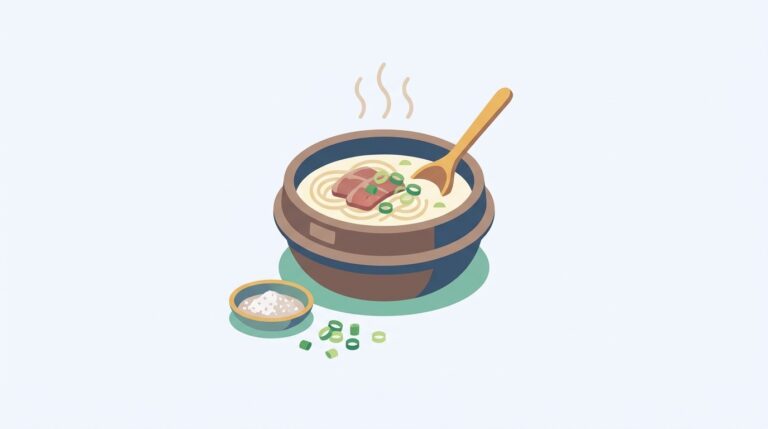
Picture this: You are sitting in a legendary, steam-filled restaurant in downtown Seoul that has been simmering beef bones since 1953. The wooden tables are slick with history, the air smells rich and hearty, and an Imo-nim (auntie) sets down a boiling, milky-white cauldron of Seolleongtang (ox bone soup) right in front of you. Excited by all the K-drama food scenes you’ve binge-watched, you grab your flat metal spoon, blow off the steam, and take a generous sip… only to pause in complete bewilderment.
“Wait… why does this taste completely bland? Did the chef forget to put in any salt?!”
If you have ever had this exact mini-heart attack in Korea, welcome to the club! Almost every international traveler and Korean learner goes through this culinary rite of passage. In Korean culinary philosophy, pristine bone broths like Seolleongtang (설렁탕) and Gomtang (곰탕) are intentionally served completely unseasoned—blank canvases awaiting your personal mastery.
Today, we are moving past beginner textbook survival phrases and stepping straight into intermediate (B2) culinary confidence. Drawing from years of feedback from real learners living in Korea, this guide will teach you the exact vocabulary, natural dinner-table nuances, and unwritten cultural etiquette needed to season, customize, and savor Korean soups like a true local.
Phase 2: Deep Dive into 3 Core Expressions
1. 간이 전혀 안 되어 있어요 (Gan-i jeonhyeo an doeeo isseoyo)
- Pronunciation: [Gan-i jeon-hyeo an dwee-eo iss-eo-yo] (Think: “Gahn” as in ‘gone’ + “ee”, “jeon” like the savory pancake, “hyeo” like the English word ‘huh’ with a ‘y’, “an dway-uh ee-ssuh-yo”)
- Meaning: Literal: “The seasoning is not done at all.” / Actual Nuance: “There is zero salt in this soup; it’s completely unseasoned.”
- K-Culture Moment: You will hear this exact line in food-travel shows when a host tries authentic, traditional bone broths cooked without artificial seasonings or pre-salted bases.
- Editor’s Insight: The word 간 (gan) refers to the optimal balance of saltiness in Korean cuisine. Saying “간이 안 맞아요” means the seasoning is slightly off, but using 전혀 (jeonhyeo – not at all) clearly explains why your tongue feels surprised.
- Situation Spectrum: Casual (✅) / Semi-formal (✅) / Formal (⚠️ – Replace with 간이 전혀 되어 있지 않습니다 in high-level business settings)
- 🤔 Think About It: In Western dining, the chef decides the final seasoning before serving. Why do you think traditional Korean bone soups place the ultimate seasoning authority directly into the hands of the eater?
2. 소금이랑 후추는 취향껏 넣으세요 (Sogeum-irang huchu-neun chwihyang-kkeot neoeuseyo)
- Pronunciation: [So-geum-i-rang hu-chu-neun chwi-hyang-kkeot neo-eu-se-yo] (Think: “So-geum” rhyming with ‘go-room’, “hu-chu” like ‘who-chew’, “chwi-hyang” like ‘chwee-yahng’, “kket” with a sharp double-k pop)
- Meaning: Literal: “Put in salt and black pepper according to your preference.” / Actual Nuance: “Season it with salt and pepper to your own liking!”
- K-Culture Moment: When an older Korean colleague or a friendly restaurant owner sees a newcomer staring hesitantly at the condiment jars on the table, they will warmly smile and offer this phrase.
- Editor’s Insight: 취향껏 (chwihyang-kkeot) is an indispensable B2-level adverb combining 취향 (preference/taste) and the suffix -껏 (to the limit of / according to). It is widely used in dining, lifestyle, and fashion.
- Situation Spectrum: Casual (✅) / Semi-formal (✅) / Formal (✅)
- 🤔 Think About It: How does the concept of 취향껏 balance Korea’s communal table-sharing culture with individual personal expression?
3. 깍두기 국물 좀 부어 먹을까요? (Kkakdugi gukmul jom bueo meogeulkkayo?)
- Pronunciation: [Kkak-du-gi gung-mul jom bu-eo meo-geul-kka-yo?] (Think: “Kkak” with a tense, snappy ‘k’, “gung-mul” where ‘k’ softens into an ‘ng’ sound before ‘m’, “bu-uh”)
- Meaning: Literal: “Shall we pour some radish kimchi broth in?” / Actual Nuance: “How about we tip in some of this spicy, tangy radish juice to finish the soup?”
- K-Culture Moment: The hallmark of true Gukbap connoisseurs! You see this constantly in slice-of-life K-dramas when tired office workers eat comforting hangover stews late at night.
- Editor’s Insight: Pouring fermented radish kimchi brine (깍국 / kkakguk) into the second half of your milky white soup cuts through the beef fat and adds natural acidity and umami. It shows you know the insider secret!
- Situation Spectrum: Casual (✅) / Semi-formal (✅) / Formal (🚫 – Considered too unceremonious for stiff formal meetings)
- 🤔 Think About It: Does your home culture ever repurpose pickling liquids or vegetable brines directly as table condiments?
Phase 3: Textbook Korean vs. Real Korean
Situation 1: Explaining that the soup needs more salt
- 📖 교과서 한국어 (Textbook): 이 탕은 맛이 싱겁기 때문에 소금을 더 첨가해야 합니다. (I tang-eun mas-i sing-geop-gi ttae-mun-e so-geum-eul deo cheom-ga-hae-ya ham-ni-da. / Because this soup tastes bland, we must add more salt.)
- 🗣️ 진짜 한국어 (Real-life Native): 국물이 좀 슴슴해서 소금 간 좀 더 해야겠어요. (Gung-mul-i jom seum-seum-hae-seo so-geum gan jom deo hae-ya-gess-eo-yo. / The broth is on the milder, flatter side, so I should adjust the salt seasoning a bit.)
- 💡 왜 다를까? Koreans rarely use formal words like 첨가하다 (to add/supplement) at dining tables. Instead, native speakers favor nuanced sensory adjectives like 슴슴하다 (subtly bland/mild in a natural way) over simple 싱겁다 (bland) and frame the action with the set phrase 간을 하다 (to season).
Situation 2: Asking a dining companion to pass the salt or scallions
- 📖 교과서 한국어 (Textbook): 저에게 소금 통과 파 그릇을 건네주시겠습니까? (Jeo-e-ge so-geum tong-gwa pa geu-reus-eul geon-ne-ju-si-gess-seum-ni-kka? / Would you please hand over the salt container and scallion bowl to me?)
- 🗣️ 진짜 한국어 (Real-life Native): 저기, 소금이랑 파 좀 이쪽으로 넘겨주실래요? (Jeo-gi, so-geum-i-rang pa jom i-jjog-eu-ro neom-gyeo-ju-sil-lae-yo? / Excuse me, could you pass the salt and green onions over this way?)
- 💡 왜 다를까? Textbook Korean sounds like an official written contract. In real casual and semi-formal dining, native speakers use 넘겨주다 (to hand over/pass) paired with the polite conversational ending -실래요?.
Phase 4: K-Culture Deep Dive & Non-Verbal Etiquette
4-1. 눈치 (Nunchi) & Table Etiquette: The Golden Tasting Rule
Never, ever dump a spoonful of salt into your soup before tasting the plain broth first! In Korea, doing so violates basic dining Nunchi.
* The Visual Check: First, observe whether the broth is steaming. Use your metal soup spoon to take one pure sip of the pristine broth.
* The Verbal Acknowledgment: Nod slightly and say, “아, 진짜 진하다!” (Ah, jin-jja jin-ha-da! / Ah, it’s really deep and rich!).
* The Action: Only then, reach for the coarse gray sea salt (천일염 / cheon-il-yeom) provided in the ceramic jar. Take half a small spoon, stir thoroughly, taste again, and gradually calibrate. Always offer the salt cellar to your dining elders or companions first before returning the lid.
4-2. Cultural Code: The Philosophy of Tang (탕) & Collectivism
Why is Seolleongtang served unseasoned when almost every other Korean stew (Jjigae) arrives intensely seasoned with garlic, gochujang, and fermented pastes?
* Historically, ox bone soups were simmered in massive village iron cauldrons (gamasot) for 10 to 18 hours. Because cattle were precious draft animals, bone broth was an essential restorative folk medicine (boyaksik).
* Adding salt directly to the boiling cauldron during the hours-long reduction would cause the minerals to bitter and degrade the collagen structure.
* More importantly, leaving the broth unseasoned democratized the meal: every individual—from hard manual laborers who needed heavy sodium to elders and young children who required a mild tonic—could customize their own bowl without communal conflict.
Phase 5: Real-World Role-Play Scenario
Setting: A bustling, steam-clouded 70-year-old Seolleongtang specialty house in Jongno, Seoul. Metal spoons clatter, broth bubbles in giant vats near the entrance, and the aroma of roasted marrow fills the room.
Characters:
* You: An intermediate Korean learner exploring authentic Seoul eats.
* Min-woo (민우): Your native Korean coworker and self-proclaimed foodie.
* Imo-nim (이모님): The veteran restaurant auntie with a quick stride and a kind demeanor.
Turn 1 (Min-woo):
여기 설렁탕은 국물이 진짜 뽀얗고 진해. 일단 국물부터 한 숟가락 맛봐 봐.
(Yeo-gi seol-leong-tang-eun gung-mul-i jin-jja ppo-yah-go jin-hae. Il-dan gung-mul-bu-teo han sut-ga-rak mat-bwa bwa.)
“The broth at this Seolleongtang place is super milky and rich. Try a spoonful of the broth first.”
🎭 Nods enthusiastically toward your piping hot earthenware bowl.
Turn 2 (You):
오, 국물이 정말 깊은데… 간이 전혀 안 되어 있네요?
(O, gung-mul-i jeong-mal gip-eun-de… gan-i jeon-hyeo an doeeo inne-yo?)
“Oh, the broth is genuinely deep… but there is no salt seasoning in it at all, right?”
🎭 Takes a sip, tilting your head in surprised realization.
Turn 3 (Imo-nim):
학생, 우리 집은 소금 간 안 해서 나가! 옆에 굵은 소금이랑 대파 듬뿍 넣어 먹어!
(Hak-saeng, u-ri jip-eun so-geum gan an hae-seo na-ga! Yeop-e gul-geun so-geum-i-rang dae-pa deum-ppuk neo-eo meog-eo!)
“Student, our restaurant serves it unsalted! Add plenty of coarse salt and chopped scallions from the side!”
🎭 Swiftly sets down a fresh stainless bowl of chopped green scallions and winks.
Turn 4 (You):
이모님, 감사합니다! 파는 얼마큼 넣는 게 맛있어요?
(I-mo-nim, gam-sa-ham-ni-da! Pa-neun eol-ma-keum neon-neun ge mas-iss-eo-yo?)
“Thank you, auntie! About how much green onion should I put in for it to taste best?”
🎭 Holds the small wooden tongs over the scallion bowl, seeking advice.
Turn 5 (Min-woo):
파는 숨이 죽으면서 국물이 시원해지니까 두세 숟가락 팍팍 넣어.
(Pa-neun sum-i jug-eu-myeon-seo gung-mul-i si-won-hae-ji-ni-kka du-se sut-ga-rak pak-pak neo-eo.)
“The scallions wilt and make the soup refreshing, so scoop in two or three generous spoonfuls with gusto.”
🎭 Mimics a heaping scooping motion with his hand.
Turn 6 (You):
소금은 반 숟가락만 넣고, 후추도 톡톡 뿌릴게요.
(So-geum-eun ban sut-ga-rak-man neo-go, hu-chu-do tok-tok ppu-ril-ge-yo.)
“I’ll put in half a small spoon of salt, and tap in a couple dashes of black pepper.”
🎭 Carefully stirs the coarse salt crystals into the broth and waits for them to dissolve.
Turn 7 (Min-woo):
간 맞아? 절반쯤 먹고 나면 깍두기 국물 부어서 빨갛게 먹는 것도 잊지 마!
(Gan maj-a? Jeol-ban-jjeum meog-go na-myeon kkak-du-gi gung-mul bu-eo-seo ppal-gah-ge meog-neun geos-do ij-ji ma!)
“Does the seasoning taste right now? Once you eat about half, don’t forget to pour in radish kimchi juice and eat it spicy red!”
🎭 Points eagerly with his spoon toward the깍두기 stone crock.
Turn 8 (You):
우와, 소금 간 맞추니까 감칠맛이 확 살아나요! 제대로 먹어볼게요.
(U-wa, so-geum gan mat-chu-ni-kka gam-chil-mas-i hwak sal-a-na-yo! Je-dae-ro meog-eo-bol-ge-yo.)
“Wow, now that the salt seasoning is balanced, the umami flavor completely springs to life! I’m going to dig in properly.”
🎭 Takes a big bite with rice and beef slices, grinning with satisfaction.
🔀 Interactive Decision Branch
What would you do immediately after your soup arrives at the table?
- Option A: Dump three massive spoons of table salt into the bowl before picking up your spoon.
- Option B: Taste one spoonful of plain broth first, then add half a spoon of coarse salt and a heap of green onions, stirring thoroughly.
- Option C: Wave your hand to call the chef and ask them why they served an incomplete, unsalted soup.
Branch Feedback:
* Option A (Bad / Risk): 🚫 High risk! Traditional coarse sea salt dissolves slowly; dumping three spoonfuls without tasting will turn your expensive, labor-intensive ox broth into an inedible ocean of sodium.
* Option B (Best Choice): 🌟 Perfect! You respected the kitchen’s craft by tasting the pure stock, and showed proper intermediate dining etiquette by adjusting step-by-step.
* Option C (Social Disaster): ⚠️ Big cringe! You will cause immense confusion and embarrassment, marking yourself as someone who doesn’t understand the fundamentals of Korean Tang culture.
Phase 6: 10-Second Emotional Shadowing Drill
Practice reading these out loud with natural rhythm. Notice the pause slashes (/) and adopt the indicated emotion!
[😋 기대감 가득하게 / With eager anticipation]
국물이 진짜 뽀얗네요! / 일단 / 간 보기 전에 / 국물 맛부터 볼게요.
(Gung-mul-i jin-jja ppo-yah-ne-yo! / Il-dan / gan bo-gi jeon-e / gung-mul mat-bu-teo bol-ge-yo.)
“The broth is so milky white! First, before seasoning, let me taste the broth itself.”-
[🧂 신중하고 진지하게 / With careful culinary focus]
소금은 / 한 번에 많이 넣지 말고, / 조금씩 넣으면서 / 간을 맞춰야 해요.
(So-geum-eun / han beon-e manh-i neoh-ji mal-go, / jo-geum-ssik neonh-eu-myeon-seo / gan-eul mat-chwo-ya hae-yo.)
“You shouldn’t put in lots of salt all at once; you have to adjust the seasoning by adding little bits at a time.” -
[🤤 감탄하며 시원하게 / Utterly refreshed and delighted]
파를 듬뿍 넣고 / 깍두기 국물까지 말았더니, / 국물이 아주 제대로네요!
(Pa-reul deum-ppuk neo-go / kkak-du-gi gung-mul-kka-ji mar-ass-deo-ni, / gung-mul-i a-ju je-dae-ro-ne-yo!)
“After adding heaps of scallions and mixing in the radish kimchi juice, this broth is truly the real deal!”
Phase 7: K-Culture Mini-Dictionary
- 간 (Gan)
- Translation: The balance of saltiness / seasoning level in food.
- Real-world Usage: Used constantly in expressions like 간을 보다 (to taste-test for seasoning), 간을 맞추다 (to adjust saltiness to perfection), and 간간하다 (pleasantly seasoned with a hint of salt).
- 다대기 (Dadaegi)
- Translation: Spicy red pepper seasoning paste.
- Real-world Usage: A paste made of chili powder, garlic, and broth. When you want your clear beef or pork soup to turn fiery and pungent, ask the staff: “다대기 좀 더 주실 수 있나요?” (Could you give me some more chili paste?).
- 깍국 (Kkakguk)
- Translation: Radish kimchi (Kkakdugi) brine.
- Real-world Usage: Colloquial abbreviation of 깍두기 국물. Old-school Seoulites often shout to the server: “이모님, 여기 깍국 한 주전자 주세요!” (asking for a small kettle full of kimchi brine to pour into their soup bowls).
- 뚝배기 (Ttukbaegi)
- Translation: Traditional heavy unglazed earthenware bowl.
- Real-world Usage: Retains intense heat for over twenty minutes. Koreans say 뚝배기처럼 은근하고 깊다 (warm and dependable like an earthenware pot) to describe loyal, warm-hearted friends.
Phase 8: Traveler’s Survival Kit
Top 3 On-Site Survival Phrases
- 소금 간이 안 되어 있어서 소금 좀 칠게요.
- Romanization: So-geum gan-i an doeeo iss-eo-seo so-geum jom chil-ge-yo.
- Pro Tip: Use the verb 치다 (to sprinkle/dash salt) instead of 넣다 (to put in) to instantly sound like a local foodie.
- 대파랑 소면 사리 리필 되나요?
- Romanization: Dae-pa-rang so-myeon sa-ri ri-pil doe-na-yo?
- Pro Tip: Most traditional Seolleongtang joints offer free refills of extra scallions and thin wheat noodles (somi). Don’t hesitate to ask politely!
- 깍두기 국물 따로 그릇에 담아주실 수 있나요?
- Romanization: Kkak-du-gi gung-mul tta-ro geu-reus-e dam-a-ju-sil su iss-na-yo?
- Pro Tip: If the tabletop kimchi jar doesn’t have enough liquid, use this sentence to get fresh, cold kimchi juice served in a separate dish.
Editor’s Travel Note
- Navigation Tip: In Korea, Google Maps frequently lacks updated indoor information or public walking paths. Make sure you install the Naver Map application download to search for historic 50-year-old soup joints (노포 / nopo).
- Payment & Manners: At traditional soup houses, you typically take your table bill slip (gyesanseo) up to the front counter register near the door after eating rather than waiting at your seat.
Phase 9: “A Step Deeper” (Reflective Humanities Essay)
In modern global food culture, mass production prioritizes identical consistency—every single bowl must taste standardized before it leaves the kitchen. Traditional Korean bone soup (Tang) culture quietly defies this premise. It honors individual biological autonomy within a collective gathering: the kitchen provides the pure, uncorrupted essence of marrow and time, but trusts you to define the boundaries of your own palate. Your bowl reflects who you are this morning—whether you need the gentle restorative purity of plain broth, the sharp jolt of sea salt, or the fiery defiance of fermented kimchi juice.
💬 Your Turn: When you eat soups or broths in your own country, do you prefer the chef to dictate the final seasoning, or do you love having full seasoning control at the table? Let’s discuss in the comments below!
Phase 10: FAQ & Misconception Buster
Q: Is Seolleongtang always served completely unsalted everywhere in Korea?
A: About 90% of dedicated, traditional Seolleongtang and Gomtang specialty houses serve their broth completely unseasoned (or with only trace natural sodium from the bones). However, some fast-casual chain franchises or modern food courts add a light baseline salt seasoning. That is why taking that first exploratory sip before adding salt is an essential habit!
Q: What is the difference between Gomtang and Seolleongtang?
A: Both are classic beef soups, but their core ingredients differ! Seolleongtang is made primarily by boiling ox bones (leg bones, marrow) for many hours until the broth turns milky opaque white. Gomtang is made by simmering lean beef meat, brisket, intestines, and minimal bones, resulting in a clearer, golden-hued broth.
Q: Why do Koreans put coarse sea salt (천일염) on the table instead of fine shaker salt?
A: Coarse sun-dried sea salt retains natural ocean minerals that give a rounded, sweet aftertaste (단맛) rather than the harsh, sharp chemical sting of refined table salt. It dissolves into hot broth gradually, preventing sudden over-salting.
🚨 Common Mistakes Warning Board
- Mistake: Dumping salt into the bowl before taking the first sip.
- Correct Action: Take one sip of the naked broth first. Always.
- Mistake: Assuming the black specks inside the salt crock are dirt.
- Correct Action: Many authentic restaurants roast their coarse sea salt with sesame or black pepper; it is roasted seasoning, not contamination!
- Mistake: Pouring kimchi juice right at the start before tasting the milky beef flavor.
- Correct Action: Enjoy at least half the bowl white and creamy with salt and scallions; add the kimchi juice (깍국) near the end for a spectacular flavor transformation.
Phase 11: Action Missions & Engagement
- 🥉 Bronze Mission (Solo Practice): Stand in front of your mirror and practice the phrase: “간이 좀 슴슴해서 소금 간 좀 할게요” smoothly three times with natural facial expressions.
- 🥈 Silver Mission (Social Media Sharing): Next time you eat any soup or noodles, snap a photo of your seasoning condiments and post an Instagram Story with the caption: “소금이랑 후추는 취향껏! 🥣🧂 #DailyHangul”.
- 🥇 Gold Mission (Real-World Test): Walk into a Korean soup restaurant, wait for your bowl, taste the broth first, and ask your dining partner: “간이 맞아요, 아니면 싱거워요?” (Does the seasoning fit, or is it bland?) completely in Korean!
🎮 K-Culture Mission: Watch an episode of the foodie K-drama Let’s Eat (식샤를 합시다) or Hospital Playlist. Pay attention to how the characters react when their stone pots arrive: see if you can spot someone passing the salt jar or pouring red radish kimchi juice into their bowl!
Phase 12: Interactive Quiz Challenge
Test your intermediate dining instincts below! Click the toggle to reveal the correct answers and cultural explanations.
- [Situational Judgment] You are eating Seolleongtang with your Korean team leader. The soup arrives. What is the most polite and natural order of actions?
- A) Pour kimchi juice immediately so everyone sees your local eating skills.
- B) Offer the scallion and salt bowls to your team leader first after tasting your own broth.
- C) Ask the waiter loudly why the soup doesn’t have any salt.
- [Fill-in-the-Blank] Fill in the missing B2 phrase meaning “according to your preference”:
- “매운 거 좋아하시면 다대기는 ________ 넣으세요.” (If you like spicy food, add chili paste to your liking.)
- [True or False] Adding Kkakdugi radish kimchi juice to Seolleongtang is considered an insult to the chef in Korea. (True / False)
👉 Click to reveal answers & explanations
- Answer: B
- Explanation: Tasting first honors the kitchen, and passing condiments to your senior dining partner shows high Nunchi and table manners.
- Answer: 취향껏 (chwihyang-kkeot)
- Explanation: Combining 취향 (taste/preference) and -껏 (to the degree of), this adverb is the natural native way to say “to your personal liking.”
- Answer: False
- Explanation: It is quite the opposite! Pouring 깍국 (kimchi brine) is celebrated as a beloved, time-honored traditional way to finish bone broth soups, celebrated by foodies across Korea!
- Explanation: It is quite the opposite! Pouring 깍국 (kimchi brine) is celebrated as a beloved, time-honored traditional way to finish bone broth soups, celebrated by foodies across Korea!







