

Phase 1: Empathy (Story Immersion Opening)
안녕하세요! 매일한글 에디터입니다. (Hello! This is your Daily Hangul editor.)
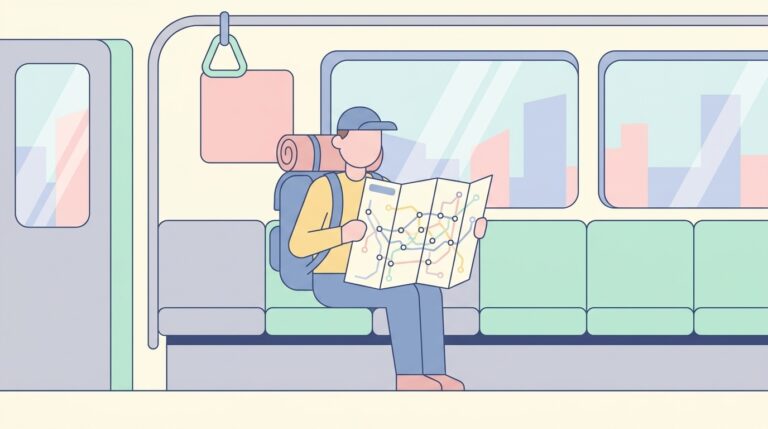
Picture this: You are on Seoul Subway Line 2 heading toward Hongdae. You have your earbuds in, vibing to NewJeans, and watching the Han River glide by outside the window. You glance down at your phone for what feels like ten seconds. Suddenly, the chime sounds, the automated voice announces an unfamiliar station name, and through the closing glass doors, you see the platform sign for your destination disappearing behind you.
Your heart drops into your stomach. “Wait… did I just miss my stop? Where am I? Is this train heading all the way to Gangnam now?!”
Panic sets in instantly. You look around, but everyone else looks cool, collected, and laser-focused on their screens. You want to ask someone for help, but your mind freezes. What do you say? Do you scream? Do you get off at the next stop and tap out? Will you get charged twice?
Every single traveler and expat in Korea has lived this exact nightmare. Missing your stop on Korea’s ultra-efficient public transit system can feel overwhelming, especially on circular subway lines or intercity express buses. But don’t worry! With just a handful of natural, intermediate-level (B1) Korean expressions and a couple of insider transit hacks, you can handle this situation with absolute composure. Today, we have curated field-tested phrases based on real feedback from international commuters in Seoul. Let’s make sure you never fear missing your stop again!
Phase 2: Deep Dive into 3 Core Expressions
1. 어떡해, 저 내릴 곳을 지나쳤어요! (Eotteokhae, jeo naeril goseul jinachyeosseoyo!)
- Pronunciation: [Uh-tteok-hae, jeo nae-ril go-seul ji-na-chyeo-sseo-yo!] (Sounds like: “Uh-duck-hae”, matching the sigh of realization when you drop your keys)
- Meaning: Literal: “What should I do, I passed the place where I get off!” | Real Nuance: “Oh no, I totally missed my stop!”
- K-Culture Moment: You see this constantly in K-dramas like Crash Landing on You or Business Proposal, where the clumsy female or male lead dozes off on the protagonist’s shoulder on a late bus, suddenly jolts awake as the doors shut, and yells this in mild horror.
- Editor’s Insight: “지나치다” (jinachida) means “to pass by” or “overshoot.” Combining it with the past tense “~았/었어요” captures the irreversible fact that the train has already left your stop. Saying “어떡해” softly before it highlights your genuine, human vulnerability, making locals much more eager to assist you immediately.
- Situation Spectrum: Casual (어떡해, 나 지나쳤어!): ✅ | Semi-formal (어떡해요, 저 지나쳤어요): ✅ | Formal/Public (내릴 곳을 지나쳤습니다): ⚠️
- 🤔 Think About It: In English, we often say “I missed my stop” (attributing the miss to our own timing). In Korean, “지나치다” emphasizes the physical movement past the location. How does shifting focus from personal failure to physical displacement change your emotional reaction?
2. 반대편으로 가려면 카드를 다시 찍어야 하나요? (Bandaepyeon-euro garyeomyeon kadeureul dasi jjigeoya hanayo?)
- Pronunciation: [Ban-dae-pyeon-eu-ro ga-ryeo-myeon ka-deu-reul da-si jji-geo-ya ha-na-yo?] (Think of “dasi” like “dada-see” and “jjik-eo-yo” like the clicking sound of a stapler)
- Meaning: Literal: “If I want to go to the opposite side, must I stamp my card again?” | Real Nuance: “Do I have to tap out and tap back in to cross over to the other platform?”
- K-Culture Moment: A typical scene at older subway stations (like City Hall or Jongno 3-ga) where platform directions are split by separate turnstiles. Characters often get trapped on the wrong platform and peer through the turnstiles trying to figure out how to switch sides without wasting money.
- Editor’s Insight: “찍다” (jjikda) literally means to stamp or imprint, but colloquially it means to “tap” a transit card on an RFID reader. Using “찍다” instead of the formal “태그하다” (to tag) makes you sound instantly like a savvy local.
- Situation Spectrum: Casual: 🚫 | Semi-formal (to staff/station helpers): ✅ | Formal: ✅
- 🤔 Think About It: Why does Korean use physical, onomatopoeic verbs like “찍다” (stamp/press) for modern digital card taps? It reflects Korean’s rich preference for tactile imagery in daily spoken language.
3. 다음 정거장에서 건너갈 수 있어요? (Daeum jeonggeojang-eseo geonneogal su isseoyo?)
- Pronunciation: [Da-eum jeong-geo-jang-e-seo geon-neo-gal su it-seo-yo?] (Imagine saying “Down-jeong-go-jang”, with “geon-neo” sounding like “gun-ner”)
- Meaning: Literal: “Can I cross over at the next stop?” | Real Nuance: “Can I switch to the return direction at the next station without leaving the ticket gate?”
- K-Culture Moment: In variety shows like Running Man, cast members on transit-chase missions frantically ask commuters inside the train car whether the next station has an “island platform” (섬식 승강장) so they can sprint across immediately without exiting.
- Editor’s Insight: “건너가다” (geonneogada) means “to cross over.” Subway stations in Korea come in two main layouts: island platforms (cross easily across the tracks) and side platforms (often separated by turnstiles). Asking this saves you from exiting into a dead-end concourse!
- Situation Spectrum: Casual (다음 역에서 건너갈 수 있어?): ✅ | Semi-formal (다음 역에서 건너갈 수 있어요?): ✅ | Formal: ✅
- 🤔 Think About It: Notice how Korean specifies the directionality of movement (“가다” = going away from speaker) rather than just stating capability. Language reflects how Koreans spatialise navigation.
Phase 3: Textbook Korean vs. Real Korean
Situation 1: Squeezing toward the exit doors when you realize you’re late
- 📖 교과서 한국어 (Textbook): “실례합니다. 제가 이번 정거장에서 내려야 합니다.” (Sil-lye-ham-ni-da. Je-ga i-beon jeong-geo-jang-e-seo nae-ryeo-ya ham-ni-da. – Excuse me. I must disembark at this station.)
- 🗣️ 진짜 한국어 (Real-life): “저 내릴게요! 잠시만 지나갈게요!” (Jeo nae-ril-ge-yo! Jam-si-man ji-na-gal-ge-yo! – Getting off! Squeezing through real quick!
- 💡 왜 다를까? (Why is it different?): Subway doors close in 15 to 20 seconds during peak Seoul commute hours. Textbook Korean is grammatically pristine but far too long and stiff. Real Koreans use short, punchy verbs indicating immediate intent (“내릴게요!”) combined with polite urgency.
Situation 2: Muttering to yourself in shock when you notice the wrong sign
- 📖 교과서 한국어 (Textbook): “저는 목적지를 지나쳤다고 생각합니다.” (Jeo-neun mok-jeok-ji-reul ji-na-chyeot-da-go saeng-gak-ham-ni-da. – I believe I have bypassed my intended destination.)
- 🗣️ 진짜 한국어 (Real-life): “아, 망했다… 지나쳤네.” (A, mang-haet-da… ji-na-chyeon-ne. – Oh shoot… I totally missed it.)
- 💡 왜 다를까? (Why is it different?): Koreans express surprise using exclamatory self-talk forms (~네 / ~다). “망했다” is the ultimate daily colloquialism for “I messed up / I’m doomed,” used lightly by everyone from university students to corporate workers when transit goes wrong.
Phase 4: K-Culture Deep Dive & Non-Verbal Manners
4-1. Nunchi (눈치) & Body Language: The Silent Commuter Dance
When you realize you’ve missed your stop on a crowded subway or bus in Korea, dramatic flailing or loud groaning will draw uncomfortable stares. Korean public transit culture values “정숙” (jeongsuk – quiet decorum).
* The Submissive Squeeze: If you need to rush out before the door seals, pull your shoulders inward, drop your head slightly (a micro-bow), hold one hand in front of your chest vertically like a karate chop blade cutting through water, and murmur: “죄송합니다, 내릴게요.” People will part like the Red Sea.
* The Map Stare: When confused, look straight up at the digital line strip map above the doors or check your phone screen conspicuously. In Korea, looking purposefully at a transit map communicates: “I am disoriented, please pardon my hesitation.”
4-2. Cultural Code: The Seoul Transit “Free Re-entry” Hack & Line 2 Loop
Foreigners often dread Seoul Subway Line 2 because it is a giant circle loop (순환선 – sunhwamseon). If you miss your stop on Line 2, you might wonder: “Should I stay on the train until it circles back around?” (Answer: No! A full loop takes about 90 minutes!).
Here is an insider secret every commuter cherishes: The 15-Minute Re-Tag Rule (15분 재승차 제도). In the Seoul Metro system, if you accidentally tap out through the turnstile because you missed your stop or went the wrong way, you can tap your card back into the opposite turnstile at the same station within 15 minutes for free! No double fare, no penalty. Knowing this turns a panic attack into a casual 2-minute stroll across the corridor.
Phase 5: Real-Life Roleplay Scenario
Setting: Euljiro 1-ga Station platform (Line 2). Sarah, an exchange student, wakes up from a daydream to realize she passed Dongdaemun History & Culture Park. She frantically steps off the train, turns around, and approaches Mr. Kim, a kindly silver-haired station volunteer wearing a yellow safety vest.
- Sarah: (눈을 크게 뜨고 당황한 표정으로 / With wide eyes and a flustered face) 저… 실례합니다! 저 내릴 곳을 지나쳤어요! (Jeo… sil-lye-ham-ni-da! Jeo nae-ril go-seul ji-na-chyeo-sseo-yo! – Um… excuse me! I passed my stop!)
- Mr. Kim: (따뜻하게 미소 지으며 / Smiling warmly) 아이고, 어디서 내리시려고 했는데요? (Aigo, eodi-seo nae-ri-si-ryeo-go haet-neun-de-yo? – Oh dear, where were you planning to get off?)
- Sarah: (휴대폰 지도를 보여주며 / Showing her phone map) 동대문역사문화공원역이요! 한 정거장 더 왔어요. (Dong-dae-mun-yeok-sa-mun-hwa-gong-won-yeok-i-yo! Han jeong-geo-jang deo wat-seo-yo. – Dongdaemun History & Culture Park Station! I went one stop too far.)
- Mr. Kim: (반대쪽 승강장을 가리키며 / Pointing toward the opposite stairs) 괜찮아요. 저기 계단으로 내려가서 반대편 열차 타면 바로 가요. (Gwaen-chan-a-yo. Jeo-gi gye-dan-eu-ro nae-ryeo-ga-seo ban-dae-pyeon yeol-cha ta-myeon ba-ro ga-yo. – It’s alright. Just head down those stairs over there and take the train going the opposite direction; you’ll be right back.)
- Sarah: (카드를 만지작거리며 / Fiddling with her transit card nervously) 혹시 개찰구 밖으로 나가서 카드를 다시 찍어야 하나요? (Hok-si gae-chal-gu bak-eu-ro na-ga-seo ka-deu-reul da-si jji-geo-ya ha-na-yo? – By any chance, do I need to exit through the turnstiles and tap my card again?)
- Mr. Kim: (손을 부드럽게 내저으며 / Waving his hand gently) 아니에요, 여기는 안쪽 계단으로 연결되어 있어서 그냥 건너가면 돼요! (A-ni-e-yo, yeo-gi-neun an-jjok gye-dan-eu-ro yeon-gyeol-doe-eo it-seo-seo geu-nyang geon-neo-ga-myeon dwae-yo! – No, this station has an interior staircase connecting both sides, so you can simply walk across!)
- Sarah: (안도의 한숨을 쉬며 허리를 숙인다 / Sighing in relief with a deep bow) 아, 다행이다! 정말 감사합니다! (A, da-haeng-i-da! Jeong-mal gam-sa-ham-ni-da! – Ah, what a relief! Thank you so much!)
- Mr. Kim: (손을 흔들어주며 / Waving goodbye) 조심해서 가요! 다음엔 졸지 말고요! (Jo-sim-hae-seo ga-yo! Da-eum-en jol-ji mal-go-yo! – Get there safely! Don’t doze off next time!)
🔀 Interactive Decision Point
Imagine you are Sarah, but the station you exited at has separate turnstiles with no interior stairs connecting the platforms. What do you say to the station staff over the emergency gate intercom?
- Option A: “이거 열어주세요. 돈 내기 싫어요!” (I-geo yeol-eo-ju-se-yo. Don nae-gi sir-eo-yo! – Open this. I don’t want to pay money!)
- 👉 Feedback [BAD]: Demanding and overly aggressive. It violates Korean politeness norms and sounds like you are accusing them.
- Option B: “반대편으로 넘어가야 하는데 개찰구를 잘못 나왔어요. 도와주실 수 있나요?” (Ban-dae-pyeon-euro neom-eo-ga-ya han-neun-de gae-chal-gu-reul jal-mot na-wat-seo-yo. Do-wa-ju-sil su in-na-yo? – I need to cross to the opposite side but exited through the wrong turnstile. Could you assist me?)
- 👉 Feedback [BEST]: Clear, polite, and explains the situation accurately. The attendant will instantly buzz the side gate open for you without charging extra!
- Option C: 그냥 다시 카드를 찍고 들어가서 요금을 두 번 낸다. (Just tap your card again and pay the fare twice silently.)
- 👉 Feedback [RISK]: While it works, you lose money unnecessarily! Remember the 15-minute re-tag rule or simply hit the bell labeled “도움 호출” (Help Call) to ask for gate assistance.
Phase 6: 10-Second Emotion Shadowing Drill
Practice these lines with exaggerated natural pauses (/) and authentic Korean voice emotion:
[😱 Panic & Urgency]
어떡해! / 저 / 이번에 못 내렸어요! / 문 좀 다시 열어주세요!
(Eot-teok-hae! / Jeo / i-beon-e mot nae-ryeot-seo-yo! / Mun jom da-si yeol-eo-ju-se-yo! – Oh no! / I / couldn’t get off this time! / Please open the doors again!)-
[🥺 Hesitant & Polite]
저기요… / 반대 방향 타려면 / 어디로 건너가야 해요?
(Jeo-gi-yo… / ban-dae bang-hyang ta-ryeo-myeon / eo-di-ro geon-neo-ga-ya hae-yo? – Excuse me… / if I want to ride the opposite direction / where should I cross over?) -
[😮💨 Pure Relief]
휴, / 다행이다… / 다음 정거장에서 / 바로 갈아탈 수 있대.
(Hyu, / da-haeng-i-da… / da-eum jeong-geo-jang-e-seo / ba-ro gar-a-tal su it-dae. – Phew, / thank goodness… / they say we can transfer directly / at the next stop.)
Phase 7: K-Culture Mini Dictionary (4 Key Terms)
- 환승 (Hwanseung) | Transfer
- Meaning: Transferring between subway lines or between buses and subways within 30 minutes for free or discounted rates.
- Real-World Use: “환승역” (transfer station). You’ll hear announcements say: “이번 역은 4호선으로 갈아타실 수 있는 환승역입니다” (This station is a transfer station where you can transfer to Line 4).
- 반대편 (Bandaepyeon) | Opposite Side
- Meaning: The platform or street heading in the reverse direction.
- Real-World Use: Critical when you miss your stop. Ask commuters: “반대편 승강장이 어디예요?” (Where is the opposite platform?).
- 하차벨 (Hachabel) | Stop Bell / Exit Bell
- Meaning: The red buzzer inside Korean intra-city buses.
- Real-World Use: In Korea, you must press the bell before reaching the stop. If you don’t press it and no one is standing at the bus stop, the driver will zoom right past! If you miss it, say: “기사님, 이번에 내려요!” (Driver, getting off this time!).
- 지옥철 (Jiokcheol) | “Hell-train” (Rush Hour Subway)
- Meaning: A blend of 지옥 (hell) and 지하철 (subway). Refers to packed trains (especially Line 9 Express or Line 2 between 7:30 AM – 9:00 AM).
- Real-World Use: Missing your stop often happens in jiokcheol because the sheer human wall physically prevents you from reaching the door in time!
Phase 8: Traveler’s Survival Kit
Top 3 Survival Phrases
- 저 이번에 내려요! (Jeo i-beon-e nae-ryeo-yo!)
- Pro Tip: Shout this clearly when trapped behind a crowd on a bus or train car. It gives everyone immediate warning to step aside.
- 기사님, 문 한 번만 다시 열어주세요! (Gi-sa-nim, mun han beon-man da-si yeol-eo-ju-se-yo!)
- Pro Tip: If you are on a bus and the doors slam shut just as you reach the exit, yell this politely toward the driver.
- 반대 방향은 어디서 타요? (Ban-dae bang-hyang-eun eo-di-seo ta-yo?)
- Pro Tip: Short, punchy phrase to ask anyone on the platform to point you to the reverse train.
Editor’s Travel Note
- Navigation Essential: Avoid standard Google Maps, which lacks real-time walking and transit transfer gate accuracy in South Korea. Instead, install the KakaoMap transit navigation app or Naver Map English edition download. Both apps display the exact train car number (e.g., “Car 4-2”) for the fastest door exit and staircase connection.
- The Station Emergency Button: If you find yourself stuck outside a gate and need to switch to the reverse track, do not force the turnstile. Look at the wide wheelchair-accessible gate. You will spot a small telephone intercom button labeled “도움 호출” (Call for Help). Press it, say: “반대편으로 건너가려는데 문 열어주세요” (I need to cross to the other side, please open the gate), and the staff will buzz it open instantly!
Phase 9: “One Step Deeper” (Reflective Essay)
In South Korea, where the philosophy of Ppal-li Ppal-li (빨리빨리 – hurry, hurry) orchestrates everyday public transit down to the precise second, missing a stop can trigger a sudden burst of self-conscious anxiety. You worry not only about being late, but also about inconveniencing the synchronized choreography of hundreds of fellow commuters. However, underneath Korea’s fast-paced exterior lies a deep cultural norm of mutual community support called Jeong (정). Commuters who seem completely stoic with their noise-canceling headphones will almost always take one earbud out, grab the door handle, or point you toward the correct staircase the moment you ask for help in Korean. Recognizing that public transit mistakes happen to locals every day allows you to breathe, smile, and connect with people on human terms.
💬 Your Turn: Have you ever missed a subway stop or bus in your home country versus abroad? What was your most comical transit blunder? Share your story in the comments below! 저도 궁금해요! (I’m curious too!)
Phase 10: FAQ & Common Mistakes
Q: Will I be fined or charged double if I accidentally exit the subway turnstile and enter again?
A: Not if you re-enter within 15 minutes! Under the Seoul Metro 15-Minute Re-entry Policy (on Lines 1 through 9 and designated urban sections), you can tap out and tap back into the same station on the same line without paying another base fare. It is treated as a continuous transfer.
Q: What should I do if the bus driver drives past my stop with the doors shut?
A: Do not panic or try to pry the doors open. Speak up immediately with a firm, polite voice toward the front: “기사님, 하차벨 눌렀는데 지나쳤어요! 내려주세요!” (Driver, I pressed the stop bell but you passed it! Please let me off!). If the bus has already pulled into heavy traffic, for safety reasons the driver may have to drop you off at the next stop.
Q: How do I know if a station allows me to switch platforms without tapping out?
A: Look at the platform overhead signs for the phrase “반대편 타는 곳” (Opposite boarding platform) with an arrow pointing to a stairway. If you see signs that lead straight to “나가는 곳” (Exit) with turnstile icons, that station has separate platforms, meaning you will need to cross via the concourse level.
🚨 Common Mistakes (흔한 실수 TOP 3)
- ❌ Mistake 1: Hesitating silently at the bus door and waiting for the driver to notice you.
- 👉 Correct Action: Call out promptly: “내릴게요!” (Getting off!). Korean bus drivers assume no one is exiting if you are not standing directly at the door with your card ready.
- ❌ Mistake 2: Tapping your transit card repeatedly in panic when the turnstile beeps red.
- 👉 Correct Action: Stop tapping! Look for the “도움 호출” (Help Call) button on the turnstile or gate pillar. Press it once and speak to the attendant.
- ❌ Mistake 3: Boarding the very next train without checking if it is an “Express” (급행).
- 👉 Correct Action: On Subway Line 1 and Line 9, double-check whether the incoming train is “일반” (All-stop) or “급행” (Express). If you get on an Express train to backtrack just one stop, you might get dragged five stations further in the wrong direction!
Phase 11: Action Mission & Challenge
- 🥉 Bronze Level (Solo Practice): Stand in front of your bathroom mirror. Practice making a determined expression, holding up one hand in a polite cutting motion, and saying aloud 5 times: “죄송합니다, 저 이번에 내려요!”
- 🥈 Silver Level (Social Media & Audio): Record a 10-second voice note using the Phase 6 Shadowing Drill expressions. Post it in your Korean study group or Instagram story with the caption: #매일한글 #DailyHangul #SeoulTransitSurvival.
- 🥇 Gold Level (Real-World Mission): The next time you ride a train or bus, practice identifying the Korean announcements for upcoming stops: “이번 역은…” (This station is…) and “다음 역은…” (Next station is…). Track whether you can identify the station names before looking at your phone!
- 🎮 K-Culture Mission: Watch an episode of any slice-of-life K-drama (like My Liberation Notes or Extraordinary Attorney Woo). Spot a scene where characters are riding a bus or the subway. Did they ring the bell early? What phrase did they use to exit?
Phase 12: Interactive Quiz Challenge
Test your transit instincts with these 3 quick challenges!
Question 1: Situational Judgment
You were dozing off on Seoul Metro Line 4 and realize you just passed your intended stop by one station. You get off the train, but you notice you must pass through the exit turnstiles to reach the other side. What is the most financially smart and natural course of action?
* A) Buy a brand-new one-way ticket at the vending machine.
* B) Tap your card out and tap into the other side within 15 minutes, or press the help bell.
* C) Jump over the turnstile quickly while nobody is looking.
🔍 Click here to reveal the answer and explanation
Correct Answer: B
Explanation: Seoul Metro offers a 15-minute free re-entry window on the same line at the same station! Alternatively, pressing the helper buzzer (도움 호출) allows the station master to unlock the gate for you for free. Never jump turnstiles (C), as transit police issue heavy penalty fines!
Question 2: Fill-in-the-Blank
Complete the natural Korean phrase to ask the station attendant if you can cross to the other side:
“반대편으로 ________ 개찰구 카드를 다시 찍어야 하나요?”
* A) 가니까 (Because I go)
* B) 가려면 (If I intend to go)
* C) 가면 안 (Must not go)
🔍 Click here to reveal the answer and explanation
Correct Answer: B (가려면)
Explanation: The grammatical pattern “-(으)려면” means “if one intends to / in order to.” Thus, “반대편으로 가려면” translates to “If I want to go to the opposite side.”
Question 3: True or False Cultural Quiz
Statement: In Korea, if you ring the bus stop bell (하차벨), you can stay comfortably sitting in your seat until the bus comes to a complete halt, and the driver will patiently wait for you to walk to the exit.
* True
* False
🔍 Click here to reveal the answer and explanation
Correct Answer: False!
Explanation: While safety campaigns advise remaining seated, in Korean real-world daily practice, passengers ring the bell and start moving toward the rear exit door before the bus stops completely. If the bus stops, the doors open, and no one is standing at the door ready to tap their card, drivers frequently assume nobody is getting off and close the doors within 3 seconds!







