

Phase 1: 공감 (Story Immersion Opening)
안녕하세요! 매일한글 에디터입니다.
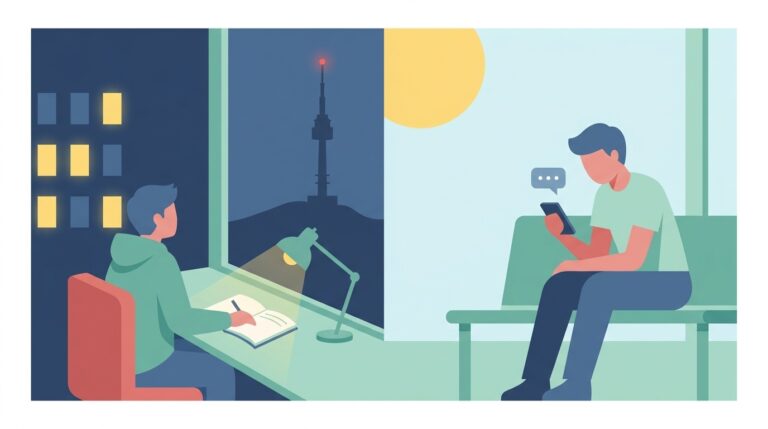
Picture this: It is 2:15 AM in your bedroom. The only illumination comes from the harsh blue glare of your smartphone screen. On the other end of the line—tucked away in a quiet officetel in Mapo-gu, Seoul—is your partner, rubbing their eyes amidst the soft clatter of coffee mugs. It is 4:15 PM their time, right in the middle of a brutal workday rush. You waited twelve hours just to hear their voice for five minutes, but all you get is a hurried: “나 지금 회의 들어가야 해서… 나중에 톡할게!” (Na jigeum hoeui deureogaya haeseo… najunge tokhalge! / I have to jump into a meeting now… I’ll text you later!). You stare at the dimmed screen, caught between rational empathy and a creeping, hollow sting of loneliness.
Long-distance relationships—or 롱디 (Long-D) as we affectionately and dreadfully call them in Korea—are an emotional tightrope. In standard textbooks, you are taught neat, robotic phrases like “보고 싶습니다” (I miss you) or “언제 만날 수 있습니까?” (When can we meet?). But real-life love across oceans requires far more linguistic dexterity than stiff honorifics. It demands words that can balance vulnerability and maturity without suffocating your partner; expressions that capture that bittersweet ache without sounding petty or demanding.
Over the past ten years of coaching advanced global learners navigating intercultural romances, I have seen brilliant, fluent speakers accidentally trigger emotional fallout simply because they lacked the specific C2-level emotional vocabulary to convey nuanced distress. In this comprehensive masterclass, we will deconstruct the psychological architecture of Korean long-distance romance. You will master the exact native nuances, slang, and cultural emotional scripts needed to keep your connection vibrant, grounded, and resilient—no matter how many nautical miles lie between your hearts.
Phase 2: 핵심 표현 3선 심층 분석 (In-Depth Analysis of 3 Core Expressions)
1. 애틋하다 (Aeteuthada)
- Pronunciation: [Ae-teut-ha-da] (Pronounce ‘ae’ like the ‘e’ in ‘pet’, followed by a sharp, clipped ‘teut’ similar to ‘foot’ without the ‘f’, finishing with ‘ha-da’)
- Meaning: Literal: Fond / Tender | Actual Nuance: A poignant, bittersweet ache of love mingled with helplessness, physical separation, or sorrow.
- K-Culture Moment: Frequently heard in cinematic melodramas like Twenty-Five Twenty-One or Crash Landing on You, particularly during airport farewells or terminal phone booths where two lovers stare helplessly across an unbridgeable divide.
- Editor’s Insight: English says “I miss you,” but 애틋하다 describes the painful poetry of longing. You do not just miss their face; your heart physically constricts because circumstances keep you apart. Calling your dynamic “우린 참 애틋해” (Urin cham aeteut-hae) reframes physical suffering into an enduring, heroic bond of profound affection.
- Situation Spectrum: Casual ✅ | Semi-formal ✅ | Formal ⚠️
- 🤔 Think About It: Does your native tongue have a single adjective that merges romantic affection with melancholy heartbreak, or do you have to construct an entire sentence to evoke that duality?
2. 몸이 멀어지면 마음도 멀어진다 (Momi meoreojimyeon maeumdo meoreojinda)
- Pronunciation: [Mom-i meol-eo-ji-myeon ma-eum-do meol-eo-jin-da] (Flow smoothly: ‘Mom-ee’ like ‘mommy’, then ‘meor-eo-ji-myeon’ with a light rolling ‘r’)
- Meaning: Literal: “When bodies grow distant, hearts grow distant too.” | Actual Nuance: Out of sight, out of mind (used specifically as a cautionary proverb for long-distance relationships).
- K-Culture Moment: The quintessential dilemma voiced over green soju bottles in K-dramas when one partner receives a scholarship abroad or prepares for mandatory military enlistment (군복무).
- Editor’s Insight: This is not a passive observation; it is an existential anxiety deeply rooted in Korean relationship culture, where physical togetherness, frequent dates, and skinship (스킨십) are paramount indicators of devotion. To master C2 Korean, you must know how to deconstruct and challenge this proverb: “몸이 멀어져도 마음은 더 단단해질 수 있어” (Even if our bodies are apart, our hearts can become firmer).
- Situation Spectrum: Casual ✅ | Semi-formal ✅ | Formal 🚫
- 🤔 Think About It: Why does Korean relationship culture place such overwhelming weight on physical proximity compared to societies that prioritize individual autonomy?
3. 서운한 티 안 내려고 했는데… (Seounhan ti an naeryeogo haenneunde…)
- Pronunciation: [Seo-un-han tee an nae-ryeo-go haen-neun-de] (A soft exhalation: ‘Seo-un-han’, crisp ‘tee’, ending with a wistful trailing ‘de’)
- Meaning: Literal: “I tried not to show that I was hurt/disappointed, but…” | Actual Nuance: Softening a vulnerable disclosure of emotional neglect to address unmet expectations without triggering defensiveness.
- K-Culture Moment: Sent via KakaoTalk voice notes late at night when scheduled video calls are repeatedly postponed due to relentless overtime culture (야근).
- Editor’s Insight: 서운하다 (seounhada) has no exact English equivalent. It is not raw anger (화나다), nor is it clinical sadness (슬프다). It is that tender, bruised disappointment you feel when someone you treasure fails to treat you with the care you anticipated. Prefixing your complaint with “티 안 내려고 했는데” demonstrates profound emotional etiquette (눈치), signaling: I respect your circumstances, but my feelings are valid.
- Situation Spectrum: Casual ✅ | Semi-formal ⚠️ | Formal 🚫
- 🤔 Think About It: How does phrasing a grievance as an attempt at restraint alter the emotional temperature of an argument?
Phase 3: 교과서 한국어 vs 진짜 한국어 (Textbook vs. Real-World Korean)
Situation 1: Expressing the exhaustion of chronic timezone mismatches
- 📖 교과서 한국어: “시차가 달라서 소통하기가 매우 어렵고 외롭습니다.” (Sichaga dallaseo sotonghagiga maeu eoreopgo oeropseumnida. / Because the time zones are different, communicating is very difficult and I am lonely.)
- 🗣️ 진짜 한국어: “시차 때문에 타이밍 계속 엇갈리니까 진짜 현타 오네…” (Sicha ttaemune taiming gyesok eotgallinikka jinjja hyeonta one… / Our timing keeps missing each other due to the time difference, and reality is hitting me so hard…)
- 💡 왜 다를까? Advanced native Korean speakers rarely speak in detached academic structures when sharing pain. The slang 현타 오다 (hyeontai oda / reality hit / sudden disillusionment) encapsulates the visceral deflation felt when your schedules perpetually collide.
Situation 2: Reassuring commitment and mutual growth
- 📖 교과서 한국어: “우리의 사랑으로 이 모든 역경과 거리를 이겨낼 것입니다.” (Uriui sarangeuro i modeun yeokgyeonggwa georireul igyeonael geosimnida. / With our love, we will overcome all these hardships and distance.)
- 🗣️ 진짜 한국어: “우리 서로 불안해하지 말고, 각자 현생 살면서 단단해지자.” (Uri seoro buranhaehaji malgo, gakja hyeonsaeng salmyeonseo dandanhaejija. / Let’s not let anxiety get the best of us; let’s live our individual daily lives well and become emotionally solid.)
- 💡 왜 다를까? Textbook Korean leans into dramatic, outdated fairy-tale tropes. Real C2-level modern adults focus on healthy psychological boundaries: embracing 현생 (real-life productivity) while committing to being 단단하다 (emotionally grounded and unshakable).
Phase 4: K-Culture 딥다이브 & 비언어적 매너 (Deep Dive & Non-Verbal Manners)
4-1. 눈치 (Nunchi) & Video-Call Micro-Manners
In a digital Korean relationship, Nunchi moves through pixels. Because you lack physical touch, your screen etiquette carries tenfold weight:
1. The Intentional Sigh (한숨 주의): In Western contexts, a deep breath often means relaxation. In Korean interpersonal dynamics, an audible sigh (한숨) over a microphone is instantly decoded as extreme exasperation, passive aggression, or loss of affection. Regulate your breathing.
2. The Soft Eye-Aversion (시선 떨구기): When expressing emotional vulnerability (서운함), looking directly into the camera lens with wide eyes can appear accusatory. Tilting your head slightly downward while speaking conveys emotional modesty and softness.
3. KakaoTalk Sticker Calibration: Never end a serious emotional conversation with plain text; it reads cold and punitive (단답). Native couples buffer tense discussions by sending an emotionally warm sticker (like an apologetic bear holding a single flower) to reaffirm that love remains intact despite disagreements.
4-2. The Cultural Archetype of “Gomsin” (곰신)
To understand modern Korean long-distance stamina, one must study Gomsin culture (short for Gomusin, rubber shoes). Historically, when Korean men began their mandatory 18-month military service, partners who waited faithfully were called Gomsin. If they broke up, it was described as “putting rubber shoes on backward” (고무신을 거꾸로 신다). Those who endure and welcome their partner back earn the celebrated title of wearing 꽃신 (Kkotshin – Flower Shoes).
This military ritual has deeply imprinted general dating psychology in Korea. Long distance is perceived not merely as an unfortunate logistics hurdle, but as a moral crucible that tests emotional loyalty and grit. When you navigate a Long-D with a Korean partner, framing the journey as a shared pilgrimage toward “꽃신 신는 날” (the day we earn our flower shoes) unlocks immense sentimental resonance.
Phase 5: 실전 롤플레이 시나리오 (Real-Life Roleplay Scenario)
Setting: It is 11:30 PM in Seoul. Min-jun is slouched at his kitchen table, mentally drained after a grueling 14-hour workday. Sarah is in Toronto at 9:30 AM, having rearranged her morning commute just to catch a 15-minute video call.
- 민준: (피곤에 지친 목소리로 마른세수를 하며) “사라야, 미안해… 오늘 부장님이 갑자기 기획서 수정 지시하셔서 이제야 들어왔어.”
(Pygone jichin moksoriro mareunsesureul hamyeo) “Saraya, mianhae… oneul bujangnimi gapjagi gihoekseo sujeong jisihasyeoseo ijeya deureowasseo.”
(Rubbing his dry face with an exhausted voice) “Sarah, I’m so sorry… My team director suddenly dropped a major proposal revision on me today, so I just got home now.” -
사라: (핸드폰 화면을 조용히 응시하며) “민준아, 밥은 먹었어? 목소리에 힘이 하나도 없네.”
(Haendeupon hwamyeoneul joyonghi eungsihamyeo) “Minjuna, babeun meogeosseo? Moksorie himi hanado eomne.”
(Staring quietly at the screen) “Min-jun, did you eat anything? You have zero energy in your voice.” -
민준: (한숨을 삼키며) “대충 편의점 삼각김밥으로 때웠지… 근데 우리 내일 통화하면 안 될까? 머리가 너무 깨질 것 같아서.”
(Hansumeul samkimyeo) “Daechung pyeon-uijeom samgakgimbabeuro ttaewotji… geunde uri naeil tonghwahamyeon an doelkka? Meoriga neomu kkaejil geot gataseo.”
(Swallowing a sigh) “I just settled for a convenience store triangle kimbap… But hey, could we talk tomorrow instead? My head feels like it’s splitting open.” -
사라: (서운한 감정이 차오르는 것을 누르며) “벌써 사흘째 이러잖아. 나 이 통화 하나 하려고 출근 준비도 서둘렀는데…”
(Seounhan gamjeongi chaoreuneun geoseul nureumyeo) “Beolsseor saheuljjae ireojanna. Na i tonghwa hana haryeogo chulgeun junbido seodulleonneunde…”
(Holding back rising disappointment) “This is the third day in a row. I rushed my entire morning commute just to get this one call…” -
민준: (당황하며 눈을 깜빡이다가 고개를 떨군다) “나도 일부러 이러는 거 아니잖아… 내 상황 좀 이해해 주면 안 돼?”
(Danghwanghamyeo nuneul kkamppagidaga gogaereul tteolgunda) “Nado ilbureo ireoneun geo anijanna… nae sanghwang jom ihaehae jumyeon an dwae?”
(Blinking in fluster, lowering his head) “It’s not like I’m doing this on purpose… Can’t you understand the situation I’m in?” -
사라: (호흡을 가다듬고 화면 속 민준의 얼굴을 살피며) “이해 못 하는 거 아니야. 그냥… 서로 얼굴 보고 웃을 시간이 너무 부족하니까 나도 지쳐서 그래.”
(Hoheubeul gadadeumgo hwamyeon sok Minjunui eolgureul salpimyeo) “Ihae mot haneun geo aniya. Geunyang… seoro eolgul bogo useul sigani neomu bujokhanikka nado jichyeoseo geurae.”
(Catching her breath, checking Min-jun’s face on screen) “It’s not that I don’t understand. It’s just… we have so little time to look at each other and smile, so I’m feeling drained too.” -
민준: (미안함과 고마움이 섞인 눈빛으로) “…내가 더 신경 썼어야 했는데, 미안해 사라야. 주말엔 온전히 너한테 시간 쏟을게.”
(Mianhamgwa gomaumi seokkin nunbicheuro) “…Naega deo singyeong sseosseoya haenneunde, mianhae Saraya. Jumaren onjeonhi neohante sigan ssodeulge.”
(With eyes full of mixed guilt and gratitude) “…I should have been more attentive, I’m sorry Sarah. This weekend, I’ll dedicate my time entirely to you.” -
사라: (당신의 선택은? Choose Sarah’s next response)
🔀 인터랙티브 분기점 (Interactive Branching)
- Option A: “됐어. 매번 말로만 그러잖아. 우리 그냥 서로 안 맞는 것 같아.” (Forget it. You only say that with words every time. I think we’re just incompatible.)
- Evaluation: [BAD] Triggering ultimatums over timezone exhaustion will prompt an immediate emotional shutdown or catastrophic breakup (극단적 파국).
- Option B: “아니야, 일하느라 고생 많았어. 푹 자고 주말에 랜선 데이트로 맛있는 거 같이 먹자!” (No, you worked so hard. Sleep well and let’s have delicious food together on a virtual date this weekend!)
- Evaluation: [BEST] De-escalates acute work stress instantly, honors his exhaustion, and secures a concrete, emotionally rewarding future milestone (랜선 데이트).
- Option C: “알겠어. 나도 바쁘니까 주말까지 서로 연락하지 말자.” (Got it. I’m busy too, so let’s not contact each other until the weekend.)
- Evaluation: [RISK] Passive-aggressive stonewalling in Korean relationships fosters lingering bitterness (앙금) and triggers toxic attachment anxieties.
Phase 6: 10초 감정 섀도잉 드릴 (10-Second Emotion Shadowing Drill)
Practice reading these out loud, observing the breathing pause slashes (/) and capturing the embedded emotional intent.
[🥺 아쉽고 애교 섞어서 - Wistful yet affectionate]
“목소리 들으니까 / 더 보고 싶다… / 오늘 꿈에 나와주라.”
(Moksori deureunikka / deo bogo sipda… / oneul kkume nawajura.)
“Now that I hear your voice / I miss you even more… / please appear in my dreams tonight.”-
[😮💨 차분하지만 단호하게 - Calm but candidly vulnerable]
“서운한 티 안 내려고 했는데, / 우리 대화 패턴 / 점검 한번 필요할 것 같아.”
(Seounhan ti an naeryeogo haenneunde, / uri daehwa paeteon / jeomgeom hanbeon piryohal geot gata.)
“I tried not to show that I was hurt, / but our communication patterns / I think we need a quick check-in.” -
[❤️ 진심 어린 위로와 확신 - Heartfelt reassurance and conviction]
“몸이 멀어졌다고 / 마음까지 흔들리진 말자. / 내가 항상 네 편인 거 알지?”
(Momi meoreojyeotdago / maeumkkaji heundeullijin malja. / Naega hangsang ne pyeonin geo alji?)
“Just because our bodies are far apart / let’s not let our hearts waver. / You know I’m always in your corner, right?”
Phase 7: K-Culture 미니 사전 (Core Slang & Nuance Keywords)
-
롱디 (Long-D / Rong-di)
- Definition: Konglish contraction for Long-Distance Relationship.
- Real-world usage: Widely used across all social demographics in Korea. Saying “우리 지금 롱디 중이야” (We are doing Long-D right now) universally evokes immediate nods of sympathetic respect.
- 현생 (Hyeonsaeng / Real-Life)
- Definition: A compound of 현실 (reality) + 인생 (life), referring to one’s offline responsibilities, career, and productivity.
- Real-world usage: Crucial for LDR survival: “현생 챙기면서 연애하자” (Let’s date while prioritizing our real-life grounding). It prevents toxic obsessiveness over smartphone notifications.
- 읽씹 (Ilkssip / Read and Ignored)
- Definition: Short for 읽고 씹기 (reading a KakaoTalk message and chewing/ignoring it).
- Real-world usage: The ultimate cardinal sin in a Korean long-distance relationship. The KakaoTalk yellow number ‘1’ vanishing without a follow-up reply creates profound psychological dread. If busy, send “확인! 일 끝나고 연락할게!” (Confirmed! Will text after work!).
- 랜선 데이트 (Raenseon Deiteu / Virtual Date)
- Definition: An internet cable (LAN선) date.
- Real-world usage: Setting up simultaneous Zoom/FaceTime meals, syncing Netflix shows, or drinking highballs together while playing online games across different continents.
Phase 8: 여행자를 위한 생존 키트 (Traveler & Expat Survival Kit)
Survival Expressions TOP 3
- “공항 도착하자마자 보이스톡 걸게!”
(Gonghang dochakhajamaja boiseutok geolge!)
“I’ll call you on Kakao VoiceTalk the exact second I land at the airport!”- Pro Tip: Reassures arrival immediately before border control or baggage retrieval delays.
- “지금 데이터가 잘 안 터져서, 와이파이 연결하고 바로 톡 남길게.”
(Jigeum deiteoga jal an teojyeoseo, waipai yeongyeolhago baro tok namgilge.)
“My data isn’t connecting well right now, so I’ll text you right after I connect to Wi-Fi.”- Pro Tip: Prevents misunderstandings of accidental 안읽씹 (unread and ignored).
- “우리 시차 계산해서 고정 통화 시간 정해두자.”
(Uri sicha gyesanhaeseo gojeong tonghwa sigan jeonghaeduja.)
“Let’s calculate our time difference and set up a recurring fixed call schedule.”
Editor’s Travel Note
When traveling to Korea to reunite with your partner or coordinating across borders, standard Google Maps often falters with walking routes. Ensure you utilize the Naver Map application guide to coordinate pinpoint meeting spots at complex subway transit hubs like Gangnam or Hongdae. Furthermore, setup KakaoTalk messenger app instructions ahead of time; its high-fidelity VoiceTalk and live-location sharing capabilities are the undisputed lifelines for intercultural couples in South Korea.
Phase 9: “한 발 더 깊이” (Deep Cultural Essay & Thought Question)
In classical Korean emotional ontology, relationships are preserved through 정 (Jeong)—a sticky, deeply communal, tactile affection cultivated through shared physical time, casual touch, and breaking bread at the same table. Modern digital tools simulate connection, but they cannot transmit tactile presence. Long-distance Korean romance requires bridging this historical weight of Jeong by converting physical presence into relentless linguistic reliability and emotional vulnerability. When distance removes your ability to show up with warm soup, the emotional precision of your words becomes your physical embrace.
💬 Your Turn: How does your culture view independence versus constant contact in relationships? When you feel neglected, do you state it candidly or expect your partner to read your mood through Nunchi? Share your experiences in the comments below!
Phase 10: FAQ & 흔한 실수 (FAQ & Common Mistakes)
Q: Why do Koreans place so much emphasis on frequent texting throughout the day compared to Western partners?
A: In Korea, texting throughout the day (연락 빈도) is seen not as an intrusion of personal space, but as the primary metric of emotional investment. Sending brief updates like “점심 먹으러 가는 중!” (Going to grab lunch!) takes five seconds and reassures your partner that they remain a constant priority in your thoughts, even during high-stress hours.
Q: What is the best way to resolve an argument over video call before going to sleep?
A: Never deploy passive-aggressive silence (침묵 시위). Conclude heated conversations with an emotional safety net: “지금 감정이 격해졌으니 각자 생각 정리하고, 내일 아침에 차분하게 다시 이야기하자. 사랑하는 마음은 변함없어.” (We are emotional right now, so let’s gather our thoughts and talk calmly tomorrow morning. My love for you hasn’t changed).
Q: How can we bridge the physical gap on special anniversaries (100일, 1년)?
A: Korean dating culture thrives on milestones like 100 days (백일) and 1-year anniversaries. If you are abroad, leverage Kakao Gift (카카오톡 선물하기) via international payment or third-party delivery to send customized floral bouquets, curated cakes, or food delivery (배달의민족) straight to their door on the exact date.
🚨 흔한 실수 (Common Mistakes)
- Mistake 1: Relying on stiff translation-app honorifics during intimate arguments. Saying “당신의 의견에 동의하지 않습니다” sounds like a legal deposition.
- Correct Action: Use natural casual speech infused with emotional self-disclosure: “네 마음은 알겠는데, 내 입장에선 조금 속상했어.”
- Mistake 2: Leaving the KakaoTalk read-receipt active without replying when overwhelmed.
- Correct Action: If you lack the bandwidth to talk, drop a polite 5-second anchor: “지금 너무 정신없어서, 저녁 먹고 차분히 답장할게! 조금만 기다려줘!”
- Mistake 3: Belittling your partner’s long hours at work. In Korea, mandatory social company dinners (회식) and sudden overtime (야근) are deeply systemic and rarely optional.
- Correct Action: Avoid “Why can’t you just say no to your boss?” Instead say: “회식 자리 힘들 텐데 컨디션 조절 잘해. 집 갈 때 잠깐 목소리 듣자.”
Phase 11: 액션 미션 & 참여 유도 (Action Missions)
- 🥉 Bronze Mission (Self-Practice): Record your voice on your phone reading the 3 emotional shadowing drills from Phase 6. Listen back to your intonation: Does your voice sound accusatory or tenderly vulnerable?
- 🥈 Silver Mission (Social/Community): Head to your favorite K-drama community or Instagram story, share the phrase “몸이 멀어져도 마음은 더 단단해지자”, and tag our blog!
- 🥇 Gold Mission (Real-Life Implementation): If you are currently in an LDR, surprise your partner today with a spontaneous KakaoTalk voice note using the sentence: “시차 때문에 엇갈려도, 내 마음은 늘 네 곁에 있어.” (Even if we cross paths due to time zones, my heart is always by your side).
- 🎮 K-Culture Mission: Watch an episode of a romance drama featuring long-distance separation (such as Lovestruck in the City or Something in the Rain). Identify whether the conflict arises from timezone misalignment, 서운함, or failure of Nunchi.
Phase 12: 인터랙티브 퀴즈 챌린지 (Interactive Quiz Challenge)
- Contextual Judgment: Your Korean partner had to cancel your scheduled Sunday FaceTime call for the second time due to mandatory company 회식 (after-work drinks). Which response exhibits the highest C2-level emotional intelligence and native tact?
- (A) “왜 맨날 회식을 거절 못 해? 우리 관계가 우선순위가 아니야?”
- (B) “피할 수 없는 자리라 피곤하겠다. 몸 상하지 않게 조절하고, 끝나고 집 들어갈 때 톡 한 통만 남겨줘.”
- (C) “알겠어. 나도 내 스케줄 있으니까 앞으로 당분간 연락하지 말자.”
- Fill-in-the-Blank: Complete this nuanced phrase to gently address emotional hurt without sounding accusatory:
- “너한테 [ ] 티 안 내려고 정말 노력했는데, 통화가 자꾸 취소되니까 솔직히 마음이 좀 헛헛하네.”
- True or False: In Korean relationship slang, reaching the milestone of completing long-distance military service waiting without breaking up is celebrated as wearing 고무신 (Gomusin).
- (True / False)
👉 Click here to reveal the answers and expert explanations!
- Answer: (B)
- Explanation: Option (B) demonstrates superior empathy for modern Korean corporate realities while setting a healthy, reasonable boundary (asking for a simple message upon returning home). Option (A) attacks cultural realities, while (C) is toxic stonewalling.
- Answer: 서운한 (Seounhan)
- Explanation: 서운한 티 안 내려고… is the gold standard of mature, emotionally calibrated Korean communication.
- Answer: False
- Explanation: Waiting is referred to as wearing 고무신 (Gomusin), but successfully finishing the journey and reuniting is celebrated as wearing 꽃신 (Kkotshin – Flower Shoes)!
- Explanation: Waiting is referred to as wearing 고무신 (Gomusin), but successfully finishing the journey and reuniting is celebrated as wearing 꽃신 (Kkotshin – Flower Shoes)!







