

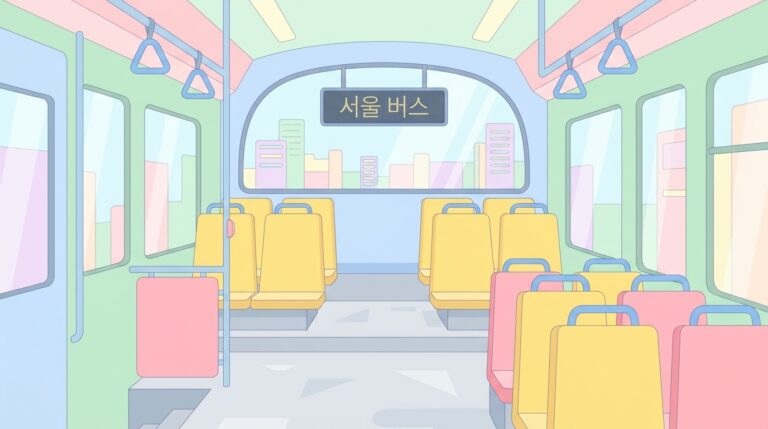
Don’t Panic on the Korean Bus: How to Handle Priority Seats Like a Local
Phase 1: Empathy (Real-Life Bus Panic)
안녕하세요! 매일한글 에디터입니다.
Picture this: You just spent five unforgettable hours exploring the bustling alleys of Insadong and Bukchon Hanok Village. Your legs are trembling, your feet ache, and all you want is to sit down. You finally step onto a bright blue Seoul city bus. As the bus lurches forward, you scan the aisle and spot an open seat right near the front. With a sigh of pure relief, you start moving toward it—until you freeze.
Overhead, there is a sign that reads 노약자석 (Noyakjaseok). Around you, passengers are standing quietly, completely ignoring that wide-open seat. Suddenly, your heart beats faster. Can I sit there if no one is using it? Will an older person shout at me? What if an elderly passenger boards at the next stop? What words do I even say to offer a seat without sounding awkward?
If you have ever experienced this exact freeze-up, take a deep breath: you are not alone! At Daily Hangul, this is consistently the number one panic story our beginner students share after their first trip to South Korea. Mastering public transit etiquette is not just about avoiding disapproving stares—it is your golden ticket to experiencing genuine Korean warmth (Jeong). Today, with just three super-simple A1 phrases, you will navigate Korean buses with total confidence and make Korean grandmothers smile.
Phase 2: Top 3 Core Expressions In-Depth
Here are the three essential phrases you need in your transit survival kit:
1. 여기 앉으세요 (Yeogi anjeuseyo)
- Pronunciation: [Yeo-gi an-jeu-se-yo] (Think of it like “Yo-gee on-jew-say-yo”)
- Meaning: Literal: “Please sit here.” | Real Nuance: A respectful, caring invitation offering your seat to someone who needs it more.
- K-Culture Moment: In heartwarming K-dramas like Hospital Playlist or Reply 1988, considerate characters promptly stand up and utter this gentle phrase with a subtle nod.
- Editor’s Insight: The ending -세요 (-seyo) transforms a simple verb into a polite, honorific request. It sounds incredibly respectful without being overly rigid.
- Situation Spectrum: Casual 🚫 | Semi-formal ✅ | Formal ✅
- 🤔 Think About It: In many Western cultures, giving up your seat can sometimes feel slightly patronizing if the person doesn’t consider themselves “old.” Why do you think Korean culture treats this as the absolute pinnacle of everyday manners?
2. 괜찮아요 (Gwaenchanhayo)
- Pronunciation: [Gwaen-chan-ha-yo] (Sounds like “Gwen-chan-ha-yo”)
- Meaning: Literal: “It is okay.” | Real Nuance: “I am completely fine standing, please don’t worry about me!”
- K-Culture Moment: When an energetic grandmother insists that you take the seat because your backpack looks heavy, this is the magic phrase to politely decline.
- Editor’s Insight: If someone declines your offer with 괜찮아요 (Gwaenchanhayo), don’t panic! Koreans often decline once or twice out of courtesy to avoid being a burden. Repeat it once more with a smile, or gracefully say thank you.
- Situation Spectrum: Casual 🚫 | Semi-formal ✅ | Formal ⚠️
- 🤔 Think About It: How does saying “I am okay” deflect attention from the elder’s age while preserving harmony?
3. 죄송합니다 (Joesonghamnida)
- Pronunciation: [Joe-song-ham-ni-da] (Sounds like “Jweh-song-hahm-nee-dah”)
- Meaning: Literal: “I am deeply sorry.” | Real Nuance: “Excuse me / Pardon me as I squeeze past you toward the exit!”
- K-Culture Moment: The bus is swinging around a sharp curve near Namsan Tower, and you have to get to the back door before the buzzer stops ringing!
- Editor’s Insight: Beginners often look for a direct word for “excuse me.” While 실례합니다 (Sillyehamnida) exists in textbooks, native speakers on moving buses almost always use 죄송합니다 (Joesonghamnida) because it carries a deeper sense of humility.
- Situation Spectrum: Casual 🚫 | Semi-formal ⚠️ | Formal ✅
- 🤔 Think About It: Why do you think Korean society prefers an apology (“I am sorry for causing inconvenience”) over an assertion of personal movement (“Excuse me”) in crowded spaces?
Phase 3: Textbook Korean vs. Real Korean
Let’s compare what typical phrasebooks teach you versus what Seoul locals actually say.
Situation 1: Offering your seat to an elder
- 📖 교과서 한국어 (Textbook): 제 자리에 앉으십시오. (Je jari-e anjeusipsio. – “Please sit down in my designated seat.”)
- 🗣️ 진짜 한국어 (Real-Life): 여기 앉으세요! (Yeogi anjeuseyo! – “Please sit here!”)
- 💡 왜 다를까? (Why is it different?): The textbook version sounds like an automated public announcement or a military drill! Real Koreans use the warmer, softer 여기 앉으세요 (Yeogi anjeuseyo) paired with an open-hand gesture.
Situation 2: Squeezing past passengers to reach the exit door
- 📖 교과서 한국어 (Textbook): 실례하지만 지나가겠습니다. (Sillyehajiman jinagagessseumnida. – “Excuse me, but I shall pass by.”)
- 🗣️ 진짜 한국어 (Real-Life): 잠시만요! / 죄송합니다! (Jamsimanyo! / Joesonghamnida! – “Just a second! / Excuse me!”)
- 💡 왜 다를까? (Why is it different?): Korean city buses do not wait around! You need short, punchy, immediate words so the driver and passengers clear the aisle before the doors shut.
Phase 4: K-Culture Deep Dive & Non-Verbal Manners
4-1. 눈치 (Nunchi) & Body Language on the Bus
- The Soft Palm Gesture: When saying 여기 앉으세요 (Yeogi anjeuseyo), never point your finger at the empty seat! Instead, hold your palm face-up and angle it gently toward the cushion.
- The Quick Step-Back: As soon as you offer the seat, stand up and take one or two steps backward or turn slightly toward the window. This relieves social pressure, allowing the person to sit down without feeling obligated to hold a long conversation.
- The Head Bow: Accompany your words with a modest 15-to-30-degree bow. It demonstrates immediate goodwill and respect.
4-2. Cultural Code Analysis: The Sacred Seats
In Korea, bus seating is strictly color-coded:
1. 노약자석 (Noyakjaseok): Typically the first 2–4 rows near the entrance, marked with yellow or silver signs. These are reserved for seniors, people with disabilities, and the injured. Most locals will leave these seats vacant even when the bus is packed with standing passengers!
2. 임산부 배려석 (Imsanbu Baeryeoseok): Marked in bright pink with a silhouette of a pregnant mother. Korean society considers this seat an ongoing courtesy. Even if an expectant mother isn’t in sight, leaving it empty ensures early-term mothers (who may not look visibly pregnant) can sit without having to justify their need.
Phase 5: Real-Life Roleplay Scenario
- Setting: Bus 720 bouncing through downtown Seoul during Friday evening rush hour.
- Character: You (a polite traveler standing near the front) and Halmeoni (a sweet 75-year-old grandmother carrying a cloth bag of fresh market greens).
Turn 1 [You]:
🎭 Stands up promptly and motions toward the seat with an open palm.
"여기 앉으세요, 할머니!"
(Yeogi anjeuseyo, halmeoni! / "Please sit here, grandmother!")

Turn 2 [Halmeoni]:
🎭 Waves her hands back and forth with an apologetic smile.
"아이고, 아니에요. 나 금방 내려요. 학생 앉아요."
(Aigo, anieyo. Na geumbang naeryeoyo. Haksaeng anjayo. / "Oh my, no no. I get off very soon. You sit, student.")

Turn 3 [You]:
🎭 Smiles warmly, shaking your head gently.
"저 진짜 괜찮아요! 편하게 앉으세요."
(Jeo jinjja gwaenchanhayo! Pyeonhage anjeuseyo. / "I am really okay! Please sit comfortably.")

Turn 4 [Halmeoni]:
🎭 Relaxes and sits down with a relieved sigh.
"아이고, 고마워요. 한국말도 참 잘하네!"
(Aigo, gomawoyo. Hangukmaldo cham jalhane! / "Oh goodness, thank you. Your Korean is so good!")

Turn 5 [You]:
🎭 Bows head slightly with a polite smile.
"아닙니다, 감사합니다!"
(Animnida, gamsahamnida! / "Not at all, thank you!")

Turn 6 [Halmeoni]:
🎭 Reaches into her coat pocket and pulls out a small candy.
"이거 먹을래요? 맛있는 박하사탕이에요."
(Igeo meogeullaeyo? Masinneun bakhasatang-ieyo. / "Would you like this? It is a delicious peppermint candy.")

Turn 7 [You]:
🎭 Accepts the candy using both hands.
"와, 할머니 감사합니다! 잘 먹겠습니다."
(Wa, halmeoni gamsahamnida! Jal meokgessseumnida. / "Wow, thank you grandmother! I will enjoy it.")

Turn 8 [Halmeoni]:
🎭 Smiles with crinkling eyes and nods in approval.
"그래요, 좋은 하루 보내요!"
(Geuraeyo, joeun haru bonaeyo! / "Yes, have a wonderful day!")
🔀 Interactive Choice Point
You are sitting in a standard seat. An elderly man with a cane boards the bus. What do you do?
- Choice A: Stand up immediately, make brief gentle eye contact, gesture toward the seat, and say: “여기 앉으세요!” (Yeogi anjeuseyo!)
- Outcome (Best!): The gentleman smiles, praises your manners, and the entire bus notices your respectful conduct.
- Choice B: Pull your hat down, pretend you have fallen deeply asleep, and stare down at your shoes.
- Outcome (Bad!): You will feel intense internal guilt, and surrounding passengers might give you the classic chilly Korean “side-eye” (nunchi).
- Choice C: Stand up and yell loudly in English: “HAY MISTER! COME SIT OVER HERE!”
- Outcome (Risk!): While your intention is sweet, sudden loud shouting causes alarm on quiet Korean public transit, making everyone flustered.
Phase 6: 10-Second Emotional Shadowing Drill
Practice these lines out loud with the emotional markers and natural breath pauses (/):
[😊 Warm and Welcoming]
여기 / 앉으세요!
(Yeogi / anjeuseyo! – “Please / sit here!”)-
[😌 Modest and Gentle]
저 / 진짜 괜찮아요.
(Jeo / jinjja gwaenchanhayo. – “I / am truly okay.”) -
[🏃 Hurried but Polite]
죄송합니다, / 잠시만 지나갈게요!
(Joesonghamnida, / jamsiman jinagalgeyo! – “Excuse me, / I will just pass through for a second!”)
Phase 7: K-Culture Mini Dictionary
- 노약자석 (Noyakjaseok) | Elderly & Priority Seating
- The dedicated seating area at the front of buses designated for seniors, injured persons, and toddlers.
- 임산부 배려석 (Imsanbu baeryeoseok) | Pregnant Women Courtesy Seat
- The recognizable bright pink seat with a badge symbol. It remains unoccupied as an ongoing gesture of care.
- 눈치 (Nunchi) | Situational Tact & Social Radar
- The intuitive ability to assess room atmosphere, body language, and implicit social expectations without explicit words.
- 정 (Jeong) | Warmth & Community Bond
- The uniquely Korean cultural concept of unconditional neighborly warmth—just like the grandmother handing out candy on the bus!
Phase 8: Traveler’s Survival Kit
Top 3 Bus Survival Expressions
- 내릴게요! (Naerilgeyo!)
- Meaning: “I am getting off!”
- Pro Tip: If the back exit door hasn’t opened yet and the driver is about to pull away, call this out clearly toward the front windshield.
- 카드 다시 대주세요 (Kadeu dasi daejuseyo)
- Meaning: “Please tap your card again.”
- Pro Tip: The transit card reader will say this if you pull your transit card away too quickly. Just hold it against the sensor until it beeps!
- 기사님, 감사합니다! (Gisanim, gamsahamnida!)
- Meaning: “Driver, thank you!”
- Pro Tip: Saying this out loud as you step out of the rear door is a beloved daily ritual in Korean transit.
Editor’s Travel Note
- No Takeout Cups: Seoul Metropolitan regulations strictly forbid boarding city buses with unsealed drink containers (like iced coffee or boba cups). Finish or discard your drink before boarding!
- Real-time Navigation: For flawless route tracking and exact bus arrival times in English, make sure to check out the [official Naver Map mobile navigation application] or the [KakaoBus app guide for international travelers] instead of general global map apps.
Phase 9: A Step Deeper
Korean public transit seating is not merely an administrative rule; it is a visible manifestation of Korea’s centuries-old Confucian heritage (hyo, 효, filial piety). In a fast-paced hyper-modern metropolis like Seoul, leaving the 노약자석 (Noyakjaseok) open—even when the bus is completely empty—symbolizes an unbroken community promise that the most vulnerable members of society always have an honored spot waiting for them.
💬 Your Turn: Have you ever experienced a funny or confusing cultural moment on public transit during your travels? Drop your story in the comments below!
Phase 10: FAQ & Common Mistakes
Q: Can I sit in the priority seat (노약자석) if the bus is totally empty?
A: Legally, nobody will arrest you, but culturally, it is strongly discouraged. Most Korean locals prefer to stand or sit in regular seats toward the middle and back, leaving priority seats unoccupied at all times.
Q: What should I do if an older passenger refuses my seat offer?
A: It is customary politeness (체면, chemyeon) to decline the first offer. Smile, gently say “진짜 괜찮아요, 앉으세요!” (Jinjja gwaenchanhayo, anjeuseyo! – “I’m really fine, please sit!”) and stand up. If they decline firmly again, bow politely and return to your seat.
Q: What does it mean when someone places their grocery bag on my lap?
A: Don’t panic! On crowded buses, elderly passengers standing in the aisle will sometimes gently set their heavy bags on the lap of a seated person. This is an affectionate sign of trust and community cooperation, not disrespect!
🚨 Common Mistakes TOP 3
- Locking intense eye contact while offering a seat:
- Correct Action: Soften your gaze and bow your head slightly. Direct, unblinking eye contact with elders can feel confrontational.
- Sitting in the pink pregnancy seat because you are tired:
- Correct Action: Keep the pink seat vacant. Early-stage pregnancy is invisible, and expecting mothers should never have to ask you to move.
- Holding conversations on speakerphone or watching videos without earbuds:
- Correct Action: Korean buses are remarkably quiet. Keep your phone on vibrate and whisper if you must take a phone call.
Phase 11: Action Missions & Engagement
- 🥉 Bronze Mission (Solo Practice): Stand in front of your mirror, make the open-palm gesture, and practice saying “여기 앉으세요!” (Yeogi anjeuseyo!) three times with a gentle smile.
- 🥈 Silver Mission (Social Share): Share today’s phrase on your social media story and tag
@DailyHangulwith your favorite Korean transit memory. - 🥇 Gold Mission (Real-Life Application): Next time you ride a bus or subway in Korea, intentionally leave the priority seat open and practice reading the overhead Hangul signs.
- 🎮 K-Culture Mission: Watch an episode of a slice-of-life drama (like Extraordinary Attorney Woo or My Liberation Notes) and spot how characters move through bus aisles and subways.
Phase 12: Interactive Quiz Challenge
Test your knowledge with these three quick questions!
Question 1: Situational Judgment
You are sitting in a normal aisle seat. An older passenger holding heavy shopping bags boards the bus. What is the most natural Korean phrase to say as you offer your seat?
* A) 비키세요! (Bikiseyo!)
* B) 여기 앉으세요! (Yeogi anjeuseyo!)
* C) 일어나세요! (Ireonaseyo!)
Question 2: Fill-in-the-Blank
When someone thanks you for giving up your seat, you can humbly reply:
“저 진짜 ____________.” (I am really okay.)
* Hint: Starts with 괜찮…
Question 3: Cultural True or False
True or False: It is completely fine to board a Seoul city bus holding an open plastic cup of iced Americano with a straw as long as you don’t spill it.
👉 Click here to reveal the answers and explanations!
- Question 1 Answer: B) 여기 앉으세요! (Yeogi anjeuseyo!)
- Explanation: Option A means “Move out of the way!” and Option C means “Stand up!” Only Option B is the respectful, polite way to invite someone to sit.
- Question 2 Answer: 괜찮아요 (Gwaenchanhayo)
- Explanation: The full sentence is 저 진짜 괜찮아요 (Jeo jinjja gwaenchanhayo), meaning “I am truly okay.”
- Question 3 Answer: False!
- Explanation: Under Seoul transit rules, open take-out beverage cups are prohibited on city buses to prevent hot spills and accidents. Always finish your drink before boarding!







