

Phase 1: 공감 (Story-Driven Opening)
안녕하세요! 매일한글 에디터입니다.
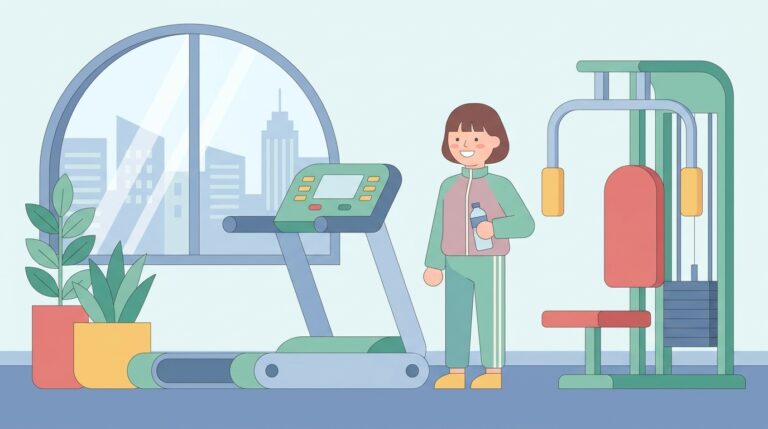
Picture this: You step into a modern fitness center in Seoul, pumped and ready to sweat. Around you, K-pop beats fill the air, and neon digital displays glow from sleek workout stations. You spot a cool-looking cable machine, but you have no idea how to adjust the pin or seat. Everyone around you looks laser-focused with their AirPods on. You freeze, wondering: Will I sound rude if I interrupt? What if I use awkward textbook Korean?
Don’t worry! That gym hesitation is completely normal. In fact, many Daily Hangul learners tell us that gyms were the places they felt most nervous speaking Korean. But here is the secret: Korean gym-goers love helping people who show interest in fitness. With just two or three polite, everyday expressions, you can confidently ask for help, avoid workout injuries, and maybe even find a local workout partner. Let’s conquer the gym together!
Phase 2: 핵심 표현 3선 심층 분석 (Top 3 Core Expressions)
1. 이거 어떻게 써요? (Igeo eotteoke sseoyo?)
- Pronunciation: ee-guh uh-ttuh-keh ssuh-yo? (Think of English “ego” + “uh-tech-care” + “saw-yo”)
- Meaning: Literal: “How is this used?” | Real Nuance: “Excuse me, how do you use this machine?”
- K-Culture Moment: You will hear this casual phrase constantly on Korean fitness YouTube channels like Gym Jong Kook when guests try out unique workout stations for the first time.
- Editor’s Insight: The word 이거 (this thing) combined with 어떻게 (how) and 써요 (from the verb 쓰다, to use) makes the simplest, most natural everyday question. It is friendly and direct without being overly stiff.
- Situation Spectrum: Casual ✅ | Semi-formal ✅ | Formal ⚠️
- 🤔 Think About It: In English, we often ask “Could you show me how this works?” In Korean, stating “How do you use this?” with a soft question intonation is already completely polite. Why do you think Korean prefers direct verbs over complex modals here?
2. 사용법 좀 알려주실 수 있나요? (Sayongbeop jom allyeojusil su innayo?)
- Pronunciation: sah-yong-bup jom ahl-lyuh-joo-sheel soo een-nah-yo? (Rhymes softly with “song-cup” + “johm” + “al-you-shil” + “sue” + “een-nah-yo”)
- Meaning: Literal: “Could you inform me of the usage method a bit?” | Real Nuance: “Could you please show me how to use this?”
- K-Culture Moment: Perfect when approaching a gym trainer (트레이너) wearing the staff uniform at the counter or walking the floor.
- Editor’s Insight: The little word 좀 (jom, a little) acts like a polite cushion. It softens your request, showing respect for the other person’s time.
- Situation Spectrum: Casual ⚠️ | Semi-formal ✅ | Formal ✅
- 🤔 Think About It: How does adding a softening word like “just a bit” (좀) change the emotional temperature of a request in your native language?
3. 다 쓰셨어요? (Da sseusyeosseoyo?)
- Pronunciation: dah sseu-shyuh-ssuh-yo? (Sounds like “da” + “sir-shuh-saw-yo”)
- Meaning: Literal: “Did you use it all?” | Real Nuance: “Are you finished with this machine? / Is it free to use?”
- K-Culture Moment: In K-Dramas, whenever two characters meet at a residential apartment gym, this phrase breaks the ice before sharing equipment.
- Editor’s Insight: Korean gyms can get crowded during evening peak hours (7 PM – 9 PM). If someone is standing near a bench or scrolling on their phone, don’t just grab the weights—politely ask this first!
- Situation Spectrum: Casual ⚠️ | Semi-formal ✅ | Formal ✅
- 🤔 Think About It: Asking whether someone is finished acknowledges their space before claiming it. How do gym-goers in your home country indicate equipment is free?
Phase 3: 교과서 한국어 vs 진짜 한국어 (Textbook vs. Real-Life Korean)
Situation 1: Asking someone to teach you how to operate a machine
- 📖 교과서 한국어: 이 운동 기구의 사용 방법을 가르쳐 주십시오. (I undong gigu-ui sayong bangbeob-eul gareuchyeo jusipsio.)
- 🗣️ 진짜 한국어: 저기요, 이거 어떻게 쓰는지 좀 알려주세요! (Jeogiyo, igeo eotteoke sseuneunji jom allyeojuseyo!)
- 💡 왜 다를까? Textbook Korean teaches strict imperative endings like -하십시오, which sound like an army manual! Real Koreans start with a gentle 저기요 (“Excuse me”) and ask with warm conversational phrasing.
Situation 2: Asking if a machine is currently occupied
- 📖 교과서 한국어: 당신은 이 기계를 현재 사용하고 계십니까? (Dangsineun i gigyereul hyeonjae sayonghago gyesimnikka?)
- 🗣️ 진짜 한국어: 혹시 이거 쓰고 계세요? (Hoksi igeo sseugo gyeseyo?)
- 💡 왜 다를까? Never say 당신 (you) to strangers—it can sound confrontational! Natural Korean drops the pronoun and adds 혹시 (“by any chance”) to show gentle consideration.
Phase 4: K-Culture 딥다이브 & 비언어적 매너 (Culture & Body Language)
4-1. 눈치(Nunchi) & Gestures
- Wait for the Set to End: Never talk to someone while they are actively lifting or running. Wait until they rack the weight, then make brief eye contact.
- The Head Nod (목례 – Mok-rye): Give a subtle 15-degree bow with a small smile before saying 저기요 (Excuse me). This instantly disarms any tension.
- Open Palm Pointing: When indicating the machine, point with an open hand facing slightly upward rather than pointing a sharp index finger.
4-2. The Korean Fitness Phenomenon: “O-Un-Wan” and “Deuk-geun”
In Korea, working out is a lifestyle trend! You will often see the viral social media hashtag #오운완 (O-Un-Wan, short for 오늘 운동 완료 – “Today’s Workout Complete”). Koreans deeply respect anyone working hard on their fitness. Another popular term is 득근 (Deuk-geun, muscle gain). If you approach a gym enthusiast with polite Korean, their inner “fitness mentor” will likely light up and demonstrate with enthusiasm!
Phase 5: 실전 롤플레이 시나리오 (Interactive Gym Roleplay)
Setting: A vibrant gym in Mapo-gu, Seoul. You want to adjust the backrest on the seated chest press machine, but the pin is stuck.
Character: Min-su (A friendly local fitness regular wearing a weight belt).
- Turn 1 (You):
🎭 Approaching gently between sets with a slight head nod
저기요, 죄송한데 잠깐만요! (Jeogiyo, joesonghande jamkkanmanyo! / Excuse me, sorry to bother you for a second!) - Turn 2 (Min-su):
🎭 Removing one earbud with a warm smile
네! 무슨 일이세요? (Ne! Museun iriseyo? / Yes! What’s up?) - Turn 3 (You):
🎭 Gesturing with an open palm toward the chest press
이거 어떻게 써요? 높이 조절이 안 돼요. (Igeo eotteoke sseoyo? Nopi jojeori an dwaeyo. / How do you use this? I can’t adjust the height.) - Turn 4 (Min-su):
🎭 Walking over and inspecting the yellow lever
아, 이거요? 이 노란색 레버를 당기면서 올려야 해요. (A, igeoyo? I noransaek rebeoreul danggimyeonseo ollyeoya haeyo. / Ah, this one? You have to pull this yellow lever while lifting it up.) - Turn 5 (You):
🎭 Watching his demonstration attentively
아! 당기면서 올리는 거군요. (A! Danggimyeonseo ollineun geogunyo. / Ah! So you pull and lift at the same time.) - Turn 6 (Min-su):
🎭 Letting go and stepping back for you to try
네, 맞아요. 한번 해보실래요? (Ne, majayo. Hanbeon haebosillaeyo? / Yes, exactly. Would you like to try?) - Turn 7 (You):
🎭 Trying it successfully and smiling broadly
와, 됐어요! 친절하게 알려주셔서 감사합니다! (Wa, dwaesseoyo! Chinjeolhage allyeojusyeoseo gamsahamnida! / Wow, it worked! Thank you for kindly showing me!) - Turn 8 (Min-su):
🎭 Giving an encouraging fist bump
별말씀을요. 득근하세요! (Byeolmalsseumeullyo. Deukgeunhaseyo! / Don’t mention it. Have a great muscle-building workout!)
🔀 Your Interactive Moment: How do you reply to Min-su’s fist bump?
- Choice A: “네, 감사해요! 좋은 하루 보내세요!” (Ne, gamsahaeyo! Joeun haru bonaeseyo!)
- Choice B: “당신도 득근하십시오!” (Dangsindo deukgeunhasipsio!)
- Choice C: “기계 다 썼으니 가세요.” (Gigye da sseosseuni gaseyo.)
Decision Feedback:
* Choice A (Best!): ⭐ Polished, friendly, and natural. Min-su will leave with a happy smile.
* Choice B (Risk): ⚠️ Using 당신 and -하십시오 sounds stiff and robotic like a translated video game line.
* Choice C (Bad): ❌ Extremely blunt and unintentionally rude! It sounds like you are chasing him away.
Phase 6: 10초 감정 섀도잉 드릴 (10-Second Emotional Shadowing)
Practice these lines out loud with the designated cadence (/ marks a brief rhythm breath):
[😊 Shy but polite]
저기요, / 이거 어떻게 쓰는지 / 좀 알려주실 수 있으세요?
(Jeogiyo, / igeo eotteoke sseuneunji / jom allyeojusil su isseuseyo?)
“Excuse me, / could you please show me / how to use this?”-
[🤔 Curious and attentive]
이 버튼을 / 먼저 누르면 되나요?
(I beoteuneul / meonjeo nureumyeon doenayo?)
“Do I / press this button first?” -
[🎉 Relieved and super grateful]
우와, / 이제 알겠어요! / 정말 감사합니다!
(Uwa, / ije algesseoyo! / Jeongmal gamsahamnida!)
“Wow, / now I get it! / Thank you so much!”
Phase 7: K-Culture 미니 사전 (Mini Gym Vocabulary)
- 헬스장 (Hel-seu-jang) | Fitness gym
- Real usage: In Korea, fitness centers are commonly called 헬스장 (from “health” + jang for venue).
- 세트 (Se-teu) | Exercise set
- Real usage: When sharing machines, ask: “몇 세트 남으셨어요?” (How many sets do you have left?).
- 무게 (Mu-ge) | Weight / Resistance
- Real usage: Use it when adjusting pin weights: “무게는 어떻게 바꿔요?” (How do I change the weight?).
- 득근 (Deuk-geun) | Muscle growth / Gains
- Real usage: The ultimate gym farewell blessing among Korean workout lovers: “오늘도 득근하세요!” (Get those gains today!).
Phase 8: 여행자를 위한 생존 키트 (Traveler’s Survival Kit)
TOP 3 Emergency Gym Phrases
- 저기요, 이거 쓰시는 중인가요? (Jeogiyo, igeo sseusineun jung-ingayo?)
- Pro Tip: Use this if a towel or water bottle is on the seat and you are unsure if someone is using it.
- 무게 핀이 안 빠져요. (Muge pini an ppajyeoyo.)
- Pro Tip: Handy when weight pins are tightly jammed in a selectorized machine.
- 수건은 어디에 있어요? (Sugeoneun eodie isseoyo?)
- Pro Tip: Most Korean gyms provide free workout shirts and small towels near the entrance or locker rooms.
🧭 Editor’s Travel Note
Looking for a day-pass gym (일일권) while traveling in Korea? Check local listings on the 네이버 지도 앱 다운로드 (Naver Map app download). Search for “헬스장 일일권” to find gyms that welcome drop-in visitors without long-term contracts. Most gyms accept domestic and foreign credit cards at self-service kiosks at the entrance!
Phase 9: 한 발 더 깊이 (Cultural Reflection)
In many Western gyms, individual space is fiercely guarded with quiet headphones and minimal interaction. But Korean gym culture carries a subtle trace of 정 (Jeong)—a communal warmth and collective encouragement. When you ask a fellow gym member for guidance on a machine, they rarely feel bothered; rather, they feel trusted and proud to share their knowledge.
💬 Your Turn: Have you ever worked out at an international gym? What was the biggest cultural difference you noticed compared to your home country? Share your stories in the comments below!
Phase 10: FAQ & 흔한 실수 (FAQ & Common Mistakes)
Q: Can I call the fitness staff “웨이터” (Waiter) or “선생님” (Teacher)?
A: Never use 웨이터! In Korean gyms, addressing floor trainers as 트레이너님 (Trainer-nim) or politely as 선생님 (Seonsaeng-nim, Teacher) is the gold standard of respect.
Q: What if I don’t know the specific name of an exercise machine?
A: Don’t stress over complex equipment names! Simply point with an open hand and use the magic universal demonstrative: “이 기구” (this equipment) or “이거” (this thing).
Q: Is it rude to ask someone how many sets they have left?
A: Not at all! Just make sure to wait until they finish their active reps, smile slightly, and ask: “혹시 몇 세트 남으셨어요?” (By any chance, how many sets do you have left?).
🚨 흔한 실수 (Top 3 Common Mistakes)
- Using “당신” (Dangsin) for “You”: Calling a stranger 당신 can sound aggressive. Simply omit the subject entirely.
- Interrupting mid-lift: Always wait until the barbell or weight stack comes to a complete rest.
- Leaving sweat behind: In Korea, good gym etiquette (매너) means wiping down the seat with a small towel if you break a heavy sweat.
Phase 11: 액션 미션 (Daily Action Missions)
- 🥉 Bronze Mission (Solo): Look in the mirror and practice saying “이거 어떻게 써요?” five times with a warm smile.
- 🥈 Silver Mission (Community): Write down your favorite gym exercise in the comments using Korean (e.g., 스쿼트 / 벤치프레스).
- 🥇 Gold Mission (Real Life): Next time you hit the gym in Korea, ask a trainer or neighbor “다 쓰셨어요?” before taking a station!
- 🎮 K-Culture Mission: Search the hashtag #헬스타그램 on Instagram or TikTok and spot how many times the phrase 득근 appears in the captions!
Phase 12: 인터랙티브 퀴즈 챌린지 (Interactive Quiz)
Q1. You want to ask a gym trainer how to use a leg press machine politely. Which sentence is best?
* A) 이거 써!
* B) 사용법 좀 알려주실 수 있나요?
* C) 당신, 가르쳐 주십시오.
👉 Click to Reveal Answer & Explanation
Correct Answer: B
Explanation: Option B uses the softening word 좀 and the polite ending -실 수 있나요?, making it the most natural and respectful choice. Option A is informal flat speech (반말), and Option C uses the confrontational word 당신.
Q2. Fill in the blank:
“혹시 이 기계 다 ________?” (Are you finished using this machine?)
* A) 먹었어요?
* B) 쓰셨어요?
* C) 잤어요?
👉 Click to Reveal Answer & Explanation
Correct Answer: B (쓰셨어요)
Explanation: 쓰다 means “to use”. With the honorific past tense -셨어요, it forms 다 쓰셨어요? (“Did you finish using it?”). Option A means “Did you eat?” and Option C means “Did you sleep?”.
Q3. True or False: In Korean gyms, it is polite to speak to someone right in the middle of a heavy bench press set so they notice you quickly.
👉 Click to Reveal Answer & Explanation
Correct Answer: False!
Explanation: Safety and focus always come first! Always use 눈치 (nunchi) and wait until they re-rack the weights and take their rest period before asking questions.






