

Phase 1: Empathy (Story-Immersive Opening)
안녕하세요! 매일한글 에디터입니다.
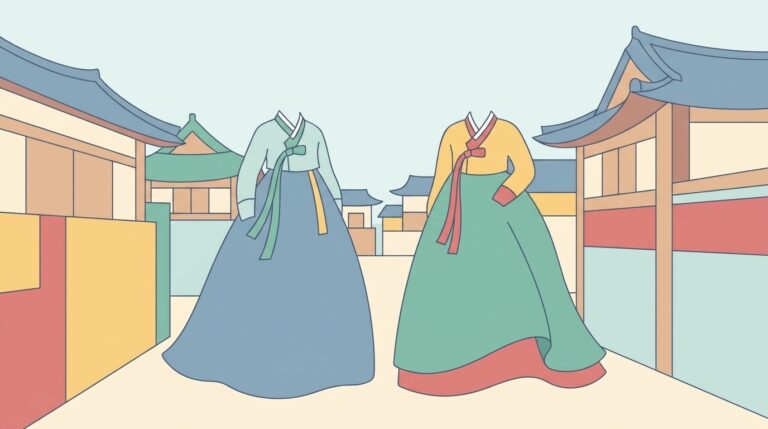
Picture this: You are strolling through an avant-garde design showroom in Samcheong-dong, Seoul. Under the warm track lighting hangs a breathtaking trench coat. At first glance, it appears to be high-fashion streetwear, but then you notice the gentle, swooping curve of the sleeves and the crisp, overlapping collar. It is unmistakably inspired by the Korean durumagi (outer robe). Your Korean friend turns to you with sparkling eyes and asks what you think. You want to articulate how the designer preserved the graceful, historical silhouette while infusing it with minimalist modern tailoring. But in that split second of panic, all your brain can supply is: “한복이… 진짜 예뻐요!” (The hanbok is… really pretty!).
Sound painfully familiar? At the advanced C1 level, relying on generic praise like 예뻐요 (pretty) or 좋아요 (good) feels like wearing children’s shoes to a gala. You understand the nuances, you appreciate the cultural depth, yet your tongue feels tethered to basic textbook adjectives. Over the past decade of curating Korean cultural guides, I have heard this exact frustration from countless advanced learners, stylists, and K-culture curators. You are not lacking aesthetic appreciation; you just lack the refined linguistic bridge connecting traditional philosophy to contemporary trends. In this comprehensive guide, we will unpack the sophisticated vocabulary and cultural instincts needed to dissect Hanbok aesthetics and its modern resurgence like an authentic cultural insider.
Phase 2: Deep Dive into 3 Core Expressions
1. 고유의 멋을 살리다 (Goyu-ui meos-eul sallida)
- Pronunciation: [Goyu-ui meoseul sallida] (Sounds like “Go-yoo-ui mut-eul sal-lee-da”; imagine “sal-lee” rolling smoothly off your tongue like revving up a stylish engine)
- Meaning: Literally “to bring alive its intrinsic taste/charm,” but used contextually as “to honor and highlight the unique, inherent beauty of something.”
- K-Culture Moment: When modern fashion critics reviewed BLACKPINK’s iconic Stage Hanboks for the How You Like That music video, critics praised how the designers modified cropped tops while preserving traditional patterns: “전통 문양으로 한국 고유의 멋을 제대로 살렸어요.” (They truly brought out Korea’s intrinsic charm using traditional motifs.)
- Editor’s Insight: 멋 (Meot) is an untranslatable Korean concept that blends effortless cool, poise, and aesthetic depth. When paired with 살리다 (to revive/enliven), this expression elevates you from someone who merely looks at clothes to someone who appreciates the soul of craftsmanship.
- Situation Spectrum: Casual: ✅ | Semi-formal: ✅ | Formal: ✅
- 🤔 Think About It: In English, we often say “keep it authentic,” which implies leaving things untouched. Why do you think Korean uses the active verb 살리다 (to breathe life into)? Does heritage require active reimagining to remain “alive”?
2. 선과 여백의 미를 담아내다 (Seon-gwa yeobaek-ui mi-reul dam-anaeda)
- Pronunciation: [Seon-gwa yeo-baeg-ui mi-reul dam-a-nae-da] (Pronounce “yeobaek” like “yaw-beck” with a soft, breathy end)
- Meaning: Literally “to capture the beauty of lines and negative space.”
- K-Culture Moment: Seen frequently in historical romance dramas like The Red Sleeve or Alchemy of Souls, where characters or costume designers explain why Hanbok skirts flow like ink in water: “화려함보다는 선과 여백의 미를 오롯이 담아냈습니다.” (Rather than flashiness, it purely captures the beauty of line and void.)
- Editor’s Insight: Western tailoring is historically architectural, focusing on structure, corseting, and body-hugging contours. Traditional Hanbok, however, celebrates 여백 (negative space—the flowing air between fabric and skin) and the natural drape of the 배래선 (the curved line of the sleeve). This phrase is the golden ticket to sounding deeply educated in Korean aesthetics.
- Situation Spectrum: Casual: ⚠️ (sounds very poetic) | Semi-formal: ✅ | Formal: ✅
- 🤔 Think About It: How does your native language describe “empty space” in design? Is it seen as something missing that needs filling, or an intentional artistic presence like 여백?
3. 현대적인 감각으로 재해석하다 (Hyeondaejeog-in gamgag-euro jaehaeseoghada)
- Pronunciation: [Hyeon-dae-jeog-in gam-gag-eu-ro jae-hae-seog-ha-da] (Crisp syllables; think “Hyeon-dae” like Hyundai, followed by a soft rhyming “gam-gak”)
- Meaning: Literally “to reinterpret with a modern sensibility/touch.”
- K-Culture Moment: When BTS performed at Gyeongbokgung Palace wearing modernized black Hanbok coats created by designer Baek Da-hee, fashion journalists universally reported: “전통 복식을 현대적인 감각으로 훌륭하게 재해석했습니다.” (They brilliantly reinterpreted traditional attire with a contemporary sensibility.)
- Editor’s Insight: When discussing modern lifestyle Hanbok (생활한복), avoid using clumsy loanwords like 모던한 스타일로 믹스했어요. Using 재해석하다 (reinterpret) immediately signals that you recognize the designer’s intellectual and cultural agency.
- Situation Spectrum: Casual: ✅ | Semi-formal: ✅ | Formal: ✅
- 🤔 Think About It: What is the boundary between “cultural appropriation/distortion” and “creative reinterpretation” (재해석) in your culture’s traditional fashion?
Phase 3: Textbook Korean vs. Real Korean
Situation 1: Praising the silhouette of a modern Hanbok coat
- 📖 교과서 한국어 (Textbook Korean):
“이 옷은 한복의 전통적인 선을 사용하여 아주 단정하고 예쁩니다.”
(This garment uses traditional Hanbok lines and is very neat and pretty.) - 🗣️ 진짜 한국어 (Real Native Korean):
“저고리 깃 선을 미니멀하게 따서 그런지, 군더더기 없이 세련돼 보여요.”
(The way it borrows the collar line minimally makes it look sleek without any excess clutter.) - 💡 왜 다를까? (Why is it different?):
Advanced native speakers rarely use sweeping adjectives like 예쁩니다. Instead, they pinpoint specific anatomical terms of the garment (e.g., 깃, 배래) and highlight design balance using idioms like 군더더기 없다 (clean/without clutter).
Situation 2: Commenting on wearing modernized Hanbok in daily life
- 📖 교과서 한국어 (Textbook Korean):
“이 한복은 편안하기 때문에 일상생활에서도 입을 수 있습니다.”
(Because this Hanbok is comfortable, one can wear it in daily life.) - 🗣️ 진짜 한국어 (Real Native Korean):
“청바지나 슬랙스에 툭 걸쳐도 이질감 없이 일상 룩에 찰떡이에요.”
(Even if you just throw it over jeans or slacks, it blends right in with everyday looks.) - 💡 왜 다를까? (Why is it different?):
Natives use vivid sensory adverbs like 툭 걸치다 (to toss on effortlessly) and colloquial metaphors like 찰떡이다 (to fit seamlessly like sticky rice cake) to convey effortless chic.
Phase 4: K-Culture Deep Dive & Non-Verbal Manners
4-1. 눈치 (Nunchi) & Spatial Gestures
When interacting with Hanbok or visiting high-end modern ateliers, your body language speaks before your words do:
* Fabric Reverence: Never tug or yank the goreum (ribbon tie) to test the fabric. Gently brush your palm against the side silhouette or touch the edge of the sleeve cuff with both hands slightly rounded.
* Posture of Humility: When wearing or examining Hanbok skirts (chima), Koreans maintain a centered, low center of gravity. Stand upright with your shoulders relaxed back; dragging your feet or slouching destroys the garment’s natural drape (맵시).
* Eye Contact during Critiques: When speaking with an artisan or curator, avoid hyper-direct, unblinking Western eye contact. Nod slowly, directing your gaze toward the craftsmanship details (such as the embroidery or seam stitching) before meeting their eyes with a respectful smile.
4-2. Cultural Code: From Palace Rites to Runway Rebellion
In Joseon dynasty society, Hanbok was deeply regulated by the Confucian class system. The colors of dangui (ceremonial jackets), the width of sleeves, and the embroidery dragons denoted political rank. Today, Korea’s young creative class has completely inverted this hierarchy.
Modern K-Pop icons and independent designers do not treat Hanbok as a museum relic frozen in time; they treat it as an evolving aesthetic language. By pairing sheer organza fabrics with cropped silhouettes and combat boots, contemporary Hanbok bridges ancestral reverence with urban grit. When discussing Hanbok today, showing that you recognize this bridge will instantly win you respect among Korean fashion enthusiasts.
Phase 5: Real-World Roleplay Scenario
Setting: Atelier Yeon (연), a boutique nestled in Samcheong-dong, Seoul. The room smells of cedarwood and silk. Jazz plays softly in the background.
Characters:
* 민지 (Min-ji): A trendsetting modern Hanbok designer known for avant-garde streetwear fusion.
* You: A sophisticated international stylist visiting Seoul for inspiration.
- 민지: “어서 오세요! 편하게 둘러보세요. 이번 시즌엔 조선 후기 도포 실루엣에서 영감을 좀 받아봤어요.”
(Eoseo oseyo! Pyeonhage dulleoboseyo. Ibeon sijeun-en Joseon hugi dopo sil-lu-es-eseo yeongam-eul jom bad-abwasseoyo. / Welcome in! Take your time browsing. This season, I drew some inspiration from late Joseon-era dopo overcoat silhouettes.)
🎭 따뜻한 미소로 찻잔을 내려놓으며 손님을 맞이한다. -
You: “아, 어쩐지 옷의 품이 넉넉하면서도 선이 굉장히 유려하네요.”
(A, eojjeonji os-ui pum-i neongneoghago seon-i goenjanghi yuryeohaneyo. / Ah, no wonder! The fit is generous, yet the lines flow remarkably gracefully.)
🎭 옷깃의 둥근 곡선을 조심스럽게 눈으로 좇으며 감탄한다. -
민지: “눈썰미가 정말 좋으시네요! 전통 복식의 깃과 동정 느낌은 남기되, 도회적인 느낌을 주려고 울 소재를 썼거든요.”
(Nun-sseolmiga jeongmal joh-eusineyyo! Jeontong bogsik-ui git-gwa dongjeong neukkim-eun namgidoe, dohoejeog-in neukkim-eul juryeogo ul sojae-reul sseotgeodeunyo. / You have a keen eye! I kept the feel of the traditional collar and white band, but used wool fabric to give it an urban edge.)
🎭 소매 끝의 디테일을 살짝 펴 보이며 설명한다. -
You: “전통 고유의 멋을 살리면서도 현대적인 감각으로 재해석한 점이 인상 깊어요.”
(Jeontong goyu-ui meos-eul sallimyeonseodo hyeondaejeog-in gamgag-euro jaehaeseoghan jeom-i insang gipeoyo. / It is deeply impressive how you honored the inherent traditional charm while reinterpreting it with a modern sensibility.)
🎭 진지하고 품격 있는 눈빛으로 고개를 끄덕인다. -
민지: “그렇게 봐주시니 디자이너로서 보람 있네요. 평소에 스트리트 패션이랑 믹스매치해도 전혀 부담스럽지 않답니다.”
(Geureohge bwajusini dijaineo-roseo boram itneyo. Pyeongsoe seuteuriteu paesyeon-irang mikseumaechihado jeonhyeo budamseureopji anatseumnida. / Hearing you say that makes it so rewarding as a designer. It is not overwhelming at all even when mixed with everyday streetwear.)
🎭 자부심 넘치는 표정으로 다른 재킷을 가리킨다. -
You: “청바지 위에 툭 걸쳐 입어도 단아하면서 힙한 분위기가 동시에 날 것 같아요.”
(Cheongbaji wie tuk geolchyeo ib-eodo dana-hamyeonseo hip-han bunwigiga dongsie nal geot gat-ayo. / I feel like even throwing this casually over jeans would pull off an elegant yet hip vibe at the same time.)
🎭 옷을 살짝 들어 몸에 대어보며 거울을 살핀다. -
민지: “정확해요! 원하시면 피팅룸에서 직접 착용해 보실 수 있어요.”
(Jeonghwaghaeyo! Wonhasimyeon pitingrum-eseo jikjeop chak-yonghae bosil su isseoyo. / Exactly right! If you’d like, you can try it on in the fitting room.)
🎭 피팅룸 커튼을 부드럽게 젖혀주며 안내한다. -
You: “네, 감사해요. 여백의 미가 몸에 감길 때 어떻게 살아나는지 직접 느껴보고 싶네요.”
(Ne, gamsahaeyo. Yeobaek-ui miga mom-e gamgil ttae eotteohge sarananeunji jikjeop neukkyeobogo sipneyo. / Yes, thank you. I’d love to experience firsthand how the beauty of negative space drapes around the body.)
🎭 정중하게 목례를 건네며 피팅룸으로 들어선다.
🔀 인터랙티브 분기점: How would you react next?
After trying on the coat, you step out to look in the mirror. How do you deliver your final verdict to Designer Min-ji?
- Choice A: “너무 편하고 한복치고는 안 촌스러워요!”
- Outcome: BAD. Calling it 안 촌스럽다 (not tacky/country bumpkin) and saying 한복치고는 (for a Hanbok) implies a backhanded compliment that traditional clothes are inherently dated or uncool. The designer will politely smile, but internally cringe.
- Choice B: “소매 배래선이 완만해서 팔을 움직일 때마다 실루엣이 정말 우아하네요.”
- Outcome: BEST. High-level precision! Recognizing the specific architectural line (배래선) and noting its kinetic beauty will astonish the designer and show deep aesthetic literacy.
- Choice C: “조선시대 왕족이 입던 옷이랑 완전 똑같아서 신기해요.”
- Outcome: RISK. While complimentary in spirit, conflating modern streetwear fusion with strict royal ceremonial garments shows historical inaccuracies and overlooks the designer’s modern additions.
Phase 6: 10-Second Emotional Shadowing Drill
Practice reading these out loud, observing the rhythmic breath pauses (/) and feeling the distinct emotional nuances.
[😊 자부심과 감탄을 담아 | With Admiration & Pride]
“전통 자수 문양으로 / 고유의 멋을 살리면서도 / 핏감이 현대적이라 / 너무 매력적이에요.”
(Jeontong jasu munyang-euro / goyu-ui meos-eul sallimyeonseodo / pitgam-i hyeondaejeog-ira / neomu maeryeogjeog-ieyo.)
Pro Tip: Elevate your tone slightly at ‘살리면서도’ to build anticipation before delivering ‘너무 매력적이에요’.-
[🤔 세련되고 통찰력 있게 | With Insightful Sophistication]
“인위적인 화려함 대신에 / 곡선과 여백의 미를 담아내서 / 보면 볼수록 깊이가 느껴져요.”
(In-wijeog-in hwaryeoham daesine / gogseon-gwa yeobaek-ui mi-reul dam-anaeseo / bomyeon bolsurok gip-iga neukkyeojyeoyo.)
Pro Tip: Slow down your pacing during ‘곡선과 여백의 미’ to mimic the unhurried elegance of the concept itself. -
[🤩 트렌디하고 경쾌하게 | With Trendy Excitement]
“일상 룩에 툭 걸쳤을 뿐인데 / 힙하면서도 단아한 무드가 / 제대로 살아나네요!”
(Ilsang rug-e tuk geolchyeoss-eul ppun-inde / hip-hamyeonseodo dan-ahan mudeuga / jedaero sarananeyo!)
Pro Tip: Pronounce ‘툭’ with a light, popping bounce to convey casual nonchalance.
Phase 7: K-Culture Mini Dictionary
| 1. Word (한글 + Romanization) | 2. Literal Translation | 3. Real-World Cultural & Fashion Usage |
|---|---|---|
| 배래선 (Baeraeseon) | Sleeve curve line | The crescent-like downward curve beneath the sleeve of a Hanbok jacket or coat. Fashion critics use this to evaluate whether a modern piece retains Hanbok identity: “배래선의 곡선미가 돋보인다.” |
| 동정 (Dongjeong) | White collar band | The crisp, stiff white ribbon attached across the inner collar. In modern tailoring, white piping along lapels is frequently praised as “동정의 모티프를 따왔다” (borrowing the dongjeong motif). |
| 오방색 (Obangsaek) | Five cardinal colors | The traditional spectrum representing the universe (White, Black, Blue, Yellow, Red). Used today when analyzing color palettes: “오방색을 채도 낮게 조색해서 세련됐어요” (The five colors were desaturated for a chic look). |
| 생활한복 / 신한복 (Saenghwal Hanbok / Shin-Hanbok) | Everyday Hanbok / New Hanbok | Everyday Hanbok prioritizes washability and function (often linen or cotton), while Shin-Hanbok refers to haute-couture runway interpretations blending high fashion with tradition. |
Phase 8: Traveler’s Survival Kit
Survival Expressions TOP 3
- “사이즈가 너무 벙벙하지 않고 딱 떨어지나요?”
(Saijeuga neomu beongbeonghaji anhgo ttak tteorojinayo? / Is the sizing clean-cut rather than looking too baggy?)
Pro Tip: Hanbok is naturally loose. Use 벙벙하다 (overly puffy/baggy) and 딱 떨어지다 (cleanly fitted) when asking a shopkeeper for sizing advice. - “옷고름 매는 법 한 번만 다시 시연해 주실 수 있나요?”
(Otgoreum maeneun beop han beonman dasi siyeonhae jusil su 있nayo? / Could you demonstrate how to tie the chest ribbon one more time?)
Pro Tip: The knot of the otgoreum must point to your left. Asking for a 시연 (demonstration) shows politeness and willingness to wear it properly. - “속치마는 볼륨감이 어느 정도로 들어가는 게 자연스러워요?”
(Sokchimaneun bollyumgam-i eoneu jeongdoro deureoganeun ge jayeonseureowoyo? / How much petticoat volume would look natural?)
Pro Tip: Essential for rental shops! Extreme wire hoops look unnatural in photos, so aim for a soft, layered silhouette.
Editor’s Travel Note
- Navigation: When visiting boutique Hanbok ateliers scattered across the narrow stone staircases of Bukchon or Seochon, standard foreign navigation maps often falter. Make sure to download the Naver Map app for Bukchon Hanok navigation to pinpoint hidden second-floor designer workshops.
- Rental Etiquette: Skip the identical polyester rental costumes near palace gates if you crave an authentic experience. Look for curated heritage studios near Anguk Station that provide authentic linen and ramie fabrics. Always wear a collarless undershirt to avoid ruining the neck line (깃).
Phase 9: “한 발 더 깊이” (Philosophical Reflection)
Western high fashion has long celebrated the sculptural human anatomy—draping fabric to accentuate waistlines, shoulders, and hips. Hanbok philosophy, however, begins with deep reverence for nature and humility. It does not force the human body to conform to geometric patterns; instead, the flat, two-dimensional garment (평면 재단) only comes to life when worn, shaped by the individual movement, posture, and breath of the wearer. In modern reinterpretation, this balance between rigid modernity and fluid tradition shows that heritage is not a dead language to be preserved behind glass—it is an ongoing, living dialogue between who we were and who we are becoming.
💬 Your Turn: What element of your own country’s traditional garments would you love to see reinterpreted into modern high-street fashion? Share your thoughts below in Korean or English!
Phase 10: FAQ & Common Mistakes
Q: Can men wear modernized durumagi as everyday winter coats?
A: Absolutely! In fact, modern durumagi coats made from cashmere and wool are among the most celebrated unisex trends in Korean menswear today. Worn over a simple black turtleneck and tailored trousers, it exudes an effortlessly cultured aura.
Q: Is it considered disrespectful or cultural appropriation to mix modernized Hanbok with Western clothes?
A: In Korea, quite the contrary! Modern Koreans and designers enthusiastically welcome creative styling—whether pairing a modernized cropped jeogori with a denim mini-skirt or styling a norigae pendant as a bag charm. The cultural consensus is that tradition lives on through active daily adoption.
Q: What is the difference between 생활한복 (Saenghwal Hanbok) and 퓨전한복 (Fusion Hanbok)?
A: 생활한복 is designed for practical daily wear (comfortable closures, pockets, machine-washable cotton). 퓨전한복 is often a broader commercial term used by tourist rental shops featuring glitter, crinoline hoops, and corset backs, which purists sometimes critique as historically disconnected.
🚨 Common Mistakes Warning Board
- Tying the Otgoreum Backwards: Fastening the chest ribbon like a typical shoelace knot. Correct Action: Keep the knot flat, creating a single clean loop pointing toward your left armpit.
- Dragging the Chima: Stepping down stairs with the full weight on the hem. Correct Action: Subtly gather the front-left fabric with your thumb and index finger to raise the hem by an inch.
- Equating Flashy Colors with High Quality: Assuming that gold foil and neon satin mean superior design. Correct Action: True Joseon aesthetic sophistication (단아함) favors subdued plant-dyed tones (천연염색) and raw silk textures.
Phase 11: Action Missions & Engagement
- 🥉 Bronze Mission (Solo Shadowing):
Practice saying “곡선과 여백의 미를 담아냈어요” in front of a mirror three times, focusing on smooth breathing and a relaxed shoulder posture. - 🥈 Silver Mission (Social Media Engagement):
Find a picture of an idol (like BTS, BLACKPINK, or Stray Kids) wearing modernized Hanbok on Instagram or X. Leave a comment in Korean using our core phrase: “전통 고유의 멋을 살려서 너무 멋있어요!” - 🥇 Gold Mission (Real-World Execution):
Visit a modern Hanbok boutique or an online store (like Leesle or Danha). Ask a question or leave a review evaluating the sleeve lines (배래선) or collar design (깃). - 🎮 K-Culture Mission:
Watch the music video for Agust D (BTS’s Suga) – Daechwita or BLACKPINK – How You Like That. Identify at least two traditional garments repurposed into modern styling and explain them to a study buddy!
Phase 12: Interactive Quiz Challenge
Test your mastery of advanced Hanbok aesthetics!
1. Context Judgment
You are at an art gallery opening. The designer showcases a modern suit jacket that incorporates the traditional white collar motif of Hanbok. Which reaction shows the most culturally and linguistically advanced insight?
* (A) “디자인이 너무 화려해서 조선시대 궁궐 잔치 같아요!”
* (B) “동정의 모티프를 정갈하게 살려내서 현대적인 감각이 돋보이네요.”
* (C) “한복치고는 덜 촌스러워서 젊은 사람들도 입겠어요.”
2. Fill-in-the-Blank
Complete the sentence with the appropriate aesthetic expression:
“이 원피스는 화려한 장식 대신 한국 전통의 (______과 ______의 미)를 고스란히 담아냈습니다.”
3. True / False Cultural Check
- [T / F] Traditional Hanbok was tailored tight to the body to highlight the natural waistline and musculature, similar to Victorian European garments.
👉 Click to reveal answers & expert explanations
- Correct Answer: (B)
- Explanation: Option (B) correctly identifies the specific anatomical detail (동정 / white collar band) and praises its refined execution (정갈하다) and modern sensibility (현대적인 감각). Option (A) is exaggerated, and (C) is a rude backhanded compliment.
- Correct Answer: 선, 여백 (Lines, Negative Space)
- Explanation: The phrase 선과 여백의 미 (the beauty of lines and negative space) is the definitive descriptor for Korean minimalist traditional aesthetic philosophy.
- Correct Answer: False
- Explanation: Hanbok relies on flat pattern making (평면 재단) and generous volumes, deliberately prioritizing the empty space (여백) between fabric and skin over tight body-shaping.






