

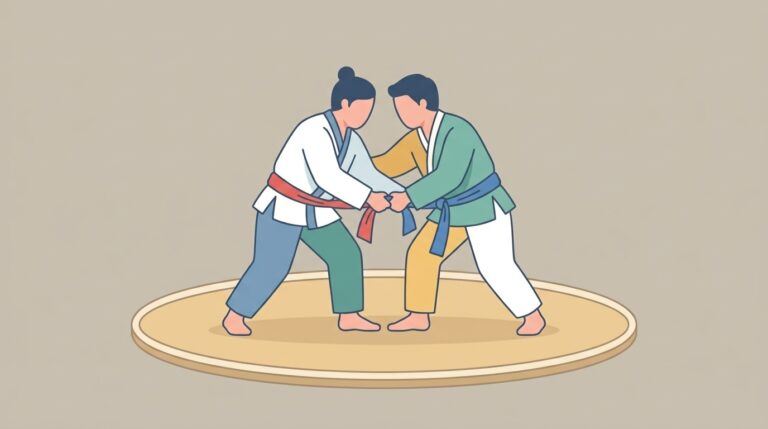
Master Korean Like a Champion: The Art of Ssireum Metaphors and Cheonhajangsa
Phase 1: Empathy (Story-Immersive Opening)
안녕하세요! 매일한글 에디터입니다.
Picture this: You are watching a high-stakes corporate Korean drama like Misaeng or Reborn Rich. The boardroom tension is suffocating, papers rustle, and two executives glare across polished mahogany. Suddenly, the senior managing director leans forward and murmurs: “지금은 섣불리 움직이지 말고, 물밑에서 샅바 싸움부터 단단히 해야 합니다.” (Now is not the time to act rashly; we must secure our grip in the satba fight beneath the surface.)
You freeze. Wait… isn’t a satba the thigh-belt worn by traditional Korean wrestlers in a sand ring? Why are high-powered CEOs in Armani suits talking about folk wrestling in the middle of a multi-million dollar merger?
If you have ever felt completely baffled by how seamlessly native Koreans blend folk sports heritage into daily boardroom strategy, political commentary, and variety shows, you are not alone. As a C1-level learner, you already understand textbook grammar and polite honorifics. But the real barrier to native-level fluency isn’t dictionary vocabulary; it is cultural subtext. In Korean society, 씨름 (Ssireum – traditional Korean wrestling) is not merely an athletic contest; it is a profound metaphor for psychological warfare, leverage, resilience, and ethical victory.
Over the past decade coaching foreign diplomats, corporate executives, and advanced Korean learners, I have watched students experience immediate breakthroughs once they unlocked these Ssireum idioms. In this masterclass guide, we will break down the exact technical moves, the legendary aura of the 천하장사 (Cheonhajangsa – Grand Champion), and the exact conversational formulas that will make native speakers turn their heads in sheer admiration.
Phase 2: Core Expressions Deep Dive
1. 샅바 싸움 (Satba ssaum)
- Pronunciation: [Sat-ba ssa-um] (Think of the quick crisp ‘sat’ in Saturday, followed by a bold ‘bah’, and an explosive ‘ssah-oom’)
- Meaning:
- Literal: The physical struggle to lock one’s grip onto the opponent’s cloth thigh belt (satba) before the referee blows the whistle.
- Real Nuance: Intense preliminary maneuvering, jockeying for tactical leverage, or psychological tug-of-war before an official negotiation begins.
- K-Culture Moment: You will hear this phrase constantly on nightly business news: “신제품 출시를 앞두고 대기업 간의 치열한 샅바 싸움이 시작되었습니다.” (A fierce battle for market leverage has begun between conglomerates ahead of the new product launch.)
- Editor’s Insight: In Ssireum, over 70% of a match is decided the moment players lock grips in the sand. If you concede a deep inner grip, you lose your leverage. Hence, Koreans use satba ssaum whenever two stubborn parties test each other’s limits without committing to an open strike.
- Situation Spectrum: Casual: ✅ | Semi-formal: ✅ | Formal (News/Business): ✅
- 🤔 Think About It: In English, you might say “jockeying for position” or “playing hardball.” Notice how the Korean expression highlights physical proximity and tension before the match even officially commences. Does your culture have an idiom rooted in pre-battle posturing?
2. 배지기 (Baejigi)
- Pronunciation: [Bae-ji-gi] (Sounds like ‘beh’ as in bed + ‘jee’ as in jeep + ‘ghee’ as in clarified butter)
- Meaning:
- Literal: The classic Ssireum belly throw—lifting your opponent off their feet using stomach momentum and slamming them to the sand.
- Real Nuance: A decisive counter-move, an overpowering breakthrough, or a bold tactical play that instantly turns the tables in an argument or market competition.
- K-Culture Moment: On entertainment variety shows like Running Man, when an underdog guest outsmarts the veteran cast members with an unexpected strategy, subtitles flash: “예상치 못한 배지기 한 방으로 역전 성공!” (A stunning turnaround with an unexpected belly-throw move!)
- Editor’s Insight: Baejigi is the soul of Ssireum. Variants include 들배지기 (Deulbaejigi – lifting belly throw) and 안배지기 (Anbaejigi – inner belly sweep). When Koreans say someone “hit a baejigi” in business, it means they did not just scrape by; they executed a clean, undeniable, kinetic triumph.
- Situation Spectrum: Casual: ✅ | Semi-formal: ✅ | Formal: ⚠️ (Use in speeches or presentations with metaphorical framing)
- 🤔 Think About It: Why does Korean strategic language favor grapple-and-throw idioms over Western strike metaphors like “landing a knockout punch”? What does this say about momentum and balance?
3. 천하장사 (Cheonhajangsa)
- Pronunciation: [Cheon-ha-jang-sa] (Think ‘chohn’ + ‘hah’ + ‘jahng’ + ‘sah’)
- Meaning:
- Literal: The undisputed supreme wrestler “under heaven” who conquers all weight divisions in the national championships.
- Real Nuance: An absolute titan, a powerhouse personality, or affectionately, someone with astonishing stamina, physical power, or hearty appetite.
- K-Culture Moment: In variety shows featuring former national champion Kang Ho-dong (강호동), cast members joke about his gargantuan meal portions: “역시 천하장사 출신이라 라면 먹는 스케일부터 다르시네요!” (As expected of a former Cheonhajangsa, the sheer scale of his ramen eating is legendary!)
- Editor’s Insight: Historically, becoming a Cheonhajangsa brought instant national glory. The champion was paraded around the stadium on a 꽃가마 (kkotgama – floral victory palanquin) and awarded a colossal prize bull (황소). To call someone a cheonhajangsa today is a tribute to indomitable grit.
- Situation Spectrum: Casual: ✅ | Semi-formal: ✅ | Formal: ✅
- 🤔 Think About It: In English, we use mythological terms like “Hercules” or “titan.” In Korea, Cheonhajangsa blends athletic dominance with deeply human, communal folk pride.
Phase 3: Textbook Korean vs. Real Native Korean
Elevate your C1 conversational sophistication by replacing standard, sterile phrases with native idiomatic color.
Situation 1: Analyzing prolonged contract disputes
- 📖 교과서 한국어 (Textbook):
“양측이 유리한 고지를 점하기 위해 매우 치열하게 협의하고 있습니다.”
(Yangcheugi yurihan gojireul jeomhagi wihae maeu chiyeolhage hyeobuihago itseumnida.)
“Both parties are consulting intensely to occupy advantageous ground.” - 🗣️ 진짜 한국어 (Real Native):
“지금 양쪽 다 주도권 뺏기 싫어서 치열하게 샅바 싸움 중이에요.”
(Jigeum yangjjok da judogwon ppaetgi sireoseo chiyeolhage satba ssaum jung-ieyo.)
“Right now, neither side wants to forfeit control, so they are locked in a relentless satba battle.” - 💡 왜 다를까? (Why the difference?): While military territorial metaphors (yurihan goji) sound stiff and textbook-formal, satba ssaum vividly paints the human friction, tension, and strategic maneuvering happening right now behind closed doors.
Situation 2: Celebrating a game-changing turnaround
- 📖 교과서 한국어 (Textbook):
“신생 기업이 혁신적인 마케팅으로 시장 상황을 완전히 역전시켰습니다.”
(Sinsaeng gieobi hyeoksinjeogin maketing-euro sijang sanghwang-eul wanjeonhi yeokjeonsikyeosseumnida.)
“The startup completely reversed the market situation through innovative marketing.” - 🗣️ 진짜 한국어 (Real Native):
“신생 스타트업이 파격적인 서비스로 멋지게 배지기 한 판을 날렸네요!”
(Sinsaeng seutateueobi pagyeokjeogin seobiseuro meotjige baejigi han paneul nallyeonneyo!)
“That rookie startup landed a spectacular belly-throw and flipped the entire game!” - 💡 왜 다를까? (Why the difference?): Native Koreans love kinetic, sensory imagery. Adding “한 판 날리다” (to throw down a round) injects dramatic flair, visual motion, and swagger that no dry business textbook can teach.
Phase 4: K-Culture Deep Dive & Non-Verbal Manners
4-1. 눈치 (Nunchi) & Sand-Ring Etiquette
In Ssireum, brute strength will get you disqualified or humiliated. The game is won through microscopic sensory calculation—reading your rival’s weight shift through your fingertips and hips before their muscles even tense. This is the physical incarnation of 눈치 (Nunchi – situational intuition).
When observing or discussing high-stakes disputes in Korean culture, note these subtle non-verbal cues:
* The Stance (자세): Never cross your arms aggressively when an opponent is speaking during negotiations. In Ssireum, true champions lower their center of gravity (무릎을 낮추다) and lean in with focused eyes, signaling absolute readiness without petty theatrics.
* Brushing the Sand (모래 털어주기): The quintessential rule of Ssireum sportsmanship: the moment your opponent’s knee touches the sand, you instantly release your aggressive grip, extend both hands, help them to their feet, and brush the sand off their back. In professional life, even after you decisively win a contract or an intellectual debate, you must always provide your counterpart an honorable exit. Never gloat; preserve their 체면 (chaemyeon – social face).
4-2. Cultural Code: From Chuseok Sandpits to Prime-Time Entertainment
Ssireum historically formed the emotional heart of seasonal agrarian celebrations like 단오 (Dano – Fifth day of the fifth lunar month) and 추석 (Chuseok – Harvest Festival). Villagers gathered under willow trees around circular sand rings to cheer their local champions.
In the 1980s, Ssireum reached peak cultural fever. Millions of families sat glued to television sets watching legendary rivalries between technical prodigy Lee Man-gi (이만기) and the charismatic young powerhouse Kang Ho-dong (강호동). When Kang transitioned from the sand ring into show business, becoming the nation’s beloved MC on programs like Knowing Bros (아는 형님) and 2 Days & 1 Night (1박 2일), he cemented the Cheonhajangsa archetype into modern pop culture: fiercely competitive on the mat, yet self-effacing, warm-hearted, and protective off it.
Phase 5: Real-World Roleplay Scenario
Context & Characters
- Setting: A quiet rooftop lounge in Yeouido, Seoul. Rain drizzles against the panoramic glass.
- Characters:
- Elena (엘레나): Senior Overseas Project Lead at a Korean mobility firm.
- Director Park (박 부장): A seasoned 52-year-old corporate strategist who loves classical Korean sports analogies.
[Scene Start]

박 부장: 엘레나 씨, 경쟁사 쪽에서 입찰 마감 직전에 갑자기 규격 수정을 요구하고 나섰어요.
(Elena-ssi, gyeongjaengsa jjok-eseo ipchal magam jikjeone gapjagi gyugyeok sujeong-eul yoguhago naseosseoyo.)
"Elena, the competitor suddenly stepped up demanding specification revisions right before the bid deadline."
🎭 [한숨을 푹 쉬며 찻잔을 내려놓는다 / Sighs heavily and sets down his teacup]

엘레나: 아, 전형적인 샅바 싸움이 시작된 거군요. 우리 일정을 흔들려는 속셈인가요?
(A, jeonhyeongjeogin satba ssaumi sijakdoen geogunyo. Uri iljeong-eul heundeullyeoneun soksemin-gayo?)
"Ah, the classic satba fight has begun. Is their scheme to shake up our project timeline?"
🎭 [침착한 눈빛으로 태블릿의 제안서를 넘기며 / Flipping through the proposal on her tablet with steady eyes]

박 부장: 정확해요. 본선 심사 전에 우리 기를 꺾고 주도권을 쥐겠다는 거죠.
(Jeonghwakhaeyo. Bonseon simsa jeone uri gireul kkeokgo judogwoneul jwigettaneun geojyo.)
"Spot on. They want to break our spirit and seize control before the main evaluation."
🎭 [팔짱을 끼고 고개를 끄덕인다 / Crosses his arms and nods knowingly]

엘레나: 그들의 페이스에 말려들면 안 됩니다. 오히려 다음 주 테크 데모에서 우리가 준비한 비장의 카드를 먼저 꺼내면 어떨까요?
(Geudeurui peiseue mallyeodeulmyeon an doemnida. Ohiryeo daeum ju tekeu demoeseo uriga junbihan bijang-ui kadeureul meonje kkeonaemyeon eotteolkkayo?)
"We must not get dragged into their pace. What if we reveal our secret ace card first at next week's tech demo?"
🎭 [자신감 넘치는 미소를 지으며 / Smiling with clear confidence]

박 부장: 오호, 기습적인 들배지기 한 판으로 상대의 허점을 찌르자는 전략이군요!
(Oho, giseupjeogin deulbaejigi han paneuro sangdaeui heojeomeul jjireujaneun jeollyag-igunyo!)
"Oho! So your strategy is to target their blind spot with a surprise lifting belly-throw!"
🎭 [눈을 반짝이며 몸을 앞으로 기울인다 / Leaning forward with glistening eyes]

엘레나: 맞습니다. 수비에만 치중하지 않고, 단숨에 기술을 걸어 전세를 뒤집어야 합니다.
(Masseumnida. Subie-man chijunghaji anko, dansume gisureul georeo jeonseoreul dwijibeoya hamnida.)
"Exactly. Instead of merely defending, we must execute our technique in one breath and overturn the tide."
🎭 [결연한 표정으로 찻잔을 쥐며 / Gripping her cup with determined poise]

박 부장: 좋습니다. 상대가 힘으로 당길 때 우리는 원심력으로 판을 돌려버립시다.
(Joeusseumnida. Sangdaega himeuro danggil ttae urineun wonsimnyeog-euro paneul dollyeobeoripsida.)
"Excellent. When the opponent pulls with brute force, we will spin the board using their own momentum."
🎭 [만족스럽게 호탕한 웃음을 터뜨린다 / Bursts into a hearty, satisfied laugh]

엘레나: 네, 부장님. 이번 프로젝트, 반드시 천하장사 타이틀을 따오겠습니다.
(Ne, bujangnim. Ibeon peurojekteu, bandeusi cheonhajangsa taiteureul ttaogesseumnida.)
"Understood, Director. For this project, we will definitely bring home the Grand Champion title."
🎭 [가벼운 목례와 함께 당당한 눈맞춤 / A crisp nod accompanied by confident eye contact]

[Scene End]
🔀 Interactive Decision Branch
How should Elena respond if Director Park hesitates and asks: “What if our aggressive move fails?”
- Option A: “괜찮습니다. 실패하면 모래판에서 툭툭 털고 일어나 다음 라운드에서 밭다리 걸면 됩니다.” (No problem. If it fails, we simply brush off the sand and hook their leg in the next round.)
- Outcome (BEST): 🏆 Demonstrates sublime mastery of Ssireum technique vocabulary (밭다리 걸기 – outer leg trip) while displaying classic resilient sportsmanship. Director Park will be completely charmed.
- Option B: “어차피 인생은 한 방 싸움이니까 무조건 공격해야죠.” (Life is a one-shot gamble anyway, so we must attack no matter what.)
- Outcome (RISKY): ⚠️ Sounds like reckless gambling. Ssireum is about calculated balance, not blind rashness. Makes you sound impulsive.
- Option C: “그러면 그냥 저쪽 요구대로 해주고 싸우지 마시죠.” (Then let’s just do what they want and avoid fighting.)
- Outcome (BAD): 🚫 Displays defeatism. Conceding the satba without tactical effort ruins credibility in corporate strategy.
Phase 6: 10-Second Emotion Shadowing Drill
Read these dynamic sentences aloud. Follow the rhythm slashes (/) for breath control, and embody the bracketed emotional cues.
- [🔥 결연하고 비장하게 / Resolute & Grimly Determined]
“지금 물러서면 / 영영 주도권을 뺏깁니다. / 모래판에 오른 이상 / 물러설 곳은 없습니다!”
(Jigeum mulleoseomyeon / yeong-yeong judogwoneul ppaetgimnida. / Moraepane oreun isang / mulleoseol goseun eopseumnida!)
“If we step back now, / we forfeit control forever. / Now that we stepped into the sand ring, / there is nowhere to retreat!” -
[😲 감탄하며 흥분한 어조로 / Astonished & Exhilarated]
“와! / 저 타이밍에 / 기습적인 들배지기 한 판이라니, / 완벽한 역전승이네요!”
(Wa! / Jeo taiming-e / giseupjeogin deulbaejigi han pan-irani, / wanbyeokhan yeokjeonseung-ineyo!)
“Wow! / To pull off a surprise lifting belly-throw at that exact timing— / what a flawless comeback victory!” -
[🤝 든든하고 신뢰감 넘치게 / Reassuring & Deeply Trustworthy]
“승패를 떠나서, / 끝까지 정정당당하게 / 멋진 한 판 승부를 / 펼쳐봅시다.”
(Seungpaereul tteonaseo, / kkeutkkaji jeongjeongdangdanghage / meotjin han pan seungbureul / pyeolchyeobopsida.)
“Regardless of victory or defeat, / let us fight fairly and honorably / to stage an unforgettable, magnificent match / right to the very end.”
Phase 7: K-Culture Mini Dictionary
-
모래판 (Moraepan)
- Translation: The circular sand ring (Ssireum pit) / Competitive commercial arena.
- Usage: When a startup enters an established market, journalists describe it as “치열한 모래판에 출사표를 던지다” (stepping boldly into the unforgiving sand ring).
- 들배지기 (Deulbaejigi)
- Translation: The lifting belly throw (The premier signature attack in Ssireum).
- Usage: Used metaphorically for an overwhelming, textbook offensive maneuver that lifts a project over bureaucratic hurdles in a single stroke.
- 꽃가마 (Kkotgama)
- Translation: The decorated floral victory palanquin.
- Usage: Figuratively means receiving supreme accolades. “꽃가마를 타다” implies being celebrated as the ultimate champion after a grueling campaign.
- 판세 (Panse)
- Translation: The flow/momentum of the game or political landscape.
- Usage: Derived from traditional board and arena games. When negotiations shift abruptly, natives note: “판세가 완전히 기울었다” (The balance of the ring has tilted completely).
Phase 8: Traveler’s Survival Kit
Visiting Korea during major holidays? Watching live Ssireum in the stadium is an electrifying cultural experience!
Survival TOP 3 Phrases
- “어디서 씨름 경기를 현장 관람할 수 있나요?”
(Eodiseo ssireum gyeonggireul hyeonjang gwallamhal su innayo?)
Pro Tip: Use this at tourist info kiosks to find regional championships during Seollal (Lunar New Year) or Chuseok (Harvest Festival). -
“이번 대회에서 가장 유력한 천하장사 후보가 누구예요?”
(Ibeon daehoe-eseo gajang yuryeokhan cheonhajangsa huboga nuguyeyo?)
Pro Tip: Ask an elderly spectator in the arena; their face will light up, and you’ll get an instant 20-minute masterclass on every wrestler’s heritage! -
“방금 들어간 기술이 배지기인가요, 아니면 밭다리인가요?”
(Banggeum deureogan gisuri baejigi-in-gayo, animyeon batdari-in-gayo?)
Pro Tip: Asking this precise technical question will instantly earn you the respect of everyone sitting within five rows of you.
Editor’s Travel Note: How to Catch a Live Match
Ssireum tournaments are hosted periodically by the Korean Ssireum Association across historical regional hubs like Suwon, Yeongam, and Boeun. Entry to these grand festivals is frequently free or remarkably low-cost! Before planning your trip, consult the 대한씨름협회 공식 대회 일정 및 티켓 안내 (Korea Ssireum Association Official Schedule & Tickets) to confirm dates. For seamless transport across regional hubs, ensure you install 코레일톡 KTX 예매 앱 (KorailTalk High-Speed Rail Booking) and navigate using 네이버 지도 길찾기 서비스 (Naver Map Navigation).
Phase 9: “One Step Deeper” (Reflective Essay)
Unlike combat sports that incentivize strikes, blood, and painful submissions, the architecture of Ssireum is fundamentally grounded in communal grace. The battle takes place on soft, shock-absorbing sand; the only goal is to unbalance the opponent so that any part of their body above the knee touches the ground. The moment the round concludes, the victor instinctively brushes the sand from the fallen competitor’s back, affirming that physical conflict must never erode human warmth (정 – Jeong).
This reveals a quintessential pillar of Korean leadership: true power is demonstrated not through public humiliation of your rival, but through decisive technical mastery followed by gracious reconciliation.
💬 Your Turn: How does your own native culture handle the ethics of competition? Do your sports metaphors emphasize crushing the opponent or unbalancing them with dignity? Share your thoughts in the comments below!
Phase 10: FAQ & Avoiding Misconceptions
Q: Is Ssireum just the Korean version of Japanese Sumo?
A: While both are traditional Asian grappling arts taking place in a circular ring, their philosophy and mechanics are starkly different. Sumo permits open-hand slapping, thrusting, and winning by pushing an opponent out of bounds. In contrast, Ssireum strictly forbids striking, pushing out of bounds does not count as a win, and wrestlers wear a fabric satba wrapped around both the waist and thigh, locking them in an intimate mutual hold from the start. Ssireum is purely about balance, lever mechanics, and circular momentum on sand.
Q: Can I use “샅바 싸움” in everyday casual conversation with friends?
A: Absolutely! You can use it playfully whenever two people take forever to make a decision because neither wants to compromise. For instance, if your friends spend 30 minutes arguing over whether to eat Korean BBQ or raw fish, say with a smirk: “우리 점심 메뉴 정하는 데 샅바 싸움 그만하고, 그냥 삼겹살 먹으러 가자!” (Stop this satba fight over lunch and let’s just get pork belly!)
Q: What is the difference between “장사 (Jangsa)” and “천하장사 (Cheonhajangsa)”?
A: Jangsa is a weight-class champion (such as 태백장사 for lightweights or 백두장사 for heavyweights). Cheonhajangsa is the supreme, open-weight absolute champion of the entire nation—the undisputed king of kings.
🚨 흔한 실수 (Common Mistakes) Warning Board
- Calling any physical wrestling move ‘태권도 (Taekwondo)’:
- Wrong: 태권도로 상대를 넘어뜨렸다.
- Correct Action: If it involves grappling, throws, and sand, always specify 씨름 기술 (Ssireum moves) like 배지기 or 밭다리.
- Confusing ‘샅바 싸움’ with literal physical violence:
- Wrong: 길거리에서 두 사람이 주먹으로 샅바 싸움을 했다.
- Correct Action: Satba ssaum refers to subtle, pre-conflict tension and psychological leverage. For violent fistfights, use 몸싸움 (physical brawl) or 난투극 (free-for-all brawl).
- Using ‘천하장사’ exclusively for men:
- Correction: Women’s Ssireum (여자 씨름) has exploded in popularity in Korea! Champions like Yang Yoon-seo and Lee Da-hyeon are celebrated national athletes. You can praise any formidable woman with deep strength as a true champion.
Phase 11: Action Missions
- 🥉 Bronze Mission (Solo Practice): Stand in front of your mirror and practice saying: “치열한 샅바 싸움 끝에 배지기 한 판으로 역전했습니다!” three times until your tongue glides smoothly over the consonants.
- 🥈 Silver Mission (Social Media Challenge): Find a news article or drama scene involving a tense corporate/political standoff. Post a comment or tweet in Korean: “완전 흥미진진한 샅바 싸움이네요!”
- 🥇 Gold Mission (Real-Life Deployment): In your next meeting, language exchange, or debate with a native Korean speaker, describe a tough decision using 샅바 싸움 or describe an underdog victory using 배지기 한 판. Watch their eyes light up at your cultural fluency!
- 🎮 K-Culture Quest: Search YouTube for “씨름 레전드 이만기 강호동” (Ssireum Legends Lee Man-gi vs Kang Ho-dong). Watch an authentic 1989 match and observe the crowd’s raw energy and the iconic satba grip ritual!
Phase 12: Interactive Quiz Challenge
Test your mastery of Korean Ssireum idioms with these three challenging questions!
1. Situational Judgment
Two rival streaming platforms are delaying their subscription price changes, constantly watching each other’s release schedules to see who makes the first move. Which idiom describes this perfectly?
* (A) 꽃가마 타기
* (B) 샅바 싸움
* (C) 들배지기 완승
2. Fill-in-the-Blank
“우리 팀이 마지막 프레젠테이션에서 강력한 기술을 선보여 화려한 (__________) 한 판으로 경쟁사를 꺾었다.”
* (A) 잔칫상
* (B) 배지기
* (C) 꽃가마
3. True or False
In traditional Ssireum, you can win a round simply by pushing your opponent outside the circular perimeter line, just like Sumo. [ True / False ]
👉 Click here to reveal answers & explanations!
정답 및 해설 (Answers & Explanations)
- 정답: (B) 샅바 싸움
- 해설: Waiting each other out, testing boundaries, and fighting for psychological leverage without open combat is the textbook definition of satba ssaum.
- 정답: (B) 배지기
- 해설: The classic idiom for throwing an opponent decisively and overturning the board is “배지기 한 판”.
- 정답: False (거짓)
- 해설: Pushing an opponent out of bounds does not grant victory in Ssireum! The match is paused, wrestlers are returned to the center sand pit, and the duel restarts. Victory only occurs when a body part above the knee touches the sand.
- 해설: Pushing an opponent out of bounds does not grant victory in Ssireum! The match is paused, wrestlers are returned to the center sand pit, and the duel restarts. Victory only occurs when a body part above the knee touches the sand.







