

Master Korean Subway Lockers: How to Store Your Bags Like a Seoul Local
Phase 1: Empathy & Storytelling Opening
안녕하세요! (Annyeonghaseyo!) It’s your Daily Hangul editor here, your 10-year local culture navigator.
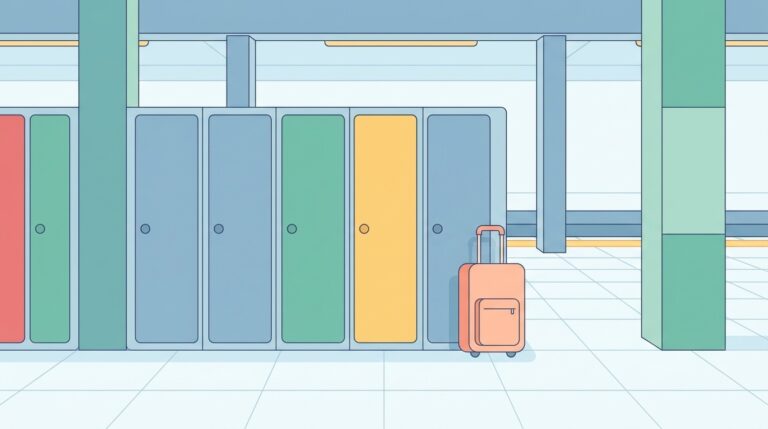
Picture this: You just landed at Incheon Airport, took the AREX train to Hongdae, and you are ready to explore the trendiest vintage shops and cozy aesthetic cafes. But there is one gigantic problem—you are dragging a 28-inch rolling suitcase through crowded streets. Every stair feels like Mount Everest, and the cafe entrance clearly says ‘No Luggage.’ You spot a bright digital locker station inside the subway concourse, but the screen flashes Korean terms like ‘보관’ (storage), ‘찾기’ (retrieval), and a queue starts forming right behind you. Your palms sweat as the person behind you taps their foot.
Don’t panic! Mastering Korean subway lockers (물품 보관함) is a rite of passage for every traveler in Korea. Our B1 learners constantly tell us that unlocking these lockers wasn’t just about dropping off bags—it gave them the sudden confidence that they could truly navigate Seoul independently. Today, I’ll walk you through the essential phrases, unwritten cultural etiquette, and screen navigation secrets so you can drop your bags in under two minutes and enjoy Seoul hands-free!
Phase 2: Core 3 Expressions Deep-Dive
1. 짐 좀 맡기려고 하는데요. (Jim jom matgiryeogo haneundeyo.)
- Pronunciation: [Jim jom mat-gi-ryeo-go ha-neu-n-de-yo] (Sounds like: Jeem johm maht-gee-ryuh-goh ha-neun-deh-yoh)
- Meaning:
- Literal: “I am intending to entrust luggage a little bit, but…”
- Real Nuance: “Excuse me, I’m looking to store my bags here.”
- K-Culture Moment: In modern K-dramas, you often see characters arriving at Seoul Station and telling an attendant or station guide, “짐 좀 맡기려고 하는데요…” while looking slightly exhausted from their journey.
- Editor’s Insight: The magic word here is 좀 (jom). It literally means “a little,” but in Korean communicative culture, it functions as a social cushion. Dropping 좀 into a request immediately removes bluntness and marks you as an empathetic, considerate speaker.
- Situation Spectrum:
- Casual (반말): 🚫 (Too blunt with strangers)
- Semi-formal (해요체): ✅ (Perfect for station staff or nearby locals)
- Formal (하십시오체): ⚠️ (Too stiff: 짐을 맡기고자 합니다 is only used in announcements)
- 🤔 Think About It: In English, we often say “I want to store my bags.” Why do you think Korean uses the trailing ending -는데요 (-neundeyo) to leave the sentence open-ended rather than ending with a direct “Please help me”?
2. 빈 보관함 자리 있어요? (Bin boganham jari isseoyo?)
- Pronunciation: [Bin bo-gwan-ham ja-ri i-sseo-yo?] (Sounds like: Bean boh-gwan-hahm jah-ree ee-ssuh-yoh?)
- Meaning:
- Literal: “Are there empty locker spots?”
- Real Nuance: “Is there an available locker left?”
- K-Culture Moment: Imagine rushing to an Olympic Park concert to see your favorite idol, holding lightsticks and heavy merch. You ask a fellow fan hovering around the locker kiosk: “혹시 빈 보관함 자리 있어요?”
- Editor’s Insight: Korean speakers rarely use the formal adjective “available” (사용 가능한). Instead, they instinctively use 자리 (jari), which means “seat” or “physical space.” Asking if there is a 자리 makes your Korean sound instantly grounded and authentic.
- Situation Spectrum:
- Casual: ⚠️ (Only with close travel buddies: 자리 있어?)
- Semi-formal: ✅ (Ideal for asking subway attendants or commuters)
- Formal: ⚠️ (빈 보관함이 있습니까? sounds like a written survey)
- 🤔 Think About It: How does your native language describe availability? Notice how Korean anchors physical availability to 자리 (space/spot) in parking lots, cafes, and subway lockers.
3. 비밀번호 설정 어떻게 해요? (Bimilbeonho seoljeong eotteoke haeyo?)
- Pronunciation: [Bi-mil-beon-ho seol-jeong eo-tteo-ke hae-yo?] (Sounds like: Bee-meel-buhn-hoh suhl-juhng uh-ttuh-kay hay-yoh?)
- Meaning:
- Literal: “Password configuration, how do I do it?”
- Real Nuance: “How do I set up the passcode on this screen?”
- K-Culture Moment: A comedic scene in a travel vlog where someone accidentally enters their phone PIN repeatedly and turns to a passerby in confusion: “저기요, 비밀번호 설정 어떻게 해요?!”
- Editor’s Insight: Most modern lockers in Seoul (such as ‘T-Locker’ or ‘Dotta Locker’) are keyless. They require setting a 6-digit PIN or authenticating via a smartphone app. Using 어떻게 해요? (How do I do this?) is the ultimate B1 problem-solving Swiss Army knife.
- Situation Spectrum:
- Casual: 🚫 (어떻게 해? only with friends)
- Semi-formal: ✅ (Polite, natural, and immediately understood by anyone)
- Formal: ⚠️ (어떻게 설정합니까? sounds slightly robotic)
- 🤔 Think About It: Why do you think Korean digital lockers moved entirely away from physical keys to digital passcodes and QR codes?
Phase 3: Textbook Korean vs. Real Korean
Situation 1: Checking if any locker is unoccupied
- 📖 교과서 한국어 (Textbook):
- “물품 보관함이 비어 있습니까?” (Mulpum boganhami bieo isseumnikka? / Is the parcel storage receptacle empty?)
- 🗣️ 진짜 한국어 (Real Life):
- “보관함 자리 남았어요?” (Boganham jari namasseoyo? / Are there any locker spots left?)
- 💡 Why is it different?
Koreans prioritize conversational velocity and everyday vocabulary. 비어 있습니까? sounds like an official inspection officer checking the premises. In real life, asking if spots 남았어요? (remain / are left) feels human, friendly, and practical.
Situation 2: Asking someone for quick help with the touch screen
- 📖 교과서 한국어 (Textbook):
- “이 기계의 사용법을 가르쳐 주십시오.” (I gigye-ui sayongbeobeul gareuchyeo jusipsio. / Please teach me the usage method of this machine.)
- 🗣️ 진짜 한국어 (Real Life):
- “이거 어떻게 눌러야 돼요?” (Igeo eotteoke nulleoya dwaeyo? / Which button should I press on this?)
- 💡 Why is it different?
Asking someone to “teach usage” (가르쳐 주십시오) sounds like requesting a formal ten-minute lecture. In fast-paced Seoul, asking “What should I press?” (어떻게 눌러야 돼요?) is actionable, clear, and respects the other person’s time.
Phase 4: K-Culture Deep-Dive & Non-Verbal Manners
4-1. 눈치 (Nunchi) & Metro Station Etiquette
Korean subway stations during rush hour (출퇴근 시간: 7:30 AM–9:00 AM & 6:00 PM–7:30 PM) are bustling rivers of commuters walking at Olympic walking speed.
* The Locker Queue Distance: When someone is operating the locker kiosk, never stand directly over their shoulder. Passcodes are entered on touchscreens, and Koreans value personal privacy (개인정보 보호). Stand at least two steps back.
* The Suitcase Tuck: If you must organize your belongings before putting them inside the locker, step to the side of the corridor. Never leave a suitcase open in the middle of the walking lane—doing so triggers heavy “sighing nunchi” from busy commuters.
* Body Language: When asking an attendant or passerby for help, use a slight 15-degree head bow and open hand gestures rather than pointing with your index finger.
4-2. Culture Code: The “Zero-Theft Paradox” & Lockers
You’ve probably seen viral TikToks showing people leaving MacBooks and wallets on cafe tables in Seoul without anyone stealing them. If Korea is so safe, why do subways have high-tech computerized lockers everywhere?
Subway lockers in Korea aren’t just about theft prevention—they are all about Convenience & Fandom Mobility (편의와 기동성). K-Pop concertgoers drop off luggage before heading to stadiums; weekend hikers store heavy hiking boots before catching dinner in Gangnam; and domestic business travelers use lockers to exchange merchandise or documents securely using shared locker PINs!
Phase 5: Real Roleplay Scenario
Setting: Myeongdong Subway Station, near Exit 3. You are standing before an electronic T-Locker kiosk with a large suitcase. An approachable subway station assistant, Manager Park (박 주임님), is standing nearby checking the terminal.
- Turn 1 (You):
저기요, 실례지만 짐 좀 맡기려고 하는데요.
(Jeogiyo, sillyejiman jim jom matgiryeogo haneundeyo.)
“Excuse me, sorry to bother you, but I’m looking to store some luggage.”
🎭 [Politely walking over with a gentle head nod] -
Turn 2 (Manager Park):
네! 보관함 이용하시게요? 저기 빈칸 파란색 불 들어온 거 보이시죠?
(Ne! Boganham 이용하시게요? Jeogi binkan paransaek bul deureoon geo boisijyo?)
“Yes! Are you using the lockers? You see those blue lights on the empty slots over there?”
🎭 [Pointing at the screen with an open palm] -
Turn 3 (You):
네, 보여요. 큰 가방인데 대형 보관함 자리 있어요?
(Ne, boyeoyo. Keun gabang-inde daehyeong boganham jari isseoyo?)
“Yes, I see them. It’s a big bag; is there a large locker spot left?”
🎭 [Gesturing to the height of your suitcase] -
Turn 4 (Manager Park):
대형은 15번이랑 22번 비어 있네요. 화면에서 ‘보관’ 먼저 누르세요.
(Daehyeong-eun sibobeon-irang isibirbeon bieo inneyo. Hwamyeon-eseo ‘bogan’ meonje nureuseyo.)
“For large sizes, numbers 15 and 22 are free. Press ‘Storage (보관)’ on the screen first.”
🎭 [Tapping the yellow screen icon] -
Turn 5 (You):
아, 보관이요? 비밀번호는 언제 입력해요?
(A, boganiyo? Bimilbeonhoneun eonje imnyeokhaeyo?)
“Ah, ‘Storage’? When do I enter the password?”
🎭 [Leaning in slightly with an inquisitive expression] -
Turn 6 (Manager Park):
함 번호 누르면 비밀번호 6자리 누르라고 나와요. 두 번 입력하셔야 돼요.
(Ham beonho nureumyeon bimilbeonho yeoseotjari nureurago nawayo. Du beon imnyeokhasyeoya dwaeyo.)
“After pressing the locker number, it asks for a 6-digit passcode. You need to enter it twice.”
🎭 [Showing two fingers cheerfully] -
Turn 7 (You):
결제는 신용카드나 티머니로 다 되나요?
(Gyeoljeneun sinyongkadeuna timeoniro da doenayo?)
“Can I pay with either a credit card or a T-Money card?”
🎭 [Taking out your transit card to verify] -
Turn 8 (Manager Park):
둘 다 돼요! 영수증 꼭 챙기세요. 거기에 보관함 번호 적혀 있어요.
(Dul da dwaeyo! Yeongsujeung kkok chaenggiseyo. Geogie boganham beonho jeokhyeo isseoyo.)
“Both work! Make sure to take your receipt. Your locker number is printed on it.”
🎭 [Smiling warmly and gesturing toward the card reader]
🔀 Interactive Branching Choice
You finished entering your passcode, but the locker door doesn’t pop open immediately. What do you say to Manager Park?
- Option A: “야, 문 왜 안 열려?” (Ya, mun wae an yeollyeo?)
- ❌ Result [BAD]: Extremely rude! 야 (Ya) is disrespectful informal speech used only with intimate friends or younger people. The station manager will be taken aback.
- Option B: “저기요, 문이 아직 안 열렸는데 다시 눌러야 되나요?” (Jeogiyo, muni ajik an yeollyeonneunde dasi nulleoya dwenayo?)
- 🏆 Result [BEST]: Perfect polite Korean! You politely explain the status without blaming the machine, asking whether you should tap again. The manager will promptly assist you.
- Option C: “기계가 고장났으니까 환불해 주십시오.” (Gigyega gojangnasseunikka hwanbulhae jusipsio.)
- ⚠️ Result [RISK]: Grammatically correct formal Korean, but overly accusatory and dramatic. Usually, lockers take 3–5 seconds to unlock after payment, so demanding an immediate refund creates awkward friction.
Phase 6: 10-Second Emotion Shadowing Drill
Practice these lines out loud with the exact vocal pause markings (/) and emotional tone!
[😊 설레면서 공손하게 - Excited & Polite]
저기요, / 짐 좀 맡기려고 하는데요, / 대형 자리 있어요?
(Jeogiyo, / jim jom matgiryeogo haneundeyo, / daehyeong jari isseoyo?)-
[😰 살짝 다급하고 당황스럽게 - Slightly Urgent & Confused]
어? / 결제했는데 / 문이 안 열려요! / 이거 어떻게 해야 돼요?
(Eo? / Gyeoljehaenneunde / muni an yeollyeoyo! / Igeo eotteoke haeya dwaeyo?) -
[🙏 안도하며 진심으로 감사하게 - Relieved & Truly Grateful]
아, 영수증 챙겼어요! / 친절하게 알려주셔서 / 정말 감사합니다.
(A, yeongsujeung chaenggyeosseoyo! / Chinjeolhage allyeojusyeoseo / jeongmal gamsahamnida.)
Phase 7: K-Culture Mini Dictionary
- 물품 보관함 (Mulpum Boganham)
- Translation: Luggage Storage Locker / Parcel Locker.
- Real-World Usage: Often abbreviated simply as 보관함 in everyday conversation. In Seoul Metro stations, follow the overhead icons of a key over a box.
- 기본요금 (Gibonyogeum)
- Translation: Base Fare / Initial Fee.
- Real-World Usage: Subway lockers usually have a 4-hour base period (around 2,000 to 4,000 KRW depending on locker size: Small, Medium, Large).
- 추가 요금 (Chuga Yogeum)
- Translation: Additional Surcharge / Overtime Fee.
- Real-World Usage: If you retrieve your luggage after the initial 4-hour window, the screen will ask you to settle the 추가 요금 before the door unlocks.
- 영수증 (Yeongsujeung)
- Translation: Receipt.
- Real-World Usage: Never throw this away! With dozens of identical grey or yellow metal doors, travelers routinely forget which box is theirs. The 영수증 contains your assigned box number and emergency helpline.
Phase 8: Traveler’s Survival Kit
Top 3 Survival Phrases
- “짐 찾는 버튼이 어디 있어요?” (Jim chatneun beoteuni eodi isseoyo?)
- Pro Tip: When retrieving your bag, look for the word 찾기 (Retrieve) or 찾음. Don’t press 보관 (Store) again!
- “영수증 재발행 돼요?” (Yeongsujeung jaebalhaeng dwaeyo?)
- Pro Tip: If the receipt printer ran out of paper, use this phrase with an attendant to get your locker number confirmed.
- “교통카드로 찍을게요.” (Gyotongkadeuro jjigeulgeyo.)
- Pro Tip: Standard T-Money cards work smoothly on 95% of Seoul metro lockers.
Editor’s Travel Note
- Locate Lockers Before Arriving: Seoul Metro operates the T-Locker (또타라커) system on Lines 1 through 9. Before dragging heavy bags up stairs, you can check locker availability via the 또타라커 T-Locker 공식 앱 다운로드 or search for storage points on 네이버 지도 앱 다운로드.
- Sizes Matter: Small (소형) fits backpacks and small carry-on bags; Large (대형) easily fits 28–30-inch full-sized suitcases.
Phase 9: “한 발 더 깊이” (A Step Deeper)
In many Western cities, public lockers were removed from train stations due to security or vandalism concerns. In Korea, however, automated locker systems continue to expand, evolving into climate-controlled storage and dry-cleaning pick-up hubs. This infrastructure thrives because Korean civic spaces rely on a high-trust collective social contract—supported by extensive CCTV coverage and mutual respect for public utilities. When using these lockers, treating the facility with care is an unwritten way of participating in Korean community trust.
💬 Your Turn: Have you ever experienced a funny or nerve-wracking moment trying to store your bags in another country? Share your story in the comments below!
Phase 10: FAQ & Common Mistakes
Q: Can I pay for subway lockers using cash (bills or coins)?
A: Most modern electronic lockers in Seoul (Line 1–8) are cashless! They only accept Korean domestic credit cards, overseas credit cards (Visa/Mastercard with IC chip), mobile payment, or T-Money transit cards. Always keep a loaded T-Money card ready.
Q: What happens if I lose my passcode or retrieve my luggage after midnight?
A: Most subway lockers operate during subway operating hours (usually 05:30 AM to 24:00 midnight). If the station closes, you cannot access the lockers until the following morning. If you forget your passcode, call the customer service number listed on the screen; an attendant will verify your identity via passport.
Q: Is there a maximum time limit for leaving luggage in the locker?
A: Lockers are generally intended for short-term use (under 24 hours). Items left for more than 3 to 5 days are transferred to the subway line’s central lost & found or storage warehouse, which incurs significant administrative storage penalties.
🚨 Common Mistakes Warning Board
- Mistake: Pressing ‘보관 (Store)’ instead of ‘찾기 (Retrieve)’ when picking up luggage.
- Correct Action: When picking up, always tap the green or blue icon labeled 찾기 or 물품 찾기.
- Mistake: Walking away without waiting for the door click.
- Correct Action: Always push the locker door firmly until you hear the electronic latch lock (딸깍!). Check the lock screen status before leaving.
- Mistake: Not taking a photo of the locker door number.
- Correct Action: Station hallways look identical. Take a smartphone photo of your locker door and the nearest station exit sign immediately.
Phase 11: Action Missions
- 🥉 Bronze Mission (Solo): Stand in front of your mirror and practice saying: “저기요, 대형 보관함 자리 남았어요?” five times without checking your notes.
- 🥈 Silver Mission (Social): Next time you spot a locker at an airport or train station, take a photo and post a story tagging @DailyHangul with the caption: “짐 좀 맡기려고 하는데요!”
- 🥇 Gold Mission (Real Life): When visiting Seoul, store your bags at a subway locker using exclusively Korean prompts on the touchscreen. Retrieve your receipt like a true local!
🎮 K-Culture Mission: Watch an episode of any Seoul-based drama (like My Mister or Run On). Spot a scene set in a subway station and check whether you can spot the yellow and grey 물품 보관함 sign in the background!
Phase 12: Interactive Quiz Challenge
Test your knowledge before hitting the Seoul Metro!
1. Situation Judgment: You have entered your 6-digit passcode and paid with your T-Money card. What should you do before walking away?
* A) Leave immediately; it locks automatically.
* B) Push the door firmly until it clicks, and take a photo of the locker number and receipt.
* C) Press the emergency call button to inform the master.
2. Fill-in-the-Blank:
* “실례지만, 큰 가방 보관할 ______ 자리 남았어요?” (Excuse me, are there any spots left to store a large bag?)
* Hint: Think of the Korean word for “lockers/storage box.”
3. True or False: In Korea, subway lockers will stay open overnight even if the station gate closes.
* (True / False)
👉 Click here to reveal answers & explanations!
Answers:
1. B is correct! Lockers must be shut firmly until the latch engages. Taking a picture prevents forgetting your locker in mega-stations like Express Bus Terminal or Seoul Station.
2. 보관함 (Boganham) — You can also say 물품 보관함.
3. False! Station gates close after midnight when trains stop running. You cannot access lockers until the station reopens at around 05:30 AM.







