

Phase 1: 공감 (Story Immersion Opening)
안녕하세요! 매일한글 에디터입니다.
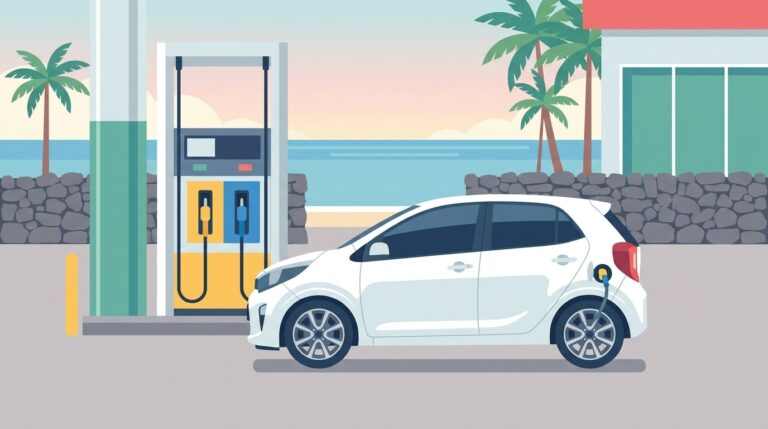
Imagine this: You have just picked up your rental car for a dreamy coastal road trip along the turquoise waters of Jeju Island. The sun is setting behind volcanic peaks, your favorite K-Drama playlist is humming through the speakers, and you are living the ultimate Korean vacation fantasy. Suddenly, a little chime rings out: the fuel gauge is blinking on empty.
You confidently pull into a bustling Korean gas station (주유소). You step out toward the pumps, take a deep breath, and suddenly freeze in your tracks. The touchscreen flashes two bold choices in Korean: 휘발유 and 경유.
Your heart rate spikes. Which one is regular gasoline? Which one is diesel? Putting diesel into a gasoline engine—or vice versa—can instantly destroy a vehicle’s engine and ruin your holiday with a multi-thousand-dollar repair bill!
Don’t worry, you are definitely not alone. Nearly every international traveler in Korea experiences that exact moment of hesitation. This guide is crafted from real student experiences and road trip feedback to give you instant fuel clarity. By the end of this 5-minute guide, you will master the exact words, colors, and etiquette needed to fuel up like a seasoned Seoul driver.
Phase 2: 핵심 표현 3선 심층 분석 (Core 3 Expressions In-Depth)
1. 휘발유인가요, 경유인가요? (Hwiballyu-ingayo, gyeong-yu-ingayo?)
- Pronunciation: [Hwee-bahl-lyoo-een-gah-yoh, gyuhng-yoo-een-gah-yoh?] (Pronounce Hwi like “wheat” without the ‘t’, and Gyeong like “young” with a hard ‘g’.)
- Meaning: Literal: “Is it gasoline, is it diesel?” | Real Nuance: “Does this car take regular gasoline or diesel?”
- K-Culture Moment: In Korean travel variety shows like 2 Days & 1 Night (1박 2일), cast members constantly ask this frantic question whenever they borrow a production car for a road mission!
- Editor’s Insight: The ending -인가요? (-ingayo?) is a polite, inquiring question form. It sounds softer and more courteous than asking abruptly.
- Situation Spectrum: Casual ⚠️ | Semi-formal ✅ | Formal ✅
- 🤔 Think About It: Notice how Korean often drops the subject “이 차는 (this car)” completely. In Korean culture, shared context makes sentences shorter and more direct. How does your native language handle context?
2. 휘발유 가득 넣어 주세요. (Hwiballyu gadeuk neoeo juseyo.)
- Pronunciation: [Hwee-bahl-lyoo gah-deuk nuh-uh joo-seh-yoh] (Gadeuk rhymes with “the cook” and means completely full.)
- Meaning: Literal: “Gasoline, please put in fully.” | Real Nuance: “Please fill it up with regular gasoline.”
- K-Culture Moment: Whenever a suave CEO character in a modern K-Drama pulls their luxury sedan into a full-service Gangnam station, they roll down the tinted window and utter this sleek, confident command.
- Editor’s Insight: If your rental is a diesel SUV, swap 휘발유 (hwiballyu) with 경유 (gyeong-yu). The word 가득 (gadeuk) is your golden ticket whenever you want a full tank before returning a rental car.
- Situation Spectrum: Casual ⚠️ | Semi-formal ✅ | Formal ✅
- 🤔 Think About It: English speakers say “Fill ‘er up.” In Korean, blending 가득 (gadeuk – full) with -아/어 주세요 (-a/eo juseyo – please do for me) creates the perfect balance of brisk efficiency and genuine politeness.
3. 노란색 노즐이 휘발유예요? (Noransaek nojeuri hwiballyu-yeyo?)
- Pronunciation: [Noh-rahn-saek noh-jeul-ee hwee-bahl-lyoo-yeh-yoh?] (Noran sounds like “no run” without the pause; nojeul is Konglish for “nozzle”.)
- Meaning: Literal: “Is the yellow nozzle gasoline?” | Real Nuance: “Is the yellow pump handle for regular unleaded gas?”
- K-Culture Moment: Foreign travelers at Korean self-service stations often point to the bright pump handles to double-check with the friendly attendant on shift.
- Editor’s Insight: In South Korea, fuel handles are universally color-coded by industry standard: Yellow is Gasoline, while Blue or Green is Diesel. Verifying the color out loud eliminates all risk!
- Situation Spectrum: Casual ⚠️ | Semi-formal ✅ | Formal ✅
- 🤔 Think About It: Visual cues like colors provide an international safety net when reading unfamiliar foreign alphabets. How do colors differ across gas stations in your home country?
Phase 3: 교과서 한국어 vs 진짜 한국어 (Textbook vs. Real Korean)
Situation 1: Asking the rental car agent about fuel
- 📖 교과서 한국어: 이 자동차의 연료는 무엇입니까? (I jadongcha-ui yeonryoneun mueos-imnikka? / What is the fuel of this automobile?)
- 🗣️ 진짜 한국어: 이 차 휘발유예요, 경유예요? (I cha hwiballyu-yeyo, gyeong-yu-yeyo? / Is this car gas or diesel?)
- 💡 왜 다를까?: Real Koreans rarely use formal Sino-Korean terms like “연료 (fuel)” at the car rental counter. Simply listing the two fuel types with the conversational polite ending -예요 (-yeyo) sounds far more natural and modern.
Situation 2: Asking for a full tank at the pump
- 📖 교과서 한국어: 연료 탱크를 최대로 채워 주십시오. (Yeonryo taengkeureul choedaero chaewo jusipsio. / Please fill the fuel tank to maximum capacity.)
- 🗣️ 진짜 한국어: 가득 채워 주세요! (Gadeuk chaewo juseyo! / Fill it up, please!) or just 가득이요! (Gadeuk-iyo! / Full, please!)
- 💡 왜 다를까?: Korean service transactions thrive on rapid communication (Ppal-li Ppal-li culture). Dropping unnecessary grammar nouns and keeping only 가득 (gadeuk) gets the job done instantly.
Phase 4: K-Culture 딥다이브 & 비언어적 매너 (Culture & Non-verbal Manners)
4-1. 눈치 (Nunchi) & Gas Station Gestures
- Half-Window Rule: When entering a full-service gas station, roll your driver’s side window down halfway as the station attendant approaches. Rolling it down all the way can feel unnecessarily exposed, while keeping it closed signals you aren’t ready.
- Two-Handed Payment: When handing over your credit card or cash through the car window, hold it with both hands, or support your right forearm with your left hand. This classic Korean etiquette gesture shows high respect to older service workers.
- The Color Code Rule:
- 🟡 Yellow Handle (노란색) = 휘발유 (Regular Gasoline / Unleaded)
- 🔵/🟢 Blue or Green Handle (파란색/초록색) = 경유 (Diesel)
- 🔴 Red Handle (빨간색) = 고급 휘발유 (Premium High-Octane Gasoline)
4-2. Cultural Code: Road Trips & Self-Service Culture
- The Boom of 셀프 주유소 (Self-Service Stations): Over 85% of gas stations across South Korea have shifted to self-service to offer cheaper per-liter rates. Don’t worry—most modern self-service pump monitors feature an English language option button (usually labeled “English” in the top right corner).
- K-Road Trip “Healing” Culture: Road trips down Highway 7 along the East Coast or circling Jeju Island’s coastal bypass are considered the peak “healing (힐링)” getaway for young Koreans. Fueling up smoothly keeps your trip romantic and stress-free.
Phase 5: 실전 롤플레이 시나리오 (Real Role-Play Scenario)
Setting: You have pulled up to pump #3 at an oceanfront self-service gas station in Jeju. An attendant with an orange vest, Mr. Park, steps forward to assist.
- Turn 1 (Driver): 저기요, 도와주실 수 있나요? (Jeogiyo, dowajusil su innayo? / Excuse me, could you help me?) 🎭 Rolling down the window halfway and making friendly eye contact.
- Turn 2 (Mr. Park): 네! 처음 오셨어요? 기름 어떤 거 넣으세요? (Ne! Cheoeum osyeosseoyo? Gireum eotteon geo neoeuseyo? / Yes! First time here? What kind of fuel do you take?) 🎭 Smiling warmly and pointing toward the fuel tank cap.
- Turn 3 (Driver): 렌터카인데, 휘발유인가요 경유인가요? (Renteokainde, hwiballyu-ingayo gyeong-yu-ingayo? / It’s a rental car, is it gasoline or diesel?) 🎭 Holding up the car key fob showing the rental tag.
- Turn 4 (Mr. Park): 아, 키에 ‘휘발유’라고 적혀 있네요. 노란색 노즐 쓰시면 돼요! (A, kie ‘hwiballyu’rago jeokhyeo inneyo. Noransaek nojeul sseusimyeon dwaeyo! / Ah, the tag says ‘Gasoline’. You can use the yellow nozzle!) 🎭 Glancing at the key and tapping the yellow pump handle.
- Turn 5 (Driver): 아, 노란색이 휘발유군요! 가득 넣고 싶어요. (A, noransaegi hwiballyugunyo! Gadeuk neohgo sipeoyo. / Ah, yellow is gasoline! I’d like to fill it up completely.) 🎭 Stepping out of the car and nodding politely.
- Turn 6 (Mr. Park): 화면에서 ‘휘발유’ 누르고 ‘가득’ 누르시면 됩니다. (Hwamyeon-eseo ‘hwiballyu’ nureugo ‘gadeuk’ nureusimyeon doemnida. / Touch ‘Gasoline’ on the screen and press ‘Full’.) 🎭 Pointing gently at the screen buttons.
- Turn 7 (Driver): 결제는 카드로 할게요. 감사합니다! (Gyeoljeneun kadeuro halkeyo. Gamsahamnida! / I’ll pay by credit card. Thank you!) 🎭 Inserting the credit card into the reader slot.
- Turn 8 (Mr. Park): 주유 끝나면 영수증 챙기세요. 즐거운 여행 되세요! (Juyu kkeunnamyeon yeongsujeung chaenggiseyo. Jeulgeoun yeohaeng doeseyo! / Don’t forget your receipt when it finishes. Have a great road trip!) 🎭 Giving a friendly parting wave.
🔀 인터랙티브 분기점 (Interactive Choice)
How should you reply if an attendant asks what fuel you need?
* Choice A: “노란색 노즐로 가득 넣어 주세요.” (Noransaek nojeullo gadeuk neoeo juseyo.)
* Feedback: [Best Choice] Perfectly clear, mentions the exact nozzle color, and asks for a full tank politely!
* Choice B: “아무거나 넣어 주세요.” (Amugeona neoeo juseyo.)
* Feedback: [Risk Choice] Danger! This means “Put in whatever you like.” You run a huge risk of getting the wrong fuel.
* Choice C: “기름 주세요.” (Gireum juseyo.)
* Feedback: [Bad Choice] Too vague. “기름” just means fuel/oil in general. The attendant will still have to ask if it’s gasoline or diesel.
Phase 6: 10초 감정 섀도잉 드릴 (10-Second Emotion Shadowing Drill)
Read these aloud while mirroring the emotion and matching the pause indicators (/):
[🤔 Slightly Curious & Polite]
저기요, / 이 차 / 휘발유인가요?
(Jeogiyo, / i cha / hwiballyu-ingayo?)-
[💡 Bright & Relieved]
아! / 노란색이 / 휘발유군요!
(A! / Noransaegi / hwiballyugunyo!) -
[😊 Confident & Crisp]
휘발유로 / 가득 / 채워 주세요!
(Hwiballyuro / gadeuk / chaewo juseyo!)
Phase 7: K-Culture 미니 사전 (K-Culture Mini Dictionary)
- 휘발유 (Hwiballyu) | Regular Gasoline / Unleaded | Standard fuel for rental sedans in Korea. Represented by yellow handles and buttons.
- 경유 (Gyeong-yu) | Diesel Fuel | Widely used for large SUVs, minivans (like the Kia Carnival), and vans. Indicated by blue or green handles.
- 셀프 주유소 (Selpeu Juyuso) | Self-Service Gas Station | Cost-effective gas stations where drivers pump their own fuel. Look for the large yellow sign reading “셀프 (SELF)”.
- 만땅 (Manttang) / 가득 (Gadeuk) | Full Tank | While “가득 (Gadeuk)” is pure Korean, “만땅 (Manttang)” is lively road trip slang derived from English (‘full’) and Japanese (‘tank’) that you will often hear native drivers shout jovially.
Phase 8: 여행자를 위한 생존 키트 (Traveler’s Survival Kit)
TOP 3 Survival Phrases
- 휘발유 맞아요? (Hwiballyu majayo?) – Is this gasoline?
- Pro Tip: Point directly at the nozzle before lifting it to confirm with an attendant.
- 영수증 주세요. (Yeongsujeung juseyo.) – Please give me the receipt.
- Pro Tip: Korean car rental companies require your final gas station receipt to verify that you returned the car full.
- 신용카드 결제 돼요? (Sinyongkadeu gyeolje dwaeyo?) – Can I pay with a credit card?
- Pro Tip: Korea is practically a cashless society; 99% of gas stations prefer card payment.
Editor’s Travel Note
- Navigation Guide: Standard foreign navigation apps often lack real-time Korean traffic data. Download the Naver Map app download or configure the Kakao Navi navigation guide for real-time gas prices along your itinerary.
- Foreign Credit Card Tip: Some older self-service automated kiosks do not accept international credit cards without a domestic Korean SMS authorization. If your card is declined, tap the office call button on the machine or walk inside the station office (사무실) to swipe at the counter.
Phase 9: “한 발 더 깊이” (One Step Deeper)
South Korea’s gas stations reflect the nation’s unique balance between rapid automation and warm communal care (Jeong). Even as sleek self-service machines replace manual labor across cities, an elderly station manager will often hurry out of the booth the second they spot a confused foreign traveler struggling with the touchscreen. Asking for help with a respectful bow and a polite “도와주세요 (Please help me)” bridges cultural distance immediately.
💬 Your Turn: Have you ever driven in a foreign country and struggled with local fuel pumps or road signs? What was your funniest or most stressful road trip memory? Drop your story in the comments below!
Phase 10: FAQ & 오해 방지 (FAQ Schema)
Q: What should I do if I accidentally put diesel into a gasoline rental car?
A: Do not start the car engine under any circumstances! Cranking the ignition pumps the contaminated fuel through the fuel lines and engine block. Keep the engine completely off, notify the station staff right away, and call your car rental emergency roadside assistance number.
Q: How do I know which fuel my rental car takes before driving to a station?
A: Check the back of your car key fob, look inside the fuel door lid (there is almost always a sticker labeled 휘발유 or 경유), or review the top of your car rental contract paper.
Q: What does ‘고급휘발유 (Gogeup Hwiballyu)’ mean on the pump screen?
A: It stands for Premium Unleaded (High Octane) fuel, typically marked in red. Unless you rented a specialized high-performance sports car, standard 휘발유 (Yellow) is what you need.
🚨 Common Mistakes
- Assuming nozzle colors match your home country: In many Western countries, green means diesel or unleaded depending on the country. In Korea, green/blue is diesel, and yellow is always regular unleaded gasoline!
- Leaving your credit card in the kiosk slot: Korean self-service kiosks hold your card until the transaction completes. Always wait for the receipt and your card before driving off.
- Just saying “기름 주세요 (Give me gas)”: Attendants cannot guess your car type. Always specify “휘발유” or “경유”.
Phase 11: 액션 미션 & 참여 유도 (Action Missions)
- 🥉 Bronze Mission: Stand before a mirror and practice saying “휘발유 가득 넣어 주세요!” three times with a confident smile.
- 🥈 Silver Mission: Save a screenshot of the fuel terms (휘발유 = Yellow, 경유 = Blue) to your phone’s travel photo album for quick offline access.
- 🥇 Gold Mission: On your next trip to Korea, complete a self-service refueling session without switching the language to English!
- 🎮 K-Culture Mission: Watch any road trip episode of a Korean variety show (like Youth Over Flowers or Camping Club) and spot the color of the pump handles when the cast stops at a rest stop 주유소.
Phase 12: 인터랙티브 퀴즈 챌린지 (Interactive Quiz Challenge)
Q1. You rented a standard Hyundai sedan. Which pump handle must you lift?
* A) 파란색 노즐 (경유)
* B) 노란색 노즐 (휘발유)
* C) 초록색 노즐 (경유)
Q2. Fill in the blank to say “Please fill it up with gasoline”:
* “휘발유 ______ 채워 주세요.”
Q3. True or False: In Korea, almost all gas stations prefer cash over credit cards.
* A) True
* B) False
👉 Click here to reveal the answers and explanations!
Answer Key:
* Q1: B) 노란색 노즐 (휘발유) — Standard passenger sedans almost always run on regular gasoline, which is universally yellow in Korea.
* Q2: 가득 (Gadeuk) — “가득 (Gadeuk)” means full. The full phrase is “휘발유 가득 채워 주세요.”
* Q3: B) False — South Korea is an overwhelmingly cashless society; nearly all gas pumps accept credit cards smoothly.







