

Navigating K-Beauty’s Global Pivot: C2 Korean for Business Strategy and Market Diversification
Phase 1: Empathy (Story-Immersive Opening)
안녕하세요! 매일한글 에디터입니다.
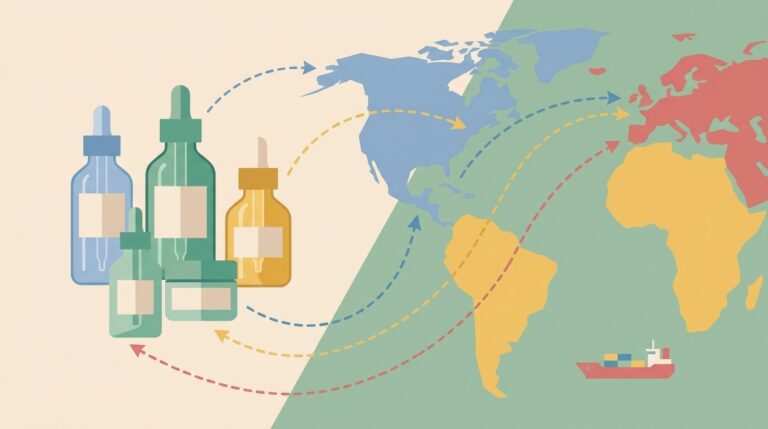
Picture this: You are sitting in an airy, sunlit boardroom in a sleek high-rise in Pangyo—Korea’s Silicon Valley. Across the polished oak table, the Executive Director of a top cosmetic conglomerate flips to a slide glowing with crimson downward arrows. For over a decade, China was the undisputed golden goose of K-Beauty, accounting for more than half of all export volumes. But today, the slide title reads in bold sans-serif: ‘탈중국과 신시장 개척’ (Decoupling from China and Pioneering New Markets). The room is silent except for the nervous clicking of a stylus. The sudden rise of China’s domestic brands (Guochao), shifting regulatory hurdles, and geopolitical turbulence have forced Korean beauty giants to make a seismic shift. If your Korean is limited to casual daily chitchat, this boardroom tension feels like an impenetrable wall of corporate metaphors and high-stakes trade jargon.
Mastering C2-level Korean in the beauty and cosmetic sector is not about reciting textbook definitions; it is about grasping how Korean boardrooms conceptualize risk, agility, and survival. Based on years of mentoring senior expats and corporate liaisons navigating Korea’s FMCG landscape, I have curated this guide to equip you with executive-level eloquence. By the end of this masterclass, you won’t just understand industry headlines—you will command the exact corporate discourse needed to debate market diversification, negotiate supply chains, and dissect global consumer trends in fluent, native-level Korean.
Phase 2: Core Expressions In-Depth (C2 Level)
1. 탈중국 행보를 본격화하다 (Tal-jung-guk haeng-bo-reul bon-gyeok-hwa-ha-da)
- Pronunciation: [Tal-jung-guk haeng-bo-reul bon-gyeok-hwa-ha-da] (Think: “Tahl-joong-gook hang-bo-rul bon-gyuk-hwa-ha-da”)
- Meaning: Literal: To regularize the step away from China. / Nuance: To officially accelerate the strategic decoupling/diversification away from over-reliance on the Chinese market.
- K-Culture Moment: Frequently headlined on SBS Biz and Korea Economic Daily, as well as corporate boardroom dramas like Agency (대행사) when marketing executives pivot campaigns from Shanghai to North America.
- Editor’s Insight: The prefix ‘탈-’ (tal, 脱) denotes escaping, transcending, or departing from a fixed paradigm. Pairing it with ‘행보’ (stride/footstep) and ‘본격화하다’ (to launch in full swing) creates an authoritative, strategic proclamation rather than a mere admission of defeat.
- Situation Spectrum: Casual 🚫 | Semi-formal ⚠️ | Formal ✅
- 🤔 Think About It: How does your native language frame corporate retreats? In Korean business culture, moving away from a market is rarely termed a “retreat” (철수); it is reframed proactively as an “assertive stride forward” (행보).
2. 판을 새로 짜다 (Pan-eul sae-ro jja-da)
- Pronunciation: [Pan-eul sae-ro jja-da] (Think: “Pahn-eul seh-ro jjah-dah”)
- Meaning: Literal: To re-weave the board/mat. / Nuance: To completely restructure the playing field, reinvent business models, or shift industry paradigms from scratch.
- K-Culture Moment: Heard in corporate strategy thrillers like Midas or when venture capital founders in Seongsu-dong discuss resetting distribution channels after a major geopolitical disruption.
- Editor’s Insight: Derived from traditional board games (Baduk or Yutnori), ‘판’ represents the game arena. Saying ‘전략을 수정하다’ (to modify strategy) sounds pedestrian; saying ‘판을 새로 짜다’ demonstrates bold, visionary leadership ready to tear down outdated infrastructure.
- Situation Spectrum: Casual ✅ | Semi-formal ✅ | Formal ✅
- 🤔 Think About It: Why do Koreans view systemic market shifts through game-board metaphors? Consider how collective game frameworks emphasize holistic realignment rather than isolated tactical changes.
3. 체질 개선에 사활을 걸다 (Che-jil gae-seon-e sa-hwal-eul geol-da)
- Pronunciation: [Che-jil gae-seon-e sa-hwal-eul geol-da] (Think: “Cheh-jeel geh-sun-eh sah-hwah-leul gull-dah”)
- Meaning: Literal: To stake one’s life or death on improving bodily constitution. / Nuance: To wage everything on deep structural transformation and financial resilience.
- K-Culture Moment: Used by CEOs in shareholder meetings when transitioning legacy cosmetic brands into biotech-driven clean beauty and indie D2C models.
- Editor’s Insight: ‘체질’ (constitution/physique) views an enterprise as a living, breathing biological entity. ‘사활을 걸다’ (staking life and death) elevates the mandate to an existential urgency that galvanizes internal stakeholders.
- Situation Spectrum: Casual 🚫 | Semi-formal ⚠️ | Formal ✅
- 🤔 Think About It: Contrast the mechanical metaphors of the West (“fine-tuning the engine”) with the biological and existential metaphors (“reforming physical constitution”) in Korean corporate philosophy.
Phase 3: Textbook Korean vs. Real Korean
Situation 1: Analyzing local Chinese brand resurgence (Guochao)
- 📖 교과서 한국어 (Textbook Korean):
중국 현지 화장품 브랜드들의 시장 점유율이 지속적으로 증가하고 있습니다.
(Jungguk hyeonji hwajangpum beuraendeudeul-ui sijang jeomyuyul-i jisokjeok-euro jeunggahago itseumnida. – The market share of local Chinese cosmetic brands is continuously increasing.) - 🗣️ 진짜 한국어 (Real Native Business Korean):
궈차오 열풍에 밀려 K-뷰티의 입지가 좁아진 만큼, 특단의 대책이 필요합니다.
(Gwachao yeolpung-e millyeo K-byuti-ui ipji-ga job-ajin mankeum, teukdan-ui daechaek-i piryohamnida. – Squeezed out by the Guochao frenzy, K-Beauty’s foothold has drastically narrowed, necessitating extraordinary measures.) - 💡 왜 다를까? (Why is it different?): Textbook phrasing relies on passive, dry statistical reporting. Executive Korean employs dynamic socio-cultural phenomena (‘궈차오 열풍’) and spatial idioms (‘입지가 좁아지다’ – one’s standing room has narrowed) to convey urgency.
Situation 2: Shifting export focus to North America and Japan
- 📖 교과서 한국어 (Textbook Korean):
우리는 미국과 일본 시장으로 화장품 수출을 다변화할 계획을 가지고 있습니다.
(Uri-neun miguk-gwa ilbon sijang-euro hwajangpum suchul-eul dabyeonhwahal gyehoek-eul gajigo itseumnida. – We have plans to diversify cosmetic exports into the US and Japanese markets.) - 🗣️ 진짜 한국어 (Real Native Business Korean):
북미와 일본을 거점 삼아 인디 브랜드 중심의 포트폴리오 다변화에 드라이브를 걸고 있습니다.
(Bungmi-wa ilbon-eul geojeom sama indi beuraendeu jungsim-ui poteupolrio dabyeonhwa-e deuraibeu-reul geolgo itseumnida. – Using North America and Japan as strategic footholds, we are aggressively driving portfolio diversification centered around indie brands.) - 💡 왜 다를까? (Why is it different?): Advanced professionals utilize energetic action verbs such as ‘거점 삼다’ (to use as a foothold/beachhead) and the corporate Konglish idiom ‘드라이브를 걸다’ (to drive/accelerate an initiative aggressively).
Phase 4: K-Culture Deep Dive & Non-Verbal Manners
4-1. 눈치 (Nunchi) & Boardroom Non-Verbal Manners
When delivering bleak market metrics to Korean executives regarding the China slump, never deliver blunt, unvarnished numbers outright. Executive Korean relies heavily on hedging grammar to preserve collective harmony while making the gravity unmistakable:
* The Head Tilt and Eye Trajectory: Deliver bad news while keeping your gaze slightly lowered toward the executive summary slide, shifting eye contact to senior leaders only when proposing the corrective pivot.
* Strategic Hedging: Replace abrupt negatives like “망했습니다” (it failed) with softened evaluative hedges: “다소 조정 국면에 접어든 모양새입니다” (It appears to have entered a period of somewhat sluggish market adjustment). This demonstrates executive maturity and emotional poise.
4-2. Cultural Code Analysis: The Olive Young Effect & Global K-Pop Synergies
K-Beauty’s survival playbook relies on a structural shift: the decline of multi-step skin routines targeted at East Asian luxury counters and the astronomical rise of functional “Clean Beauty” curated by platforms like Olive Young. As third- and fourth-generation K-pop idols become ambassadors for diverse global skin tones, the industry has decoupled from traditional whitening (미백) formulas, refocusing on microbiome, barrier-repair, and sun protection tailored for Western and Middle Eastern regulatory environments. Discussing this shift in Korean demonstrates cultural fluency spanning industrial policy and pop-culture synchronization.
Phase 5: Real-World Roleplay Scenario
Setting: A strategy conference room at an emerging K-Beauty brand incubator in Seongsu-dong.
Characters:
* Executive Director Park (박 전무): A sharp, veteran director who built his career on China sales and is now spearheading global restructuring.
* You (글로벌 전략팀장): Head of the Global Strategy Team tasked with presenting the Western hemisphere expansion plan.
박 전무 (Executive Director Park):
중국 광군제 실적이 기대치에 한참 못 미쳤더군요. 대중국 의존도를 낮추지 않고는 생존 자체가 위태롭습니다.
(Jungguk gwang-gun-je siljeok-i gidaechi-e hancham mot michyeotdeogunyo. Daejungguk uijondo-reul natchuji ankoneun saengjon jache-ga witaeropseumnida.)
“Our Double 11 results in China fell far short of expectations. Without lowering our dependency on China, our very survival is in jeopardy.”
🎭 Frowning, taps a pen against the printed revenue chart.
You:
네, 전무님. 현지 궈차오 트렌드가 공고해지면서 K-뷰티 프리미엄이 예전만 못한 것이 현실입니다.
(Ne, jeonmunim. Hyeonji gwachao teurendeu-ga gong-gohaejimyeonseo K-byuti peurimieom-i yejeonman mothan geos-i hyeonsirimnida.)
“Indeed, Director Park. As the local Guochao trend solidifies, the historical K-Beauty premium has objectively eroded.”
🎭 Nodding with a calm, analytical expression while opening the North America deck.
박 전무 (Executive Director Park):
그렇다면 대체재로 내세운 북미와 유럽 시장 진출 로드맵은 어떻게 구체화되고 있습니까?
(Geureotdamyeon daechaejae-ro naese-un bungmi-wa yureop sijang jinchul rodeumaep-eun eotteoke guchaehwadoego itseumnikka?)
“Then how is the roadmap shaping up for North America and Europe, which we proposed as alternatives?”
🎭 Leaning forward, resting elbows on the table with intense curiosity.
You:
현지 뷰티 유통 체인과 협력해 세포라와 얼타 입점을 목표로 판을 새로 짜고 있습니다.
(Hyeonji byuti yutong che-in-gwa hyeopryeokhae Sepora-wa Eolta ipjeom-eul mokpyo-ro pan-eul sae-ro jja-go itseumnida.)
“We are reinventing the board by collaborating with local distribution chains to secure shelf space in Sephora and Ulta.”
🎭 Pointing smoothly with an open palm toward the North American distribution diagram.
박 전무 (Executive Director Park):
기존의 고가 기초 라인업 그대로 서구권 시장을 공략하기엔 무리가 있지 않겠어요?
(Gijon-ui goga gicho rain-eop geudaero seogu-gwon sijang-eul gongryakhagi-en muri-ga itji anketseoyo?)
“Wouldn’t it be reckless to target Western markets with our existing high-end skincare line unchanged?”
🎭 Narrowing eyes, probing for strategic vulnerability.
You:
맞습니다. 그래서 기능성 선케어와 비건 라인업으로 체질 개선에 사활을 걸고 제품군을 전면 리뉴얼 중입니다.
(Majeumnida. Geuraeseo gineungseong seonkeo-wa bigeon rain-eop-euro che-jil gae-seon-e sa-hwal-eul geolgo jepumgun-eul jeonmyeon rinyueol jung-imnida.)
“Precisely. That is why we are staking everything on structural renewal, revamping the product lineup entirely around functional suncare and vegan formulas.”
🎭 Speaking in a firm, resolute tone while displaying prototype minimalist packaging.
박 전무 (Executive Director Park):
좋습니다. 결국 이번 위기를 체질 개선의 모멘텀으로 삼아 수출 다변화를 조기에 달성해야 합니다.
(Joeumnida. Gyeolguk ibeon wigi-reul che-jil gae-seon-ui momenteom-euro sama suchul dabyeonhwa-reul jogi-e dalseonghaeya hamnida.)
“Agreed. Ultimately, we must turn this crisis into the momentum for structural overhaul and achieve early export diversification.”
🎭 Nodding in approval, clasping hands together.
You:
탈중국 행보를 본격화하는 동시에 인디 브랜드 특유의 기동성으로 승부수를 띄우겠습니다.
(Tal-jung-guk haeng-bo-reul bon-gyeok-hwa-haneun dongsi-e indi beuraendeu teuk-yu-ui gidongseong-euro seungbusu-reul ttiewugetseumnida.)
“While accelerating our strategic pivot from China, we will play our decisive winning hand through the agility unique to indie brands.”
🎭 Standing up slightly to bow with confident posture.
🔀 Interactive Branching Moment
The Executive Director asks: “동남아와 중동 시장에 대한 진출 우선순위는 어떻게 설정할 겁니까?” (How will you prioritize entry into Southeast Asia and the Middle East?)
- Option A: “단순히 현지 인플루언서 마케팅 예산을 두 배로 늘려 인지도를 높이겠습니다.” (We will simply double the local influencer budget to boost awareness.)
- Feedback (Bad): Too operational and superficial for a C2 strategist. Demonstrates lack of regulatory and logistical depth.
- Option B: “할랄 인증 규제와 고온다습한 기후 특성을 반영한 현지 맞춤형 제품으로 틈새시장을 집중 타깃하겠습니다.” (We will target niche markets with localized formulations addressing Halal certifications and hot, humid climates.)
- Feedback (Best): Flawless C2 executive phrasing. Connects regulatory compliance (할랄 인증), climate localization (기후 특성), and market segmentation (틈새시장).
- Option C: “중국 시장 실적이 회복될 때까지 해당 지역 투자는 전면 보류하는 것이 안전합니다.” (It is safest to withhold all investments in those regions until China market sales recover.)
- Feedback (Risk): Displays severe risk aversion and contradicts the mandate of export diversification (수출 다변화), likely causing the boardroom to lose confidence in your strategic initiative.
Phase 6: 10-Second Emotional Shadowing Drill
Practice reading these sentences aloud, honoring the pause markers (/) and the corresponding emotional mindsets:
- [🔥 단호하고 결단력 있게 – Firm and Decisive]
탈중국 행보를 본격화하여 / 서구권 시장으로 / 판을 새로 짜야만 합니다.
(Tal-jung-guk haeng-bo-reul bon-gyeok-hwa-hayeo / seogu-gwon sijang-euro / pan-eul sae-ro jjayaman hamnida.) -
[📉 냉철하고 객관적인 톤으로 – Cool and Analytical]
단순한 단기적 부진이 아니라, / 구조적 변화인 만큼 / 체질 개선에 사활을 걸어야 합니다.
(Dansunhan dangijeok bujin-i anira, / gujojeok byeonhwa-in mankeum / che-jil gae-seon-e sa-hwal-eul georeo-ya hamnida.) -
[🤝 설득력 있고 확신에 찬 어조 – Persuasive and Confident]
북미 유통 채널 입점을 거점 삼아 / 글로벌 포트폴리오의 안정성을 / 완성해 내겠습니다.
(Bungmi yutong chaeneol ipjeom-eul geojeom sama / geullobeol poteupolrio-ui anjeongseong-eul / wanseonghae naegetseumnida.)
Phase 7: K-Culture Mini Dictionary
-
궈차오 (Guochao / Gwachao)
Meaning: China’s national wave or consumer patriotism trend.
Usage: Refers to Chinese Gen Z consumers favoring domestic brands over international labels; frequently cited in Korean financial analysis to explain drops in cosmetics and consumer goods exports. -
판로 개척 (Pan-ro gae-cheok)
Meaning: Pioneering sales channels / opening distribution pipelines.
Usage: Essential B2B vocabulary when signing overseas wholesale contracts or securing placement on global platforms such as Amazon, Shopee, or Rakuten. -
현지화 전략 (Hyeon-ji-hwa jeon-ryak)
Meaning: Localization strategy.
Usage: Adapting packaging, shade ranges, scents, and marketing semantics to align strictly with local cultural and regulatory norms. -
틈새시장 (Teum-sae-si-jang)
Meaning: Niche market.
Usage: Highlighting under-served market segments (e.g., gentle barrier-soothing creams for sensitive skin in dry climates) to avoid direct clashes with multinational conglomerates.
Phase 8: Survival Kit for Industry Professionals & Travelers
Top 3 Executive Survival Expressions
-
이 제품의 바이어 상담 카탈로그를 받아볼 수 있을까요?
(I jepum-ui baieo sangdam katallogeu-reul badabol su isseulkkayo?)
Translation: “Could I receive the buyer consultation catalog for this product?”
Pro Tip: Use this at beauty expos (like InterCHARM Korea or Cosmobeauty Seoul) to distinguish yourself immediately as a commercial buyer rather than a retail browser. -
현지 규제 인증(FDA/CPNP 등) 취득 여부를 확인하고 싶습니다.
(Hyeonji gyuje injeung chwideuk yeobu-reul hwaginhago sipseumnida.)
Translation: “I would like to verify whether overseas regulatory certifications (FDA, CPNP, etc.) have been acquired.”
Pro Tip: Demonstrates institutional diligence before entering contract discussions. -
최소 주문 수량(MOQ)과 납기 일정이 어떻게 됩니까?
(Choeso jumun suryang-gwa napgi iljeong-i eotteoke doemnikka?)
Translation: “What is the minimum order quantity (MOQ) and delivery schedule?”
Pro Tip: The universal, essential phrase for factory negotiations in Incheon or Gyeonggi beauty clusters.
Editor’s Travel Note: Field Guide for Seoul’s Beauty Districts
- When conducting market research, head straight to Seongsu-dong flagship stores (like Amore Seongsu) rather than the older tourist-heavy streets of Myeongdong. Seongsu functions as the incubator for cutting-edge pop-up retail concepts.
- Download the Olive Young Global Official App to cross-reference domestic vs. international product rankings in real-time.
- For seamless transport across cosmetic manufacturing districts in Pangyo and Incheon, rely on the Naver Map Route Planner, as foreign mapping platforms do not provide complete pedestrian navigation data inside Korean commercial hubs.
Phase 9: “One Step Deeper” (Reflective Humanities Column)
Korean corporate culture has long been governed by the dual concept of ‘위기’ (crisis), which etymologically pairs the character for danger (危, 위) with opportunity (機, 기). Because the Korean peninsula’s rapid modernization was forged through continuous structural resets—from the 1997 IMF Asian Financial Crisis to the unexpected China tourism halts—Korean corporate leadership rarely views market loss as terminal ruin. Instead, a crisis triggers a cultural reflex known as ‘체질 개선’ (constitutional restructuring): a collective, relentless drive to shed inefficiencies, abandon complacency, and redesign the entire paradigm. When you discuss K-Beauty’s market diversification in Korean, you are speaking the language of a nation that views adversity as a catalytic prerequisite for reinvention.
💬 Your Turn: How does your home country’s business ecosystem react when a dominant export market abruptly closes? Share your perspective in the comments using at least one advanced business expression learned today!
Phase 10: FAQ & Avoiding Misunderstandings
Q: Is it considered impolite or overly dramatic to say ‘사활을 걸다’ (staking life and death) in a standard corporate presentation?
A: Not at all! In senior management, board meetings, and high-stakes journalism, ‘사활을 걸다’ is standard idiomatic parlance. It signals extraordinary dedication, executive resolve, and seriousness. However, do avoid using it for trivial daily tasks—saying you stake your life on ordering lunch will sound absurdly comedic.
Q: How does ‘탈중국’ differ from simply saying ‘중국 사업 철수’?
A: ‘철수’ (cheol-su) implies total withdrawal, surrender, and retreat, which can cause brand valuation drops and investor panic. ‘탈중국’ (tal-jung-guk) frames the action strategically as diversification, structural decoupling, and proactive risk management while keeping baseline trade channels open.
Q: Can I use ‘판을 새로 짜다’ in personal contexts, or is it strictly business?
A: It is delightfully versatile! While frequent in corporate strategy, you can use it among friends when completely resetting study routines, redesigning a living space, or restructuring personal career goals.
🚨 Common Mistakes Alert (외국인 학습자의 흔한 실수 TOP 3)
- Mistake: Saying “중국에서 도망쳐야 합니다” (We must run away from China).
- Correct Action: Use “대중국 의존도를 낮추고 수출 다변화를 꾀해야 합니다” (We must lower reliance on China and pursue export diversification). Never use emotive, cowardly terms like “도망치다” in professional settings.
- Mistake: Overusing “바꾸다” (to change) for sophisticated corporate restructuring.
- Correct Action: Upgrade to “체질을 개선하다” (reform corporate constitution) or “패러다임을 전환하다” (shift paradigm).
- Mistake: Pronouncing ‘탈중국’ with separated, unnatural pauses like [tal / jung / guk].
- Correct Action: Pronounce it fluidly as a single compound concept: [Tal-jung-guk].
Phase 11: Action Mission & Engagement
- 🥉 Bronze Level (Solo Practice): Record yourself reading the Phase 6 shadowing drills with appropriate emotional cadences. Listen back to confirm your rhythm pauses (
/) feel natural. - 🥈 Silver Level (Social Engagement): Find an article about K-Beauty on Naver News or LinkedIn, identify the word ‘수출 다변화’ or ‘탈중국’, and write a one-sentence Korean summary under the article.
- 🥇 Gold Level (Real-World Application): Craft a 3-sentence elevator pitch in Korean proposing an overseas expansion strategy for your favorite cosmetic product, utilizing ‘거점 삼아’, ‘판을 새로 짜다’, and ‘체질 개선’.
- 🎮 K-Culture Mission: Watch an episode of a Korean business-themed drama (such as Search: WWW or Agency) and spot three boardroom moments where speakers use bodily or spatial metaphors to deliver tough performance reviews.
Phase 12: Interactive Quiz Challenge
1. Contextual Selection
Which phrase is most appropriate for a VP addressing investors to explain that the company is abandoning its old sales model to pioneer new Western distribution channels?
A) 우리는 장사를 대충 다시 시작할 것입니다.
B) 기존의 한계를 극복하고 서구권을 중심으로 판을 새로 짜고 있습니다.
C) 중국을 완전히 버리고 도망치기로 결정했습니다.
Click to reveal answer & explanation
Correct Answer: B
Explanation: ‘판을 새로 짜다’ conveys confident, visionary restructuring. Option A uses colloquial low-register language (‘장사를 대충’), while Option C uses non-professional, panicky phrasing (‘버리고 도망치기로’).
2. Fill-in-the-Blank
중국의 애국 소비 열풍인 [ ] 현상으로 인해 국내 화장품 브랜드의 입지가 좁아졌습니다.
(Due to the [ ] phenomenon of Chinese patriotic consumption, domestic cosmetic brands have seen their market foothold narrow.)
Click to reveal answer
Correct Answer: 궈차오 (Guochao)
Explanation: 궈차오 refers directly to the surge of domestic consumer nationalism in China that displaced foreign cosmetic imports.
3. True or False Cultural Protocol Quiz
Statement: When reporting catastrophic foreign sales declines in a Korean corporate board meeting, pointing directly at the numbers and declaring blunt failure without using hedging expressions demonstrates executive honesty and will be welcomed by Korean senior management. (True / False)
Click to reveal answer
Correct Answer: False
Explanation: Unmitigated bluntness often breaches non-verbal ‘Nunchi’ etiquette. C2 professionals frame poor figures through analytical hedging (e.g., ‘조정 국면에 접어들었습니다’) paired immediately with proactive strategic pivots (‘체질 개선의 계기로 삼겠습니다’).







