

Phase 1: Empathy (Opening Story)
안녕하세요! 매일한글 에디터입니다. (Annyeonghaseyo! It’s your Daily Hangul editor here.)
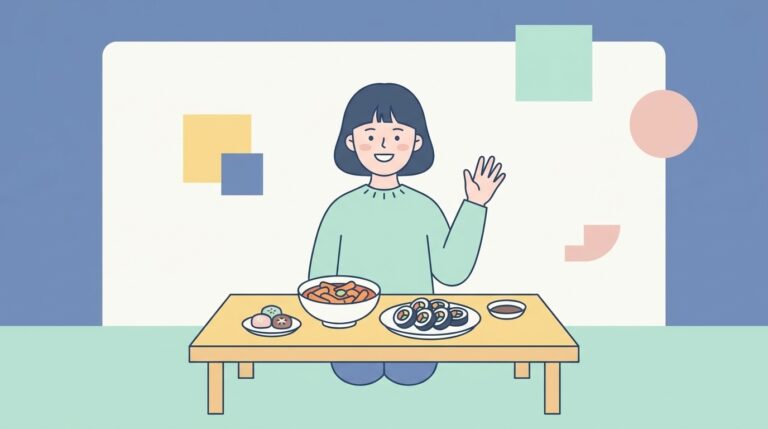
Picture this: It is 11:30 PM on a Friday night in Seoul. You are hanging out with your Korean friends in a bustling Hongdae apartment or watching your favorite K-drama variety show. Suddenly, the doorbell rings. The magical aroma of golden, crispy Korean fried chicken (chimaek) and bubbling, spicy tteokbokki fills the room. Your friends break into cheers, pop open the soda cans, and hand you a pair of wooden chopsticks with huge, expectant smiles.
Your stomach rumbles, but your mind flashes back to your fitness goals, your upcoming vacation photos, or your promised summer body. You freeze. You desperately want to say, “I’m on a diet!” or “I really need to lose weight!” But you worry: What if I sound rude? What if I kill the fun, celebratory vibe of the room?
Over the past ten years coaching international learners, this exact late-night dining dilemma has been one of the biggest beginner hurdles. In Korea, communal eating is deeply cherished, but here is the open secret: Koreans talk about dieting all the time! In fact, bonding over your diet struggle is one of the quickest ways to make friends in Korea. Today, we will master the exact beginner-friendly phrases you need to decline high-calorie temptations with warmth, humor, and polite cultural finesse.
Phase 2: Top 3 Core Expressions In-Depth
1. 살 빼야 해요 (Sal ppaeya haeyo)
- Pronunciation: [Sal ppaeya haeyo] (Sal sounds like “sahl” in salad + ppae sounds like “bbaek” without the k + ya + hay-yo)
- Meaning: Literal: “I must take off flesh.” vs Real Nuance: “I need to lose weight / I have to get in shape.”
- K-Culture Moment: A K-pop trainee looking in the dance studio mirror during a training montage, or a lead character pinching their cheek before a big romantic date.
- Editor’s Insight: The word 살 (sal) literally means flesh or body fat, and ‘-아/어야 해요’ means ‘must/need to’. While talking about “flesh” sounds intense in English, in Korean it is the most natural, down-to-earth way to discuss body weight.
- Situation Spectrum: Casual (⚠️ 살 빼야 돼 – to close friends) / Semi-formal (✅ 살 빼야 해요 – standard polite) / Formal (✅ 살 빼야 합니다 – fitness consultation)
- 🤔 Think About It: In English, we usually say “lose weight” (an abstract number), but Korean refers directly to sal (flesh/body). Why do you think Korean expresses body goals in such a tangible way?
2. 다이어트 중이에요 (Daieoteu jung-ieyo)
- Pronunciation: [Da-i-eo-teu jung-i-e-yo] (Da-i-eo-teu is the 4-syllable Korean rhythm for “diet” + joong-ee-yo)
- Meaning: Literal: “I am in the middle of a diet.” vs Real Nuance: “I am currently on a diet right now.”
- K-Culture Moment: At an office dinner (hoesik) when your manager tries to place another grilled pork belly slice on your plate, you deliver this line with a soft smile.
- Editor’s Insight: This phrase combines the English loanword 다이어트 with the grammar particle -중이에요 (in the middle of doing something). It is super beginner-friendly and instantly understood everywhere.
- Situation Spectrum: Casual (✅ 다이어트 중이야) / Semi-formal (✅ 다이어트 중이에요) / Formal (✅ 다이어트 중입니다)
- 🤔 Think About It: English loanwords are everywhere in modern Korean lifestyle vocabulary. How does using a recognized loanword help lower the pressure during social refusals?
3. 오늘은 참을게요 (Oneureun chameulgeyo)
- Pronunciation: [Oh-neu-reun cha-meul-ge-yo] (Oh-neul + reun + chahm like charm + eul-geh-yo)
- Meaning: Literal: “Today I will endure / hold back.” vs Real Nuance: “I will pass for tonight / I am holding back today.”
- K-Culture Moment: When your roommate asks, “Hey, do you want me to boil a pack of Shin Ramyun for you too?” at midnight.
- Editor’s Insight: The verb 참다 (chamda) means to endure, hold back, or exercise patience. Using this phrase shows that you appreciate the food and want to eat it, but you are exercising strong self-control. It flatters the person offering food!
- Situation Spectrum: Casual (✅ 오늘은 참을게) / Semi-formal (✅ 오늘은 참을게요) / Formal (⚠️ 오늘은 참겠습니다 – slightly stiff)
- 🤔 Think About It: Notice how this phrase focuses on self-control (enduring) rather than rejecting the host’s hospitality. Can you see how this preserves social harmony?
Phase 3: Textbook Korean vs Real Korean
Situation 1: Refusing late-night snacks (야식 / Yasik)
- 📖 교과서 한국어: 저는 음식을 먹지 않겠습니다. (Jeoneun eumsigeul meokji ankessseumnida. – I shall not consume food.)
- 🗣️ 진짜 한국어: 저 야식 끊었어요! (Jeo yasik kkeuneosseoyo! – I quit late-night snacking!)
- 💡 왜 다를까? The textbook phrase sounds like a formal declaration from a historical royal court. Saying 야식 끊었어요 creates instant laughter because every single Korean understands the epic battle against late-night delivery cravings!
Situation 2: Explaining why you are eating a light meal
- 📖 교과서 한국어: 저는 체중을 감량하고 있습니다. (Jeoneun chejungeul gamryanghago itsseumnida. – I am reducing my body mass.)
- 🗣️ 진짜 한국어: 저 요즘 관리 중이에요! (Jeo yojeum gwalli jung-ieyo! – I am managing myself these days!)
- 💡 왜 다를까? 관리 (gwalli) means management or self-care. Rather than sounding like a medical patient, saying you are 관리 중 sounds trendy, disciplined, and proactive.
Phase 4: K-Culture Deep Dive & Non-verbal Manners
4-1. 눈치 (Nunchi) & Polite Body Language
In Korea, flatly saying “아니요! (No!)” when offered food can sound sharp, as if you dislike the host’s taste. To decline with perfect Nunchi (social intuition):
1. The Gentle Belly Tap: Place one palm lightly over your stomach.
2. The Polite Hand Wave: Slightly wave your other hand back and forth near chest level (palm facing outward).
3. The Empathetic Tilt: Tilt your head slightly with a gentle, regretful smile that says, “I truly want to eat that chicken, but my willpower is being tested!”
4. Deliver the line: “정말 먹고 싶지만… 다이어트 중이에요! (Jeongmal meokgo sipjiman… daieoteu jung-ieyo! – I really want to eat, but I’m on a diet!)”
4-2. Cultural Code: “맛있게 먹으면 0칼로리!”
Have you ever heard Korean idols or variety show hosts shout “맛있게 먹으면 0칼로리!” (Masitge meogeumyeon yeong-kallori! – If you eat happily, it has zero calories!)? While scientifically questionable, it is Korea’s favorite collective joke to soothe food guilt. When your Korean friends say this to tempt you, they aren’t being mean—they are showing affection by inviting you to indulge together. Understanding this helps you playfully deflect without taking offense!
Phase 5: Real-Life Roleplay Scenario
Setting: A vibrant, shared kitchen in a Hongdae guesthouse at 10 PM.
NPC Character: Minji (민지) – Your cheerful Korean roommate who just brought back a box of piping-hot fried chicken.
- Minji: “치킨 시켰는데 같이 먹을래요? (Chikin sikyeonneunde gachi meogeullaeyo? – I ordered chicken, want to eat together?)”
🎭 holds out the steaming box with a sunny grin - Learner: “우와, 냄새 진짜 좋아요! (Uwa, naemsae jinjja joayo! – Wow, it smells so good!)”
🎭 sniffing the air with a tempted expression - Minji: “얼른 와요! 방금 나와서 진짜 바삭해요. (Eolleun wayo! Banggeum nawaseo jinjja basakhaeyo. – Come quickly! It just arrived, so it’s super crispy.)”
🎭 pulls out an extra chair and hands you wooden chopsticks - Learner: “정말 먹고 싶지만… 저 살 빼야 해요. (Jeongmal meokgo sipjiman… jeo sal ppaeya haeyo. – I really want to eat, but… I need to lose weight.)”
🎭 places hand on stomach with an apologetic smile - Minji: “에이, 오늘만 먹어요! 맛있게 먹으면 0칼로리예요! (Ei, oneulman meogeoyo! Masitge meogeumyeon yeong-kallori-yeyo! – Aw, just for tonight! If it tastes good, it’s zero calories!)”
🎭 playfully waves a drumstick in front of you - Learner: “아니에요, 오늘은 참을게요. (Anieyo, oneureun chameulgeyo. – No thanks, I will hold back for today.)”
🎭 shakes head gently and takes a sip of iced water - Minji: “대단해요! 의지가 정말 강하네요. (Daedanhaeyo! Uijiga jeongmal ganghanaeyo. – Wow, impressive! You have such strong willpower.)”
🎭 gives a thumbs up with genuine respect - Learner: “고마워요! 내일 아침에 같이 샐러드 먹어요. (Gomawoyo! Naeil achime gachi saelleodeu meogeoyo. – Thank you! Let’s eat salad together tomorrow morning.)”
🎭 smiles and laughs warmly
🔀 Interactive Decision Point
How will you answer when Minji tempts you with the drumstick?
* Option A: “살 빼야 해요, 치킨 치워주세요! (Sal ppaeya haeyo, chikin chiwojuseyo! – I need to lose weight, take the chicken away!)”
Feedback: Bad. Telling someone to remove their food is far too harsh and will cause instant awkward silence.
* Option B: “저 다이어트 중이라서 오늘은 참을게요! (Jeo daieoteu jung-iraseo oneureun chameulgeyo! – I’m on a diet, so I’ll hold back today!)”
Feedback: Best. Sweet, polite, clear, and perfectly respectful of the gesture.
* Option C: “안 먹어요. (An meogeoyo. – I don’t eat.)”
Feedback: Risk. Blunt and cold. Minji might wonder if you are angry at her.
Phase 6: 10-Second Emotion Shadowing Drill
Practice reading these out loud, pausing at the slashes (/) and channeling the tagged emotion!
[🥺 아쉽고 애교 섞어서 - Regretful and playful]
저 / 살 빼야 해요… / 유혹하지 마세요!
(Jeo / sal ppaeya haeyo… / yuhokhaji maseyo! / “I… need to lose weight… don’t tempt me!”)-
[💪 비장하고 당당하게 - Determined and firm]
오늘은 / 진짜 / 참을게요!
(Oneureun / jinjja / chameulgeyo! / “Today… I will really… hold back!”) -
[😂 웃프고 장난스럽게 - Self-mocking and comedic]
내일부터 / 다이어트 / 할게요!
(Naeilbuteo / daieoteu / halgeyo! / “Starting tomorrow… I will do… my diet!”)
Phase 7: K-Culture Mini Dictionary
- 야식 (Yasik) | Late-night meal/snack
Usage: Midnight delivery food culture in Korea (ramyeon, chicken, jokbal). It is the number one enemy of every Korean diet. - 유지어터 (Yujieoteo) | Weight maintainer
Usage: A hybrid of “유지” (yuji – maintain) and “다이어터” (dieter). Refers to someone who reached their goal weight and is working hard to keep it. - 치팅데이 (Chitingdei) | Cheat day
Usage: Borrowed directly from English. Young Koreans use this to announce the one blessed day of the week when they feast without guilt. - 눈바디 (Nunbadi) | Visual body check
Usage: A portmanteau of “눈” (nun – eye) and “인바디” (InBody body-composition scale). It means checking your physique progress in the mirror rather than obsessing over the scale.
Phase 8: Traveler’s Survival Kit
Top 3 Survival Expressions at Korean Restaurants
- 덜 달게 해주세요 (Deol dalge haejuseyo)
Translation: “Please make it less sweet.”
Pro Tip: Essential when ordering fruit juices, iced teas, or lattes at trendy cafes. - 소스는 따로 주세요 (Soseuneun ttaro juseyo)
Translation: “Please serve the sauce on the side.”
Pro Tip: Perfect for tonkatsu (pork cutlet) or salads so you can control your calorie intake. - 밥 조금만 주세요 (Bap jogeumman juseyo)
Translation: “Please give me just a small portion of rice.”
Pro Tip: Shows respect for the restaurant owner by reducing food waste while cutting carbs.
Editor’s Travel Note
When traveling across Korea while watching your calories, don’t worry about starving! Use the 네이버 지도 앱 다운로드 (Naver Map app) to search for 샐러드 (Salad) or 포케 (Poke). You will find thousands of boutique fresh-salad bars across major subway stations. Furthermore, walk into any local convenience store (CU, GS25, or 7-Eleven) to pick up 감동란 (Gamdongran – seasoned soft-boiled eggs) and 닭가슴살 소시지 (chicken breast sausage bars) for quick, high-protein snacks on the go!
Phase 9: Deep Reflection (“한 발 더 깊이”)
In Korean culture, food is the universal love language of Jeong (정 – deep affection and communal attachment). Asking someone “밥 먹었어요?” (Have you eaten?) is a standard greeting equivalent to “How are you?”. When you say no to an offer of food, a Korean host’s instinctive concern is that you might be uncomfortable or hungry.
That is why clarifying why you are not eating—with phrases like 살 빼야 해요 (Sal ppaeya haeyo) or 다이어트 중이에요 (Daieoteu jung-ieyo)—is so liberating. You aren’t rejecting their kindness; you are sharing a deeply relatable personal challenge. It turns an awkward barrier into a warm moment of shared human empathy.
💬 Your Turn: Have you ever struggled to stay healthy while traveling or hanging out with foodie friends? How do you say “I’m on a diet” in your home language? Share your stories in the comments below!
Phase 10: FAQ & Common Mistakes
Q: Is it considered impolite to tell an elder or boss that I am on a diet in Korea?
A: Not at all! Just make sure to use polite language: 다이어트 중이에요 (Daieoteu jung-ieyo) or 관리 중입니다 (Gwalli jung-imnida). Acknowledge that the meal looks incredible first, and nobody will take offense.
Q: What is the exact difference between 살 빼다 and 다이어트하다?
A: 살 빼다 (sal ppaeda) specifically means “losing fat/body mass” (the physical result), whereas 다이어트하다 (daieoteuhada) refers to the whole routine or lifestyle of dieting (eating clean, working out). In casual conversation, both are used interchangeably.
Q: How can I order low-calorie coffee at a Korean cafe?
A: Simply say: “시럽 빼주세요 (Sireop bpaejuseyo – Please omit the syrup)” or ask for oat milk: “오트 밀크로 바꿔주세요 (Oteu milkeuro bakkwojuseyo – Please substitute with oat milk).”
🚨 Common Mistakes Warning Board
- Mistake 1: Translating “I lost weight” as “살을 잃어버렸어요”
Why it’s wrong: 잃어버리다 (ireobeorida) is used when you lose your wallet or keys!
Correct Action: Say 살 빠졌어요 (Sal ppajyeosseoyo – The weight came off). - Mistake 2: Shouting “안 먹어요! (An meogeoyo!)”
Why it’s wrong: This sounds like a stubborn child yelling “I won’t eat!”.
Correct Action: Say 생각 없어요 (Saenggak eopseoyo – I’m okay for now) or 오늘은 참을게요 (Oneureun chameulgeyo). - Mistake 3: Self-deprecating with “저는 뚱뚱해요”
Why it’s wrong: Bluntly calling yourself “fat” creates awkward tension for everyone around you.
Correct Action: Keep it positive and forward-looking with 살 빼야 해요 (Sal ppaeya haeyo).
Phase 11: Action Missions
- 🥉 Bronze Mission (Solo Practice): Stand in front of your mirror. Practice the belly-tap and hand-wave gesture while smiling and saying: “살 빼야 해요! (Sal ppaeya haeyo!)” three times.
- 🥈 Silver Mission (Social Share): Snap a picture of your healthy meal or water bottle, post it on social media, and caption it: “오늘부터 다이어트! #DailyHangul”.
- 🥇 Gold Mission (Real-life Execution): The next time a coworker, friend, or roommate offers you a snack, decline in Korean: “고맙지만 저 다이어트 중이에요! (Gomapjiman jeo daieoteu jung-ieyo!)”.
- 🎮 K-Culture Mission: Watch any episode of a Korean reality show (like I Live Alone or Omniscient Interfering View) and listen for how many times the cast members mention 다이어트 (diet) or 살 (weight)!
Phase 12: Interactive Quiz Challenge
1. Context Judgment:
Your Korean coworker offers you a box of fresh donuts at 3 PM. Which response is the most natural, polite A1 Korean?
* A) 음식 치워요! (Eumsik chiwoyo! – Remove the food!)
* B) 저 다이어트 중이에요, 마음만 받을게요! (Jeo daieoteu jung-ieyo, maeumman badeulgeyo! – I’m on a diet, I’ll take the thought!)
* C) 안 먹어! (An meogeo! – I won’t eat!)
2. Fill-in-the-Blank:
“I really want to eat late-night snacks, but I’ll hold back tonight!”
* 야식 먹고 싶지만 오늘은 ________! (참을게요 / 잊을게요)
3. True or False Culture Check:
* (True / False): Koreans consider it disrespectful to mention your diet when declining food from someone.
👉 Click here to reveal the answers and explanations!
- Answer: B
Explanation: “마음만 받을게요 (I will take only your kind heart/thought)” paired with “다이어트 중이에요” is the gold standard of polite refusal in Korea! -
Answer: 참을게요 (Chameulgeyo)
Explanation: 참다 means to endure or hold back willpower. (잊다 means to forget!) -
Answer: False
Explanation: Explaining that you are on a diet is widely respected in Korea and prevents the person offering food from feeling rejected!






