

Phase 1: Empathy (Story-immersive Opening)
안녕하세요! 매일한글 에디터입니다. (Hello! It’s your Daily Hangul editor.)
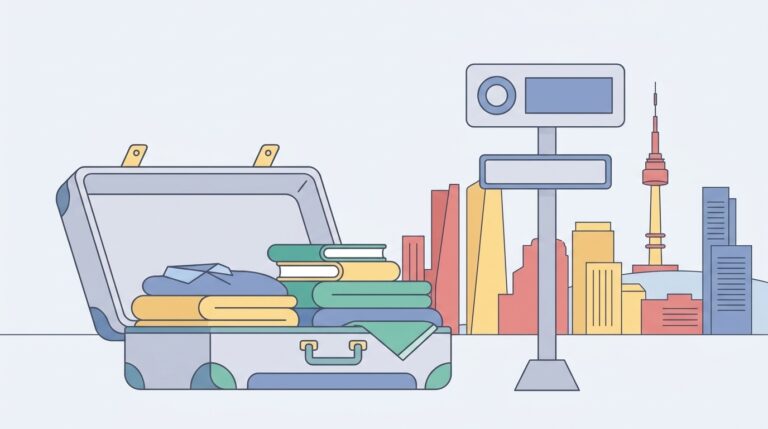
Picture this: You are in your room 48 hours before your flight to Incheon International Airport. Your bed looks like a department store exploded. You have laid out three cozy oversized cardigans, two pairs of combat boots, five face masks, two thermal cups, and a giant stash of snacks. You heave everything into your 28-inch suitcase, put your whole body weight onto the lid, and pray to the travel deities that the zipper won’t snap. But then cold reality hits: “How on earth am I going to haul this through the multi-story underground maze of Jongno 3-ga Station during morning rush hour?”
If you have ever stared helplessly at an overflowing bag while sweating through your shirt, you are certainly not alone! Packing anxiety is practically a rite of passage for every traveler heading to South Korea. Many of our intermediate learners tell us: “Editor, I knew how to say ‘my bag is heavy,’ but I sounded like a robot reading a manual when talking to my travel buddy!” Today, we are swapping out stiff dictionary phrases for the authentic, relatable expressions Koreans actually use when their bags are threatening to explode. Let’s make sure your Korean trip starts with zero stress and pure excitement!
Phase 2: Core Expressions Deep Dive
1. 짐이 너무 많아서 걱정이에요 (Jim-i neomu manhaseo geokjeong-ieyo)
- Pronunciation: [Jim-i neo-mu man-ha-seo geok-jeong-i-e-yo] (Pronounce ‘Jim’ like ‘Jeem’ in jeans, ‘neo-mu’ like ‘naw-moo’, and ‘geok’ with a quick, crisp stop in your throat.)
- Meaning: Literal: “Because the luggage is too much, it is a worry.” ➔ Real Nuance: “I’m really stressing out because I packed way too much stuff.”
- K-Culture Moment: You will hear this constantly on travel variety shows like Nana Tour or Youth MT, where celebrity cast members show up with oversized bags before hiking up a steep hill.
- Editor’s Insight: In Korean, 짐 (jim) means physical baggage or luggage, but it also poetically means an emotional burden. Coupling it with 걱정이에요 (geokjeong-ieyo – I’m worried) sounds incredibly genuine, gentle, and humble rather than demanding.
- Situation Spectrum: Casual: ✅ (짐이 너무 많아서 걱정이야) | Semi-formal: ✅ (짐이 너무 많아서 걱정이에요) | Formal: ✅ (짐이 너무 많아서 걱정입니다)
- 🤔 Think About It: In English, we often focus on our own action (“I overpacked!”). Korean often frames it as a situational state (“Luggage is abundant, leading to worry”). Notice how this subtly softens self-blame!
2. 캐리어에 다 안 들어갈 것 같아요 (Kaerieoe da an deureogal geot gatayo)
- Pronunciation: [Kae-ri-eo-e da an deu-reo-gal geot ga-ta-yo] (Think of ‘Kae-ri-eo’ sounding like ‘carrier’, and ‘deu-reo-gal’ flowing smoothly together.)
- Meaning: Literal: “It seems it will not all enter into the carrier.” ➔ Real Nuance: “I don’t think all of this is going to fit in my suitcase!”
- K-Culture Moment: The iconic K-Drama moving scene where a character sits on their hard-shell suitcase while their sibling or best friend desperately tries to zip it closed.
- Editor’s Insight: Forget the word “suitcase” when speaking everyday Korean! In modern South Korea, a wheeled travel bag is universally called a 캐리어 (kaerieo). If you say “수트케이스 (seuteukeiseu)”, people will understand, but 캐리어 is what 99% of locals actually say.
- Situation Spectrum: Casual: ✅ | Semi-formal: ✅ | Formal: ⚠️ (At airline check-in counters, staff will use formal terms like ‘위탁 수하물 (checked baggage)’. )
- 🤔 Think About It: Why do you think Korea adopted the Konglish word “캐리어 (carrier)” instead of Sino-Korean words for rolling luggage? How does language evolve around modern travel tech?
3. 짐 좀 줄여야겠어요 (Jim jom juryeoyagesseoyo)
- Pronunciation: [Jim jom ju-ryeo-ya-get-seo-yo] (Pronounce ‘jom’ softly like ‘chom’, and ‘ju-ryeo’ like ‘joo-ryuh’.)
- Meaning: Literal: “Luggage a little must reduce.” ➔ Real Nuance: “I really need to lighten my load / take some stuff out.”
- K-Culture Moment: When K-pop group members do an unboxing or packing vlog before a world tour, and their manager steps in to weigh their carry-on bag.
- Editor’s Insight: The secret weapon here is 좀 (jom – a little). Without “좀”, the sentence sounds like a strict military order to yourself. With “좀”, it sounds natural, approachable, and contemplative.
- Situation Spectrum: Casual: ✅ (짐 좀 줄여야겠어) | Semi-formal: ✅ (짐 좀 줄여야겠어요) | Formal: ✅ (짐을 좀 줄여야겠습니다)
- 🤔 Think About It: In Korean social dynamics, adding softening adverbs like “좀” signals emotional flexibility. Where else can you sprinkle “좀” into your daily requests?
Phase 3: Textbook Korean vs. Real Korean
- Situation 1: Describing a dangerously full suitcase
- 📖 교과서 한국어: “수하물의 용량이 부족하여 닫히지 않습니다.” (Suhamul-ui yongryang-i bujokhayeo dachiji anseumnida. – The baggage capacity is insufficient, so it does not close.)
- 🗣️ 진짜 한국어: “가방 터질 것 같아요!” (Gabang teojil geot gatayo! – My bag is about to burst!)
- 💡 왜 다를까? Textbook Korean sounds like an automated airline cargo broadcast! Real native speakers use punchy, highly visual verbs like 터지다 (teojida – to explode/burst) to express packing panic.
- Situation 2: Deciding to remove extra clothes
- 📖 교과서 한국어: “불필요한 물품을 제외하도록 하겠습니다.” (Bulpiryohan mulpum-eul jewehadorok hagesseumnida. – I will exclude unnecessary items.)
- 🗣️ 진짜 한국어: “짐 좀 빼야겠어요.” (Jim jom ppaeyagesseoyo. – I need to take some stuff out.)
- 💡 왜 다를까? In casual planning conversations, Koreans prefer light native action verbs like 빼다 (ppaeda – to pull out/remove) over rigid Sino-Korean vocabulary like 제외하다.
Phase 4: K-Culture Deep Dive & Non-Verbal Manners
4-1. 눈치 (Nunchi) & Metro Station Etiquette
If you have ever carried a 28-inch suitcase onto Seoul Subway Line 9 during evening rush hour (퇴근 시간), you know what true adrenaline feels like! Navigating crowded spaces with luggage requires top-notch 눈치 (nunchi – situational awareness):
* Keep It Tucked In: Never trail your suitcase five feet behind you on the station concourse. Pull it parallel to your leg or keep it right in front of your knees when standing on the train.
* The Apology Nod: If you accidentally bump someone’s ankle with your wheel, make quick eye contact, bow slightly at 15 degrees, and instantly whisper: “죄송합니다! (Joesonghamnida! – I am sorry!)”
* Elevator Priority: Older Seoul metro stations have notorious long flights of stairs known colloquially among travelers as 계단 지옥 (gyedan jiok – stair hell). If you take the elevator, yield space graciously to elderly passengers (어르신) before boarding with your heavy bags.
4-2. The Korean Travel Phenomenon: ‘Pack-Free Traveling’
Koreans love traveling light. Thanks to ultra-convenient infrastructure, you rarely see domestic travelers dragging monstrous bags across cities. High-speed rail stations (KTX) and major subway hubs operate modern smart locker networks called 물품보관함 (mulpumbogwanham) and same-day delivery services like Zimcarry (짐캐리) or T-Luggage, which transport your heavy bags directly from subway terminals to hotel front desks!
Phase 5: Real Role-Play Scenario
- Setting: A sunny café near Hongik University Station (Hongdae). You and your Korean friend Minho (민호), who travels with just a tiny backpack, are planning your weekend KTX trip to Busan over iced Americanos.
-
Characters:
- You: An enthusiastic traveler who brought winter coats, cameras, and gift boxes.
- Minho (민호): A seasoned Seoulite who values speed, agility, and minimal packing.
Dialogue:
1. You: “민호 씨, 제 캐리어 좀 보세요. 짐이 너무 많아서 걱정이에요.” (Minho-ssi, je kaerieo jom boseyo. Jim-i neomu manhaseo geokjeong-ieyo.) 🎭 [Looking down anxiously at your bulging 28-inch suitcase]
2. Minho: “어? 우리 2박 3일 여행인데 혹시 이민 가세요?” (Eo? Uri i-bak sam-il yeohaeng-inde hoksi imin gaseyo?) 🎭 [Chuckling playfully behind his iced coffee]
3. You: “부산 가서 예쁜 카페도 가고 사진도 찍으려니까 캐리어에 다 안 들어갈 것 같아요.” (Busan gaseo yeppeun kapedo gago sajindo jjigeuryeonikka kaerieoe da an deureogal geot gatayo.) 🎭 [Sighing and attempting to squeeze the zipper]
4. Minho: “내일 KTX 타러 서울역 갈 때 계단도 많이 올라가야 하잖아요.” (Naeil KTX tareo Seoulyeok gal ttae gyedando mani ollagaya hajanayo.) 🎭 [Pointing out the café window toward the subway entrance with a sympathetic smile]
5. You: “맞아요. 진짜 가방 터질 것 같아요. 짐 좀 줄여야겠어요.” (Majayo. Jinjja gabang teojil geot gatayo. Jim jom juryeoyagesseoyo.) 🎭 [Unzipping the top pocket and setting aside two heavy jackets]
6. Minho: “한국은 편의점이나 올리브영 가면 다 살 수 있으니까 옷이랑 화장품은 좀 빼요!” (Hanguk-eun pyeon-uijeom-ina Ollibeuyeong gamyeon da sal su isseunikka os-irang hwajangpum-eun jom ppaeyo!) 🎭 [Waving his hand reassuringly]
7. You: “그럴까요? 그래도 혹시 무거우면 역에 있는 물품보관함에 맡길 수 있죠?” (Geureolkkayo? Geuraedo hoksi mugeoumyeon yeog-e inneun mulpumbogwanham-e matgil su itjyo?) 🎭 [Eyes lighting up with relief]
8. Minho: “당연하죠! 역마다 코인락커가 잘 되어 있으니까 걱정 마세요.” (Dang-yeonhajyo! Yeongmada koin-rakkeoga jal doeeo isseunikka geokjeong maseyo.) 🎭 [Giving a firm, reassuring thumbs-up]
🔀 Interactive Branching Point: What would you reply next?
- Option A: “좋아요, 코트 두 개 빼고 가볍게 갈게요!” (Joayo, koteu du gae ppaego gabyeopge galgeyo! – Great, I’ll take out two coats and travel light!)
- Editor Feedback [Best Choice]: Perfect! You sound cooperative, practical, and culturally tuned-in to the ease of traveling light in Korea.
- Option B: “그냥 다 들고 갈게요. 운동 삼아 계단 오르죠 뭐!” (Geunyang da deulgo galgeyo. Undong sama gyedan oreujyo mwo! – I’ll just carry it all. Think of the stairs as a workout!)
- Editor Feedback [Risk Choice]: Sounds ambitious, but hauling 23kg up 70 steep concrete steps at subway transfer stations will make you regret this within 10 minutes!
- Option C: “민호 씨가 제 가방 좀 들어줄 수 있어요?” (Minho-ssiga je gabang jom deureojul su isseoyo? – Minho, can you carry my bag for me?)
- Editor Feedback [Bad Choice]: Asking a friend to carry your deliberately overpacked personal luggage puts unnecessary social burden on them. Save this only for real emergencies!
Phase 6: 10-Second Emotion Shadowing Drill
Read these aloud while matching the emotional markers and natural breath breaks (/):
[😰 초조하고 다급하게 - Anxious and stressed]
“짐이 / 너무 많아서 / 진짜 걱정이에요!”
(Jim-i / neomu manhaseo / jinjja geokjeong-ieyo!)-
[😮💨 한숨 쉬며 포기한 듯이 - Defeated with a deep sigh]
“캐리어 지퍼가 / 안 잠겨요… / 가방 터질 것 같아요.”
(Kaerieo jipeoga / an jamgyeoyo… / gabang teojil geot gatayo.) -
[💪 결심하며 시원하게 - Resolute and determined]
“안 되겠다! / 짐 좀 빼고 / 가볍게 출발할게요!”
(An doegetda! / Jim jom ppaego / gabyeopge chulbalhalgeyo!)
Phase 7: K-Culture Mini Dictionary
- 캐리어 (Kaerieo) | Noun | The standard Konglish word for wheeled luggage or suitcases. Always use this instead of trying to transliterate “rolling bag.”
- 짐 (Jim) | Noun | Luggage, baggage, or physical pack. Also commonly used metaphorically for duties or obligations that weigh heavily on someone.
- 물품보관함 / 코인락커 (Mulpumbogwanham / Koin-rakkeo) | Noun | Public electronic luggage storage lockers found inside almost all Korean subway stations and express bus terminals.
- 보부상 (Bobusang) | Noun (Slang) | Originally historical peddlers who carried massive bundles on their backs; modern Korean slang for a friend whose everyday bag contains absolutely everything (chargers, medicine, wet wipes, extra socks).
Phase 8: Traveler’s Survival Kit
Top 3 Survival Phrases
- “짐 여기 맡길 수 있나요?” (Jim yeogi matgil su innayo?)
- Meaning: Can I leave my luggage here?
- Pro Tip: Use this at hotel front desks before check-in or after check-out, or at tourist information centers.
- “캐리어 무게 좀 잴 수 있을까요?” (Kaerieo muge jom jael su isseulkkayo?)
- Meaning: Could I weigh my suitcase?
- Pro Tip: Most major hotels and Incheon Airport departure floors provide free electronic baggage scales.
- “엘리베이터가 어디에 있어요?” (Ellibeiteoga eodie isseoyo?)
- Meaning: Where is the elevator?
- Pro Tip: Save your knees! When arriving at unfamiliar metro transfer stations, ask the station attendant immediately.
Editor’s Travel Note
- Before arriving in Seoul, make sure you download the navigation app: 네이버 지도 앱 다운로드. It displays detailed wheelchair/elevator routes for every subway exit.
- If you are moving between cities or heading to the airport with big bags, explore the T-Luggage 사전 예약 서비스 to transfer your baggage hands-free directly through the metro system.
Phase 9: “한 발 더 깊이” (Cultural Reflection)
Korean urban life moves at lightning speed, designed around high-density vertical infrastructure. In a city where millions transition seamlessly across high-speed trains, buses, and subterranean networks every hour, physical space becomes a shared public commodity. Packing minimally is not merely a travel hack; it reflects the deep-rooted Korean concept of 배려 (baeryeo – mutual consideration). When your bags are compact and manageable, you move without obstructing fellow commuters or placing burdens on your companions.
💬 Your Turn: Are you a meticulous minimalist who travels with a carry-on, or a self-proclaimed 보부상 (bobusang) who packs for every possible weather scenario? Drop a comment below and tell us in Korean!
Phase 10: FAQ & Common Mistakes
Q: Can I take my 28-inch carrier on Seoul city buses?
A: While city buses allow luggage, bus drivers may legally refuse boarding during rush hours if your bag exceeds 50x40x20cm or blocks aisles. For large suitcases, the subway (지하철) or Airport Limousine bus is vastly safer and more comfortable.
Q: What is the difference between ‘가방’ and ‘캐리어’?
A: 가방 (gabang) is an umbrella term for any bag (backpack, tote, shoulder bag). 캐리어 (kaerieo) specifically refers to wheeled rolling suitcases.
Q: How do payment and keys work for station coin lockers (물품보관함)?
A: Modern Korean station lockers rarely use physical keys or cash coins! They operate via touchscreen kiosks where you enter your locker number, set a 6-digit pin code, and pay using T-Money, credit card, or KakaoPay.
🚨 Common Mistakes Alert!
- ❌ Mistake 1: Translating “My bag is full” literally as “내 가방이 찼어요” (Sounds unnatural).
- ✅ Correct Action: Say: “가방 터질 것 같아요!” or “더 이상 안 들어가요.”
- ❌ Mistake 2: Calling your suitcase a “수트케이스 (suit-case)” when talking to hotel clerks.
- ✅ Correct Action: Use the natural term: “캐리어 (kaerieo)”.
- ❌ Mistake 3: Leaving your rolling suitcase unlocked on a moving subway carriage.
- ✅ Correct Action: Keep a hand firmly on the handle or lay it on its side, as sudden train braking will send it rolling into other passengers!
Phase 11: Action Mission & Engagement
- 🥉 Bronze Mission (Solo): Look into your mirror, pretend your backpack is stuffed, and practice saying “가방 터질 것 같아요! 짐 좀 줄여야겠어요” 3 times smoothly.
- 🥈 Silver Mission (Social): Snap a photo of your travel essentials or suitcase, post it on social media, and tag our community with the caption: “짐이 너무 많아서 걱정이에요! #매일한글 #DailyHangul”.
- 🥇 Gold Mission (Real Life): When checking into your hotel or hostel in Korea, leave your bags before check-in using the full sentence: “체크인 전에 짐 좀 맡길 수 있나요?”
- 🎮 K-Culture Mission: Watch any travel-themed episode of Run BTS or Nana Tour and count how many times members make fun of someone’s oversized 캐리어!
Phase 12: Interactive Quiz Challenge
Test your knowledge before you zip up your bag!
1. Situational Judgment:
You are shopping in Myeongdong and just bought 10 boxes of sheet masks. Your suitcase is completely stuffed. What is the most natural sentence to express this to your friend?
* (A) 가방이 터질 것 같아요!
* (B) 가방이 사라졌어요.
* (C) 가방을 사고 싶지 않아요.
2. Fill-in-the-Blank:
“옷이 너무 두꺼워서 캐리어에 다 안 [______] 것 같아요.”
* (A) 나갈
* (B) 들어갈
* (C) 마실
3. True or False Culture Check:
In South Korea, you can have your heavy suitcases transported from subway stations directly to your hotel using luggage delivery services like T-Luggage. (True / False)
👉 Click here to check the answers and explanations!
- Answer: (A) 가방이 터질 것 같아요!
- Explanation: Expresses the vivid feeling of a bag being packed to bursting point. (B means ‘My bag disappeared’, C means ‘I do not want to buy a bag’).
- Answer: (B) 들어갈
- Explanation: 들어가다 (deureogada) means ‘to enter / to fit inside’. The full sentence means: “Because the clothes are so thick, I don’t think they will all fit into the suitcase.”
- Answer: True
- Explanation: Korea’s modern transport network features convenient smart luggage transfer systems connecting subway hubs, hotels, and airports!
- Explanation: Korea’s modern transport network features convenient smart luggage transfer systems connecting subway hubs, hotels, and airports!







