

How to Say “I Don’t Know” Politely in Korean: Refuse Favors Without Being Rude
Phase 1: Empathy (Story-Immersive Opening)
안녕하세요! 매일한글 에디터입니다. (Annyeonghaseyo! I’m your Daily Hangul editor.)
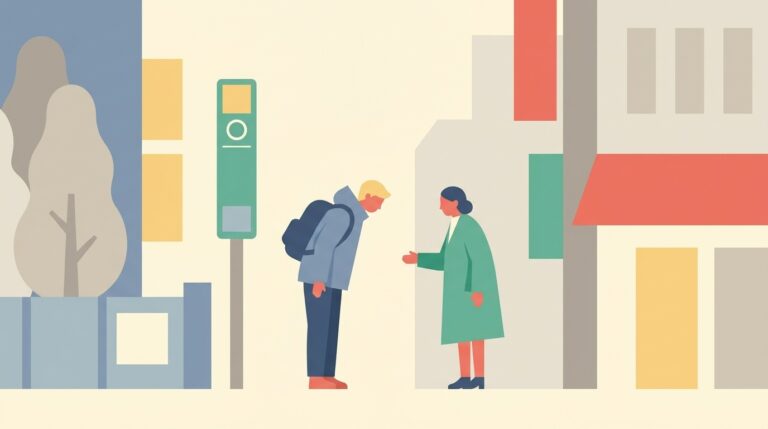
Picture this: You are strolling through the bustling, cafe-lined alleys of Seongsu-dong, enjoying an iced Americano, when someone approaches you with an urgent look. They show you their smartphone screen: “저기요, 혹시 이 카페 어디 있는지 아세요?” (Excuse me, do you know where this cafe is?) or maybe “이것 좀 들어주실 수 있나요?” (Could you hold this for a second?). Your brain enters instant panic mode! You actually have no idea where that place is, or you are running late to meet a friend. In your head, you recall the word from your basic vocab list: “몰라요! (Mollayo!)”
You say it with a nervous smile, but the other person’s face instantly stiffens. They look disappointed—maybe even a little offended. Wait, did I do something wrong?
Here is the secret: In Korean culture, blurted out words like “몰라요” can sound sharp, dismissive, and cold, almost like snapping “I don’t know, why ask me?” Declining a favor or a question by expressing you don’t know requires a delicate social dance. Drawing from years of feedback from beginner learners, this comprehensive guide will equip you with natural, warm, and native-approved phrases to gracefully decline any request—without ever feeling guilty or rude again!
Phase 2: Core Expressions Deep Dive
Here are three essential expressions you will hear daily in Seoul.
1. 잘 모르겠어요 (Jal moreugesseoyo)
- Pronunciation: [Jal mo-reu-get-seo-yo] (Sounds like: “Jahl” + “more” + “get” + “saw” + “yo”)
- Meaning: Literal: “I do not know well.” / Real Nuance: “I’m not quite sure / I’m afraid I don’t know.”
- K-Culture Moment: Picture an office drama like Misaeng. When an intern is asked by a senior manager about an ongoing project they haven’t been briefed on, they bow softly and whisper, “죄송합니다, 대리님. 그 부분은 제가 잘 모르겠습니다.”
- Editor’s Insight: Notice the tiny magic word 잘 (jal) meaning “well” and the suffix -겠- (-get-). While 몰라요 sounds absolute and detached, 잘 모르겠어요 signals: “I wish I could help you, but my knowledge is simply incomplete.” It cushions the blow instantly.
- Situation Spectrum: Casual ⚠️ | Semi-formal ✅ | Formal ✅
- 🤔 Think About It: Why does English comfortably say “I don’t know,” while Korean feels a psychological need to soften the lack of knowledge with “well” (잘)?
2. 제가 여기를 잘 몰라서요 (Jega yeogireul jal mollaseoyo)
- Pronunciation: [Je-ga yeo-gi-reul jal mol-la-seo-yo] (Sounds like: “Jay-gah yaw-gee-reul jahl mole-lah-saw-yo”)
- Meaning: Literal: “Because I don’t know here well…” / Real Nuance: “I’m not from around here, so I’m afraid I can’t help.”
- K-Culture Moment: A scene in Hometown Cha-Cha-Cha where an outsider visits Gongjin and asks a passing tourist for directions to the lighthouse, receiving this friendly, trailing deflection.
- Editor’s Insight: The sentence ending in -아서요/어서요 (-aseoyo/eoseoyo) implies causality (“Because…”). Leaving the sentence gently hanging implies the unsaid consequence: “…so I can’t be of much help to you, sorry!” Koreans love this indirect harmony.
- Situation Spectrum: Casual ⚠️ | Semi-formal ✅ | Formal ✅
- 🤔 Think About It: In English, people say “I can’t help you.” Notice how the Korean expression focuses entirely on the circumstance rather than the refusal itself.
3. 저도 잘 모르겠는데, 어쩌죠? (Jeodo jal moreugenneunde, eojjeojyo?)
- Pronunciation: [Jeo-do jal mo-reu-gen-neun-de, eot-jjeo-jyo?] (Sounds like: “Jaw-doh jahl mo-reu-gen-noon-day, ut-jju-jyo?”)
- Meaning: Literal: “I don’t know well either, so what shall we do?” / Real Nuance: “I wish I could help, but I’m not sure either… I feel bad for you!”
- K-Culture Moment: A lively scene in Hospital Playlist where two junior doctors look at a malfunctioning coffee machine or a confusing chart, sharing an empathetic grimace.
- Editor’s Insight: By adding 저도 (me too) and 어쩌죠? (what to do?), you step into the asker’s shoes. You turn what could have been a cold rejection into a moment of shared mutual empathy.
- Situation Spectrum: Casual ⚠️ | Semi-formal ✅ | Formal ⚠️
- 🤔 Think About It: How does showing emotional concern (기분 / Gibun) protect interpersonal relationships even when you refuse a favor?
Phase 3: Textbook Korean vs. Real Korean
Situation 1: Declining directions or local recommendations
- 📖 교과서 한국어 (Textbook Korean):
- 저는 모릅니다. 다른 사람에게 물어보세요. (Jeoneun moreumnida. Dareun saramege mureoboseyo. – I do not know. Ask someone else.)
- 🗣️ 진짜 한국어 (Real Korean):
- 죄송해요, 제가 이 동네는 잘 몰라서요… (Joesonghaeyo, jega i dongneneun jal mollaseoyo… – Sorry, I don’t know this neighborhood very well…)
- 💡 왜 다를까? (Why is it different?):
- Saying “저는 모릅니다” sounds like an automated subway announcement or a stern security officer. Real natives start with a soft apology (죄송해요) and cite unfamiliarity with the neighborhood to show goodwill.
Situation 2: Declining a request or favor at work/university
- 📖 교과서 한국어 (Textbook Korean):
- 그것은 제가 할 수 없습니다. (Geugeoseun jega hal su eopseumnida. – I cannot do that.)
- 🗣️ 진짜 한국어 (Real Korean):
- 그건 제가 잘 모르는 내용이라 도와드리기 어려울 것 같아요. (Geugeon jega jal moreuneun naeyong-ira dowadeurigi eoryeoul geot gatayo. – That is something I don’t know much about, so I think it might be difficult for me to help.)
- 💡 왜 다를까? (Why is it different?):
- A blunt “I cannot do that” creates an immediate wall. Stating that you lack sufficient information makes the refusal sound like an objective limitation rather than a personal unwillingness to assist.
Phase 4: K-Culture Deep Dive & Non-Verbal Manners
4-1. 눈치 (Nunchi) & Gestures
Refusing in Korea is 50% language and 50% body language!
* The Tilt and Gaze: When saying “잘 모르겠어요”, tilt your head slightly to one side (about 10 degrees) and let your gaze dip momentarily toward your hands or the ground. Staring blankly straight into their eyes while saying no can look confrontational.
* The Apologetic Hand Press: Bring one hand gently up to your upper chest or clasp both hands together lightly in front of your waist. This universal Korean gesture communicates: “My heart is apologetic that I cannot be of service to you.”
4-2. Cultural Code: The Art of “체면 (Chaemyeon – Face-Saving)”
Why don’t Koreans simply say “No”? In Korean social dynamics, saving face—both your own and the other person’s—is sacred. If someone asks for a favor and you state “안 돼요 (No, I won’t)”, you cause them to lose face for having asked. By saying “제가 잘 몰라서요 (Because I don’t know well)”, you transfer the burden away from both parties: you aren’t rejecting them; the universe simply didn’t grant you the knowledge they need!
Phase 5: Real-Life Roleplay Scenario
Setting: Exit 11 of Gangnam Subway Station. A bustling weekday afternoon.
NPC: Mr. Kim (김 아저씨), a warm but slightly flustered middle-aged commuter carrying a heavy paper shopping bag.
- Turn 1 (Mr. Kim): 저기요, 학생! 여기서 코엑스 가려면 몇 번 출구로 나가야 돼요?
(Jeogiyo, haksaeng! Yeogiseo Ko-ek-seu garyeomyeon myeot beon chulguro nagaya dwaeyo? – Excuse me, student! Which exit should I take to get to COEX from here?)
🎭 Looking around frantically holding an unfolded subway pamphlet - Turn 2 (You): 아, 안녕하세요! 코엑스요?
(A, annyeonghaseyo! Ko-ek-seu-yo? – Oh, hello! COEX?)
🎭 Pausing politely and tilting head while checking your own phone - Turn 3 (Mr. Kim): 응, 약속 시간이 다 됐는데 길을 도무지 못 찾겠네. 좀 알려줄 수 있어요?
(Eung, yaksok sigani da dwaenneunde gireul domuji mot chatgenne. Jom allyeojul su isseoyo? – Yes, my appointment is right now and I can’t find the way at all. Can you help me out?)
🎭 Leaning forward hopefully with an earnest expression - Turn 4 (You): 아… 죄송해요, 어르신. 제가 여기를 잘 몰라서요.
(A… joesonghaeyo, eoreusin. Jega yeogireul jal mollaseoyo. – Ah… I am sorry, sir. I don’t really know this area well.)
🎭 Tilting head slightly and offering a gentle apologetic half-bow - Turn 5 (Mr. Kim): 아, 그래요? 여기 근처 사는 사람이 아니었나 보네.
(A, geuraeyo? Yeogi geuncheo saneun sarami anieonna bone. – Ah, really? I guess you don’t live around here.)
🎭 Sighing softly with understanding, backing up a step - Turn 6 (You): 네, 저도 오늘 처음 와서 잘 모르겠어요. 도움 못 드려서 죄송해요.
(Ne, jeodo oneul cheoeum waseo jal moreugesseoyo. Doum mot deuryeoseo joesonghaeyo. – Yes, it’s my first time here today too so I’m not sure. I’m sorry I can’t be of help.)
🎭 Clasping hands together with an empathetic, soft smile - Turn 7 (Mr. Kim): 아니에요, 괜찮아요! 물어봐줘서 고마워요. 역무원한테 가볼게요.
(Anieyo, gwaenchanayo! Mureobwajwoseo gomawoyo. Yeongmuwonhante gabolgeyo. – No, it’s totally okay! Thank you for listening. I will ask the station staff.)
🎭 Waving his hand dismissively with a warm, relieved grin - Turn 8 (You): 네, 조심히 가세요!
(Ne, josimhi gaseyo! – Yes, please take care!)
🎭 Bowing 30 degrees politely as he walks toward the info booth
🔀 Interactive Choice Branch
Imagine an elderly traveler asks you to help them buy a complex KTX high-speed train ticket at an automated kiosk, but your train leaves in 2 minutes and you don’t know the kiosk software either!
- Option A: “몰라요. 저 지금 바빠요.” (Mollayo. Jeo jigeum bappayo. – I don’t know. I’m busy right now.)
- ❌ [Bad]: Super blunt! Even if true, this feels like an aggressive brush-off and will ruin both of your days.
- Option B: “죄송해요, 제가 기계는 잘 몰라서요… 저기 창구 직원분께 여쭤보시겠어요?” (Joesonghaeyo, jega gigyeneun jal mollaseoyo… Jeogi changgu jikwonbunkke yeojjwobosigesseoyo? – I’m sorry, I don’t know the machines well… Could you ask the counter staff over there?)
- 🏆 [Best]: Blends polite lack of knowledge with an actionable, helpful redirect without making you miss your train!
- Option C: “음… 아마 이 버튼 아닐까요? (아무거나 누름)” (Eum… Ama i beoteon anilkkayo? [Amugeona nureum] – Um… maybe it’s this button? [Presses random button])
- ⚠️ [Risk]: Over-helping when you don’t know! You might accidentally charge their card or book a ticket to Busan instead of Gangneung.
Phase 6: 10-Second Emotional Shadowing Drill
Read these lines aloud, paying attention to the breath pauses (/) and emotional tone cues!
[🥺 Apologetic & Hesitant]- “아… / 죄송해요, / 제가 여기는 / 잘 몰라서요.”
(A… / joesonghaeyo, / jega yeogineun / jal mollaseoyo.)
- “아… / 죄송해요, / 제가 여기는 / 잘 몰라서요.”
[🤝 Empathetic & Gentle]- “저도 / 잘 모르겠는데, / 어쩌죠?”
(Jeodo / jal moreugenneunde, / eojjeojyo?)
- “저도 / 잘 모르겠는데, / 어쩌죠?”
[🙇 Warm & Respectful Closing]- “도움 못 드려서 / 죄송해요. / 조심히 가세요!”
(Doum mot deuryeoseo / joesonghaeyo. / Josimhi gaseyo!)
- “도움 못 드려서 / 죄송해요. / 조심히 가세요!”
Phase 7: K-Culture Mini Dictionary
- 눈치 (Nunchi) | Quick situational awareness / reading emotional room temperature | Vital for picking up when someone is gently hinting that they cannot fulfill your request.
- 어쩌죠 (Eojjeojyo) | “What should we do?” (Empathetic distress) | A friendly rhetorical question used to soften rejections by expressing shared sorrow over the problem.
- 길치 (Gilchi) | A directionally challenged person | A playful, self-deprecating noun you can use to laugh off declining directions: “제가 길치라서요!” (Because I have zero sense of direction!)
- 정중한 거절 (Jeongjunghan Geojeol) | Polite refusal | A treasured Korean social skill essential for business, dating, and casual everyday encounters.
Phase 8: Survival Kit for Travelers
Top 3 Survival Expressions for Non-Natives
- 제가 외국인이라 잘 몰라요. (Jega oegukin-ira jal mollayo.)
- Meaning: I am a foreigner, so I don’t really know.
- Pro Tip: The ultimate beginner pass! It immediately relieves tension when anyone stops you with rapid-fire Korean.
- 저도 길을 잘 몰라서 죄송합니다. (Jeodo gireul jal mollaseo joesonghamnida.)
- Meaning: I don’t know the way either, I apologize.
- Pro Tip: Use this polite formal phrase if someone asks you for directions inside intricate subway hubs like Express Bus Terminal.
- 저기 직원분께 여쭤보세요! (Jeogi jikwonbunkke yeojjwoboseyo!)
- Meaning: Please ask that staff member over there!
- Pro Tip: Point with an open palm (never a single finger) toward the station booth or desk.
Editor’s Travel Note
When navigating South Korea, having local tools makes declining unnecessary: make sure to prepare with a reliable Naver Map app setup guide before hitting the streets, as Google Maps does not provide real-time walking directions in Korea! Furthermore, if you ever feel overwhelmed by pushy individuals, locate the nearest subway station master booth (역무실) or tourist police kiosk (관광경찰 안내소) for instant assistance.
Phase 9: “A Step Deeper” (한 발 더 깊이)
In Western cultures, direct honesty is often viewed as the highest form of respect: “No, I am unable to do that.” However, in Korea’s relational, collective consciousness, direct rejections create an immediate crack in social harmony. Expressing a lack of knowledge (“잘 모르겠어요”) serves as a linguistic bridge: it reassures the other person that you value their dignity and harbor no ill will, while still protecting your personal boundaries.
💬 Your Turn: Have you ever experienced a moment where saying “No” in your own native language felt surprisingly harsh or uncomfortable? Share your story in the comments below!
Phase 10: FAQ & Common Mistakes
Q: Why shouldn’t I just say “몰라요” (Mollayo)?
A: While grammatically correct, “몰라요” spoken alone carries an abrupt, snappy tone—similar to rolling your eyes and saying “Dunno! Don’t ask me!” In contrast, simply adding “잘” and -겠- to make “잘 모르겠어요” instantly turns it into a courteous response.
Q: What is the exact difference between “몰라요” and “모르겠어요”?
A: The infix -겠- denotes conjecture and humble softness. 몰라요 is a blunt statement of fact (“I lack this information”), while 모르겠어요 conveys “From what I can tell, I don’t appear to know,” which sounds far more considerate and thoughtful.
Q: What should I do if a stranger on the street keeps insisting after I say I don’t know?
A: In nightlife hotspots or outside busy stations like Hongdae or Hyehwa, some people who stop you may be aggressive solicitors or pseudo-religious groups (frequently approaching foreigners under the guise of “practicing Korean culture”). If someone refuses to accept your polite “잘 모르겠어요”, switch to a firm, decisive “괜찮습니다 (Gwaenchanseumnida – No thank you / I’m fine)” while continuing to walk without breaking stride.
🚨 Common Mistakes TOP 3
- Saying “안 돼요 (An dwaeyo)” instead of “잘 모르겠어요”: 안 돼요 means “It is forbidden / You cannot do that!” If an elder asks for directions and you say 안 돼요, you are accidentally telling them they aren’t allowed to go there!
- Over-bowing with excessive formal apologies: You do not need to say 죽을죄를 졌습니다 (I committed a mortal sin)! A simple, warm 죄송해요 (Joesonghaeyo) is perfectly balanced for A2 learners.
- Freezing up and sprinting away: Running away in silence creates awkward confusion. A two-second smile, a gentle nod, and “잘 몰라서요, 죄송해요!” leaves everyone feeling respected.
Phase 11: Action Missions & Engagement
- 🥉 Bronze Mission (Solo Practice): Stand in front of your mirror. Tilt your head 10 degrees, place your hand softly near your heart, and speak: “죄송해요, 제가 잘 몰라서요.” Repeat 3 times until your voice sounds gentle and melodic.
- 🥈 Silver Mission (Social Engagement): Write a sentence down declining a hypothetical request using “잘 모르겠는데, 어쩌죠?” and share your sentence in the comments section below for personalized editor feedback!
- 🥇 Gold Mission (Real-World Application): Next time you watch a Korean vlog, drama, or interact with a native speaker, catch or use the phrase 잘 모르겠어요 in place of 몰라요.
- 🎮 K-Culture Mission: While watching popular shows like Business Proposal or Queen of Tears, observe how secretaries and junior executives politely deflect inquiries from their bosses using “글쎄요… 잘 모르겠습니다.”
Phase 12: Interactive Quiz Challenge
Test your instincts below! Try guessing before clicking open the answer key.
Q1. Situation Judgment
A tourist next to you on the subway asks if this train goes directly to Incheon Airport. You are unsure. What is the most natural, polite beginner response?
* A) 몰라요! (Mollayo!)
* B) 안 돼요! (An dwaeyo!)
* C) 죄송해요, 저도 잘 모르겠어요. (Joesonghaeyo, jeodo jal moreugesseoyo.)
* D) 묻지 마세요. (Mutji maseyo.)
👉 Click to view Answer & Explanation
Correct Answer: C
* Explanation: Option C is polite, humble, and shows warm empathy. Option A sounds rude; Option B means “It’s not allowed”; Option D means “Don’t ask me,” which is extremely offensive!
Q2. Fill in the Blank
Complete the natural deflection phrase meaning “Because I don’t know this place well…”:
* “제가 여기를 잘 [ ].”
👉 Click to view Answer & Explanation
Correct Answer: 몰라서요 (mollaseoyo)
* Full Sentence: 제가 여기를 잘 몰라서요. (Jega yeogireul jal mollaseoyo.)
* Explanation: The -아서요 ending gently attributes the refusal to your lack of local knowledge without needing a harsh negative ending.
Q3. Cultural True or False
True or False: In Korea, maintaining eye contact without blinking and boldly saying “몰라요!” is considered confident and praiseworthy communication for foreigners.
👉 Click to view Answer & Explanation
Correct Answer: False!
* Explanation: Direct, intense eye contact accompanied by a blunt “몰라요!” will be perceived as curt or annoyed. Softening your gaze and pairing it with a small head tilt and 잘 모르겠어요 is the true hallmark of high-level social grace in Korea!







