

Phase 1: 공감 (Story Opening)
안녕하세요! 매일한글 에디터입니다.
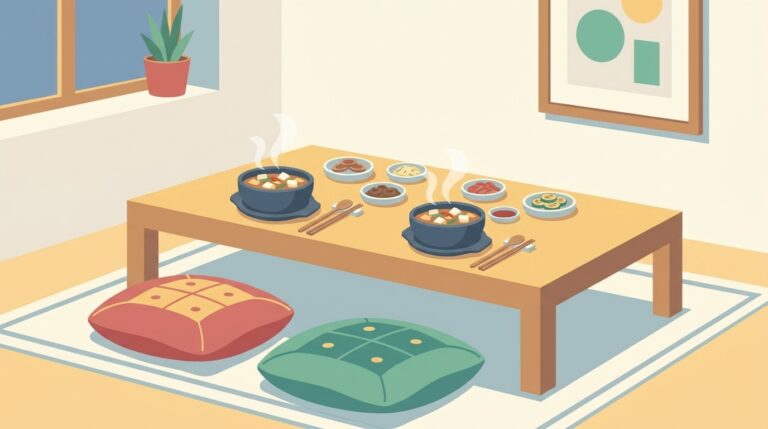
Picture this: You are watching a warm, slice-of-life K-drama like Hospital Playlist or Reply 1988. The characters gather around a low wooden dining table in a cozy living room, steam billowing from an bubbling pot of homemade Doenjang-jjigae, laughter filling the room as someone shouts, “Just come as you are!” You smile and think, I want to experience that. You have made some wonderful Korean friends, and this weekend, you finally muster up the courage to invite them to your home for dinner.
Then panic strikes. You open your textbook and construct a sentence: “저희 집에 저녁 식사를 하러 오시겠습니까?” You send it, feeling proud—only to receive an awkward silence, followed by an overly polite response that makes you feel like you just invited your company chairman to an official banquet! Why does inviting someone over feel so stiff and intimidating in Korean?
Here is the real truth our Daily Hangul students discover every week: inviting a friend to your personal sanctuary in Korea isn’t just about food; it is an intimate gesture of belonging. When you use textbook honorifics, you accidentally create emotional distance. But when you master the relaxed, caring nuances of conversational B1 Korean, you break down the cultural walls instantly. This guide is built directly from real expat experiences and local insights to help you host your first unforgettable Korean dinner night effortlessly.
Phase 2: 핵심 표현 3선 심층 분석
1. 우리 집에서 저녁 먹고 갈래? (Uri jib-eseo jeonyeok meokgo gallae?)
- Pronunciation: [Uri jib-eseo jeonyeok meok-go gal-lae?] (Sounds like: “Oo-ree jeeb-eh-suh jun-yeok muk-go gal-lay?” Glide through the “gallae” with an upward, friendly lilt!)
- Meaning: Literal: “Do you want to eat dinner at our house and go?” | Real Nuance: “Wanna come over to my place for dinner?”
- K-Culture Moment: In urban Korean lifestyle dramas, close friends walking home after work casually toss this out to invite someone over for ramyun or a quick home-cooked meal without any heavy pressure.
- Editor’s Insight: Notice the verb structure
-고 갈래?(eat and then go?). Koreans say this because it gently implies, “You don’t have to stay late or feel burdened; just come, enjoy food, and you can leave whenever you like.” It reduces social pressure dramatically!- Situation Spectrum: Casual: ✅ | Semi-formal: ⚠️ | Formal: 🚫
- 🤔 Think About It: Why do Koreans say “우리 집” (our house) even if they live completely alone? What does this reveal about community vs. individuality in Korean culture?
2. 내가 맛있는 거 해줄게, 놀러 와! (Naega masinneun geo haejulge, nolleo wa!)
- Pronunciation: [Naega masinneun geo hae-jul-ge, nol-leo wa!] (Sounds like: “Nay-ga ma-shee-neun guh hay-jool-gay, nol-luh wah!” The ending -ge is soft and warm, like making a sweet promise.)
- Meaning: Literal: “I will make delicious things for you, come to play!” | Real Nuance: “I’ll cook you something amazing, come hang out!”
- K-Culture Moment: On reality variety shows like I Live Alone (나 혼자 산다), celebrities say this when preparing a feast for friends who have had a tough week.
- Editor’s Insight: The phrase
놀러 와literally means “come to play,” but among adults, it simply means “come hang out.” Pairing it with맛있는 거 해줄게expresses unconditional hospitality and affection.- Situation Spectrum: Casual: ✅ | Semi-formal: ⚠️ | Formal: 🚫
- 🤔 Think About It: In English, we often say “I’ll make dinner.” How does the Korean focus on “something delicious” (맛있는 거) feel more emotionally pampering?
3. 이번 주말에 시간 되면 우리 집에 밥 먹으러 올래요? (Ibeon jumare sigan doemyeon uri jibe bap meogeureo ollaeyo?)
- Pronunciation: [Ibeon jumal-e sigan doe-myeon uri jib-e bap meog-euro ol-lae-yo?]
- Meaning: Literal: “This weekend, if time allows, do you want to come to our house to eat rice?” | Real Nuance: “If you’re free this weekend, would you like to come over to my place for a meal?”
- K-Culture Moment: A great line used when asking a language exchange partner, coworker, or acquaintance you want to get closer with without crossing personal boundaries.
- Editor’s Insight: Using the polite polite ending
-ㄹ래요?paired with the buffer clause시간 되면(if you have time) gives the listener a polite, comfortable way to decline without losing face.- Situation Spectrum: Casual: ⚠️ | Semi-formal: ✅ | Formal: ⚠️
- 🤔 Think About It: Notice how “밥” (rice) serves as the universal synonym for a complete meal. What role does shared staple food play in bringing people closer in your culture?
Phase 3: 교과서 한국어 vs 진짜 한국어
Situation 1: Inviting them over to your place for dinner
- 📖 교과서 한국어: 제 집에 저녁 식사를 하러 오시겠습니까? (Je jibe jeonyeok siksa-reul ha-reo osigesseumnikka?)
- 🗣️ 진짜 한국어: 오늘 저녁에 우리 집에서 밥 먹을래? (Oneul jeonyeoge uri jibeseo bap meogeullae?)
- 💡 왜 다를까? Textbook Korean uses honorifics like
제 집and오시겠습니까?, which makes you sound like a hotel concierge addressing a dignitary. In everyday Korean, friends use우리 집(our home) and the cozy proposal ending-ㄹ래?to express genuine camaraderie.
Situation 2: Telling them not to worry about bringing anything
- 📖 교과서 한국어: 당신은 아무것도 가져올 필요가 없습니다. (Dangsineun amugeotdo gajyeool piryoga eopseumnida.)
- 🗣️ 진짜 한국어: 내가 다 준비할 테니까 그냥 몸만 와! (Naega da junbihal tenikka geunyang momman wa!)
- 💡 왜 다를까? Literal translations sound robotic and accusatory (avoid using “당신”). The real native idiom is
몸만 와(“just come with your body” / “just bring yourself”), which is the ultimate host phrase signifying maximum warmth and zero expectations.
Phase 4: K-Culture 딥다이브 & 비언어적 매너
4-1. 눈치(Nunchi) & Entryway Etiquette
Inviting someone into a Korean home begins right at the 현관 (hyeongwan – front entrance).
* The Shoe Dance: When your guests arrive, never walk directly from the tiled foyer onto the wooden floor with shoes on. Have comfortable indoor slippers ready. Point the toes of their shoes toward the front door when placing them down—this traditional subtle gesture wishes them a safe, smooth journey when they depart.
* The Double Refusal of Gifts: Even if you tell your friend, “몸만 와!” (Just bring yourself!), a Korean guest will rarely arrive empty-handed. They will likely bring a box of seasonal fruit, specialty pastries, or a bottle of wine. When they hand it to you, accept with both hands, accompanied by a polite protest: “아이고, 뭘 이런 걸 사 왔어! 그냥 오지~” (Oh my, why did you buy this! You should have just come without anything~). This is harmonious Korean social rhythm at its finest.
4-2. Cultural Codes: The Magic of “집밥” (Home-cooked Meal)
In Korea’s fast-paced society of delivery apps and solitary convenience store meals, inviting someone to your home for 집밥 (jipbap) is the highest tier of friendship. When cooking, don’t worry about multi-course culinary perfection. What counts is the generous setting of side dishes (반찬 – banchan). Even placing one main dish (like Bulgogi, Tteokbokki, or Kimchi-jjigae) in the center with a few banchan bowls creates that authentic, communal “정” (jeong – deep emotional bond).
Phase 5: 실전 롤플레이 시나리오
Setting: It’s Friday at 4:30 PM. You and your Korean friend/coworker Minwoo (민우) are finishing up a collaborative project at a cafe in Hongdae.
- You: 민우 씨, 오늘 프로젝트 끝나고 특별한 약속 있어요?
(Minwoo ssi, oneul peurojekteu kkeutnago teukbyeolhan yaksok isseoyo?)
“Minwoo, do you have any special plans after the project ends today?”
🎭 Checking your phone calendar with an eager, warm smile. -
Minwoo: 아니요, 딱히 없어요. 그냥 집에 가서 넷플릭스나 보려고요. 왜요?
(Aniyo, ttakhi eopseoyo. Geunyang jibe gaseo netpeullikseuna boryeogoyo. Waeyo?)
“No, not really. I’m just planning to go home and watch Netflix. Why?”
🎭 Tilting head curiously, taking a sip of iced americano. -
You: 잘됐다! 그러면 오늘 우리 집에서 저녁 먹고 갈래요?
(Jaldwaetda! Geureomyeon oneul uri jibeseo jeonyeok meokgo gallaeyo?)
“Awesome! Then would you like to come over to my place for dinner?”
🎭 Making casual eye contact with welcoming open palms. -
Minwoo: 어? 진짜요? 그래도 갑자기 찾아가면 폐 끼치는 거 아닌가요?
(Eo? Jinjjayo? Geuraedo gapjagi chajagamyon pye kkichineun geo aningayo?)
“Huh? Really? Wouldn’t it be an inconvenience if I drop by so suddenly?”
🎭 Hesitating slightly out of Korean politeness so as not to seem intrusive. -
You: 전혀요! 제가 맛있는 불고기 해줄 테니까 그냥 몸만 와요.
(Jeonhyeoyo! Jega masinneun bulgogi haejul tenikka geunyang momman wayo.)
“Not at all! I’ll cook delicious bulgogi, so please just bring yourself!”
🎭 Chuckling warmly, waving your hand dismissively to reassure him. -
Minwoo: 와, 불고기요? 저야 완전 좋죠! 빈손으로 갈 순 없으니까 근처 마트에서 음료수라도 사갈게요.
(Wa, bulgogiyo? Jeoya wanjeon jochyo! Binsoneuro gal sun eopseunikka geuncheo mateueseo eumryosurado sagalgeyo.)
“Wow, bulgogi? I’d absolutely love that! But I can’t come empty-handed, so let me pick up some drinks at the supermarket nearby.”
🎭 Grinning happily with eyes sparkling. -
You: 에이, 안 그래도 되는데! 그럼 가는 길에 같이 장 봐서 가요.
(Ei, an geuraedo doeneunde! Geureom ganeun gire gachi jang bwaseo gayo.)
“Aw, you really don’t have to! Well then, let’s stop by the market together on our way.”
🎭 Packing up laptop bag briskly. -
Minwoo: 좋아요! 오늘 집밥 제대로 먹겠네요. 출발합시다!
(Joayo! Oneul jipbap jedaero meokgenneyo. Chulbalhapsida!)
“Sounds great! I get to enjoy real home-cooked food today. Let’s head out!”
🎭 Standing up with an energized laugh.
🔀 인터랙티브 분기점 (Interactive Choice)
How would you invite a Korean colleague who helped you move apartments last week?
- Option A: “지난번에 도와줘서 정말 고마웠어요. 주말에 우리 집에서 저녁 한 끼 대접하고 싶은데, 시간 어떠세요?”
- Option B: “내 집에 와서 밥을 먹으십시오.”
- Option C: “오늘 밤 무조건 우리 집으로 와! 안 오면 삐질 거야!”
-
Feedback:
- Option A (Best): 🌟 Perfect! Combining gratitude, the polite humble phrase
대접하고 싶다(I want to treat/serve you), and asking for their availability is 100/100 Korean etiquette. - Option B (Bad): ❌ Stiff imperative command!
먹으십시오sounds like a military order, and내 집sounds cold. - Option C (Risk): ⚠️ Only acceptable between childhood best friends. If said to a colleague, it sounds aggressively entitled and pushy!
- Option A (Best): 🌟 Perfect! Combining gratitude, the polite humble phrase
Phase 6: 10초 감정 섀도잉 드릴
Repeat these aloud, mimicking the emotion cues and pausing at each /:
[😊 설레고 유쾌하게 - Excited & Playful]
오늘 저녁에 / 우리 집에서 / 맛있는 거 먹고 갈래?
(Oneul jeonyeoge / uri jib-eseo / masinneun geo meokgo gallae?)-
[ 따뜻하고 배려심 넘치게 - Warm & Reassuring]
아무것도 사 오지 마, / 내가 다 준비했으니까 / 그냥 몸만 와!
(Amugeotdo sa oji ma, / naega da junbihaesseunikka / geunyang momman wa!) -
[🥺 솔직하고 다정하게 - Sincere & Friendly]
시간 될 때 / 우리 집에 밥 한 끼 / 하러 와요. / 꼭이요!
(Sigan doel ttae / uri jibe bap han kki / hareo wayo. / Kkok-iyo!)
Phase 7: K-Culture 미니 사전
- 집밥 (Jip-bap) | Noun: Home-cooked meal | Far beyond nutrition, jipbap symbolizes nostalgia, motherly love, and psychological comfort. Calling your invitation jipbap immediately warms a Korean guest’s heart.
- 몸만 와 (Mom-man wa) | Idiomatic phrase: Just bring your body (Come empty-handed) | Used by hosts to relieve guests of gift-giving obligations. Even so, guests will often bring fruit or dessert!
- 집들이 (Jip-deuri) | Noun: Housewarming party | Traditionally, guests bring toilet paper (wishing smooth fortune like rolling paper) or laundry detergent (wishing bubbling wealth). If you just moved in, your dinner counts as a jipdeuri!
- 야식 (Ya-sik) | Noun: Late-night snack | If your home dinner party stretches past 10 PM, offering yasik (like ordering spicy chicken feet or fried chicken via delivery) is the hallmark of a veteran host.
Phase 8: 여행자를 위한 생존 키트
Survival Phrases TOP 3
- 우리 집 비밀번호는 1234예요. (Uri jip bimilbeonhoneun il-i-sam-sa-yeyo.)
Pro Tip: Korean homes rarely use metal keys; almost all apartments use digital doorlocks. Give guests the code if they are arriving ahead of you! - 신발은 여기에 벗어두시면 돼요. (Sinbareun yeogie beoseodusimyeon dwaeyo.)
Pro Tip: Guide your guest smoothly right as they step into the foyer to avoid awkward hesitations. - 혹시 못 먹는 음식이나 알레르기 있어요? (Hoksi mot meongneun eumsigina allereugi isseoyo?)
Pro Tip: Asking about dietary restrictions or allergies beforehand shows incredible thoughtfulness that Koreans deeply appreciate.
Editor’s Travel Note
- Navigation Guide: Finding addresses inside residential villa complexes can be a maze. Don’t rely on global maps—send your exact location using the 네이버 지도 앱 다운로드 link so your guests can navigate right to your door lock.
- Post-Dinner Etiquette: In Korea, residential trash is strictly divided into food waste (음식물 쓰레기), recyclables, and general waste. Clean up casually with your guests so nobody feels awkward about leftovers!
Phase 9: “한 발 더 깊이” (Deep Dive Reflection)
In Western languages, the possessive pronoun “my” reigns supreme: my house, my mother, my country. But in Korean, using “내 집” (my house) sounds unexpectedly cold, as if you are marking private property lines with caution tape. Instead, Koreans naturally say 우리 집 (our house), even if they live alone in a one-room studio.
This linguistic habit reflects the ancient concept of communal belonging and shared destiny. When you invite someone into “우리 집,” you are not merely offering them a chair at your kitchen counter; you are inviting them inside your emotional family perimeter. Sharing a meal over a single steaming table breaks down the social hierarchy that dominates daily life outside.
💬 Your Turn: Have you ever invited a local friend over in Korea or experienced Korean home dining? How did the atmosphere differ from home dinner parties in your home country? Share your stories below!
Phase 10: FAQ & 오해 방지
Q: Does asking “우리 집에서 라면 먹고 갈래?” have a double meaning like Netflix & Chill?
A: Yes! In modern pop culture (originating from the classic movie One Fine Spring Day), asking someone specifically of the opposite sex to eat 라면 (ramyun) at night carries a flirtatious romantic subtext. If you just want a friendly dinner, stick to 저녁 먹고 갈래? (Do you want to have dinner?) or specify the dish like 불고기 먹고 갈래? to prevent unintentional heart-fluttering misunderstandings!
Q: Should I let my Korean guest wash the dishes after dinner?
A: Culturally, Korean guests will almost always jump up and insist on washing the dishes or clearing the table: “제가 설거지할게요!” As a proper host, you should gently push them away at least twice: “아니에요, 편하게 앉아 계세요! 손님인데 안 돼요.” If they persist a third time, you can compromise by letting them pack up the side dishes or brew the tea.
Q: What should I prepare if my guest doesn’t drink alcohol?
A: Always have refreshing non-alcoholic options like barley tea (보리차), corn silk tea (옥수수수염차), or zero-sugar soda. Koreans love pairing rich meals with fizzy or roasty beverages.
🚨 흔한 실수 (Common Mistakes) TOP 3
- Mistake: Using “당신” (Dangsin) to mean “you”.
Correction: Never say “당신을 초대합니다.” Use their name plus title (민우 씨, 우리 집에 놀러 와요). - Mistake: Forgetting to offer slippers in winter.
Correction: Even with floor heating (온돌 – ondol), walking barefoot on tiles or wooden floors can feel unwelcoming to guests. - Mistake: Apologizing profusely for having “only simple food”.
Correction: Don’t stress! In Korea, hosts humbly say “차린 건 없지만 많이 드세요” (It’s not much, but please eat plenty), which turns simplicity into elegance.
Phase 11: 액션 미션 & 참여 유도
- 🥉 Bronze Level: Stand in front of your mirror and practice the phrase: “우리 집에서 저녁 먹고 갈래?” with a bright, welcoming smile 5 times.
- 🥈 Silver Level: Send a message to a Korean language partner or friend: “이번 주말에 시간 되면 우리 집에 맛있는 거 먹으러 와요!”
- 🥇 Gold Level: Actually host a dinner evening! Cook one main Korean comfort dish and take a snapshot of your communal table.
- 🎮 K-Culture Mission: Watch an episode of the drama Reply 1988 or reality show I Live Alone. Spot the moment a neighbor or friend hands over a side dish saying “이거 갖다 먹어!” and post the time-stamp in the comments below!
Phase 12: 인터랙티브 퀴즈 챌린지
Q1. Situation Decision: You want to invite your Korean friend to your house for homemade Kimchi Fried Rice this evening without putting pressure on them. Which sentence is the most natural?
– A) 제 저택에 저녁 식사를 하러 납시겠습니까?
– B) 오늘 저녁에 우리 집에서 김치볶음밥 먹고 갈래?
– C) 너 오늘 무조건 와서 밥 먹어야 해.
Q2. Fill-in-the-Blank: Complete the host’s magic phrase meaning “Don’t bring any gifts, just bring yourself!”
“선물 사 오지 말고, 그냥 ( ____ )만 와!”
Q3. True or False: Saying “우리 집” instead of “내 집” is only correct if you actually live with roommates or family members.
– [True / False]
👉 Click to reveal Quiz Answers & Explanations!
- Q1 Answer: B)
오늘 저녁에 우리 집에서 김치볶음밥 먹고 갈래?is relaxed, friendly, and naturally conversational. (A sounds like historical drama royal court speech; C sounds like an aggressive command!) - Q2 Answer: 몸 (Body). The full idiom is
몸만 와!(Just bring your body/yourself). - Q3 Answer: False! Koreans always say
우리 집even if they live totally alone in a studio apartment, reflecting the cultural mindset of shared community and connection.







