

Phase 1: 공감 (Story-Immersive Opening)
안녕하세요! 매일한글 에디터입니다.
Imagine sitting in a seaside cafe in Jeju or walking through an alleyway market in Busan after months of diligently studying Standard Korean (표준어, Pyojuneo). You have aced your Topik II exams, mastered complex grammatical conjugations, and feel confident about joining spontaneous chats. But then, an elderly vendor smiles warmly and throws a rapid, rhythmic sentence at you: “어디서 왔능교? 밥은 묵었나?” (Eodiseo watneunggyo? Babeun mugeonna? / Where did you come from? Have you eaten?). Suddenly, your textbook vocabulary feels paper-thin, leaving you frozen in place.
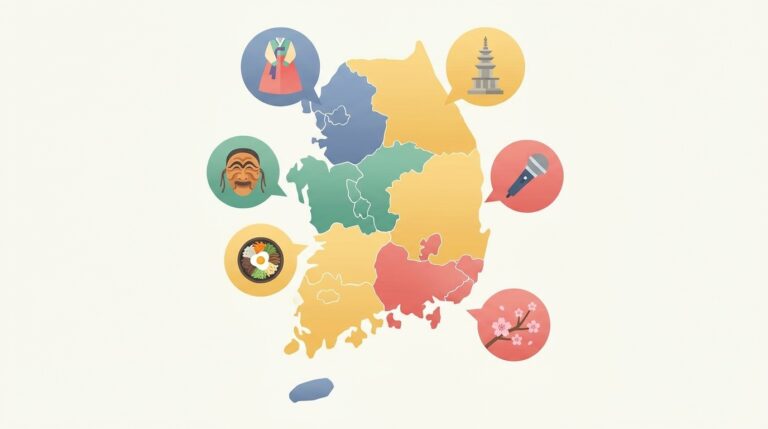
Many advanced Korean learners face this exact linguistic barrier: the realization that the living soul of the Korean language breathes far beyond the neatly packaged Seoul standard. For decades, media portrayals often marginalized 사투리 (Saturi, regional dialects) as crude comedic fodder or the aggressive speech of gangster cinema. However, modern masterpieces like Our Blues (우리들의 블루스) and the beloved Reply (응답하라) series have ignited a long-overdue cultural renaissance, spotlighting how dialects carry irreplaceable communal memory, tenderness (정, Jeong), and poetic history.
At a C1 level, mastering Korean is no longer just about clinical grammatical correctness; it is about sociolinguistic competence—understanding what is lost when dialects vanish and learning how to celebrate the regional textures that define authentic human connection in Korea.
Phase 2: 핵심 표현 3선 심층 분석 (Core Expressions Deep Dive)
1. 사투리 속에 정이 묻어나다 (Saturi sog-e jeong-i mudeonada)
- Pronunciation: [Sa-tu-ri sog-e jeong-i mu-deo-na-da] (Sounds like “sah-too-ree so-geh jung-ee moo-duh-nah-dah”)
- Meaning: Literal: “Affection/Jeong rubs off in the dialect.” | Nuanced: Regional accents carry a deeply personal, heartfelt warmth that cannot be replicated by formal standard speech.
- K-Culture Moment: In Our Blues, when characters speak in blunt Jeju dialect while silently slipping fresh fish into a neighbor’s basket, viewers recognize this exact dynamic.
- Editor’s Insight: The verb 묻어나다 describes liquid or scent subtly seeping into a fabric. Using this phrase showcases a high-register emotional observation rather than a dry analytical statement.
- Situation Spectrum: Casual: ⚠️ | Semi-formal: ✅ | Formal: ✅
- 🤔 Think About It: Does your native tongue have regional accents that sound brusque on the surface yet convey profound kinship beneath?
2. 말씨를 고치다 (Malssireul gochida)
- Pronunciation: [Mal-ssi-reul go-chi-da] (Sounds like “mahl-shee-reul go-chee-dah”)
- Meaning: Literal: “To repair one’s speech style.” | Nuanced: To actively suppress or eliminate one’s provincial accent in favor of standard Seoul speech, often due to social pressure or professional conformity.
- K-Culture Moment: In Reply 1994, college students moving from Jeolla and Gyeongsang provinces to Seoul agonize in phone booths, frantically practicing “Seoul intonation” to avoid ridicule during job interviews.
- Editor’s Insight: The verb 고치다 means “to fix/repair,” which linguistically implies that regional dialects were historically treated as “broken” variants needing correction. Discussing this term enables insightful critiques of linguistic hegemony.
- Situation Spectrum: Casual: ✅ | Semi-formal: ✅ | Formal: ✅
- 🤔 Think About It: Why do modern societies equate capital-city speech with competence, and how does that affect an individual’s regional identity?
3. 지역 고유의 말맛을 살리다 (Jiyeok goyu-ui malmaseul sallida)
- Pronunciation: [Ji-yeok go-yu-ui mal-ma-seul sal-li-da] (Sounds like “jee-yuhk go-yoo-eui mahl-mah-seul sahl-lee-dah”)
- Meaning: Literal: “To revive/bring to life the local taste of words.” | Nuanced: To preserve and utilize the sensory richness, rhythm, and expressive nuance inherent to regional dialects.
- K-Culture Moment: Literary critics praising writers who preserve indigenous dialect words in modern poetry, or actors praised on talk shows for executing authentic provincial cadence.
- Editor’s Insight: 말맛 (the “taste/flavor of words”) is an untranslatable Korean aesthetic concept. It refers to the sensory delight and emotional resonance generated by the acoustic texture of spoken language.
- Situation Spectrum: Casual: ⚠️ | Semi-formal: ✅ | Formal: ✅
- 🤔 Think About It: How does preserving linguistic diversity enrich a country’s collective literature and storytelling?
Phase 3: 교과서 한국어 vs 진짜 한국어 (Textbook vs. Real Korean)
Situation 1: Expressing the emotional depth of a regional accent
- 📖 교과서 한국어: 방언은 표준어보다 훨씬 친근한 감정을 느끼게 해 줍니다. (Bangeoneun pyojuneoboda hwolssin chingeunhan gamjeongeul neukkige hae jumnida. / Dialects allow us to feel much friendlier emotions than standard language.)
- 🗣️ 진짜 한국어: 투박하게 들려도, 그 사투리 한마디에 담긴 진득한 정감은 흉내 낼 수 없죠. (Tubakhage deullyeodo, geu saturi hanmadie damgin jindeukhan jeonggameun hyungnae nael su eopjyo. / Even if it sounds unpolished, the profound affection baked into that single dialect phrase is impossible to imitate.)
- 💡 왜 다를까?: C1 Korean moves away from generic descriptors like 친근하다 (friendly) to sophisticated, sensory adjectives like 투박하다 (rough/unhewn) and 진득하다 (deep, persistent, sticky with genuine emotion).
Situation 2: Discussing the loss of dialect heritage
- 📖 교과서 한국어: 방송 미디어 때문에 사투리가 점점 사라지고 있어서 문제입니다. (Bangsong midieo ttaemune saturiga jeomjeom sarajigo isseoseo munjeimnida. / It is a problem that dialects are gradually disappearing due to broadcast media.)
- 🗣️ 진짜 한국어: 미디어의 획일화 속에서 방언의 고유성이 퇴색되는 건 문화적으로 큰 손실이에요. (Midieoui hoeg-ilhwa sog-eseo bangeonui goyuseongi toesaekdoeneun geon munhwajeogeuro keun sonsirieyo. / The fading of dialect uniqueness amidst media homogenization represents a profound cultural loss.)
- 💡 왜 다를까?: Advanced sociolinguistic discussion leverages Sino-Korean vocabulary (획일화 – homogenization, 고유성 – distinct uniqueness, 퇴색 – fading/discoloration) to form persuasive, critical arguments.
Phase 4: K-Culture 딥다이브 & 비언어적 매너 (K-Culture Deep Dive)
4-1. 눈치 (Nunchi) & Non-Verbal Manners: The “Rough Care” Paradigm
When communicating with older dialect speakers—particularly in regions like Gyeongsang-do—non-Korean speakers often mistake high pitch variance, abrupt syllable cut-offs, and lack of honorific flourishes for anger.
* Deciphering Tone: A loud, rapid “밥 뭇나? 퍼뜩 앉아라!” (Bap munna? Peotteok anjara! / Eaten yet? Sit down quickly!) accompanied by a furrowed brow might feel intimidating. However, observing their hands reveals the 눈치 context: they are already pulling out a warm chair and scooping an oversized portion of rice for you.
* Physical Mannerism: Maintain attentive eye contact, soften your shoulder posture, and nod with a slight smile. Never mirror back exaggerated dialect mimicry, as this can easily come across as mocking. Receive their regional speech with respectful appreciation.
4-2. Cultural Code Analysis: The Media Shift from Stigma to Identity
South Korea’s rapid industrialization in the 1970s and 1980s centered resources in Seoul, codifying 표준어 (Standard Korean) as “the speech of cultured citizens in contemporary Seoul.” Consequently, regional dialects were relegated to working-class stereotypes or criminal caricatures in classic cinema like Friend (친구).
However, contemporary K-content has triggered a paradigm shift. Shows like Our Blues celebrated the Jeju dialect—recognized by UNESCO as critically endangered—not as an incomprehensible curiosity, but as a vessel of communal resilience against tragedy. Understanding dialect preservation today is synonymous with validating regional autonomy, heritage, and the decentralized cultural identity of modern Korea.
Phase 5: 실전 롤플레이 시나리오 (Real-Life Roleplay Scenario)
Setting: An independent, heritage-focused bookstore and archive tucked inside the historical harborside of Mokpo, Jeolla-do.
NPC Character: Mr. Choi (최 대표), a passionate 58-year-old local folklorist and archivist preserving regional oral histories.
- 최 대표: 어서 오시오. 서울서 일부러 여그까지 찾아왔소? (Eoseo osio. Seoullseo ilbureo yeogeukkaji chajawatso? / 🎭 Welcoming with warm, searching eyes while wiping an old cedar desk) Welcome. Did you come all the way down here from Seoul on purpose?
- Learner (You): 네, 대표님. 남도 방언의 구술 기록을 보존하신다는 기사를 읽고 직접 뵙고 싶었습니다. (Ne, daepyonim. Namdo bangeonui gusul girokeul bojonhasindaneun gisareul ilgo jikjeop boepgo sipeotseumnida. / 🎭 Bowing politely with two hands clasped in front) Yes, Director Choi. I read an article about your work archiving Southern dialect oral histories, and I really wanted to visit you in person.
- 최 대표: 아이고, 외국분이 우리 사투리에 관심을 다 가져주니 참말로 고맙소 야. 근디 다들 사투리는 촌스럽다고 잊어버릴라 허는디… (Aigo, oegukbuni uri saturie gwansimeul da gajyeojuni chammallo gomapso ya. Geundi dadeul saturineun chonseureopdago ijeobeorilla heoneundi… / 🎭 Sighing gently with a mixed look of pride and melancholy) My goodness, I am truly grateful that an international guest shows interest in our dialect. But these days, most people just dismiss dialects as rustic and try to forget them…
- Learner (You): 전혀 그렇지 않습니다. 오히려 표준어에서는 느낄 수 없는 지역 고유의 말맛과 정서가 배어 있잖아요. (Jeonhyeo geureochi anseumnida. Ohiryeo pyojuneoeseoneun neukkil su eomneun jiyeok goyu-ui malmatgwa jeongseoga baeeo itjanayo. / 🎭 Speaking earnestly while nodding slowly) Not at all. On the contrary, regional dialects carry an authentic linguistic flavor and sentiment that standard Korean simply cannot reproduce.
- 최 대표: 맞아요! 우리 말 속에는 갯벌이랑 바람 냄새, 그리고 사람 냄새가 꽉 차 있제. 그걸 표준어로 싹 갈아엎어 불면 역사도 날아가는 것이여. (Majayo! Uri mal sogeneun gaetbeorirang baram naemsae, geurigo saram naemsaega kkwak cha itje. Geugeol pyojuneoro ssak garaeopeo bulmyeon yeoksado naraganeun geosiyeo. / 🎭 Slapping his knee enthusiastically as his eyes light up) Exactly! In our speech, the scent of tidal mudflats, sea breezes, and raw human warmth is packed tight. If you wipe all that out with standard speech, history flies away with it.
- Learner (You): 맞습니다. 사투리 속에 정과 삶의 궤적이 묻어나는데, 이를 소멸 위기 언어로 방치하는 건 큰 손실인 것 같습니다. (Matseumnida. Saturi sog-e jeonggwa samui gwejeogi mudeonaneunde, ireul somyeol wigi eoneoro bangchihaneun geon keun sonsirin geot gatseumnida. / 🎭 Gesturing toward the displayed local manuscripts with deep respect) Exactly. Life’s trajectory and deep communal affection are woven into dialects; neglecting them as endangered languages is a tragic loss.
- 최 대표: 허허, 말이 통하는 귀한 손님을 만났네. 내가 아끼는 구술 설화 녹음본 하나 들려줄 텐게 귀 기울여 보쇼. (Heoheo, mari tonghaneun gwihan sonnimeul mannatne. Naega akkineun gusul seolhwa nogeumbon hana deullyeojul tenge gwi giuryeo bosyo. / 🎭 Smiling broadly while setting an old reel-to-reel tape on the counter) Haha, I have finally met a precious guest who truly understands! I will play you a cherished recording of a local oral folktale, so listen closely.
- Learner (You): 귀한 자료를 공유해 주셔서 진심으로 감사드립니다, 대표님. (Gwihan jaryoreul gongyuhae jusyeoseo jinsimeuro gamsadeurimnida, daepyonim. / 🎭 Leaning in with focused, sincere attention) Thank you so much for sharing such a precious archive with me, Director.
🔀 인터랙티브 분기점 (Interactive Branching Point)
At turn 4, how would you respond if Mr. Choi lamented that young locals only use standard Seoul speech to avoid sounding uneducated?
- Option A: “사투리를 쓰는 건 교양 없어 보일 수 있으니 표준어 교육을 강화하는 게 합리적이지 않을까요?” (Saturireul sseuneun geon gyoyang eopseo boil su isseuni pyojuneo gyoyugeul ganghwahaneun ge hamnijeogiji aneulkkayo? / Dialects can make one look unrefined, so wouldn’t expanding standard education be more rational?)
- ❌ Bad: Offensive and culturally tone-deaf. It directly reinforces discriminatory linguistic prejudice and invalidates the archivist’s lifetime mission.
- Option B: “젊은 세대가 표준어와 방언을 적재적소에 구사하는 이중언어적 유연성을 기르도록 돕는 것이 현실적인 대안 아닐까요?” (Jeolmeun sedega pyojuneowa bangeoneul jeokjaejeoksoe gusahaneun ijung-eoneojeok yuyeonseongeul gireudorok domneun geosi hyeonsiljeogin daean anilkkayo? / Wouldn’t helping younger generations develop bilingual flexibility to use standard speech and dialect strategically be a practical alternative?)
- 🏆 Best: Sophisticated, empathetic C1-level discourse. It acknowledges modern social realities while elevating regional dialects as a valuable linguistic asset.
- Option C: “그냥 학교에서 사투리 시험을 필수로 보게 만들면 해결됩니다.” (Geunyang hakgyo-eseo saturi siheomeul pilssuro boge mandeulmyeon haegyeoldeumnida. / We can solve this simply by making dialect exams compulsory in schools.)
- ⚠️ Risk: Well-meaning but overly simplistic. Institutional mandates rarely preserve organic spoken traditions without grassroots cultural enthusiasm.
Phase 6: 10초 감정 섀도잉 드릴 (Emotional Shadowing Drill)
Practice these lines focusing on pause points (/) and emotional tone indicators:
[🧐 차분하고 비판적인 어조로]- 표준어만 고집하는 태도는 / 언어의 다채로운 생태계를 / 메마르게 만들 수 있습니다.
- (Pyojuneoman gojiphaneun taedoneun / eoneoui dachae-roun saengtae-gyereul / memareuge mandeul su itseumnida.)
- “Insisting solely on standard language / can dry up / the rich ecosystem of our speech.”
[🥺 가슴 깊이 안타까워하며]- 할머니의 거친 말씨 속에 / 얼마나 따뜻한 정이 스며 있었는지 / 이제야 깨달았어요.
- (Halmeoniui geochin malssi sog-e / eolmana ttatteut-han jeong-i seomyeo isseotneunji / ijeya kkaedaratseoyo.)
- “Only now do I realize / how much tender warmth was permeated / inside my grandmother’s rough dialect.”
[✨ 자부심과 확신을 담아]- 방언은 낡은 과거의 유물이 아니라, / 우리가 지켜내야 할 / 살아 숨 쉬는 문화유산입니다!
- (Bangeoneun nalgeun gwageoui yumuri animyeo, / uriga jikyeonaeya hal / sara sum swineun munhwayusan-imnida!)
- “Dialects are not outdated relics of the past, / but a living, breathing cultural heritage / that we must safeguard!”
Phase 7: K-Culture 미니 사전 (Mini Dictionary)
- 표준어지상주의 (Pyojuneo-jisangju-ui) | Standard Language Chauvinism / Supremacy
- The societal prejudice or institutional dogma that treats the capital standard dialect as inherently superior, refined, or intellectually advanced compared to provincial dialects.
- 말맛 (Malmat) | Linguistic “Flavor” / Verbal Texture
- The unique phonetic crunch, emotional cadence, and expressive savor unique to authentic spoken expressions, particularly celebrated in regional Korean speech.
- 소멸 위기 언어 (Somyeol Wigi Eoneo) | Endangered Language
- A sociolinguistic classification applied to tongues at risk of falling out of use, such as the Jeju dialect (제주어), officially recognized under UNESCO’s Red Book of Endangered Languages.
- 정감 (Jeong-gam) | Warm Sentiment / Heartfelt Intimacy
- The comforting feeling of instinctive warmth, nostalgia, and emotional closeness evoked by familiar local gestures, voices, and cadences.
Phase 8: 여행자를 위한 생존 키트 (Survival Kit for Travelers)
Regional Dialect Decoders (TOP 3)
- 밥 뭇나? (Bap munna?) – Gyeongsang-do
- Standard equivalent: 식사하셨어요? (Siksahasyeosseoyo? / Have you eaten?)
- Pro Tip: In Busan or Daegu, this is rarely a literal question about calories; it is the ultimate regional greeting signaling, “I care about your wellbeing.”
- 괜찮애유, 천천히 해유 (Gwaenchanaeyu, cheoncheonhi haeyu) – Chungcheong-do
- Standard equivalent: 괜찮아요, 천천히 하세요 (Gwaenchanayo, cheoncheonhi haseyo / It’s alright, take your time.)
- Pro Tip: Chungcheong speech lengthens vowels and uses relaxed endings (~유). It emphasizes emotional composure, modesty, and indirect politeness.
- 혼저옵서예 (Honjeo-opseoye) – Jeju-do
- Standard equivalent: 어서 오세요 (Eoseo oseyo / Welcome.)
- Pro Tip: Often mistaken by tourists to mean “come alone” because 혼저 sounds like 혼자 (alone). In authentic archaic Jeju dialect, 혼저 means “quickly/warmly”!
Editor’s Travel Note
When venturing outside Seoul into historic hubs like Gangneung, Mokpo, or Andong, do not rely on standard subway habits. Local bus schedules require real-time tracking: be sure to use the Naver Map navigation application for regional transit rather than global map tools that lack provincial bus coordination. If you visit rural traditional markets (오일장, 5-day rotating markets), cash or local gift certificates (온누리상품권) remain widely appreciated, and answering an elder’s inquiry with a respectful smile and a hearty “네, 맛있게 잘 먹었습니다!” will invariably earn you an extra generous scoop of side dishes (덤).
Phase 9: “한 발 더 깊이” (Food for Thought)
Language is never purely a utilitarian tool for exchanging information; it is the living container of a community’s ecological knowledge, historical humor, and collective grief. When a regional dialect goes extinct under the banner of modern efficiency and standardization, we do not merely lose idiosyncratic words—we lose an entire philosophical perspective on human relationships. In an era where globalization flattens cultural variation, celebrating local speech is a radical act of keeping our collective humanity vibrant.
💬 Your Turn: Has learning Korean ever made you rethink your relationship with your own mother tongue’s regional accents? Which Korean dialect feels most captivating to your ears, and why? Drop your thoughts below!
Phase 10: FAQ & 흔한 오해 방지 (FAQ Schema)
Q: Is speaking in dialect considered impolite or unprofessional in modern Korea?
A: It depends on the context and relationship spectrum. In formal business pitches, high-level corporate negotiations, and national news broadcasts, Standard Korean (표준어) remains the default standard of decorum. However, subtly retaining one’s regional intonation is no longer stigmatized as it once was. In fact, many prominent politicians, creators, and business leaders deliberately utilize their native regional accents to convey authenticity, grounded charisma, and unpretentious reliability.
Q: Can I study a dialect instead of Standard Korean as a foreign learner?
A: While exploring dialects is culturally rewarding and vital for advanced comprehension (C1/C2), grounding your foundational grammar in Standard Korean is strongly advised. Master standard politeness systems (존댓말) first. Once you possess a firm structural framework, learning the rhythmic cadence of Gyeongsang or the poetic lexicon of Jeolla will become an enriching journey rather than a confusing linguistic collision.
Q: Why is the Jeju dialect categorized as a separate language by linguists?
A: Linguistic institutions such as UNESCO categorize Jeju speech (제주어, Jejueo) as a critically endangered language distinct from mainland Korean dialects. Due to geographical isolation, Jeju speech preserved ancient Middle Korean grammatical morphemes, vowel systems (such as the Arae-a ·), and distinct vocabulary that mainland speakers cannot comprehend without formal translation.
🚨 COMMON MISTAKES WARNING BOARD
-----------------------------------------------------------------------------------
[MISTAKE 1] Mimicking regional dialects to locals upon your first meeting.
  -> Reality Check: Without intimate fluency and cultural context, dialect imitation
     frequently sounds like sarcastic caricature.
  -> Correct Action: Speak polite Standard Korean while expressing genuine curiosity
     about their local dialect.

[MISTAKE 2] Assuming Gyeongsang dialect speakers are aggressive or angry.
  -> Reality Check: Fast tempo and abrupt terminal glottal stops are acoustic features,
     not emotional hostility.
  -> Correct Action: Read the non-verbal *눈치* cues (hospitality, smiles, actions)
     before interpreting tone.

[MISTAKE 3] Believing standard words always have a 1:1 dialect translation.
  -> Reality Check: Many dialect terms express holistic situations that require whole
     sentences to explain in standard Korean.
  -> Correct Action: Learn dialect terms as cultural vignettes rather than simple
     dictionary synonyms.
-----------------------------------------------------------------------------------
Phase 11: 액션 미션 & 참여 유도 (Action Missions)
- 🥉 Bronze Level: Choose one regional dialect variation of “Thank you” or “Have you eaten?” (e.g., Gyeongsang’s 밥 뭇나?) and record your voice focusing on the natural melodic rise and fall.
- 🥈 Silver Level: While watching your next K-drama set in a regional province (e.g., Our Blues, When the Camellia Blooms), jot down two dialect ending particles (like ~데이, ~허벌나게, or ~유) and analyze how they alter the scene’s emotional temperature.
- 🥇 Gold Level: Strike up a conversation with a native Korean speaker from outside Seoul. Ask them respectfully: “고향 사투리 중에 가장 정감 가는 단어가 무엇인가요?” (Gohyang saturi junge gajang jeonggam ganeun daneoga mueosingayo? / What word from your hometown dialect feels most warm and heartfelt to you?).
- 🎮 K-Culture Mission: Watch the classic dialect rap battle scene in Reply 1994 (Episode 2). Can you spot where the characters transition between rapid-fire Jeolla dialect and Gyeongsang dialect?
Phase 12: 인터랙티브 퀴즈 챌린지 (Interactive Quiz Challenge)
1. Situational Judgment:
You are visiting a traditional seaside restaurant in Yeosu. The owner brings out a mountain of side dishes and says: “묵을 것은 없제만 마이 묵으시오!” (Mugeul geoseun eopjeman mai mugeusio!). What is the owner’s true intent?
* (A) Warning you that the food is stale and you shouldn’t eat much.
* (B) Expressing deep, humble hospitality: “I may not have prepared much, but please eat abundantly!”
* (C) Complaining that the ingredients ran out today.
2. Fill-in-the-Blank (C1 Register):
“미디어가 발달할수록 지방 고유의 언어적 특색이 사라지고 [ ] 현상이 심화되고 있다.”
(As media advances, regional linguistic identity disappears and the phenomenon of homogenization intensifies.)
* (A) 차별화 (Chabyeolhwa)
* (B) 획일화 (Hoeg-ilhwa)
* (C) 세계화 (Segyehwa)
3. True or False:
The UNESCO organization classifies Jeju Island’s traditional dialect as a critically endangered separate tongue within the Koreanic language family.
* (True / False)
🔍 Click here to reveal the Answer Key & Explanations!
- Answer: (B)
- Explanation: In southern Korean dialects, declaring “묵을 것은 없제만” (there isn’t much to eat) is a classic formula of deep Confucian modesty while presenting an opulent feast.
- Answer: (B) 획일화 (Hoeg-ilhwa – Homogenization/Standardization)
- Explanation: 획일화 denotes the flattening of diverse, unique phenomena into a single uniform pattern. 차별화 means differentiation, and 세계화 means globalization.
- Answer: True
- Explanation: In 2010, UNESCO officially registered Jejueo (Jeju language) in its Atlas of the World’s Languages in Danger as “critically endangered” due to the dramatic decline of generational transmission.
- Explanation: In 2010, UNESCO officially registered Jejueo (Jeju language) in its Atlas of the World’s Languages in Danger as “critically endangered” due to the dramatic decline of generational transmission.







