

Master Korean Vegan Beauty & Natural Skincare Ingredients: The Ultimate Shopping Guide
Phase 1: Empathy (Story Immersion)
안녕하세요! 매일한글 에디터입니다. (Annyeonghaseyo! I am your Daily Hangul editor.)
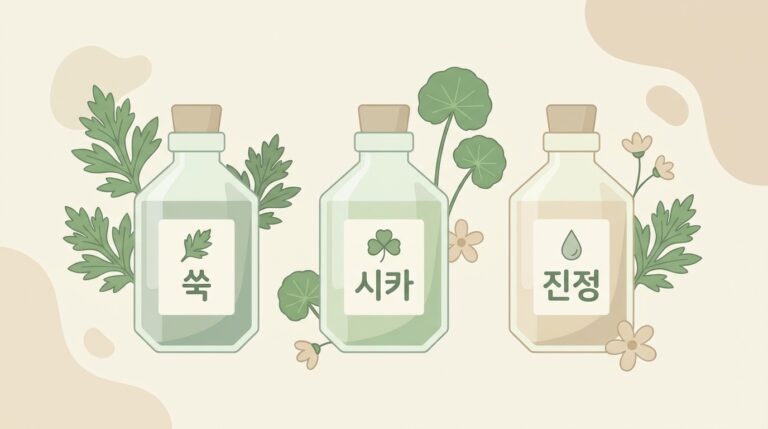
Picture this: You step inside a sleek, multi-story Olive Young flagship store in the trendy streets of Seongsu-dong. The aesthetic displays are mesmerizing, lined with chic glass bottles boasting clean pastel labels. You are looking for gentle, plant-derived skincare because your skin easily turns red and irritated. Everywhere you look, you see Korean characters: 어성초 (Heartleaf), 병풀 (Centella Asiatica), 쑥 (Mugwort), and 비건 (Vegan).
You want to ask the friendly beauty clerk whether a serum is 100% vegan certified, cruelty-free, and free of synthetic fragrances. But the moment the consultant approaches you with a welcoming smile, your mind freezes. You know basic Korean, but shopping for nuanced cosmetic formulations at an intermediate (B2) level feels like reading medical hieroglyphs!
You are not alone. Hundreds of intermediate learners have shared this exact frustration with us. They understand everyday grammar, yet stumble when navigating Korea’s high-tech, fast-paced clean beauty world. This guide is built directly from real-life learner experiences to empower you with natural, professional, and culturally fluent expressions so you can shop for natural and vegan K-Beauty with absolute confidence.
Phase 2: Deep Dive into 3 Essential Expressions
1. 순한 성분으로 만든 제품 추천해 주세요.
- Pronunciation: Sunhan seongbuneuro mandeun jepum chucheonhae juseyo. (Pronounce sunhan like “soon-hahn”, rhythmically gliding into seong-bun).
- Meaning: Literal: “Please recommend a product made with mild ingredients.” | Nuance: “Could you suggest something gentle that won’t irritate sensitive skin?”
- K-Culture Moment: Commonly heard in beauty vloggers’ store visits on YouTube (like Get It Beauty) when asking advisors for soothing formulations.
- Editor’s Insight: The adjective 순하다 (sunhada) literally means “mild” or “tame” (often used for docile pets or mild food). In K-Beauty, it is the magic keyword for hypoallergenic skincare.
- Situation Spectrum:
- Casual (with close friends): 순한 걸로 추천해 줘. (⚠️ Only with friends)
- Semi-formal (Store clerk / Retail): 순한 성분으로 만든 제품 추천해 주세요. (✅ Ideal)
- High Formal (Business presentation): 저자극성 천연 유래 제품을 추천해 주시겠습니까? (✅ Formal meetings)
- 🤔 Think About It: In English, we often say “for sensitive skin,” but Korean speakers frequently focus on the nature of the ingredient itself (순한 성분). Why do you think Korean beauty culture attributes personality traits like “gentleness” to physical ingredients?
2. 이거 비건 인증받은 제품인가요?
- Pronunciation: Igeo bigeon injeungbadeun jepumingayo? (Blend bigeon like “bee-gun” and in-jeung like “in-joong”).
- Meaning: Literal: “Is this a product that received vegan certification?” | Nuance: “Is this officially certified vegan and cruelty-free?”
- K-Culture Moment: Seen on lifestyle reality shows where eco-conscious celebrities inspect beauty labels before purchasing.
- Editor’s Insight: Many Korean brands formulate with plant extracts but may not carry official stamps from the Korea Agency of Vegan Certification and Services (한국비건인증원). Asking for 인증받은 (certified) specifies official verification.
- Situation Spectrum:
- Casual: 이거 비건 인증받았어? (⚠️ Close peers only)
- Semi-formal: 이거 비건 인증받은 제품인가요? (✅ Perfect for shopping)
- High Formal: 해당 품목이 비건 인증을 획득하였습니까? (🚫 Too stiff for retail)
- 🤔 Think About It: How does asking for formal certification (인증) reflect modern consumer demand for transparency in Korean wellness culture?
3. 유해 성분이나 인공 향료는 안 들어갔죠?
- Pronunciation: Yuhae seongbunina ingong hyangryoneun an deureogatjyo? (Cadence rises softly on hyang-ryo-neun and settles on the reassuring ending an deureogatjyo?).
- Meaning: Literal: “Harmful ingredients or artificial fragrances didn’t go in, right?” | Nuance: “This is clean and free of synthetic fragrances or harsh chemicals, right?”
- K-Culture Moment: Featured regularly in K-Drama skincare routines where characters with delicate skin double-check product purity.
- Editor’s Insight: The tag question ending ~안 들어갔죠? (It didn’t go in, right?) is a natural conversational tool to seek friendly confirmation from the seller.
- Situation Spectrum:
- Casual: 인공 향료 안 들어갔지? (⚠️ Casual setting only)
- Semi-formal: 유해 성분이나 인공 향료는 안 들어갔죠? (✅ Ideal retail tone)
- Formal: 유해 성분 및 인공 향료 무첨가 제품입니까? (✅ Clinical/Formal label inquiries)
- 🤔 Think About It: Notice how Korean questions often anticipate a positive confirmation rather than a flat yes/no inquiry. How does this build rapport with retail staff?
Phase 3: Textbook Korean vs. Real Korean
Situation 1: Inquiring about plant-based soothing lines
- 📖 Textbook Korean: 이 화장품은 식물성 성분을 함유하고 있습니까? (I hwajangpumeun singmulseong seongbuneul hamyuhago itseumnikka? – Does this cosmetic product contain vegetable ingredients?)
- 🗣️ Real Korean: 이거 진정 효과 있는 천연 성분 라인이에요? (Igeo jinjeong hyogwa inneun cheon-yeon seongbun rain-ieyo? – Is this a natural ingredient line with soothing effects?)
- 💡 Why it differs: Textbook phrasing uses dense Sino-Korean terms like “식물성 함유” (plant-derived containment), whereas real shoppers naturally combine practical skin benefits like 진정 (soothing) with 천연 성분 (natural ingredients).
Situation 2: Asking if a formula is non-toxic and clean
- 📖 Textbook Korean: 화학 물질이 첨가되지 않았습니까? (Hwahak muljiri cheomgawonji anatseumnikka? – Are chemical substances not added?)
- 🗣️ Real Korean: 성분 순해요? 착한 성분 제품 맞죠? (Seongbun sunhaeyo? Chak-han seongbun jepum matjyo? – Are the ingredients gentle? This is a clean/good-ingredient product, right?)
- 💡 Why it differs: Modern Korean skincare lovers use the trending cultural concept 착한 성분 (literally “kind/good ingredients”) to refer to clean, non-toxic formulations without sounding overly technical.
Phase 4: K-Culture Deep Dive & Non-Verbal Manners
4-1. Nunchi (눈치) & Body Language in K-Beauty Stores
When sampling skincare in Korean cosmetic stores, non-verbal etiquette is essential:
1. The Back-of-the-Hand Test: Never apply open testers directly onto your face. Dispense a tiny pea-sized drop onto the back of your left hand, gently tap it with two fingers, and let the consultant see you assessing the absorption speed (흡수력).
2. Spatula & Cotton Pad Etiquette: Always pick up jar creams using the provided single-use spatulas (스패출러). Dipping bare fingers directly into communal tester jars is considered a breach of hygiene etiquette.
3. Receiving Recommendations: When a beauty consultant hands you a tester or sample sachet, receive it using both hands or support your right wrist with your left hand. A slight 15-degree nod accompanied by “감사합니다” shows respect and creates immediate goodwill.
4-2. Cultural Code: The “Chakhan Seongbun” (착한 성분) & Hwahae Phenomenon
In Korea, the concept of 착한 성분 (kind ingredients) revolutionized the beauty industry. Driven by mobile platforms like the 화해 (Hwahae) ingredient analysis app, Korean consumers actively scrutinize the 20 cautionary ingredients (20가지 주의성분). Natural botanical ingredients like 어성초 (Heartleaf) from Jirisan Mountain or 쑥 (Artemisia/Mugwort) from Ganghwa Island are celebrated not just as plant extracts, but as rooted natural remedies. Choosing vegan and naturally derived skincare in Korea is viewed as an extension of balanced living and environmental mindfulness.
Phase 5: Real-Life Roleplay Scenario
- Setting: The Clean Beauty section of a flagship cosmetic store in Seongsu.
- Character: Minji (민지) – An attentive and ingredient-savvy beauty advisor.
[Scene Start]
민지 (Minji): 어서 오세요! 찾으시는 스킨케어 라인 있으세요?
(Eoseo oseyo! Chajeusineun seukinke-eo rain isseuseyo?)
🎭 Bows gently with hands folded in front, smiling warmly.
“Welcome! Are you looking for a specific skincare line?”
You: 네, 요즘 환절기라 피부가 예민해서 순한 성분으로 만든 제품 추천받고 싶어요.
(Ne, yojeum hwanjeolgira pibuga yeminhaeseo sunhan seongbuneuro mandeun jepum chucheonbatgo sipeoyo.)
🎭 Lightly touch your cheek to indicate sensitive skin.
“Yes, my skin is sensitive due to the seasonal change, so I’d like a recommendation for gentle products.”
민지 (Minji): 아, 그러시면 진정 효과에 좋은 어성초 추출물 세럼은 어떠세요?
(A, geureosimyeon jinjeong hyogwa-e joeun eoseongcho chuchulmul sereumeun eotteoseyo?)
🎭 Presents a sleek green glass bottle and offers a tester spatula.
“Ah, in that case, how about this heartleaf extract serum which is great for soothing?”
You: 향이 거의 없네요. 이거 비건 인증받은 제품인가요?
(Hyangi geoui eomneyo. Igeo bigeon injeungbadeun jepumingayo?)
🎭 Tests a drop on the back of your hand and gently pats it in.
“It has almost no scent. Is this product vegan certified?”
민지 (Minji): 네! 한국비건인증원에서 정식 인증받았고, 동물 실험도 일절 안 한 제품이에요.
(Ne! Hangukbigeon-injeung-woneseo jeongsik injeungbadatgo, dongmul silheomdo iljeol an han jepumieyo.)
🎭 Points to the green vegan emblem embossed on the packaging.
“Yes! It is officially certified by the Korea Vegan Agency, and 100% cruelty-free.”
You: 다행이네요. 유해 성분이나 인공 향료는 전혀 안 들어갔죠?
(Dahaeng-ineyoyo. Yuhae seongbunina ingong hyangryoneun jeonhyeo an deureogatjyo?)
🎭 Inspects the ingredient summary box on the packaging.
“That’s a relief. There are no harmful ingredients or artificial fragrances added, right?”
민지 (Minji): 네, 전성분 EWG 그린 등급이라 민감성 피부에도 안심하고 쓰실 수 있어요.
(Ne, jeonseongbun EWG geurin deunggeubira mingamseong pibuedo ansimhago sseusil su isseoyo.)
🎭 Nods reassuringly and hands you a clean toner pad tester.
“Yes, all ingredients are EWG Green Grade, so you can use it with total peace of mind even on sensitive skin.”
You: 마음에 드네요. 이 세럼으로 하나 주세요!
(Maeume deuneyo. I sereumeuro hana juseyo!)
🎭 Smiles and hands the product box to the advisor.
“I love it. Please give me one of this serum!”
[Scene End]
🔀 Interactive Decision Branch
If the clerk introduces a botanical cream that has a distinct natural herbal scent, how would you respond?
- Choice A: “이거 인공 향료 들어간 거 아니에요? 냄새 이상해요.” (Igeo ingong hyangryo deureogan geo anieyo? Naemsae isanghaeyo.)
- Feedback [Bad]: Accusing the product of smelling weird (냄새 이상해요) can sound rude and blunt to retail staff.
- Choice B: “향이 독특한데, 혹시 천연 에센셜 오일 향인가요?” (Hyangi dokteukhande, hoksi cheon-yeon esensyeol oil hyangingayo?)
- Feedback [Best]: Expresses curiosity politely while asking whether the distinctive aroma comes from natural essential oils.
- Choice C: “그냥 안 살래요. 다른 매장 갈게요.” (Geunyang an sallaeyo. Dareun maejang galgeyo.)
- Feedback [Risk]: Abruptly walking away without context creates an awkward social atmosphere.
Phase 6: 10-Second Emotional Shadowing Drill
Practice these natural cadences out loud. Focus on intonation breaks marked by / and immerse yourself in the emotional cues!
- [😊 Politeness & Curiosity]
저기요, / 순한 천연 성분 세럼 / 추천해 주실 수 있나요?
(Jeogiyo, / sunhan cheon-yeon seongbun sereum / chucheonhae jusil su innayo?) -
[🔍 Careful Inquirer]
민감한 피부라서 그런데, / 비건 인증 마크 / 어디에 있나요?
(Mingamhan piburaseo geureonde, / bigeon injeung makeu / eodie innayo?) -
[😌 Reassured & Decisive]
인공 향료가 없어서 / 자극이 전혀 없네요. / 이걸로 할게요!
(Ingong hyangryoga eopseoseo / jageugi jeonhyeo eomneyo. / Igeollo halgeyo!)
Phase 7: K-Culture Mini Dictionary (4 Key Terms)
-
착한 성분 (Chak-han Seong-bun)
- Meaning: Clean, safe, non-toxic ingredients.
- Context: Widely used in modern K-Beauty marketing to describe formulas free from parabens, mineral oils, and synthetic dyes.
- 진정 케어 (Jin-jeong Ke-eo)
- Meaning: Soothing / Calming skincare.
- Context: The most sought-after function in Korea, highlighting ingredients like Centella (Cica), Tea Tree, and Mugwort to calm redness.
- 비건 뷰티 (Bi-geon Byu-ti)
- Meaning: Vegan beauty.
- Context: Refers to certified cruelty-free products made without animal derivatives, packaged using eco-friendly soy ink and recycled materials.
- 속건조 (Sok-geon-jo)
- Meaning: Inner skin tightness/dehydration.
- Context: Used when your skin surface looks balanced or oily, but the deeper dermal layers feel parched and tight.
Phase 8: Traveler’s Survival Kit
Top 3 Survival Phrases
- 테스터 사용해 봐도 되나요?
Romanization: Teseuteo sayonghae bwado doenayo?
Pro Tip: Always ask before testing pump bottles or sealed compacts. - 민감성 피부용 샘플 좀 챙겨주실 수 있나요?
Romanization: Mingamseong pibuyong saemple jom chaenggyeojusil su innayo?
Pro Tip: When purchasing products at checkout, politely ask for sensitive-skin samples! - 전성분 라벨 영어로 확인할 수 있나요?
Romanization: Jeonseongbun rabel yeong-eoro hwag-inhal su innayo?
Pro Tip: Useful if you have specific severe allergies and need the international INCI names.
Editor’s Travel Note
Before shopping in Myeongdong, Hongdae, or Seongsu, be sure to utilize helpful mobile tools. You can navigate effortlessly by exploring the Naver Map application for Korean street navigation. When in store, you can also cross-reference ingredient safety using the Hwahae cosmetic analysis app download to verify clean certifications on the spot. Remember that purchases over 15,000 KRW at tax-free certified beauty stores qualify for instant tax refund (즉시 환급), so keep your physical passport ready at checkout!
Phase 9: “One Step Deeper” (Reflective Thought)
In Korean culture, the word 착하다 (kind/good-natured) is typically reserved for obedient children or altruistic people. Yet, in beauty discourse, Koreans naturally speak of 착한 성분 (kind ingredients) and 착한 화장품 (kind cosmetics). This linguistic personification reveals how Korean society views self-care: looking after one’s skin is not merely a chemical application, but an ethical, harmonious relationship with nature and oneself. When we choose products made with pure plant extracts, we treat our bodies with mindful kindness.
💬 Your Turn: Does your native language personify skincare and health products with moral words like “kind” or “honest”? Share your language’s unique expressions in the comments below!
Phase 10: FAQ & Common Mistakes
Q: What is the difference between 천연 화장품 (natural cosmetics) and 비건 화장품 (vegan cosmetics) in Korea?
A: 천연 화장품 contains over 95% naturally derived ingredients, but it may still include animal by-products like honey, beeswax, or snail mucin. 비건 화장품 strictly excludes all animal-derived ingredients and prohibits animal testing throughout the entire production lifecycle.
Q: If a product says 무향 (unscented), does it mean it contains zero fragrance?
A: In Korean skincare, 무향 (Unscented) means no synthetic perfume has been added. However, it might still have a subtle earthy or herbal scent naturally derived from botanical oils or plant extracts (원료 고유의 향).
Q: Can I return an opened skincare product if it causes a skin breakout?
A: Most major Korean retailers will offer an exchange or refund within 14 to 30 days if you experience contact dermatitis, provided you bring the original receipt and a medical diagnosis note (피부과 진단서) from a local dermatologist.
🚨 Common Mistakes Warning Board
- Mistake: Saying “이거 동물 없어요?” (Igeo dongmul eopseoyo? – Does this not have animals in it?)
- Correct Action: Use “동물성 원료가 안 들어갔나요?” (Dongmulseong wollyoga an deureogatnayo? – Does it contain no animal-derived raw materials?)
- Mistake: Demanding “화학 성분 다 빼주세요.” (Hwahak seongbun da bpaejuseyo. – Please take out all chemicals.)
- Correct Action: Say “저자극 무첨가 라인 보여주세요.” (Jeojageuk mucheomga rain boyeojuseyo. – Please show me the hypoallergenic, additive-free line.)
- Mistake: Assuming all “Cica” products are 100% vegan.
- Correct Action: Check for the official logo or ask: “비건 인증 마크가 부착되어 있나요?” (Bigeon injeung makeuga buchakdoe-eo innayo?)
Phase 11: Action Missions & Community Challenge
- 🥉 Bronze Mission (Solo Shadowing): Record yourself saying “순한 성분으로 만든 비건 제품 추천해 주세요” three times with natural intonation.
- 🥈 Silver Mission (Social Engagement): Look at your current skincare bottles. Find one botanical ingredient in Korean (e.g., 어성초, 티트리, 병풀) and post it on your Instagram Story tagging @DailyHangul!
- 🥇 Gold Mission (Real-World Practice): Walk into a local Korean cosmetics shop or browse an online Korean beauty retailer and ask a question about vegan certification in Korean.
- 🎮 K-Culture Mission: Watch an episode of a Korean beauty vlog or K-Drama shopping scene, and spot whether they use the term 진정 (soothing) or 순하다 (mild)!
Phase 12: Interactive Quiz Challenge
Test your knowledge with these three practical questions!
1. Situation Judgment: You have sensitive, reactive skin and want to ask the clerk for a non-irritating, clean ingredient toner. Which sentence is the most natural?
* (A) 식물성 화학 물질을 첨가해 주세요.
* (B) 민감성 피부에 순한 착한 성분 토너 추천해 주세요.
* (C) 동물 테스트한 화장품만 찾고 있어요.
2. Fill in the Blank: Complete the sentence to ask if the product is certified vegan.
“이거 한국비건인증원에서 ______ 받은 제품인가요?”
* (A) 배달 (Delivery)
* (B) 인증 (Certification)
* (C) 포장 (Packaging)
3. True or False: In Korean cosmetics, a product labeled “천연 유래 성분” (naturally derived ingredients) is always guaranteed to be 100% vegan.
* (A) True
* (B) False
👉 Click here to check your answers & explanations!
-
Answer: (B)
Explanation: Option (B) combines key natural terms (민감성, 순한, 착한 성분) seamlessly. (A) makes no sense grammatically, and (C) means asking for animal-tested products. -
Answer: (B) 인증
Explanation: 인증받다 means “to receive certification.” The complete phrase means “Is this product certified by the Korea Agency of Vegan Certification?” -
Answer: (B) False
Explanation: Natural ingredients (천연 성분) may include non-vegan substances like honey, propolis, or beeswax. Always look specifically for the 비건 (Vegan) badge!







