

Phase 1: 공감 (Story Immersion Opening)
안녕하세요! 매일한글 에디터입니다.
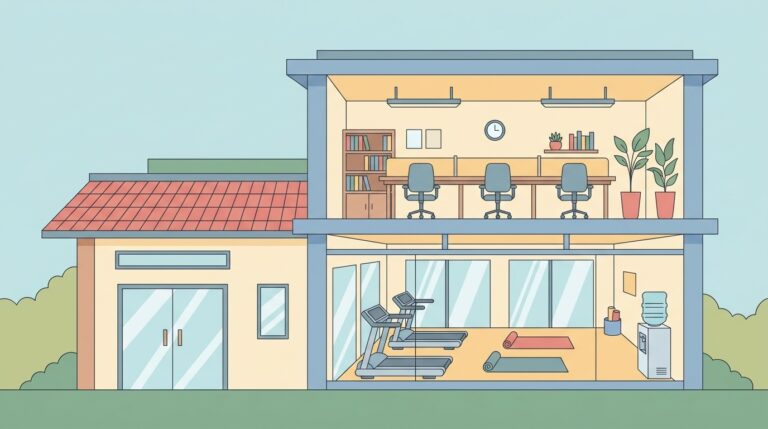
Have you ever walked through a modern Korean danji (아파트 단지 – apartment complex) and felt like you stepped into a self-contained futuristic mini-city? If you’ve watched K-dramas like Crash Course in Romance or Sky Castle, you already know that Korean apartment complexes aren’t just buildings; they are entire lifestyle ecosystems. Right beneath the residential towers lie state-of-the-art community centers (커뮤니티 센터) boasting full fitness gyms, golf driving ranges, saunas, and whisper-quiet study rooms (dokseosil – 독서실).
However, for many international residents and travelers staying long-term, walking down to that sleek basement facility can trigger major social anxiety. You swipe your door fob, but the gym turnstile buzzes red. You want to reserve a study desk for remote work, but the automated kiosk displays unfamiliar terms like 좌석 배정 (seat assignment) and 관리비 합산 (billed to maintenance). You wonder: Do I need special indoor shoes? Can I just bring my laptop into the quiet room? How do I talk to the front desk manager without feeling awkward?
Don’t worry! Drawing from hundreds of real coaching sessions with expats navigating daily life in Seoul, this guide will give you the exact conversational tools, nunchi (눈치 – social awareness) tips, and cultural confidence needed to enjoy your apartment amenities like a seasoned resident.
Phase 2: 핵심 표현 3선 심층 분석 (Deep-Dive Core Expressions)
1. 입주민 등록 하러 왔는데요. (Ip-ju-min deung-nok ha-reo wan-neun-de-yo.)
- Pronunciation: [Ip-joo-min deung-nok ha-reo wan-neun-de-yo] (Sounds like “Eep-joo-min deung-nok ha-raw wahn-neun-day-yo”)
- Meaning: Literal: “I came to do resident registration.” | Real Nuance: “Hi, I live here and I’d like to sign up to use the community facility.”
- K-Culture Moment: In slice-of-life K-dramas, new tenants introduce themselves at the management counter with a polite half-bow and this exact sentence to register their fingerprint or key fob.
- Editor’s Insight: Ending with -는데요 (-neundeyo) softens your statement. Rather than sounding like a blunt command, it leaves room for the staff to warmly guide you to the next step.
- Situation Spectrum:
- Casual: 🚫 (Too informal for a facility desk)
- Semi-formal: ✅ (Perfect for friendly, polite resident service)
- Formal: ✅ (Highly acceptable everywhere)
- 🤔 Think About It: In many Western countries, gyms are commercial memberships. In Korea, apartment amenities are communal assets tied to your specific household unit (dong and ho). Why do you think Korean registration focuses so heavily on unit verification rather than just individual payment?
2. 독서실 자리 예약은 어떻게 해요? (Dok-seo-sil ja-ri ye-yak-eun eo-tteo-ke hae-yo?)
- Pronunciation: [Dok-seo-shil ja-ri ye-ya-keun eo-tteo-ke hae-yo] (Think: “Dok-saw-sheel jah-ree yay-yah-goon uh-tuh-kay hay-yo”)
- Meaning: Literal: “How do I do study room seat reservation?” | Real Nuance: “Could you explain how to book a study desk / cubicle?”
- K-Culture Moment: In youth dramas like Twenty-Five Twenty-One or high-school exam arcs, students rush to the dokseosil kiosk after school to secure their favorite cubicle by tapping their key tag.
- Editor’s Insight: Most modern complexes use automated touchscreens or apartment companion apps. Asking 어떻게 해요? (How do I do it?) prompts the manager to either show you the kiosk UI or set it up directly.
- Situation Spectrum:
- Casual: ⚠️ (Only with close neighbors)
- Semi-formal: ✅ (Ideal for counter inquiries)
- Formal: ✅
- 🤔 Think About It: In your home country, are public libraries or residential study rooms dead-silent cubicles or open collaborative spaces? How does Korea’s intense study culture (hagwon and exam preparation) shape these neighborhood facilities?
3. 실내 운동화로 갈아신어야 하나요? (Sil-nae un-dong-hwa-ro gal-a-sin-eo-ya ha-na-yo?)
- Pronunciation: [Sheel-nae oon-dong-hwa-ro gahl-ah-sheen-uh-yah hah-nah-yo]
- Meaning: Literal: “Must I change into indoor athletic shoes?” | Real Nuance: “Do I need to change into dedicated clean indoor sneakers before entering the gym floor?”
- K-Culture Moment: Characters getting playfully scolded by gym staff or fitness buddies for stepping onto the treadmill wearing the dusty sneakers they wore outside.
- Editor’s Insight: In Korea, hygiene and floor maintenance are taken very seriously. Gyms strictly separate outdoor shoes (실외화) from indoor-only shoes (실내화/실내 전용 운동화). Asking this proactively shows immense cultural respect and sens (센스 – social savvy).
- Situation Spectrum:
- Casual: ⚠️
- Semi-formal: ✅
- Formal: ✅
- 🤔 Think About It: Taking shoes off at home is standard across East Asia, but extending shoe-changing etiquette to communal gyms reflects a deep collective respect for shared cleanliness. What similar habits exist in your culture?
Phase 3: 교과서 한국어 vs 진짜 한국어 (Textbook vs. Real Korean)
Situation 1: Asking if a workout machine or study desk is currently taken
- 📖 교과서 한국어 (Textbook Korean):
- 이 운동 기구를 사용하고 계십니까? (I un-dong gi-gu-reul sa-yong-ha-go gye-sim-ni-kka? / “Are you utilizing this exercise apparatus?”)
- 🗣️ 진짜 한국어 (Real Korean):
- 혹시 여기 쓰시나요? (Hok-si yeo-gi sseu-si-na-yo? / “Excuse me, are you using this [machine/spot]?”)
- 💡 왜 다를까? (Why the difference?): Real-world native Korean relies on contextual pronouns like 여기 (here) and soft hedges like 혹시 (by any chance/excuse me) rather than stiff technical terms like 운동 기구 (exercise apparatus).
Situation 2: Asking how the amenity fee is charged
- 📖 교과서 한국어 (Textbook Korean):
- 이용 요금을 지금 신용카드로 결제해야 합니까? (I-yong yo-geum-eul ji-geum sin-yong-ka-deu-ro gyeol-je-hae-ya ham-ni-kka? / “Must I pay the utilization fee right now via credit card?”)
- 🗣️ 진짜 한국어 (Real Korean):
- 이용료는 관리비에 합산되나요? (I-yong-ryo-neun gwal-li-bi-e hap-san-doe-na-yo? / “Will the fee just be added to my monthly maintenance bill?”)
- 💡 왜 다를까? (Why the difference?): In nearly all Korean apartment complexes, amenity fees are not charged on the spot via credit card; they are automatically appended (합산) to the apartment unit’s monthly utility & maintenance bill (관리비).
Phase 4: K-Culture 딥다이브 & 비언어적 매너 (Culture Deep Dive & Mannerisms)
4-1. 눈치(Nunchi) & Gestures in Community Facilities
- The Dedicated Indoor Sneaker Check: Never step onto the gym turf or wooden floor with the shoes you walked in with from the street. Carry your clean workout shoes in a small gym bag or shoe pouch and change at the entryway bench.
- The Silent Study Room Code (독서실 에티켓): In apartment dokseosil, silence is absolute. Use a silicone keyboard cover on laptops, switch phone vibrations completely off (even vibration sounds on wooden desks can draw glares), and avoid clicky pens.
- The Card Tag Courtesy: When scanning your RFID card/dong key, wait for the chime (삑! – Ppip!) and step through cleanly without tailgating behind another resident.
4-2. Cultural Code Analysis: The Apartment as an All-Inclusive City
In Korean urban planning, major apartment complexes (often built by mega-brands like Raemian, Xi, Prugio, or e-Pyeonhansesang) compete by building hyper-luxurious community centers. These aren’t just bare-bones amenities; they serve as social hubs where neighbors attend morning yoga, seniors play screen golf, and students spend entire weekends studying for university entrance exams (Suneung) without ever leaving the complex perimeter.
Phase 5: 실전 롤플레이 시나리오 (Real-Life Roleplay Scenario)
Setting: The underground Community Center front desk at ‘Hangul I-Park’ apartments. Resident Alex approaches the center manager, Mr. Min.
- Alex: 안녕하세요! 이번에 104동에 이사 왔는데요. (Annyeonghaseyo! Ibeone 104-donge isa wanneundeyo.)
- 🎭 Action: Gives a slight 15-degree bow while holding his apartment key fob.
- Translation: “Hello! I just moved into Building 104.”
- Mr. Min: 아, 환영합니다! 커뮤니티 시설 등록 도와드릴까요? (A, hwanyeonghamnida! Keomyuniti siseol deungnok dowadeurilkkayo?)
- 🎭 Action: Smiles warmly and pulls up the computer terminal.
- Translation: “Ah, welcome! Shall I help you register for the community facilities?”
- Alex: 네, 헬스장이랑 독서실 둘 다 이용하고 싶어요. (Ne, helseujang-irang dokseosil dul da iyonghago sipeoyo.)
- 🎭 Action: Points towards the gym doors and quiet study wing.
- Translation: “Yes, I’d like to use both the fitness gym and the study room.”
- Mr. Min: 네, 입주민 카드로 등록해 드릴게요. 카드 한번 태그해 주세요. (Ne, ipjumin kadeuro deungnokae deurilgeyo. Kadeu hanbeon taegeuhae juseyo.)
- 🎭 Action: Points to the RFID reader pad on the counter.
- Translation: “Sure, I’ll register it to your resident card. Please tap your card here once.”
- Alex: (삑!) 이용료는 관리비에 합산되나요? ((Ppip!) Iyongryoneun gwanribie hapsandoenayo?)
- 🎭 Action: Taps the card and listens for the chime.
- Translation: “(Beep!) Will the monthly fee be added to my maintenance bill?”
- Mr. Min: 네, 맞습니다. 헬스장은 월 2만 원이고 다음 달 관리비에 청구돼요. (Ne, matseumnida. Helseujangeun wol iman-won-igo daeum dal gwanribie cheonggudwaeyo.)
- 🎭 Action: Hands back a registration receipt.
- Translation: “Yes, that’s right. The gym is 20,000 KRW per month and will be billed on next month’s statement.”
- Alex: 독서실은 자리를 미리 예약해야 하나요? (Dokseosireun jarireul miri yeyakaeya hanayo?)
- 🎭 Action: Looks over toward the digital touchscreen kiosk next to the door.
- Translation: “For the study room, do I need to reserve a desk in advance?”
- Mr. Min: 저기 키오스크에서 카드를 찍고 원하시는 빈 좌석을 선택하시면 됩니다! (Jeogi kioseukeueseo kadeureul jjikgo wonhasineun bin jwaseokeul seontaekhasimyeon doemnida!)
- 🎭 Action: Points directly at the digital kiosk interface.
- Translation: “Just tap your card at that kiosk over there and select any available vacant seat!”
🔀 인터랙티브 분기점 (Interactive Choice Branch)
Alex enters the gym area for the first time and notices everyone is wearing spotless running shoes. What should Alex say to the gym trainer on duty?
- Option A: “밖에서 신고 온 운동화 그냥 신어도 돼요?” (Bakk-eseo sin-go on un-dong-hwa geu-nyang sin-eo-do dwae-yo? / “Can I just wear the shoes I wore outside?”)
- Feedback: 🚫 Risk / Bad Manner. Street shoes carry dirt and small stones that damage treadmills. The trainer will likely refuse entry.
- Option B: “실내 전용 운동화로 갈아신어야 하죠? 사물함은 어디에 있나요?” (Sil-nae jeon-yong un-dong-hwa-ro gal-a-sin-eo-ya ha-jo? Sa-mul-ham-eun eo-di-e in-na-yo? / “I should change into indoor-only sneakers, right? Where are the lockers?”)
- Feedback: 🌟 Best Choice! Shows high etiquette awareness and asks practical follow-up logistics in natural, polite Korean.
- Option C: “신발 벗고 맨발로 운동할게요.” (Sin-bal beot-go maen-bal-lo un-dong-hal-ge-yo? / “I’ll take off my shoes and work out barefoot.”)
- Feedback: ⚠️ Awkward / Unsafe. Barefoot workouts are generally prohibited in communal gyms for safety reasons.
Phase 6: 10초 감정 섀도잉 드릴 (10-Second Emotional Shadowing Drills)
Practice these with natural speech rhythm and authentic pauses (marked with /).
[😊 밝고 공손하게 - Bright & Courteous]- 안녕하세요! / 이번에 새로 이사 온 / 입주민인데요. /
(An-nyeong-ha-se-yo! / I-beon-e sae-ro i-sa on / ip-ju-min-in-de-yo.)
- 안녕하세요! / 이번에 새로 이사 온 / 입주민인데요. /
[🤔 궁금하고 조심스럽게 - Inquiring & Considerate]- 혹시 / 독서실 키오스크 / 사용법 좀 알려주실 수 있나요? /
(Hok-si / dok-seo-sil ki-o-seu-ku / sa-yong-beop jom al-lyeo-ju-sil su in-na-yo?)
- 혹시 / 독서실 키오스크 / 사용법 좀 알려주실 수 있나요? /
[🤝 정중하고 매너 있게 - Polite & Respectful]- 저기요, / 이 기구 / 혹시 지금 쓰고 계신가요? /
(Jeo-gi-yo, / i gi-gu / hok-si ji-geum sseu-go gye-sin-ga-yo?)
- 저기요, / 이 기구 / 혹시 지금 쓰고 계신가요? /
Phase 7: K-Culture 미니 사전 (Mini Dictionary)
- 입주민 (Ip-ju-min) | Resident / Tenant
- Usage: Used whenever accessing resident-only perks, security services, or community voting.
- 관리비 (Gwal-li-bi) | Apartment Maintenance & Utility Bill
- Usage: The monthly consolidated bill that covers shared elevator electricity, cleaning, security, and facility fees.
- 독서실 / 스터디 카페 (Dok-seo-sil / Seu-teo-di Ka-pe) | Quiet Study Room / Study Cafe
- Usage: Complex amenities partitioned into high-focus individual study carrels or relaxed cafe-style desk spaces.
- 실내 전용 운동화 (Sil-nae jeon-yong un-dong-hwa) | Indoor-Only Athletic Sneakers
- Usage: Clean shoes reserved exclusively for the gym floor or indoor badminton/golf facilities.
Phase 8: 여행자 & 장기 거주자를 위한 생존 키트 (Living Survival Kit)
Survival TOP 3 Expressions
- “입주민 카드 등록해 주세요.” (Ip-ju-min ka-deu deung-nok-hae ju-se-yo.) – “Please register my resident card.”
- Pro Tip: Keep your lease contract or apartment key fob ready when visiting the management desk.
- “여기 자리 비어 있나요?” (Yeo-gi ja-ri bi-eo in-na-yo?) – “Is this seat/spot empty?”
- Pro Tip: Use this in the community study cafe when looking for an open desk near a power outlet.
- “사물함 신청은 어떻게 하나요?” (Sa-mul-ham sin-cheong-eun eo-tteo-ke ha-na-yo?) – “How do I apply for a gym locker?”
- Pro Tip: Locker fees are usually tiny (~5,000 KRW/month) and keep you from lugging your indoor sneakers back and forth.
Editor’s Travel & Living Note
If you reside in a modern Korean apartment complex, ask your landlord or leasing agent about downloading the Apartmentner app on Google Play or checking the resident portal. Many complexes allow you to check live gym capacity, reserve study desks, and book golf simulator bays directly from your smartphone!
Phase 9: “한 발 더 깊이” – 생각 질문 (Deep Cultural Insight)
In Korean apartment complexes, community facilities represent an extension of the traditional village well or town square (madang – 마당), modernized into high-tech shared amenities. Because thousands of people share close physical quarters in vertical high-rises, strict adherence to silent study codes and pristine indoor gym rules isn’t viewed as restrictive; rather, it is celebrated as collective consideration (bae-ryeo – 배려). By maintaining these boundaries together, residents create a high quality of life at minimal individual cost.
💬 Your Turn: Does your neighborhood or housing community offer shared resident-only facilities? How does the etiquette in your hometown compare to Korea’s indoor-shoe rule and silent study rooms? Let us know in the comments below!
Phase 10: FAQ & 오해 방지 (FAQ Schema & Common Mistakes)
Q: Can I invite non-resident friends to use my apartment complex gym with me?
A: In most Korean apartment complexes, facilities are strictly restricted to verified residents (입주민 전용). While some complexes permit registered guests for a small extra surcharge, bringing unregistered outside guests can lead to warnings from security or management. Always ask the front desk: “게스트 동반 가능한가요?” (Can I bring a guest?).
Q: Do I need cash or a credit card when registering at the community center desk?
A: Rarely. Almost all Korean apartment facilities charge membership fees directly to your household’s monthly gwanribi (관리비 – maintenance bill). You only need your registered resident ID tag or building/unit number (dong-ho-su).
Q: What is the difference between a 독서실 (dokseosil) and a 주민 카페 (resident cafe)?
A: A dokseosil is an ultra-silent study hall with individual partitioned booths, strict noise rules, and zero phone calls allowed. A jumin cafe or community lounge is a casual social space where neighbors can chat, drink coffee, and study in a relaxed environment.
🚨 흔한 실수 (Common Mistakes TOP 3)
- Wearing outside running shoes onto the gym floor.
- Correct Action: Bring a separate pair of clean sneakers in your bag and switch into them at the shoe racks.
- Typing loudly on laptop mechanical keyboards in the 독서실.
- Correct Action: Move to the “Laptop Zone” (노트북 존) or use a silent silicone keyboard cover and a silent mouse.
- Leaving personal items to hold gym machines or study desks indefinitely.
- Correct Action: Korean facilities operate on active occupancy; if you leave for over 30–60 minutes, release your seat at the kiosk to avoid complaints.
Phase 11: 액션 미션 & 참여 유도 (Action Missions)
- 🥉 Bronze Mission (Solo Shadowing): Say “입주민 등록 하러 왔는데요” out loud 3 times in front of your mirror with a polite smile and gentle head nod.
- 🥈 Silver Mission (Interactive Practice): Next time you enter a shared study space or gym, practice softly asking: “혹시 여기 쓰시나요?” (Hok-si yeo-gi sseu-si-na-yo?).
- 🥇 Gold Mission (Real-Life Mastery): Visit your apartment community desk or a local Korean study cafe (seuteodi kape), scan your access card at the kiosk, and successfully select your seat in Korean!
- 🎮 K-Culture Mission: Watch an episode of a modern apartment-based K-drama (like Happiness or Sky Castle) and spot the scenes where characters interact in the building elevator or community amenities.
Phase 12: 인터랙티브 퀴즈 챌린지 (Interactive Quiz Challenge)
1. Situational Judgment
Question: You want to ask the community center manager if you can charge the monthly gym fee to your household maintenance bill. Which sentence is most natural?
* (A) 돈을 나중에 길에서 줄게요. (Don-eul na-jung-e gil-e-seo jul-ge-yo.)
* (B) 관리비에 합산되나요? (Gwal-li-bi-e hap-san-doe-na-yo?)
* (C) 카드로 매일 결제할래요. (Ka-deu-ro mae-il gyeol-je-hal-lae-yo.)
2. Fill-in-the-Blank
Question: Fill in the missing word: “헬스장에서는 반드시 ______ 운동화로 갈아신어야 합니다.” (At the gym, you must change into ______ athletic shoes.)
* (A) 실외 (outdoor)
* (B) 실내 전용 (indoor-only)
* (C) 등산 (hiking)
3. True / False Cultural Check
Question (T/F): In an apartment 독서실 (dokseosil), it is acceptable to talk on the phone as long as you whisper quietly.
👉 Click here to reveal Quiz Answers & Explanations!
- Answer: (B) 관리비에 합산되나요?
- Explanation: Community amenities in Korean apartments are billed directly through the consolidated monthly maintenance statement (관리비).
- Answer: (B) 실내 전용 (Sil-nae jeon-yong)
- Explanation: 실내 전용 운동화 refers to clean, indoor-only sneakers that protect the shared fitness flooring.
- Answer: False (F)
- Explanation: Phone calls are strictly prohibited inside the study room cabin. You must step out into the hallway or elevator foyer to take calls.
- Explanation: Phone calls are strictly prohibited inside the study room cabin. You must step out into the hallway or elevator foyer to take calls.







