

Don’t Get Ripped Off at Korean Festivals: How to Spot Overcharging and Speak Up Like a Local
Phase 1: 공감 (Story Immersion Opening)
안녕하세요! 매일한글 에디터입니다.
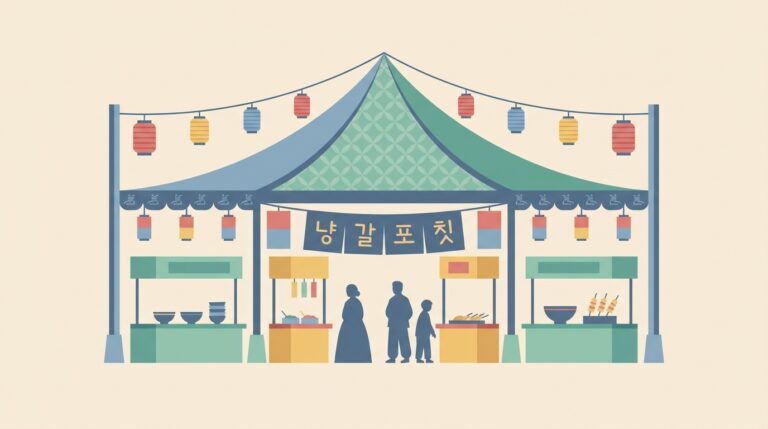
Imagine this: You are walking through the glowing lantern-lit paths of a bustling regional festival in Korea. The crisp evening air is thick with the irresistible aromas of sizzling pajeon (seafood pancake), grilled skewers, and boiling eomuk-tang (fish cake soup). Your mouth waters, and you sit down at an inviting pop-up tent (pojangmacha) to celebrate the vibrant local culture with friends. Everything feels like a scene straight out of a healing K-Drama—until the bill arrives. A modest plate of stir-fried pork and a small side of dried snacks costs 50,000 KRW ($38 USD), with no itemized receipt in sight.
Your stomach drops. Is this normal festival pricing, or did you just get hit with 바가지 (bagaji—overcharging)? If you have ever felt paralyzed between wanting to be a polite visitor and refusing to be taken advantage of, you are far from alone. In fact, price gouging at local festivals is currently one of the hottest social topics in South Korea, sparking passionate debates across TV news and YouTube vlogs.
As your 10-year local cultural navigator, I am here to bridge that gap. In this guide, you will master intermediate (B2-level) communicative strategies to tactfully verify prices, assert your consumer rights without causing unnecessary scenes, and navigate festival culture with genuine local confidence.
Phase 2: 핵심 표현 3선 심층 분석 (Core Expressions)
1. 바가지 씌우는 거 아니에요? (한글)
- Pronunciation: Bagaji ssuiuneun geo anieyo? (Sounds like: Bah-gah-jee sshi-oo-neun guh ah-nee-eh-yo? – imagine scooping water with an oversized wooden gourd bowl).
- Meaning: Literal: “Aren’t you putting a gourd over my head?” | Actual Nuance: “Aren’t you ripping me off?” / “Isn’t this an unfair markup?”
- K-Culture Moment: Seen frequently in variety shows like 2 Days & 1 Night (1박 2일) or consumer investigative programs when cast members jokingly or firmly challenge unrealistic street vendor prices.
- Editor’s Insight: Bagaji originates from the historical practice of charging arbitrary prices using unstandardized wooden gourd scoops. In B2 conversation, pairing this noun with the soft ending -는 거 아니에요? softens an accusation into a sharp, witty rhetorical check.
- Situation Spectrum: Casual: ✅ | Semi-formal: ⚠️ (Use cautiously with vendors) | Formal: 🚫
- 🤔 Think About It: In your native culture, do idioms for overcharging refer to physical objects, physical harm (e.g., “an arm and a leg”), or legal violations?
2. 메뉴판에 적힌 가격이랑 다른데요? (한글)
- Pronunciation: Menyupane jeokhin gageogirang dareundeyo? (Sounds like: Meh-nyu-pahn-eh juk-heen gah-gyuhk-ee-rahng dah-reun-day-yo?)
- Meaning: Literal: “It is different from the price written on the menu board.” | Actual Nuance: “Excuse me, this doesn’t match the advertised price.”
- K-Culture Moment: Used by observant leads in slice-of-life K-Dramas when discovering discrepancies in seasonal market stalls.
- Editor’s Insight: The nuance here lies in the ending -ㄴ/은데요, which introduces factual tension without direct aggression. It invites the seller to clarify their mistake rather than initiating an outright confrontation.
- Situation Spectrum: Casual: ✅ | Semi-formal: ✅ (Best balance of tact and firmness) | Formal: ✅
- 🤔 Think About It: Notice how Korean creates indirect friction through observation rather than saying “You lied to me.”
3. 양에 비해 가격이 너무 센 것 같아요. (한글)
- Pronunciation: Yange bihae gageogi neomu sen geot gatayo. (Sounds like: Yahng-eh bee-hae gah-gyuhg-ee nuh-moo sehn guht gah-tah-yo.)
- Meaning: Literal: “Compared to the portion, the price seems too strong.” | Actual Nuance: “The price feels pretty steep for this portion size.”
- K-Culture Moment: Common among food vloggers inspecting seasonal cherry blossom food trucks.
- Editor’s Insight: 세다 (seda) literally means “strong” or “intense,” but in colloquial market Korean, it serves as a natural synonym for 비싸다 (bissada / expensive). Adding ~것 같아요 (“it seems like”) keeps you polite while making your dissatisfaction clear.
- Situation Spectrum: Casual: ✅ | Semi-formal: ✅ | Formal: ⚠️
- 🤔 Think About It: Why do Koreans prefer saying a price is “strong” rather than directly labeling a seller “greedy”?
Phase 3: 교과서 한국어 vs 진짜 한국어 (Textbook vs. Real-Life Korean)
Situation 1: Pointing out an exorbitant festival surcharge
- 📖 교과서 한국어: 이 음식은 너무 비쌉니다. 깎아주세요. (I eumsigeun neomu bissanida. Kkak-ajuseyo. – This food is too expensive. Please give me a discount.)
- 🗣️ 진짜 한국어: 사장님, 축제인 건 알겠는데 이건 가격이 좀 과한 것 같아요. (Sajangnim, chukjein geon algetneunde igeon gageogi jom gwahan geot gatayo. – Boss, I understand it’s a festival, but this price feels a bit excessive.)
- 💡 왜 다를까? Asking to “discount” (깎아주세요) at pop-up event stalls rarely works and sounds childish. B2-level speakers acknowledge the situational context (축제인 건 알겠는데) before addressing the lack of proportionality.
Situation 2: Asking for itemized pricing before ordering
- 📖 교과서 한국어: 가격표를 보여주십시오. (Gageokpyoreul boyeojusipsio. – Please show me the price list.)
- 🗣️ 진짜 한국어: 주문하기 전에 메뉴별로 가격 먼저 확인할 수 있을까요? (Jumunhagi jeone menyubyeollo gageok meonjeo hwaginhalsu isseulkkayo? – Could I verify the prices per menu item before ordering?)
- 💡 왜 다를까? Formal imperative endings (-십시오) create unnatural distance at outdoor tents. A gentle potential question with 확인할 수 있을까요? achieves compliance without putting the vendor on defense.
Phase 4: K-Culture 딥다이브 & 비언어적 매너 (Deep Dive & Non-verbal Etiquette)
4-1. 눈치 (Nunchi) & Gestures
When disputing a price or questioning an unlisted menu item at a festival:
* The Tilt & Glance: Avoid pointing your index finger directly at the menu or the vendor. Instead, use an open hand gesture while slightly tilting your head. This non-verbal cue signals curiosity rather than hostile confrontation.
* Tone Modulation: Lower your pitch slightly and speak at a steady pace. Raising your voice at an open stall triggers public embarrassment (che-myeon / face-saving), which makes the vendor defensive.
4-2. Cultural Code: The Anti-Bagaji Movement
Overcharging controversies at events like the Yeongyang Traditional Market (where puffed snacks were sold at ten times the market price) triggered nationwide public outrage in Korea. Local governments now mandate 정찰제 (jeongchalje / fixed-price system) and conduct spot-inspections. Knowing the vocabulary associated with this social phenomenon proves you understand contemporary Korean civic standards.
Phase 5: 실전 롤플레이 시나리오 (Real-Life Roleplay)
Setting: A vibrant seafood tent at the Gangneung Danoje Festival.
NPC: Vendor Auntie (이모님 / Imonim) known for brisk sales tactics.
- Turn 1 (Vendor): 어서 와요! 이모가 서비스 많이 줄 테니까 여기 앉아! (Eoseo wayo! Imoga seobiseu mani jul tenikka yeogi anja! – Welcome! Sit here, I’ll throw in lots of extras!)
- Turn 2 (Learner): 🎭 Looking at the menu board with missing price tags
저기 사장님, 모둠 해물 가격이 안 적혀 있는데 얼마예요? (Jeogi sajangnim, modum haemul gageogi an jeokhyeo inneunde eolmayeyo? – Excuse me boss, the mixed seafood has no price written. How much is it?) - Turn 3 (Vendor): 축제 특별 구성이라 7만 원이야. 기분 좋게 먹고 가! (Chukje teukbyeol guseong-ira chilman won-iya. Gibun joke meokgo ga! – It’s a special festival set, 70,000 KRW. Just enjoy it!)
- Turn 4 (Learner): 🎭 Checking adjacent tables with a calm expression
7만 원이요? 축제 특수를 감안해도 생각보다 가격이 센데요. (Chilman won-iyo? Chukje teuksureul gamanhaedo saenggakboda gageogi sendeyo. – 70,000 KRW? Even considering the festival surcharge, that’s steeper than expected.) - Turn 5 (Vendor): 아이구, 산지 직송이라 그래! 현금 내면 5천 원 깎아줄게. (Aigu, sanji jiksong-ira geurae! Hyeongeum naemyeon ocheon won kkak-ajulge. – Oh come on, it’s fresh from the source! Pay cash and I’ll take 5,000 off.)
- Turn 6 (Learner): 카드 결제는 정가대로 받는 거죠? 카드 영수증 발행 가능한가요? (Kadeu gyeoljeneun jeong-gadaero banneun geojyo? Kadeu yeongsujeung balhaeng ganeunghangayo? – Card payments are accepted at standard price, right? Can you issue a card receipt?)
- Turn 7 (Vendor): 🎭 Hesitating, realizing the customer is well-informed
그럼, 당연히 되지. 양 넉넉하게 담아줄 테니까 편하게 먹어. (Geureom, dang-yeonhi doeji. Yang neongneokhage dam-ajul tenikka pyeonhage meogeo. – Well, of course. I’ll make sure the portion is generous, take your time.) - Turn 8 (Learner): 네, 영수증 챙겨주세요. 맛있게 부탁드립니다! (Ne, yeongsujeung chaeng-gyeojuseyo. Mas-itge butakdeurimnida! – Yes, please provide the receipt. Please make it delicious!)
🔀 Interactive Choice Point
What should you do if the vendor refuses to show clear pricing before preparing your food?
* Choice A: Eat the food silently and complain later on social media.
* Choice B: Shout “This is illegal!” (이거 불법이에요!) and knock over a chair.
* Choice C: Politely say “가격 확인이 안 되면 주문하기 어려울 것 같아요” (Gageok hwagini an doemyeon jumunhagi eoryeoul geot gatayo – If I can’t confirm the price, I don’t think I can order) and walk away.
Feedback:
* Choice A (Bad): Leaves you out of pocket with zero resolution.
* Choice B (Risk): Creates severe public disturbance and potential legal liability.
* Choice C (Best): Asserts standard consumer boundaries with pristine B2 politeness.
Phase 6: 10초 감정 섀도잉 드릴 (Emotional Shadowing Drill)
Practice matching pitch and micro-pauses (/ indicates a 0.5s pause):
[🤔 의아해하며 정중하게 - Curious & Polite]
저기 사장님, / 메뉴판에 적힌 금액이랑 / 결제 금액이 다른데요?
(Jeogi sajangnim, / menyupane jeokhin geumaegirang / gyeolje geumaegi dareundeyo?)-
[🤨 단호하지만 차분하게 - Firm & Level-headed]
축제인 건 알겠지만, / 양에 비해 / 가격이 너무 과한 것 같아요.
(Chukjein geon algetjiman, / yange bihae / gageogi neomu gwahan geot gatayo.) -
[😊 침착하고 당당하게 - Confident & Collected]
주문하기 전에 / 정확한 가격 먼저 / 확인 부탁드릴게요.
(Jumunhagi jeone / jeonghwakhan gageok meonjeo / hwagin butakdeurilgeyo.)
Phase 7: K-Culture 미니 사전 (Mini Dictionary)
- 바가지 (Bagaji): Unfair price gouging or overcharging, particularly common at short-term tourist pop-ups.
- 눈탱이 (Nuntaengi): Colloquial slang for getting ripped off heavily (e.g., 눈탱이 맞았다 – “I got scammed hard”).
- 정찰제 (Jeongchalje): A mandatory fixed-price labeling policy where vendors must display all rates openly.
- 축제 물가 (Chukje Mulga): The inflated price index unique to regional festivals and temporary seasonal markets.
Phase 8: 여행자를 위한 생존 키트 (Survival Kit)
Survival TOP 3 Phrases:
- 가격표 어디 있어요? (Gageokpyo eodi isseoyo? – Where is the price tag?)
Pro Tip: Ask before sitting down to prevent high minimum-spend pressure. - 영수증 끊어주실 수 있나요? (Yeongsujeung kkeuneojusil su innayo? – Can you print a receipt?)
Pro Tip: Fraudulent vendors often drop marked-up prices when asked for legal documentation. - 1인분 주문도 가능한가요? (Irinbun jumundo ganeunghangayo? – Can I order just one portion?)
Pro Tip: Stalls often force tourists into ordering huge 3-4 person platters.
Editor’s Travel Note
- Install the Korea Tourism Organization 1330 Helpline App for immediate English dispute translation and real-time overcharging reporting.
- Check local municipal notices on Naver Map Festival Guides to cross-check authorized food zone pricing before attending.
Phase 9: “한 발 더 깊이” (Reflective Humanities Prompt)
In traditional Korean culture, Jeong (정—warm social bonding) often bridged commercial transactions, where street vendors provided extra free dishes (seobiseu / 서비스). However, contemporary rapid commercialization has caused friction between this traditional trust and short-term capital exploitation at tourist hubs. When you learn to speak up with refined politeness, you are not being difficult; you are actively contributing to fair consumer ethics in Korea’s evolving travel landscape.
💬 Your Turn: Have you ever experienced surprising price markups during public events in Korea or your home country? Share your story in the comments below!
Phase 10: FAQ & 오해 방지 (FAQ Schema)
Q: Is bargaining acceptable at Korean local festivals?
A: Minor price rounding or asking for small extra portions (덤 / deom) is acceptable at fruit or raw market stalls, but commercial food stalls with printed menus expect fixed payment. Demanding deep discounts is viewed as rude.
Q: Can street food pop-ups refuse card payments?
A: Under Korean tax law, registered businesses must accept cards, though temporary pop-up booths sometimes operate via cash or bank transfer. However, festivals supervised by city halls increasingly enforce mandatory card terminals.
Q: What should I do if a vendor insists on an overcharged bill after I ate?
A: Request an itemized receipt (상세 영수증), verify the listed menu prices, and if they refuse or become hostile, contact the festival’s management booth (축제 종합안내소) or call the 1330 Travel Hotline.
🚨 흔한 실수 (Common Mistakes)
- Mistake 1: Assuming “Market food = Cheap food.”
Correct Action: Festival pop-ups frequently cost more than brick-and-mortar restaurants due to temporary booth leasing fees. - Mistake 2: Not checking portion definitions (e.g., ordering “Seafood Skewer” without clarifying per-stick vs. plate price).
Correct Action: Always confirm: 이거 개당 가격이에요? (Igeo gaedang gageogieyo? – Is this price per piece?). - Mistake 3: Shouting or aggressively taking photos of the vendor without permission.
Correct Action: Document the menu board and receipts calmly rather than filming individuals directly.
Phase 11: 액션 미션 & 참여 유도 (Action Missions)
- 🥉 Bronze Mission (Solo): Practice repeating the phrase “메뉴판에 적힌 가격이랑 다른데요?” 5 times using the shadowing cadence.
- 🥈 Silver Mission (Social): Share this guide with a friend planning a trip to a Korean cherry blossom or autumn foliage festival.
- 🥇 Gold Mission (Real-life): During your next visit to a Korean market or festival, actively ask for a receipt (영수증 주세요) in natural Korean.
- 🎮 K-Culture Mission: Watch an episode of a Korean travel variety show and identify how cast members react when they spot an exorbitant price tag.
Phase 12: 인터랙티브 퀴즈 챌린지 (Interactive Quiz)
Q1. Situation: You order chicken skewers marked as 4,000 KRW, but the seller asks for 8,000 KRW at payment without explanation. What is the most appropriate B2 response?
1. 돈 없어요. 안 내요! (Don eopseoyo. An naeyo!)
2. 사장님, 메뉴판에는 4천 원으로 나와 있는데 왜 8천 원인가요? (Sajangnim, menyupane-neun sacheon-woneuro nawa inneunde wae palcheon-won-ingayo?)
3. 경찰 부를 거예요! (Gyeongchal bureul geoyeyo!)
Q2. Fill in the Blank:
축제에서 터무니없이 비싼 요금을 매기는 것을 “_______(을/를) 씌우다”라고 부릅니다.
(Word hint: Traditional scoop made from a dried gourd)
Q3. True or False:
All festival food stands in Korea are legally exempt from displaying price tags. (True / False)
👉 Click here to reveal answers & explanations
- Q1 Answer: 2. Option 2 uses respectful address (사장님) while directly and calmly pointing out the factual discrepancy.
- Q2 Answer: 바가지 (Bagaji). The full idiom is 바가지를 씌우다 (to overcharge/rip someone off).
- Q3 Answer: False. Korean consumer laws and local festival guidelines strictly require 정찰제 (fixed price display systems) at registered event stalls.







