

Stop Fearing the Phone! Natural Korean Phone Etiquette for Everyday Calls
Phase 1: Empathy & Storytelling Opening
안녕하세요! It’s your Daily Hangul editor and your personal Korean cultural navigator!
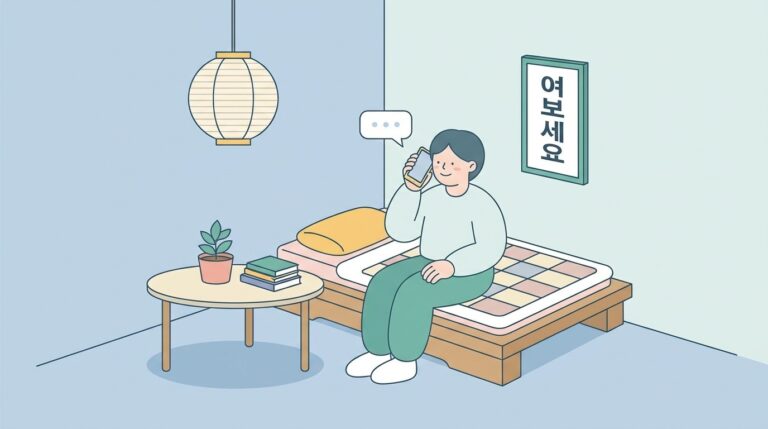
Picture this: You are relaxing in your room in Seoul, or maybe at an office internship, when suddenly your phone buzzes with an unknown local 010 number. Your heart drops into your stomach. You answer with a trembling, quiet “…여보세요? (Yeoboseyo? / Hello?)”, only for the fast-talking person on the other end to fire off a stream of honorifics: “혹시 김민수 씨 계신가요? (Hoksi Kim Minsu ssi gyesingayo?)” Your brain freezes. Who are they looking for? How do you ask who is calling without sounding terribly rude or like a robot from a 1990s textbook?
If you have ever felt phone anxiety in Korean, you are not alone! Over 85% of our intermediate B1 learners tell us that answering phone calls is tenfold harder than face-to-face chats because you cannot rely on facial cues or hand gestures. But don’t worry—once you master just a few golden formulas to clarify who is calling and who they need, phone calls will become your ultimate Korean confidence booster. Let’s dive into real, natural Korean phone etiquette!
Phase 2: Core Expressions Breakdown
1. 여보세요, 누구 찾으세요? (Yeoboseyo, nugu chajeuseyo?)
- Pronunciation: [Yeo-bo-se-yo, nu-gu cha-jeu-se-yo?] (Think of ‘Yeo-bo’ like ‘Yo-bo’ with a soft ‘ye’, and ‘chajeuseyo’ sounding like ‘cha-jew-say-yo’)
- Meaning: “Hello, who are you looking for?” (Direct: Look for whom? / Real Nuance: Friendly and clear way to ask who the caller wants to speak with in casual to semi-formal situations)
- K-Culture Moment: The iconic rom-com scene where a friend picks up the main lead’s ringing phone on the table and curiously asks who is on the line.
- Editor’s Insight: While textbook Korean teaches “누구를 찾으십니까? (Nugureul chajeusimnikka?)”, real Koreans almost always drop the object particle -(r)eul in speech and use the softer polite ending -세요 (-seyo).
- Situation Spectrum: Casual: ✅ | Semi-formal: ✅ | Formal/Business: ⚠️ (In corporate settings, use “어디로 연결해 드릴까요? (Where may I direct your call?)”)
- 🤔 Think About It: In English, we often say “Who’s calling?” (focusing on the caller’s identity), but Korean often asks “Who are you searching for?” (focusing on the recipient). How does this reflect Korean hospitality?
2. 실례지만 어디시죠? (Sillyejiman eodisijyo?)
- Pronunciation: [Sil-lye-ji-man eo-di-si-jyo?] (Pronounce ‘Sillye’ like ‘Shield-yea’ said smoothly)
- Meaning: “Excuse me, but where/who are you calling from?” (Direct: Excuse me, but where are you? / Real Nuance: Polite way to ask for the caller’s organization or identity)
- K-Culture Moment: Office K-Dramas like Misaeng where a junior employee politely screens incoming calls before transferring them to the team manager.
- Editor’s Insight: Notice that Koreans ask 어디시죠? (Where are you [from]?) instead of 누구세요? (Who are you?). Asking 누구세요? directly to a stranger on the phone can sound abrupt or accusatory, whereas asking 어디 (where/which company or place) sounds infinitely more courteous!
- Situation Spectrum: Casual: ⚠️ | Semi-formal: ✅ | Formal/Business: ✅
- 🤔 Think About It: Why is asking about the caller’s affiliation (어디) considered softer and less intrusive in Korean culture than directly demanding their personal name?
3. 잠깐만 기다려 주세요 / 바꿔 드릴게요 (Jamkkanman gidaryeo juseyo / Bakkwo deurilgeyo)
- Pronunciation: [Jam-kkan-man gi-da-ryeo ju-se-yo / Bak-kwo deu-ril-ge-yo]
- Meaning: “Please wait a brief moment / I will pass the phone over.”
- K-Culture Moment: When someone’s mom answers the home phone and calls out their child’s name across the living room while holding the receiver.
- Editor’s Insight: 바꿔 드릴게요 (Bakkwo deurilgeyo) utilizes the humble auxiliary verb 드리다 (deurida – to give/offer), showing that transferring the call is done as a helpful service to the caller.
- Situation Spectrum: Casual: ⚠️ | Semi-formal: ✅ | Formal/Business: ✅
- 🤔 Think About It: How does utilizing humble verbs like 드리다 create instant warmth in everyday Korean interactions?
Phase 3: Textbook Korean vs. Real Korean
Situation 1: Asking the caller who they are
- 📖 교과서 한국어 (Textbook): 당신은 누구입니까? (Dangsineun nuguimnikka? – “Who are you?”)
- 🗣️ 진짜 한국어 (Real-life): 실례지만 누구시라고 전해 드릴까요? (Sillyejiman nugusirago jeonhae deurilkkayo? – “Excuse me, whom should I say is calling?”) or 실례지만 어디 전화인가요? (Sillyejiman eodi jeonhwaingayo?)
- 💡 왜 다를까? (Why the difference?): Using 당신 (dangsin) on the phone can sound aggressive or confrontational. Real Koreans frame the question around the act of conveying their message respectfully.
Situation 2: Telling someone the person they want isn’t available
- 📖 교과서 한국어 (Textbook): 그 사람은 지금 여기에 없습니다. (Geu sarameun jigeum yeogie eopseumnida. – “That person is not here now.”)
- 🗣️ 진짜 한국어 (Real-life): 지금 자리에 안 계시는데, 메모 남겨 드릴까요? (Jigeum jarie an gyesineunde, memo namgyeo deurilkkayo? – “They are away from their desk right now; may I take a message for you?”)
- 💡 왜 다를까? (Why the difference?): In natural Korean communication, you don’t just state absence bluntly; you soften the situation with the honorific 안 계시다 (an gyesida) and proactively offer a solution (메모 남겨 드릴까요?).
Phase 4: K-Culture Deep Dive & Non-Verbal Manners
4-1. 눈치 (Nunchi) & The Iconic “Phone Bow”
Have you ever seen a Korean person standing in the street or at a desk, bowing repeatedly at a 45-degree angle while talking on their smartphone? It might look funny at first because the caller cannot see them, but it is an instinctive reflex of Korean 예의 (ye-ui / politeness)!
* Vocal Posture: When answering in Korean, aim for the “Sol” tone in musical pitch (slightly higher and brighter than your regular speaking voice). This bright tone instantly signals attentiveness.
* Continuous Acknowledgment (Chuimsae): Don’t stay silent while the other person speaks. Sprinkle in soft verbal nods: “네~ (Ne~)”, “아, 네! (Ah, ne!)”, or “네, 알겠습니다 (Ne, algetseumnida)” every few sentences so they know the connection hasn’t dropped.
4-2. Cultural Code: Who Ends the Call First?
In Korean hierarchy etiquette, the person of higher status (a client, boss, professor, or elder) is supposed to hang up first. When closing a call with someone older or senior, say “네, 들어가세요~ (Ne, deureogaseyo~ / Yes, please go in [have a good day])” and wait 1 to 2 seconds until you hear the line disconnect before hanging up your phone.
Phase 5: Real-Life Roleplay Scenario
Context: You are staying in a shared apartment / studio in Hongdae with your Korean roommate, Minji (민지). The landline/intercom phone rings. You pick up, and it’s a delivery service or building manager looking for someone.
- Turn 1 (You): 🎭 [Politely picking up the receiver on the second ring]
여보세요? (Yeoboseyo? / Hello?) - Turn 2 (Caller): 🎭 [Energetic, speaking briskly]
네, 안녕하세요! 거기 302호 맞나요? 혹시 이민지 씨 계신가요? (Ne, annyeonghaseyo! Geogi sambaegi-ho mannayo? Hoksi Lee Minji ssi gyesingayo? / Yes, hello! Is this Unit 302? Is Lee Minji there by any chance?) - Turn 3 (You): 🎭 [Checking your surroundings]
네, 맞아요. 그런데 실례지만 어디시죠? (Ne, majayo. Geurende sillyejiman eodisijyo? / Yes, that’s right. But excuse me, who is calling?) - Turn 4 (Caller): 🎭 [Explaining clearly]
아, 네! 한진택배 기사인데요, 문 앞에 물품 배송 완료했습니다. (Ah, ne! Hanjin taekbae gisaindeyo, mun ape mulpum baesong wallyo-haesseumnida. / Ah, yes! I’m the Hanjin parcel courier, I just completed the delivery in front of your door.) - Turn 5 (You): 🎭 [Relieved and friendly]
아, 택배 기사님이시군요! 민지 씨 지금 잠깐 밖에 나갔어요. (Ah, taekbae gisanimisigunyo! Minji ssi jigeum jamkkan bakke nagasseoyo. / Ah, you’re the delivery driver! Minji stepped out for a moment.) - Turn 6 (Caller): 🎭 [Confirming]
네, 문 앞에 두고 가니까 확인해 보시라고 전해 주세요. (Ne, mun ape dugo ganikka hwaginhae bosirago jeonhae juseyo. / Okay, I left it at the door, so please tell her to check it.) - Turn 7 (You): 🎭 [Polite confirmation]
네, 제가 바로 전해 드릴게요! 감사합니다. (Ne, jega baro jeonhae deurilgeyo! Gamsahamnida. / Yes, I will pass the message along right away! Thank you.) - Turn 8 (Caller): 🎭 [Signing off]
네, 수고하세요~ (Ne, sugohaseyo~ / Yes, have a good day~)
🔀 Interactive Choice Point
What if the caller was an unknown business executive looking for Minji’s father? How do you answer if Minji is not available?
* Option A: “누구예요? 왜 전화했어요?” (Nuguyeyo? Wae jeonhwahaesseoyo?)
* Feedback (Bad ❌): “Who are you? Why did you call?” sounds rude, aggressive, and startlingly informal on the phone.
* Option B: “지금 안 계시는데, 실례지만 메모 남겨 드릴까요?” (Jigeum an gyesineunde, sillyejiman memo namgyeo deurilkkayo?)
* Feedback (Best ⭐): Perfect B1 level! Polite honorifics, courteous tone, and proactive assistance.
* Option C: “몰라요. 나중에 다시 전화해요.” (Mollayo. Najunge dasi jeonhwahaeyo.)
* Feedback (Risk ⚠️): “I don’t know. Call back later.” While understandable, it lacks polite manners and may leave a bad impression.
Phase 6: 10-Second Emotion Shadowing Drill
Practice matching the rhythm, pause (/), and emotional melody of native speakers!
[😊 Bright & Courteous]
여보세요? / 실례지만 / 누구 찾으세요?
(Yeoboseyo? / Sillyejiman / nugu chajeuseyo?)-
[🤝 Helpful & Calm]
잠깐만 기다려 주세요, / 제가 바로 / 바꿔 드릴게요!
(Jamkkanman gidaryeo juseyo, / jega baro / bakkwo deurilgeyo!) -
[🙇 Respectful Sign-off]
네, / 말씀 전해 드리겠습니다. / 들어가세요~
(Ne, / malsseum jeonhae deurigessumnida. / Deureogaseyo~)
Phase 7: K-Culture Mini Dictionary
- 통화 중 (Tonghwa jung) | On another call / Line busy | Used on phone screens or when someone says, “지금 통화 중이세요 (They are currently on another line)”.
- 부재중 전화 (Bujaejung jeonhwa) | Missed call | Crucial notification term on Korean smartphones. If you see this, you might text back asking who it was.
- 연결해 드리겠습니다 (Yeongyeolhae deurigessumnida) | I will connect / transfer you | Standard phrase used in customer service and corporate phone lines.
- 끊을게요 (Kkeuneulgeyo) | I’m going to hang up now | Used between friends and casual acquaintances before pressing the end button.
Phase 8: Traveler’s Survival Kit
TOP 3 Survival Phrases
- 1. 한국어를 잘 못해서 천천히 말씀해 주세요. (Hangugeoreul jal mothaeseo cheoncheonhi malsseumhae juseyo.)
- Pro Tip: “I don’t speak Korean well, so please speak slowly.” Say this right after 여보세요 when feeling overwhelmed!
- 2. 문자로 남겨 주시겠어요? (Munjaro namgyeo jusigesseoyo?)
- Pro Tip: “Could you leave a text message?” Great when you can read Korean better than you can hear fast spoken delivery calls.
- 3. 잘못 걸었습니다. (Jalmot georeotseumnida.)
- Pro Tip: “You have dialed the wrong number” or “I dialed the wrong number.” Clear and polite way to end a misdialed call.
Editor’s Travel Note
When traveling or living in Korea, delivery drivers (Baemin, Coupang) and taxi drivers will often call your local SIM card number. Always install the Naver Map Navigation App and Kakao T Taxi Guide with push notifications turned on. If a driver calls, simply replying with “네, 문 앞에 놓아주세요 (Ne, mun ape noajuseyo – Please leave it in front of the door)” will solve 90% of situations effortlessly!
Phase 9: A Step Deeper (한 발 더 깊이)
In Korean culture, a phone call is considered an intrusion into someone’s personal time space. Because you cannot see the listener’s environment, using honorific expressions like 실례지만 (excuse me for intruding) and 계신가요 (is [someone] present) acts as a polite verbal buffer. It acknowledges the other person’s boundaries while maintaining communal harmony.
💬 Your Turn: Have you ever picked up an unexpected phone call in Korean? What was the hardest part to understand? Let us know in the comments below!
Phase 10: FAQ & Common Mistakes
Q: Can I use “여보세요” when calling someone in business?
A: Avoid starting with just “여보세요” in corporate calls. Instead, state your company and name right away: “안녕하세요, 데일리한글 에디터 김민수입니다 (Hello, this is Minsu Kim, Editor at Daily Hangul).”
Q: What should I say when I call a restaurant to make a reservation?
A: Start with: “안녕하세요, 예약 문의 좀 드리려고 하는데요 (Hello, I’m calling to inquire about a reservation).”
Q: Why do Koreans say “들어가세요 (Go in)” when hanging up?
A: Historically, this meant “go safely inside your house/room.” Over time, it evolved into the standard, warm farewell phrase on the phone, similar to “Take care and have a wonderful day!”
🚨 Common Mistakes Alert Board
- Mistake: Saying “누구예요? (Who are you?)” to strangers or seniors.
- Correct Action: Say “실례지만 어디시죠? (Sillyejiman eodisijyo?)” or “누구 찾으세요? (Nugu chajeuseyo?)”.
- Mistake: Hanging up immediately without a closing acknowledgment.
- Correct Action: Say “네, 감사합니다, 들어가세요~” before pressing end.
- Mistake: Staying completely silent while listening.
- Correct Action: Give periodic verbal nods (네~, 아 네~).
Phase 11: Action Missions
- 🥉 Bronze Level: Shadow the 3 drills in Phase 6 three times while mimicking the “phone bow” in front of a mirror.
- 🥈 Silver Level: Write a short fictional 4-line phone call dialogue between you and a delivery courier in the comments.
- 🥇 Gold Level: The next time a food delivery driver or friend calls your phone in Korea, answer completely in Korean without switching to English!
- 🎮 K-Culture Mission: Watch an episode of a modern K-Drama (like Business Proposal or Hospital Playlist) and count how many times characters say “여보세요” vs “네, 말씀하세요”.
Phase 12: Interactive Quiz Challenge
Test your phone etiquette skills! Click the dropdown below to check your answers.
- Situational Judgment: You receive an unexpected phone call at an office desk. How should you politely ask who is on the line?
- A) 당신 이름이 뭐예요?
- B) 실례지만 어디시죠?
- C) 누구 찾아왔어요?
- Fill in the Blank:
“잠깐만 기다려 주세요, 제가 담당자에게 바로 __________ 드릴게요.” (I will transfer/connect you right away.)- A) 바꿔
- B) 버려
- C) 때려
- True / False Culture Quiz: In Korea, it is polite for junior employees or callers to hang up the phone first before the senior or client disconnects. (True / False)
👉 Click here for answers and explanations!
-
Answer: B (실례지만 어디시죠?)
Explanation: Asking 어디시죠? is the polite standard way to ask for the caller’s affiliation or identity. -
Answer: A (바꿔)
Explanation: 바꿔 드릴게요 means “I will pass/transfer the call to you.” -
Answer: False
Explanation: The higher-status person or senior should always hang up first. The junior waits 1-2 seconds after saying goodbye before hanging up.







