

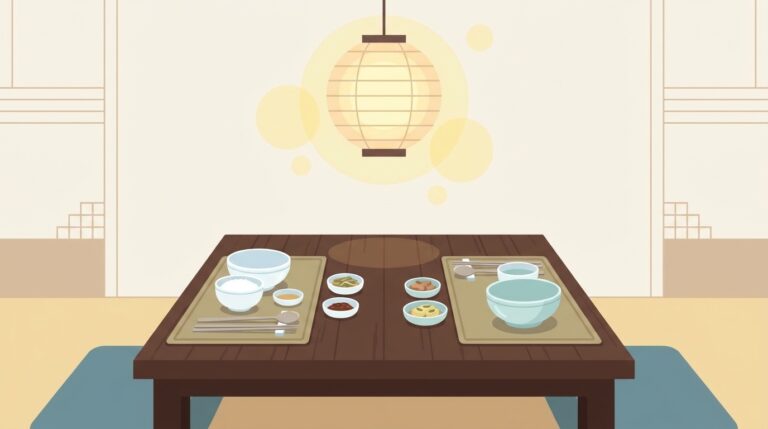
Phase 1: Empathy (Story-Immersive Opening)
안녕하세요! 매일한글 에디터입니다.
Picture this: You are seated in a serene, private hanjeongsik (Korean traditional course meal) dining room overlooking the lit-up skyline of Gwanghwamun. Across from you sits Executive Director Park from your Korean partner firm. The atmosphere is cordial, the food looks exquisite, and a multimillion-dollar joint venture contract hangs gently in the balance. But suddenly, your internal alarm goes off. Do you pick up your chopsticks first, or wait for Director Park to lift his spoon? When he reaches over to pour you a glass of cheongju (refined rice wine), should you hold your glass with one hand or two? And if someone offers a toast, which angle do you turn your head to drink?
If you have ever felt a knot in your stomach during a cross-cultural corporate dinner in Seoul, you are not alone. Korean business dinners—often termed hoeshik (회식) or executive banquets—are not merely social meals; they are high-stakes cultural rituals where trust, organizational hierarchy, emotional resonance (jeong), and diplomatic poise (nunchi) are tested in real time.
At the C2 level, you no longer just need to know how to ask for the bill. You need the linguistic sophistication and cultural mastery to navigate high-context dining protocols effortlessly. Today, we will break down the subtle, unspoken taboos, honorific registers, and executive dining strategies that will transform you from an outsider into an indispensable, culturally fluent business partner.
Phase 2: 3 Core Expressions in In-Depth Analysis
1. 제가 한잔 올리겠습니다. (Jega hanjan olligesseumnida)
- Pronunciation: [Jega han-jan ol-li-get-seum-ni-da] (Sounds like “Je-gah hahn-jahn ohl-lee-get-seum-nee-dah”)
- Meaning: Literal: “I will offer you one glass.” / Real Nuance: “Allow me the distinct honor of pouring you a drink.”
- K-Culture Moment: Seen frequently in corporate K-dramas like Misaeng or Reborn Rich, where an ambitious junior or a foreign partner formally honors an executive before initiating a strategic conversation.
- Editor’s Insight: Using the humble verb 올리다 (ollida, to offer upwards) instead of 따르다 (ttareuda, to pour) immediately elevates your register to executive-level politeness. It signals profound respect for the recipient’s seniority.
- Situation Spectrum: Casual 🚫 | Semi-formal ⚠️ | Formal/Executive ✅
- 🤔 Think About It: How does your native language verbally express hierarchical respect during dining toasts without sounding overly archaic?
2. 편하게 드시지요, 제가 오늘 모시는 자리입니다. (Pyeonhage deusijiyo, jega oneul mosineun jariimnida)
- Pronunciation: [Pyeon-ha-ge deu-si-ji-yo, je-ga o-neul mo-si-neun ja-ri-im-ni-da] (Sounds like “Pyeohn-hah-geh deu-shee-jee-yoh, jeh-gah oh-neul moh-shee-neun jah-ree-eem-nee-dah”)
- Meaning: Literal: “Please eat comfortably; today is a seat where I serve you.” / Real Nuance: “Please make yourself completely at home; it is our company’s privilege to host you today.”
- K-Culture Moment: Used by a hosting CEO or project leader when dining with VIP clients to dissolve initial awkwardness while subtly reinforcing gracious hospitality.
- Editor’s Insight: The term 모시다 (mosida, to attend/serve/host a superior) conveys sophisticated hospitality. It reassures your guest while asserting that you have everything taken care of, including the bill.
- Situation Spectrum: Casual 🚫 | Semi-formal ⚠️ | Formal/Executive ✅
- 🤔 Think About It: In your culture, who sets the tone of comfort at the dining table—the host, the most senior guest, or everyone collectively?
3. 귀사의 무궁한 발전을 기원하며 건배를 제의하겠습니다. (Gwisaui mugunghan baljeoneul giwonhamyeo geonbaereul jeuihagesseumnida)
- Pronunciation: [Gwi-sa-ui mu-gung-han bal-jeo-neul gi-won-ha-myeo geon-bae-reul je-ui-ha-get-seum-ni-da] (Sounds like “Gwee-sah-wee moo-goong-hahn bahl-jeon-eul gee-won-hah-myeoh geon-beh-reul jeh-wee-hah-get-seum-nee-dah”)
- Meaning: Literal: “Wishing your esteemed company infinite development, I propose a toast.” / Real Nuance: “To the enduring prosperity and fruitful partnership of your esteemed enterprise.”
- K-Culture Moment: The climactic toast delivered at formal bilateral business banquets before clinking glasses.
- Editor’s Insight: 귀사 (gwisa, your esteemed company) paired with 무궁한 발전 (mugunghan baljeon, limitless growth/prosperity) is the gold standard of Sino-Korean corporate eloquence.
- Situation Spectrum: Casual 🚫 | Semi-formal ⚠️ | Formal/Executive ✅
- 🤔 Think About It: Notice how Korean business toasts prioritize corporate longevity and relational solidarity over individual achievements.
Phase 3: Textbook Korean vs. Real Korean
Situation 1: Declining More Alcohol Diplomatically
- 📖 교과서 한국어 (Textbook): 저는 술을 더 마실 수 없습니다. (Jeoneun sureul deo masil su eopseumnida. – “I cannot drink more alcohol.”)
- 🗣️ 진짜 한국어 (Authentic C2): 오늘은 마음만 감사히 받고, 다음 잔은 물로 대신해도 되겠습니까? (Oneureun maeumman gamsahi batgo, daeum janeun mullo daesinhaedo doegesseumnikka? – “May I cherish your kind thought and substitute water for the next glass?”)
- 💡 Why the Difference? A blunt refusal disrupts the collective harmony (gibun) of the table. Acknowledging the goodwill (마음만 감사히 받고) before offering a non-alcoholic alternative preserves rapport without breaking boundaries.
Situation 2: Starting the Meal Formally
- 📖 교과서 한국어 (Textbook): 맛있게 먹겠습니다. (Masitge meokgesseumnida. – “I will eat deliciously.”)
- 🗣️ 진짜 한국어 (Authentic C2): 차려주신 정성에 감사드리며, 감사히 잘 먹겠습니다. (Charyeojusin jeongseonge gamsadeurimyeo, gamsahi jal meokgesseumnida. – “Thank you for the warm care invested in this meal; I shall enjoy it with utmost gratitude.”)
- 💡 Why the Difference? In formal executive dining, acknowledging the host’s effort (jeongseong) frames you as a refined guest of deep emotional maturity.
Phase 4: K-Culture Deep Dive & Non-Verbal Manners
4-1. 눈치 (Nunchi) & Table Gestures
- The Two-Hand Rule (Du-son Etiquette): When pouring for or receiving a drink from someone senior, support your right forearm or wrist lightly with your left hand, or place your left hand flat over your chest. Never pour or receive one-handed in a formal setting.
- The Turn-Away Sip (Gogae Dolligi): When taking a drink in front of a senior partner or client, turn your head and torso slightly away (approx. 45 degrees) and shield your glass with your free hand. Drinking straight facing an elder/senior can be perceived as confrontational.
- Chopstick & Spoon Taboos (Sujeo Protocol): Never stick your chopsticks upright into a bowl of rice (Kkoji-ma-seyo). This resembles incense sticks placed in memorial services (Jesa) and is considered a serious taboo. Always rest your utensils on the ceramic rest (sujeobatchim) or paper sleeve.
4-2. Cultural Code Analysis: The Dynamics of Sangseok (상석)
The seat of honor (sangseok) is traditionally the seat farthest from the entrance door, facing the room, often with a wall behind it. As a guest of honor, you will likely be guided there. If you are hosting, ensure the senior executive is seated there before sitting down yourself.
Phase 5: Interactive Role-Play Scenario
- Setting: A high-end private dining room (hanjeongsik) in Jongno, Seoul.
- Character: Executive Director Park (박 전무), a distinguished 55-year-old partner known for traditional etiquette and sharp business acumen.
Director Park: 먼 길 오시느라 대단히 수고 많으셨습니다. 식사는 입에 맞으실지 모르겠습니다.
(Meon gil osineura daedanhi sugo maneusyeotseumnida. Siksaneun ibe majeusilji moreugesseumnida.)
“You went through great trouble traveling from afar. I hope the cuisine suits your palate.”
You: 🎭 [Politely bowing while seated with both hands gently resting on the table]
초대해 주셔서 진심으로 영광입니다. 정갈한 상차림에 감탄했습니다.
(Chodaehae jusyeoseo jinsimeuro yeonggwang-imnida. Jeonggalhan sangcharime gamtanhaetseumnida.)
“It is truly an honor to be invited. I am captivated by this exquisitely prepared meal.”
Director Park: 🎭 [Lifts the soju/cheongju bottle]
자, 이번 프로젝트의 성공적인 출범을 위해 한잔 받으시지요.
(Ja, ibeon peurojekteuui seonggongjeogin chulbeomeul wihae hanjan badeusijiyo.)
“Now, please receive a glass for the successful launch of our project.”
You: 🎭 [Lifting your glass with both hands, keeping it slightly below Director Park’s glass level]
전무님, 제가 먼저 한잔 올려야 하는데 배려해 주셔서 대단히 감사합니다.
(Jeonmunim, jega meonjeo hanjan ollyeoya haneunde baeryeohae jusyeoseo daedanhi gamsahamnida.)
“Director Park, I should have poured for you first; thank you very much for your kind consideration.”
Director Park: 허허, 괜찮습니다. 자, 우리의 성공을 위하여!
(Heoheo, gwaenchansumnida. Ja, uriui seonggongeul wihayeo!)
“Haha, not at all. Cheers, to our mutual success!”
You: 🎭 [Turning your head 45 degrees to the side, shielding the glass with your left hand before taking a sip]
귀사의 무궁한 발전을 위하여!
(Gwisaui mugunghan baljeoneul wihayeo!)
“To the boundless prosperity of your esteemed firm!”
Director Park: 🎭 [Noticing an empty glass]
식사도 천천히 드시면서 편하게 이야기 나누시지요.
(Siksado cheoncheonhi deusimyeonseo pyeonhage iyagi nanusijiyo.)
“Please eat at your own pace and let us converse comfortably.”
You: 🎭 [Picking up the teapot with both hands to offer tea]
네, 전무님. 따뜻한 차 한잔 더 따뜻하게 채워드리겠습니다.
(Ne, jeonmunim. Ttatteutan cha hanjan deo ttatteuthage chaewodeurigesseumnida.)
“Yes, Director Park. Allow me to refresh your warm tea.”
🔀 Interactive Choice Point
Director Park finishes his meat dish and leaves a small amount on his plate. He asks: “고기가 입에 잘 맞으셨습니까? 더 주문해 드릴까요?” (Did you enjoy the meat? Shall I order more?)
- Option A: “아닙니다! 배가 터질 것 같아서 더 못 먹습니다.” (No! My stomach is about to burst, I can’t eat more.)
- Option B: “배려해 주신 덕분에 아주 훌륭하게 즐겼습니다. 이미 충분히 융숭한 대접을 받아 더할 나위 없습니다.” (Thanks to your consideration, I enjoyed it wonderfully. I have already received such lavish hospitality that I couldn’t ask for more.)
- Option C: “네, 조금 부족하니 갈비 2인분만 더 시켜주십시오.” (Yes, it was a bit lacking, please order 2 more portions of Galbi.)
Feedback:
* Choice A (Bad): Overly casual and colloquial (배가 터지다). Breaks the sophisticated executive register.
* Choice B (Best! ⭐): Exemplary C2 diction (융숭한 대접, 더할 나위 없습니다). Expresses profound satisfaction and deep gratitude while politely declining excess.
* Choice C (Risk): While direct, demanding additional expensive dishes without the host prompting first can appear tactless.
Phase 6: 10-Second Emotion Shadowing Drill
[💼 격식 있고 정중하게 / Dignified & Polite]
제가 / 한잔 / 정중히 / 올리겠습니다.
(Je-ga / han-jan / jeong-jung-hi / ol-li-get-seum-ni-da.)-
[🥂 진중하고 결의에 차서 / Solemn & Strategic]
양사의 / 성공적인 파트너십을 / 기원합니다.
(Yang-sa-ui / seong-gong-jeog-in pa-teu-neo-si-beul / gi-won-ham-ni-da.) -
[🤝 온화하고 세련되게 / Warm & Diplomatic]
배려해 주신 덕분에 / 매우 뜻깊은 자리가 / 되었습니다.
(Bae-ryeo-hae ju-sin deok-bu-ne / mae-u tteut-gi-peun ja-ri-ga / doe-eot-seum-ni-da.)
Phase 7: K-Culture Mini Dictionary
- 수저 세팅 (Sujeo Setting): The act of setting out spoons, chopsticks, and water glasses for everyone at the table before the meal starts. Doing this proactively for senior associates demonstrates high nunchi.
- 첨잔 (Cheomjan): The act of topping off a glass before it is empty. While common in Western wine dining, traditional Korean etiquette prefers refilling a glass when it is almost empty, though modern business settings are flexible.
- 주도 (Judo – 酒道): “The Way of Drinking.” The traditional philosophy and etiquette code governing how alcohol is poured, received, and consumed respectfully in Korean society.
- 상석 (Sangseok): The designated seat of honor, typically positioned farthest from the main entrance door with a clear view of the room.
Phase 8: Expat & Traveler Survival Kit
Survival Phrases TOP 3
- 결제는 저희 쪽에서 진행하겠습니다. (Gyeoljeneun jeohi jjok-eseo jinhaenghagesseumnida.)
Pro Tip: Use this when host privileges allow you to subtly take care of the bill at the counter before your guests step out. - 혹시 못 드시는 음식이 있으십니까? (Hoksi mot deusineun eumsigi isseusimnikka?)
Pro Tip: Essential when organizing a business lunch to screen for dietary restrictions or allergies in advance. - 물수건 좀 부탁드리겠습니다. (Mulsugeon jom butakdeurigesseumnida.)
Pro Tip: To politely request extra wet hand towels before the dining course begins.
Editor’s Travel Note
- Reservation Apps: When booking private business rooms (room-siks) in Seoul, use the CatchTable restaurant reservation app to guarantee high-tier seating with private dining options.
- Navigation: Download the Naver Map navigation app to pinpoint executive VIP parking and private side-room entrances in Gangnam and Gwanghwamun.
- Settling the Bill: In Korea, splitting the bill at a business dinner is rare. The host settles discreetly at the front register, never at the table in front of guests.
Phase 9: A Step Deeper (Cultural Essay)
In Korean culture, sharing a meal (bapsang) is fundamentally about transitioning from business counterparts (nam) to a collective unit (uri or sikgu—literally “eating mouths”). While Western business meals emphasize personal space and individual orders, Korean dining celebrates mutual sharing from central pots and communal banchan dishes. Navigating this table dynamic requires balancing hierarchical deference (yeui) with relational warmth (jeong). When you master these dining rituals, you show your Korean partners that you respect not only their business acumen, but their core cultural heritage.
💬 Your Turn: Have you ever attended a formal dinner in Korea or with Korean executives? What was the most surprising etiquette detail you noticed? Drop your story in the comments below!
Phase 10: Structured FAQ & Mistake Prevention
Q: What should I do if a Korean business partner insists on pouring me alcohol, but I don’t drink?
A: Never turn your glass upside down or abruptly push the bottle away. Accept the first glass with both hands, let the liquid touch your lips as a gesture of appreciation, and set it down. You may then politely explain: “건강상의 이유로 술을 삼가고 있어 양해를 구합니다.” (I kindly ask for your understanding as I am abstaining from alcohol for health reasons.)
Q: Is it rude to start eating before the senior host?
A: Yes. In traditional Korean etiquette, you should always wait until the oldest or highest-ranking individual lifts their spoon or chopsticks and begins eating before you start.
Q: Should I clink glasses higher or lower than my senior client?
A: Always touch your glass rim slightly lower than that of the senior executive or host during a toast. It is a subtle, universally recognized gesture of deference and humility.
🚨 Common Mistakes TOP 3
- Holding Utensils Together: Holding both the spoon and chopsticks in one hand simultaneously. Correct Action: Use one utensil at a time; rest the unused one on the table/rest.
- Pouring with One Hand: Refilling a senior client’s drink one-handed like in a casual Western pub. Correct Action: Support your pouring arm with your other hand.
- Leaving Food on the Chopsticks: Sticking chopsticks upright in the rice bowl. Correct Action: Always place them across the edge of a dish or on the chopstick stand.
Phase 11: Action Missions & Challenge
- 🥉 Bronze Mission (Solo Practice): Practice holding a glass with two hands, turning 45 degrees, and reciting: “귀사의 무궁한 발전을 기원합니다.”
- 🥈 Silver Mission (Social Sharing): Share this guide or post a photo of your favorite Korean dining setup tagging your business study buddy.
- 🥇 Gold Mission (Real Life Execution): At your next Korean dinner, proactively set the sujeo (spoons/chopsticks on napkins) for everyone at the table before the meal arrives.
- 🎮 K-Culture Mission: Watch an episode of Misaeng or King the Land and spot at least 3 instances of two-handed pouring and head-turning etiquette!
Phase 12: Interactive Quiz Challenge
1. [Scenario Judgement] You are seated at a business dinner in Yeouido. The Executive Director reaches out to pour you a drink. What is the most appropriate action?
A. Hold your glass firmly with your right hand only while maintaining direct eye contact.
B. Hold the glass with both hands, lower the rim slightly, and turn your head away when sipping.
C. Tell him to leave the bottle on the table so you can pour it yourself.
2. [Fill in the Blank] Fill in the elevated honorific word:
“제가 오늘 전무님께 술을 한잔 (_______)겠습니다.” (Hint: elevated form of 따르다)
3. [True or False] Sticking your chopsticks vertically into your bowl of steamed rice is considered acceptable if the table is crowded.
🔍 Click for Answers & Explanations
- Answer: B. Two-handed receiving and turning slightly away demonstrates elite corporate etiquette (Judo).
- Answer: 올리 (올리겠습니다 / olligesseumnida). 올리다 is the honorific verb for offering a beverage to a senior/VIP.
- Answer: False. Sticking chopsticks vertically resembles ancestral funeral incense rites and is a strict taboo at Korean dining tables.







