

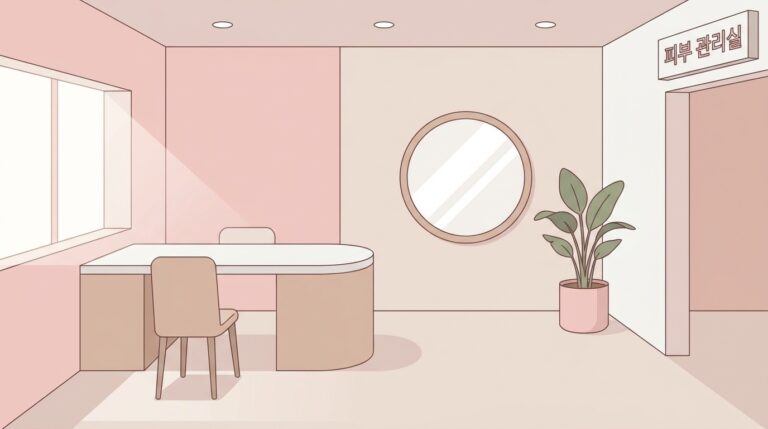
Phase 1: Empathy (Story-Driven Opening)
안녕하세요! (Annyeonghaseyo!) It is your trusted Daily Hangul editor and cultural navigator here. Have you ever walked down the glamorous streets of Gangnam or Apgujeong, mesmerized by the sleek, minimalist beauty clinics, and dreamed of having your own customized K-Beauty consultation? Maybe you want subtle double-eyelid surgery, glass-skin laser treatments, or a gentle touch of filler.
However, the moment you step through those automatic glass doors, your heart begins to race. You wonder: “What if I say the wrong word and end up with an over-the-top look? How do I tell the doctor I want something soft and natural, not dramatic?”
You are not alone. One of our learners, Sarah, once wanted to ask for “natural-looking eyes” but used a rigid dictionary term that made the doctor think she wanted no procedure at all! Navigating medical consultations in a foreign language can feel intimidating, especially when it comes to your face and well-being. But with just a few core A2-level Korean phrases, you will gain the confidence to express your exact desires clearly, ask about recovery times, and avoid miscommunications. Let’s make your K-Beauty consultation empowering, safe, and exciting!
Phase 2: Top 3 Essential Expressions Deep Dive
1. 자연스럽게 해주세요 (Jayeonseureopge hae-juseyo)
- Pronunciation: [Ja-yeon-seu-reop-ge hae-ju-se-yo] (Think of ‘Ja’ like ‘jar’, ‘yeon’ like ‘yawn’, ‘seu’ like ‘sir’ without the ‘r’, and ‘juseyo’ like ‘juice-say-yo’)
- Meaning: Literal: “Please do it naturally.” | Real Nuance: “I want subtle, effortless results that look like I was born this way.”
- K-Culture Moment: In Korean makeover shows like Let Me In or modern K-Dramas, patients repeatedly emphasize this phrase to ensure they do not look “overdone” or “Gangnam unni style” (excessively plastic).
- Editor’s Insight: In Korea, the aesthetic standard has shifted dramatically from dramatic changes to Kku-An-Kku (looking effortless). Using 자연스럽게 tells the doctor to respect your natural facial harmony.
- Situation Spectrum: Casual: 🚫 | Semi-formal: ⚠️ | Formal/Polite: ✅
- 🤔 Think About It: Why does Korean culture prize subtle enhancements over dramatic alterations? How does this reflect the cultural value of harmony and understated elegance compared to your home country?
2. 회복 기간이 얼마나 걸려요? (Hoebok gigani eolmana geollyeoyo?)
- Pronunciation: [Hoe-bok gi-ga-ni eol-ma-na geol-lyeo-yo?]
- Meaning: Literal: “How much does recovery time take?” | Real Nuance: “What is the downtime before I can go back to daily life / travel?”
- K-Culture Moment: Travel vloggers visiting Seoul frequently ask this so they can plan café-hopping in Seongsu-dong or shopping in Hongdae around their post-treatment swelling.
- Editor’s Insight: 회복 기간 (Recovery period) is crucial for tourists. Doctors will often reply with estimates for 큰 붓기 (major swelling) versus 잔붓기 (residual swelling).
- Situation Spectrum: Casual: 🚫 | Semi-formal: ⚠️ | Formal/Polite: ✅
- 🤔 Think About It: In English, we often say “downtime,” while Korean uses “recovery time” (회복 기간). Notice how Korean emphasizes the body’s healing process rather than just pausing work.
3. 부작용은 없나요? (Bujagyong-eun eomnayo?)
- Pronunciation: [Bu-ja-gyong-eun eom-na-yo?] (Pronounce ‘Bujagyong’ like ‘Boo-jah-gyong’ and ‘eomnayo’ like ‘um-nah-yo’)
- Meaning: Literal: “Are there no side effects?” | Real Nuance: “What are the potential side effects or risks I should be aware of?”
- K-Culture Moment: In medical dramas like Hospital Playlist, careful patients always double-check safety profiles using this exact polite question.
- Editor’s Insight: Asking this directly is neither rude nor disrespectful in Korea—it shows that you are an informed, responsible patient taking your health seriously.
- Situation Spectrum: Casual: 🚫 | Semi-formal: ⚠️ | Formal/Polite: ✅
- 🤔 Think About It: Do you find it easy or intimidating to question medical professionals in your culture? In Korea, polite inquiry using honorific endings (-요) balances respect and self-advocacy.
Phase 3: Textbook Korean vs. Real Korean
Situation 1: Explaining your desired aesthetic
- 📖 Textbook Korean: 인위적이지 않게 수술을 진행해 주시겠습니까? (In-wijeog-iji anke susul-eul jinhaenghae jusigesseumnikka?) — “Would you proceed with the surgery in a non-artificial manner?”
- 🗣️ Real Korean: 그냥 자연스러운 느낌으로 하고 싶어요. (Geunyang jayeonseureoun neukkim-euro hago sipeoyo.) — “I just want a natural look/vibe.”
- 💡 Why the difference?: Textbook phrases sound like an academic contract. Real Koreans use the versatile word 느낌 (vibe/feeling) to convey soft aesthetic preferences comfortably.
Situation 2: Asking if the procedure will hurt
- 📖 Textbook Korean: 시술 과정에서 동통이 심하게 발생합니까? (Sisul gwajeong-eseo dongtong-i simhage balsaenghamnikka?) — “Does severe pain manifest during the procedure?”
- 🗣️ Real Korean: 많이 아파요? 마취는 어떻게 해요? (Mani apayo? Machwineun eotteoke haeyo?) — “Does it hurt a lot? How is anesthesia done?”
- 💡 Why the difference?: Medical jargon like 동통 (pain/ache) is rarely used by patients. Simple, everyday words like 아파요? (Does it hurt?) are standard and completely acceptable.
Phase 4: K-Culture Deep Dive & Non-Verbal Etiquette
4-1. Nunchi & Clinic Body Language
- The Photo Reference Rule: Visuals speak louder than words. Bring 2–3 reference photos of Korean celebrities or models whose features you admire, but also 1 photo of what you definitely do not want. Hold your phone with both hands when showing it to the doctor or coordinator.
- Gentle Mirror Gestures: When looking into the hand mirror provided during the consultation, use the pads of your index fingers rather than pulling your skin aggressively. This signals respect for the doctor’s assessment while pinpointing exact areas.
4-2. The Role of the “Siljang-nim” (실장님)
In Korean beauty clinics, you will meet the 상담실장님 (Consultation Director) before and after seeing the head surgeon. The Siljang-nim manages pricing, post-op care packages, and scheduling. Being polite and friendly to the Siljang-nim can often unlock complimentary skincare treatments (like soothing sheet masks or deswelling laser sessions)!
Phase 5: Real-Life Roleplay Scenario
Setting: A sleek, warm consultation room in Sinsa-dong. Soft acoustic K-Pop plays in the background. Alex sits across from Minji, a warm and professional Consultation Director.
- Minji (실장님): 안녕하세요, 알렉스 님! 오늘 어떤 부위가 가장 고민이세요? (Annyeonghaseyo, Alex-nim! Oneul eotteon buwiga gajang gomin-iseyo?)
🎭 Hands Alex a warm cup of barley tea and smiles gently.
“Hello, Alex! Which area are you most concerned about today?” -
Alex: 코 라인을 조금 정리하고 싶어요. (Ko rain-eul jogeum jeongnihago sipeoyo.)
🎭 Points softly to the bridge of his nose.
“I want to refine my nose line a little bit.” -
Minji (실장님): 아, 그러시군요! 혹시 원하시는 스타일 사진 있으세요? (A, geureosigunyo! Hoksi wonhasineun seutail sajin isseuseyo?)
🎭 Tilts her head attentively, ready to view Alex’s phone.
“Ah, I see! By any chance, do you have photos of the style you want?” -
Alex: 네, 이 사진처럼 자연스럽게 해주세요. (Ne, i sajin-cheoreom jayeonseureopge hae-juseyo.)
🎭 Shows a photo on the phone using two hands.
“Yes, please make it natural like this photo.” -
Minji (실장님): 이 라인이 알렉스 님 이미지에 아주 잘 어울릴 것 같아요. (I rain-i Alex-nim imiji-e aju jal eoullil geot gat-ayo.)
🎭 Nods in agreement and takes notes on the medical chart.
“This line would suit your overall image very well.” -
Alex: 그런데 회복 기간이 얼마나 걸려요? (Geureonde hoebok gigani eolmana geollyeoyo?)
🎭 Looks slightly worried about travel plans.
“By the way, how long does the recovery period take?” -
Minji (실장님): 큰 붓기는 일주일이면 빠져요! (Keun butgineun ilju-irimyeon ppajyeoyo!)
🎭 Gestures reassuringly with an open palm.
“The major swelling goes down in about a week!” -
Alex: 다행이네요! 부작용 설명도 부탁드려요. (Dahaeng-ineyyo! Bujagyong seolmyeong-do butakdeuryeoyo.)
🎭 Smiles with relief and listens carefully.
“That’s a relief! Please explain the potential side effects as well.”
🔀 Interactive Decision Point
The Siljang-nim asks if you would like to book the procedure today to get a 10% discount. What do you say?
- Option A: “지금 바로 예약할게요!” (Jigeum baro yeyak-halgeyo! – I will book right now!)
- Option B: “조금 더 생각해보고 연락드릴게요.” (Jogeum deo saenggak-haebogo yeollak-deurilgeyo. – I will think about it a bit more and contact you.)
- Option C: “비싸요, 그냥 갈래요.” (Bissayo, geunyang gallaeyo. – It’s expensive, I’m just leaving.)
Feedback:
* Option A (Risk): Valid if you are 100% confident, but it’s always safer to consult at 2–3 clinics before deciding on surgery!
* Option B (Best ✅): Perfectly polite, smart, and gives you time to compare opinions and quotes without pressure.
* Option C (Bad ❌): A bit too blunt and dismissive in a medical consultation setting.
Phase 6: 10-Second Emotion Shadowing Drill
Read aloud following the pause markers (/) and emotional cues:
[😊 Hopeful & Gentle]
저 / 너무 과하지 않게 / 자연스럽게 해주세요.
(Jeo / neomu gwahaji anke / jayeonseureopge hae-juseyo.)
“Please / not too excessive / make it natural.”-
[🧐 Cautious & Inquiring]
혹시 / 멍이나 붓기가 / 얼마나 오래 가요?
(Hoksi / meong-ina butgiga / eolmana orae gayo?)
“By any chance / bruising or swelling / how long does it last?” -
[🤝 Polite & Reassured]
네, 원장님 말씀대로 / 진행할게요.
(Ne, wonjangnim malsseumdaero / jinhaenghalgeyo.)
“Yes, doctor / as you suggested / I will proceed.”
Phase 7: K-Culture Mini Dictionary
- 상담실장님 (Sangdam-siljang-nim) | Consultation Manager/Director
The primary clinic coordinator who assists with pricing, scheduling, and overall care coordination. - 붓기 / 부기 (Butgi / Bugi) | Swelling / Puffiness
Essential term when discussing aftercare. “붓기 빠지는 차” (deswelling pumpkin tea) is a popular post-treatment drink in Korea! - 다운타임 (Da-un-ta-im) | Downtime / Recovery Period
Widely used in modern aesthetic clinics alongside 회복 기간. - 전후 사진 (Jeon-hu sajin) | Before & After Photos
The standard portfolio photos you will review during consultations to evaluate the doctor’s style.
Phase 8: Traveler’s Survival Kit
Top 3 Survival Phrases
- 한국어 통역 지원되나요? (Hangugeo tong-yeok jiwondoenayo?)
“Is Korean-English translation support available?”
Pro Tip: Many Gangnam clinics have dedicated English, Japanese, or Chinese coordinators on staff. - 텍스 리펀 영수증 끊어주세요. (Tekseu ripeon yeongsujeung kkeuneo-juseyo.)
“Please issue a Tax Refund receipt.”
Pro Tip: Foreign tourists can receive a 7–8% VAT refund at airport kiosks for eligible aesthetic procedures! - 처방전 어디로 가져가요? (Cheobangjeon eodiro gajyeogayo?)
“Where do I take this prescription?”
Pro Tip: Pharmacies (약국) are usually located on the ground floor of the same building as the clinic.
Editor’s Travel Note
- Navigation: Always use the Official Naver Map App to find clinic building entrances easily, as Google Maps often lacks detailed indoor floor directories in Korea.
- App Research: Review clinic ratings and legitimate before-and-after photos in advance using beauty platforms like the Gangnam Unni Medical App.
Phase 9: “One Step Deeper” (Cultural Reflection)
In many Western cultures, aesthetic modifications have historically been treated as confidential or taboo topics. In contemporary South Korea, however, cosmetic enhancement and dermatological care are widely viewed as proactive forms of self-care and self-improvement (자기관리), similar to hiring a personal trainer or visiting the dentist. Because openness and precision are celebrated, consultations are thorough, structured, and direct.
💬 Your Turn: What is the cultural perspective on beauty procedures in your country? Would you feel comfortable asking a doctor for a subtle “K-Beauty glow up”? Let’s chat in the comments below!
Phase 10: FAQ & Misconception Prevention
Q: Can I negotiate the price during a Korean plastic surgery consultation?
A: While major surgical fees have standard pricing, the 실장님 (Siljang-nim) often has discretion to include value-added perks, such as post-operative soothing facials, deswelling treatments, or bundled discounts if doing more than one procedure. Polite inquiries like “추가 혜택이 있을까요?” (Are there any additional benefits?) work best.
Q: Do doctors in Gangnam speak fluent English?
A: While many top surgeons read English medical journals fluently, their speaking comfort varies. Most international clinics provide professional in-house translators. However, speaking core Korean phrases shows respect and helps build immediate rapport.
Q: What is the difference between 원장님 (Wonjang-nim) and 실장님 (Siljang-nim)?
A: 원장님 is the licensed head doctor/surgeon performing your medical diagnosis and procedure. 실장님 is the clinic director managing your customer service, quote, and appointments.
🚨 Common Mistakes Alert
- Mistake: Using informal language (반말) like “자연스럽게 해줘”.
Correct Action: Always use polite endings: “자연스럽게 해주세요” (Jayeonseureopge hae-juseyo). - Mistake: Forgetting to bring your passport.
Correct Action: Keep your physical passport with you for ID verification and immediate on-site Tax Refund paperwork. - Mistake: Agreeing without understanding side effects.
Correct Action: Never nod just to be polite. If unsure, ask: “다시 한번 설명해 주세요” (Please explain one more time).
Phase 11: Action Mission & Community Challenge
- 🥉 Bronze Level: Practice saying “자연스럽게 해주세요” 5 times aloud in front of your mirror with a calm smile.
- 🥈 Silver Level: Share your favorite Korean celebrity aesthetic photo on social media or in our comments, labeling it in Korean: “이런 자연스러운 느낌 좋아요!” (I like this natural vibe!).
- 🥇 Gold Level: Roleplay an entire 4-sentence consultation dialogue with your Korean language partner or tutor!
- 🎮 K-Culture Mission: Watch an episode of a beauty-themed K-Drama (like True Beauty) and spot how many times characters use the word “느낌” or “자연스러워요”!
Phase 12: Interactive Quiz Challenge
Question 1: Situation Judgment
You want to tell the doctor that you don’t want swelling to last too long because you fly back home in 5 days. What should you ask?
* A) 얼마예요? (Eolmayeyo?)
* B) 붓기가 빠지는 데 얼마나 걸려요? (Butgiga ppajineun de eolmana geollyeoyo?)
* C) 마취 안 할래요. (Machwi an hallaeyo.)
👉 Click to reveal Answer & Explanation
Answer: B
Explanation: Asking “붓기가 빠지는 데 얼마나 걸려요?” (How long does it take for swelling to go down?) directly addresses recovery time and travel constraints.
Question 2: Fill in the Blank
“너무 과하지 않게, ________ 해주세요.” (Please do it naturally, not overly dramatic.)
* A) 시끄럽게 (sikkeureopge)
* B) 자연스럽게 (jayeonseureopge)
* C) 차갑게 (chagapge)
👉 Click to reveal Answer & Explanation
Answer: B (자연스럽게)
Explanation: ‘자연스럽게’ means ‘naturally’, which is the signature phrase for subtle K-Beauty enhancements.
Question 3: True or False Cultural Quiz
In Korean beauty clinics, it is considered rude to ask to see before-and-after photos (전후 사진) during a consultation.
* True
* False
👉 Click to reveal Answer & Explanation
Answer: False
Explanation: Reviewing before-and-after portfolios is a standard and encouraged part of every consultation to align aesthetic expectations!







