

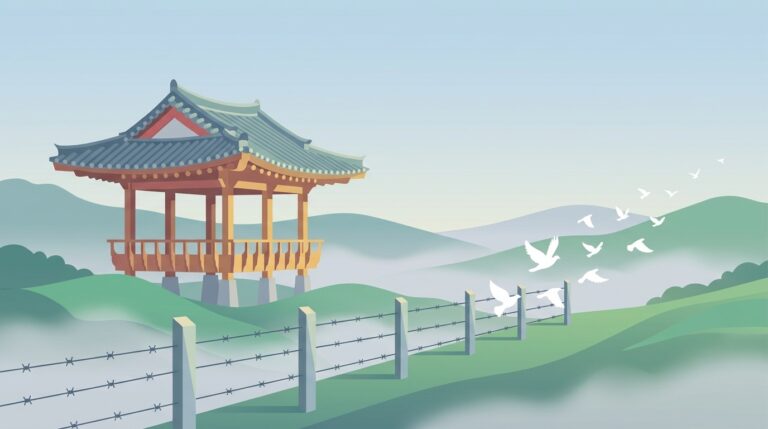
Speaking with Depth: Understanding the Korean War and the Scars of Division
Phase 1: 공감 (Story-Immersive Opening)
안녕하세요! This is your Daily Hangul editor and cultural navigator.
Have you ever stood in front of the glass display at the War Memorial of Korea in Yongsan, or watched the gut-wrenching train separation scene in Ode to My Father (국제시장), only to realize your Korean vocabulary hit an emotional wall? Many advanced Korean learners tell me: “I know all the high-level grammar patterns for TOPIK II, but when deep conversations turn to modern Korean history, the Korean War (6.25 전쟁), or the separation of families, I end up sounding either too robotic or unintentionally flippant.”
Discussing national trauma, the 1950–1953 Korean War, and the ongoing division of the peninsula requires a nuanced, empathetic register that standard textbooks rarely teach. Understanding these sensitive historical layers will transform your Korean from merely “grammatically correct” to deeply moving, authentic, and socially attuned. Based on years of mentoring advanced international researchers, journalists, and avid K-drama enthusiasts, this guide offers you the exact linguistic keys and cultural sensitivity needed to discuss Korea’s modern history with confidence and grace.
Phase 2: 핵심 표현 3선 심층 분석 (Core Expressions Deep Dive)
1. 분단의 아픔을 겪다 (Bunda-nui apeumeul gyeokda)
- Pronunciation: [Boon-dan-eui ah-peum-eul gyeok-da] (Sounds like saying “boon-dahn” + “ah-peum” with a sharp, crisp ‘k’ sound at the end of “gyeok”)
- Meaning: Literal: To experience the pain of division. / Nuance: To carry the collective historical trauma, grief, and generational scars caused by the territorial and ideological split of the Korean Peninsula.
- K-Culture Moment: Frequently heard in historical documentaries, award-winning dramas like Crash Landing on You (사랑의 불시착), and solemn civic speeches delivered on Memorial Day (현충일).
- Editor’s Insight: The verb 겪다 implies enduring an unavoidable, profound ordeal firsthand. Pairing it with 분단의 아픔 shifts your tone from an external spectator to an empathetic listener who recognizes the enduring human cost of the DMZ.
- Situation Spectrum:
- Casual: ⚠️ (Too heavy for light banter over beer)
- Semi-formal: ✅ (Ideal for group discussions or cultural exchanges)
- Formal: ✅ (Standard in broadcast, university lectures, and essays)
- 🤔 Think About It: Does your native culture have a single phrase that captures a geopolitical boundary as an emotional wound rather than just a physical border?
2. 이산가족의 한 (Isangajogui han)
- Pronunciation: [Ee-sahn-gah-jok-eui hahn] (Rhymes with “e-sound” + “gah-jok” + deep exhalation for “hahn”)
- Meaning: Literal: The grief/unresolved sorrow of separated families. / Nuance: The lifelong agony, unresolved yearning, and heartbreak of millions of relatives separated by the armistice line with no means of contact.
- K-Culture Moment: Evoked in the legendary 1983 KBS live telethon Finding Dispersed Families (이산가족을 찾습니다), an archive recognized in UNESCO’s Memory of the World.
- Editor’s Insight: 한 (Han) is a uniquely Korean cultural concept denoting deep-seated sorrow mixed with resilience and unfulfilled longing. Calling the tragedy of separated families an 이산가족의 한 signals advanced cultural comprehension that deeply impresses native Korean speakers.
- Situation Spectrum:
- Casual: 🚫
- Semi-formal: ✅
- Formal: ✅
- 🤔 Think About It: How does your language express longing when reunion is structurally impossible?
3. 하루빨리 평화통일이 이루어지길 바라다 (Haruppalli pyeonghwatong-iri irueojigil barada)
- Pronunciation: [Hah-roo-ppahl-li pyeong-hwa-tong-il-ee ee-roo-eo-ji-gil bah-rah-dah] (Notice the reinforced tense sound on “ppalli” and soft glide on “pyeong-hwa”)
- Meaning: Literal: To hope that peaceful reunification happens as soon as possible. / Nuance: A respectful, diplomatic, and humane aspiration for long-term peace and reconciliation across the Korean peninsula.
- K-Culture Moment: Stamped on wishing ribbons at the Imjingak Peace Nuri Park (임진각 평화누리공원) and articulated by both citizens and diplomats at cross-border peace forums.
- Editor’s Insight: Using 평화통일 (peaceful reunification) rather than simply 통일 (reunification) underscores non-violence and mutual healing, which is vital in modern socio-political discourse.
- Situation Spectrum:
- Casual: ⚠️ (Natural when sharing personal wishes)
- Semi-formal: ✅
- Formal: ✅
- 🤔 Think About It: Why does specifying “peaceful” carry such substantial weight in historical trauma discourse?
Phase 3: 교과서 한국어 vs 진짜 한국어 (Textbook vs. Real Native Korean)
Situation 1: Discussing the legacy of the war in contemporary society
- 📖 교과서 한국어: 한국은 1950년에 전쟁을 겪어서 아주 슬픕니다. (Hangukeun cheongubaekoosimnyeone jeonjaengeul gyeok-eoseo aju seulpeumnida.)
- Translation: Korea experienced a war in 1950, so it is very sad.
- 🗣️ 진짜 한국어: 전쟁이 멈춘 지 70년이 넘었지만, 아직도 분단의 상흔이 사회 곳곳에 깊게 남아 있죠. (Jeonjaengi meomchun ji chilsimnyeoni neomeotjiman, ajikdo bundanui sangheuni sahoe gotgose gipge nama itjyo.)
- Translation: Even though over 70 years have passed since the ceasefire, the scars of division still linger deeply throughout our society.
- 💡 왜 다를까? Advanced native conversation replaces simplistic adjectives like “슬프다” with refined nouns such as 상흔 (scars/trauma) and temporal grounding like 전쟁이 멈춘 지 ~년 to convey historical depth.
Situation 2: Expressing an opinion on inter-Korean relations
- 📖 교과서 한국어: 저는 남한과 북한이 다시 하나가 되면 좋겠습니다. (Jeoneun namhangwa bukhani dasi hanaga doemyeon joketssumnida.)
- Translation: I hope South Korea and North Korea become one again.
- 🗣️ 진짜 한국어: 갈 길이 멀긴 하지만, 인도적 교류와 대화의 끈을 놓지 않는 게 중요하다고 봐요. (Gal giri meolgin hajiman, indjeok gyoryuwa daehwaui kkeuneul nochi anneun ge jung-yohadago bwayo.)
- Translation: While there is a long way to go, I believe it is crucial not to let go of humanitarian exchanges and dialogue.
- 💡 왜 다를까? Real discussions acknowledge pragmatic complexities using idioms like 대화의 끈을 놓지 않다 (keep the thread of dialogue alive) rather than overly idealistic declarations.
Phase 4: K-Culture 딥다이브 & 비언어적 매너 (Culture Deep Dive & Mannerisms)
4-1. 눈치(Nunchi) & Demeanor
When visiting historical memorial sites such as the War Memorial of Korea (전쟁기념관), Imjingak (임진각), or the DMZ, maintaining a quiet, solemn posture is crucial.
* Posture & Gaze: Avoid loud laughter, dramatic selfie poses near memorial plaques, or overly aggressive geopolitical debates in public spaces.
* Addressing Elders: If you meet older Koreans (the wartime generation or their immediate children), listen with subtle head nods (gogae kkeudeogim) and lowered vocal cadence. Never treat the Korean War as mere movie trivia; it is living family memory.
4-2. Cultural Code: The Memory of Displaced People (실향민 문화)
Did you know that iconic Korean dishes like Hamheung Naengmyeon (함흥냉면 – spicy cold noodles), Sokcho Abai Sundae (아바이순대), and Milmyeon (밀면) in Busan were born directly out of the refugee crisis during the Korean War? Displaced refugees (실향민) from the North recreated their hometown delicacies using emergency wheat rations in Busan or pollack intestines in Gangwon-do. Appreciating this background turns every culinary experience into a meaningful connection with modern Korean resilience.
Phase 5: 실전 롤플레이 시나리오 (Interactive Roleplay)
Setting: You are visiting the Special Exhibition Hall at the War Memorial of Korea in Seoul and conversing with Mr. Park, an 78-year-old volunteer docent whose family originated from Gaeseong.
- 도슨트 박 어르신 (Docent Mr. Park): 🎭 (따뜻한 눈빛으로 전시된 흑백 사진을 가리키며) 외국 분이신데 6.25 전쟁 역사에 관심이 많으신가 봅니다. (Oeguk bunisinde yugio jeonjaeng yeoksaye gwansimi maneusinga bomnida.)
- You: 네, 책으로만 접하다가 이렇게 유품들을 직접 마주하니 마음이 참 먹먹해집니다. (Ne, chaeg-euroman jeophadaga ireoke yupumdeureul jikjeop maju-hani maeumi cham meongmeokhaejimnida.)
- 도슨트 박 어르신: 🎭 (깊은 한숨을 내쉬며) 저 다리 너머에 고향을 두고 온 실향민들에게는 70년의 세월이 엊그제 같지요. (Jeo dari neomeoe gohyangeul dugo on silhyangmindeuregeneun chilsimnyeonui sewori eojgeuje gatjiyo.)
- You: 가족분들과 생사조차 확인하지 못하셨을 텐데, 그 안타까움을 어찌 다 헤아리겠습니까. (Gajokbundeulgwa saengsajocha hwaginhaji mothasyeosseul tende, geu antakkawumeul eojji da he-arigessseumnikka.)
- 도슨트 박 어르신: 🎭 (고개를 끄덕이며 엷은 미소를 띤다) 그렇게 공감해 주니 참 고맙네요. 젊은 세대에게 평화의 소중함이 잘 전달되었으면 합니다. (Geureoke gonggamhae juni cham gomamneyo. Jeolmeun sedae-ege pyeonghwaui sojunghami jal jeondal-doeeosseumyeon hamnida.)
- You: 맞습니다. 이 비극적인 역사를 잊지 않고 평화의 길을 모색하는 것이 남겨진 과제인 것 같아요. (Matseumnida. I bigeukjeogin yeoksareul itji anko pyeonghwaui gireul mosekhaneun geosi namgyeojin gwaje-in geot gatayo.)
- 도슨트 박 어르신: 🎭 (기특하다는 듯 손을 가볍게 토닥이며) 아주 훌륭한 생각을 가지고 계시네. (Aju hullyunghan saenggakeul gajigo gyesine.)
- You: 어르신께서 들려주신 생생한 이야기 덕분에 더 깊이 배우고 갑니다. 건강하세요. (Eoreusinkkeseo deullyeojusin saengsaenghan iyagi deokbune deo gipi baeugo gamnida. Geonganghaseyo.)
🔀 Your Decision Point
How would you conclude your conversation with an elderly docent who lived through the war’s aftermath?
- Option A: “북한 김정은 정권에 대해서는 어떻게 생각하세요?” (What do you think about Kim Jong-un’s regime?)
- Feedback: ⚠️ Risk: Too abruptly confrontational and politically charged for an emotional memorial setting.
- Option B: “하루빨리 이산가족들의 아픔이 치유되고 한반도에 진정한 평화가 찾아왔으면 좋겠습니다.” (I hope the pain of separated families heals soon and true peace arrives on the Korean Peninsula.)
- Feedback: 🌟 Best! Demonstrates deep empathy, impeccable C1 vocabulary, and historical respect.
- Option C: “옛날 일이니까 이제 다 잊고 털어버리셔야죠.” (It’s in the past, so people should just forget and move on.)
- Feedback: 🚫 Bad: Highly insensitive, completely negating the ongoing tragedy and generational trauma.
Phase 6: 10초 감정 섀도잉 드릴 (Emotional Shadowing Drill)
Read aloud along the pause markers (/) with the designated emotional intention:
- [🥺 가슴 먹먹하고 숙연하게 / Solemn & Mournful]
전쟁의 비극은 / 아직 끝나지 않았고, / 이산가족의 눈물은 / 여전히 흐르고 있습니다.
(Jeonjaengui bigeugeun / ajik kkeutnaji anatgo, / isangajogui nunmureun / yeojeonhi heureugo itsseumnida.) -
[🕊️ 진중하고 결연하게 / Earnest & Determined]
과거의 아픔을 딛고 / 다음 세대를 위해 / 평화로운 미래를 / 함께 만들어가야 합니다.
(Gwagoeo-ui apeumeul ditgo / da-eum sedaereul wihae / pyeonghwaroun miraereul / hamkke mandeureogaya hamnida.)
Phase 7: K-Culture 미니 사전 (Key Historical Lexicon)
- 휴전선 (Hyujeonseon): The Military Demarcation Line / Ceasefire Line. Distinct from a formal political border (국경선), emphasizing that the war ended in an armistice, not peace.
- 실향민 (Silhyangmin): Displaced Persons. Specifically refers to people who had to leave their ancestral hometowns in North Korea during the war and could never return.
- 유가족 (Yugajok): Bereaved Family Members. Used with utmost reverence when referring to descendants of fallen soldiers or victims of civilian massacres.
- 통일염원 (Tong-il yeomwon): Earnest Aspiration for Reunification. Often written on lanterns, bell pavilions, or commemorative ribbons at border monuments.
Phase 8: 여행자를 위한 생존 키트 (Historical Travel Survival Kit)
Survival Expressions TOP 3
- “전쟁 당시의 기록 사진이나 유품은 어디에 전시되어 있나요?”
(Jeonjaeng dangsi-ui girok sajinjna yupumeun eodi-e jeonsidoe-eo innayo? / Where are the war photographs and artifacts exhibited?)- Pro Tip: Perfect for navigating museums like the War Memorial or Incheon Landing Operation Memorial Hall.
- “실향민 분들의 인터뷰 영상을 시청할 수 있는 공간이 있습니까?”
(Silhyangmin bundeurui inteobyu yeongsangeul sicheonghal su inneun gonggani itsseumnikka? / Is there a dedicated room to watch interviews of separated families?) - “DMZ 투어 중 사진 촬영이 엄격히 제한되는 구역이 어디인가요?”
(DMZ tu-eo jung sajin chwaryeongi eomgyeokhi jehandoeneun guyeogi eodi-ingayo? / Which zones have strict photography restrictions during the DMZ tour?)
Editor’s Travel Note
When heading to Paju Imjingak or booking a specialized DMZ excursion, make sure to bring your physical passport. Use the Official Visit Korea DMZ Tour Booking Portal or navigate public transport schedules using the Naver Map Navigation App. Remember that military checkpoints strictly forbid unsanctioned telephoto lenses.
Phase 9: “한 발 더 깊이” (Humanities Essay)
The Korean concept of 분단 (Division) is not merely geographical or military; it is an ongoing existential rupture in family lines, language, and cultural continuity. When you master expressions describing historical grief in Korean, you are validating a shared grief that millions of families have carried for over seven decades. Language here transforms into an act of remembrance and hospitality.
💬 Your Turn: How does your home country commemorate historical conflicts, and what phrase best captures the desire for reconciliation? Share your thoughts below!
Phase 10: FAQ & 오해 방지 (FAQ Schema)
Q: Is it socially acceptable to ask my Korean friends what they think about North Korea?
A: Yes, but context matters. With close friends in informal settings, thoughtful questions about peace or cultural divergence are completely fine. However, avoid asking elderly Koreans or new acquaintances aggressive political questions (e.g., “Why doesn’t South Korea just reunify right now?”) as political perspectives on reunification vary widely across generations.
Q: What is the linguistic difference between 종전 (Jongjeon) and 휴전 (Hyujeon)?
A: 휴전 (Hyujeon) means an armistice or temporary cessation of armed conflict, which describes Korea’s current status since 1953. 종전 (Jongjeon) means a formal, permanent end to the war treaty. Confusing the two in academic or cultural discussions alters the entire legal and political premise.
Q: Why do Koreans refer to the conflict as “6.25 전쟁” instead of “한국전쟁”?
A: While “한국전쟁 (Korean War)” is common in global contexts, Koreans domestically refer to it as 6.25 전쟁 (Yugio Jeonjaeng) to mark the precise date North Korean forces launched their surprise invasion on June 25, 1950. Using “6.25 전쟁” demonstrates insider cultural fluency.
🚨 흔한 실수 (Common Mistakes TOP 3)
- Mistake: Using casual slang terms when visiting memorial shrines.
- Correct Action: Use formal honorific vocabulary such as 순국선열 (patriotic martyrs) and 묵념 (moment of silent tribute).
- Mistake: Assuming all young Koreans prioritize instant reunification.
- Correct Action: Acknowledge diverse viewpoints using phrases like “세대마다 시각 차이가 존재하죠 (Different generations view it from distinct angles).”
- Mistake: Treating the DMZ purely as a tourist entertainment spot.
- Correct Action: Respect security guidelines and observe historical solemnity.
Phase 11: 액션 미션 & 참여 유도 (Action Missions)
- 🥉 Bronze Mission (Solo Shadowing): Practice saying the Phase 6 shadowing drill 3 times aloud, matching the solemn emotional markers.
- 🥈 Silver Mission (Writing Practice): Write a 2-sentence journal reflection on what peace means to you using the phrase “~을 딛고 평화로 나아가다 (step over ~ and move towards peace).”
- 🥇 Gold Mission (Real Engagement): Visit a local Korean historical museum or watch an archival video clip of the 1983 KBS Separated Families Broadcast and spot 3 target terms!
- 🎮 K-Culture Mission: Watch the movie Ode to My Father (국제시장) and listen for the phrase 이산가족 (separated family) during the televised search scene.
Phase 12: 인터랙티브 퀴즈 챌린지 (Interactive Quiz)
- Situation Judgment: You are participating in a university symposium on inter-Korean history. Which expression best expresses respectful empathy?
- A) “전쟁 끝난 지 오래됐으니 별문제 없잖아요?”
- B) “분단의 아픔을 치유하기 위한 지속적인 대화가 필요합니다.”
- C) “어차피 통일은 불가능한 것 같아요.”
- Fill in the Blank: 1953년 협정 체결 이후 한반도는 완전한 종전이 아닌 ( ) 상태를 유지하고 있습니다.
-
True / False: The term “실향민” refers to any person who moved from the countryside into modern Seoul for university.
👉 Click here to reveal answers & in-depth explanations!
- Answer: B (Option B utilizes high-level diplomatic empathy and correct C1 phrasing. Options A and C are dismissive and inappropriate.)
- Answer: 휴전 (Hyujeon – Armistice/Ceasefire) (The peninsula remains under an armistice agreement, not a formal peace treaty.)
- Answer: False (실향민 specifically designates refugees who lost access to their native hometowns in North Korea due to the division.)







