

Phase 1: Empathy (Story Immersion)
안녕하세요! 매일한글 에디터입니다. (Hello! I’m your Daily Hangul editor.)
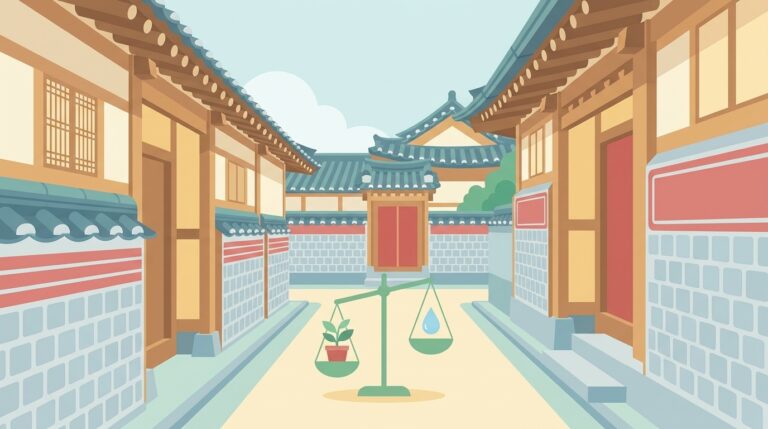
Picture this: You are sitting in a high-stakes Seoul MICE seminar or a municipal development forum overlooking the historic alleyways of Bukchon Hanok Village or the emerald coastlines of Jeju Island. The debate is heating up over the clash between thriving inbound tourism and local resident displacement. You want to contribute a sophisticated, high-level perspective on implementing a 관광총량제 (Tourism Carrying Capacity Quota System), but your tongue feels tied to basic textbook phrases like “관광객이 너무 많아요” (There are too many tourists).
At the C2 proficiency level, your goal is no longer mere survival—it is nuanced persuasion, institutional diplomacy, and policy discourse. Many advanced Korean learners hit a plateau right here: knowing formal grammar, yet lacking the socio-cultural lexicon to navigate municipal conflict, environmental preservation, and economic pragmatism. This guide is crafted directly from field insights, policy debates, and executive language coaching to elevate your Korean into the upper echelons of public policy and professional MICE leadership.
Phase 2: Deep Dive into 3 Core Expressions (C2 Level)
1. 관광총량제 도입을 본격적으로 검토해야 합니다.
- Revised Romanization: Gwan-gwang-chong-ryang-je do-ib-eul bon-gyeok-jeok-eu-ro geom-to-hae-ya ham-ni-da.
- Sound Metaphor: Pronounce chong-ryang-je with crisp dental stops, akin to delivering a definitive judicial verdict in English.
- Meaning: “We must formally and proactively review the adoption of a tourism quota system.”
- K-Culture Moment: Frequently heard on investigative news programs like SBS Unanswered Questions (그것이 알고 싶다) or urban policy roundtables when discussing historic residential quarters.
- Editor’s Insight: 본격적으로 (in earnest/formally) signals that discussions have moved past superficial talk into administrative action. 검토하다 (review/examine) is the gold standard institutional term for polite yet firm policy proposal.
- Situation Spectrum: Casual 🚫 | Semi-formal ⚠️ | Formal ✅
- 🤔 Think About It: Notice how Korean policy discourse prefers 검토하다 (to review) over aggressive imperatives like 시행해야 한다 (must execute). Why does administrative Korean favor procedural rhetoric to build consensus?
2. 수용력의 한계를 넘어서면 정주 여건이 심각하게 훼손됩니다.
- Revised Romanization: Su-yong-ryeok-ui han-gye-reul neo-meo-seo-myeon jeong-ju yeo-geon-i sim-gak-ha-ge hwe-son-doem-ni-da.
- Sound Metaphor: The word 훼손 (hwe-son) sounds sharp and decisive, like a clean cut indicating irreversible structural damage.
- Meaning: “Exceeding carrying capacity severely damages local residential conditions.”
- K-Culture Moment: Echoed in regional governance meetings in Jeju or Jeonju Hanok Village when discussing noise pollution, illegal parking, and tenant displacement.
- Editor’s Insight: 정주 여건 (定住 條件) is a refined socio-geographical term meaning the quality of life for permanent residents, contrasting with short-term visitor infrastructure.
- Situation Spectrum: Casual 🚫 | Semi-formal ⚠️ | Formal ✅
- 🤔 Think About It: How does phrasing resident welfare as 정주 여건 shift the focus from personal complaints to systemic human rights and urban sustainability?
3. 지역 주민과 상생할 수 있는 지속 가능한 대안을 모색합시다.
- Revised Romanization: Ji-yeok ju-min-gwa sang-saeng-hal su it-neun ji-sok ga-neung-han dae-an-eul mo-saek-hap-si-da.
- Sound Metaphor: 상생 (sang-saeng) flows with a balanced sibilant tone, reflecting mutual harmony and equal partnership.
- Meaning: “Let us seek sustainable alternatives that foster mutual coexistence with local residents.”
- K-Culture Moment: Standard rhetoric delivered by modern ESG directors in major MICE conglomerates and cultural heritage foundations.
- Editor’s Insight: 상생 (win-win coexistence) is one of the most culturally loaded buzzwords in contemporary Korean society, bridging public ethics and economic growth.
- Situation Spectrum: Casual ⚠️ | Semi-formal ✅ | Formal ✅
- 🤔 Think About It: 상생 (Co-living) has roots in East Asian philosophy. How does this contrast with the Western corporate term “stakeholder synergy”?
Phase 3: Textbook Korean vs. Real Korean
Situation 1: Describing a city area overwhelmed by tourists
- 📖 교과서 한국어 (Textbook): 관광객이 너무 많이 와서 동네가 복잡하고 주민들이 불편해합니다. (Too many tourists come, so the neighborhood is crowded and residents are uncomfortable.)
- 🗣️ 진짜 한국어 (Real C2 Professional): 밀려드는 인파로 인해 주민들의 일상이 마비되고 지역 사회가 몸살을 앓고 있습니다. (Due to surging crowds, daily life has been paralyzed and the local community is severely overwhelmed.)
- 💡 왜 다를까? C2 native discourse uses visceral, evocative idioms like 몸살을 앓다 (suffering body aches / reeling from distress) and 일상 마비 (paralysis of daily life) to highlight systemic crisis rather than mild inconvenience.
Situation 2: Proposing visitor limitations during a summit
- 📖 교과서 한국어 (Textbook): 이제부터는 입장객 수를 정해서 제한해야 한다고 생각합니다. (I think from now on we should decide and limit the number of visitors.)
- 🗣️ 진짜 한국어 (Real C2 Professional): 지속 가능한 MICE 산업 생태계를 위해 적정 수용 인원을 통제하는 총량제 도입이 불가피합니다. (For a sustainable MICE industry ecosystem, adopting a carrying-capacity quota system to regulate visitor numbers is inevitable.)
- 💡 왜 다를까? Professional Korean relies heavily on Sino-Korean nominal clauses (불가피하다, 생태계, 적정 수용 인원) to project objective institutional necessity rather than subjective opinion.
Phase 4: K-Culture Deep Dive & Non-Verbal Manners
4-1. 눈치 (Nunchi) & Professional Boardroom Demeanor
When debating hot-button topics like regional tourism caps (관광총량제) in a Korean committee:
* The Open-Palm Gesture: Never point fingers when challenging a municipal delegate. Keep fingers together, palm facing upward at a 45-degree angle when directing attention to data or speakers.
* Strategic Buffering (완곡어법): Before delivering a rebuttal, always validate the economic standpoint first: “물론 관광 수익 증대도 중요합니다만…” (While tourism revenue growth is undoubtedly vital…). This demonstrates Nunchi and cooperative maturity.
* Controlled Pitch: In Korean formal debate, lowering vocal pitch and reducing tempo projects gravitas and institutional authority.
4-2. Cultural Code Analysis: The Bukchon Silent Hours & Jeju Tourism Surcharge
In Korea, overtourism is not merely an economic debate; it touches the core constitutional value of 행복추구권 (Right to Pursue Happiness). When the Bukchon Hanok Village introduced curfews and quiet zones (정숙 관광지), it sparked debates on the boundary between public interest and private property rights. Understanding this civic friction helps you argue with empathy and cultural accuracy.
Phase 5: Real-World Roleplay Scenario
Setting: A joint policy consultation meeting at the Seoul Tourism Plaza between Director Kang Min-ho (Director of Regional Tourism Policy) and Sarah Lin (Senior Sustainable Tourism Consultant).
- Director Kang: 최근 북촌과 서촌 일대의 오버투어리즘 민원이 위험 수위에 도달했습니다. (Choe-geun Buk-chon-gwa Seo-chon il-dae-ui o-beo-tu-eo-ri-jeum min-won-i wi-heom su-wi-e do-dal-haet-seum-ni-da.)
“Recently, overtourism petitions in Bukchon and Seochon have reached a critical threshold.” 🎭 Furrowing brow, pointing at statistical charts. - Sarah: 네, 주민들의 정주 여건 악화가 임계점을 넘어선 것으로 보입니다. (Ne, ju-min-deul-ui jeong-ju yeo-geon ak-hwa-ga im-gye-jeom-eul neo-meo-seon geot-eu-ro bo-im-ni-da.)
“Indeed, the deterioration of residential conditions appears to have crossed the tipping point.” 🎭 Nodding slowly with a focused gaze. - Director Kang: 하지만 상인회 측에서는 방문객을 강제로 제한하면 지역 상권이 위축될 것이라며 강하게 반발하고 있어요. (Ha-ji-man sang-in-hoe cheuk-e-seo-neun bang-mun-gaek-eul gang-je-ro je-han-ha-myeon ji-yeok sang-gwon-i wi-chuk-doel geot-i-ra-myeo gang-ha-ge ban-bal-ha-go it-eo-yo.)
“However, local merchant associations are fiercely protesting, claiming forced visitor limits will shrink commercial districts.” 🎭 Sighing softly, adjusting glasses. - Sarah: 단순한 출입 통제보다는 시간대별 사전 예약제를 통한 총량 분산이 현실적인 절충안입니다. (Dan-sun-han chul-ip tong-je-bo-da-neun si-gan-dae-byeol sa-jeon ye-yak-je-reul tong-han chong-ryang bun-san-i hyeon-sil-jeok-in jeol-chung-an-im-ni-da.)
“Rather than simple entry bans, distributing total capacity through time-slot reservations offers a pragmatic compromise.” 🎭 Presenting policy draft with both hands. - Director Kang: 시간대별 분산이라면 MICE 단체 관광객의 동선도 체계적으로 관리할 수 있겠군요. (Si-gan-dae-byeol bun-san-i-ra-myeon MICE dan-che gwan-gwang-gaek-ui dong-seon-do che-gye-jeok-eu-ro gwan-ri-hal su it-get-gun-yo.)
“If we disperse by time slot, we could also systematically manage the flow of MICE group tours.” 🎭 Nodding thoughtfully, writing down notes. - Sarah: 맞습니다. 환경보전분담금 부과와 병행한다면 지역 인프라 개선 재원도 확보할 수 있습니다. (Mat-seum-ni-da. Hwan-gyeong-bo-jeon-bun-dam-geum bu-gwa-wa byeong-haeng-han-da-myeon ji-yeok in-peu-ra gae-seon jae-won-do hak-bo-hal su it-seum-ni-da.)
“Exactly. If implemented alongside an environmental preservation levy, we can also secure funds to upgrade local infrastructure.” 🎭 Maintaining calm, steady eye contact. - Director Kang: 타당한 지적이십니다. 상인회와 주민 비상대책위원회를 소집하여 공청회를 추진하도록 하죠. (Ta-dang-han ji-jeok-i-sip-ni-da. Sang-in-hoe-wa ju-min bi-sang-dae-chaek-wi-won-hoe-reul so-jip-ha-yeo gong-cheong-hoe-reul chu-jin-ha-do-rok ha-jo.)
“That is a sound recommendation. Let us convene a public hearing with both the merchant association and the resident council.” 🎭 Smiling faintly, offering a formal handshake. - Sarah: 상생의 기틀이 마련되기를 기대하겠습니다. (Sang-saeng-ui gi-teul-i ma-ryeon-doe-gi-reul gi-dae-ha-get-seum-ni-da.)
“I look forward to laying the foundational framework for win-win coexistence.” 🎭 Bowing politely at 30 degrees.
🔀 Interactive Choice Point
During the meeting, the merchant representative interrupts and shouts that quotas will ruin small businesses. How do you respond?
- Option A: “상인분들 이익만 생각하지 마시고 주민들 피해도 좀 보세요!” (Stop thinking only of your profits and look at the residents’ suffering!)
- Option B: “단기적인 매출 감소 우려는 충분히 이해하지만, 지역 붕괴를 막아야 장기 상권도 보장됩니다.” (We fully understand concerns regarding short-term revenue drops; however, preventing community collapse is essential to safeguard the long-term commercial district.)
- Option C: “그럼 의견이 안 맞으니 관광총량제 정책 자체를 백지화하시죠.” (Well, since we cannot agree, let’s just scrap the tourism quota policy altogether.)
[Feedback Evaluation]
- Option A (Bad): Confrontational and accusatory. Destroys rapport and violates professional etiquette in Korean public meetings.
- Option B (Best): Demonstrates high-EQ Nunchi, validates business concerns first, then redirects focus to long-term sustainability.
- Option C (Risk): Displays complete avoidance of conflict, forfeiting your role as an expert mediator.
Phase 6: 10-Second Emotional Shadowing Drill
- [🧐 객관적이고 단호하게 / Objective & Firm]
지속 가능한 관광 생태계 조성을 위해 / 수용력 한계를 고려한 총량제 도입이 / 시급한 시점입니다.
(Ji-sok ga-neung-han gwan-gwang saeng-tae-gye jo-seong-eul wi-hae / su-yong-ryeok han-gye-reul go-ryeo-han chong-ryang-je do-ib-i / si-geup-han si-jeom-im-ni-da.) -
[🤝 공감하며 중재하듯 / Empathetic & Mediating]
주민의 주거권과 / 상권 활성화라는 두 가치가 / 균형을 이룰 수 있도록 / 절충점을 찾아야 합니다.
(Ju-min-ui ju-geo-gwon-gwa / sang-gwon hwal-seong-hwa-ra-neun du ga-chi-ga / gyun-hyeong-eul i-rul su it-do-rok / jeol-chung-jeom-eul cha-ja-ya ham-ni-da.) -
[📊 자신감 있고 설득력 있게 / Confident & Persuasive]
데이터 기반의 방문객 분산 정책이야말로 / 지역 사회와 MICE 산업이 상생하는 / 확실한 해법입니다.
(De-i-teo gi-ban-ui bang-mun-gaek bun-san jeong-chaek-i-ya-mal-lo / ji-yeok sa-hoe-wa MICE san-eob-i sang-saeng-ha-neun / hwak-sil-han hae-beop-im-ni-da.)
Phase 7: K-Culture Mini Dictionary
- 정주 여건 (Jeong-ju yeo-geon)
- Translation: Residential living conditions / Permanent habitability
- Usage: Essential in city planning and public administration debates when prioritizing permanent locals over transient tourists.
- 몸살을 앓다 (Mom-sal-eul al-da)
- Translation: To suffer severely / To reel under immense pressure
- Usage: Metaphor borrowed from the body-ache of flu, frequently applied to regions collapsing under overtourism or infrastructure strain.
- 상생 (Sang-saeng)
- Translation: Win-win mutual coexistence
- Usage: Key social philosophy in modern Korea applied across corporate ESG, supplier relations, and municipal tourism mediation.
- 환경보전분담금 (Hwan-gyeong-bo-jeon-bun-dam-geum)
- Translation: Environmental conservation levy / Eco-tax
- Usage: Central administrative terminology in debates regarding entry surcharges on ecologically sensitive destinations like Jeju.
Phase 8: Survival Kit for Travelers & MICE Professionals
Top 3 Survival Expressions
- 정숙 관광에 적극 동참해 주시기 바랍니다. (Jeong-suk gwan-gwang-e jeok-geuk dong-cham-hae ju-si-gi ba-ram-ni-da.)
- Pro Tip: Use when briefing foreign MICE VIPs before visiting historical residential quarters.
- 사전 예약 인원 초과 시 입장이 제한될 수 있습니다. (Sa-jeon ye-yak in-won cho-gwa si ib-jang-i je-han-doel su it-seum-ni-da.)
- Pro Tip: Formal phrasing for ticketing booths or administrative portals under quota enforcement.
- 지역 주민의 사생활 보호를 위해 촬영을 자제해 주세요. (Ji-yeok ju-min-ui sa-saeng-hwal bo-ho-reul wi-hae chwal-yeong-eul ja-je-hae ju-se-yo.)
- Pro Tip: Indispensable sign and announcement phrase in village tourist spots.
Editor’s Travel Note
- Descriptive Navigation Check: For real-time updates on restricted zones and residential visiting hours in historic districts, always consult the official Visit Seoul Tour Guide Platform before organizing private or MICE group itineraries.
- Smart Mobility: To avoid congestion penalties in protected urban zones, utilize official public charter routes mapped via the Naver Map Navigation App.
Phase 9: One Step Deeper (Reflection)
In Korean society, the balance between public hospitality and community boundaries is framed by the concept of 공동체 의식 (Community Consciousness). While Jeong (정) encourages warm accommodation of guests, unregulated tourist intrusion into private spaces triggers intense civic petitions (민원), which carry immense institutional weight in South Korea. The push for a 관광총량제 is not an anti-tourist sentiment, but an administrative mechanism to safeguard the cultural integrity that makes these neighborhoods attractive in the first place.
💬 Your Turn: Has your hometown experienced overtourism? How do local governments in your country handle the conflict between economic tourism gains and resident rights? Share your thoughts below in advanced Korean!
Phase 10: FAQ & Common Mistakes (FAQ Schema Compliant)
Q: What is the exact difference between 관광 제한 (Tourism Limit) and 관광총량제 (Tourism Carrying Capacity Quota System)?
A: While 관광 제한 refers generally to restricting access, 관광총량제 is a formal policy mechanism based on calculated carrying capacity (수용 한계력), integrating time quotas, environmental levies, and reservation systems.
Q: Can I use 몸살을 앓다 in formal business presentations?
A: Yes! While originating from physical illness, 몸살을 앓다 is standard journalistic and professional Korean when describing economic bottlenecks or overtaxed systems.
Q: How do I disagree politely with a government official during a MICE committee session?
A: Never use blunt negatives like 틀렸습니다 (You’re wrong). Instead, employ the soft reframing structure: “위원님의 말씀도 일리가 있습니다만, 현실적인 수용력을 감안할 때 다른 측면도 고려할 필요가 있습니다.” (Your point is well taken; however, considering realistic carrying capacity, we must take other facets into account.)
🚨 Common Mistakes Warning Board
- Mistake: Saying “주민들이 스트레스 받아요” in a policy summit.
- Correct Action: Upgrade to “주민들의 정주 여건이 심각하게 침해받고 있습니다.”
- Mistake: Confusing 상생 (Sang-saeng: Coexistence) with 상생 (Sang-seung: Upward trend / 상승).
- Correct Action: Keep pronunciation clear with open vowel ae (ㅐ) for win-win solutions.
- Mistake: Using casual imperative “인원을 줄이세요” in formal negotiations.
- Correct Action: Use administrative nominal proposals: “총량 조절 방안을 검토해 주시기 바랍니다.”
Phase 11: Action Missions
- 🥉 Bronze Mission (Self-Practice): Shadow the 3 audio drills in Phase 6 five times, focusing on maintaining steady, lower pitch during formal debates.
- 🥈 Silver Mission (Social Sharing): Post a short 3-sentence commentary on a social platform regarding sustainable tourism using the keywords 관광총량제, 정주 여건, and 상생.
- 🥇 Gold Mission (Real-World Application): In your next professional meeting, Korean class, or study exchange, state your stance on overtourism using the phrase: “지속 가능한 대안을 모색하기 위해 총량제 검토가 불가피합니다.”
- 🎮 K-Culture Mission: Watch an episode of a Korean documentary (e.g., KBS Docu Insight) on urban regeneration and identify at least three times the word 상생 or 훼손 is used!
Phase 12: Interactive Quiz Challenge
1. Situation Judgement
You are addressing a municipal council on overtourism in a historical quarter. Which sentence displays the highest level of professional diplomatic tact?
– (A) 사람이 너무 많이 오니까 길을 막아버립시다.
– (B) 상권도 중요하지만 정주 여건과의 균형을 위한 총량제 검토가 시급합니다.
– (C) 관광객들이 시끄러워서 주민들이 다 이사 가고 싶어 합니다.
2. Fill-in-the-Blank
“지역 주민과 상권이 함께 번영하기 위해서는 상호 협력하는 ( ____ )의 정신이 필수적입니다.”
– Clue: East Asian socio-cultural term for win-win coexistence.
3. True / False Cultural Fact
In South Korea, local governments have legally enacted restricted visiting hours in certain historic residential zones (e.g., Bukchon Hanok Village) to protect residents’ right to quietness.
– [True / False]
👉 Click here to reveal Answers & Explanations
- Answer: (B)
- Explanation: Option (B) balances economic development with residential quality of life using standard C2 administrative vocabulary (정주 여건, 균형, 총량제 검토).
- Answer: 상생 (Sang-saeng)
- Explanation: 상생 implies harmonious mutual survival and flourishing across disparate interest groups.
- Answer: True
- Explanation: Seoul Metropolitan Government and Jongno District Office instituted enforceable curfew hours and silent walking zones to prevent overtourism distress in historic living heritage quarters.
- Explanation: Seoul Metropolitan Government and Jongno District Office instituted enforceable curfew hours and silent walking zones to prevent overtourism distress in historic living heritage quarters.







