

Conquer CopyKiller: How to Write Plagiarism-Free Academic Papers in Korean
Phase 1: Empathy (Story-Immersive Opening)
안녕하세요! 매일한글 (Daily Hangul) editor here!
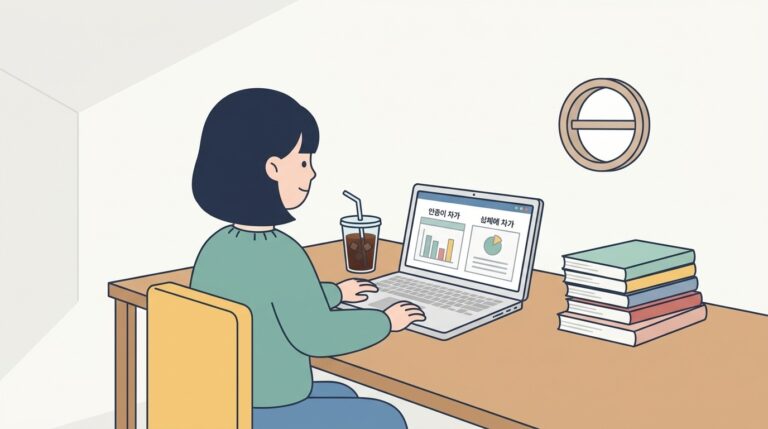
Picture this: It is 3:15 AM in a quiet 24-hour study café in Sinchon. You have poured your heart, soul, and endless shots of espresso into your master’s thesis or term paper for your Korean university seminar. With trembling fingers, you upload your 30-page .hwp document to CopyKiller (카피킬러)—South Korea’s ubiquitous plagiarism detection portal—expecting a clean bill of academic health.
Then, the screen flashes red: 표절률 (Plagiarism Rate): 32%.
Your heart sinks. You haven’t stolen anyone’s ideas! You wrote every paragraph yourself! But in the strict ecosystem of Korean academic writing, failing to master syntactic restructuring, formal direct/indirect citation formulas, and discipline-specific paraphrasing can turn even original thoughts into algorithmic red flags. Many advanced international researchers stumble not on conceptual depth, but on the delicate conventions of Korean scholarly attribution.
Drawing from years of coaching graduate students and consulting academic labs in Seoul, this C2-level guide is built to help you navigate CopyKiller effortlessly, articulate nuanced citations, and maintain impeccable academic integrity in the Korean language.
Phase 2: Core Expressions Deep Dive
1. 표절률을 낮추다 (Pyojeollyureul natchuda)
- Pronunciation: [Pyo-jeol-ryu-reul nat-chu-da] (Sounds like “pyo-johl-ryu-reul” with a sharp, crisp ‘t’ release on ‘nat’)
- Meaning: Literally “to lower the plagiarism rate”; practically means restructuring sentences, synthesizing arguments, and converting verbatim matches into analytical paraphrases.
- K-Culture Moment: In high-stakes university dramas like Law School or campus research lab vlogs, graduate students celebrate when their CopyKiller score drops below the golden 10% threshold.
- Editor’s Insight: At the C2 level, avoid simplistic verbs like 바꾸다 (to change). Pair 표절률 with precise collocations such as 표절률을 경감시키다 (alleviate/reduce the rate) or 유사도를 최소화하다 (minimize similarity).
- Situation Spectrum: Casual (⚠️ 친구 간 대화) | Semi-formal (✅ 스터디 그룹) | Formal (✅ 지도교수 면담 및 학술지 투고)
- 🤔 Think About It: Does your native academic culture rely more heavily on verbatim quotation blocks, or on synthesized paraphrasing like Korean academia?
2. 출처를 명확히 밝히다 (Chulcheoreul myeonghwakhi balkhida)
- Pronunciation: [Chul-cheo-reul myeong-hwa-ki bal-ki-da] (Pronounce ‘balkhida’ as ‘bal-ki-da’ due to aspiration rules)
- Meaning: Literally “to brightly reveal the source”; contextually “to provide unambiguous, rigorous bibliographic citations.”
- K-Culture Moment: Academic integrity panels in Korean research institutions consistently emphasize this phrase whenever reviewing journal submissions or thesis defenses.
- Editor’s Insight: The adverb 명확히 (explicitly/clearly) carries significant weight. Korean scholarly prose prioritizes transparent attribution formulas like “~의 견해를 수용하여” (~adopting the viewpoint of) or “~에 근거하여” (~grounded in).
- Situation Spectrum: Casual (🚫) | Semi-formal (⚠️) | Formal (✅ 학술 논문 및 연구 계획서)
- 🤔 Think About It: How does the linguistic concept of “revealing” (밝히다) a source reflect the Korean ethical emphasis on collective scholastic transparency?
3. 문맥에 맞게 재구성하다 (Munmaek-e matge jaeguseonghada)
- Pronunciation: [Mun-mae-ge mat-ge jae-gu-seong-ha-da]
- Meaning: Literally “to reconstruct according to the context”; implies advanced conceptual paraphrasing and synthesizing multiple scholarly viewpoints into your own analytical voice.
- K-Culture Moment: Thesis advisors frequently write this note on draft margins: “단순 발췌를 지양하고 문맥에 맞게 재구성할 것” (Avoid mere excerpting; reconstruct according to context).
- Editor’s Insight: At the advanced level, CopyKiller flags identical 6-word strings. “재구성” requires changing syntactic frames—such as transforming passive academic nominalizations into active analytical assertions.
- Situation Spectrum: Casual (🚫) | Semi-formal (✅ 세미나 토론) | Formal (✅ 공식 논문 심사)
- 🤔 Think About It: Why is conceptual restructuring valued higher in Korean academia than literal word-for-word translation of foreign research?
Phase 3: Textbook Korean vs. Real Native Academic Korean
Situation 1: Inquiring About Acceptable Plagiarism Thresholds
- 📖 Textbook Korean: 표절 검사 결과가 몇 퍼센트여야 합니까? (Pyojeol geomsa gyeolgwaga myeot peosenteuyeoya hamnikka?) — What percent must the plagiarism test result be?
- 🗣️ Real Native Korean: 교수님, 이번 학술지 투고 시 카피킬러 유사도 허용 기준선이 대략 몇 % 선인지 여쭙고 싶습니다. (Gyosunim, ibeon haksulji tugo si Kapikilleo yusado heoyong gijunseoni daeryak myeot peosenteu seoninji yeojjupgo sipsumnida.) — Professor, I would like to inquire about the approximate allowable similarity threshold for CopyKiller for this journal submission.
- 💡 Why the Difference? Native academic discourse uses technical terms like 유사도 (similarity index) rather than just 표절 (plagiarism), and softens inquiries with honorific verbs like 여쭙다.
Situation 2: Explaining How You Handled Cited Literature
- 📖 Textbook Korean: 다른 사람의 글을 제 말로 바꿨습니다. (Dareun saramui geureul je mallo bakkwotsseumnida.) — I changed another person’s writing into my words.
- 🗣️ Real Native Korean: 선행 연구를 무단 전재하지 않고, 비판적 시각을 견지하며 전면 재진술 및 각주 처리를 완료했습니다. (Seonhaeng yeongureul mudan jeonjaehaji anko, bipanjeok sigageul gyeonjihamyeo jeonmyeon jaejinsul mit gakju cheorireul wanryohaessumnida.) — Rather than reprinting prior literature unauthorized, I maintained a critical perspective, completely paraphrasing the text and executing proper footnote citations.
- 💡 Why the Difference? C2-level academic communication employs sophisticated Sino-Korean vocabulary (무단 전재, 전면 재진술, 선행 연구) to establish peer credibility.
Phase 4: K-Culture Deep Dive & Non-Verbal Manners
4-1. 눈치 (Nunchi) & Non-Verbal Etiquette in Thesis Advising
When discussing your CopyKiller report with your Korean advisor (지도교수님):
* The Two-Handed Document Handover: Always present the printed CopyKiller comprehensive inspection report (종합 결과 확인서) using both hands, with the header facing the professor.
* Postural Humility (공손한 자세): If your similarity score is unexpectedly high, avoid defensive micro-expressions. Keep your hands clasped neatly on your lap, tilt your head slightly forward, and acknowledge the mechanical result before explaining your methodology: “기계적 유사도가 다소 높게 산출되었으나, 학술 용어 중복에 기인한 것인지 면밀히 재검토하겠습니다.”
4-2. Cultural Code: The Zero-Tolerance Integrity Movement
In South Korea, academic integrity is intensely scrutinized across society, from university halls to parliamentary hearings. Because public figures frequently face scrutiny over dissertation originality, Korean universities have implemented CopyKiller Campus as a mandatory filtering gate. Understanding this institutional anxiety helps you appreciate why advisors demand strict single-digit similarity rates (보통 10~15% 미만).
Phase 5: Real Role-Play Scenario
Setting: Graduate Research Lab in Seoul. You (Alex/민우) are consulting your senior lab colleague (정훈 선배) after a CopyKiller run.
- 민우: 선배님, 방금 카피킬러로 소논문 초고를 돌려봤는데 유사도가 24%나 나와서 당혹스럽습니다.
(Sunbaenim, banggeum Kapikilleoro sononmun chogoreul dollyeobwanneunde yusadoga isipsapeosenteuna nawaseo danghokseoreopsumnida.)
🎭 Hands trembling slightly while pointing at the highlighted PDF screen.
“Sunbae, I just ran my draft through CopyKiller, and the similarity came out at 24%. I’m quite perplexed.” -
정훈 선배: 어디 보자. 아, 이론적 배경 섹션에서 선행 연구 정의를 그대로 인용한 문장들이 통째로 걸렸네.
(Eodi boja. A, ironjeok baegyeong sekshyeon-eseo seonhaeng yeongu jeong-uireul geudaero inyonghan munjangdeuri tongjjaero geollyeonne.)
🎭 Adjusting his glasses, scrolling methodically through the blue and orange match highlights.
“Let’s see. Ah, in the theoretical background section, sentences defining previous studies were caught word-for-word.” -
민우: 따옴표로 직접 인용 처리를 했는데도 시스템상 표절로 인식될 수 있나요?
(Ttaompyoro jikjeop inyong cheorireul haenneundedo siseutemsang pyojeollo insikdoel su innayo?)
🎭 Leaning forward with genuine curiosity and academic concern.
“Can the system recognize it as plagiarism even if I used quotation marks for direct quotation?” -
정훈 선배: 카피킬러 설정에서 ‘인용/출처문장 제외’ 옵션을 켰어? 그걸 활성화해도 6어절 이상 연속 일치하면 잡혀.
(Kapikilleo seoljeong-eseo ‘inyong/chulcheomunjang je-oe’ opshyeon-eul kyeosseo? Geugeol hwalseonghwahaedo yuk-eojeol isang yeonsok ilchihamyeon japhyeo.)
🎭 Pointing calmly at the filter settings dropdown menu.
“Did you toggle the ‘Exclude Citations/References’ option in CopyKiller settings? Even with that on, consecutive matches of six words or more get flagged.” -
민우: 아, 그 필터 옵션을 미처 확인하지 못했습니다. 주로 어떤 방식으로 문장을 손질해야 할까요?
(A, geu pilteo opshyeon-eul micheo hwaginhaji mothaessumnida. Juro eotteon bangsigeuro munjang-eul sonjilhaeya halkkayo?)
🎭 Jotting down notes rapidly in a leather-bound research notebook.
“Ah, I failed to check that filter option. What method should I primarily use to refine the sentences?” -
정훈 선배: 인용 구문을 간접 인용 형태로 전환하고, 수식 구조와 술어 어미를 학술적 어조로 전면 재진술해봐.
(Inyong gumuneul ganjeop inyong hyeongtae-ro jeonhwanhago, susik gujowa sureo eomireul haksuljeok eojoro jeonmyeon jaejinsulhaebwa.)
🎭 Nodding encouragingly while tapping the desk with a pen.
“Convert the quotes into indirect citations, and reconstruct the modifier structures and predicate endings into an academic tone.” -
민우: 조언해 주신 대로 문맥 중심의 패러프레이징을 거쳐 표절률을 10% 미만으로 조정해 보겠습니다.
(Joeonhae jusin daero munmaek jungsimui paereopeureijing-eul geocheo pyojeollyureul sip-peosenteu mimaneuro jojeonghae bogesseumnida.)
🎭 Bowing head slightly in sincere gratitude.
“Following your advice, I will paraphrase contextually to bring the similarity below 10%.” -
정훈 선배: 그래, 수정본 완성되면 학술지 투고 전에 내가 다시 한번 봐줄 테니 힘내!
(Geurae, sujeongbon wanseongdoemyeon haksulji tugo jeone naega dasi hanbeon bwajul teni himnae!)
🎭 Patting Alex lightly on the shoulder with a supportive smile.
“Sounds good! Once the revised draft is ready, I’ll review it again before you submit to the journal. Keep it up!”
🔀 Interactive Choice Point
What would you say next to Senior Jung-hoon to confirm your understanding of proper citation style?
- Option A: “선배님 말씀대로 직접 인용을 간접 인용으로 바꾸고, 각주에 원저자 정보를 정확히 명기하겠습니다.” (Convert to indirect citation and specify the original author in footnotes.)
- Option B: “선배님, 그냥 카피킬러 검사 설정에서 표절 기준 어절 수를 최대로 늘려서 검사하면 안 될까요?” (Can’t I just increase the word match threshold in settings to trick the system?)
- Option C: “표절률이 20% 넘어도 교수님께서 논문 내용이 좋으면 그냥 넘어가 주시지 않을까요?” (Even if the rate is over 20%, won’t the professor overlook it if the content is good?)
▶ Option A: [BEST] Exemplary C2 academic ethics and clear communication. Shows profound respect for research integrity.
▶ Option B: [RISK] Unethical workaround. Universities use standardized filter settings; altering them on your own won't fool the official campus audit.
▶ Option C: [BAD] Major cultural miscalculation. Academic integrity standards in Korea are strictly enforced; professors rarely overlook uncertified similarity reports.
Phase 6: 10-Second Emotion Shadowing Drill
Practice these natural cadence flows using the marked pauses (/) and dynamic pitch markers:
[😰 다급하지만 예의 바르게 / Anxious yet extremely polite]
“교수님, / 카피킬러 유사도 결과에 대해 / 몇 가지 여쭙고자 메일 드렸습니다.”
(Gyosunim, / Kapikilleo yusado gyeolgwawa daehae / myeot gaji yeojjutgoja me-il deuryeossumnida.)-
[🧐 진지하고 학구적으로 / Scholarly & analytical]
“선행 연구의 학술적 개념을 / 훼손하지 않는 범위 내에서 / 문맥을 전면 재구성했습니다.”
(Seonhaeng yeongu-ui haksuljeok gaenyeomeul / hwesonhaji anneun beomwi nae-eseo / munmaegeul jeonmyeon jaeguseonghaessumnida.) -
[💡 깨달음을 얻고 명료하게 / Confident & enlightened]
“단순 문장 치환이 아닌, / 독립적인 비판 시각을 담아 / 결론부를 보완하겠습니다.”
(Dansun munjang chihwani anin, / dongnipjeogin bipan sigageul dama / gyeollonbureul bowanhagessumnida.)
Phase 7: K-Culture Mini Dictionary
- 카피킬러 (Kapikilleo / CopyKiller): South Korea’s most authoritative cloud-based plagiarism detection platform, comparing documents against over 6 billion web documents and 60 million academic papers.
- 유사도 및 표절률 (Yusado mit Pyojeollyul / Similarity Index & Plagiarism Rate): The numerical metric (%) displaying overlapping phrasing. Korean universities generally require master’s/doctoral submissions to remain under 10%–15%.
- 각주 및 출처 표기 (Gakju mit Chulcheo Pyogi / Footnotes & Citation Formatting): Standardized bibliographic markers (APA, Chicago, or KCI styles) indicating original authorship.
- 연구윤리 서약서 (Yeonguyunri Seoyakseo / Pledge of Research Ethics): A legally binding document signed by Korean graduate students affirming originality before final thesis evaluations.
Phase 8: Survival Kit for Researchers & Writers
Top 3 Survival Phrases
- “카피킬러 상세 검사 결과서를 첨부합니다.”
(Kapikilleo sangse geomsa gyeolgwaseoreul cheombuhamnida.)
Pro Tip: Use this exact sentence when emailing your revised dissertation chapters to committee members. - “동일 어절 반복을 피해 학술적 유의어로 대체했습니다.”
(Dong-il eojeol banbogeul pihae haksuljeok yu-ui-eoro daechehaessumnida.)
Pro Tip: Perfect explanation during thesis oral defense when explaining manuscript revisions. - “인용 부호 및 출처 표기 누락 여부를 철저히 교정했습니다.”
(Inyong buho mit chulcheo pyogi nurak yeobureul cheoljeohi gyojeonghaessumnida.)
Pro Tip: Use when submitting final camera-ready copy to Korean academic journal platforms (KCI/DBpia).
Editor’s Academic Tech Note
- Utilize the official RISS 학술연구정보서비스 포털 to cross-reference standard dissertation phrasing and citation styles.
- Ensure your university credentials are connected via the specialized 카피킬러 캠퍼스 포털 서비스 to access free institutional similarity evaluations without daily upload limits.
Phase 9: “한 발 더 깊이” (One Step Deeper)
Language reflects societal paradigms of trust. In Korean scholarship, academic attribution is not merely an intellectual property protocol; it represents respect for the lineage of scholars who preceded you (학맥에 대한 예의). When an author writes “~의 이론적 틀을 계승하되” (inheriting the theoretical framework of ~ while expanding it), the syntax balances scholarly deference with personal innovation. Mastering high-level Korean academic phrasing allows you to join this historic academic dialogue with dignity and cultural resonance.
💬 Your Turn: What is the standard acceptable similarity rate for papers in your home country? Share your university’s citation experiences in the comments below! (여러분의 모국에서는 논문 표절 검사 기준이 어떻게 되나요? 댓글로 여러분의 경험을 들려주세요!)
Phase 10: FAQ & Common Mistakes
Q: 카피킬러에서 법률 조항이나 고유 학술 용어도 표절률로 잡히나요?
A: 네, 6어절 이상 연속 일치하면 고유명사나 법령도 기계적으로 일치 항목에 포함됩니다. 이때는 카피킬러 설정에서 ‘법령/상용구 제외’ 옵션을 적용하거나, 각주로 원전을 분명히 명시한 후 교수님께 해당 사유를 소명하면 됩니다.
Q: 외국 논문을 직접 한국어로 번역해서 넣으면 표절 검사에 걸리지 않나요?
A: 언어 간 번역이라도 아이디어와 문장 구조를 무단 차용했다면 ‘개념적 표절(Conceptual Plagiarism)’에 해당합니다. 한국어 학술지 심사위원들은 원전을 파악하는 데 능숙하므로 반드시 “~의 논의를 번역·재구성함”과 같이 출처를 정직하게 명시해야 합니다.
Q: 표절률은 무조건 0%여야 가장 좋은 논문인가요?
A: 아닙니다. 학술 논문은 선행 연구를 바탕으로 발전하므로 인용이 전혀 없는 0%는 오히려 학술적 고립을 의미할 수 있습니다. 일반적으로 5%~12% 사이의 유사도를 유지하며 적절한 인용 관계를 입증하는 것이 가장 모범적입니다.
🚨 흔한 실수 (Common Mistakes) Top 3
- Direct Copy-Paste with only Footnote attached: CopyKiller still flags the passage if quotation marks (
"...") are missing.- Correct Action: Use block quotations with indentations or explicit quotation marks for direct citations.
- Superficial Synonym Swapping: Changing one or two words without altering syntactic grammar.
- Correct Action: Completely restructure clauses using nominalized predicates (e.g., “~에 기여한다” $\rightarrow$ “~에 유의미한 시사점을 제공한다”).
- Neglecting Institutional Filter Settings: Forgetting to check “Exclude Bibliography (참고문헌 제외)” before running tests.
- Correct Action: Always verify that the references page is excluded so citation lists do not inflate your similarity score.
Phase 11: Action Missions
- 🥉 Bronze Mission (Self-Practice): Take one paragraph of an existing Korean news article and rewrite it into a formal academic indirect citation using “~에 따르면, …라고 보고된 바 있다.”
- 🥈 Silver Mission (Community / Study Group): Post a screenshot of your practice Korean paraphrased paragraph on your study blog or Daily Hangul community and ask peers to assess natural syntactic variance.
- 🥇 Gold Mission (Real-World Application): Upload an actual essay draft to CopyKiller Campus, adjust the citation filter options, and successfully bring your similarity index below 10% using proper academic paraphrasing!
🎮 K-Culture Mission: Watch an episode of a Korean legal/academic drama (such as Law School or Black Dog) and write down 2 examples of how characters use the honorific forms 여쭙다 and 보고드리다 when consulting mentors.
Phase 12: Interactive Quiz Challenge
1. Situational Judgment
Which of the following approaches is the most academically sound way to lower your CopyKiller similarity index before submitting a thesis?
* A) Delete the cited theoretical background section entirely.
* B) Replace spaces with invisible Unicode symbols to trick the scanner.
* C) Reconstruct the text into an analytical indirect citation and accurately reference the source in footnotes.
* D) Translate the entire Korean paragraph into English and back into Korean using machine translation.
2. Fill-in-the-Blank
다음 빈칸에 가장 적절한 고급 학술 어휘를 고르세요.
“본 연구는 선행 연구의 오류를 시정하고, 기존 논의를 비판적으로 ( _________ )하여 새로운 분석 모델을 제시하고자 한다.”
* A) 짜깁기
* B) 재구성 (Reconstructing)
* C) 복사
* D) 방치
3. Cultural True or False
True or False: In Korean university graduate programs, a CopyKiller plagiarism score of 0% is mandatory and universally praised by professors.
👉 Click here to view answers & detailed explanations!
- Answer: C
Explanation: Academic integrity requires transparent attribution through contextual paraphrasing (재구성) and precise footnote attribution, not deceptive algorithmic evasion. - Answer: B (재구성)
Explanation: ‘재구성하다’ (to reconstruct/synthesize) is the quintessential academic term for legitimate paraphrasing. - Answer: False
Explanation: A 0% score often signals a lack of engagement with foundational prior literature (선행 연구). A healthy score with proper citation tags (usually under 10–15%) is the academic standard.






