

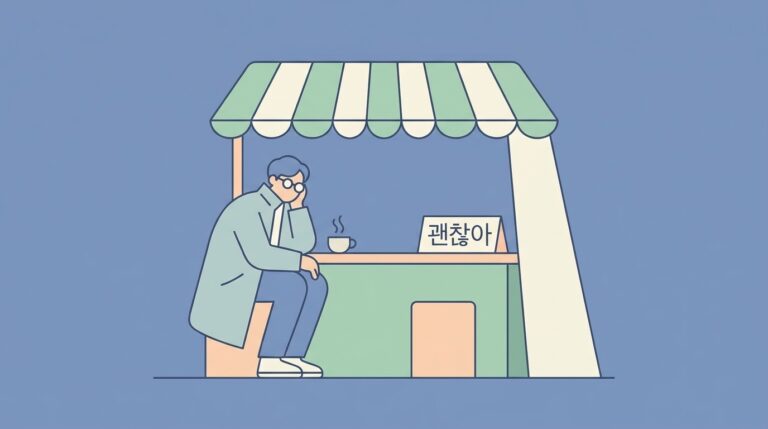
안녕하세요! 매일한글 에디터입니다. Have you ever watched a K-Drama where the main lead clutches their chest, sighs dramatically, or holds the back of their neck while dealing with a stubborn boss or a messy misunderstanding? If you’ve ever lived, worked, or traveled in Korea, you know that unmistakable, heavy feeling when things just won’t go your way—and simply saying “스트레스 받아요 (I’m stressed)” just doesn’t capture the sheer agony of it. At an intermediate level (B2), sounding natural means moving past robotic dictionary definitions and mastering the rich vocabulary of Korean emotional release. Today, we’re unlocking the art of expressing deep frustration and venting stress like a true local.
Phase 2: Core 3 Expressions Deep Dive
1. 속이 답답해요 (Sogi dapdaphaeyo)
- Pronunciation: [Sog-i dap-dap-hae-yo] (Sounds like soke-ee dahp-dahp-heh-yo — imagine a heavy lid pressing down on your chest).
- Meaning: Literal: “My inside feels suffocated/clogged.” | Real Nuance: “I feel so stifled, frustrated, and blocked because things aren’t resolving.”
- K-Culture Moment: Seen in office dramas like Misaeng when endless red tape or a micromanaging boss blocks a great proposal.
- Editor’s Insight: 속 refers to your inner stomach/chest area. Koreans view emotional blockage as a physical sensation in the torso.
- Situation Spectrum: Casual: 속 답답해 (✅) | Semi-formal: 속이 답답해요 (✅) | Formal: 속이 답답합니다 (⚠️)
- 🤔 Think About It: In English, we say “I’m frustrated,” focusing on the mental state. Why do you think Korean expresses frustration through visceral physical sensations in the chest?
2. 멘붕 왔어요 (Menbung wasseoyo)
- Pronunciation: [Men-bung wa-sseo-yo] (Men-boong wah-ssuh-yo — short for 멘탈 붕괴, mental breakdown).
- Meaning: Literal: “Mental collapse has arrived.” | Real Nuance: “My brain is completely fried / I am experiencing cognitive overload / I’m having a mini-meltdown.”
- K-Culture Moment: Every Korean variety show (like Running Man) when players get hit with a totally impossible mission or betrayal.
- Editor’s Insight: It sounds dramatic in translation, but in daily life, it’s used lightheartedly whenever you’re overwhelmed by sudden chaos.
- Situation Spectrum: Casual: 멘붕 왔어 (✅) | Semi-formal: 멘붕 왔어요 (✅) | Formal: 멘탈 붕괴를 겪고 있습니다 (🚫 – too slangy for corporate reports)
- 🤔 Think About It: Does your native language have slang created by blending foreign loanwords (like Mental) with native roots (붕괴)?
3. 울화통이 터질 것 같아요 (Ulhwatongi teojil geot gatayo)
- Pronunciation: [Ul-hwa-tong-i teo-jil geot ga-ta-yo] (Ool-hwa-tong-ee tuh-jeel guht gah-tah-yo — roll the r/l smoothly).
- Meaning: Literal: “My vessel of pent-up anger feels like it’s about to burst.” | Real Nuance: “I am so furious and frustrated that I might explode.”
- K-Culture Moment: When a K-Drama protagonist finally stands up to unfair in-laws after bottling up emotions for months.
- Editor’s Insight: Rooted in the traditional Korean culture of Hwa-byung (anger illness from suppressed feelings). It indicates that suppressed stress is boiling over.
- Situation Spectrum: Casual: 울화통 터져 (✅) | Semi-formal: 울화통이 터질 것 같아요 (✅) | Formal: 울화통이 터질 지경입니다 (⚠️)
- 🤔 Think About It: How does societal pressure to maintain harmony influence whether people vent directly or let it build up to an ulhwatong?
Phase 3: Textbook Korean vs. Real Korean
Situation 1: Describing an overwhelming workday
- 📖 Textbook Korean: 오늘 일이 너무 많아서 정말 힘듭니다. (Today there is too much work, so I am very tired.)
- 🗣️ Real Korean: 아, 진짜 뒷목 잡겠어요. 머리가 터질 것 같아요! (A, jinjja dwinmok japgesseoyo. Meoriga teojil geot gatayo! – Ugh, I’m literally clutching my neck. My head feels like it’s about to explode!)
- 💡 Why is it different? Intermediate native speakers use vivid somatic metaphors (neck tension, exploding head) rather than bland, abstract adjectives like 힘들다.
Situation 2: Reacting to someone being slow and uncooperative
- 📖 Textbook Korean: 상황이 매우 불만족스럽고 답답합니다. (The situation is very unsatisfactory and frustrating.)
- 🗣️ Real Korean: 완전 고구마 백 개 먹은 것 같아요! (Wanjeon goguma baek gae meogeun geot gatayo! – It feels like I ate a hundred dry sweet potatoes without water!)
- 💡 Why is it different? The “Goguma” metaphor is modern Korean pop-culture shorthand for feeling choked by someone’s frustrating incompetence.
Phase 4: K-Culture Deep Dive & Non-Verbal Manners
4-1. Nunchi & Non-Verbal Venting
- The Chest Thump (가슴 치기): Gently thumping your sternum with an open palm or fist while letting out a long breath (하아…) signals that you are trying to physically dislodge the emotional blockage.
- The Neck Grab (뒷목 잡기): Grasping the nape of your neck implies sudden blood pressure spikes from shock or sheer exasperation.
- Nunchi Warning: Never perform these overly dramatically toward a senior or boss directly, as it looks confrontational. Use it when venting to peers or subordinates about external obstacles.
4-2. Cultural Codes: The Goguma & Cider Dynamic
In Korea, venting stress isn’t just complaining—it’s part of a cultural cycle. When you suffer through a 고구마 (Goguma) scenario (slow, frustrating, suffocating), your emotional cure is a 사이다 (Cider – refreshing Korean lemon-lime soda) moment: a fast, sharp, satisfying resolution. Koreans often bond over spicy food like Tteokbokki or Bulldak to sweat out this pent-up Hwa (inner heat).
Phase 5: Real-Life Roleplay Scenario
Setting: 10:30 PM at a Pocha (street tent pub) near Euljiro. Minho, your project partner, slumps onto the plastic chair after a brutal client meeting.
- Minho: 하… 오늘 클라이언트 피드백 봤어? 진짜 말도 안 돼. (Ha… oneul keullaieonteu pideubaek bwasseo? Jinjja maldo an dwae. / Sigh… Did you see the client’s feedback today? It makes zero sense.)
🎭 [Drops his head onto his crossed arms on the table] - You: 네, 확인했어요. 기획을 처음부터 다 엎으라니… 완전 멘붕 왔어요. (Ne, hwaginhaesseoyo. Gihoegeul cheoeumbuteo da eopeurani… wanjeon menbung wasseoyo. / Yes, I checked it. Asking us to scrap the whole plan from scratch… My brain completely fried.)
🎭 [Sighs and passes a glass of water] - Minho: 지난 3주 동안 야근한 건 다 뭐가 되냐고. 속이 너무 답답하다. (Jinan samju dongan yageunhan geon da mwoga doenyago. Sogi neomu dapdaphada. / What was the point of our three weeks of overtime? My chest feels so stifled.)
🎭 [Thumps his chest twice lightly] - You: 맞아요. 진짜 고구마 백 개 먹은 기분이에요. (Majayo. Jinjja goguma baek gae meogeun gibunieyo. / Exactly. It really feels like eating a hundred dry sweet potatoes.)
🎭 [Nods sympathetically] - Minho: 내일 부장님한테 어떻게 보고해야 할지… 울화통이 터질 것 같아. (Naeil bujangnimhante eotteoke bogohaeya halji… ulhwatongi teojil geot gata. / I don’t know how to report this to the director tomorrow… I feel like exploding.)
🎭 [Grabs the back of his neck] - You: 부장님도 들으시면 뒷목 잡으실 걸요. 일단 오늘은 일 생각 말고 매운 닭발에 한잔해요. (Bujangnimdo deureusimyeon dwinmok jabeusil geollyo. Ildan oneureun il saenggak malgo maeun dakbare hanjanhaeyo. / The director will probably clutch his neck in shock too. For tonight, let’s forget work and have a drink with spicy chicken feet.)
🎭 [Pours a drink for Minho] - Minho: 그래, 일단 스트레스부터 풀자. 짠하자! (Geurae, ildan seuteuleseubuteo pulja. Jjanhaja! / Yeah, let’s blow off some steam first. Cheers!)
🎭 [Clinks glasses with a relieved smile] - You: 힘내요, 민호 씨. 내일 사이다 같은 해결책이 나올 거예요. (Himnaeyo, Minho ssi. Naeil saida gateun haegyeolchaegi naol geoyeyo. / Cheer up, Minho. A refreshing solution will pop up tomorrow.)
🎭 [Gives an encouraging thumbs-up]
🔀 Interactive Decision Point
When Minho says his head is about to burst from stress in turn 5, how do you respond?
– Option A: “민호 씨, 진정하시고 내일 아침에 다시 이성적으로 분석해 보세요.” (Minho, calm down and analyze it rationally tomorrow morning.)
– Option B: “진짜 어이없죠! 오늘은 매운 거 먹으면서 욕 한 바가지 하고 털어버려요.” (That’s totally ridiculous! Let’s eat spicy food, vent our hearts out, and shake it off tonight.)
– Option C: “그 클라이언트 회사에 당장 항의 메일을 보내는 게 어때요?” (How about sending a formal complaint email to the client right now?)
Detailed Feedback:
* Option A (Bad): Too cold and overly logical. In Korean venting culture (Gong-gam / Empathy), invalidating the emotion will make the speaker feel alienated.
* Option B (Best!): Spot-on intermediate emotional intelligence! Validates his frustration, introduces stress-relieving food culture, and builds solidarity.
* Option C (Risk): Impulsive. Sending angry late-night emails in a Korean corporate setting can cause catastrophic professional damage.
Phase 6: 10-Second Emotion Shadowing Drill
Practice matching the exact rhythm, intonation, and breath pauses (/ indicates a natural breath/stress break):
[😫 가슴을 쾅쾅 치며 - Deep frustration]
아, 진짜 / 일이 이렇게 안 풀리니까 / 속이 터질 것 같아! (A, jinjja / iri ireoke an pullinikka / sog-i teojil geot gata!)[🤯 멘붕 와서 허탈하게 - Overwhelmed & dazed]
갑자기 일정이 다 바뀌어서 / 완전 / 멘붕 왔어요… (Gapjagi iljeongi da bakkwieoseo / wanjeon / menbung wasseoyo…)[😤 참다 참다 폭발하기 직전 - Suppressed anger boiling over]
계속 참았는데 / 이번엔 진짜 / 울화통이 터지네요. (Gyesok chamannneunde / ibeonen jinjja / ulhwatongi teojineyo.)
Phase 7: K-Culture Mini Dictionary
- 사이다 (Saida): Lemon-lime soda, but culturally used as an adjective/noun for anything brilliantly refreshing that instantly clears up a frustrating situation.
- 고구마 (Goguma): Sweet potato; shorthand for feeling suffocated or frustrated due to slow communication, indecisive people, or stubborn plotlines.
- 홧병 (Hwa-byung): A recognized somatic syndrome caused by chronic suppression of anger and resentment within strict social hierarchies.
- 당 떨어진다 (Dang tteoleojinda): “My blood sugar is dropping” — used jokingly when mental exhaustion and stress make you crave sweets instantly.
Phase 8: Traveler’s Survival Kit
Top 3 Survival Phrases for Stressed Situations
- 문제가 생겨서 너무 답답해요. (Munje-ga saenggyeoseo neomu dapdaphaeyo.) – A problem occurred and I feel so stuck/frustrated. (Use when airline/hotel bookings go wrong).
- 스트레스가 너무 쌓여서 매운 음식 추천해 주세요. (Seuteuleseu-ga neomu ssayeoseo maeun eumsik chucheonhae juseyo.) – I’m super stressed, please recommend something spicy! (Use at restaurants).
- 잠시 바람 좀 쐬고 올게요. (Jamsi baram jom ssoego olgeyo.) – I’ll go get some fresh air for a moment. (Polite way to step away when overwhelmed).
Editor’s Travel Note
When public transit delays or unexpected map errors strike in Seoul, avoid panic by using local navigation tools. Make sure to complete your 네이버 지도 앱 다운로드 before navigating labyrinthine alleyways, and rely on 카카오 T 택시 호출 서비스 for safe, hassle-free late-night transit.
Phase 9: Think Deeper
In Western communication, individual frustration is often expressed through assertiveness and direct confrontation (“I disagree with this policy”). In contrast, Korean linguistic history is intertwined with the collective concept of Han (한)—deep, shared sorrow—and modern Hwa (화). Because harmony and hierarchical respect (Jeong and Yee-ui) are paramount, direct confrontation is frequently softened. Instead, people bond through shared venting sessions (Han-puri), using vivid physical metaphors like “suffocating chest” or “exploding head” over communal meals to build intimacy and consensus without burning professional bridges.
💬 Your Turn: How does your culture handle daily workplace frustration? Do you confront the issue head-on, or do you have a ritual like sharing spicy food with friends?
Phase 10: FAQ & Common Mistakes
Q: Can I use “속 답답해” to describe physical indigestion?
A: Yes! It literally describes feeling bloated or heavy in the stomach. Context tells the listener whether you need digestive medicine (Sohwaje) or a sympathetic ear.
Q: Is “멘붕” appropriate to say to a university professor or company CEO?
A: No. 멘붕 is widely accepted colloquial slang among peers and friendly seniors, but in formal presentations or to top executives, use 당황스럽습니다 (I am taken aback/perplexed) or 혼란스럽습니다 (It is confusing).
Q: What is the difference between 짜증나다 (Jjajeungnada) and 답답하다 (Dapdaphada)?
A: 짜증나다 expresses irritation or annoyance caused by external nuisances (like a buzzing fly or spilled coffee). 답답하다 expresses helplessness and stifled feelings when a problem has no immediate solution.
🚨 Common Mistakes Warning Board
| Mistake | Why it sounds odd | Correct Action |
|---|---|---|
| ❌ “나 지금 화병 걸려 죽겠어!” to a stranger | Too dramatic and personal for formal or distant acquaintances. | Use “상황이 조금 답답하네요” (Semi-formal & polite). |
| ❌ Using “스트레스 받다” for every single negative feeling | Sounds repetitive and limits your expressive range at B2 level. | Swap in “속이 터지다”, “멘붕 오다”, or “뒷목 잡다”. |
| ❌ Clapping hands while complaining | Gives off a sarcastic, aggressive, or mocking vibe in Korea. | Use the palm-on-chest touch or a deep sigh instead. |
Phase 11: Action Mission & Engagement
- 🥉 Bronze Level: Look in the mirror and practice the 3 Shadowing drills from Phase 6 with realistic facial expressions and hand gestures.
- 🥈 Silver Level: Leave a comment below using the phrase
고구마 백 개 먹은 것 같아요to describe a recent frustrating movie or real-life moment. - 🥇 Gold Level: The next time a Korean friend or colleague vents about a hard day, comfort them using: “완전 멘붕이었겠어요. 속 답답할 땐 매운 게 최고예요!”
- 🎮 K-Culture Mission: Watch an episode of a recent K-Drama and count how many times characters sigh, hold their neck, or mention “Cider/Goguma”.
Phase 12: Interactive Quiz Challenge
- Scenario Judgment: Your Korean coworker just found out that their hard drive crashed without a backup 10 minutes before a deadline. Which expression is the most natural and empathetic to reflect their exact state?
- A) 축하해요! 드디어 쉬겠네요.
- B) 완전 멘붕 왔겠어요… 어떡해요!
- C) 저는 조용히 책을 읽고 싶어요.
- Fill in the blank: 일이 시원하게 해결되지 않고 질질 끌려서 속이 너무 ( ).
- A) 시원해요
- B) 답답해요
- C) 달콤해요
- Culture True or False: The phrase “사이다” is only used to order a lemon-lime carbonated beverage in restaurants.
- (True / False)
🔍 Click here to reveal the answers and explanations!
- Answer: B | Explanation: A sudden catastrophic crash right before a deadline is the textbook definition of 멘붕 (mental breakdown/meltdown).
- Answer: B (답답해요) | Explanation: When things drag on without resolution, it causes the feeling of being suffocated (속이 답답하다).
- Answer: False | Explanation: Culturally, 사이다 is widely used to describe a satisfying, refreshing, and swift resolution to a frustrating (고구마) situation!







