

Phase 1: Empathy (Storytelling Opening)
안녕하세요! 매일한글 에디터입니다. (Hello! This is your Daily Hangul Editor.)
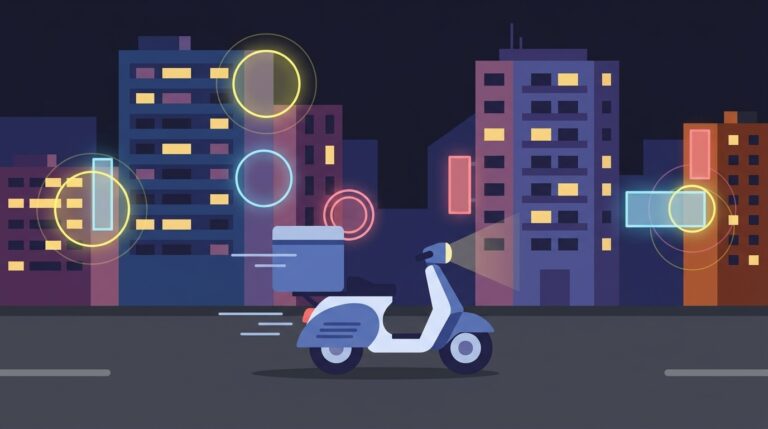
Picture this: It is 11:30 PM on a freezing Friday night in Seoul. After a grueling week, you curl up on your sofa, ready to indulge in quintessential K-drama comfort food: a steaming bowl of tteokbokki and crispy garlic fried chicken. You open your favorite delivery app—Baemin (배달의민족) or Coupang Eats (쿠팡이츠)—only to face an existential dilemma at checkout. The meal itself is 12,000 KRW, but the “Single-Order Express Delivery” (치타배달 or 알뜰/한집배달) tacks on an eye-watering 6,500 KRW surcharge. Welcome to the frontline of Korea’s hyper-competitive platform wars, where lightning-fast speed meets escalating delivery fees (배달비 폭등).
As advanced C2 learners, mastering standard textbook transactions is no longer enough. To truly navigate contemporary Korean life and social discourse, you need the sophisticated vocabulary, idiomatic witticisms, and socio-economic idioms native speakers use when venting about the platform economy. This guide draws upon hundreds of hours of urban cultural observations and real student experiences, equipping you with the linguistic prowess to dissect Korea’s delivery landscape like a seasoned Seoulite.
Phase 2: 3 Core Expressions In-Depth
1. 단건 배달 (Dangeon Baedal)
- Pronunciation: [Dan-geon bae-dal] (Sounds like “dahn-gun” + “bed-al”)
- Meaning: Literal: “Single-item/single-case delivery” | Nuance: Direct door-to-door express delivery where the rider picks up and delivers exclusively your order without bundling others along the way.
- K-Culture Moment: Frequently featured on current affair talk shows and YouTube tech channels dissecting the platform rivalry between Coupang Eats and Baemin.
- Editor’s Insight: This service arose from consumer frustration over soggy fries caused by bundled deliveries (묶음 배달). While it guarantees sizzling-hot food within 20 minutes, it triggered the current delivery fee inflation.
- Situation Spectrum: Casual ✅ | Semi-formal ✅ | Formal ✅
- 🤔 Think About It: How does your culture balance the ethical cost of instant labor against the desire for ultimate consumer convenience?
2. 배달비 폭탄 (Baedalbi Poktan)
- Pronunciation: [Bae-dal-bi pok-tan] (Like “bed-al-bee” + explosive “pohk-tahn”)
- Meaning: Literal: “Delivery fee bomb” | Nuance: Skyrocketing, extortionate delivery surcharges that shock the consumer.
- K-Culture Moment: Protagonists in modern slice-of-life K-Dramas shaking their heads at checkout before deciding to put on slippers and pick up takeout in the snow.
- Editor’s Insight: The word 폭탄 (bomb) is productively attached to financial shocks in Korean: 세금 폭탄 (tax bomb), 이자 폭탄 (interest rate shock), and now 배달비 폭탄.
- Situation Spectrum: Casual ✅ | Semi-formal ✅ | Formal ⚠️ (Use 급격한 배달비 인상 in formal reports)
- 🤔 Think About It: Why do Korean speakers use explosive military metaphors to describe everyday economic pressures?
3. 배보다 배꼽이 더 크다 (Baeboda Baekko-bi Deo Keuda)
- Pronunciation: [Bae-bo-da bae-kko-bi deo keu-da] (Analogous to “belly-bo-dah beck-ko-bee duh koo-dah”)
- Meaning: Literal: “The belly button is bigger than the belly” | Nuance: The secondary or incidental cost dramatically exceeds the core item’s value (the tail wagging the dog).
- K-Culture Moment: Used by variety show hosts on I Live Alone when a 4,000 KRW coffee order requires a 5,000 KRW delivery fee.
- Editor’s Insight: This time-tested proverb is the single most common reaction among Koreans when debating whether midnight delivery is worth the surcharge.
- Situation Spectrum: Casual ✅ | Semi-formal ✅ | Formal ⚠️ (Common in spoken discourse, but figurative)
- 🤔 Think About It: Is there an equivalent anatomical or situational proverb in your native language that captures this exact disproportion?
Phase 3: Textbook Korean vs. Real Native Korean
Situation 1: Complaining about excessive delivery charges
- 📖 교과서 한국어 (Textbook): 배달 요금이 제품 가격보다 다소 비싸게 책정되었습니다. (Baedal yogeumi jepum gagyeokboda daso bissage chaekjeongdoe-eotsseumnida.) — “The delivery fee is priced somewhat more expensively than the product.”
- 🗣️ 진짜 한국어 (Real Native): 배달비가 밥값만큼 나와서 완전 배보다 배꼽이 더 커요. (Baedalbiga bapkkamman-keum nawaseo wanjeon baeboda baekkobi deo keoyo.) — “The delivery fee costs as much as the meal itself; the belly button is bigger than the belly!”
- 💡 왜 다를까? (Why the difference?): Textbook Korean over-relies on Sino-Korean bureaucratic phrasing (다소, 책정되다), whereas natives leverage vivid proportional idioms (밥값만큼, 배보다 배꼽).
Situation 2: Inquiring why an order is delayed despite express priority
- 📖 교과서 한국어 (Textbook): 빠른 배달을 선택했는데 왜 아직 도착하지 않았습니까? (Ppareun baedareul seontaekaenneunde wae ajik dochakhaji anatseumnikka?)
- 🗣️ 진짜 한국어 (Real Native): 치타배달로 시켰는데 라이더님 동선이 왜 묶음 배달처럼 돌아가죠? (Chitabaedallo sikyeonneunde raideonim dongseoni wae mukkeum baedalcheoreom doragajyo?)
- 💡 왜 다를까? (Why the difference?): C2 natural Korean incorporates platform jargon (치타배달, 동선, 라이더님) and polite rhetorical questions rather than blunt confrontational interrogatives.
Phase 4: K-Culture Deep Dive & Non-Verbal Etiquette
4-1. 눈치 (Nunchi) & Contactless Etiquette
In Korea, delivery tipping culture does not exist in the Western cash-in-hand sense; all gratuity and platform costs are baked directly into the app checkout. However, modern 눈치 manifests in contactless handoffs (비대면 배달).
* Doorstep Etiquette: Leave instructions like “문 앞에 두고 벨 눌러주세요” (Please leave at the door and ring the bell). Opening the door the exact split-second the rider steps up creates unnecessary mutual awkwardness. Give them 10 seconds to set the food down and step into the elevator before retrieving your meal.
* Rider Greetings: If you happen to encounter the courier in the hallway, a slight 15-degree head bow accompanied by a warm “감사합니다, 수고하세요!” (Thank you, take care on your run!) exhibits peak Korean social grace.
4-2. Cultural Analysis: The “Ppalli-Ppalli” Platform Dilemma
Korea’s legendary 빨리빨리 (quick-quick) mindset birthed the world’s most sophisticated logistical infrastructure. When Coupang introduced single-order 치타배달 (Cheetah Delivery), it ignited a platform war. Yet, as platform commissions grew and delivery costs skyrocketed toward 8,000 KRW per run during peak rainstorms, Korean society entered a period of fatigue known as 배달비 인플레이션 저항 (delivery fee resistance). Consumers are now balancing extreme efficiency against economic pragmatism, giving rise to 포장족 (people who opt for self-pickup).
Phase 5: Real-Life Roleplay Scenario
Characters:
* You: An experienced expat living in Mapo-gu, planning dinner.
* Min-jun (민준): Your Korean flatmate, a savvy budget-conscious graduate student.
Dialogue:
1. You: 민준아, 오늘 비도 오는데 야식으로 엽떡에 허니콤보 시켜 먹을까? (Minjuna, oneul bido oneunde yasigeuro yeoptteoge heonicombo sikyeo meogeulkka?)
🎭 Looking out the window at the rain while scrolling your phone.
“Min-jun, since it’s raining, should we order some spicy tteokbokki and honey combo chicken for a late-night snack?”
- Min-jun: 오, 대찬성! 근데 쿠팡이츠 켜서 배달비 얼마 나오는지 먼저 확인해 봐. (O, daechanseong! Geunde Coupang Eats kyeoseo baedalbi eolma naoneunji meonjeo hwaginhae bwa.)
🎭 Putting down his laptop and nodding enthusiastically.
“Oh, totally down! But open Coupang Eats first and check how much the delivery fee is.” -
You: 헐, 비 와서 그런지 단건 배달비가 7,000원까지 치솟았어. (Heol, bi waseo geureonji dangeon baedalbiga chilcheon-won-kkaji chisosasseo.)
🎭 Staring at the checkout screen in disbelief.
“Whoa, maybe because of the rain, the single-order delivery fee surged up to 7,000 KRW.” -
Min-jun: 7,000원? 완전 배보다 배꼽이 더 크네. 그냥 묶음 배달로 돌릴까? (Chilcheon-won? Wanjeon baeboda baekkobi deo keune. Geunyang mukkeum baedallo dollilkka?)
🎭 Sighing and clicking his tongue.
“7,000 won? The belly button is way bigger than the belly. Should we just switch to bundled delivery?” -
You: 묶음 배달은 비 오는 날 기본 50분은 걸릴 텐데, 튀김 다 눅눅해지지 않을까? (Mukkeum baedareun bi oneun nal gibon osipbuneun geollil tende, twigim da nungnukhaejiji aneulkka?)
🎭 Expressing genuine gourmet concern over food texture.
“Bundled delivery will take at least 50 minutes on a rainy day. Won’t the fried chicken get all soggy?” -
Min-jun: 맞는 말이야. 식은 치킨 먹을 바엔 차라리 우산 쓰고 포장해 올래? 포장 할인은 3,000원 해주잖아. (Maneun mariya. Sigeun chikin meogeul ba-en charari usan sseugo pojanghae ollaeyo? Pojang harineun samcheon-won haejujana.)
🎭 Grabbing a padded jacket from the coat rack.
“Good point. Rather than eating cold chicken, want to just grab an umbrella and pick it up ourselves? Takeout gets a 3,000 KRW discount!” -
You: 굿 아이디어! 배달비 7,000원 아끼고 할인까지 받으면 만 원 세이브네. (Gut aidieo! Baedalbi chilcheon-won akkigo harinkkaji badeumyeon man-won seibeune.)
🎭 Smiling and putting on your sneakers.
“Great idea! If we save the 7,000 won delivery fee and get the discount, that’s a 10,000 won net save.” -
Min-jun: 가자! 절약한 만 원으로 편의점에서 맥주 4캔 픽업하면 완벽하겠다. (Gaja! Jeoryakhan man-woneuro pyeon-uijeomeseo maekju ne-kaen pigeophamyeon wanbyeokhagetda.)
🎭 Opening the front door with an umbrella in hand.
“Let’s roll! Using that saved 10,000 won to grab 4 cans of beer at the convenience store will make this night perfect.”
🔀 Interactive Decision Point
How would you respond to Min-jun at Turn 4 when he says the fee is too high?
* Option A: “그냥 돈 더 주고 단건 배달 시키자. 내 시간과 입맛이 더 소중해!” (Let’s just pay extra for single-order. My time and palate are worth more!)
Feedback: [Best for speed-focused dining] Assertive, idiomatic, and very modern Seoul style. Shows high confidence.
* Option B: “배달 요금이 과다하니 주문을 전면 취소하는 것이 어떨까요?”
Feedback: [Bad – Overly Formal] Sounds like a corporate audit statement. Unnatural between roommates.
* Option C: “라이더한테 깎아 달라고 전화해 볼까?” (Should we call the rider and ask for a discount?)
Feedback: [Risk – Cultural Taboo] Couriers don’t set app algorithm prices. Calling to negotiate will cause extreme social discomfort.
Phase 6: 10-Second Emotional Shadowing Drill
Practice reading these sentences aloud, observing pauses (/) and capturing the native emotional cadence:
- [😤 Frustrated & Shocked]
배달비가 / 밥값보다 더 나오면 / 도대체 / 뭘 남기겠다는 거야?
(Baedalbiga / bapkkapboda deo naomyeon / dodaeche / mwol namgigetdaneun geoya?)
“If the delivery fee costs more than the meal / what on earth / are we even paying for?” -
[😋 Excited & Relieved]
치타배달로 시켰더니 / 15분 만에 / 김 펄펄 나는 상태로 / 문 앞에 딱 도착했네!
(Chitabaedallo sikyeotdeoni / sibobun mane / gim peolpeol naneun sangtaero / mun ape ttak dochakhaenne!)
“Ordered via express delivery / and in 15 minutes flat / piping hot with steam rising / it arrived right at the doorstep!”
Phase 7: K-Culture Mini Dictionary
- 묶음 배달 (Mukkeum Baedal) — Bundled Multi-Stop Delivery
The standard delivery model where an AI algorithm assigns a rider 2–4 proximate orders simultaneously. Cost-effective, but poses risks for heat-sensitive food. - 포장 할인 (Pojang Harin) — Takeout / Self-Pickup Discount
A financial incentive (usually 1,000–4,000 KRW) offered by eateries when customers order via the app but walk in to pick up the food themselves. - 최소 주문 금액 (Choeso Jumun Geumaek) — Minimum Order Threshold
The baseline cart value required by restaurants before delivery can be triggered (typically 12,000 to 18,000 KRW), forcing solo diners to add extra side dishes. - 라이더 (Raideo) — Platform Delivery Courier
Loanword from English (“Rider”), universally used across Korean apps, news media, and street conversations to refer to two-wheel couriers with professional respect.
Phase 8: Traveler’s & Expat Survival Kit
Top 3 Survival Phrases
- 문 앞에 두고 문자 남겨주세요. (Mun ape dugo munja namgyeojuseyo.)
Pro Tip: The golden standard for non-contact delivery in apartments and officetels. - 공동현관 비밀번호는 [샵 + 번호]입니다. (Gongdong-hyeongwan bimilbeonhoneun [syap + beonho]imnida.)
Pro Tip: Essential for letting couriers pass the computerized ground-floor security gate. - 수저랑 포크는 안 주셔도 돼요. (Sujeorang pokeuneun an jusyeodo dwaeyo.)
Pro Tip: Korea’s eco-friendly default setting on apps. Check this box to skip single-use plastics.
Editor’s Travel & Tech Note
To navigate Korea’s platform food ecosystem effortlessly, download foreign-friendly tools before you arrive. You can install the service directly via 배달의민족 앱 다운로드 or access international payment setups on 쿠팡이츠 바로가기. Note that while most Korean apps require domestic SMS verification, Coupang Eats and Yogiyo have expanded credit card options for international travelers staying at hotels and Airbnbs.
Phase 9: “A Step Deeper” (Sociocultural Reflection)
The friction over skyrocketing delivery fees in South Korea is not merely a tale of consumer economics; it is a mirror reflecting the rapid transformation of the nation’s social contract. For decades, rapid urban density and low-cost labor sustained an unspoken expectation of near-instant, virtually free service. Today, platform algorithmic pricing and the formal recognition of rider labor rights have forced consumers to reconcile the true cost of human immediacy against individual convenience.
💬 Your Turn: How has on-demand app culture changed your personal perception of human labor in your home country? Share your thoughts below in Korean or English!
Phase 10: FAQ & Common Misconceptions
Q: Is it customary to tip delivery drivers in cash upon arrival in Korea?
A: No. Giving cash tips in Korea is generally unexpected and can even create momentary confusion. All compensation is resolved algorithmically through the app during payment.
Q: Why do delivery fees change depending on the weather or time of day?
A: Korean delivery platforms utilize dynamic surge pricing. During severe rain, heavy snow, or sub-zero cold waves, dynamic weather surcharges (우천 할증) are triggered to incentivize riders to accept hazardous driving routes.
Q: Can delivery drivers enter high-rise apartment elevators to reach my room door?
A: Yes. In South Korea, couriers deliver straight to your individual apartment door (문 앞), provided you supply the ground-floor security pass code (공동현관 비번) in the app notes.
🚨 Common Mistakes Warning Board
- Mistake 1: Waiting anxiously behind the door with it slightly cracked open. (Fix: Choose non-contact delivery and wait until the rider has dropped off the food and departed.)
- Mistake 2: Forgetting to input the outer gate password in the rider instructions. (Fix: Always add
공동현관 비번: #1234in the delivery memo.) - Mistake 3: Assuming all express deliveries are completely solo runs. (Fix: Ensure the app explicitly badges the order as 단건배달 or 한집배달; otherwise, standard multi-stop routing applies.)
Phase 11: Action Missions
- 🥉 Bronze Mission (Solo Practice): Open your delivery app or voice memo. Practice vocalizing: “배달비가 너무 비싸서 오늘은 집 앞 치킨집에서 포장해 올게요.”
- 🥈 Silver Mission (Social Media): Post a screenshot of an absurdly high delivery fee on your Instagram story with the caption: “오늘자 배달비 실화? 완전 배보다 배꼽이 더 큼 💸”
- 🥇 Gold Mission (Real-life Execution): Order dinner using a Korean delivery application, set delivery notes in Korean (문 앞에 두고 벨 눌러주세요), and retrieve your food seamlessly like a local!
- 🎮 K-Culture Mission: Watch an episode of a recent modern K-Drama (like Work Later, Drink Now or Crash Course in Romance) and spot characters debating dinner takeout choices.
Phase 12: Interactive Quiz Challenge
1. Situational Judgment:
You want steaming hot ramen delivered within 20 minutes without intermediate stops. Which service option should you select on the app?
* A) 묶음 배달
* B) 단건 배달 (치타/한집배달)
* C) 매장 식사
2. Fill-in-the-Blank:
음식값은 만 원인데 배달비가 8천 원 나와서 완전 [ _________ ] 더 크다.
3. True or False:
In South Korea, it is standard practice to hand a 10% cash tip directly to the rider when receiving your food.
🔍 Click here to reveal the Quiz Answers & Explanations!
- Answer: B (단건 배달) — Single-order delivery prioritizes speed by assigning one courier to one order exclusively.
- Answer: 배보다 배꼽이 — Full sentence: “음식값은 만 원인데 배달비가 8천 원 나와서 완전 배보다 배꼽이 더 크다.”
- Answer: False — Korea operates on a tip-free service model; platform delivery fees are paid entirely in-app.







