

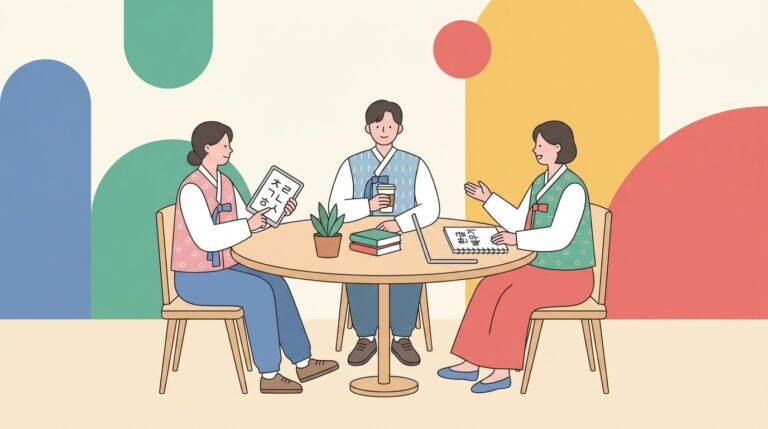
Why Everyone Orders the Same Thing: Decoding Korean Herd Psychology at C1 Level
Phase 1: Empathy (Story Immersion Opening)
안녕하세요! 매일한글 에디터입니다. (Hello! This is your Daily Hangul editor.) Have you ever sat around a sizzling K-BBQ grill with Korean colleagues, and the moment the senior manager orders Kimchi Jjigae, everyone suddenly nods and echoes, “저도 그걸로 통일할게요! (I’ll unify with that too!)”? Or perhaps you’ve witnessed how a single dessert trend—from honey butter chips to tanghulu—sweeps the entire peninsula overnight, packing storefronts with lines stretching around the block. You might wonder: Is this genuine conformity, unspoken peer pressure, or an intricate social dance?
Navigating Korean group psychology (집단 심리) and crowd dynamics (군중 심리) can feel overwhelming for advanced learners. Moving from intermediate B2 to fluent C1 means understanding not just literal vocabulary, but the complex socio-cultural undercurrents of Nunchi, collective harmony, and trend-surfing. This guide draws from real-life interactions and feedback from advanced expats to help you articulately critique, humorously observe, and gracefully navigate herd dynamics in natural, sophisticated Korean.
Phase 2: Deep Dive into 3 Core Expressions
1. 휩쓸리다 (Hwipsseollida)
- Pronunciation: [Hwip-sseol-li-da] (Think of a swift whip sound combined with sir-lee-da, meaning swept away by a wave)
- Meaning: Literally “to be swept away by a current/wave”; practically used when someone loses their autonomy and gets caught up in peer pressure, mass hysteria, or viral fads.
- K-Culture Moment: In K-Dramas like Misaeng or Sky Castle, characters often lament how entire communities get swept up in hyper-competitive academic or corporate fads.
- Editor’s Insight: C1 speakers use this with passive constructions like “군중심리에 휩쓸리다” (to be swept up by mob mentality) or “분위기에 휩쓸리다” (to get carried away by the mood). It implies regret or loss of personal agency.
- Situation Spectrum: Casual: ✅ | Semi-formal: ✅ | Formal: ✅
- 🤔 Think About It: Does your native culture frame going with the flow as positive adaptability or a negative loss of individuality? How does that compare to Korea’s balance between collective harmony and personal regret?
2. 묻어가다 (Mudeogada)
- Pronunciation: [Mu-deo-ga-da] (Sounds like mood-uh-gah-da)
- Meaning: Literally “to be smeared onto something and go along”; metaphorically “to free-ride,” “blend in quietly with the majority,” or “piggyback on a collective decision without drawing attention.”
- K-Culture Moment: On variety shows like Running Man, members joke about “묻어가지 마라!” (Don’t just tag along without contributing!) during team missions.
- Editor’s Insight: This word carries a subtle self-deprecating or slightly cynical nuance. You can playfully use it when you don’t know what to choose: “이번엔 그냥 다수 의견에 묻어갈게요” (I’ll just quietly tag along with the majority opinion this time).
- Situation Spectrum: Casual: ✅ | Semi-formal: ✅ | Formal: ⚠️ (Use ‘편승하다’ instead)
- 🤔 Think About It: Is blending in to avoid conflict viewed as smart self-preservation or laziness in your culture?
3. 대세를 따르다 (Daesereul Ttareuda)
- Pronunciation: [Dae-se-reul Tta-reu-da] (Pronounce Dae-seh-reul tah-roo-dah)
- Meaning: Literally “to follow the overarching trend/dominant force”; practically used to express consciously adopting the mainstream choice or popular consensus.
- K-Culture Moment: Tech reviewers and entertainment critics frequently use this phrase when discussing why audiences migrate en masse to specific streaming platforms or lifestyle aesthetics.
- Editor’s Insight: Unlike 휩쓸리다 (which sounds helpless), 대세를 따르다 sounds pragmatic, sensible, and strategic. It signals that you recognize what is dominant and actively choose to align with efficiency.
- Situation Spectrum: Casual: ✅ | Semi-formal: ✅ | Formal: ✅
- 🤔 Think About It: How does your language distinguish between rational trend adoption and mindless conformity?
Phase 3: Textbook Korean vs Real Korean
Situation 1: Ordering Food as a Group
- 📖 Textbook Korean: “저는 다른 사람들과 같은 메뉴를 선택하겠습니다.” (Jeoneun dareun saramdeulgwa gateun menyureul seontaekhagetseumnida. – I will select the same menu as other people.)
- 🗣️ 진짜 한국어 (Real Korean): “다들 짜장면 드세요? 그럼 저도 그냥 대세에 묻어갈게요!” (Dadeul jjajangmyeon deuseyo? Geureom jeodo geunyang daesee mudeogalgeyo! – Everyone having black bean noodles? Then I’ll just piggyback on the general consensus!)
- 💡 Why the Difference?: Korean meal culture values communal flow and kitchen speed. Using 묻어가다 shows self-awareness and breezy social flexibility rather than rigid formal syntax.
Situation 2: Discussing Viral Social Media Trends
- 📖 Textbook Korean: “그 유행은 집단적 동조 현상에 기인합니다.” (Geu yuhaengeun jipdanjeok dongjo hyeonsange giinhapnida. – That trend originates from collective conformity phenomenon.)
- 🗣️ 진짜 한국어 (Real Korean): “남들 다 사니까 불안해서 사는 일종의 포모(FOMO) 심리 같아요.” (Namdeul da sanikka buranhaeseo saneun iljongui pomo simni gatayo. – It seems like a type of FOMO where people buy it out of anxiety just because everyone else is.)
- 💡 Why the Difference?: Native C1 speakers blend psychological concepts with conversational ease, contrasting FOMO with organic desire.
Phase 4: K-Culture Deep Dive & Non-verbal Manners
4-1. Nunchi (눈치) & Micro-Gestures in Group Settings
When entering a group decision-making space—whether a company team dinner (Hoesik) or university group project—observe before speaking. Look for the “Nodding Cadence” (고개 끄덕임): if senior members or the vocal majority start nodding in unison, presenting a contradictory opinion bluntly creates awkward tension (갑분싸).
- The Soft Disagreement Gesture: If you wish to diverge from the crowd, gently tilt your head 15 degrees, lightly tap the table with your forefinger, and soften your intro: “대세는 A인 것 같지만, 혹시 B 방안도 열려 있을까요?” (It seems A is the dominant opinion, but might we consider option B as well?).
4-2. Cultural Code: The Double-Edged Sword of “우리” (We/Us)
Korean culture places immense value on 우리 (Uri – We/Our). While this creates unmatched solidarity, it also fuels intense FOMO (군중심리). When a viral food trend emerges on Instagram, failing to try it makes one feel excluded from the collective cultural conversation. Recognizing this helps you understand that Korean trend-chasing isn’t mere consumerism; it’s social bonding currency.
Phase 5: Interactive Roleplay Scenario
- Setting: A lively office lounge after lunch in Yeouido, Seoul.
- Characters:
- 민우 (Minwoo): Trend-conscious project lead who loves consensus.
- 수진 (Sujin): Critical thinker who dislikes blind conformity.
- 당신 (You – Alex): C1-level expat colleague navigating group dynamics.
Dialogue:
1. 민우: “오늘 팀 회식 장소, 다들 새로 오픈한 오마카세 가자는데 어때요? 요즘 완전 핫플이잖아요!” (Minwoo smiles excitedly, looking around for validation.) [Oneul tim hoesik jangso, dadeul saero opeunhan omakase gajaneunde eottaeyo? Yojeum wanjeon hatpeurijanayo! – For our team dinner today, everyone wants to go to that newly opened omakase. What do you think? It’s the hottest place right now!]
2. 수진: “거기 예약 대기만 두 시간이라던데요. 그냥 줄 서는 군중심리에 편승하는 거 아니에요?” (Sujin crosses her arms skeptically.) [Geogi yeyak daegiman du siganiradeondeyo. Geunyang jul seoneun gunjungsimnie pyeonseunghaneun geo anieyo? – I heard the waitlist alone is two hours. Aren’t we just jumping on the bandwagon of people standing in line?]
3. 당신 (Alex): “🎭 (생각에 잠긴 듯 턱을 괴며) 솔직히 바이럴 마케팅에 다들 휩쓸리는 감이 없지 않아 있죠.” [Soljikhi baireol maketing-e dadeul hwipsseollineun gami eopji ana itjyo. – Honestly, I feel like people are somewhat getting swept away by viral marketing.]
4. 민우: “에이, 알렉스 씨! 남들 다 가보는 데는 다 그만한 이유가 있는 법이에요.” (Minwoo chuckles, nudging you lightly.) [Ei, Alex ssi! Namdeul da gaboneun deneun da geumanhan iyuga inneun beobieyo. – Come on, Alex! There is always a solid reason when everyone flocks to a place.]
5. 수진: “그래도 비효율적인 건 사실이잖아요. 알렉스 씨는 다수결에 묻어가는 편이에요?” (Sujin turns the spotlight on you.) [Geuraedo bihyeoyuljeogin geon sasirijanayo. Alex ssineun dasugyeore mudeoganeun pyeon-ieyo? – Still, it’s undeniably inefficient. Alex, are you the type to just piggyback on majority rule?]
6. 당신 (Alex): (What will you say next? Choose your response below!)
🔀 Interactive Choice Point
- Option A: “저는 분위기 깨기 싫으니까 그냥 대세를 따를게요. 예약만 된다면요!” (I don’t want to spoil the mood, so I’ll follow the dominant trend, provided we get a reservation!)
- Option B: “왜 항상 남들이 하는 대로만 해야 하죠? 전 빠질게요.” (Why do we always have to do what others do? Count me out.)
- Option C: “군중심리도 하나의 문화적 재미니까 체험해 보되, 대기가 길어지면 플랜 B로 넘어가죠.” (Experiencing herd curiosity is part of cultural fun, but if the wait gets too long, let’s switch to Plan B.)
Detailed Branch Feedback:
- Option A (Safe / Best Social Harmony): Natural, friendly, and prioritizes group harmony while subtly placing a practical condition (reservation). Fits everyday Korean work culture.
- Option B (Bad / High Social Friction): Too confrontational for a collectivist office setting; instantly creates an icy atmosphere (갑분싸).
- Option C (Masterful C1 / Balanced Leadership): Validates both Minwoo’s excitement and Sujin’s efficiency. Demonstrates top-tier emotional intelligence (Nunchi).
Phase 6: 10-Second Emotion Shadowing Drill
Practice these natural rhythm pauses (/) with vivid emotional immersion:
[😏 약간 씁쓸하고 자조적으로 / Slightly self-deprecatingly]- “남들 다 / 주식 산다고 하니까 / 저도 모르게 / 휩쓸렸던 것 같아요.”
(Namdeul da / jusik sandago hanikka / jeodo moreuge / hwipsseollyeotdeon geot gatayo.) - “Since everyone else was buying stocks, I guess I got swept up without even realizing it.”
- “남들 다 / 주식 산다고 하니까 / 저도 모르게 / 휩쓸렸던 것 같아요.”
[🤝 유쾌하고 넉살 좋게 / Playfully adaptable]- “저는 결정 장애가 있어서요, / 오늘은 그냥 / 다수 의견에 / 묻어갈게요!”
(Jeoneun gyeoljeong jang-aega isseoseoyo, / oneureun geunyang / dasu uigyeone / mudeogalgeyo!) - “I’m terribly indecisive, so today I’ll just ride along with whatever the majority decides!”
- “저는 결정 장애가 있어서요, / 오늘은 그냥 / 다수 의견에 / 묻어갈게요!”
[🧐 분석적이고 지적인 톤 / Analytical C1 tone]- “단순한 유행이라기보다는 / 집단 심리가 만들어낸 / 하나의 사회적 현상이죠.”
(Dansunhan yuhaeng-iragibodaneun / jipdan simniga mandeureonaen / hanaui sahoejeok hyeonsang-ijyo.) - “Rather than a simple passing fad, it’s a social phenomenon produced by group psychology.”
- “단순한 유행이라기보다는 / 집단 심리가 만들어낸 / 하나의 사회적 현상이죠.”
Phase 7: K-Culture Mini Dictionary
- 쏠림 현상 (Ssol-lim hyeon-sang) | Extreme polarization or one-sided clustering | Used frequently in economics, sociology, and media when the public disproportionately rushes into one specific trend, stock, or opinion.
- 동조 압력 (Dong-jo am-nyeok) | Peer pressure / Conformity pressure | Academic yet widely used in corporate and educational contexts to critique the pressure to agree with the group.
- 편승하다 (Pyeon-seung-ha-da) | To jump on the bandwagon / Take opportunistic advantage | Formal counterpart of 묻어가다; common in business reports and news articles analyzing marketing trends.
- 소신 (So-sin) | Personal conviction / Unwavering belief | The direct antidote to crowd mentality. Used in phrases like “소신 발언” (speaking one’s conviction despite group pressure).
Phase 8: Survival Kit for Travelers
Survival Expressions TOP 3
- “여기서 제일 많이 시키는 게 뭐예요?” (Yeogiseo jeil mani sikineun ge mwoyeyo?)
- Pro Tip: When menus are overwhelming, asking for what the crowd orders taps directly into Korean crowd-tested quality.
- “다수결로 정하시죠!” (Dasugyeollo jeonghasijyo!)
- Pro Tip: Perfect phrase to resolve lingering group debates over where to eat or visit.
- “저는 대세에 따르겠습니다.” (Jeoneun daesee ttareugetseumnida.)
- Pro Tip: A polite, classy way to let Korean hosts or friends take the lead without sounding indifferent.
Editor’s Travel Note
When you’re trying to dodge crowds at viral hotspots in Seoul (like Seongsu or Yeonnam-dong), search the spot via the Naver Map navigation app download to check real-time visitor congestion or read domestic reviews before queuing blindly.
Phase 9: A Step Deeper (Reflection)
Korean collective consciousness is rooted in agrarian cooperative traditions (Dure and Pumasi), where survival depended entirely on mutual cooperation. Today, this manifests in a hyper-connected digital society where consensus offers emotional security, while standing out carries vulnerability. True fluency lies in recognizing that Koreans who “follow the crowd” often do so out of empathy and communal consideration rather than a lack of individual conviction.
💬 Your Turn: Have you ever followed a crowd trend in Korea or your home country just to fit in? Share your story in the comments below! (여러분의 경험을 댓글로 들려주세요!)
Phase 10: FAQ & Common Mistakes
Q: Is ‘묻어가다’ considered impolite in business settings?
A: In formal board meetings or presentations, avoid ‘묻어가다’ as it sounds too casual and slightly unprofessional. Instead, use refined academic expressions like ‘의견에 동의하다’ (to agree with the opinion) or ‘흐름에 발맞추다’ (to keep pace with the trend).
Q: What is the exact difference between ‘군중심리’ and ‘집단심리’?
A: ‘집단심리’ (Group psychology) refers broadly to the psychological dynamics of any organized group (like a company, club, or committee). ‘군중심리’ (Mob / Crowd psychology) specifically describes irrational, emotional, or spontaneous mass conformity among unorganized crowds.
Q: How do I express my individual choice politely when everyone else unifies their order?
A: Smile warmly and say: “모두 통일하시는데 죄송해요! 저는 오늘 꼭 먹고 싶은 메뉴가 있어서 [메뉴명]으로 해도 될까요?” (Sorry to break the unity! There’s a specific dish I’m craving today, so would it be okay if I order [Dish Name]?).
🚨 Common Mistakes Warning Board
- Mistake 1: Saying “저는 군중을 따라갈게요” ❌
- Correct Action: Native speakers don’t say “follow the crowd” literally. Say “대세를 따를게요” or “다수 의견에 맞출게요” ✅.
- Mistake 2: Using “휩쓸다” (active) instead of “휩쓸리다” (passive) ❌
- Correct Action: Unless you are the powerful storm sweeping people away, say “유행에 휩쓸렸어요” (I was swept up by the trend) ✅.
- Mistake 3: Treating “눈치 보다” only as fear ❌
- Correct Action: Recognize that reading the room (눈치 빠르게 대세 파악하기) is considered a social skill, not merely anxiety.
Phase 11: Action Missions
- 🥉 Bronze Mission: Stand in front of a mirror and shadow the 3 emotional drills from Phase 6 with hand gestures.
- 🥈 Silver Mission: Write a 2-sentence Instagram or Threads post using the phrase
대세를 따르다or휩쓸리다describing a recent viral trend. - 🥇 Gold Mission: Next time you are with Korean friends or colleagues, use “저는 다수 의견에 묻어갈게요!” with a playful smile.
- 🎮 K-Culture Mission: Watch a variety show clip (like Running Man or You Quiz on the Block) and identify at least one moment where someone points out group conformity.
Phase 12: Interactive Quiz Challenge
1. Situation Judgment Quiz:
Your coworkers all decide to buy the same trending desk gadget. You want to playfully admit you bought it because of FOMO without sounding regretful. What do you say?
* A) 저는 반대 의견을 고수하겠습니다.
* B) 남들 다 사길래 저도 대세에 편승했어요!
* C) 군중들은 항상 비합리적입니다.
2. Fill-in-the-blank Quiz:
“이번 프로젝트에서는 혼자 튀지 않고 팀원들의 결정에 조용히 ( )로 했습니다.”
* A) 휩쓸기로
* B) 묻어가기로
* C) 선동하기로
3. True or False Cultural Insight Quiz:
* Q: In Korean culinary culture, saying ‘메뉴 통일’ (unifying the menu) is always done out of authoritarian oppression. (True / False)
👉 Click here to check the Answers and Explanations!
- Answer: B | 대세에 편승하다 or 묻어가다 perfectly expresses cheerful conformity to a viral trend.
- Answer: B | 묻어가기로 fits the meaning of blending in quietly with the collective decision.
- Answer: False | 메뉴 통일 is often practiced for logistical convenience and speed in bustling restaurants, reflecting consideration for group efficiency.







