

How to Break the Ice in a Korean Job Interview
Phase 1: Empathy & Storytelling Opening
안녕하세요! It’s your Daily Hangul editor and cultural navigator back with another practical lesson! Imagine this scenario: You are sitting on the interviewer side of the table at a bustling Seoul tech startup in Teheran-ro, Gangnam. The applicant walks in, bowing at exactly 90 degrees with trembling hands, clutching their portfolio as if their entire life depends on it. If you’ve watched hit K-dramas like Misaeng or Start-Up, you already know the intense aura of Korean job interviews. The silence is often deafening, and nervous candidates end up reciting memorized scripts rather than showing their true potential.
As an interviewer or team lead conducting a hiring interview in Korean, your superpower isn’t grilling the candidate—it’s knowing how to melt the ice (아이스브레이킹) so they can show their genuine talent. Many intermediate Korean learners struggle here because standard textbook honorifics often sound too stiff or intimidating, making the candidate even more nervous! In this guide, backed by real corporate coaching feedback and authentic Korean office culture, you’ll master how to balance polite professionalism (격식) with warm empathy (배려) to effortlessly set a relaxed, productive interview atmosphere.
Phase 2: Top 3 Core Icebreaking Expressions
1. 오시느라 고생 많으셨죠? 날씨가 많이 춥죠/덥죠?
- Pronunciation: [O-si-neu-ra go-saeng man-eu-syeot-jyo? Nal-ssi-ga man-i chup-jyo/deop-jyo?] (Sounds like: Oh-she-neu-ra go-sang mahn-eu-shot-jyo)
- Meaning: Literal: “Did you suffer a lot coming here? The weather is cold/hot, right?” | Actual Nuance: “Thank you for making the trip all the way here in this tough weather; I hope your journey wasn’t too stressful.”
- K-Culture Moment: Think of warm team leads in workplace K-dramas offering a hot paper cup of yuzu tea to an anxious job seeker before starting the formal evaluation.
- Editor’s Insight: In Korean culture, acknowledging someone’s physical effort to travel (gosaeng) immediately builds goodwill and validates their dedication.
- Situation Spectrum: Casual ⚠️ | Semi-formal ✅ | Formal ✅
- 🤔 Think About It: In English, we often ask “Did you find the place okay?” How does the Korean focus on acknowledging physical hardship (gosaeng) create a deeper sense of care?
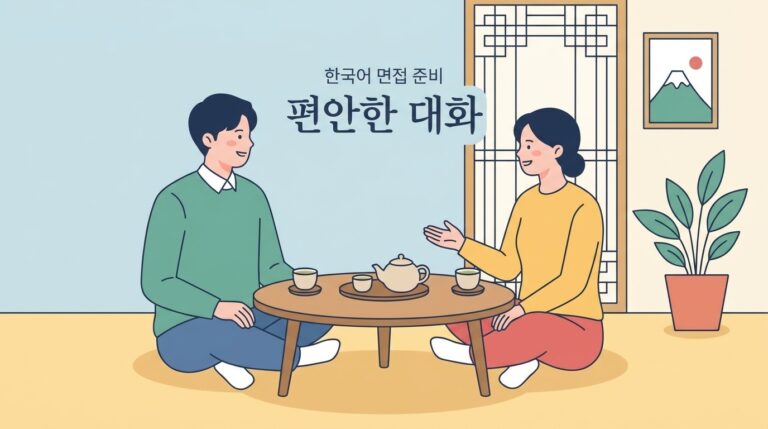
2. 긴장하지 마시고, 편안하게 차 한잔 마시면서 이야기 나눠요.
- Pronunciation: [Gin-jang-ha-ji ma-si-go, pyeon-an-ha-ge cha han-jan ma-si-myeon-seo i-ya-gi na-nwo-yo.] (Sounds like: Geen-jang-ha-jee mah-she-go, pyon-ahn-hah-geh cha hahn-jahn…)
- Meaning: Literal: “Don’t be nervous, let’s talk comfortably over a cup of tea.” | Actual Nuance: “Take a deep breath; think of this as a relaxed conversation rather than a rigid test.”
- K-Culture Moment: A modern startup CEO gently lowering the interview tension by sliding a warm tumbler across the desk.
- Editor’s Insight: Using the collaborative ending ~나눠요 (let’s share/exchange) instead of ~답변해 주세요 (please answer) shifts the dynamic from an interrogation to a two-way dialogue.
- Situation Spectrum: Casual 🚫 | Semi-formal ✅ | Formal ✅
- 🤔 Think About It: How does phrasing an interview as “sharing stories” (이야기를 나누다) rather than “evaluating skills” change the candidate’s psychological safety?
3. 오늘 면접이라기보다는 서로 잘 맞는지 알아가는 자리라고 생각하시면 돼요.
- Pronunciation: [O-neul myeon-jeob-i-ra-gi-bo-da-neun seo-ro jal man-neun-ji al-a-ga-neun ja-ri-ra-go saeng-gak-ha-si-myeon dwae-yo.] (Sounds like: Oh-neul myon-job-ee-rah-gee-boh-dah-neun…)
- Meaning: Literal: “Rather than an interview today, you can think of this as a place to see if we fit well together.” | Actual Nuance: “We are both evaluating mutual fit, so feel free to be yourself.”
- K-Culture Moment: Seen in progressive tech company interviews where the focus is on cultural fit (핏) rather than hierarchical obedience.
- Editor’s Insight: The phrase 서로 알아가다 (getting to know each other) removes the vertical hierarchy and fosters mutual respect.
- Situation Spectrum: Casual 🚫 | Semi-formal ✅ | Formal ✅
- 🤔 Think About It: Does your native workplace culture treat job interviews as mutual evaluations or one-sided examinations?
Phase 3: Textbook Korean vs. Real Korean
Situation A: Offering a drink to ease tension
- 📖 교과서 한국어: 음료수를 드시겠습니까? (Eum-ryo-su-reul deu-si-get-seum-ni-ka? – “Will you consume a beverage?”)
- 🗣️ 진짜 한국어: 목마르실 텐데, 시원한 물이나 따뜻한 커피 한잔 준비해 드릴까요? (Mok-ma-reu-sil ten-de, si-won-han mul-i-na tta-tteut-han keo-pi han-jan jun-bi-hae deu-ril-kkayo? – “You must be thirsty; can I get you some cold water or hot coffee?”)
- 💡 왜 다를까?: Textbook formulas sound like flight attendant announcements. Real native professionals anticipate the candidate’s physical state (목마르실 텐데) with empathetic consideration.
Situation B: Asking the candidate to introduce themselves smoothly
- 📖 교과서 한국어: 지금부터 자기소개를 시작해 주십시오. (Ji-geum-bu-teo ja-gi-so-gae-reul si-jak-hae ju-sip-si-o. – “Begin self-introduction starting now.”)
- 🗣️ 진짜 한국어: 준비되셨을 때 편안하게 본인 소개 간단히 부탁드릴게요. (Jun-bi-doe-syeos-seul ttae pyeon-an-ha-ge bon-in so-gae gan-dan-hi bu-tak-deu-ril-ge-yo. – “Whenever you are ready, please give us a brief introduction at your own pace.”)
- 💡 왜 다를까?: Commands with ~십시오 heighten anxiety. Adding softening phrases like 준비되셨을 때 (when you’re ready) gives agency back to the candidate.
Phase 4: K-Culture Deep Dive & Non-Verbal Manners
4-1. 눈치 (Nunchi) & Non-Verbal Warmth
In Korean corporate settings, non-verbal cues carry 70% of the emotional message:
* Eye Contact & Nodding (끄덕임): Don’t stare continuously with an unblinking gaze. Soften your eyes, smile slightly, and nod affirmatively as they start speaking.
* Postural Openness: Keep your arms uncrossed and lean slightly forward toward the table. If you write notes, briefly look up every 10 seconds to show active listening (경청).
4-2. Cultural Code: Coffee Culture & The Modern Startup Vibe
In contemporary Korean corporate culture—especially in IT hubs like Pangyo Techno Valley—offering Ah-Ah (Iced Americano) or warm barley tea is the ultimate gesture of welcome. Handing a cup with both hands (양손으로 건네기) immediately bridges the hierarchical divide.
Phase 5: Real-World Roleplay Scenario
- Setting: A bright, glass-walled conference room at a creative agency in Seongsu-dong, Seoul.
- Characters:
- You (Interviewer / Lead Marketer): Warm, professional, aiming to evaluate portfolio creativity.
- Minji (Applicant / Graphic Designer): Talented but clutching her notebook with visibly tense shoulders.
- You: 🎭 (Smiling warmly while pulling out a chair) 민지 씨, 안녕하세요! 오시느라 길 많이 안 복잡하셨어요? (Minji-ssi, an-nyeong-ha-se-yo! O-si-neu-ra gil man-i an bok-jap-ha-syeos-seo-yo? / “Hello Minji! Did you manage to find your way here okay in the rush?”)
- Minji: 🎭 (Bowing quickly) 아, 네! 성수역에서 바로 찾아왔습니다. (Ah, ne! Seong-su-yeog-e-seo ba-ro cha-ja-wat-seum-ni-da. / “Ah, yes! I found it right away from Seongsu Station.”)
- You: 🎭 (Handing over a glass of iced tea with both hands) 다행이네요. 바깥 날씨가 꽤 덥죠? 목 축이시면서 천천히 호흡 가다듬으세요. (Da-haeng-i-ne-yo. Ba-kkat nal-ssi-ga kkwae deop-jyo? Mok chuk-i-si-myeon-seo cheon-cheon-hi ho-heub ga-da-deum-eu-se-yo. / “Glad to hear that. It’s quite hot outside, right? Please have some tea and catch your breath.”)
- Minji: 🎭 (Taking a sip, shoulders dropping slightly) 감사합니다, 팀장님. (Gam-sa-ham-ni-da, tim-jang-nim. / “Thank you, Team Lead.”)
- You: 🎭 (Soft tone, maintaining friendly eye contact) 오늘 면접은 정답을 맞히는 시험이 아니니까요, 편안하게 본인의 경험을 들려주시면 됩니다. (O-neul myeon-jeob-eun jeong-dab-eul mat-hi-neun si-heom-i a-ni-ni-kka-yo, pyeon-an-ha-ge bon-in-ui gyeong-heom-eul deul-ryeo-ju-si-myeon doem-ni-da. / “Today’s interview isn’t a test with right or wrong answers, so please comfortably share your journey.”)
- Minji: 🎭 (Smiling back nervously) 네, 솔직하고 성실하게 말씀드리겠습니다! (Ne, sol-jik-ha-go seong-sil-ha-ge mal-sseum-deu-ri-get-seum-ni-da! / “Yes, I will answer honestly and sincerely!”)
- You: 🎭 (Nodding encouragingly) 좋아요. 그럼 마음 편히 가지시고, 준비되셨을 때 간단한 자기소개로 시작해 볼까요? (Jo-a-yo. Geu-reom ma-eum pyeon-hi ga-ji-si-go, jun-bi-doe-syeos-seul ttae gan-dan-han ja-gi-so-gae-ro si-jak-hae bol-kka-yo? / “Great. Take your time, and when you are ready, shall we start with a brief introduction?”)
- Minji: 🎭 (Taking a steady breath) 네, 저는 시각 디자인을 전공한… (Ne, jeo-neun si-gak di-ja-in-eul jeon-gong-han… / “Yes, my name is…”)
🔀 Interactive Decision Branch
What would you say next if Minji stumbles on her first sentence?
* Option A: “시간 없으니 빨리 다음 질문으로 넘어갈게요.” (We have no time, let’s move to the next question.)
* 💥 Feedback (Bad): Destroys psychological safety. The candidate will shut down.
* Option B: “괜찮아요, 긴장되시는 건 당연해요. 천천히 물 한 모금 드시고 다시 하셔도 됩니다.” (It’s completely fine; it’s natural to be nervous. Take a sip of water and start whenever you like.)
* 🌟 Feedback (Best): Empathetic leadership that helps real talent shine through initial nervousness.
* Option C: “왜 그렇게 떨고 계세요? 자신감이 부족한 편인가요?” (Why are you trembling so much? Do you lack confidence?)
* ⚠️ Feedback (Risk): Excessive pressure may test stress tolerance, but often pushes away high-potential candidates.
Phase 6: 10-Second Emotional Shadowing Drill
Practice these pause points / and emotional directions:
[😊 따뜻하고 안심시키는 톤]- “오시느라 / 고생 많으셨죠? / 편하게 앉으세요.”
- (O-si-neu-ra / go-saeng man-eu-syeot-jyo? / Pyeon-ha-ge an-jeu-se-yo.)
[🌿 부드럽고 여유로운 톤]- “긴장하지 마시고요, / 준비되셨을 때 / 천천히 말씀해 주세요.”
- (Gin-jang-ha-ji ma-si-go-yo, / jun-bi-doe-syeos-seul ttae / cheon-cheon-hi mal-sseum-hae ju-se-yo.)
[🤝 동등하고 신뢰감 있는 톤]- “오늘 자리는 / 서로가 잘 맞는지 / 알아가는 시간입니다.”
- (O-neul ja-ri-neun / seo-ro-ga jal man-neun-ji / al-a-ga-neun si-gan-im-ni-da.)
Phase 7: K-Culture Mini-Dictionary
- 아이스브레이킹 (A-i-seu-beu-re-i-king): Icebreaking | The essential art of defusing tension at the start of corporate meetings and interviews.
- 핏 / 컬처 핏 (Pit / Keol-cheo-pit): Culture Fit | How well a candidate’s communication style and values align with the team.
- 스몰토크 (Seu-mol-to-keu): Small Talk | Casual remarks about weather, commute, or coffee to build rapport before heavy agenda topics.
- 티타임 (Ti-ta-im): Tea Time | Informal conversation over tea or coffee, often used as a relaxed alternative format for preliminary screening.
Phase 8: Traveler & Professional Survival Kit
Top 3 Survival Expressions
- 1. 혹시 마실 것 좀 드릴까요? (Hok-si ma-sil geot jom deu-ril-kkayo?) – Would you like something to drink?
- 2. 편하게 말씀하셔도 괜찮습니다. (Pyeon-ha-ge mal-sseum-ha-syeo-do gwaen-chan-seum-ni-da.) – It’s totally fine to speak comfortably.
- 3. 질문 편하게 주셔도 됩니다. (Jil-mun pyeon-ha-ge ju-syeo-do doem-ni-da.) – Feel free to ask any questions you have.
Editor’s Professional Note
When coordinating interviews in Seoul, sharing detailed transit guides via 네이버 지도 앱 다운로드 saves candidates from getting lost in massive station complexes like Gangnam or Samseong. Remind them which exit (출구) has elevator access!
Phase 9: Stepping Deeper (Cultural Reflection)
In traditional Korean corporate settings, the hierarchy was once absolute, demanding military-like rigidity. However, modern Korean workplaces are undergoing a profound cultural shift toward psychological safety (심리적 안정감). When an interviewer initiates warm icebreaking, it is not merely polite chatter—it is a conscious leadership choice that demonstrates emotional intelligence (눈치 and 배려). True authority in contemporary Korean business is earned through warmth, not intimidation.
💬 Your Turn: How does icebreaking work in your country’s interview culture? Share your memorable interview moments in the comments below!
Phase 10: FAQ & Common Pitfalls
Q: Can I use informal Banmal (반말) to make the interviewee feel more comfortable?
A: Absolutely not! While you want to ease tension, an interview remains a professional setting. Always maintain polite 존댓말 (e.g., using ~해요 or ~하십시오 forms) to preserve mutual respect.
Q: What is the ideal length for interview icebreaking in Korea?
A: Keep it between 2 to 3 minutes. A brief check on their commute, offering water, and a calming framing statement is perfect without diluting the evaluation time.
Q: Is it okay to ask personal questions (age, marital status) during small talk?
A: No. Modern Korean employment laws (채용절차법) strictly prohibit inquiring into family background, hometown, marital status, or appearance.
🚨 Common Mistakes Warning Board
- Mistake: Saying “긴장 풀어요” (Drop your tension) in casual tone. ➡️ Correct Action: Use “긴장하지 마시고 편안히 말씀해 주세요.”
- Mistake: Starting directly with hard-hitting technical questions without greeting. ➡️ Correct Action: Acknowledge their effort: “오시느라 고생 많으셨습니다.”
- Mistake: Crossing arms while listening. ➡️ Correct Action: Keep hands open on the desk and provide steady, gentle nods.
Phase 11: Action Mission & Engagement
- 🥉 Bronze Mission: Practice saying “오시느라 고생 많으셨죠?” in front of a mirror with a warm smile 5 times.
- 🥈 Silver Mission: Write your favorite Korean icebreaking line in the comments and tag a study partner.
- 🥇 Gold Mission: Use one of our softening phrases (준비되셨을 때…) in your next Korean study session or business meeting.
🎮 K-Culture Mission: Watch an episode of the drama Start-Up (스타트업) or Misaeng (미생) and spot how senior managers greet newcomers!
Phase 12: Interactive Quiz Challenge
Q1. (Situational Judgment) What is the most polite and natural way to invite an applicant to introduce themselves?
* A) 지금 당장 자기소개 시작하세요.
* B) 준비되셨을 때 편안하게 본인 소개 부탁드릴게요.
* C) 자기소개는 대충 하셔도 됩니다.
Q2. (Fill-in-the-Blank) Choose the right word:
“오늘 면접이라기보다는 서로 잘 맞는지 ________ 자리라고 생각하시면 돼요.”
* A) 시험하는 (testing)
* B) 알아가는 (getting to know)
* C) 혼내는 (scolding)
Q3. (True/False) Modern Korean interviews encourage asking candidates about their age and marital status during icebreaking small talk. (T/F)
🔍 Click to reveal answers and explanations!
- Q1 Answer: B — 준비되셨을 때… gives the candidate time to compose themselves while maintaining polite honorifics.
- Q2 Answer: B (알아가는) — 알아가는 자리 frames the interview as a mutual, collaborative discovery session.
- Q3 Answer: False — Korean labor regulations strictly forbid asking private personal details during hiring processes.







