

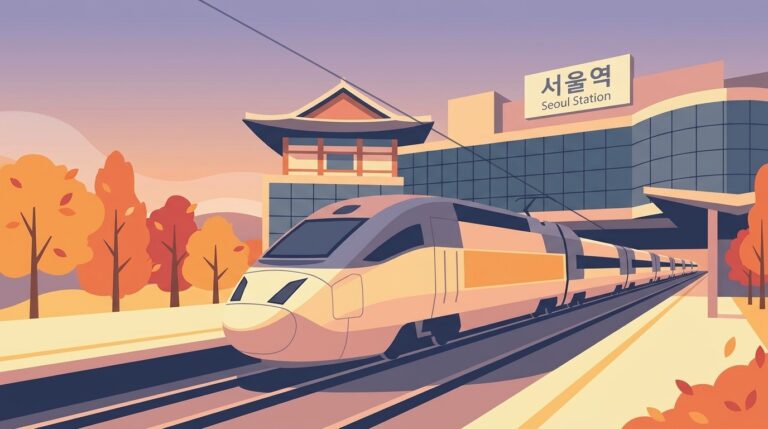
Surviving the KTX Ticketing War: Master Korea’s High-Speed Rail & Holiday Rush Like a Local
Phase 1: Empathy (Story Immersion Opening)
안녕하세요! Welcome back to Daily Hangul—your trusted Korean best friend and 10-year local culture navigator!
Picture this: It’s two weeks before Chuseok (Korean Thanksgiving). You’ve planned a dreamy autumn getaway to Busan, eager to catch the coastal breeze. You casually open the Korail app on your phone at 9:05 AM, only to see every single seat across every single time slot marked with a dreaded gray label: 매진 (Maejin – Sold Out). Welcome to Korea’s infamous Piketing (blood-splattered ticketing war), where millions of locals mobilize simultaneously with the precision of competitive gamers to secure a ride home.
Booking train tickets in Korea—especially during major holidays (Myeongjeol) or peak travel seasons—can feel overwhelming if you only rely on standard translation tools. But don’t panic! With the right cultural savvy, tactical phrases, and navigation know-how, you can effortlessly snag cancellation seats, communicate with station staff under pressure, and glide through Seoul Station like a seasoned commuter. Let’s conquer the rails together!
Phase 2: 3 Core Expressions In-Depth Analysis
1. 취소표를 줍줍하다 (Chwisopyo-reul jupjuphada)
- Pronunciation: [Chwi-so-pyo-reul jup-jup-ha-da] (Sounds like: Chee-so-pyo-reul joop-joop-ha-da)
- Meaning: Literal: “To pick up/gather canceled tickets.” | Real Nuance: To tenaciously monitor the system and snatch up suddenly released cancellation tickets.
- K-Culture Moment: Frequently used among K-pop fandoms reserving concert seats or office workers staying up until midnight before holiday weekends to grab last-minute KTX cancellations.
- Editor’s Insight: 줍줍하다 (Jupjuphada) is playful internet slang derived from the onomatopoeia 줍다 (to pick up). In Korean digital culture, it conveys the thrill of finding valuable leftovers without formal competition.
- Situation Spectrum: Casual: ✅ | Semi-formal: ⚠️ | Formal: 🚫 (In formal settings, use ‘취소된 표를 예매하다’).
- 🤔 Think About It: How does your native language describe the competitive thrill of snagging limited reservations online?
2. 입석이라도 끊어주세요 (Ipseog-irado kkeuneojuseyo)
- Pronunciation: [Ip-seo-gi-ra-do kkeun-eo-ju-se-yo] (Sounds like: Eep-seok-ee-rah-doh ggeun-uh-joo-seh-yo)
- Meaning: Literal: “Please issue me standing-room only, at least.” | Real Nuance: Expresses an urgent necessity to board the train regardless of seating comfort.
- K-Culture Moment: Seen in classic K-dramas when the protagonist must rush across the country for a pivotal reunion or emergency.
- Editor’s Insight: Notice the verb 끊다 (kkeunta), which literally means “to cut” or “to sever,” but historically refers to tearing off a paper ticket stub. Using 끊다 instead of 예매하다 (to book) instantly makes you sound like a native speaker.
- Situation Spectrum: Casual: ⚠️ | Semi-formal: ✅ | Formal: ✅
- 🤔 Think About It: Why do you think Korean uses physical action verbs like ‘cutting’ for digital transactions?
3. 매진이라 대기 걸어뒀어요 (Maejin-ira daegi georeo-dwosseoyo)
- Pronunciation: [Mae-jin-i-ra dae-gi geol-eo-dwot-seo-yo] (Sounds like: Meh-jin-ee-rah deh-gee gull-uh-dwot-suh-yo)
- Meaning: Literal: “It’s sold out, so I hung up a waitlist.” | Real Nuance: “Since it’s completely sold out, I put myself on the standby reservation list.”
- K-Culture Moment: Everyday dialogue between coworkers discussing their travel plans ahead of long holiday weekends.
- Editor’s Insight: 대기를 걸다 (daegireul geolda) reflects the Korean tendency to “hang” or “attach” statuses (like calls on hold or waitlists). It emphasizes proactive problem-solving.
- Situation Spectrum: Casual: ✅ | Semi-formal: ✅ | Formal: ✅
- 🤔 Think About It: How do systems in your country manage overbooked public transport compared to Korea’s automated waitlist notifications?
Phase 3: Textbook Korean vs Real Korean
Scenario 1: Checking for remaining seats
- 📖 Textbook Korean: “남은 좌석이 있는지 확인해 주시겠습니까?” (Nameun jwaseogi inneunji hwaginhae jusigesseumnikka?) – Highly formal, feels robotic like an automated recording.
- 🗣️ Real Korean: “혹시 지금 잔여석이나 반환표 나온 거 있을까요?” (Hoksi jigeum janyeoseogina banhwanpyo naon geo isseulkkayo?)
- 💡 Why it differs: Locals use precise operational terms like 잔여석 (remaining seats) and 반환표 (returned tickets) coupled with soft questioning markers (혹시 ~ 있을까요?) to politely gauge real-time seat churn.
Scenario 2: Expressing extreme ticketing difficulty
- 📖 Textbook Korean: “표를 예매하기가 매우 어려웠습니다.” (Pyoreul yemaehagiga maeu eoryeowotseumnida.)
- 🗣️ Real Korean: “완전 피켓팅이라 광클했는데도 겨우 구했어요!” (Wanjeon piketing-ira gwangkeul-haenneundedo gyeou guhaesseoyo!)
- 💡 Why it differs: Standard textbooks omit modern digital slang like 피켓팅 (Blood + Ticketing) and 광클 (Mad clicking at light speed), which captures the genuine intensity of high-demand digital reservations in Korea.
Phase 4: K-Culture Deep Dive & Non-Verbal Manners
4-1. Nunchi (눈치) & Station Etiquette
When boarding a packed KTX/SRT during peak travel hours:
* Queue with Purpose: Even if you hold an unassigned standing ticket (입석), respect the priority of seated passengers moving into train corridors. Stand courteously between car entryways (통로) without blocking restroom doors.
* Earphone Decorum: Train quiet cars (정숙 칸) take silence seriously. If taking a phone call, quickly step out into the connector vestibules with a slight apologetic head nod (목례) to nearby passengers.
4-2. Cultural Code: The Great Migration (민족 대이동)
Twice a year during Seollal (Lunar New Year) and Chuseok, Korea witnesses Minjok Dae-idong—over 30 million citizens traveling across the peninsula to honor ancestors and reunite with family. Ticketing opens months in advance at 7:00 AM sharp, turning PC Bangs across the country into command centers with synchronized atomic clocks. Understanding this tradition illuminates why train reservations during these periods require tactical speed and cultural comprehension.
Phase 5: Real-Life Roleplay Scenario
Setting: A frantic Friday evening at Seoul Station ticket counter. Min-woo (Station Agent) is helping Sarah (an expat trying to reach Daegu for an urgent conference).
- Sarah: 저기요, 실례지만 오늘 동대구 가는 KTX 전석 매진인가요? (Jeogiyo, sillyejiman oneul Dongdaegu ganeun KTX jeonseok maejiningayo?)
🎭 Peeks nervously at the departure board showing red ‘매진’ lights.
“Excuse me, are all KTX trains to Dongdaegu sold out today?” -
Min-woo: 네, 고객님. 퇴근 시간대라 일반실과 특실 모두 마감되었습니다. (Ne, gogaeknim. Toegeun sigandaera ilbansilgwa teuksil modu magamdoe-eotseumnida.)
🎭 Types briskly into the ticketing terminal while adjusting glasses.
“Yes, customer. Since it’s evening rush hour, both Standard and First Class are fully booked.” -
Sarah: 혹시 취소표나 중간에 입석으로 갈아타는 방법은 없을까요? (Hoksi chwisopyona junggan-e ipseog-euro garataneun bangbeob-eun eopseulkkayo?)
🎭 Shows polite urgency with clasped hands.
“Is there any chance of returned tickets or a combined standing-and-sitting route?” -
Min-woo: 아, 마침 7시 40분 열차에 대전까지 좌석, 대전부터 동대구까지 입석인 ‘환승 복합 승차권’이 하나 떴네요. (A, machim ilgopsi sasipbun yeolchae Daejeonkkaji jwaseok, Daejeonbuteo Dongdaegukkaji ipseogin ‘hwanseung bokhapseungchagwon’i hana tteonneyo.)
🎭 Points at the screen with an encouraging nod.
“Ah, just in time! A ‘combined transfer ticket’ popped up for the 7:40 PM train—seated until Daejeon, and standing from Daejeon to Dongdaegu.” -
Sarah: 정말요? 그거라도 바로 결제해 주세요! (Jeongmalyo? Geugeorado baro gyeoljehae juseyo!)
🎭 Quickly offers her transportation card.
“Really? Please issue that for me right away!” -
Min-woo: 네, 영수증 겸 승차권 출력해 드렸습니다. 타는 곳 4번 홈입니다. (Ne, yeongsujeung gyeom seungchagwon chullyeokhae deuryeotseumnida. Taneun got sabeon homimnida.)
🎭 Hands over the paper ticket with both hands.
“Certainly, here is your printed boarding ticket. Departure is at Platform 4.” -
Sarah: 덕분에 살았어요. 친절하게 알아봐 주셔서 감사합니다! (Deokbune sarasseoyo. Chinjeolhage arabwa jusyeoseo gamsahamnida!)
🎭 Gives a deep, grateful 30-degree bow.
“You saved my day. Thank you so much for checking so thoroughly!” -
Min-woo: 좋은 여행 되세요, 조심히 다녀오세요! (Joeun yeohaeng doeseyo, josimhi danyeo-oseyo!)
🎭 Smiles warmly with a gentle farewell hand gesture.
“Have a pleasant trip and travel safely!”
🔀 Interactive Choice Point
What would you say if the agent says even standing tickets are completely booked?
* A. “그냥 태워주시면 안 돼요? 기차 안에서 돈 낼게요.” (Can’t you just let me on? I’ll pay on board.)
👉 Bad Choice: Boarding without a valid ticket incurs a penalty surcharge of up to 10-30x the fare, and conductors strictly inspect tickets.
* B. “혹시 SRT 수서역 출발 편이나 고속버스 쪽 여권은 남아있을까요?” (Is there availability on SRT from Suseo or express buses?)
👉 Best Choice: Shows proactive travel flexibility and deep familiarity with alternative transport networks.
* C. “표 나올 때까지 창구 앞에서 계속 기다릴게요.” (I will just wait in front of the counter until a ticket appears.)
👉 Risk Choice: Counter staff cannot hold unreleased tickets; using the automated Korail mobile app refresh (새로고침) is far faster.
Phase 6: 10-Second Emotional Shadowing Drill
Master the rhythmic pauses (/) and natural prosody of rail travel urgency:
[😱 초조하고 절박하게 - Anxious and desperate]
“혹시 / 오늘 막차 시간대 / 취소표 남은 거 / 진짜 없나요?”
(Hoksi / oneul makcha sigandae / chwisopyo nameun geo / jinjja eomnayo?)-
[💡 빠르고 기지 넘치게 - Resourceful and quick]
“특실이라도 상관없으니까 / 나오는 대로 / 바로 잡아주세요!”
(Teuksil-irado sanggwan-eopseunikka / naoneun daero / baro jabajuseyo!) -
[🎉 극적인 안도감 - Dramatic relief]
“와, / 출발 5분 전에 / 극적으로 / 줍줍 성공했어요!”
(Wa, / chulbal obun jeone / geukjeog-euro / jupjup seonggonghaesseoyo!)
Phase 7: K-Culture Mini Dictionary
- 귀성길 (Gwiseong-gil) | Homebound journey to one’s hometown during holidays. | Essential cultural concept referring to the emotional and physical trek back to ancestral roots.
- 피켓팅 (Piketing) | Blood + Ticketing (Fierce ticketing war). | Used across entertainment, high-speed rail, and popular camp site bookings.
- 취켓팅 (Chwiketing) | Cancellation + Ticketing. | Sniping returned tickets during ungodly hours (often between 12:00 AM and 3:00 AM).
- 역귀성 (Yeok-gwiseong) | Reverse homecoming. | Modern trend where parents living in rural provinces travel up to Seoul to visit their working children, avoiding traffic.
Phase 8: Traveler Survival Kit
Top 3 Survival Phrases
- “창측 좌석으로 부탁드립니다.” (Changcheuk jwaseog-euro butakdeurimnida.)
Pro Tip: Use this to secure scenic window seating on KTX-Sancheon models. - “코레일 어플로 승차권 전달 가능한가요?” (Koreil eopeul-lo seungchagwon jeondal ganeunghangayo?)
Pro Tip: Enables seamless digital ticket gifting between smartphones. - “이 열차 정차역에 동대구역 포함되나요?” (I yeolcha jeongchayeoge Dongdaeguyeok pohamdoenayo?)
Pro Tip: KTX express routing varies; some skip secondary stations.
Editor’s Travel Note
- Install the official KorailTalk mobile application and create a membership ID ahead of time to enable 1-click reservations.
- If KTX is fully booked, check the SRT high-speed rail network departing from Suseo Station in southern Seoul, which often operates on alternating schedule windows.
- For holiday rush periods, cancellations flood the system precisely 24 hours to 3 hours prior to departure as refund penalties increase closer to departure time.
Phase 9: One Step Deeper (Thinking Question)
In contemporary Korean society, securing a holiday KTX ticket represents far more than mere logistics—it is viewed as a tangible demonstration of Hyo (filial piety) and familial devotion. In an ultra-fast, digitized urban society, the physical return to one’s hometown bridges generational divides and reinforces collective solidarity. When Koreans ask each other, “이번 명절에 표 구했어?” (Did you manage to get a ticket this holiday?), they are actually inquiring about your familial wellbeing and work-life balance.
💬 Your Turn: Does your home culture have a seasonal “mass migration” tradition where securing transportation feels like a national competition? Share your story in the comments below!
Phase 10: FAQ & Common Mistakes
Q: Can foreigners buy holiday KTX tickets on the English Korail website?
A: Yes, but the specialized holiday pre-booking window (명절 승차권 예매 전용 페이지) is primarily accessible via Korean language web modules and requires local resident registration or verified Korail memberships. For regular travel seasons, the English Korail portal works smoothly with foreign credit cards.
Q: What happens if I board a KTX without a seat ticket during a rush?
A: Boarding without purchasing any ticket beforehand results in an automatic penalty surcharge (부가운임) ranging from 50% to 300% of the standard fare. Always request an official standing-room ticket (입석) at the station counter before passing platform turnstiles.
Q: What is the difference between KTX and SRT?
A: KTX departs primarily from Seoul Station and Yongsan Station, operated by Korail. SRT departs exclusively from Suseo Station in Gangnam, operated by SR Inc. Both reach 300 km/h and share the same high-speed railway tracks south of Pyeongtaek.
🚨 Common Mistakes Warning Board
- Mistake: Assuming you can buy weekend KTX tickets directly at the counter 10 minutes prior.
Correct Action: Reserve at least 3-7 days early on the app; use early morning or late night cancellation slots. - Mistake: Mistaking KTX with slower Mugunghwa/ITX-Maeum lines without checking transit duration.
Correct Action: Verify train type prefixes carefully; KTX takes ~2.5 hours Seoul-Busan, whereas regional lines take up to 5 hours. - Mistake: Looking for physical ticket turnstile gates.
Correct Action: Korea employs an open-gate trust system. There are no physical ticket gates; train conductors check real-time tablet seat occupancy sensors as they patrol.
Phase 11: Action Missions & Participation
- 🥉 Bronze Mission (Solo Practice): Open KorailTalk or a mapping app in Korean and locate 3 major KTX stations (서울역, 오송역, 동대구역) while pronouncing their names aloud.
- 🥈 Silver Mission (Social Engagement): Comment below using the phrase: “이번 주말에 [Destination] 가는 KTX 취소표 줍줍 도전합니다!”
- 🥇 Gold Mission (Real Life Application): Purchase a train ticket using Korean phrases at a physical station ticketing window or kiosk during your next visit.
- 🎮 K-Culture Mission: Watch a scene from the acclaimed film Train to Busan (부산행) or K-drama travel scenes and spot how passengers reference train car corridors (통로) and seats (좌석).
Phase 12: Interactive Quiz Challenge
Question 1: Situational Judgment
You urgently need to reach Busan during Friday peak rush, but all seats are sold out online. What is the most culturally savvy and effective counter request?
a) “자리 없으면 서서라도 갈 테니 입석이나 환승표 있을까요?”
b) “왜 표가 없어요? 그냥 빈자리에 앉게 해주세요.”
c) “내일 아침까지 역에서 기다릴 테니 표 생기면 불러주세요.”
Question 2: Fill-in-the-Blank
명절 기차표 예매는 마치 피 튀기는 전쟁 같아서 신조어로 ‘______’이라고 부릅니다. (Hint: Blood + Ticketing)
Question 3: True / False Cultural Fact
In Korean high-speed rail, boarding an unreserved train and explaining your situation to the conductor incurs zero additional financial penalty. (True / False)
👉 Click here to reveal Answers & Explanations!
- Answer: a) Politeness combined with specific operational requests for combined transfers (환승표) or standing tickets (입석) gets immediate solutions from station agents.
- Answer: 피켓팅 (Piketing).
- Answer: False. Korea’s transit policy strictly enforces surcharges for boarding without pre-issued valid transit tickets to prevent overcrowding and ensure passenger safety.







