

How to Talk About Colors in Korean: Your Friendly Shopping & K-Pop Guide
Phase 1: Empathy (Story Opening)
안녕하세요! (Annyeonghaseyo!) I’m your editor from Daily Hangul, your Korean best friend and cultural navigator!
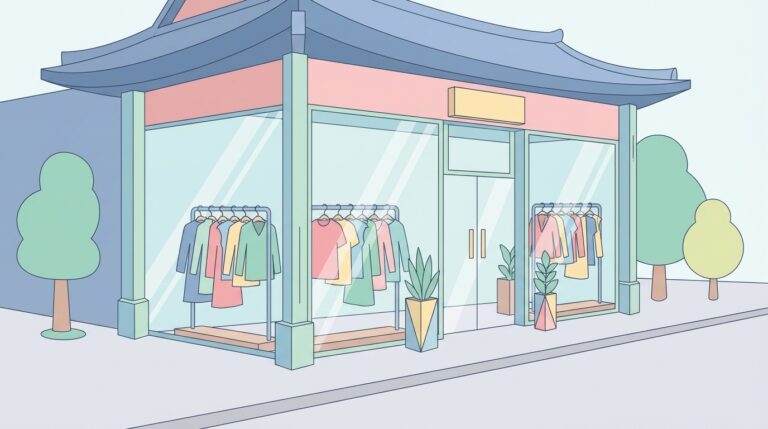
Picture this: You are standing in a trendy boutique in Hongdae or browsing an aesthetic Olive Young store in Seoul. You spot an adorable oversized hoodie or a gorgeous phone case. The design is absolute perfection, but the color on the hanger is bright neon green. You desperately want the soft cream-white one shown in the display poster, but when the polite shop clerk walks up with a warm smile and asks “도와드릴까요?” (Can I help you?), your mind goes blank. You know the English word “white,” but how on earth do you say “Do you have this in white?” without resorting to awkward pointing and silent panic?
Color words in Korean can feel tricky at first because textbooks overload beginners with complicated adjective conjugations right away. But here is the good news: you do not need complicated grammar to describe objects like a native speaker! With just a handful of snappy phrases and color nouns, you can effortlessly shop in Myeongdong, ask for your K-Pop bias’s favorite official lightstick color, and describe anything around you. Let’s make color words your superpower today!
Phase 2: Top 3 Core Expressions
Here are the top 3 essential color expressions tailored for real-life conversations:
1. 빨간색 있어요? (Ppalgan-saek isseoyo?)
- Pronunciation: Ppal-gan-saek ee-sseo-yo? (Think of “Ppal” sounding like a snappy popping sound, followed by “saek” like “sack”!)
- Meaning: Literal: “Red color exists?” | Real Nuance: “Do you have this in red?”
- K-Culture Moment: Browsing through K-beauty lip tints at Olive Young and asking the staff if they have that classic velvet red shade in stock.
- Editor’s Insight: In Korean, adding 색 (saek, meaning ‘color’) after a base color word turns it into a clear noun. Adding 있어요? (isseoyo?, meaning ‘do you have / is there’) creates the ultimate shopping power phrase!
- Situation Spectrum: Casual: ✅ | Semi-formal: ✅ | Formal: ✅
- 🤔 Think About It: In English, we ask “Do you have this in red?” using prepositions, but Korean simply pairs the color noun directly with “Is there?” Isn’t it wonderfully minimalist?
2. 하얀색으로 주세요. (Hayan-saegeuro juseyo.)
- Pronunciation: Ha-yan-sae-geu-ro joo-seh-yo. (Sounds like “Ha-yahn” + “say-goo-roh” + “joo-say-yo”.)
- Meaning: Literal: “Please give it by means of white color.” | Real Nuance: “I will take the white one, please.”
- K-Culture Moment: Ordering an aesthetic white tumbler at a trendy Seongsu-dong concept café or choosing phone case colors at an accessory shop.
- Editor’s Insight: The particle ~(으)로 (-euro) marks a choice or direction. Whenever you decide on a color among many choices, attach ~으로 주세요 (-euro juseyo) to lock in your pick like a pro.
- Situation Spectrum: Casual: ⚠️ (Use ‘하얀색 줘’ with close friends) | Semi-formal: ✅ | Formal: ✅
- 🤔 Think About It: How does your native language state a final choice when buying things? Does it specify the item or just the color?
3. 이거 검은색이에요? (Igeo geomeun-saegieyo?)
- Pronunciation: Ee-geo geom-eun-saeg-ee-eh-yo? (“Ee-geo” like ‘ego’, “geom” like ‘gum’.)
- Meaning: Literal: “Is this thing black color?” | Real Nuance: “Is this (one) black? / Is this black or dark navy?”
- K-Culture Moment: Checking clothing under dim store lighting to confirm whether a sleek coat is jet black or dark charcoal navy.
- Editor’s Insight: Store lighting in Korea can be warm or stylized, making colors tricky to distinguish. Asking “이거 [Color]이에요?” is the easiest beginner formula to clarify what you’re seeing.
- Situation Spectrum: Casual: ✅ | Semi-formal: ✅ | Formal: ✅
- 🤔 Think About It: Koreans frequently double-check subtleties like black vs. charcoal (meok-saek). How important are exact color tones in your culture?
Phase 3: Textbook Korean vs. Real Korean
Let’s see how real native speakers talk compared to standard textbook lines!
Situation 1: Asking for a different color in a clothing shop
- 📖 Textbook Korean: 이 옷의 다른 색상이 존재합니까? (I os-ui dareun saeksang-i jonjaehamnikka? – “Does another colorway of this garment exist?”)
- 🗣️ Real Korean: 다른 색도 있어요? (Dareun saek-do isseoyo? – “Do you have other colors too?”)
- 💡 Why is it different? Real Koreans prioritize brevity and softness. Using words like “존재하다” (to exist) sounds like a robot in a sci-fi drama. Adding “도” (too/also) sounds warm and natural.
Situation 2: Stating your favorite color
- 📖 Textbook Korean: 저의 가장 좋아하는 색깔은 파란색입니다. (Jeoui gajang joahaneun saekkkareun paransaegimnida. – “My most liked color is blue.”)
- 🗣️ Real Korean: 저 파란색 제일 좋아해요! (Jeo paransaek jeil joahaeyo! – “I like blue the most!”)
- 💡 Why is it different? Daily conversation drops awkward possessive markers (-ui) and puts the simple adverb 제일 (jeil, best/most) right in front of the verb.
Phase 4: K-Culture Deep Dive & Non-Verbal Manners
4-1. Nunchi & Shopping Body Language
When asking a shop clerk to check another color, gentle body language goes a long way. In Korean stores:
1. Two-Finger Pointing or Open Palm: Instead of pointing aggressively with one index finger at a display item, gesture with an open palm or hold the hanger gently.
2. The Polite Head Tilt: Slight nod with a small tilt when asking “분홍색 있어요?” (Do you have pink?) creates an instantly friendly vibe.
3. Card Handover: When paying for your chosen color item, always hand your payment card or cash with both hands (or right hand supported by your left wrist).
4-2. Cultural Code: The Meaning of Color in K-Culture & K-Pop
Colors hold deep symbolic weight in Korea!
* In modern K-Pop culture, fandoms are famously unified by official group colors (e.g., Pearl Aqua for SHINee, Candy Navy for NCT, Rose Quartz and Serenity for SEVENTEEN). Knowing how to say these colors connects you instantly with local fans at concerts or pop-up stores.
* In traditional aesthetic concepts (Obangsaek, 오방색), five cardinal colors (Blue, Red, Yellow, White, Black) represent directions, balance, and harmony, which you will spot in colorful Bibimbap toppings and historic palace architecture.
Phase 5: Real-Life Roleplay Scenario
Setting: A vibrant streetwear boutique in Yeonnam-dong, Seoul.
NPC Character: Min-ji (Friendly and stylish store manager with round glasses)
- Turn 1 (Min-ji): 안녕하세요! 천천히 구경하세요. (Annyeonghaseyo! Cheoncheonhi gugyeonghaseyo.)
🎭[Smiling brightly and stepping back to give you personal space]
“Hello! Please take your time looking around.” -
Turn 2 (You): 저기요, 이 모자 예뻐요! (Jeogiyo, i moja yeppeoyo!)
🎭[Holding up a cute bucket hat and pointing lightly]
“Excuse me, this hat is pretty!” -
Turn 3 (Min-ji): 인기 진짜 많은 제품이에요! (Inki jinjja maneun jepum-ieyo!)
🎭[Nodding enthusiastically with both hands clasped]
“That item is super popular!” -
Turn 4 (You): 혹시 파란색 있어요? (Hoksi paransaek isseoyo?)
🎭[Asking politely with a curious tone]
“By any chance, do you have this in blue?” -
Turn 5 (Min-ji): 네! 파란색이랑 검은색 있어요. 잠시만요! (Ne! Paransaeg-irang geomeunsaek isseoyo. Jamsimanyo!)
🎭[Walking quickly to the back drawer and bringing out two hats]
“Yes! We have blue and black. Just a moment!” -
Turn 6 (You): 와, 둘 다 예쁘네요. (Wa, dul da yeppeuneyo.)
🎭[Comparing both colors carefully in the mirror]
“Wow, both are so pretty.” -
Turn 7 (Min-ji): 어떤 색으로 하시겠어요? (Eotteon saeg-euro hasigesseoyo?)
🎭[Looking at you with an inviting smile]
“Which color would you like?” -
Turn 8 (You): 파란색으로 주세요! (Paransaeg-euro juseyo!)
🎭[Handing over the blue hat with a satisfied grin]
“I will take the blue one, please!”
🔀 Interactive Choice Point
At Turn 8, how would you respond if you changed your mind and wanted black instead?
- Option A: 검은색으로 주세요! (Geomeunsaeg-euro juseyo!)
- Option B: 검은색 없어요. (Geomeunsaek eopseoyo.)
- Option C: 야! 검은색 줘. (Ya! Geomeunsaek jwo.)
Choice Feedback:
* Option A (Best): Perfect score! Clear, extremely polite, and uses the correct decision particle ~(으)로.
* Option B (Bad): This means “There is no black color.” You are stating the opposite of what you want!
* Option C (Risk): Very rude! “야” (Hey!) and 반말 (informal talk) to a store clerk will cause serious awkwardness.
Phase 6: 10-Second Emotion Shadowing Drill
Practice these 3 lines with real feelings! Focus on the rhythm slashes / for natural pacing:
[✨ 호기심 가득하고 친절하게 / Curious & Friendly]
저기요, / 노란색 / 있어요?
(Jeogiyo, / noransaek / isseoyo? – “Excuse me, / do you have / yellow?”)-
[🤔 고민하다가 확신에 차서 / Decisive & Happy]
음… / 초록색으로 / 주세요!
(Eum… / choroksaeg-euro / juseyo! – “Umm… / I’ll take the green one / please!”) -
[😍 감탄하며 반가운 목소리로 / Amazed & Delighted]
이 분홍색 / 진짜 예쁘다!
(I bunhongsaek / jinjja yeppeuda! – “This pink color / is truly pretty!”)
Phase 7: K-Culture Mini Dictionary
- 빨간색 (Ppalgan-saek) | Red color | Essential for ordering Korean food spice levels (e.g., “빨간 국물” red spicy broth) and describing vibrant K-beauty lip shades.
- 하얀색 (Hayan-saek) | White color | Used constantly when shopping for minimalist Korean interior goods, basic t-shirts, and sneakers.
- 파란색 (Paran-saek) | Blue color | Associated with fresh summer vibes, clear skies (Cheongmyeong), and popular K-Pop aesthetic concepts.
- 까만색 / 검은색 (Kkaman-saek / Geomeun-saek) | Black color | The undisputed king of Korean winter streetwear, famous for the iconic Long Padded Coat (롱패딩).
Phase 8: Survival Kit for Travelers
Top 3 Survival Expressions
- 이거 다른 색 있어요? (Igeo dareun saek isseoyo?) – “Do you have this in a different color?”
Pro Tip: Point to the item you like and say this phrase; the staff will instantly show you all available options. - 베이지색 보여주세요. (Be-i-ji-saek boyeojuseyo.) – “Please show me the beige one.”
Pro Tip: Loanwords like beige (베이지), pink (핑크), and khaki (카키) work seamlessly with “색” in Korean shops! - 어떤 색이 인기 많아요? (Eotteon saeg-i inki manayo?) – “Which color is the most popular?”
Pro Tip: Great phrase to ask for the trendiest color recommendation in Korea.
Editor’s Travel Note
When shopping in areas like Seongsu or Dongdaemun, install the Kakao T taxi and navigation app and the Naver Map navigation application to find boutique design shops tucked away in quiet alleys. Keep in mind that Korean stores accept all major credit cards and Apple Pay in most metro areas!
Phase 9: A Step Deeper (Reflection)
In Korean, basic colors have both native Korean roots (하얗다, 빨갛다, 파랗다) and Sino-Korean roots (백색, 적색, 청색). Furthermore, Koreans often express subtle emotional shades—like nurut-tang-tang (yellowish with a dull tone) or ppalgat-ppalgat (speckled cute red). This vast color vocabulary reflects a culture deeply attuned to visual harmony, seasonal atmosphere, and sensitivity to nature. When you learn Korean color words, you aren’t just learning labels—you are learning to view the world with fine emotional precision.
💬 Your Turn: What is your all-time favorite color? Try writing “[Color]색 좋아해요!” in the comments below!
Phase 10: FAQ & Common Mistakes
Q: Can I just use English color names like ‘Pink’ and ‘Blue’ in Korea?
A: Yes, many Koreans understand common English words like ‘Pink’ (핑크) or ‘Black’ (블랙). However, combining native colors like 분홍색 (bunhongsaek) and 검은색 (geomeunsaek) makes you sound infinitely more fluent and natural in local shops!
Q: What is the difference between 빨강 (Ppalgang) and 빨간색 (Ppalgan-saek)?
A: 빨강 is the abstract concept of “red,” while 빨간색 literally specifies “the color red” as a tangible descriptor. In shopping and everyday descriptions, using 빨간색 is standard and foolproof.
Q: How do I say light blue or dark blue?
A: Simply add 연- (yeon-, light) or 진- (jin-, dark) in front of the color! For example: 연파랑 (light blue) or 진파랑 (dark navy/deep blue).
🚨 Common Mistakes Warning Board
- Mistake: Saying “빨간 있어요?” (Dropping the ‘색’).
Correct Action: Always keep ‘색’ attached: “빨간색 있어요?”. - Mistake: Mixing up ‘하얀색’ (White) with ‘노란색’ (Yellow) due to similar syllable endings.
Correct Action: Remember “Ha” for Halo (White light) and “No” for glowing sunflower Yellow. - Mistake: Using formal dictionary adjectives like “붉다” in casual shopping.
Correct Action: Stick to “빨간색으로 주세요” for smooth, natural communication.
Phase 11: Action Missions
- 🥉 Bronze Mission (Solo): Look around your room right now. Find 3 objects and name their colors out loud in Korean (e.g., “하얀색 컵!”, “검은색 노트북!”).
- 🥈 Silver Mission (Social): Post an Instagram story of your favorite outfit or coffee cup with the sticker caption “[Color]색 예뻐요!”.
- 🥇 Gold Mission (Real Life): Next time you visit a Korean café or restaurant, ask for a napkin or cup color in Korean!
- 🎮 K-Culture Mission: Watch a K-Pop music video and spot your favorite member’s hair or microphone color. Comment the member’s name and color in Korean!
Phase 12: Interactive Quiz Challenge
Test your new skills! Click each box below to reveal the answer:
1. Situation Quiz: You want to buy the black t-shirt. What do you say to the clerk?
* A) 파란색으로 주세요.
* B) 검은색으로 주세요.
* C) 노란색 없어요.
👉 Click to see the Answer & Explanation
Answer: B) 검은색으로 주세요.
Explanation: 검은색 (geomeunsaek) means black, and ~으로 주세요 (-euro juseyo) means “please give me that one”. Option A is blue, and Option C means “There is no yellow.”
2. Fill in the Blank: “Do you have this in white?”
이거 [ ] 있어요?
👉 Click to see the Answer & Explanation
Answer: 하얀색 (or 흰색)
Explanation: 하얀색 (hayan-saek) is the natural word for the color white. The full sentence is: “이거 하얀색 있어요?”
3. True or False: In Korea, adding ‘색’ (saek) after a color helps make it a clear noun.
👉 Click to see the Answer & Explanation
Answer: True (O)
Explanation: Adding ‘색’ (saek, color) after 빨간, 파란, 노란, 검은, and 하얀 immediately creates clear color nouns that fit seamlessly into any beginner sentence pattern!







