

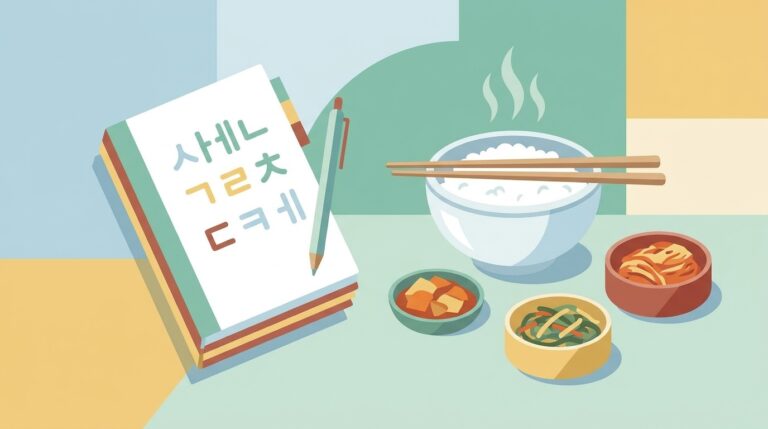
Why Koreans Run on Rice: The Secret Behind ‘Bapsim’ (밥심)
Phase 1: Empathy (Story Immersion Opening)
안녕하세요! 매일한글 에디터입니다. (Hello! I’m your Daily Hangul editor.)
Have you ever finished an epic, ten-course Korean BBQ meal—pork belly, lettuce wraps, steamed egg, and spicy stew—only to have your Korean friend look at the server and proudly say, “Can we get two orders of cheese fried rice now?”
You stare in disbelief: “Wait, didn’t we just eat dinner?” Your friend simply laughs and says, “한국인은 밥심으로 살잖아!” (Koreans live on the power of rice!)
For many Korean learners, the word 밥 (bap) is an absolute linguistic puzzle. Koreans greet you by asking if you ate rice (밥 먹었어?), threaten mischievous kids by saying they won’t get rice, say goodbye with promises to share rice (언제 밥 한번 먹자), and diagnose exhaustion with a lack of rice (밥심이 부족해서 그래).
If you have ever felt confused about why rice isn’t just grain in Korea—but an emotion, a currency of affection, and a biological power source—you are in the right place! Today, we’ll dive deep into Korea’s heartwarming food culture so you can sound like a true local at any dinner table.
Phase 2: Top 3 Core Expressions
1. 한국인은 밥심으로 살아요 (Hanguk-ineun bapsimeuro sarayo)
- Pronunciation: [Hahn-guk-ee-neun bap-shim-eu-roh sah-rah-yo] (Sounds like “BAP” + “Shim” with a strong, energetic burst!)
- Meaning: Literal: “Koreans live on the strength of rice.” | Nuance: “Rice is what fuels my spirit, energy, and productivity!”
- K-Culture Moment: In K-Dramas like Hospital Playlist or Weightlifting Fairy Kim Bok-joo, characters facing exhausting shifts or athletic competitions instantly regain energy the second they dig into a steaming bowl of hot rice.
- Editor’s Insight: The word 밥심 (bapsim) combines 밥 (bap – cooked rice/meal) and 힘 (him – power/strength), phonetically modified to 심 (sim). It signifies more than calories; it is mental resilience and vitality.
- Situation Spectrum: Casual ✅ | Semi-formal ✅ | Formal ⚠️ (In strict board meetings, use 한국인은 한식과 밥에서 힘을 얻습니다)
- 🤔 Think About It: What single staple food in your culture represents ultimate comfort and daily vitality? Is it bread, pasta, or something else?
2. 밥 한 끼 해요 (Bap han kki haeyo)
- Pronunciation: [Bap han kkee hae-yo] (Think “kki” like a sharp “key” sound)
- Meaning: Literal: “Let’s have a single meal together.” | Nuance: “Let’s catch up, build our bond, and spend meaningful time together.”
- K-Culture Moment: When business partners or long-time friends want to move past superficial chit-chat and build genuine Jeong (정, emotional connection), they suggest sharing a proper table together.
- Editor’s Insight: 한 끼 (han kki) refers to one wholesome meal. Offering to buy or share bap is Korea’s highest token of warmth and care.
- Situation Spectrum: Casual ✅ | Semi-formal ✅ | Formal ⚠️
- 🤔 Think About It: In many Western cultures, catching up starts with “Let’s grab a coffee.” Why do you think Korean culture centers around a shared hot meal instead?
3. 밥 든든하게 챙겨 먹어요 (Bap deundeunhage chaenggyeo meogeoyo)
- Pronunciation: [Bap deun-deun-ha-ge chaeng-gyeo meo-geo-yo] (Deun-deun has a solid, reassuring rhythm)
- Meaning: Literal: “Make sure you eat a hearty meal.” | Nuance: “Take good care of your health; don’t skip meals or neglect yourself!”
- K-Culture Moment: Whenever K-Pop idols write messages on Weverse or Bubble to their fans, this phrase is practically guaranteed. It is the ultimate expression of love and empathy.
- Editor’s Insight: 든든하다 (deundeunhada) means feeling full, robust, and safe. Wishing someone a 든든한 밥 is wishing them strength against life’s stresses.
- Situation Spectrum: Casual ✅ | Semi-formal ✅ | Formal ✅
- 🤔 Think About It: How do you say “Take care of yourself” in your native language, and does it involve food?
Phase 3: Textbook Korean vs. Real Korean
Situation 1: Checking in on a stressed friend
- 📖 교과서 한국어 (Textbook): 몸 건강은 괜찮으세요? (Mom geongangeun gwaenchaneuseyo? / Is your physical health fine?)
- 🗣️ 진짜 한국어 (Real-life): 요즘 밥은 잘 챙겨 먹고 다녀? (Yojeum babeun jal chaenggyeo meokgo danyeo? / Are you eating properly these days?)
- 💡 왜 다를까? (Why the difference?): Koreans historically measured well-being through appetite and eating regular meals. Asking if someone eats well shows intimate concern rather than clinical curiosity.
Situation 2: Winding down after a long overtime workday
- 📖 교과서 한국어 (Textbook): 오늘 일을 많이 해서 매우 피곤합니다. (Oneul ireul mani haeseo maeu pigonhapnida. / I am very tired from working a lot today.)
- 🗣️ 진짜 한국어 (Real-life): 아, 오늘 완전 방전됐다… 밥심으로 버텨야지! (A, oneul wanjeon bangjeondwaetda… bapsimeuro beotyeoyaji! / Ah, my battery is completely drained… I need rice power to survive!)
- 💡 왜 다를까? (Why the difference?): Using vivid slang like 방전 (discharged battery) paired with 밥심 (rice power) injects natural humor and empathy into daily conversations.
Phase 4: K-Culture Deep Dive & Non-Verbal Manners
4-1. Nunchi & Table Etiquette (눈치와 식사 매너)
- The Shared Spoon & Side Dishes: When communal stews (jjigae) arrive, observe if individual ladles (gukja) are used. If sharing directly, keep your spoon clean and do not rummage through the pot.
- The Sacred Rice Bowl Position: In traditional Korean etiquette, place the rice bowl (bapgeureut) on your left and the soup bowl (gukgeureut) on your right. Never stick your spoon upright into the rice—this resembles ancestral memorial rituals (Jesa).
- Respecting the Eldest at the Table: Before digging in, wait until the eldest person picks up their spoon, and cheerfully say: “맛있게 먹겠습니다!” (I will eat deliciously!)
4-2. The “K-Dessert” Phenomenon: Bokkeumbap (볶음밥)
To truly understand Bapsim, you must witness the famous Korean phenomenon where carbohydrate meals end with… more carbohydrates! Whether eating Dakgalbi (spicy chicken), Ddeokbokki (rice cakes), or Grilled Gopchang (tripe), Koreans will almost always order 볶음밥 (stir-fried rice) in the leftover sauce and dub it the “True Korean Dessert” (K-디저트). It reinforces the deeply rooted mindset: “A meal without rice is merely an appetizer.”
Phase 5: Real-World Roleplay Scenario
Setting: 8:30 PM at a Korean restaurant in Yeouido. Alex (a foreign exchange specialist) and Minji (his energetic Korean team mentor) are sitting down after a grueling project deadline.
- Minji: 🎭 (Stretches her arms with a huge sigh of relief) 알렉스 씨, 오늘 야근하느라 진짜 고생 많았어요! (Alex-ssi, oneul yageunhaneura jinjja gosaeng manasseoyo! / Alex, you worked so hard with overtime today!)
- Alex: 🎭 (Rubs his tired eyes and smiles) 민지 멘토님도 고생하셨어요. 저 지금 완전히 방전된 것 같아요. (Minji mentonimdo gosaenghasyeosseoyo. Jeo jigeum wanjeonhi bangjeondoen geot gatayo. / You worked hard too, Mentor Minji. I feel completely drained.)
- Minji: 🎭 (Points at the sizzling Kimchi stew on the table) 그러니까 어서 찌개랑 밥 드세요. 한국인은 밥심으로 사는 거 알죠? (Geureonikka eoseo jjigaerang bap deuseyo. Hanguk-ineun bapsimeuro saneun geo aljyo? / That’s why you need to eat stew and rice right now! You know Koreans run on rice power, right?)
- Alex: 🎭 (Curiously tilting his head) 밥심이요? 밥을 먹으면 정말 특별한 힘이 생겨요? (Bapsim-iyo? Babeul meogeumyeon jeongmal teukbyeolhan himi saenggyeoyo? / Bapsim? Does eating rice really give you special strength?)
- Minji: 🎭 (Nods proudly while handing him a full bowl of hot purple rice) 그럼요! 갓 지은 따뜻한 밥을 든든하게 먹어야 내일 또 힘내서 일하죠! (Geureomyo! Gat jieun ttatteutan babeul deundeunhage meogeoya naeil tto himnaeseo ilhajyo! / Of course! You have to eat freshly cooked warm rice to recharge your energy for tomorrow!)
- Alex: 🎭 (Smelling the fragrant rice steam happily) 아, 그래서 다들 끼니 거르지 말라고 챙겨주는 거군요. (A, geuraeseo dadeul kkini georeuji mallago chaenggyeojuneun geogunyo. / Ah, that’s why everyone checks to make sure we don’t skip meals.)
- Minji: 🎭 (Grins and tops Alex’s rice with a piece of grilled meat) 맞아요! 밥 든든하게 챙겨 먹는 게 최고의 보약이에요. 많이 먹어요! (Majayo! Bap deundeunhage chaenggyeo meongneun ge choegoui boyagieyo. Mani meogeoyo! / Exactly! Eating hearty meals is the best medicine. Eat a lot!)
- Alex: 🎭 (Picks up his spoon enthusiastically) 네! 오늘 밥심 제대로 충전해서 갈게요! (Ne! Oneul bapsim jedaero chungjeonhaeseo galgeyo! / Yes! I will fully recharge my rice power today!)
🔀 Interactive Branch Point
Minji offers you a second bowl of rice along with cheese fried rice. How do you respond?
- Option A: “배부르니까 그만 먹을게요. 탄수화물 너무 많아요.” (I’m full so I’ll stop. Too many carbs.)
- Feedback [Bad]: While honest, it slightly dampens the cozy bonding mood. It sounds a bit clinical during a warm social dinner.
- Option B: “우와, 볶음밥은 못 참죠! K-디저트로 마무리해 볼까요?” (Wow, fried rice is irresistible! Shall we finish with the K-dessert?)
- Feedback [Best]: 100% natural, culturally witty, and guarantees laughter from your Korean colleagues!
- Option C: “밥 대신 맥주나 더 마셔요.” (Let’s just drink more beer instead of rice.)
- Feedback [Risk]: Good for a casual drinking buddy, but might miss the heartwarming essence of enjoying a wholesome meal together.
Phase 6: 10-Second Emotion Shadowing Drill
Master the rhythm and intonation with pauses (/) and emotional cues:
[😊 기쁘고 활기차게 / Cheerful & Energetic]- 한국인은 / 밥심으로 살잖아요! / 오늘 맛있는 밥 먹으러 가요!
- (Hanguk-ineun / bapsimeuro saljanayo! / Oneul masinneun bap meogeureo gayo!)
- “Koreans live on rice power, you know! Let’s go grab a delicious meal today!”
[🥺 다정하고 걱정스럽게 / Caring & Warm]- 바빠도 / 끼니 거르지 말고, / 밥 든든하게 챙겨 먹어요.
- (Bappado / kkini georeuji malgo, / bap deundeunhage chaenggyeo meogeoyo.)
- “Even if you are busy, don’t skip meals and make sure to eat hearty.”
[🤤 장난스럽고 기대에 차서 / Playful & Anticipating]- 고기 다 먹었으면, / 이제 볶음밥으로 / 밥심 충전해 볼까요?
- (Gogi da meogeosseumyeon, / ije bokkeumbabeuro / bapsim chungjeonhae bolkkayo?)
- “Now that we finished the meat, shall we recharge our rice power with fried rice?”
Phase 7: K-Culture Mini Dictionary
- 밥심 (Bapsim) | Energy derived from eating rice/meals
Usage: Used whenever someone overcomes exhaustion after eating a comforting home-cooked meal. - 집밥 (Jipbap) | Home-cooked food / Mom’s meal
Usage: Symbolizes nostalgic comfort, wholesome side dishes (banchan), and loving care away from fast food. - 공깃밥 (Gonggibap) | Stainless steel bowl of steamed white rice
Usage: The standard portion served at Korean diners (usually priced at 1,000 KRW). - 식구 (Sikgu) | Family / Household (Literal: ‘Mouths that eat together’)
Usage: Shows that Korean culture defines family not just by blood, but by who shares the daily meal table.
Phase 8: Traveler’s Survival Kit
Survival Expressions TOP 3
- 공깃밥 하나 추가해 주세요! (Gonggibap hana chugahae juseyo!)
- Meaning: “Please add one extra bowl of rice!”
- Pro Tip: Keep this ready when enjoying spicy stews or braised dishes like Galbi-jjim!
- 밥 볶아 주실 수 있나요? (Bap bok-ga jusil su innayo?)
- Meaning: “Can you make stir-fried rice with the leftover sauce?”
- Pro Tip: Ask this right when you have about 10% of your meat or Ddeokbokki remaining.
- 밥 많이 주세요! (Bap mani juseyo!)
- Meaning: “Please give me a generous portion of rice!”
- Pro Tip: Say this warmly to owners of neighborhood diners (Bapsang or Baekban spots) and they will treat you with immense affection.
🧭 Editor’s Travel Note
When hunting for authentic Baekban (home-style meal sets with 8+ side dishes), skip generic tourist blogs and explore alleys near universities. Make sure to download the Naver Map app navigation service to search for keywords like 백반 맛집 (Baekban Matjib) or 기사식당 (Drivers’ Diner). These spots offer infinite side dish refills and the truest taste of Korean Bapsim.
Phase 9: One Step Deeper (Reflection)
In a historical context marked by harsh winters and post-war scarcity, asking someone “Did you eat rice?” was the most sincere inquiry about their sheer survival. Today, despite Korea becoming an ultra-modern economic powerhouse, this linguistic DNA remains untouched.
Feeding someone rice is still the ultimate Korean way of saying “I value your life, your health, and your presence.” It bridges generational gaps and transforms strangers into a 식구 (Sikgu – family sharing meals).
💬 Your Turn: Have you ever felt emotionally comforted by a warm meal prepared by a friend or colleague in Korea? Share your story in the comments below!
Phase 10: FAQ & Avoiding Common Mistakes
Q: Can ‘밥’ (Bap) mean meals other than steamed white rice?
A: Yes! While bap literally means cooked grain, colloquially it stands for any complete breakfast, lunch, or dinner. Saying “밥 먹자” can include noodles, soups, or dishes from other cuisines.
Q: Why do Koreans say “Let’s eat rice sometime” when parting, but never set a date?
A: “언제 밥 한번 먹자” functions similarly to “Let’s keep in touch” in English. It expresses good intentions and goodwill. Unless specific dates and times follow, treat it as a warm social greeting rather than a binding appointment.
Q: Is it rude to leave leftover rice in the bowl?
A: Leaving a small amount when you are full is totally fine. However, finishing your rice cleanly is traditionally praised as a sign that you thoroughly appreciated the cook’s effort and hospitality.
🚨 Common Mistakes Warning Board
- ❌ Mistake: Translating “How are you?” literally as “어떻게 지내세요?” to close Korean friends every day.
- ✅ Correct Action: Greet them naturally with: “밥 먹었어?” (Did you eat?)
- ❌ Mistake: Lifting the rice bowl up to your mouth with your hands like in Japanese or Chinese dining customs.
- ✅ Correct Action: Keep the rice bowl on the table and use your stainless steel spoon (Sutgarak) to bring rice to your mouth.
- ❌ Mistake: Refusing food repeatedly by saying you are dieting when invited to an elder’s home.
- ✅ Correct Action: Accept a modest portion, eat a few spoonfuls happily, and compliment the flavors by saying “정말 든든하고 맛있어요!”
Phase 11: Action Missions & Engagement
- 🥉 Bronze Level: Stand in front of your mirror and practice saying: “한국인은 밥심이지!” three times with a bright smile.
- 🥈 Silver Level: Next time you text a Korean friend or K-Pop fan buddy, replace “Take care” with “밥 든든하게 챙겨 먹어요!”
- 🥇 Gold Level: Visit a local Korean restaurant, order a spicy stew, and confidently ask: “사장님, 공깃밥 하나 추가해 주세요!”
🎮 K-Culture Mission: Watch an episode of any food-themed K-Drama (like Let’s Eat or Reply 1988). Spot how many times characters ask about each other’s meals, and write down your favorite moment!
Phase 12: Interactive Quiz Challenge
1. Situational Judgment
Your Korean coworker looks fatigued from working overtime. What is the most heartwarming and culturally natural phrase to encourage them?
* (A) 물을 많이 마시세요.
* (B) 한국인은 밥심이니까 밥 든든하게 챙겨 드세요!
* (C) 일을 그만두는 게 어때요?
2. Fill in the Blank
Koreans often call fried rice eaten at the end of a meal the “True K-_________” because a meal is only complete with rice.
* (Sentence: 볶음밥은 한국인의 진정한 K-[ ]이다.)
3. True / False Cultural Check
- Statement: In Korean dining etiquette, it is considered polite to pick up the rice bowl with your hands while eating with chopsticks. (T / F)
👉 Click here to reveal the answers and explanations!
- Answer: (B) — Offering comfort through 밥심 and wishing them a hearty meal (든든한 밥) is the quintessential Korean way of demonstrating care.
- Answer: 디저트 (Dessert) — Bokkeumbap is affectionately nicknamed the “K-Dessert” (K-디저트) across modern Korean pop culture!
- Answer: False (F) — Unlike in Japan or China, in Korea the rice bowl must remain rested on the table, and rice is eaten using a spoon.







