

Talk About Rebirth in Korean: If You Were Reborn, Man or Woman?
Phase 1: Empathy (Story-immersive Opening)
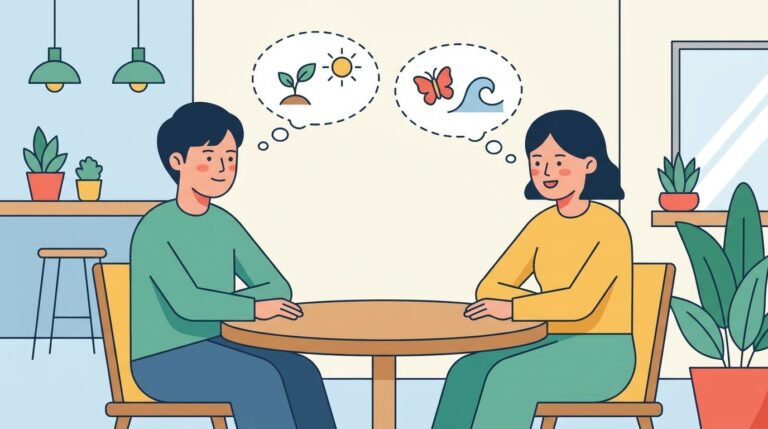
안녕하세요! This is your Daily Hangul editor. Imagine this: it is midnight at a bustling pojangmacha (street food tent) in Hongdae. The spicy aroma of tteokbokki and sizzling pajeon fills the air, while green bottles clink between hearty laughs. Suddenly, your Korean friend leans across the table, eyes sparkling with curiosity, and drops a classic Korean balance game question: “야, 너 다시 태어나면 남자로 살래, 여자로 살래?” (Hey, if you were reborn, would you live as a man or a woman?)
You understand the words, but your brain freezes. How do you express a hypothetical conditional in Korean without sounding like a robotic textbook from 1995? Should you say 만약? How do you conjugate 태어나다 (to be born) hypothetically? Expressing imaginary scenarios, alternate realities, and personal desires using 가정과 조건 (Hypotheses and Conditions) is a massive milestone for intermediate (B1) learners. Master this guide, and you will never hesitate during late-night Korean heart-to-hearts again!
Phase 2: Core Expressions (Top 3)
1. 다시 태어난다면 (Dasi taeonandamyeon)
- Pronunciation: [Dasi tae-eo-nan-da-myeon] (Sounds like dah-she tea-on-un-dah-myun)
- Meaning: Literal: “If (I) am born again” | Nuance: “If I were to be reborn… / In my next life…”
- K-Culture Moment: The quintessential opening line in Korean variety shows and balance games when idols playfully debate alternate lives.
- Editor’s Insight: Combining
다시(again),태어나다(to be born), and-(ㄴ/는)다면creates an unreal, imaginative hypothetical condition.- Situation Spectrum: Casual ✅ | Semi-formal ✅ | Formal ⚠️
- 🤔 Think About It: Why does Korean use a distinct verb ending
-(ㄴ/는)다면for imaginary conditions instead of just the basic-면?2. ~로 태어나고 싶어요 (~ro taeonago sipeoyo)
- Pronunciation: [~ro tae-eo-na-go sip-eo-yo] (Sounds like ~roh tea-on-ah-go sheep-uh-yo)
- Meaning: Literal: “I want to be born as ~” | Nuance: “I’d choose to be born as [a man/a woman/a cat].”
- K-Culture Moment: Frequently heard in K-dramas when characters express romantic rebirth vows: “다음 생에도 당신의 연인으로 태어날게요” (In the next life, I’ll be born as your lover).
- Editor’s Insight: The particle
(으)로marks identity or status here (e.g.,남자로as a man,여자로as a woman).- Situation Spectrum: Casual ✅ | Semi-formal ✅ | Formal ✅
- 🤔 Think About It: In English, we say “born as“, but Korean uses the directional/role marker
-(으)로. How does this shift your perspective of identity?3. 솔직히 말하면 (Soljiki malhamyeon)
- Pronunciation: [Sol-ji-ki mal-ha-myeon] (Sounds like soul-jee-kee mal-ha-myun)
- Meaning: Literal: “If I speak honestly” | Nuance: “To be completely frank…”
- K-Culture Moment: Used right before dropping an unexpectedly candid or hilarious answer during late-night drinking banter.
- Editor’s Insight: The consonant
ㅎmerges withㄱin솔직히to sound like [솔찌키]. Use this to set a confidential, intimate tone.- Situation Spectrum: Casual ✅ | Semi-formal ✅ | Formal ⚠️
- 🤔 Think About It: Notice how soft disclaimers smooth over potentially controversial personal opinions in Korean conversational culture.
Phase 3: Textbook Korean vs Real Korean
Situation 1: Stating a hypothetical condition
- 📖 교과서 한국어 (Textbook): 만약 제가 다시 태어난다면, 저는 남자가 될 것입니다. (Manyak jega dasi taeonandamyeon, jeoneun namjaga doel geosimnida.)
- 🗣️ 진짜 한국어 (Real-Life): 다시 태어나면 난 무조건 남자! (Dasi taeonamyeon nan mujogeon namja!)
- 💡 왜 다를까? Real conversations drop redundant words like
만약(if) and될 것입니다(will become), opting for punchy emphasis words like무조건(unconditionally / definitely).
Situation 2: Explaining reasons for your choice
- 📖 교과서 한국어 (Textbook): 여성의 삶이 남성의 삶보다 더 궁금하기 때문입니다. (Yeoseong-ui salmi namseong-ui salboda deo gung-geumhagi ttaemun-imnida.)
- 🗣️ 진짜 한국어 (Real-Life): 여자로 한번 살아보고 싶어! (Yeojaro hanbeon sarabogo sipeo!)
- 💡 왜 다를까? Koreans naturally say
살아보다(to try living as / experience living) rather than abstract nouns like “the life of a woman.”
Phase 4: K-Culture Deep-Dive & Non-Verbal Manners
4-1. 눈치 (Nunchi) & Gestures
When discussing gender and hypothetical lives in Korean, tone and body language matter:
* Pondering Pose: Lightly tap your chin with your index finger while tilting your head slightly to signal you are weighing both sides thoughtfully.
* Humorous Delivery: Keep your smile relaxed. Balance game questions (밸런스 게임) are meant for fun, not heated sociological debates.
4-2. Cultural Code: The Rebirth Trope in K-Media
Reincarnation (환생, Hwansaeng) is one of the most prominent storytelling devices in Korean media, from classic dramas like Goblin to modern hits like Reborn Rich. Because Buddhist concepts of karma and reincarnation run deep in Korean folklore, debating what you want to be in the “next life” (다음 생) is a universal bonding ritual among friends.
Phase 5: Real-Life Roleplay Scenario
Setting: A cozy café in Yeonnam-dong. You are sharing bingsu with your Korean friends, Minho (민호) and Sora (소라).
- 민호 (Minho): 야, 우리 밸런스 게임 하나 하자. 다시 태어난다면 남자로 태어날래, 여자로 태어날래?
(Ya, uri baelleonseu geim hana haja. Dasi taeonandamyeon namjaro taeonallae, yeojaro taeonallae?)
“Hey, let’s do a balance game. If you were reborn, would you be born as a man or a woman?”
🎭 Leaning forward with a playful grin. -
소라 (Sora): 난 무조건 지금처럼 여자! 예쁜 옷도 많고 꾸미는 재미가 있잖아.
(Nan mujogeon jigeumcheoreom yeoja! Yeppeun otdo manko kkumineun jaemiga itjana.)
“I’d definitely be a woman like now! There are so many pretty clothes and styling is fun.”
🎭 Flipping her hair playfully. -
You: 음, 솔직히 말하면… (Eum, soljiki malhamyeon…)
“Um, to be honest…”
🎭 Pausing thoughtfully. -
민호 (Minho): 오, 궁금하다! 너는 어때?
(O, gunggeumhada! Neoneun eottae?)
“Oh, I’m curious! How about you?”
🎭 Tapping the table excitedly. -
You: 저는 다시 태어난다면 남자로 한번 살아보고 싶어요.
(Jeoneun dasi taeonandamyeon namjaro hanbeon sarabogo sipeoyo.)
“If I were reborn, I’d like to try living as a man for once.”
🎭 Chuckling with eye contact. -
소라 (Sora): 오, 진짜? 특별한 이유가 있어?
(O, jinjja? Teukbyeolhan iyuga isseo?)
“Oh, really? Is there a special reason?”
🎭 Eyes wide with curiosity. -
You: 그냥 다른 성별의 삶이 어떤지 궁금하거든요.
(Geunyang dareun seongbyeorui salmi eotteonji gunggeumhageodeunyo.)
“I’m just curious about what life is like as a different gender.”
🎭 Shrugging comfortably. -
민호 (Minho): 맞아, 그것도 일리 있네! 다음 생에는 우리 반대로 태어나보자!
(Maja, geugeotdo illi inne! Daeum saeng-eneun uri bandaero taeonaboja!)
“Right, that makes sense too! In the next life, let’s be born the opposite!”
🎭 Laughing and raising his coffee cup for a toast.
🔀 Interactive Branching Point
What would you say next to keep the banter going?
* Choice A: “다음 생에도 우리 친구 해야지!” (Daeum saeng-edo uri chin-gu haeyaji! – We should be friends in the next life too!)
👉 [Best] Warm, natural, and strengthens friendship bonding instantly.
* Choice B: “그건 과학적으로 불가능해요.” (Geugeon gwahakjeogeuro bulganeunghaeyo. – That is scientifically impossible.)
👉 [Bad] Kills the playful balance game mood (분위기 깨기).
* Choice C: “다음 생에는 사람 말고 고양이로 태어날래요.” (Daeum saeng-eneun saram malgo goyang-iro taeonallaeyo. – Next life, I’d rather be a cat than a human.)
👉 [Risk / Fun Alternative] Witty and relatable, shifts the topic in a humorous direction!
Phase 6: 10-Second Emotion Shadowing Drill
Practice these emotional cadences out loud (/ indicates a rhythmic breath pause):
[🤔 Deep in thought]다시 태어난다면 / 저는 여자로 / 살아보고 싶어요.
(Dasi taeonandamyeon / jeoneun yeojaro / sarabogo sipeoyo.)[😂 Playful and energetic]난 무조건 남자! / 다음 생에는 / 키 큰 남자로 태어날래!
(Nan mujogeon namja! / daeum saeng-eneun / ki keun namjaro taeonallae!)[🥺 Tender and sincere]다음 생에도 / 꼭 우리 / 다시 만나자.
(Daeum saeng-edo / kkok uri / dasi mannaja.)
Phase 7: K-Culture Mini Dictionary
- 환생 (Hwansaeng): Reincarnation / Rebirth. Frequently used when talking about next lives or dramatic personal transformations.
- 밸런스 게임 (Baelreonseu Geim): Balance Game. Korea’s ultra-popular “Would You Rather” game played at dinners, retreats, and blind dates.
- 다음 생 (Daeum Saeng): Next Life. Used in both serious philosophical chats and self-deprecating humor (e.g., “I’ll diet in my next life”).
- 티키타카 (Tikitaka): Witty conversational back-and-forth. The dynamic chemistry of rapid jokes between close friends.
Phase 8: Survival Kit for Travelers
Top 3 Survival Expressions
- 다시 한번 말씀해 주세요. (Dasi hanbeon malsseumhae juseyo.) – Please say it once again. (Pro Tip: Useful when people talk fast in games).
- 진짜요? 신기해요! (Jinjja-yo? Sin-gi-hae-yo!) – Really? That’s fascinating! (Pro Tip: Universal social reaction phrase).
- 저는 상관없어요. (Jeoneun sang-gwan-eopseoyo.) – Either is fine with me / I don’t mind. (Pro Tip: When you can’t pick between choices).
Editor’s Travel Note
When heading out with Korean friends, always have the Naver Map navigation app download ready so you can find local pojangmachas and trendy late-night dessert cafes in Hongdae or Ikseon-dong. Most balance game conversations happen organically over late-night snacks!
Phase 9: One Step Deeper (Reflection Question)
In Korean culture, hypothetical discussions about past and future lives (인연, Inyeon – karmic ties) reflect a deep longing for meaningful human connections across time. It is not just about choosing a gender; it is about wondering what kind of relationships you would build under different circumstances.
💬 Your Turn: If you could be reborn anywhere in the next life, what choice would you make? Leave a comment below using the pattern: 다시 태어난다면 저는 [ ______ ](으)로 태어나고 싶어요!
Phase 10: FAQ & Common Mistakes
Q: What is the difference between -면 and -(ㄴ/는)다면?
A: -면 is for simple, realistic conditions (“If it rains tomorrow…”), while -(ㄴ/는)다면 is specifically for unreal, imaginary, or low-probability hypotheticals (“If I won the lottery / If I were reborn…”).
Q: Should I use 남자로 or 남자가 with 태어나다?
A: Use 남자로 (with the role/identity particle -(으)로). 남자가 태어나다 means “a boy is born (to someone else).”
Q: Is talking about this topic too personal with new Korean acquaintances?
A: As long as it is framed within a lighthearted 밸런스 게임 (Balance Game), it is considered a fun and friendly icebreaker!
🚨 Common Mistakes
| Mistake | Correction | Why? |
|---|---|---|
| ❌ 다시 태어나면 남자가 되고 싶어요 | ✅ 다시 태어난다면 남자로 태어나고 싶어요 | Use -(으)로 태어나다 instead of literal “become a man”. |
| ❌ 만약 다시 태어나요 | ✅ 만약 다시 태어난다면 | Hypotheticals require conditional verb conjugation. |
| ❌ 여자 삶을 살아요 | ✅ 여자로 한번 살아보고 싶어요 | ~로 살아보다 sounds infinitely more natural to native ears. |
Phase 11: Action Mission & Engagement
- 🥉 Bronze Mission: Say
다시 태어난다면 남자로/여자로 태어나고 싶어요5 times in the mirror with clear pronunciation. - 🥈 Silver Mission: Post your hypothetical choice on your Instagram story using the hashtag
#DailyHangulRebirth. - 🥇 Gold Mission: Ask your Korean language exchange partner: “다시 태어나면 남자로 살래, 여자로 살래?” and record their reaction!
- 🎮 K-Culture Mission: Watch an episode of a Korean variety show (like Running Man or Workman) and listen for when cast members play balance games!
Phase 12: Interactive Quiz Challenge
Q1. Fill in the blank:
다시 ____________ (태어나다 + hypothetical condition), 고양이로 살고 싶어요.
Q2. Multiple Choice:
Which phrase naturally means “I want to try living as a woman for once”?
(A) 여자로 한번 살아보고 싶어요
(B) 여자를 한번 만들고 싶어요
(C) 여자로 되기를 시작해요
Q3. True or False:
In Korean, the particle -(으)로 is used to indicate the form or role in which one is reborn. (T/F)
👉 Click to view Answers & Explanations
-
Answer: 태어난다면 (Taeonandamyeon)
Explanation:태어나다takes-(ㄴ)다면because the stem ends in a vowel, forming an imaginary condition. -
Answer: (A) 여자로 한번 살아보고 싶어요
Explanation:살아보다means “to experience living as”, which is the natural native phrasing. -
Answer: True
Explanation: We say남자로 / 여자로 태어나다where-(으)로functions as the identity/status marker.







