

Phase 1: Empathy (Story-Driven Opening)
안녕하세요! 매일한글 에디터입니다.
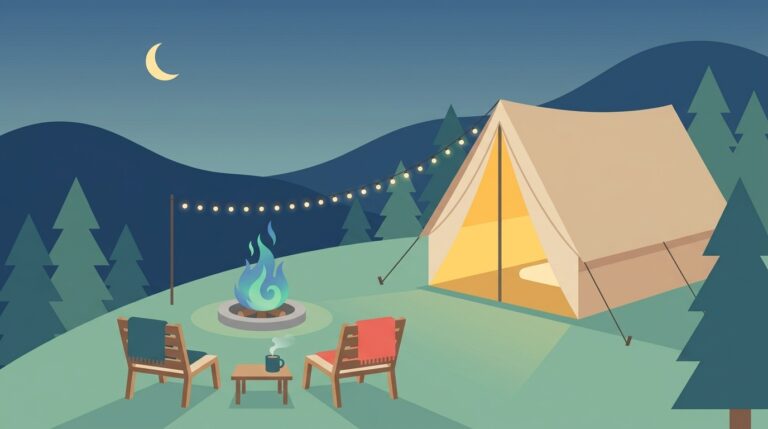
Picture this: You have just binged an episode of a cozy K-Variety show like I Live Alone (나 혼자 산다) or Hospital Playlist (슬기로운 의사생활), where the characters gather around a glowing campfire, grilling succulent pork belly (samgyeopsal) under fairy lights without sweating through tent poles. Naturally, you think, “Glamping in Korea looks like absolute heaven!”
So you book a trendy glamping dome in Gapyeong for the weekend. But when you arrive, you realize two things that your favorite drama forgot to mention: first, the bill costs more than a five-star boutique hotel in Gangnam; second, glamping tent canvas walls provide zero soundproofing against the college group three meters away playing drinking games until 3 AM. When talking about this with your Korean friends on Monday, simply saying “Glamping is good but bad” feels painfully childish for someone at an advanced level.
As a C1 Korean learner, you need to articulate nuanced trade-offs: weighing aesthetic romance (gamseong) against price-to-performance ratios (gaseongbi), analyzing infrastructure, and sounding like a seasoned local who understands outdoor culture inside and out. Based on real feedback from advanced learners navigating outdoor trips in Korea, this guide gives you the cultural context, idioms, and natural expressions to debate the pros and cons of glamping with effortless sophistication.
Phase 2: Core 3 Expressions In-Depth
1. 몸만 가도 되다 (Momman gado doeda)
- Pronunciation: [Mom-man ga-do doe-da] (Sounds like “Moam-mahn gah-doh dway-dah”)
- Meaning: Literal: “To only have to bring one’s body” | Actual Nuance: “To travel completely hassle-free without packing gear or heavy equipment.”
- K-Culture Moment: Frequently heard on reality shows when celebrities brag about easy staycations where luxury setups, heating, and cookware are pre-arranged.
- Editor’s Insight: At the C1 level, pairing this with grammar patterns like ~는 장점이 있다 (has the merit of…) elevates your commentary: “글램핑은 장비를 챙길 필요 없이 몸만 가도 된다는 게 가장 큰 메리트죠.” (The biggest merit of glamping is that you can just go empty-handed without packing gear).
- Situation Spectrum: Casual (✅) | Semi-formal (✅) | Formal (⚠️ – prefer ‘별도의 장비 없이 간편하게 이용할 수 있다’)
- 🤔 Think About It: Why does modern Korean society place such immense value on “몸만 가도 되는” travel? How does Korea’s intense Ppalli-Ppalli (fast-paced) work culture fuel the demand for zero-prep outdoor experiences?
2. 가성비가 떨어지다 (Gaseongbiga tteoreojida)
- Pronunciation: [Ga-seong-bi-ga tteo-reo-ji-da] (Sounds like “Gah-sung-bee-gah ttuh-ruh-jee-dah”)
- Meaning: Literal: “The price-to-performance ratio falls” | Actual Nuance: “It’s overpriced for what you actually get / It lacks cost-effectiveness.”
- K-Culture Moment: Used by practical friends when debating whether spending 350,000 KRW for a one-night glamping tent is really worth it compared to a standard hotel or real backcountry camping.
- Editor’s Insight: Contrast this smartly with 가심비 (satisfaction per cost) or 감성값 (paying for the aesthetic vibe). You can say: “감성은 챙길 수 있지만, 시설에 비해 가성비는 솔직히 좀 떨어져요.” (You get the aesthetic vibe, but honestly, the value for money is somewhat lacking compared to the facilities).
- Situation Spectrum: Casual (✅) | Semi-formal (✅) | Formal (✅)
- 🤔 Think About It: In English, we often say “It’s a rip-off” or “Not worth the buck.” How does using the analytical term 가성비 (cost-effectiveness) allow you to critique an experience objectively without sounding overly aggressive?
3. 방음이 취약하다 (Bangeumi chwiyakhada)
- Pronunciation: [Bang-eum-i chwi-yak-ha-da] (Sounds like “Bahng-eum-ee chwee-yahk-hah-dah”)
- Meaning: Literal: “Soundproofing is weak/vulnerable” | Actual Nuance: “The noise insulation is terrible; you hear everything from next door.”
- K-Culture Moment: The standard complaint found in honest online reviews (Naver Blog / Yanolja) of budget glamping sites where zippers and snoring echo through fabric walls.
- Editor’s Insight: Advanced learners should master Sino-Korean pairings like 취약하다 (vulnerable/weak) rather than just saying 소음이 심하다 (it’s noisy). It directly targets the structural flaw of the accommodation.
- Situation Spectrum: Casual (✅) | Semi-formal (✅) | Formal (✅)
- 🤔 Think About It: Glamping is framed as nature-immersion, but close campsite quarters test boundaries. How does this phrase capture the clash between private comfort and communal outdoor spaces?
Phase 3: Textbook Korean vs Real Korean
Situation 1: Expressing that it feels overpriced despite the convenience
- 📖 교과서 한국어 (Textbook): 글램핑은 매우 편리하지만 숙박 요금이 다소 비쌉니다. (Glamping is very convenient, but the lodging fee is somewhat expensive.)
- 🗣️ 진짜 한국어 (Real-Life C1): 편하긴 진짜 편한데, 1박 가격 생각하면 솔직히 감성값에 바가지 쓰는 느낌도 없지 않아 있어. (It’s ridiculously convenient, but considering the price per night, it honestly feels like we’re getting overcharged for the ‘aesthetic vibe’.)
- 💡 왜 다를까? (Cultural Context): Native speakers rarely say “다소 비쌉니다” in conversational debate. They weave nuanced double negatives like ~느낌도 없지 않아 있다 (there is definitely some feeling of…) and slangs like 감성값 (vibe tax) and 바가지 (rip-off).
Situation 2: Complaining about nighttime neighbor noise
- 📖 교과서 한국어 (Textbook): 밤에 주변 텐트의 소음 때문에 잠을 잘 수 없었습니다. (I couldn’t sleep because of the noise from surrounding tents at night.)
- 🗣️ 진짜 한국어 (Real-Life C1): 방음이 전혀 안 돼서 옆 텐트 코골이랑 수다 소리가 귓가에 서라운드로 다 들리더라고. (There was zero soundproofing, so the snoring and chatter from the next tent sounded like it was in full surround sound right in my ears.)
- 💡 왜 다를까? (Cultural Context): High-level conversational storytelling utilizes vivid sensory metaphors (서라운드로 들리다 – hearing in surround sound) to evoke empathy and humor rather than just stating a dry factual grievance.
Phase 4: K-Culture Deep Dive & Non-Verbal Manners
4-1. 눈치(Nunchi) & Camping Manners in Korea
When glamping in Korea, social harmony is guarded under the unwritten rule of 매너타임 (Manner Time)—usually starting strictly at 10:00 PM or 11:00 PM.
* The Eye Contact & Gesture: If your music is playing near 10:00 PM and a neighbor glances at your speaker while making a subtle downward pressing gesture with both hands (palm down), that is a non-verbal cue to turn the volume down immediately without verbal confrontation.
* Recycling Decorum: Korean glamping sites enforce thorough 분리수거 (waste separation). Walking up to the campsite host with your trash separated into food waste (음식물 쓰레기), combustible vinyl, and cans shows supreme cultural competence.
4-2. Culture Code: “Bulmeong” (불멍) vs “Gamseong” (감성)
In Korea, outdoor culture is less about conquering the wilderness and more about psychological restoration (힐링). The term 불멍 (Bulmeong)—a compound of 불 (fire) and 멍때리다 (to space out)—describes the therapeutic act of staring silently into a campfire. Glamping packages capitalize heavily on 감성 캠핑 (aesthetic camping), renting out retro Marshall Bluetooth speakers, kerosene lamps (랜턴), and Aurora powder that turns flames rainbow colors for Instagram.
Phase 5: Real-Life Roleplay Scenario
Setting: Min-jun (a hardcore backpacker) and Ji-won (a comfort-first glamper) are planning an autumn weekend trip at a cafe in Hongdae.
- 민준 (Min-jun): 이번 주말에 가평 쪽으로 캠핑 갈래? 내가 텐트랑 버너 다 챙겨갈게. (How about going camping toward Gapyeong this weekend? I’ll bring the tent and stove.)
- 지원 (Ji-won): (머리를 긁적이며) 아, 텐트 치고 팩 박고 설거지까지 할 생각 하니까 벌써 피곤한데… 그냥 글램핑으로 잡으면 안 돼? (Scratching head) Ugh, thinking about pitching a tent, driving stakes, and doing the dishes already exhausts me… Can’t we just book a glamping site?
- 민준 (Min-jun): 글램핑? 요즘 성수기라 1박에 기본 30만 원 넘을 텐데, 그 돈이면 장비를 하나 더 사겠다. (Glamping? It’s peak season so it’ll easily exceed 300,000 KRW a night. For that money, I’d rather buy another piece of gear.)
- 지원 (Ji-won): 그래도 글램핑은 몸만 가도 되잖아. 침대도 있고 개별 바비큐장에 난방까지 다 갖춰져 있는데. (Still, with glamping, we can just go empty-handed. It has beds, private BBQ decks, and even indoor heating.)
- 민준 (Min-jun): 시설 좋은 건 인정. 근데 텐트 간격 좁은 데 가면 방음이 취약해서 새벽까지 옆 사람 말소리 다 감수해야 해. (I admit the facilities are nice. But if we pick a place with tight tent gaps, the soundproofing is so weak that we have to endure neighboring chatter until dawn.)
- 지원 (Ji-won): 그건 리뷰 꼼꼼히 보고 매너타임 관리 엄격한 독채형 글램핑으로 고르면 해결돼. (We can solve that by reading reviews carefully and picking an isolated glamping pod that strictly manages Manner Time.)
- 민준 (Min-jun): 흠, 듣고 보니 낭만은 챙기면서 노동은 줄일 수 있겠네. 대신 가성비 떨어지지 않게 시설 대비 평점 높은 곳으로 네가 찾아봐! (Hmm, hearing that, it does keep the romance while cutting down the labor. In return, find a spot with high ratings relative to facilities so it’s not poor value!)
- 지원 (Ji-won): (스마트폰을 켜며) 오케이! 내가 불멍 오로라 가루까지 풀코스로 세팅된 곳으로 찾아볼게! (Unlocking phone) Deal! I’ll look for a spot that comes fully prepped with Aurora fire dust for bulmeong!)
🔀 Interactive Choice Point
How would you step in to finalize the reservation details?
* Choice A: “글램핑이 확실히 편리하긴 하니까, 이번엔 돈 좀 더 쓰더라도 몸 편하게 힐링하고 오자.” (Best: Validates both the comfort factor and budget reality while keeping the mood warm and decisive.)
* Choice B: “30만 원은 너무 비싸니까 그냥 집에서 고기나 구워 먹는 게 낫겠어.” (Bad: Shuts down the entire trip planning; kills the social energy.)
* Choice C: “방음 안 돼도 상관없으니까 제일 싼 데로 예약해 버리자.” (Risk: High chance of ruining the weekend with noise pollution and miserable accommodations.)
Phase 6: 10-Second Emotion Shadowing Drill
Practice matching natural pauses (/) and native speech speed:
- [😊 설득하듯 부드럽게 – Persuasive & Lighthearted]
- “장비 챙기고 / 텐트 칠 필요 없이 / 몸만 가도 된다는 게 / 글램핑의 제일 큰 매력이죠.”
- (Jangbi chaenggigo / tenteu chil piryo eopsi / momman gado doendaneun ge / geullaemping-ui jeil keun maeryeogijyo.)
- [🤔 분석적이고 솔직하게 – Analytical & Objective]
- “감성은 충만한데 / 1박 가격 대비 / 솔직히 시설 가성비는 / 좀 떨어지는 편이에요.”
- (Gamseong-eun chungmanhande / ilbak gagyeok daebi / soljiki siseol gaseongbineun / jom tteoreojineun pyeon-ieyo.)
- [🤫 걱정스럽고 조심스럽게 – Concerned & Realistic]
- “아무래도 텐트 재질이라 / 방음이 취약하니까 / 매너타임 잘 지키는 곳으로 / 알아봐야 해요.”
- (Amuraedo tenteu jaejil-ira / bangeumi chwiyakanikka / maeneota-im jal jikineun goseuro / arabwaya haeyo.)
Phase 7: K-Culture Mini Dictionary
- 불멍 (Bul-meong) | Campfire Spacing Out
- The meditative state of silently gazing into an open flame. Essential Korean outdoor therapy.
- 장비빨 (Jang-bi-ppal) | Gear Supremacy / Over-reliance on Gear
- Achieving success or looking stylish strictly due to expensive, high-end equipment rather than skill.
- 매너타임 (Mae-neo-ta-im) | Camping Quiet Hours
- Designated nighttime hours (typically 22:00–07:00) where guests must cease loud talking, music, and illumination.
- 촌캉스 (Chon-kang-seu) | Rustic Countryside Vacance
- A vacation spent in rural Korean countryside houses (hanok or farmhouses), often wearing retro patterned work pants (ilbaji).
Phase 8: Traveler’s Survival Kit
Top 3 Outdoor Survival Phrases
- 1. “혹시 불멍용 장작이랑 오로라 가루 추가할 수 있나요?”
- (Hoksi bulmeong-yong jangjagirang oreora garu chugahal su innayo?)
- Pro Tip: Ask this at check-in to ensure firewood and fire-color powder are delivered before dusk.
- 2. “온수랑 바닥 난방은 몇 시까지 들어오나요?”
- (Onsurang badak nanbang-eun myeot sikkaji deureo-onayo?)
- Pro Tip: In mountain areas like Gapyeong or Pyeongchang, nights get freezing. Confirm heating uptime early.
- 3. “주변 텐트 소음이 너무 심한데 관리자분께서 주의 한 번 주실 수 있을까요?”
- (Jubyeon tenteu soeumi neomu simhande gwallijabunkkeseo juui han beon jusil su isseulkkayo?)
- Pro Tip: Avoid confronting noisy campers directly; let site managers enforce the rules.
Editor’s Travel Note
- Booking campsite spots in Korea is competitive. Use dedicated platforms rather than general hotel apps. Check openings on 캠핏(Camfit) 앱 다운로드 for real-time site maps or find detailed user photo reviews on 네이버 지도 앱 다운로드.
Phase 9: “A Step Deeper” (Reflective Essay)
In hyper-dense Korean urban environments, private individual space is a luxury. Glamping sits at the unique intersection of modern Koreans’ deep craving for nature escape and the equally strong demand for convenience and digital connectivity. It highlights how contemporary Korean leisure transforms the traditional rough outdoor ethos into a curated, aesthetic service where discomfort is engineered out—even if it comes at a high financial premium.
💬 Your Turn: In your home country, do people prefer rugged wilderness survival camping, or has luxury glamping taken over the scene? Share your thoughts below in Korean using 몸만 가다 or 가성비!
Phase 10: FAQ & Common Mistakes
Q: What is the main difference between 카라반 (Caravan) and 글램핑 (Glamping) in Korean booking apps?
A: 카라반 refers to a stationary trailer or RV featuring hard walls, superior soundproofing, and integrated internal plumbing. 글램핑 refers to large, furnished safari-style canvas tents with outdoor decks, offering higher aesthetic romance (감성) but weaker sound insulation.
Q: Is food generally provided at Korean glamping sites?
A: Most sites provide barbecue grills, charcoal (숯), and kitchen utensils, but you must bring your own meat and groceries. Some luxury sites offer 바비큐 패키지 (pre-prepped pork, sausage, stew sets) for an added fee.
Q: What should I wear for a Korean glamping trip in spring or autumn?
A: Dress in warm layers. Even if daytime temperatures hit 20°C, outdoor mountain valley nights can plummet near freezing. Bring an extra fleece jacket and cozy indoor socks.
🚨 Common Mistakes Warning Board
- Calling camping quiet hours “Quiet Time”: Use the accepted Konglish term 매너타임 (Manner Time); staff and signage exclusively use this keyword.
- Confusing 가성비 (Price-performance) with 가심비 (Emotional satisfaction per cost): When praising how pretty a site looks regardless of high cost, use 가심비가 좋다 rather than 가성비가 좋다.
- Directly confronting rude neighbors: Do not knock on neighbor tents late at night; call or message the campsite office (관리실) to prevent friction.
Phase 11: Action Mission & Engagement
- 🥉 Bronze Level: Shadow Phase 6’s three audio lines in front of a mirror until your pacing matches native speed.
- 🥈 Silver Level: Leave a comment below comparing your last vacation accommodation using ~긴 한데 … 가성비가 떨어져요.
- 🥇 Gold Level: On your next trip or KakaoTalk chat, debate weekend plans using the term 몸만 가면 돼.
- 🎮 K-Culture Mission: Watch an episode of a Korean camping show (e.g., House on Wheels / 바퀴 달린 집) and write down how many times you spot a character doing 불멍.
Phase 12: Interactive Quiz Challenge
1. Situation Judgment:
You want to explain to a Korean friend that a glamping site has great furniture and aesthetics, but the price is too high for what they offer. Which phrase fits best?
* A) 방음이 잘 돼서 가성비가 좋아요.
* B) 시설은 깔끔한데 가성비는 솔직히 좀 떨어져요.
* C) 몸만 가면 되니까 바가지를 씌워야 해요.
2. Fill-in-the-Blank:
“따로 텐트나 코펠 같은 장비를 챙길 필요 없이 (________) 가도 돼서 정말 편해요.”
3. True or False:
Korean glamping sites are made of thick brick walls, so you never need to worry about soundproofing (방음) or quiet hours (매너타임). (True / False)
👉 Click here to reveal Answer & Explanations!
Answers:
1. B – 시설은 깔끔한데 가성비는 솔직히 좀 떨어져요 accurately contrasts good facilities with poor cost-performance.
2. 몸만 (몸만 가도 돼서 = because you only need to bring your body/travel empty-handed).
3. False – Glamping units use canvas and vinyl walls where 방음이 취약 (soundproofing is weak), making 매너타임 compliance vital.







